
Mynd: Educational Display of Turnip Nutrition with Fresh Vegetables
Birt:
Síðast uppfært: 14. september 2026 kl. 14:49:43 UTC
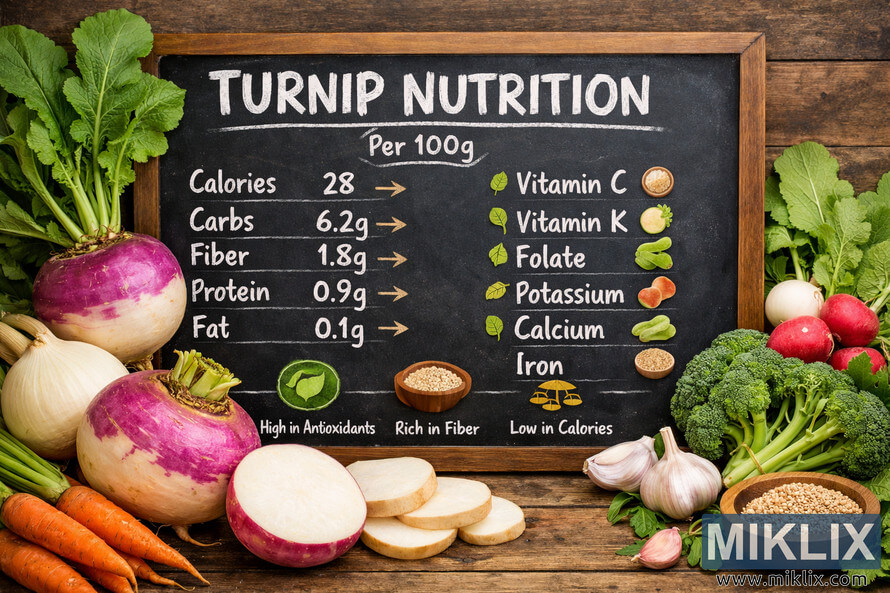
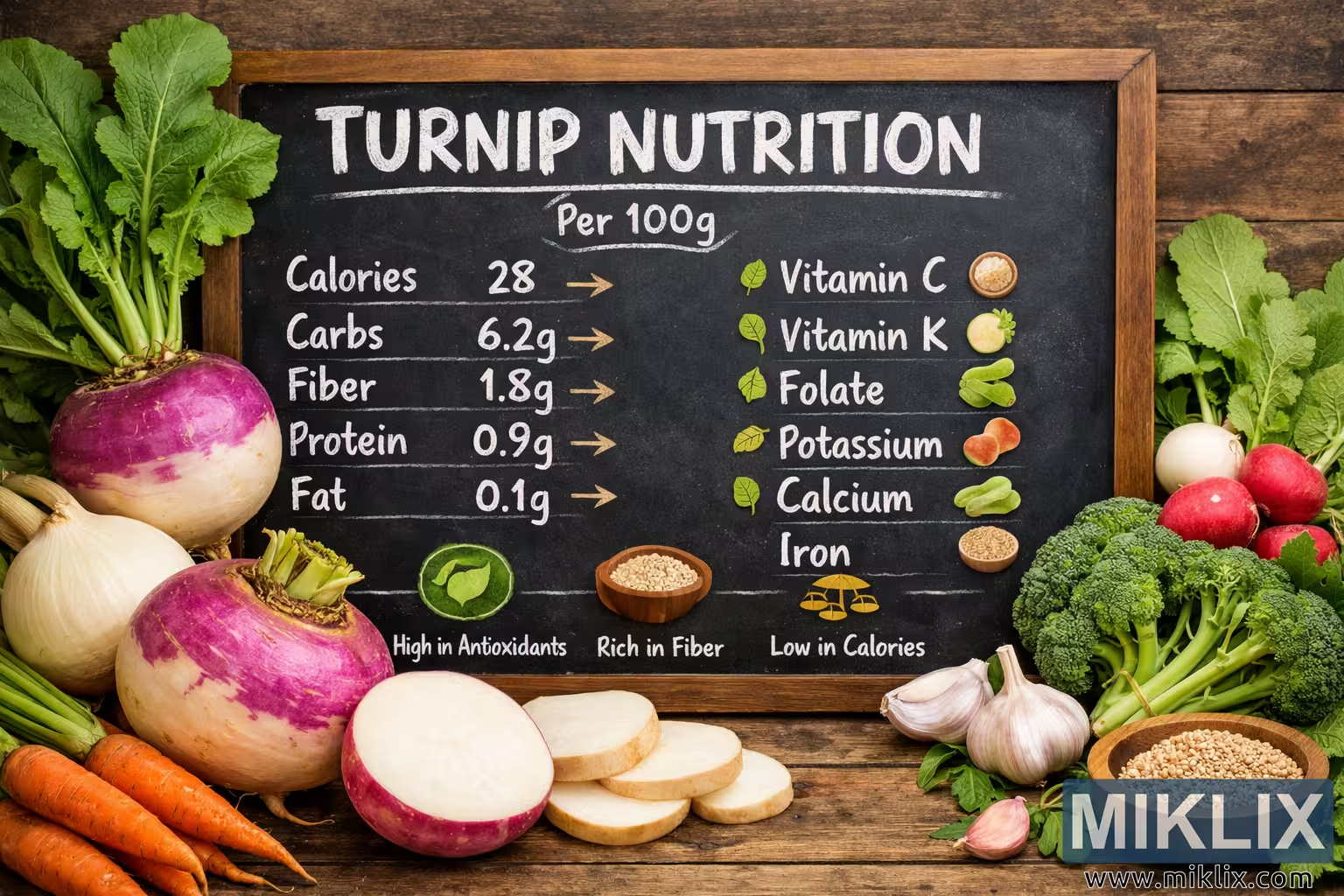
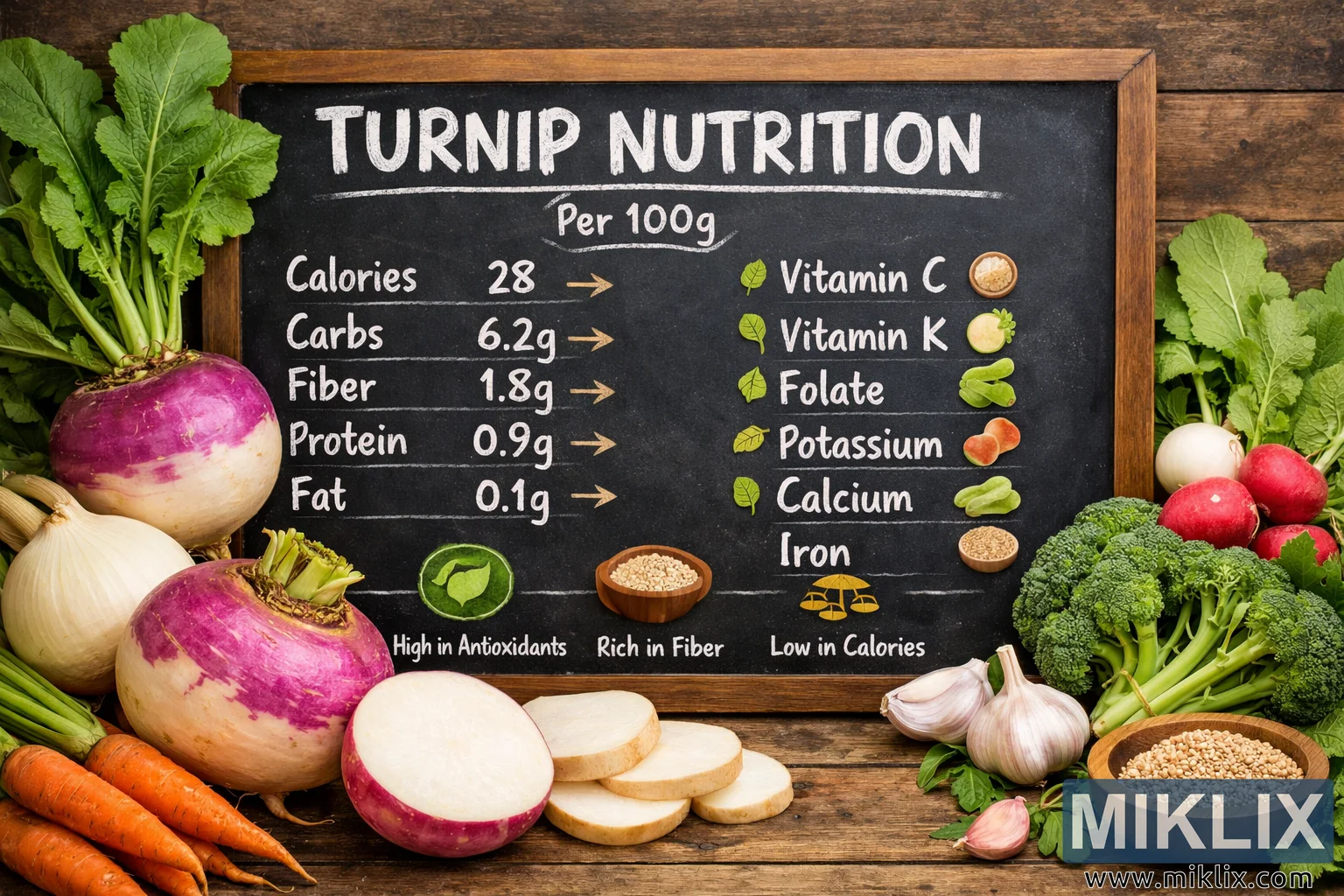
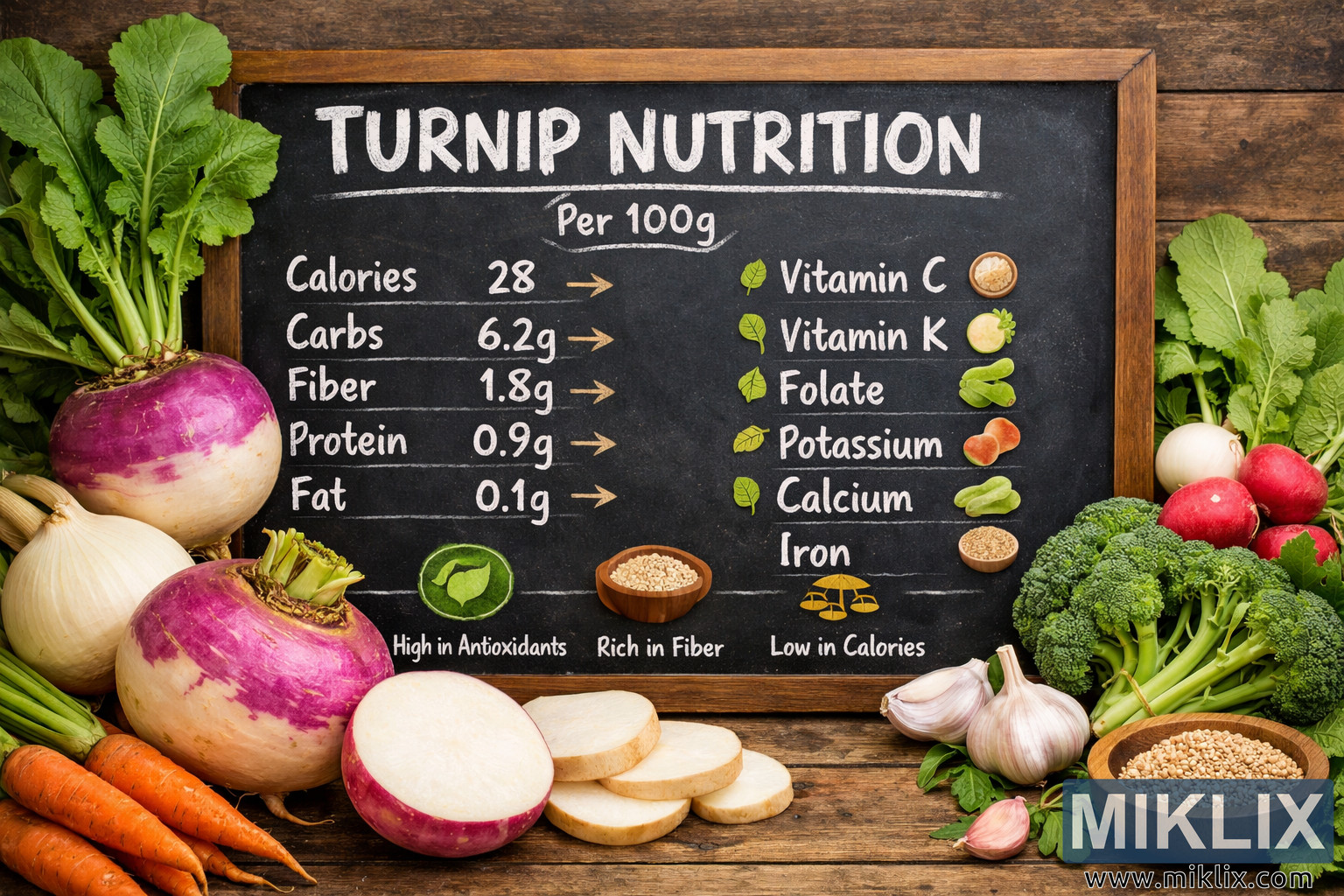
Educational landscape image showing the nutritional composition of turnips on a central chalkboard, surrounded by fresh vegetables like turnips, carrots, broccoli, garlic, radishes, leafy greens, and grains on a rustic wooden table. Ideal for nutrition, healthy eating, and vegetable-focused content.
Educational Display of Turnip Nutrition with Fresh Vegetables
Tiltækar útgáfur af þessari mynd
Myndaskrárnar sem hægt er að hlaða niður hér að neðan eru minna þjappaðar og í hærri upplausn - og þar af leiðandi í hærri gæðum - en myndirnar sem eru felldar inn í greinar og síður á þessari vefsíðu, sem eru betur fínstilltar fyrir skráarstærð til að draga úr bandvíddarnotkun.
Venjuleg stærð (1,536 x 1,024)
Stór stærð (3,072 x 2,048)
Mjög stór stærð (4,608 x 3,072)
Mjög stór stærð (6,144 x 4,096)
Kómískt stór stærð (1,048,576 x 699,051)
- Er enn að hlaða inn... ;-)
Lýsing myndar
This image presents a carefully arranged, educational-style display focused on the nutritional composition of turnips, set on a rustic wooden table that evokes the feeling of a farmer’s market or a cozy kitchen. At the center of the composition stands a dark chalkboard framed with natural wood, acting as the primary focal point and information hub. Written across the top of the chalkboard in large, bold, white chalk letters is the heading "TURNIP NUTRITION," immediately signaling that the image is about the health benefits and nutrient profile of turnips. Just below the title, the phrase "Per 100g" appears, clarifying that the listed values refer to a standard serving size.
On the left side of the chalkboard, a column of macronutrient information is written in neat chalk handwriting. Each nutrient is followed by its corresponding value and a small arrow pointing toward the right side of the board, visually guiding the viewer’s eye across the display. The list includes "Calories 28," "Carbs 6.2g," "Fiber 1.8g," "Protein 0.9g," and "Fat 0.1g." These values emphasize that turnips are low in calories and fat, while providing carbohydrates and a modest amount of fiber and protein. The arrows create a sense of flow and connection between the numerical data and the rest of the visual elements.
On the right side of the chalkboard, another column highlights key vitamins and minerals found in turnips. This section lists "Vitamin C," "Vitamin K," "Folate," "Potassium," "Calcium," and "Iron," each accompanied by a small icon that visually represents the nutrient category. For example, there may be simple shapes suggesting a droplet, a leaf, or a capsule, all rendered in chalk-style illustration. These icons add a playful, approachable touch to the otherwise informational layout, making the nutritional data feel more accessible and engaging.
In front of the chalkboard, occupying the lower portion of the image, a variety of fresh vegetables are arranged to create a vibrant, colorful foreground. Turnips are the star of this arrangement. On the left side, a large whole turnip with purple and white skin is displayed, its green leafy tops still attached, suggesting freshness and a direct connection to the soil. Near the center, a halved turnip reveals its smooth, white interior, providing a visual contrast to the purple exterior and emphasizing the root’s crisp texture. Several round slices of turnip are laid out in the lower center on the wooden surface, their pale color and circular shape adding rhythm and repetition to the composition.
To the left of the turnips, a bunch of bright orange carrots with lush green tops is placed diagonally, adding a warm hue that contrasts with the cooler tones of the turnips and leafy greens. The carrots help frame the scene and reinforce the theme of wholesome, fresh produce. On the right side of the foreground, a small cluster of other vegetables and ingredients appears: a head of deep green broccoli, a few garlic cloves with papery skins, and assorted leafy greens. These elements suggest a broader context of healthy eating and plant-based cooking, showing how turnips can be part of a varied, nutrient-rich diet.
Additional details are scattered throughout the composition to enrich the visual story. In the upper left corner, radishes with red skins and green leaves peek into the frame, echoing the root-vegetable theme and adding another pop of color. To the right, near the edge of the table, a small wooden bowl filled with quinoa or similar grains is placed, hinting at whole grains as a complementary component of balanced meals. The rustic wooden table surface, with its visible grain and slightly worn texture, ties all these elements together, giving the scene a natural, earthy atmosphere.
At the bottom of the chalkboard, three circular icons with short captions further summarize the benefits of turnips. The first icon, featuring a green shield with a leaf, is labeled "High in Antioxidants," suggesting that turnips contain compounds that help protect the body from oxidative stress. The second icon, showing a brown bowl filled with grains or seeds, is labeled "Rich in Fiber," reinforcing the idea that turnips contribute to digestive health and satiety. The third icon, with a yellow scale symbol, is labeled "Low in Calories," highlighting turnips as a weight-conscious choice for those looking to manage energy intake while still enjoying satisfying meals.
The lighting in the image is soft yet bright enough to clearly illuminate the chalkboard text and the textures of the vegetables. Shadows are gentle and natural, suggesting daylight coming from one side, which adds depth without overwhelming the scene. The overall color palette is balanced between earthy browns of the table and frame, deep greens of leaves and broccoli, vivid oranges of carrots, purples and whites of turnips, and subtle off-whites of garlic and chalk text. This harmonious mix of colors creates visual interest while maintaining a calm, inviting mood.
The composition is thoughtfully arranged so that the viewer’s eye moves from the bold title at the top of the chalkboard, down through the nutrient lists, and then across the foreground of vegetables. The chalkboard provides clear, structured information, while the fresh produce offers a tangible, appetizing representation of the data. Together, they communicate that turnips are not only nutritionally valuable but also versatile and appealing ingredients in everyday cooking.
Overall, the image functions as both an educational chart and a culinary still life. It invites viewers to learn about the nutritional profile of turnips while simultaneously inspiring them to incorporate more fresh vegetables into their meals. The absence of any commercial branding keeps the focus squarely on the natural ingredients and the health information, making the scene feel authentic, approachable, and suitable for use in educational materials, health blogs, recipe websites, or nutrition-focused presentations.
Myndin tengist: Turnip: The Root Vegetable That Supports Better Health