
Hops in Beer Brewing: Early Prolific
出版された:
最終更新日 2026年5月17日 19:32:41 UTC
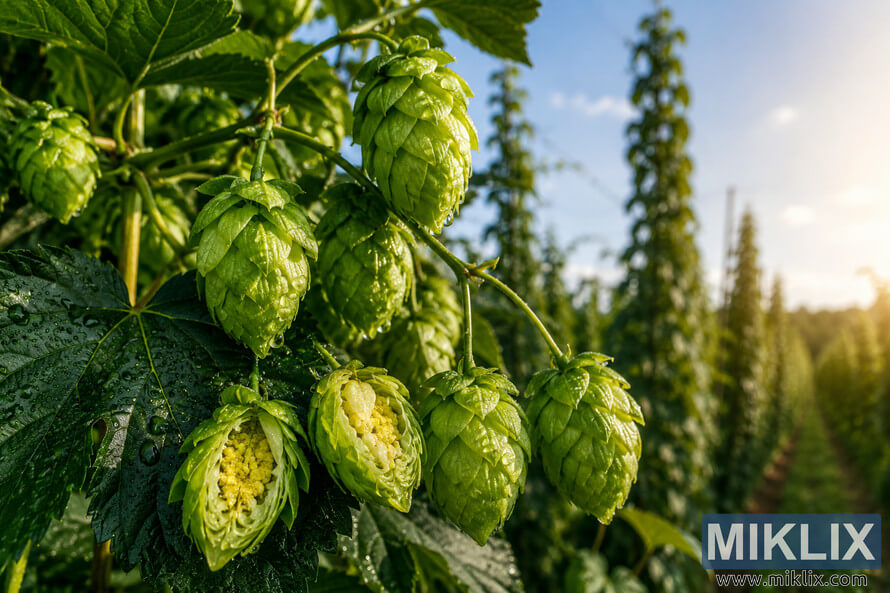
Early Prolific, a hop from Wye College, is known for its pleasant, continental-style aroma. It's a standout in hop varieties, attracting brewers and breeders with its aromatic traits. Despite its limited commercial growth, it was accessioned by the USDA in 1980, securing its place in research and germplasm records.
Hops in Beer Brewing: Early Prolific
画像をクリックまたはタップすると、詳細と高解像度が表示されます。
Its slow growth and modest yields have kept Early Prolific from widespread cultivation. Yet, it holds a special place in small farms and craft breweries. Collaborations, like those between Firestone Walker and Hollingbery farms, highlight the importance of unique hop flavors. Small hopyards, such as Nopalito Hopyard, showcase the value of hand-harvesting and precise timing in preserving the essence of these hops.
Interest in Early Prolific is driven by its aroma and robust storage stability. These traits make it a promising candidate for future hop varieties. For brewers interested in historic or heritage options, Early Prolific offers a unique opportunity. It's ideal for specialty additions or wet-hop beers that showcase terroir and fresh flavors.
Key Takeaways
- Early Prolific is a Wye College hop known for a continental-style aroma.
- The variety received USDA accession in 1980 and appears in germplasm collections.
- Commercial plantings are limited due to slow growth and low yield.
- Small farms and hand-harvest practices help preserve its aromatic value.
- Breeders value Early Prolific for aroma and strong storage stability.
- Useful for wet-hop trials and heritage-focused craft brewing recipes.
Overview of Early Prolific hops
Early Prolific is a heritage hop known for its unique continental aroma and moderate cultivation needs. Its origins are linked to Wye College hops research in the United Kingdom. The variety is documented in germplasm collections. Below is a summary of its lineage, brewing role, and practical notes for small-scale growers and brewers.
Origin and breeding history
The variety's roots trace back to Wye College's breeding work, a significant chapter in British hop improvement. It was formally accessioned by the USDA in 1980, ensuring its genetic material for research and breeding. Despite its limited commercial use, breeders praise its aromatic stability and hybrid potential.
General purpose in brewing
Early Prolific is primarily used as an aroma hop, not for high-yield bittering. Its yields are modest, around 560–670 kg/ha (500–600 lb/acre). Brewers incorporate it for its floral and spicy notes, enhancing the flavor in small additions or specialty batches.
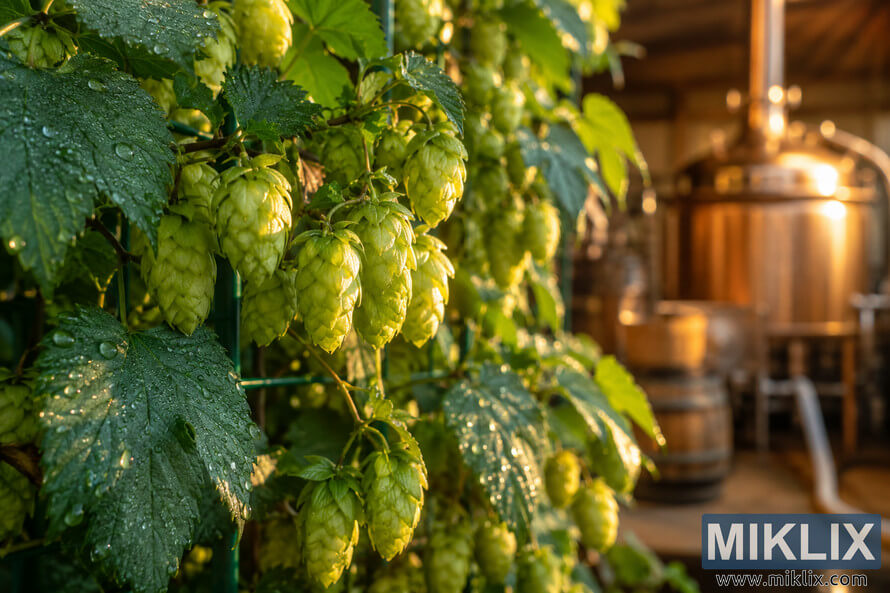
Small farms and craft brewers value Early Prolific for its flavor diversity and breeding trials. Its use as an aroma hop and its USDA accession in 1980 make it valuable for sensory work and preserving genetic lines from Wye College hops research.
画像をクリックまたはタップすると、詳細と高解像度が表示されます。
Flavor and aroma profile
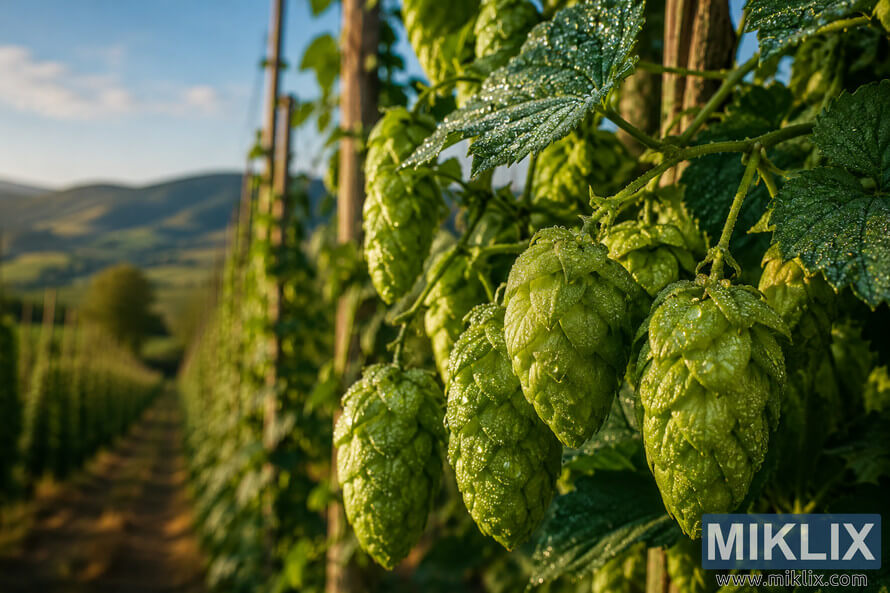
Early Prolific presents a compact, readable hop aroma, ideal for traditional European-style beers. It showcases a continental aroma hop character, leaning towards herbal and pine notes over bright tropical fruit. The modest oil content makes it perfect for achieving a subtle, old-world scent without an aggressive modern punch.
The hop's aroma profile is defined by a mix of dominant and minor volatiles in the cone. It features green, resinous tones with a supporting layer of spicy woodiness. This balance ensures malt and yeast-driven esters remain visible, adding depth and complexity.
Essential oil breakdown reveals the sensory expectations. With about 0.5 mL per 100 g of cones, Early Prolific's hop essential oils are led by myrcene. It also contains significant humulene and caryophyllene, with small amounts of farnesene. Myrcene contributes herbal and resinous notes, while humulene brings dry, woody spice. Caryophyllene adds a peppery warmth.
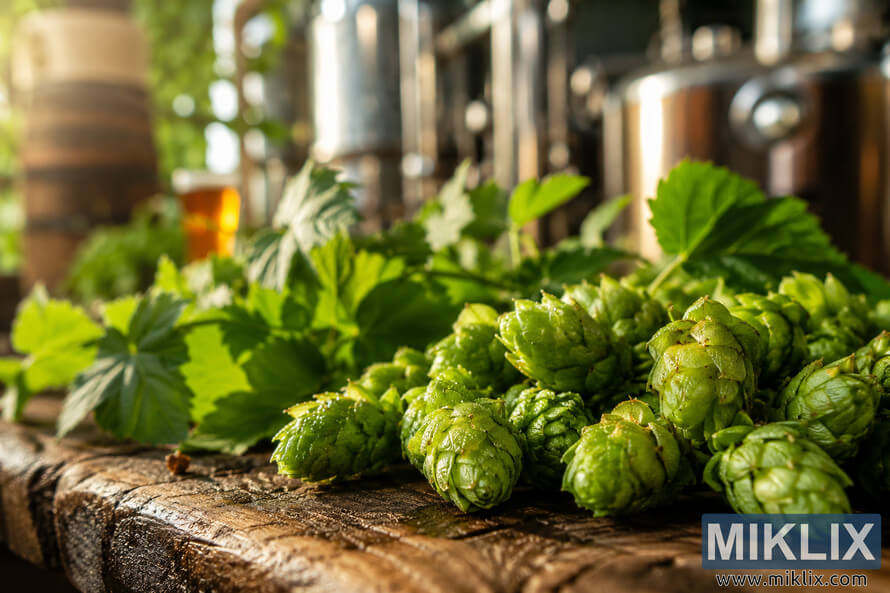
The sensory impact depends on how brewers use the cones. Aroma additions at flameout or in dry hopping highlight the hop's aroma without increasing bitterness. In kettle or whirlpool additions, Early Prolific complements yeast-derived characters, softening sharp hop edges. It's well-suited for balanced ales and lagers.
Practical tasting notes for recipe work:
- Herbal resin and pine on first sniff.
- Underlying wood spice on the palate.
- Light floral or fruity topnotes from farnesene when fresh picks are used.
画像をクリックまたはタップすると、詳細と高解像度が表示されます。
Alpha and beta acids: bitterness potential
Early Prolific's role in the brew kettle is centered on aroma, not primary bittering. It has modest alpha and beta acid content, ideal for late additions and dry hopping. The hop's chemical makeup guides brewers in recipe formulation.
Measured alpha and beta levels
- Alpha acid averages near 4.7%, placing Early Prolific among lower-alpha aroma hops.
- Beta acid measures around 2.2%, which supports stability of certain flavor compounds during storage and maturation.
- These numbers indicate limited potential for boil-time bittering when compared with high-alpha cultivars from Yakima and other production regions.
Co-humulone and hop bitterness character
- Co-humulone proportion is recorded about 23%, a mid-to-lower range that tends to yield a smoother bitterness character.
- A lower co-humulone share helps avoid the sharp, harsh bite some brewers associate with high co-humulone varieties.
- Given its Early Prolific alpha acid and co-humulone profile, the variety fits best as a flavor and aroma addition rather than a primary bittering source.
画像をクリックまたはタップすると、詳細と高解像度が表示されます。
Growth and agronomic characteristics
Early Prolific exhibits traits that appeal to growers seeking a balance between aroma and practicality. It matures before many traditional varieties, aiding in managing tight harvest windows. This allows for better labor distribution throughout the season.
Maturity and seasonality
Hop maturity early is a significant benefit. This variety reaches harvestable cone development sooner than mid-season types. This allows harvest crews to move on to other blocks efficiently. For small farms with standard trellis systems and bine supports, an early harvest window simplifies scheduling during the busy autumn weeks.
Yield, growth rate, and harvest considerations
Early Prolific yield ranges from 560–670 kg per hectare, or roughly 500–600 lbs per acre. These figures indicate modest production for commercial standards.
Growers rate hop growth rate as low to moderate. Slow canopy fill and less aggressive bine extension can reduce total cone weight. These growth characteristics influence decisions on planting density and trellis investment.
- Expect staggered ripening that may help small-scale wet-hop plans.
- Plan harvest crews around a shorter, earlier window rather than a prolonged season.
- Adjust plant spacing to compensate for lower per-plant yield.
Disease resistance and cultivation notes
Early Prolific shows moderate downy mildew resistance. This resistance is beneficial in wet seasons but requires continued vigilance against other pests and pathogens.
Given its lower vigor and limited commercial adoption, growers should test small blocks before scaling. Disease scouting and soil fertility management are crucial to support cone quality, despite modest growth rates.
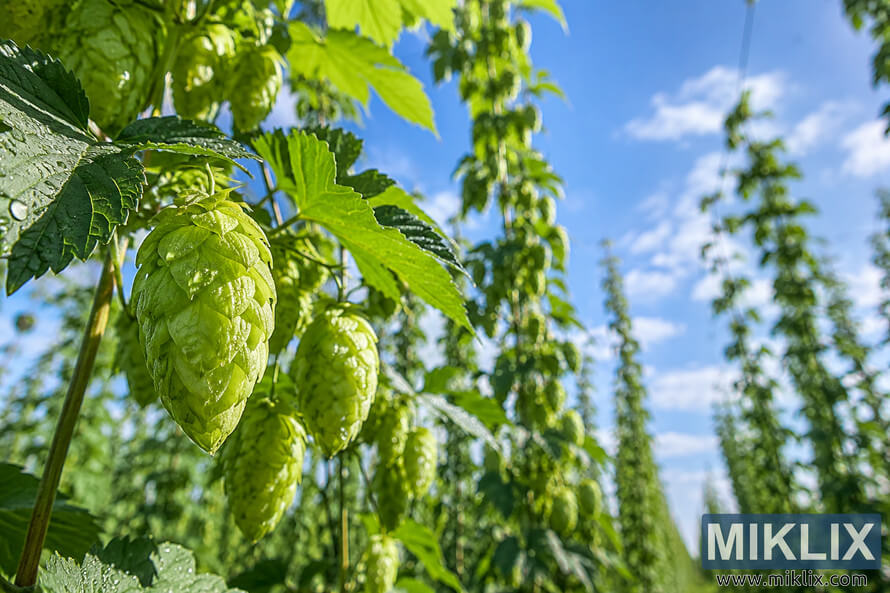
画像をクリックまたはタップすると、詳細と高解像度が表示されます。
Storability and post-harvest performance
Early Prolific exhibits remarkable durability post-harvest. Its unique blend of volatile oils and high alpha acids offers brewers flexibility. This flexibility extends to both immediate use and longer storage periods. The subsequent sections delve into the practical implications for alpha acid retention and the choices brewers face.
Alpha acid retention and shelf life
Studies reveal Early Prolific retains approximately 80% of its alpha acids after six months at 20°C (68°F). This performance surpasses many traditional hops, enhancing its shelf life. It proves invaluable when immediate processing is not feasible.
Effective alpha acid retention minimizes the variability in bittering levels. This stability is crucial for brewers who rely on precise IBU calculations. It ensures consistency in their beers, even when hop availability is uncertain.
Processing implications for brewers
The variety's low total oil content, combined with its robust alpha acid retention, makes it ideal for pelletization and cold storage. Pelletized Early Prolific maintains its bittering potential while the aroma evolves slightly over time and through processing.
Even small farms benefit from Early Prolific's storability, especially when planning their batch schedules. Wet-hop beers showcase the fresh aromas, while pelletized or frozen stocks provide consistent bitterness across different seasons.
- Cold storage supports post-harvest hop stability and extends usable life.
- Pelletizing helps preserve alpha acid retention for months.
- Fresh cone use maximizes delicate aroma, though hop shelf life may be shorter for volatile notes.
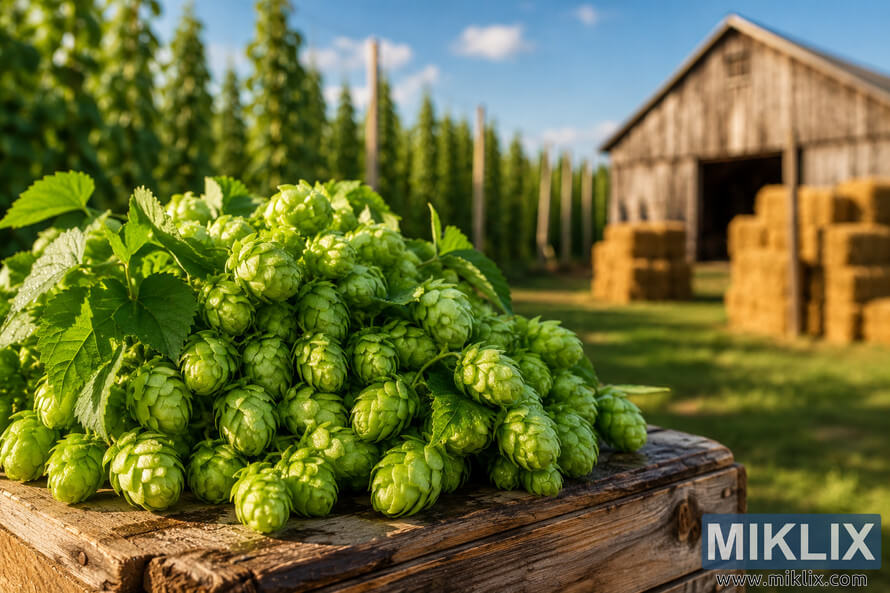
画像をクリックまたはタップすると、詳細と高解像度が表示されます。
Brewing uses and recipe roles
Early Prolific is ideal for finishing and aroma hops. Its low alpha acids, around 4–5%, ensure minimal bitterness. This makes it perfect for late boil additions, whirlpool additions, or dry-hop charges. It enhances herbal and continental notes without a harsh bite.
Early Prolific shines when used in small amounts alongside modern hops. It adds piney, herbal complexity to beers. Pairing it with fruity hops like Mosaic or experimental hops like Strata creates a balanced profile. This combination offers a classic backbone to modern juiciness.
Wet-hop and harvest ales are particularly suited for Early Prolific. Single-hop or small-batch harvest expressions highlight its subtle traits. These beers showcase the hop's continental character and light herbal tones without overpowering bitterness.
- Late-kettle: 5–15 minutes for delicate lift.
- Whirlpool: 10–30 minutes to capture volatile oils.
- Dry-hop: 2–5 days for aroma prominence in cask, keg, or kegged session beers.
Opt for beer styles that emphasize aroma over bitterness for Early Prolific. Traditional English and continental ales benefit from its subtle herbal profile. Light saisons, blond ales, and certain hybrid pale ales can highlight the hop's gentle spice as an aroma hop addition.
- English-style bitter or pale ale: complements malt and yeast character.
- Continental blonde or Kölsch-like ales: supports clean, floral aromatics.
- Wet-hop small batches and harvest-season ales: emphasize fresh hop nuances.
When adjusting recipes, slightly reduce late-boil quantities compared to modern bold varieties. Use Early Prolific to nudge a recipe toward classic aroma rather than dominant fruit. This approach ensures balance in mixed-hop IPAs and keeps session beers drinkable and aromatic.
Comparisons and suitable substitutes
Early Prolific is categorized alongside classic aroma hops, differing from modern American varieties. Its distinct herbal, piney, and spicy notes stem from a higher myrcene and moderate humulene content. This contrasts sharply with the newer US hops, which emphasize tropical and resinous flavors.
In the debate between UK and US hops, oil composition is key to aroma. Modern US hops like Citra, Mosaic, and Idaho 7 are known for their tropical esters and high total oils. In contrast, classic UK hops such as Fuggle and Northern Brewer offer earthy, woody, and herbal flavors, aligning more with Early Prolific.
- Fuggle: A direct match for earthy and subtle spice. Use it where Early Prolific’s gentle herbal lift is needed.
- Northern Brewer: Brings pine and minty notes that mirror humulene-driven character. Works well in bitters and brown ales.
- Continental aroma hops (e.g., Styrian Goldings-type): Offer similar balances of myrcene and humulene for lager or pale ale adaptations.
For recipe adaptation, blends can serve as effective Early Prolific substitutes. Combine a neutral base hop with a small amount of a spicy, humulene-forward hop to mimic the original aroma. This method allows brewers to find aroma hop alternatives when exact matches are not available.
- Start with a neutral British or continental base at typical late-addition rates.
- Add 10–25% of a spicy, piney hop like Northern Brewer to nudge the profile toward Early Prolific.
- Taste in small trial brews and adjust to preference, tracking how humulene and myrcene balance affects the final aroma.
Practical hop comparisons aid brewers in maintaining recipe integrity. Employ the suggested substitutions and blending techniques to achieve aroma hop alternatives that honor Early Prolific’s traditional essence while preserving the beer’s balance.
Breeding potential and research interest
Early Prolific is sought after by breeders and researchers for its unique aromatic character and storability. Its scent profile introduces floral and spicy notes when crossed into modern lines. This makes it valuable for small-scale conservation and targeted crossings. These efforts ensure its availability for experimental programs aiming to blend aroma with improved agronomics.
Aromatic traits valued for breeding
- Breeders value the distinct floral and spicy aromas that enhance pale ales and English styles.
- By combining Early Prolific's aromatic genes with those of high-yielding parents, breeders can create hops with both scent and commercial appeal.
- The cultivar's storage stability is crucial for preserving volatile oils, essential for long-term supply chains.
Historical and USDA accession data
- The USDA accession 1980 is documented in Agricultural Research Service records, making it available for public breeding work.
- Hop germplasm repositories and university collections hold detailed notes and trial data for breeders exploring hop breeding traits.
- Regional conservation efforts and interest from craft brewers fuel ongoing evaluation and preservation of this genetic resource.
Harvest and regional cultivation context
Early Prolific, a cultivar from the UK, is ideal for niche plantings in the United States. It thrives in areas with clear seasons and cool nights. Growers should match soil drainage and summer heat to the hop's moderate growth habits.
Typical hop-growing regions and climate needs
Hop-growing regions in the U.S. stretch from the Canadian border to Mexico, each with unique microclimates. The Yakima Valley in Washington is the top spot for commercial hops. It offers reliable irrigation, long summer days, and well-drained soils.
California's smaller areas also play a crucial role in hop diversity. San Diego hop farms and other southern California plots show that arid climates with cool coastal breezes can support experimental hops. Planting Early Prolific in these locations can reveal adaptation traits not seen in Britain.
The variety excels in areas with clear growing seasons. Cool nights help retain aroma, while warm days promote cone development. Choosing the right site reduces disease risk and enhances cone quality.
Harvest timing and practical considerations
Early maturity shortens the harvest calendar, which helps spread labor for farms with multiple varieties. Standard harvest timing in many U.S. regions is in September. However, Early Prolific often tips earlier in the season.
- Small farms may pick earlier in arid zones; some operations harvest weeks before major Yakima hops collection.
- Each variety has a narrow pick window. Some windows open for only a few days; very small batches can peak within hours.
- Low-to-moderate growth rate and modest yields mean Early Prolific suits trial blocks rather than large-scale fields.
Planning around hop harvest timing is crucial for logistics. Brewers and growers coordinating wet-hop events should track cone maturity by feel and lupulin color. Collaboration between growers in Yakima hops country and small producers at San Diego hop farms can smooth supply for craft brewers seeking heritage varieties.
Small-farm and wet-hop relevance
Early Prolific’s early maturity makes it a natural fit for small-scale wet-hop programs. Its harvest window often aligns with local harvest festivals. This allows brewers and growers to coordinate same-day delivery. Small-farm hops picked and moved quickly preserve volatile aromatics that define a wet-hop pour.
- Wet-hop beers use cones within 24 hours. This practice captures delicate floral and herbal notes that fade in dried hops.
- Small farms can hand-harvest and bring Early Prolific wet-hop cones to local breweries the same day. This keeps flavors bright and seasonally specific.
- Hyperlocal brewing benefits when breweries such as Firestone Walker collaborate with nearby growers. These partnerships create single-lot releases and limited wet-hop runs that attract local drinkers.
Relation to craft and farm-to-glass practices
- Farm-to-glass hops command a premium because they offer traceable origin and immediate freshness. Brewers marketing seasonal offerings often highlight this provenance.
- Small-farm hops that show a continental aroma can be used in single-hop or blended wet-hop beers. They deliver a distinct, place-driven character.
- Local contracts sustain niche production. Brewery–grower ties help maintain small-batch supplies of rare varieties. They support community-focused beer programs.
Economic and commercial availability
Early Prolific availability remains scarce in American markets. It's documented in germplasm records and specialty listings but not widely available. Mainstream hop suppliers do not actively offer it. Brewers should anticipate scarcity and long lead times when searching for it for pilot brews or heritage series.
Current commercial status and supply limitations
- Production is minimal due to Early Prolific's slow growth rate and low yields. This makes it less appealing for large-scale growers.
- Some conservation-focused nurseries and university programs list accessions. These entries usually represent small, noncommercial stocks for preservation or research.
- Expect patchy availability tied to specific conservation efforts or experimental plantings rather than steady retail supply.
Where to source or request Early Prolific hops
- Check USDA/ARS germplasm records for accession details and contact information to request material for trialing.
- Contact regional hop farms and small hop gardens that maintain heritage vines. They often supply limited wet-hop harvests or small dried lots for local brewers.
- Reach out to specialty hop suppliers and heritage nurseries that list rare hop varieties. They may accept requests to propagate or trial Early Prolific.
For brewers seeking Early Prolific, start with archival sources and conservation-minded hop suppliers. Networking with local farms and craft brewers often yields the fastest route to small quantities for recipe testing and wet-hop projects.
Sensory testing and recipe development tips
Start with simple test beers to focus on hop character. Use a neutral malt bill and clean yeast to highlight aroma and flavor. Early Prolific sensory testing is best for aroma evaluation due to its low alpha and unique oil profile.
- Set up small-batch trials of 1–5 gallons (4–20 L) with identical grist and fermentation to compare variables.
- Run single-hop and simple-base beers to capture the hop's true contribution without masking.
- Keep records for each trial: hop weight, timing, temperature, and perceived notes.
Follow clear hop trial protocols when testing additions. Late-kettle, whirlpool, and dry-hop stages reveal different facets of aroma. For wet-hop trials, plan to harvest and use cones within 24 hours to catch fresh-aroma qualities. Allocate extra hops for wet-hop brews because fresh cones require higher rates than dried or pelletized forms.
Tasting protocols for small-batch trials
Use a tasting panel of three to six tasters for repeatable results. Evaluate aroma, flavor, and mouthfeel separately. Blind samples help reduce bias.
- Pour samples at consistent temperatures and note first impressions within 30 seconds.
- Score intensity, nuance, and persistence on a simple 1–5 scale.
- Compare late additions against dry-hop-only versions to map where Early Prolific shines.
Scaling recipes and hop rate adjustments
When scaling up from a small trial to a production batch, use proportional math but correct for alpha differences. Early Prolific has low alpha, so use it as an aroma hop. Use a high-alpha bittering hop for IBUs if required. This approach preserves the intended aroma without over-bittering.
- To scale hop amounts, calculate weight by volume and then adjust for alpha acid to hit target IBUs.
- When substituting, match humulene/myrcene balance and reduce weight of the high-alpha hop to meet desired hop substitution rates.
- Consider blending hops to mimic aroma while maintaining appropriate bitterness.
Document every change and retest after scale-up. Good hop trial protocols and disciplined notes cut guesswork when refining recipes. Clear comparison data helps you tune scaling hop recipes and control hop substitution rates for consistent beer quality.
Conclusion
Early Prolific summary: This hop, originating from Wye College, is known for its early maturity and continental aroma. It has a modest alpha acid content of ≈4.7% and a balanced oil profile. Myrcene and humulene dominate, offering a gentle bitterness and clear aromatic character. This makes it ideal for brewers seeking subtle floral and spice notes without a harsh bite.
As a heritage hop, Early Prolific is practical for small farms. It yields around 560–670 kg/ha, has moderate vigor, and solid resistance traits. Its storability is impressive, retaining about 80% of its alpha acids after six months at 20°C. This supports seasonal harvests and supplies craft brewers and conservation programs.
Brewing with Early Prolific is best in farm–brewer collaborations or wet-hop projects. It's not suited for mass commercial production but excels in niche beers, breeding pipelines, and local styles. Use this heritage hop overview and Early Prolific summary to enhance your recipe choices, trial batches, and conservation-minded brewing strategies.
FAQ
What is the origin and breeding history of Early Prolific?
Early Prolific originated at Wye College in England and was accessioned by the USDA in 1980. It is a heritage, early-maturing aroma hop developed in the UK. Though it never achieved commercial popularity because of low growth rate and modest yields, breeders note its pleasant continental-style aroma and strong storage stability, making it useful in germplasm collections and breeding programs.
What general purpose does Early Prolific serve in brewing?
Early Prolific is classified as an aroma-purpose hop rather than a bittering variety. With low alpha acids (about 4.7%) it is best used for late-kettle, whirlpool, or dry-hop additions to emphasize aroma while contributing minimal bitterness. Its continental/herbal profile suits traditional ales, seasonal wet-hop beers, and small-batch aromatic experiments.
How would you describe the aromatic characteristics of Early Prolific?
Early Prolific has a pleasant continental-style aroma with herbal, green, and pine-like notes. Its oil profile—dominated by myrcene with notable humulene and caryophyllene—supports an herbal-to-spicy character rather than the tropical-fruity profile typical of many modern U.S. varieties.
What is the essential oil composition and how does it affect sensory impact?
Total oil content is about 0.5 mL per 100 g of cones. The breakdown is roughly myrcene 50%, humulene 21.2%, caryophyllene 7%, and farnesene 4.6%. High myrcene gives green, resinous, and piney topnotes; humulene and caryophyllene add spicy, woody, and herbal midtones; minor farnesene can give subtle floral or fruity accents. Together these oils shape a continental herbaceous aroma that interacts with yeast-derived esters.
What are the measured alpha and beta acid levels for Early Prolific?
Early Prolific measures approximately 4.7% alpha acids and 2.2% beta acids. These low-alpha figures confirm its role as an aroma hop rather than a primary bittering source.
How does co-humulone percentage affect bitterness with this hop?
Co-humulone is around 23%, a mid-to-lower proportion that generally yields a smoother, less harsh bitterness than high co-humulone varieties. Combined with low overall alpha acids, Early Prolific’s bitterness contribution is mild and rounded, which supports its use mainly for flavor and aroma.
When does Early Prolific mature and what are the seasonal implications?
Early Prolific is an early-maturing variety. That can help growers stagger harvests and ease peak-season labor. Typical hop harvests fall in September in many regions, but Early Prolific’s early window may shift regionally and can suit farms aiming to spread workload.
What are the yield, growth rate, and harvest considerations for growers?
Yields are modest—about 560–670 kg per hectare (roughly 500–600 lb/acre). Growth rate is low to moderate. The short pick window common to hops means timely harvest is critical, and small farms often hand-harvest to protect aroma. Because of limited yield, Early Prolific is more viable for trial plantings, conservation plots, or niche farm-to-glass sales than large-scale production.
How resistant is Early Prolific to diseases and what cultivation notes apply?
Early Prolific shows moderate resistance to downy mildew; other susceptibilities are not well documented in public records. Standard hop trellis systems and bine support apply. Growers should treat it as a heritage variety and monitor local pest and disease pressures when trialing in new regions.
How well does Early Prolific store after harvest?
Early Prolific demonstrates notable storability: studies report it retains about 80% of its alpha acids after six months at 20°C (68°F). Combined with stable oil content, this makes it attractive for pelletization and cold storage for small-batch or breeding uses, although some volatile aroma components can shift with processing and length of storage.
What are the processing implications for brewers using Early Prolific?
Because Early Prolific stores well, brewers can use pellets or dried cones from cold storage without losing all aroma character. For wet-hop beers, using freshly picked cones within 24 hours will capture the most volatile topnotes. Pelletizing and cold storage are viable for later use, but small-scale wet-hop deliveries can better showcase the fresh continental aroma.
Where in the brew schedule is Early Prolific best used?
Use Early Prolific for late-kettle, whirlpool, and dry-hop additions. These timings preserve its herbal and piney oils while minimizing bittering. It can also be used in late additions for hop-forward traditional ales or as a small percentage in blends to add spicy/herbal complexity to modern IPAs.
What beer styles showcase Early Prolific effectively?
Traditional English and continental ales, seasonal wet-hop beers, pale ales that need a restrained herbal backbone, and single-hop small-batch trials highlight Early Prolific’s profile. It can also be blended with modern fruity hops to add herbal or piney contrast in mixed-hop beers.
How does Early Prolific compare to modern U.S. and classic UK hops?
Compared with U.S. modern varieties like Citra or Mosaic, Early Prolific is lower in total oils and leans herbal/piney rather than tropical-fruity. It shares more character with classic UK/continental aroma hops—such as Fuggle or Northern Brewer—though its specific oil ratios give it a distinct identity within that traditional spectrum.
What substitutes are recommended when Early Prolific is unavailable?
For aroma character, consider Fuggle or Northern Brewer as rough analogs for herbal, woody, or slightly piney notes. When substituting, account for alpha acid differences: use proportionally less high-alpha hops to avoid over-bittering, and consider blending to reproduce the myrcene/humulene balance.
What aromatic traits make Early Prolific valuable for breeding?
Breeders value Early Prolific for its pleasant continental aroma, favorable oil composition, and impressive storability. These genetic traits can be crossed with higher-yielding parents to transfer aroma quality and better post-harvest stability into new cultivars.
Is there documented germplasm and accession data for Early Prolific?
Yes. USDA/ARS germplasm records list Early Prolific with a USDA accession from 1980. These records and hop cultivar descriptions like FreshHops provide primary chemical and agronomic data for researchers and breeders.
In which regions and climates can Early Prolific be trialed successfully?
Hops thrive in moderate climates with distinct seasons. While Yakima Valley (Washington) is the U.S. hub, Early Prolific—being UK-origin—can be trialed in temperate U.S. regions where chill and seasonality match hop needs. Small-scale farms in California or the Pacific Northwest have successfully trialed heritage varieties under trial or conservation plantings.
What harvest timing and practical considerations apply to Early Prolific?
Early Prolific’s early maturity can fit staggered harvest plans. Hop cones have a short pick window; growers should plan labor accordingly. Small farms often hand-harvest to preserve aroma and enable quick delivery for wet-hop brewing within 24 hours.
How is Early Prolific used for wet-hop and hyperlocal beers?
For wet-hop beers, small farms can hand-pick and deliver cones to local breweries the same day to capture fresh topnotes. Early Prolific’s early window and continental aroma make it attractive for hyperlocal seasonal releases and single-hop wet-hop expressions that showcase rarity and terroir.
How do brewery–grower partnerships affect the viability of rare hops like Early Prolific?
Partnerships between breweries and growers can sustain niche varieties. Farms and breweries working together—similar to known collaborations in the industry—can underwrite small-lot production, guarantee local sales for wet-hop releases, and fund trial plantings or breeding work that keep heritage hops alive.
Is Early Prolific commercially available?
Early Prolific is not widely produced commercially due to low yields and growth limitations. Commercial availability is scarce. It appears mainly in germplasm records and specialty or conservation listings rather than mainstream hop supplier catalogs.
Where can brewers source or request Early Prolific hops?
Brewers seeking Early Prolific should consult USDA/ARS germplasm records, contact hop conservation programs, specialty hop nurseries, or small regional farms that maintain heritage varieties. Local hop gardens and university extension services can also point to trial or conservation sources.
What tasting protocols are recommended for small-batch sensory trials with Early Prolific?
Use controlled small-batch trials (1–5 gallon / 4–20 L) with identical grist and fermentation. Run single-hop expressions or simple-base beers to isolate aroma. Test late-kettle, whirlpool, and dry-hop additions separately. For wet-hop trials, use cones within 24 hours and allow for larger hop rates because fresh cones contribute differently than pellets.
How should recipes be scaled and hop rates adjusted when using Early Prolific?
Because alpha acids are low (4.7%), do not rely on Early Prolific for bittering; substitute a high-alpha hop for calculated bittering if needed. For aroma, apply typical late-addition or dry-hop rates and increase trial quantities for wet-hop tests. When replacing Early Prolific with stronger hops, reduce weight proportionally to alpha acid differences and consider blending to match aroma balance.
What are the key references and resources for learning more about Early Prolific and hop chemistry?
Primary sources include USDA/ARS germplasm pages and hop cultivar descriptions (FreshHops). University extension materials, such as Washington State University Extension, provide hop agronomy and chemistry background. Trade and farm profiles on hop grower practices and wet-hop techniques offer practical context for small-farm use and brewery partnerships.
さらに読む
この投稿が気に入った場合は、次の提案も気に入るかもしれません: