
이미지: Okra Plant Showing Fusarium Wilt Symptoms
게시됨:
마지막으로 업데이트되었습니다: 2026년 3월 17일 오후 9시 37분 46초 UTC
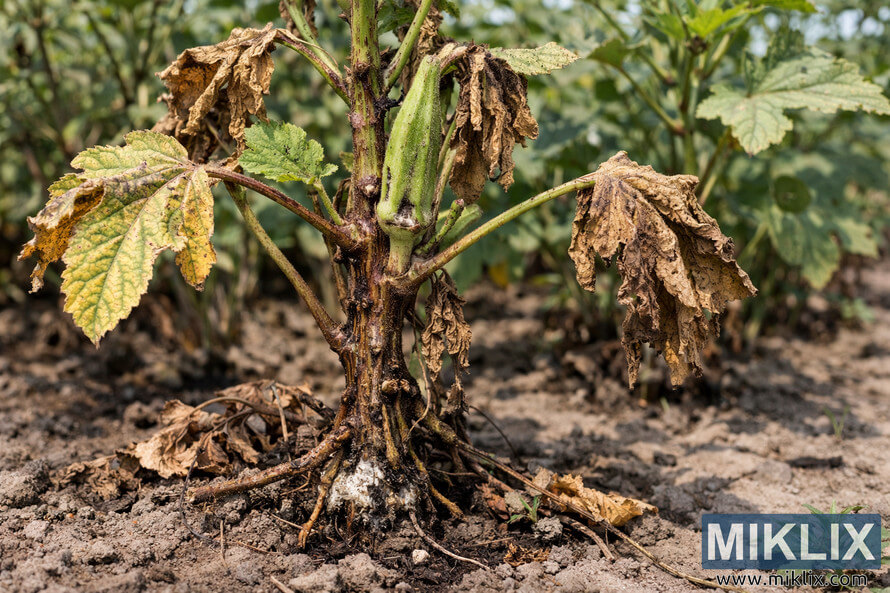
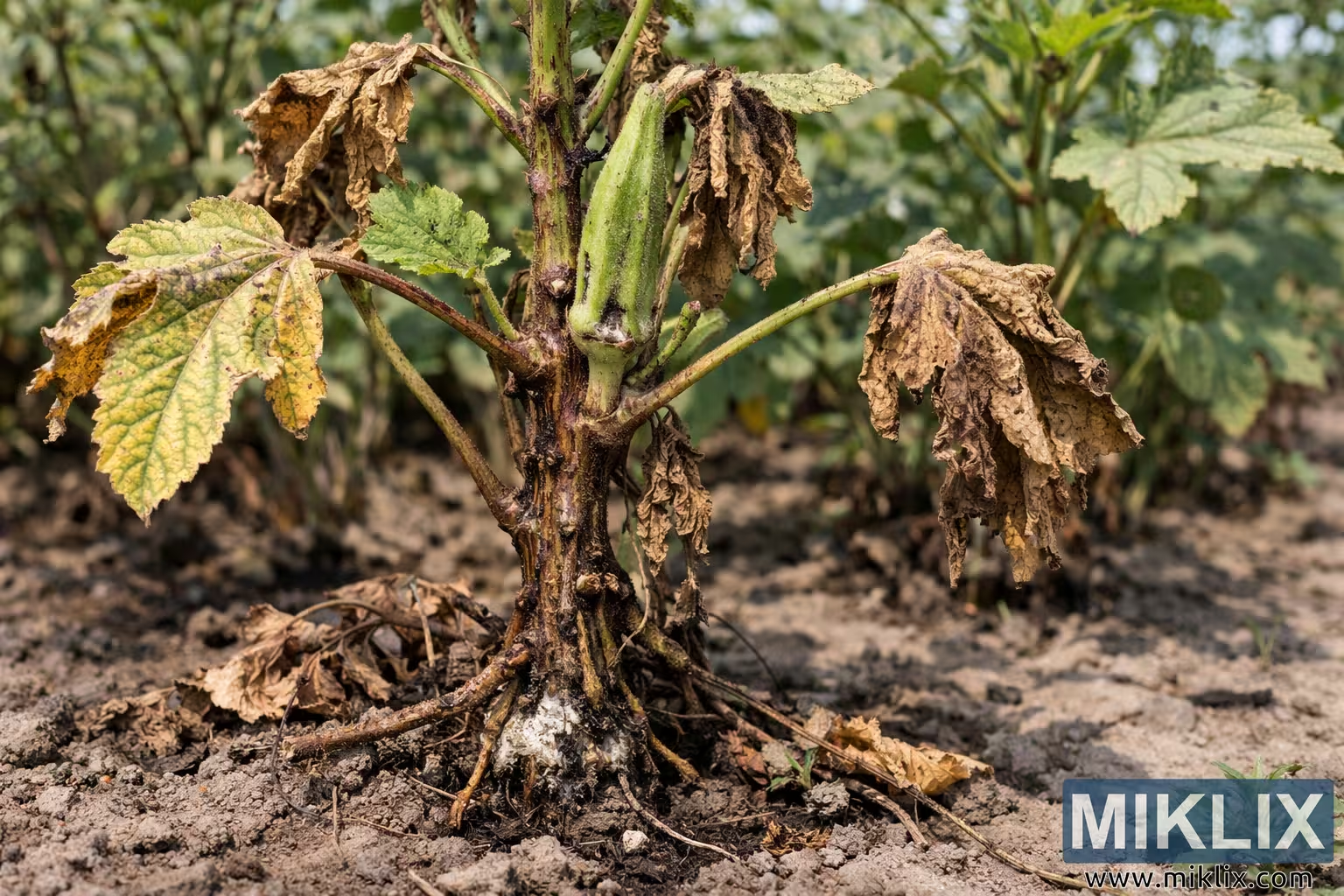
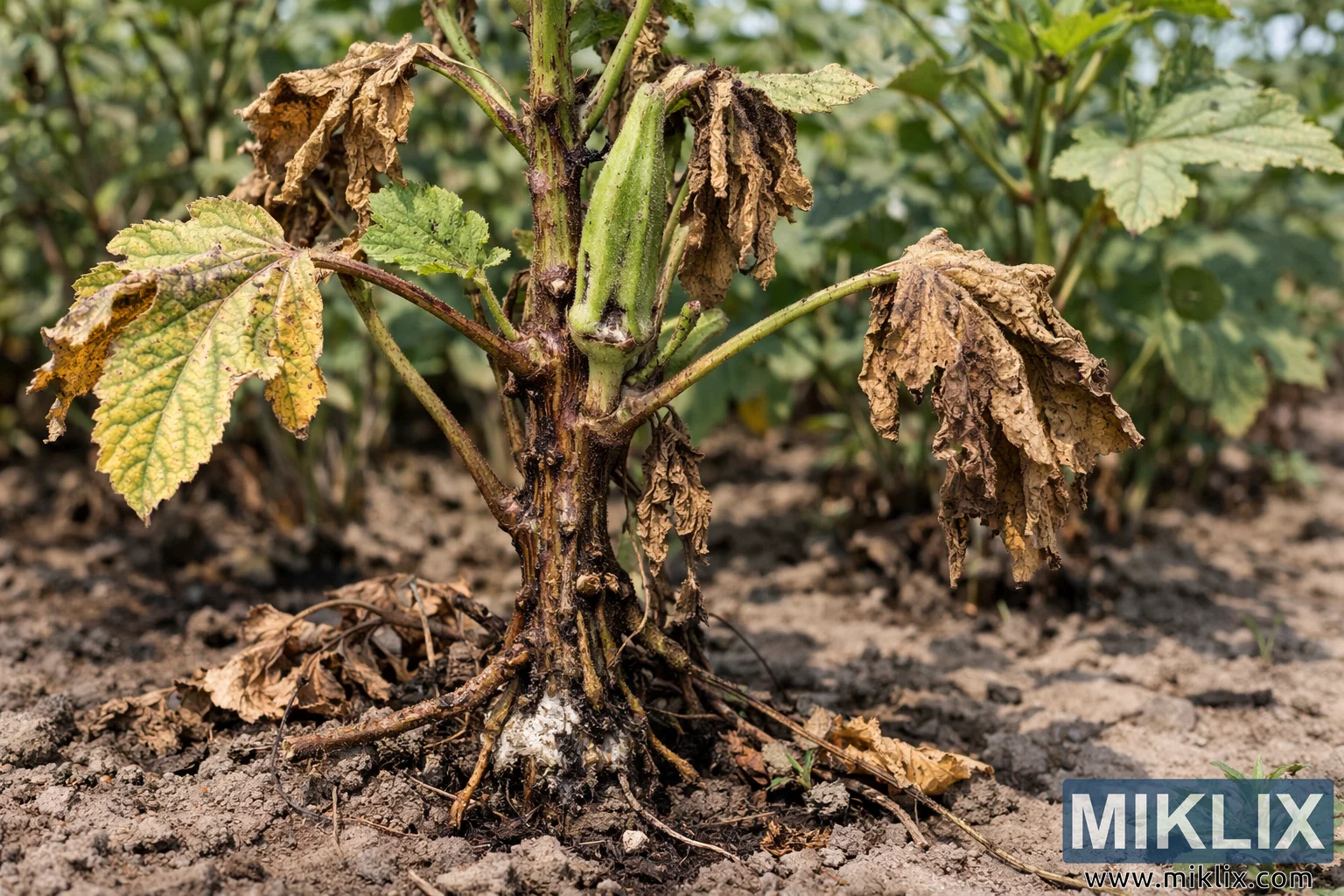
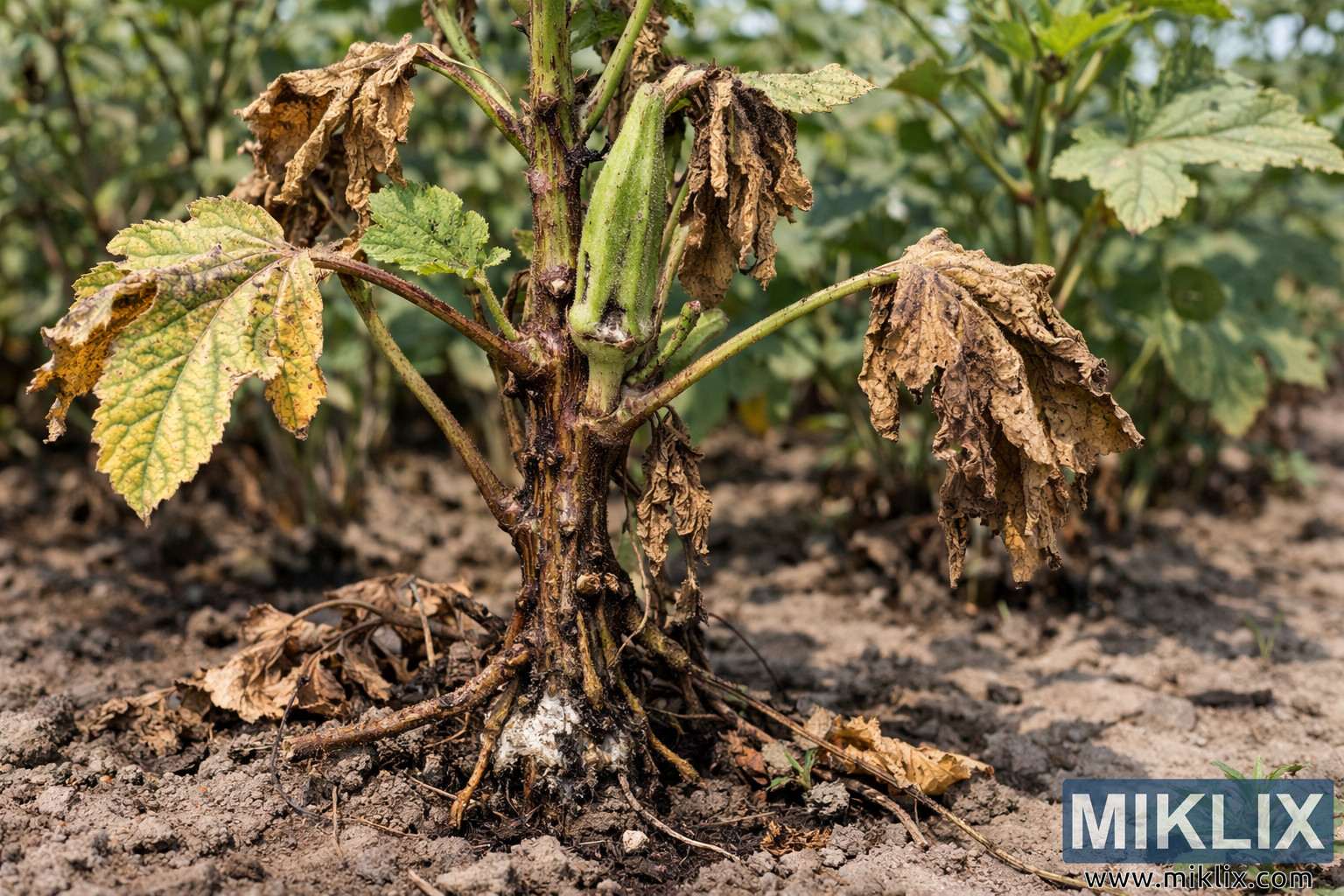
Photograph of an okra plant infected with Fusarium wilt showing yellowing leaves, wilting foliage, and stem discoloration at the soil line in a cultivated field.
Okra Plant Showing Fusarium Wilt Symptoms
이 이미지의 사용 가능한 버전
아래에서 다운로드할 수 있는 이미지 파일은 이 웹사이트의 기사 및 페이지에 삽입된 이미지보다 압축률이 낮고 해상도가 높으며, 대역폭 소비를 줄이기 위해 파일 크기에 더 최적화되어 있어 품질이 더 높습니다.
일반 사이즈 (1,536 x 1,024)
대형 사이즈 (3,072 x 2,048)
매우 큰 크기 (4,608 x 3,072)
초대형 사이즈 (6,144 x 4,096)
코믹하게 큰 사이즈 (1,048,576 x 699,051)
- 아직 업로드 중... ;-)
이미지 설명
The image shows a close-up, landscape-oriented photograph of an okra plant growing in cultivated soil and displaying clear symptoms of Fusarium wilt infection. The plant stands in the center of the frame, rooted in dry, lightly compacted soil with small clumps and scattered organic debris visible around the base. The camera angle is slightly low and forward-facing, allowing a detailed view of the lower stem, root crown, and surrounding ground surface.
The okra plant appears severely stressed and diseased. Several of its leaves are wilted, shriveled, and discolored. Some leaves remain partially green but show yellowing along the veins and margins, while others have turned brown and brittle, hanging limply from the stems. The contrast between the remaining green foliage and the dry, curled brown leaves highlights the progressive decline typical of Fusarium wilt infections.
At the base of the plant, the stem shows visible darkening and necrotic discoloration where it meets the soil. The tissue appears rough and slightly cracked, suggesting damage caused by the soil-borne fungal pathogen that infects the plant through the roots and spreads upward through the vascular system. The root crown area appears weakened, with exposed roots visible just above the soil surface. These roots look thin and stressed, with patches of discoloration that suggest reduced vitality.
A few immature okra pods are visible attached to the central stem. They remain green but appear slightly undersized compared with what would be expected from a healthy plant. Their presence suggests the plant was once productive but is now declining due to the disease affecting its vascular transport system.
The background is softly blurred, showing additional okra plants growing in rows across the field. Some of these plants appear healthier with fuller green leaves, while others show mild signs of stress, hinting at the potential spread of disease within the crop. The shallow depth of field keeps the infected plant as the primary focal point while still providing context of an agricultural setting.
Natural daylight illuminates the scene, casting soft shadows and emphasizing the textures of the leaves, stem, and soil. The overall composition conveys the visible impact of Fusarium wilt on okra plants, highlighting typical symptoms such as leaf yellowing, wilting, stem discoloration near the soil line, and gradual plant decline within a cultivated field environment.
이 이미지는 다음과 관련이 있습니다: The Complete Guide to Growing Okra in Your Home Garden