
ရုပ်ပုံ- Proper Technique for Picking Quince from a Tree
ထုတ်ဝေသည်-
နောက်ဆုံး မွမ်းမံပြင်ဆင်သည်- ၂၀၂၆၊ မတ် ၅ UTC ၂၁:၄၈:၁၄
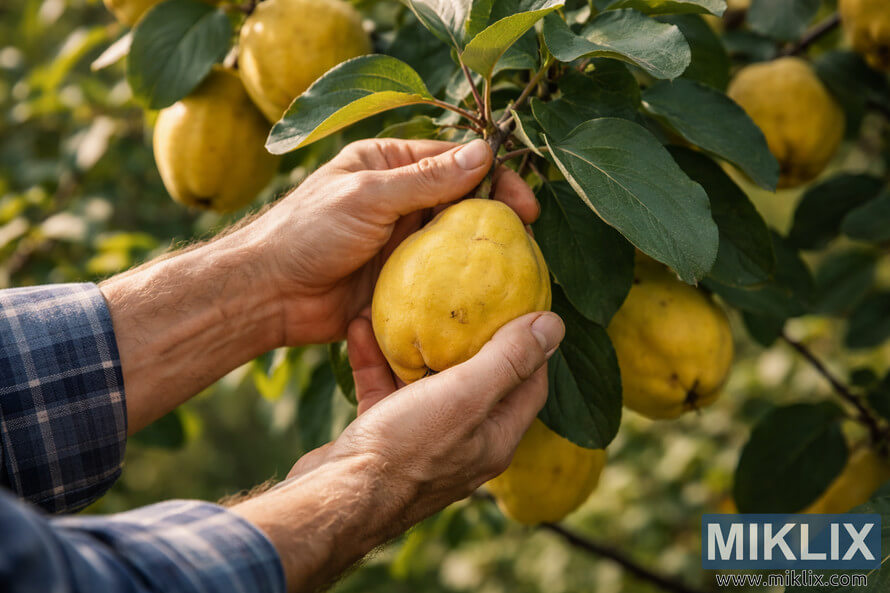
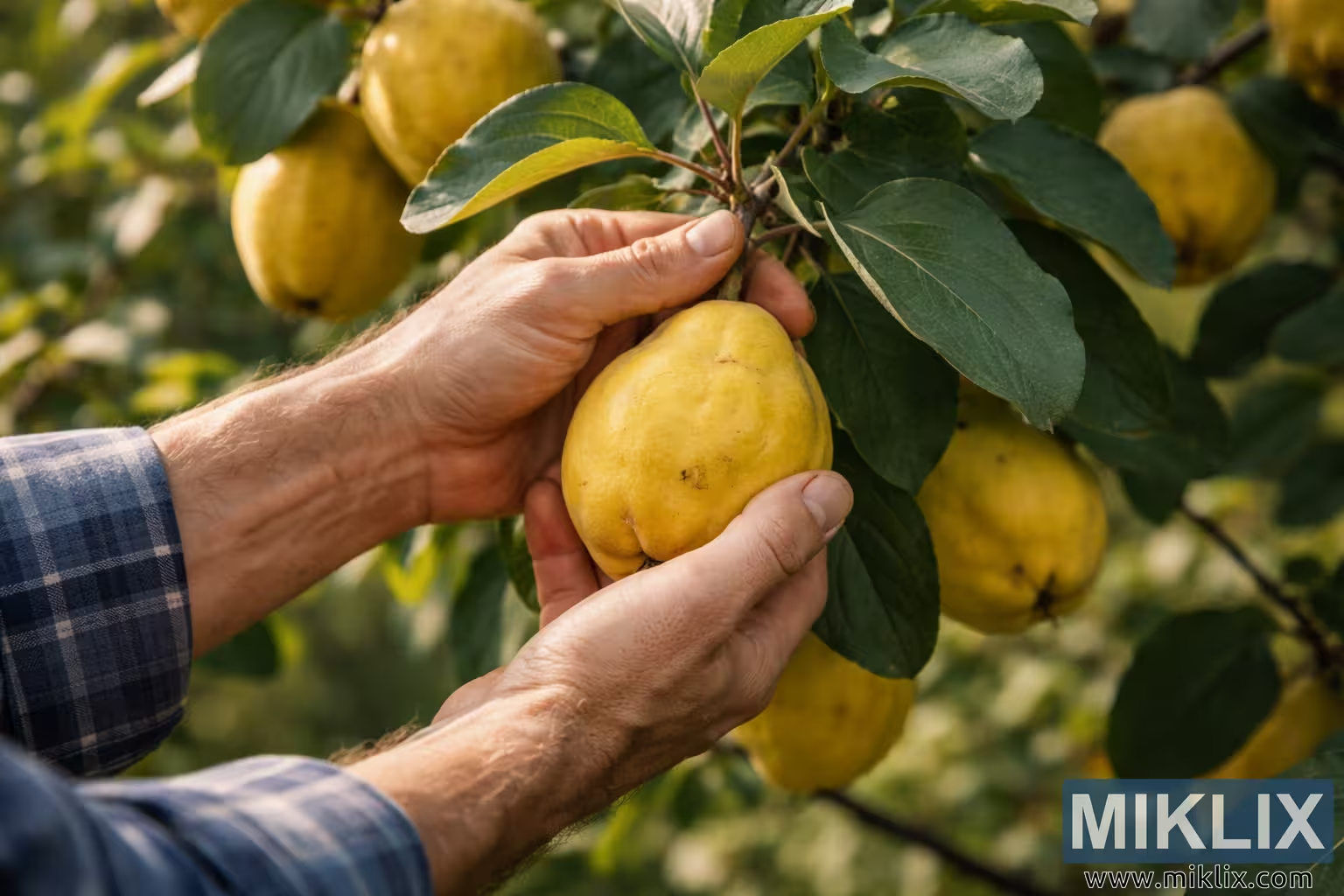
High-resolution landscape photo showing the proper technique for picking quince, with hands carefully supporting and twisting a ripe yellow fruit from a tree branch in a sunlit orchard.
Proper Technique for Picking Quince from a Tree
ဤပုံ၏ ရရှိနိုင်သော ဗားရှင်းများ
အောက်တွင် ဒေါင်းလုဒ်လုပ်နိုင်သော ရုပ်ပုံဖိုင်များသည် ဤဝက်ဘ်ဆိုက်ရှိ ဆောင်းပါးများနှင့် စာမျက်နှာများတွင် ထည့်သွင်းထားသော ရုပ်ပုံများထက် ချုံ့မှုနည်းပြီး ရုပ်ထွက်အရည်အသွေးမြင့်မားသည် - ထို့ကြောင့် အရည်အသွေးမြင့်မားပြီး bandwidth သုံးစွဲမှုကို လျှော့ချရန်အတွက် ဖိုင်အရွယ်အစားအတွက် ပိုမိုသင့်တော်အောင် ပြုလုပ်ထားသည်။
ပုံမှန်အရွယ်အစား (1,536 x 1,024)
အရွယ်အစားကြီး (3,072 x 2,048)
အရွယ်အစား အလွန်ကြီးမား (4,608 x 3,072)
အရွယ်အစား အလွန်ကြီး (6,144 x 4,096)
ရယ်စရာကောင်းလောက်အောင် အရွယ်အစားကြီးမား (1,048,576 x 699,051)
- တင်နေတုန်းပဲ... ;-)
ပုံဖော်ပြချက်
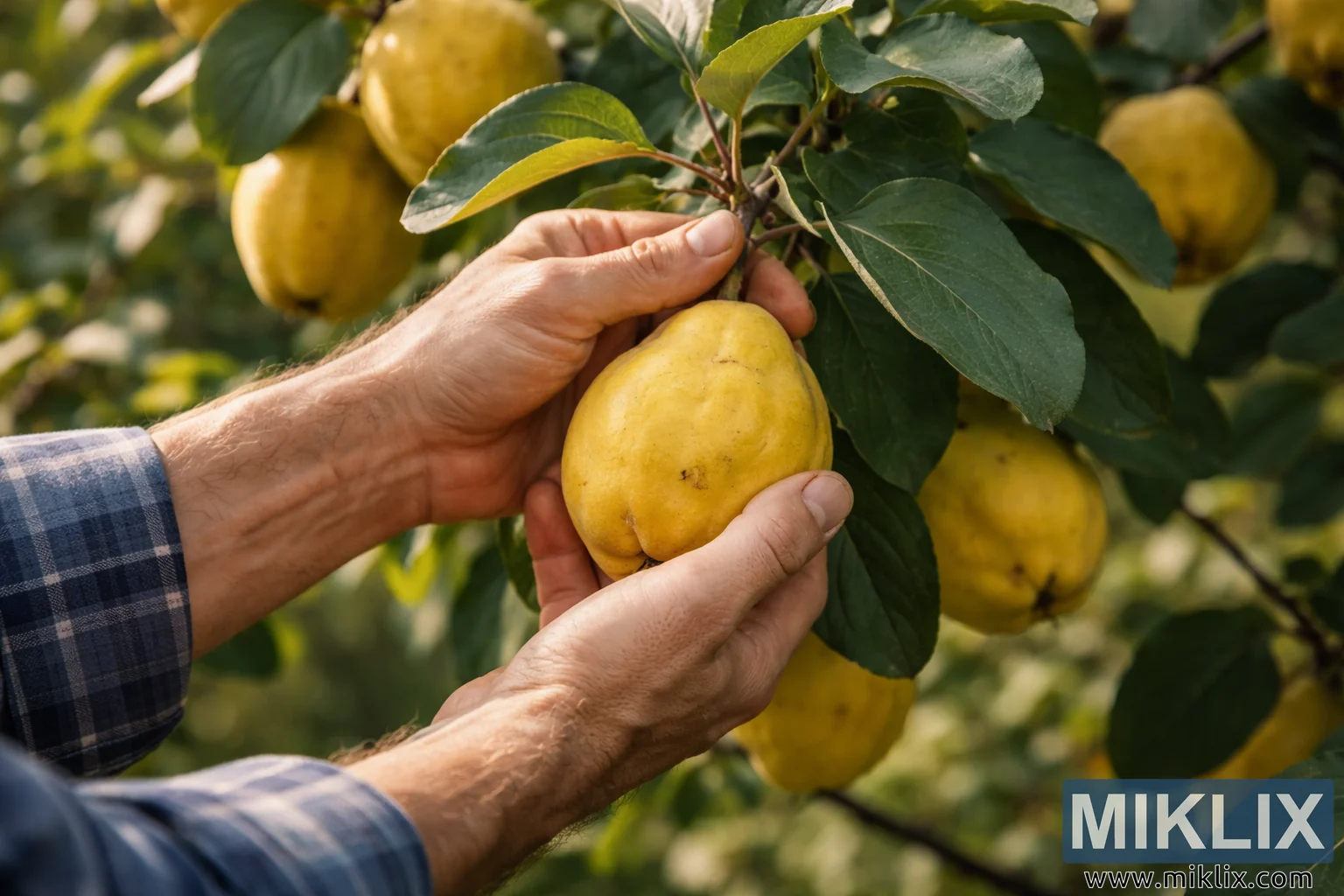
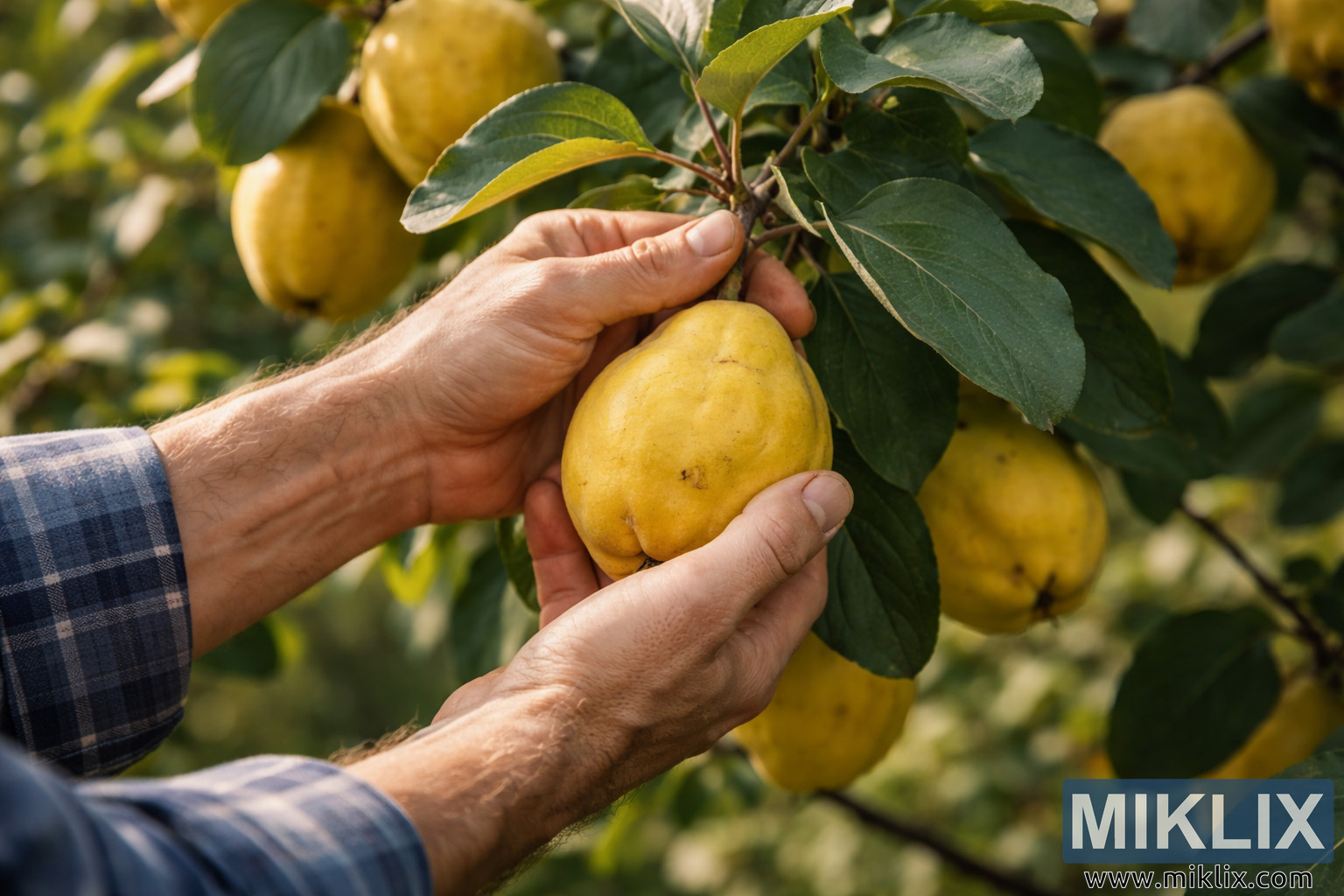
This high-resolution landscape photograph presents a close-up view of proper quince harvesting technique in a sunlit orchard setting. At the center of the composition, a pair of experienced adult hands gently cradle a ripe, golden-yellow quince still attached to its branch. The fruit is full and slightly irregular in shape, with a matte skin that shows natural speckling and subtle surface blemishes typical of mature quince. Its warm hue contrasts vividly against the deep green leaves surrounding it.
The left hand supports the lower half of the fruit, fingers curved carefully around its base to prevent dropping or bruising. The right hand steadies the stem area near the branch, positioning the thumb and forefinger close to the point of attachment. This placement demonstrates correct picking technique: supporting the weight of the fruit while preparing to lift and twist gently at the stem, rather than pulling forcefully. The posture of the hands suggests a careful upward motion combined with a slight twist, a method that helps detach the quince cleanly without tearing the spur or damaging nearby buds that may produce fruit in the following season.
The gardener’s hands appear weathered yet steady, with visible texture in the skin that conveys experience and familiarity with orchard work. A long-sleeved plaid shirt in muted blue and gray tones frames the lower left edge of the image, reinforcing the agricultural context. The fabric’s soft folds and natural creases add realism and depth.
Behind the main subject, several additional quinces hang from the same tree, softly blurred by a shallow depth of field. Their rounded forms echo the central fruit and create visual rhythm across the background. The leaves are broad and slightly glossy, with defined veins catching the sunlight. Dappled golden light filters through the canopy, producing gentle highlights along the fruit’s curves and subtle shadows beneath the leaves. This interplay of light and shade enhances the three-dimensionality of the scene and draws attention to the careful handling of the fruit.
The composition emphasizes respect for both produce and plant. By clearly showing the support of the fruit’s weight and the controlled positioning at the stem, the image communicates best practices in harvesting quince: avoid squeezing the flesh, keep the stem intact, and minimize strain on the branch. The orchard environment feels calm and abundant, suggesting late-season ripeness when quinces have turned from green to rich yellow.
Overall, the photograph blends instructional clarity with aesthetic warmth. It captures not only the technical details of correct quince picking, but also the tactile and seasonal qualities of orchard life—sunlight, foliage, texture, and the deliberate, patient motion required to harvest fruit at its peak.