
छवि: Nutrients in Shallots – Vitamins and Minerals Infographic
प्रकाशित:
पछिल्लो पटक अद्यावधिक गरिएको: २०२६ अगस्ट ५: २२:४९:३५ UTC
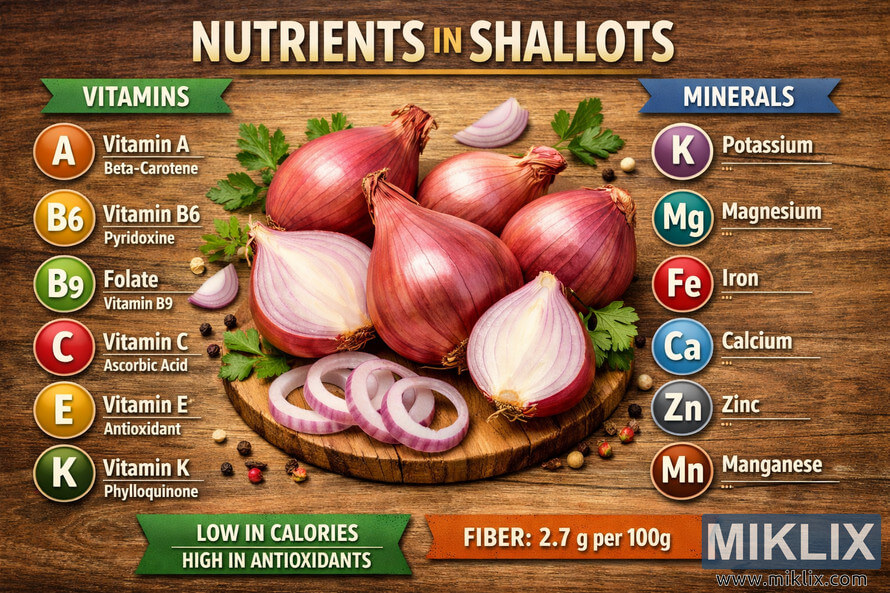
High‑resolution infographic showing the vitamins and minerals in shallots, with color‑coded icons for key nutrients, realistic shallot imagery, and banners highlighting low calories, antioxidant benefits, and fiber content. Ideal for nutrition, health, and cooking‑related content.
Nutrients in Shallots – Vitamins and Minerals Infographic
यस छविका उपलब्ध संस्करणहरू
तल डाउनलोडको लागि उपलब्ध छवि फाइलहरू कम संकुचित र उच्च रिजोल्युसन छन् - र यसको परिणामस्वरूप, उच्च गुणस्तर - यस वेबसाइटमा लेख र पृष्ठहरूमा इम्बेड गरिएका छविहरू भन्दा, जुन ब्यान्डविथ खपत कम गर्न फाइल आकारको लागि बढी अनुकूलित छन्।
नियमित आकार (1,536 x 1,024)
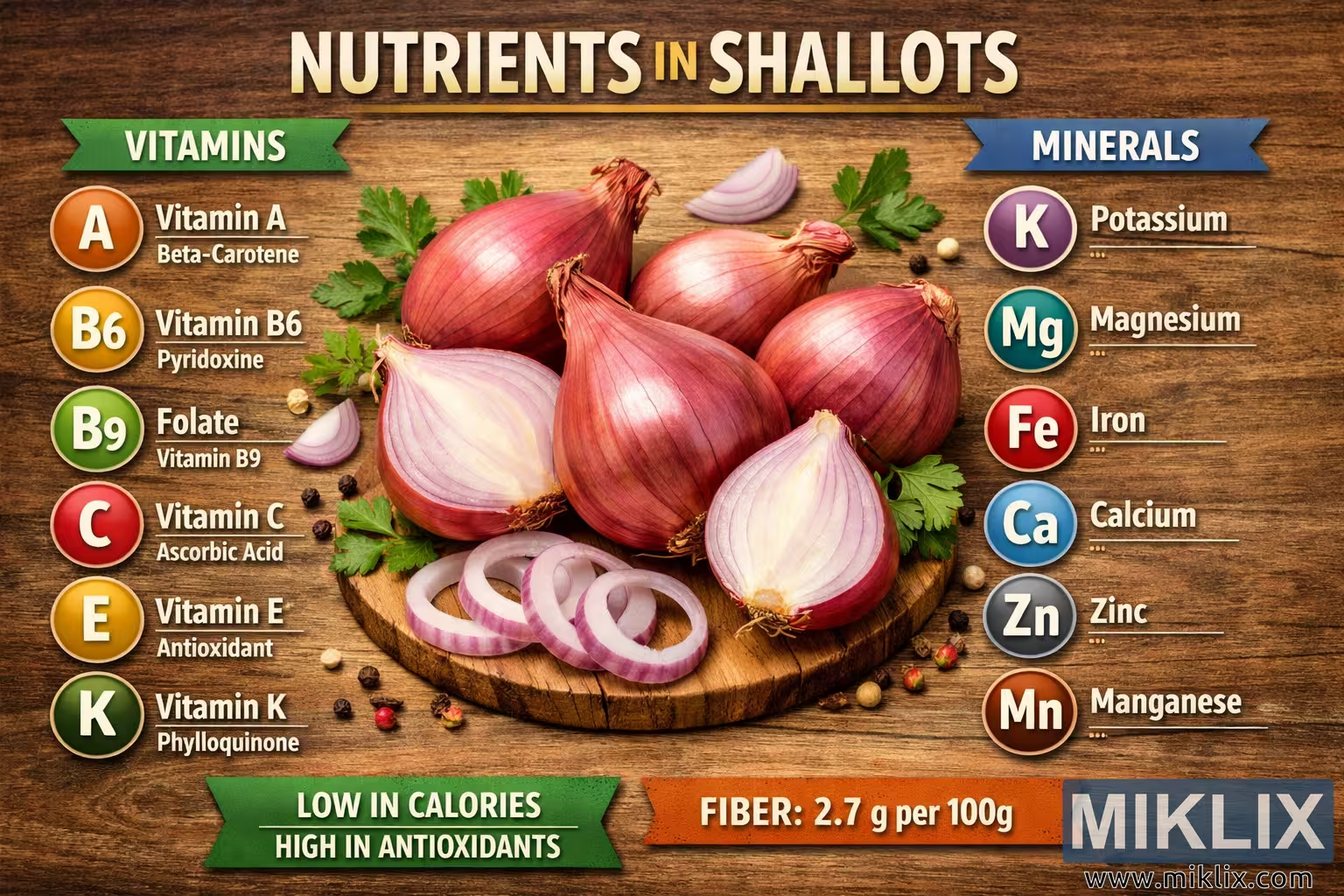
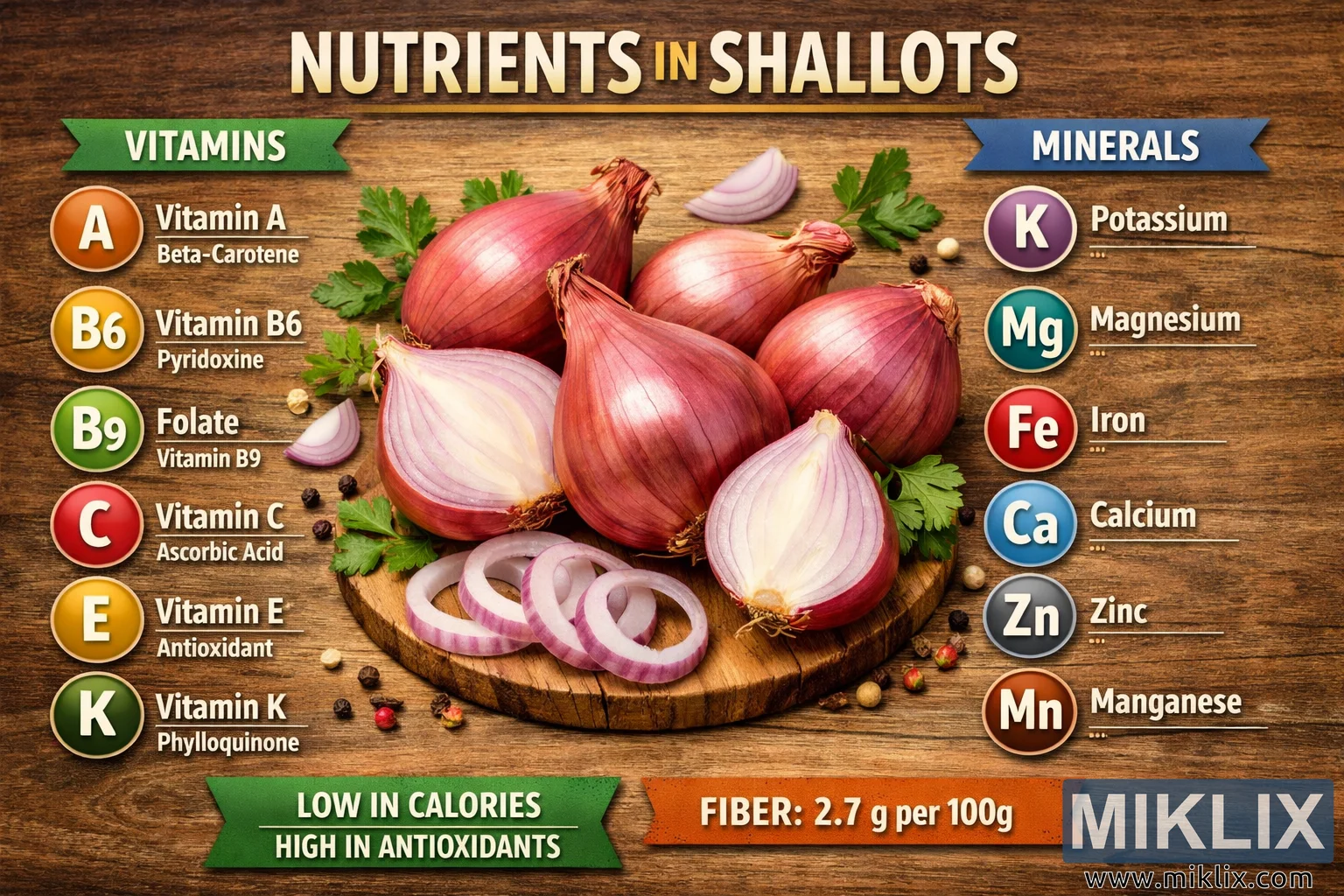
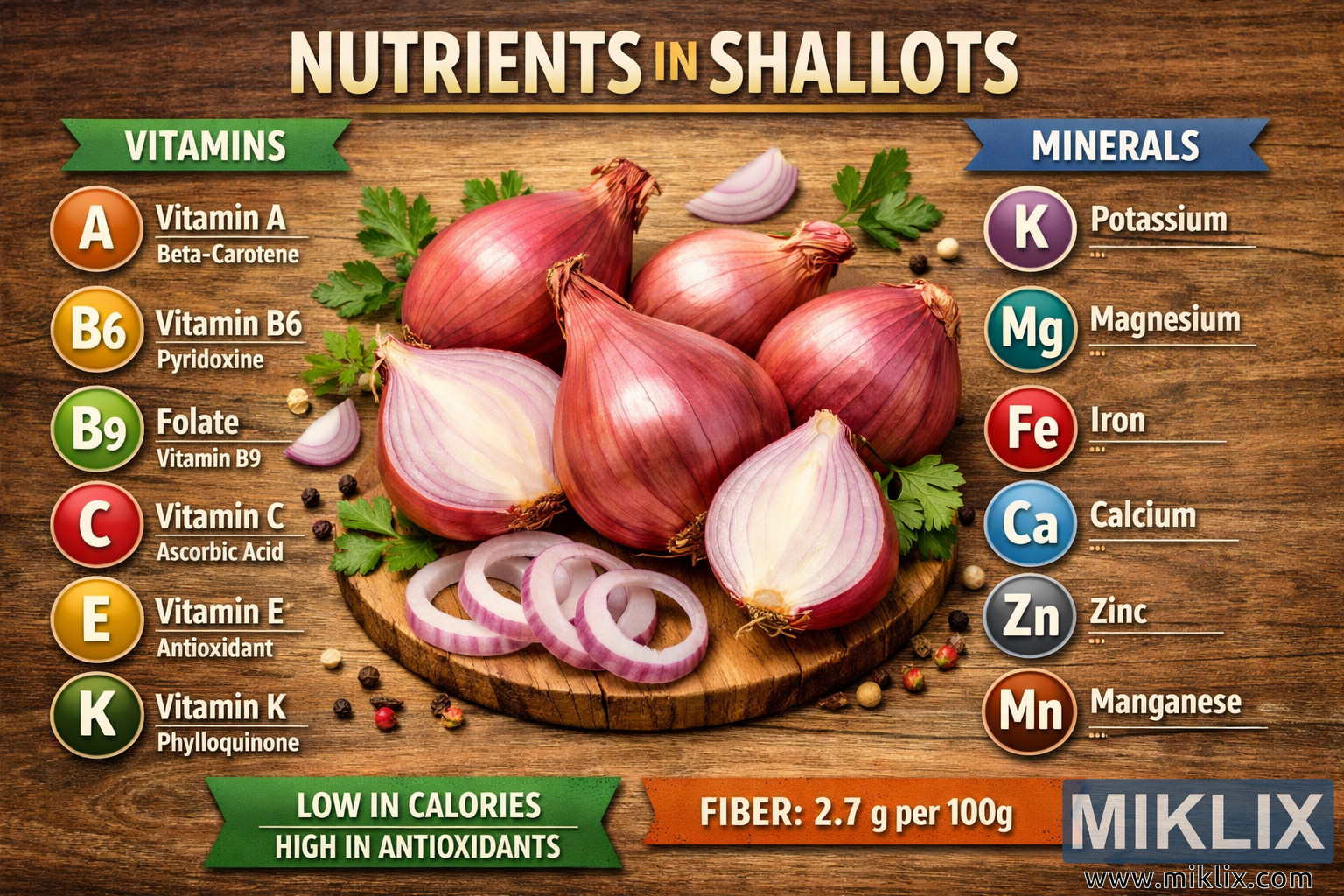
ठूलो आकार (3,072 x 2,048)
धेरै ठूलो आकार (4,608 x 3,072)
धेरै ठूलो आकार (6,144 x 4,096)
हास्यास्पद रूपमा ठूलो आकार (1,048,576 x 699,051)
- अझै अपलोड हुँदैछ... ;-)
छवि विवरण
The image is a detailed nutritional breakdown infographic focused on the vitamins and minerals found in shallots. It is presented in a high‑resolution, landscape orientation, designed to be both visually appealing and educational. The background of the infographic resembles a rustic wooden surface, with warm brown tones and subtle grain patterns that give the composition a natural, kitchen‑table feel. Centered on this wooden backdrop is an arrangement of fresh shallots, which serve as the main visual anchor of the design.
In the middle of the image, several shallots are displayed in different forms to highlight their texture and color. There are whole shallots with reddish‑purple skins, one shallot sliced in half to reveal its white and pale purple interior, and a few thin rings of shallot scattered around. These rings show the layered structure of the vegetable, emphasizing its resemblance to onions while maintaining its distinct identity. Around the shallots, small garnishes such as sprigs of parsley and scattered peppercorns add a touch of culinary context and visual interest, making the infographic feel like a snapshot from a cooking or nutrition guide.
At the very top of the infographic, in large, bold capital letters, the title reads "NUTRIENTS IN SHALLOTS." The text is rendered in a combination of white and yellow, standing out clearly against the darker wooden background. The font is modern and clean, giving the infographic a professional and easy‑to‑read appearance. This title immediately informs the viewer that the focus of the graphic is the nutritional composition of shallots, specifically their vitamins and minerals.
On the left side of the image, there is a prominent section dedicated to vitamins. This section is introduced by a green banner with the word "VITAMINS" written in clear, uppercase letters. Beneath this banner, a vertical column of circular icons presents individual vitamins found in shallots. Each circle has a distinct color and contains a letter or abbreviation representing a specific vitamin, accompanied by explanatory text below.
The first icon in this vitamins column is an orange circle labeled "A," representing Vitamin A. Below the circle, the text reads "Vitamin A" and "Beta‑Carotene," indicating that shallots contain beta‑carotene, a precursor to Vitamin A known for supporting vision, immune function, and skin health. The orange color evokes associations with carrots and other beta‑carotene‑rich foods, reinforcing the idea of eye health and antioxidant properties.
Next, there is a yellow circle labeled "B6." Underneath, the text states "Vitamin B6" and "Pyridoxine." This highlights the presence of Vitamin B6 in shallots, a nutrient involved in metabolism, brain function, and the formation of neurotransmitters. The bright yellow color suggests energy and vitality, aligning with the role of B‑vitamins in energy metabolism.
Following that, a green circle labeled "B9" represents Folate, also known as Vitamin B9. The text below reads "Folate" and "Vitamin B9." Folate is important for cell division, DNA synthesis, and overall growth and development. The green color is often associated with leafy vegetables and growth, visually reinforcing the idea of cellular health and renewal.
Further down the column, a red circle labeled "C" stands for Vitamin C. The accompanying text reads "Vitamin C" and "Ascorbic Acid." Vitamin C is widely known for its role in immune support, collagen production, and antioxidant protection. The red color suggests vibrancy and strength, echoing the common association of Vitamin C with citrus fruits and immune resilience.
Below that, a golden circle labeled "E" represents Vitamin E. The text beneath it reads "Vitamin E" and "Antioxidant." This emphasizes the antioxidant nature of Vitamin E, which helps protect cells from oxidative damage and supports skin and immune health. The golden hue conveys a sense of richness and protection, fitting for a nutrient that guards the body’s cells.
Finally, in the vitamins section, there is a dark green circle labeled "K." The text below reads "Vitamin K" and "Phylloquinone." Vitamin K is essential for blood clotting and bone health. The deep green color evokes leafy greens, which are commonly associated with Vitamin K, and visually ties the nutrient to natural, plant‑based sources. Together, these vitamin icons create a clear, organized overview of the key vitamins present in shallots, making it easy for viewers to understand their nutritional benefits at a glance.
On the right side of the infographic, a complementary section is dedicated to minerals. This section is introduced by a blue banner with the word "MINERALS" written in uppercase letters, mirroring the style of the vitamins banner on the left. Beneath the banner, another vertical column of circular icons presents the minerals found in shallots, each with its own color and abbreviation.
The first mineral icon is a purple circle labeled "K," representing Potassium. The text below simply reads "Potassium." Potassium is important for maintaining fluid balance, nerve function, and healthy blood pressure. The purple color gives the icon a distinctive look, helping it stand out while still harmonizing with the overall color palette.
Next, a teal circle labeled "Mg" stands for Magnesium. The text beneath reads "Magnesium." Magnesium plays a role in muscle function, nerve signaling, and energy production. The teal color suggests calmness and balance, reflecting magnesium’s involvement in relaxation and overall physiological stability.
Following that, a red circle labeled "Fe" represents Iron. The text below reads "Iron." Iron is crucial for the formation of hemoglobin and the transport of oxygen in the blood. The red color is fitting, as it evokes blood and vitality, visually reinforcing the mineral’s role in oxygenation and energy.
Further down, a light blue circle labeled "Ca" stands for Calcium. The text beneath reads "Calcium." Calcium is essential for strong bones and teeth, as well as muscle contraction and nerve function. The light blue color conveys clarity and stability, aligning with the idea of structural support in the body.
Below that, a gray circle labeled "Zn" represents Zinc. The text reads "Zinc." Zinc is involved in immune function, wound healing, and DNA synthesis. The neutral gray color suggests versatility and subtle importance, highlighting zinc’s wide‑ranging roles in the body without overpowering the other icons.
Next, a brown circle labeled "Mn" stands for Manganese. The text below reads "Manganese." Manganese contributes to metabolism, bone formation, and antioxidant defenses. The earthy brown color connects the mineral to the soil and natural sources, reinforcing its presence in plant‑based foods like shallots.
Finally, a yellow circle labeled "Se" represents Selenium. The text beneath reads "Selenium." Selenium is an important trace mineral that supports antioxidant activity and thyroid function. The bright yellow color suggests alertness and protection, fitting for a nutrient that helps defend the body against oxidative stress. Together, these mineral icons create a balanced counterpart to the vitamins section, giving viewers a comprehensive picture of the micronutrients in shallots.
At the bottom of the infographic, two horizontal banners provide additional nutritional highlights. On the left side, a green banner reads "LOW IN CALORIES" with the phrase "HIGH IN ANTIOXIDANTS" beneath it. This succinctly communicates that shallots are a nutrient‑dense food that does not contribute many calories, while offering significant antioxidant benefits. The green color reinforces the idea of health, freshness, and plant‑based nutrition.
On the right side, an orange banner presents specific fiber information. It reads "FIBER: 2.7 g per 100g." This detail emphasizes that shallots contribute dietary fiber, which supports digestion, gut health, and satiety. The orange color ties back to the energetic, vibrant tones used elsewhere in the infographic, maintaining visual cohesion.
Overall, the infographic combines clear typography, color‑coded icons, and realistic imagery of shallots to create an engaging and informative visual summary of their nutritional profile. The central shallot arrangement draws the eye, while the flanking vitamin and mineral columns organize complex information into easily digestible segments. The banners at the bottom reinforce key takeaways about calories, antioxidants, and fiber content. The design avoids any reference to specific brands, focusing entirely on the natural qualities of shallots as a wholesome ingredient rich in vitamins and minerals. The result is a polished, educational image suitable for use in nutrition articles, health blogs, cooking guides, or educational materials about plant‑based foods and their benefits.
छवि निम्नसँग सम्बन्धित छ: Shallots: The Small Vegetable with Big Nutritional Benefits