
ପ୍ରତିଛବି: Cross-Section of Ideal Citrus Tree Soil and Drainage Layers
ପ୍ରକାଶିତ:
ଶେଷ ଥର ପାଇଁ ଅଦ୍ୟତନ ହୋଇଥିଲା: 7:06:31 PM UTC ଠାରେ ମାର୍ଚ୍ଚ 25, 2026
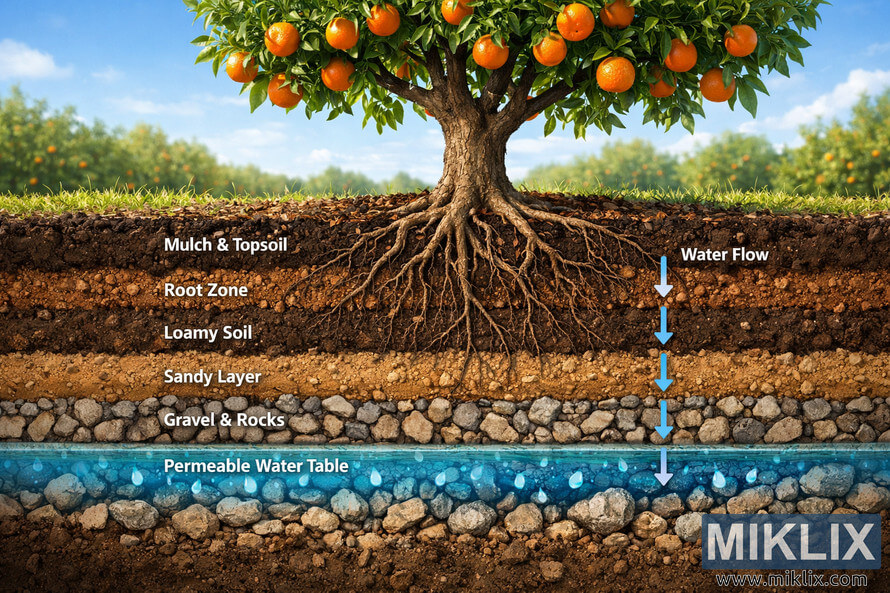
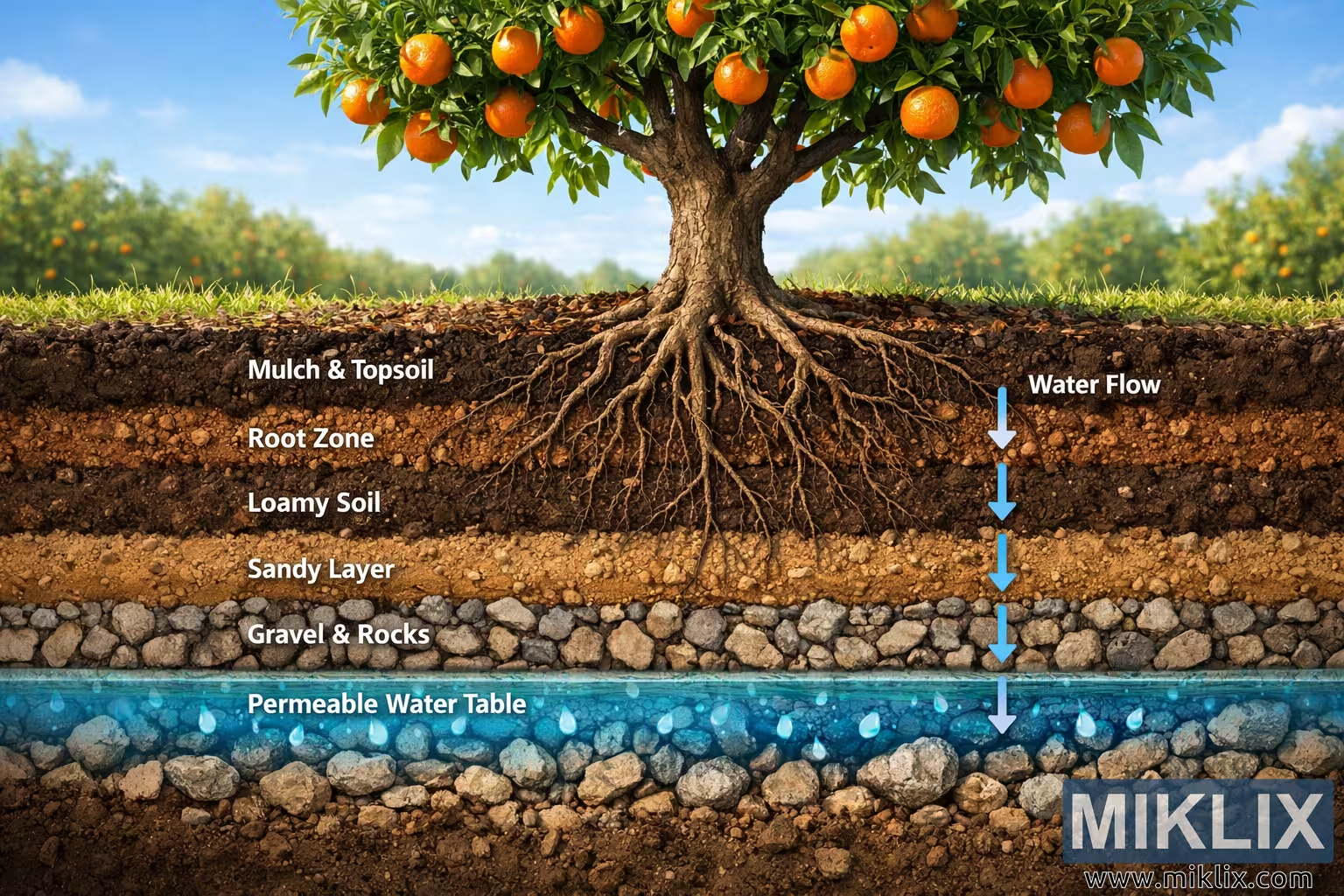
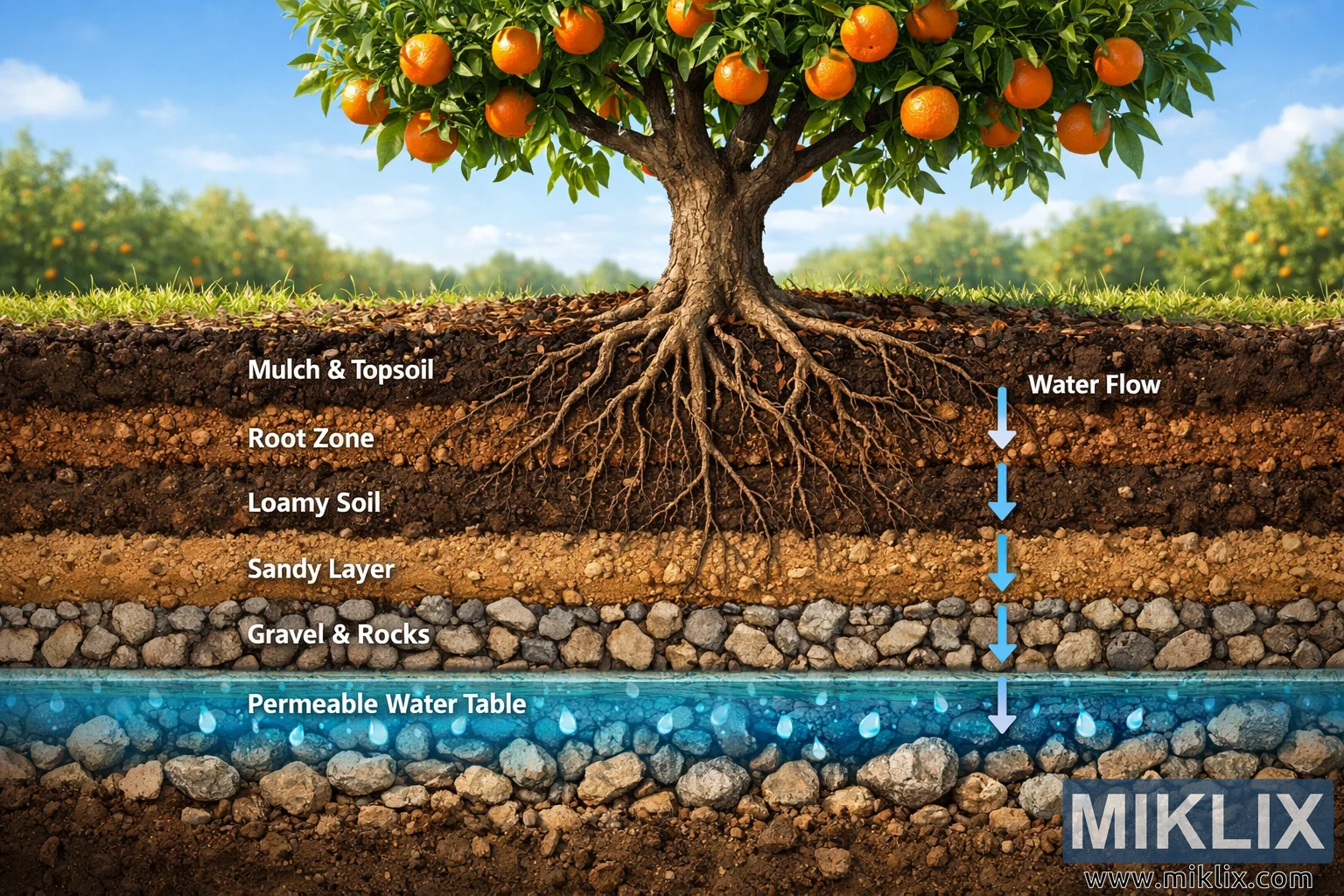
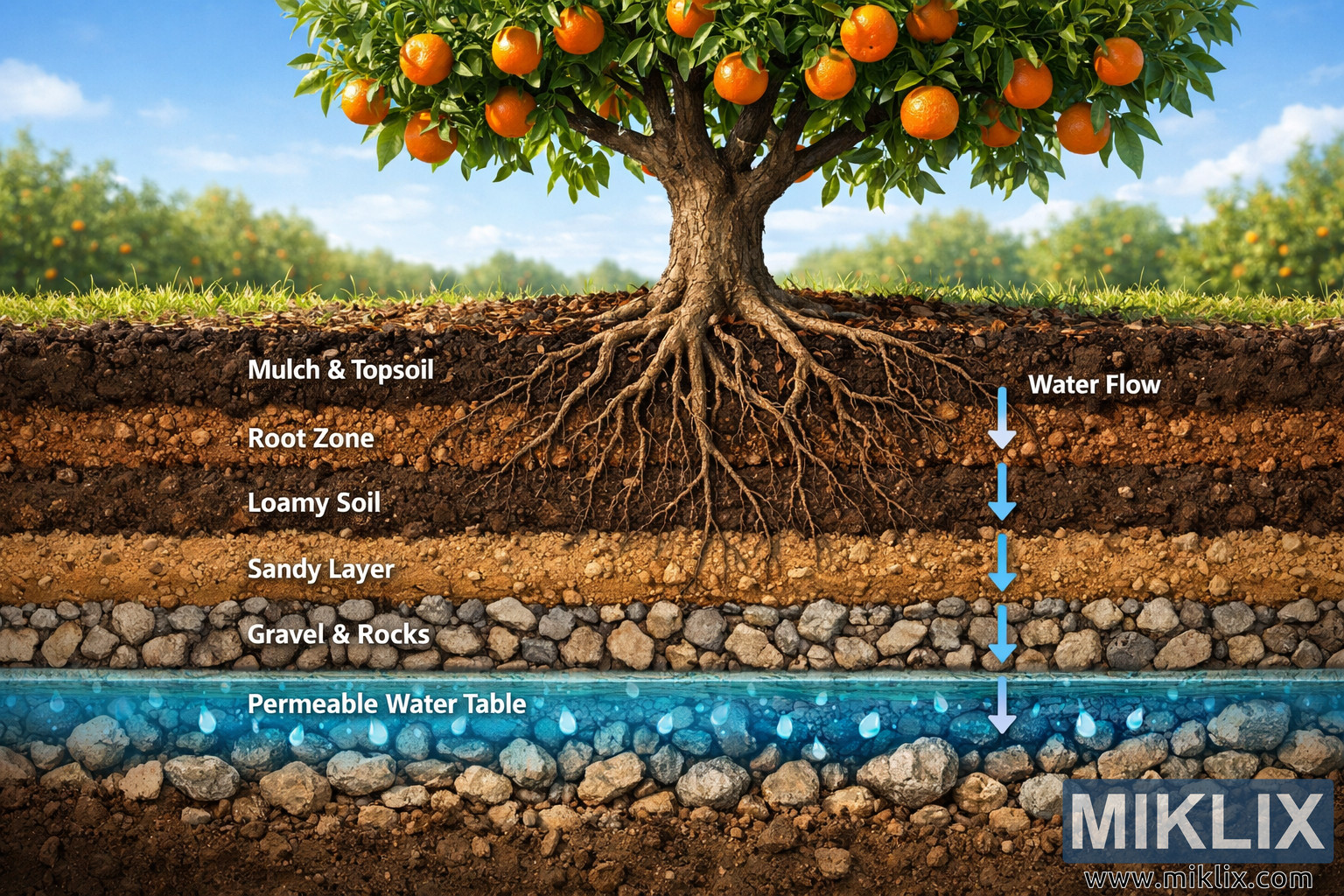
Detailed diagram of ideal citrus tree soil showing layered structure, root zone, drainage path, and permeable water table to illustrate proper water movement for healthy citrus growth.
Cross-Section of Ideal Citrus Tree Soil and Drainage Layers
ଏହି ଛବିର ଉପଲବ୍ଧ ସଂସ୍କରଣଗୁଡ଼ିକ
ତଳେ ଡାଉନଲୋଡ୍ ପାଇଁ ଉପଲବ୍ଧ ପ୍ରତିଛବି ଫାଇଲଗୁଡ଼ିକ କମ୍ ସଙ୍କୁଚିତ ଏବଂ ଉଚ୍ଚ ରିଜୋଲ୍ୟୁସନ୍ - ଏବଂ ଫଳସ୍ୱରୂପ, ଏହି ୱେବସାଇଟରେ ଥିବା ଆର୍ଟିକିଲ୍ ଏବଂ ପୃଷ୍ଠାଗୁଡ଼ିକରେ ଏମ୍ବେଡ୍ ହୋଇଥିବା ପ୍ରତିଛବିଗୁଡ଼ିକ ଅପେକ୍ଷା ଉଚ୍ଚ ଗୁଣବତ୍ତା, ଯାହା ବ୍ୟାଣ୍ଡୱିଡଥ୍ ବ୍ୟବହାର ହ୍ରାସ କରିବା ପାଇଁ ଫାଇଲ୍ ଆକାର ପାଇଁ ଅଧିକ ଅପ୍ଟିମାଇଜ୍ କରାଯାଇଛି।
ନିୟମିତ ଆକାର (1,536 x 1,024)
ବଡ଼ ଆକାର (3,072 x 2,048)
ବହୁତ ବଡ଼ ଆକାର (4,608 x 3,072)
ଅତ୍ୟଧିକ ବଡ଼ ଆକାର (6,144 x 4,096)
ହାସ୍ୟପୂର୍ଣ୍ଣ ଭାବରେ ବଡ଼ ଆକାର (1,048,576 x 699,051)
- ଏବେ ବି ଅପଲୋଡ୍ ହେଉଛି... ;-)
ଛବିର ବର୍ଣ୍ଣନା
This educational illustration presents a landscape-oriented cross-section of an ideal soil environment for a healthy citrus tree. The upper portion of the image shows a mature orange tree growing above ground under a bright blue sky. The tree has a sturdy trunk with textured bark, a dense canopy of glossy green leaves, and numerous ripe oranges hanging among the branches. The sunlight illuminates the foliage and fruit, suggesting a warm, productive orchard environment. The ground surface forms a clean horizontal cut that reveals the soil layers beneath, allowing viewers to see how the tree interacts with the soil profile.
Below the surface, the image transitions into a detailed underground cross-section that clearly displays multiple soil layers designed to promote proper drainage and healthy root development. The tree’s root system spreads outward and downward from the trunk, with thick structural roots branching into many smaller feeder roots. These roots occupy the upper soil layers where nutrients and oxygen are most accessible.
The first visible underground layer is labeled "Mulch & Topsoil." This dark, organic-rich layer contains decomposing plant material and loose soil that retains moisture while still allowing airflow. It supports microbial life and provides nutrients for the citrus tree.
Beneath this is the "Root Zone," a slightly lighter brown layer where the majority of fine feeder roots spread horizontally. This zone is critical for water and nutrient uptake. The soil here appears well-aerated and crumbly, allowing roots to expand easily.
Below the root zone lies the "Loamy Soil" layer, which is balanced in composition with a mixture of sand, silt, and clay particles. This layer provides both drainage and moisture retention, helping regulate water availability for the roots above.
Under the loam is the "Sandy Layer," depicted with a lighter golden color and larger visible particles. Sand allows water to pass through more rapidly, preventing waterlogging and helping excess moisture move downward.
Beneath the sand is a layer labeled "Gravel & Rocks." This coarse, rocky layer contains rounded stones and large gaps between them, creating an efficient drainage pathway. Water flows easily through this layer, reducing the risk of stagnant water near the roots.
At the bottom of the cross-section lies the "Permeable Water Table," illustrated as a horizontal band of blue-tinted groundwater with droplets and subtle ripples. This layer represents groundwater that can move through the surrounding materials without saturating the upper soil layers.
On the right side of the diagram, a vertical column of blue arrows labeled "Water Flow" visually demonstrates the downward movement of water through each soil layer. The arrows begin near the surface and extend down through the sandy and gravel layers toward the water table, illustrating how proper soil structure prevents water from accumulating around the roots.
Overall, the image combines a realistic depiction of a fruit-bearing citrus tree with a clearly labeled educational diagram of soil composition and drainage. The visual layout emphasizes the relationship between healthy root systems, balanced soil layers, and effective water movement, making the concept of ideal citrus growing conditions easy to understand.
ପ୍ରତିଛବିଟି ଏହା ସହିତ ଜଡିତ: Growing Tangerines: The Complete Guide to Sweet Success in Your Home Garden