
Fermenting Beer with Wyeast 9097 Old Ale Yeast Blend
Opublikowano:
Ostatnia aktualizacja: 11 maja 2026 20:00:26 UTC
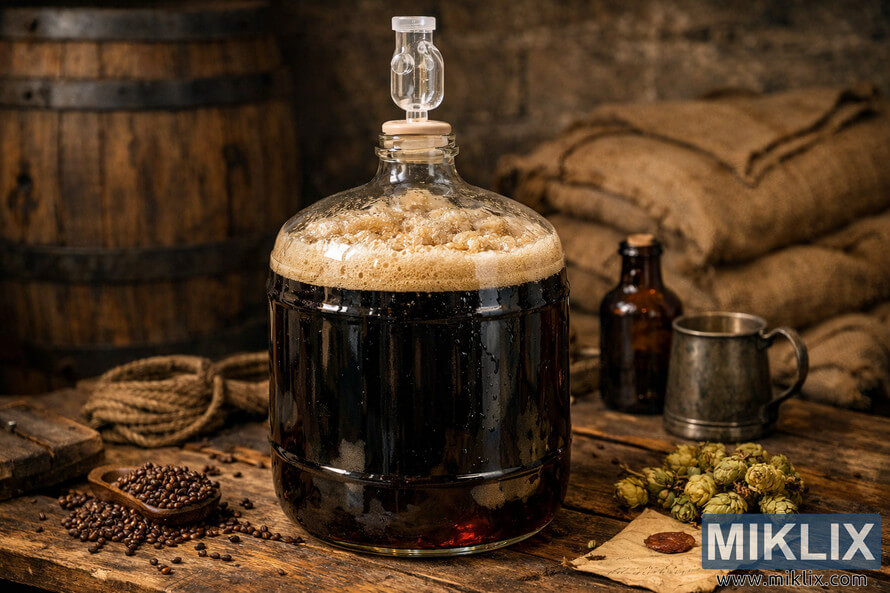
Wyeast 9097 Old Ale Blend is a seasonal liquid yeast blend. It's designed for fermenting malt-forward old ales with a touch of Brettanomyces. This blend can be used as both a primary fermenter and for aging.
Fermenting Beer with Wyeast 9097 Old Ale Yeast Blend
Kliknij lub dotknij obrazu, aby uzyskać więcej informacji i wyższą rozdzielczość.
This article is a detailed Wyeast 9097 review and a practical guide for brewing old ale. It explains how the blend works in typical old ale recipes, including pitching and starter tips. It also covers how to balance fermentation temperatures for the perfect ester and Brett character. Readers will learn how to use this yeast in both five-gallon (20 L) batches and larger projects.
Expect sections that compare the blend to single-strain yeasts, offer mash and hop pairing advice, and present monitoring and aging strategies. The aim is to assist homebrewers and small commercial brewers in deciding if Wyeast 9097 Old Ale Blend Yeast Blend fits their flavor goals and production plans.
Key Takeaways
- Wyeast 9097 Old Ale Blend is a seasonal liquid Old Ale brewing yeast often sold in single packs.
- The blend supports malt-forward profiles with controlled Brett character when fermenting old ale.
- Typical retail price examples show around $13.99 per pack in U.S. listings.
- This article combines a Wyeast 9097 review with practical pitching, temperature, and aging advice.
- Useful for homebrewers aiming for complexity without relying on pure Brett strains.
Why Choose Wyeast 9097 Old Ale Blend Yeast Blend for Your Old Ale
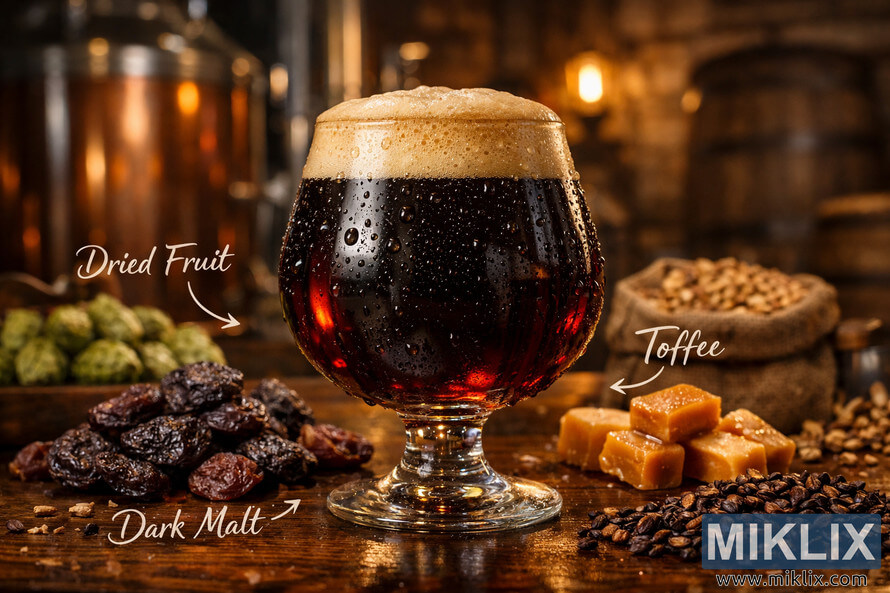
Wyeast 9097 offers a rich tapestry of aromas and flavors, perfect for traditional old ales. The yeast's initial malt-forward ester presence gradually evolves into a subtle funk. This transformation enhances the ale's caramel, toffee, and dried fruit notes, embodying the essence of old ale character.
Blended yeasts, like Wyeast 9097, take brewers on a fascinating journey through fermentation and aging. Initially, ale strains contribute fruit and esters. Over time, Brett-like organisms introduce complexity, dryness, and a gentle tang. This evolution is what many brewers aim for in their old ales.
- Flavor contributions: expect estery top notes early, then layered Brett complexity during conditioning and cellaring.
- Texture and attenuation: the blend often finishes drier than a single ale strain, which lifts perceived balance in rich, high-gravity recipes.
- Aging behavior: funk and complexity develop gradually, rewarding patience and controlled maturation.
The choice between a yeast blend and a single strain hinges on predictability versus evolution. Single strains offer reliable timelines and stable flavors. However, blends like Wyeast 9097 provide a multi-stage character and extra attenuation over time. Brewers seeking an active aging profile often opt for blends.
Wyeast 9097's availability can be sporadic, with many retailers listing it as seasonal. It's often sold as single units and can be found at specialty homebrew shops and online suppliers. To avoid last-minute substitutions, brewers should check with hobbyist suppliers early when planning a brew day.
- Typical retail notes: labeled seasonal and sometimes priced near common pack levels for liquid yeast.
- Where to buy Wyeast 9097: search specialty homebrew retailers and seasonal listings, or order ahead from trusted suppliers that stock rare blends.
Kliknij lub dotknij obrazu, aby uzyskać więcej informacji i wyższą rozdzielczość.
Understanding the Blend: Strain Components and Expected Behavior
The Wyeast 9097 blend combines a classic ale Saccharomyces with a Brettanomyces component. This mix is designed to create an old ale character. It offers both steady primary fermentation and slow secondary activity. This blend is favored for beers that mature in bottle or barrel over time.
Commercial mixes typically start with a robust ale strain for clean fermentation of simple sugars. The Brett strain then works its magic, slowly consuming complex dextrins. It introduces subtle funk, spice, or leathery notes. This blend ensures a reliable finish while allowing for long-term development.
Recipe archives and BrewersFriend entries suggest an attenuation of 75% and medium flocculation. These figures help predict final gravity, clarity, and settling after fermentation. Use the 75% attenuation as a guide for estimating FG and alcohol.
- Primary phase: Saccharomyces handles most gravity drop and body retention.
- Secondary phase: Brett continues slow attenuation, often drying the beer over time.
- Clarity: medium flocculation means reasonable settling, with some yeast remaining active during aging.
The blend influences fermentation pacing and mouthfeel in predictable ways. Early drinking reveals a moderately full malt character from the ale yeast. Over time, Brett activity lightens the body and enhances complexity. Expect the mouthfeel to shift from rounded to drier, with greater textural nuance as esters and Brett-derived phenolics integrate.
For brewers aiming for specific FG or aging trajectories, consider the blend's dynamics when planning mash profile and adjuncts. Balancing fermentable sugars and dextrins will determine the residual body after the blend finishes its work.
Kliknij lub dotknij obrazu, aby uzyskać więcej informacji i wyższą rozdzielczość.
Starter and Pitching Recommendations for Wyeast 9097 Old Ale Blend Yeast Blend
Accurate yeast quantity is crucial for a successful fermentation. Below, guidelines for a 20 L (5 gal) batch are provided. Specific advice is given on when a Wyeast 9097 starter is necessary and how to size it for high gravity beers.
Community recipes for a standard old ale around OG 1.070 often list Starter: No for a 20 L batch. Direct pitching can be effective for moderate gravity beers and fresh yeast packs. However, for higher OGs or older packs, a starter is recommended to reduce lag time and ensure full attenuation.
When to make a starter vs. direct pitch
- Direct pitch: Suitable for average-strength beers (around OG 1.060–1.072) with fresh yeast and prompt brewing schedules.
- Make a Wyeast 9097 starter: Ideal for big beers (OG above ~1.085), uncertain pack age, or vigorous early growth.
- Consider multiple packs instead of a single large starter if planning to brew quickly and avoid starter prep.
Target pitch rates and example cell counts
Use a pitch rate of 1.0 M cells/ml/°P for mixed ale blends to preserve ester balance and Brett development. For the specified batch conditions, 341 billion cells are required. Aim for this target when sizing starters or combining packs.
Starter size guidance for high-gravity beers
- For OG ~1.095 (high-gravity examples), increase starter volume or add extra packs. Many brewers report using more than a single standard pack to hit the needed cell count.
- If you need roughly 341 billion cells required and have only one pack, plan a multi-step starter or build to a larger final volume on a stir plate.
- When time is limited, use two or three fresh packs to reach the target without a large starter.
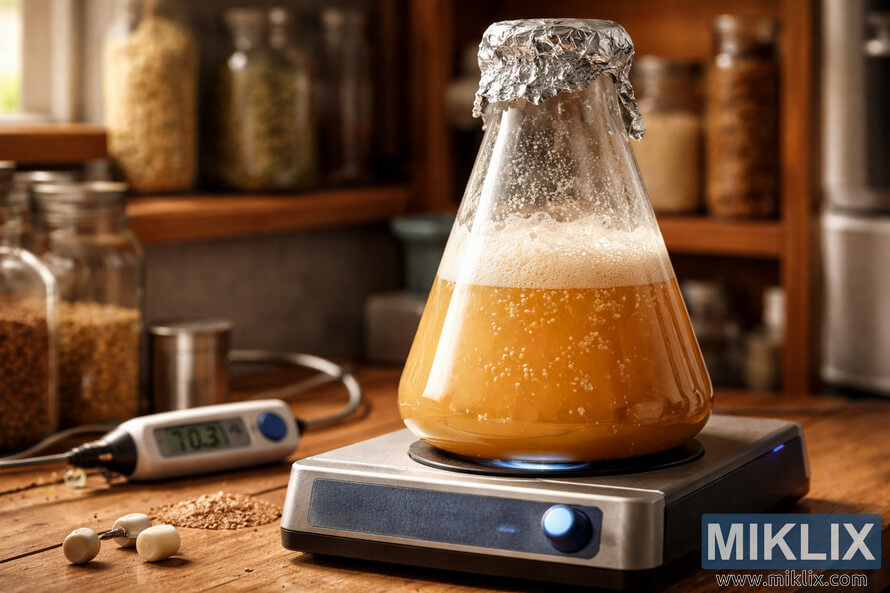
Practical tips: oxygenate well at pitching, cool the starter before use, and consider a day of healthy krausen as a sign the Wyeast 9097 starter worked. For high gravity starter guidance, err on the side of more viable cells rather than less to avoid sluggish or stuck ferments.
Kliknij lub dotknij obrazu, aby uzyskać więcej informacji i wyższą rozdzielczość.
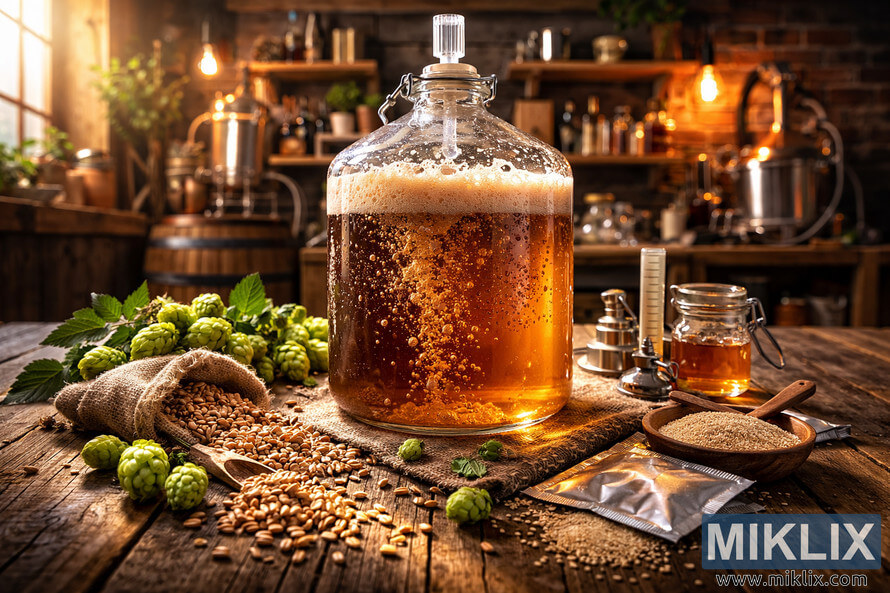
Optimal Fermentation Temperatures and Schedules
Temperature control is crucial for Wyeast 9097 fermentation. It allows ale strains and Brettanomyces to develop distinct flavors. This balance is essential for the final beer's character.
Experts suggest a temperature range of 19–22 °C. This range is ideal for fermentation. It helps in achieving a harmonious blend of ale flavors and Brettanomyces notes.
For most recipes, ferment at 21 °C in the primary stage. This temperature ensures reliable attenuation and produces fruity esters. It also allows Brett to mature during aging.
To achieve a cleaner ale profile, ferment at the lower end of the range. Cooler temperatures reduce ester intensity and slow Brett activity. This results in a cleaner taste.
To enhance the funkier Brett character, raise the temperature during secondary or cellaring. This step accelerates Brett metabolism. It brings out unique flavors like leathery, barnyard, or tangy notes.
- Example schedule used by homebrewers: hold primary at 21 °C for 7–10 days.
- After reaching target gravity, drop to 18–19 °C for a short cold rest to help flocculation.
- Age at 20–22 °C if managing Brett character and complexity is desired.
Monitoring temperature fluctuations is vital. Sudden changes can stress the blend and lead to off-flavors. Maintaining a stable temperature around 19–22 °C ensures the best results for classic old ales.
Kliknij lub dotknij obrazu, aby uzyskać więcej informacji i wyższą rozdzielczość.
Mash and Grain Bill Considerations to Complement the Yeast Blend
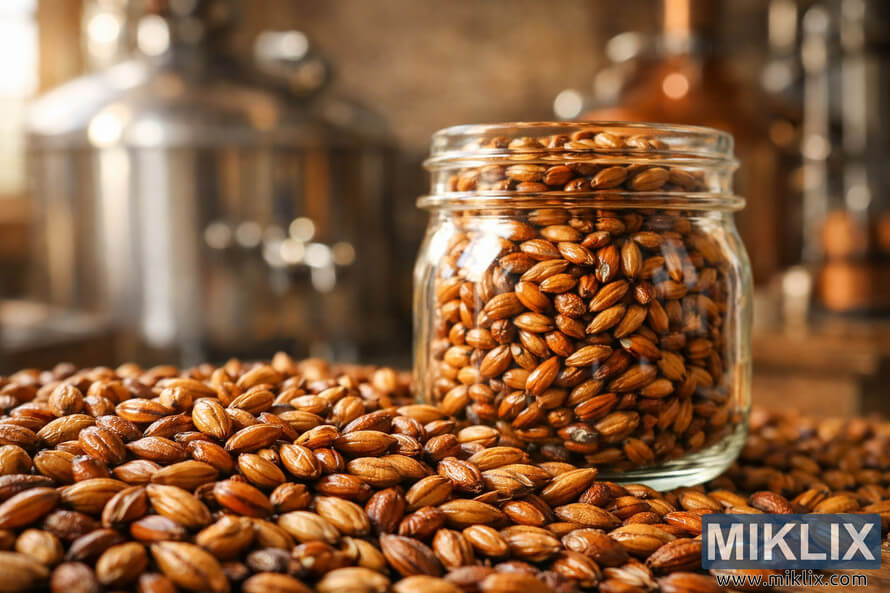
Creating a grain bill for old ale begins with a solid foundation. Munich Light, CaraRed, and Maris Otter are key. They form a rich malt base that supports the yeast's esters and Brett character.
Munich Light adds bready malt depth, while Maris Otter enhances the base's roundness. Adding CaraRed or dark crystal malts introduces caramel and toffee flavors. These enhance the midpalate without overpowering the yeast's fruity or funky tones.
Mash pH should be around mid-5s. A mash pH of 5.47 in a classic old ale recipe balances sweetness and body. This pH range optimizes enzymatic efficiency and mouthfeel.
Adjust the grain bill's color and complexity with small additions. CaraRed adds an amber hue and caramel flavor. Dark crystal malts deepen caramel and nutty notes. A pinch of black malt can introduce roast for darker SRM. These changes impact malt complexity and interact with yeast-driven flavors.
- Example base bill: majority Munich Light with a portion of Maris Otter for depth.
- Specialty additions: 10–30% CaraRed or crystal for sweetness and color.
- High-gravity variant: add Maris Otter plus small amounts of dark crystal and black malt for body and roast balance.
Make adjustments carefully to preserve fermentation character. A well-balanced grain bill for old ale boosts malt complexity. It also allows the yeast blend to shape the beer's aroma and flavor over time.
Kliknij lub dotknij obrazu, aby uzyskać więcej informacji i wyższą rozdzielczość.
Hop Choices and Bitterness Targeting for Old Ales with Wyeast 9097
When selecting hops for old ale, it's crucial to prioritize malt and yeast. Aim for a bitterness level that balances sweetness without drying out the finish. Opt for hops that complement Brett and mixed-ale flavors, rather than overpowering them.
Target IBUs between 47 and 59 for a malt-forward taste. Recipes often fall within this range, from 47.6 to 58.7 IBU. For a 20 L batch, aim for 45–60 IBU, depending on the grain bill and desired balance. This ensures the beer remains rich and clean during aging.
Employ a two-part strategy with Magnum Sybilla hops. Use Magnum for bittering, such as 18 g at about 11.5% AA, which yields roughly 25 IBU in 20 L. Reserve Sybilla for late-boil and whirlpool additions. Its low AA and herbal, floral notes enhance aroma without obscuring yeast-driven complexity.
Most aroma hops should be added in whirlpool additions or very late boil hops. This method preserves volatile oils, ensuring the beer retains fresh hop character. As Brett and ale esters mature, the yeast's prominence is maintained, preventing hop harshness in long-aged old ales.
- Balance: keep hops subordinate to malt and yeast.
- Bittering: rely on high-AA varieties like Magnum for stable IBUs.
- Aroma: add Sybilla during whirlpool additions or at flameout for subtle herbal lift.
For adjustments, reduce IBUs toward 45 if the grain bill is heavy or add toward 60 when aiming for a crisper finish. Use hop selection and timing to support Wyeast 9097’s layered fermentation character rather than overwhelm it.
Water Profile and Conditioning to Support Fermentation Character
Creating the right water profile is a straightforward way to enhance malt and yeast flavors in an old ale. Begin with a clear plan: many recipes aim for a balanced water profile, avoiding extreme chloride or sulfate levels. Small, targeted adjustments allow the Wyeast 9097 blend to showcase its malt-forward, complex character.
First, measure your local tap water's mineral content before brewing. If it's high in minerals, adjust it to a neutral baseline. Many brewers start with low-mineral water and add ions to achieve a balanced profile that complements darker malts and extended aging.
- Use gypsum sparingly to add sulfate when you need a bit more hop bite or dryness.
- Add calcium chloride to lift malt fullness and round mouthfeel.
- Apply baking soda only when bicarbonates are low and dark malts demand buffering.
Consider the bicarbonate sulfate impact when designing your mash. High bicarbonate levels can accentuate roast notes and create harshness with darker malts. Higher sulfate levels will enhance dryness and hop perception, which might not suit a malt-forward, yeast-driven old ale.
Practical measurement tips ensure reliable water adjustments. Test your mash's pH and adjust with acid or salts to achieve a mash pH of 5.3–5.5 for traditional old ale body. Use small additions and re-test to avoid large corrections.
- Record your starting ion profile using a test or water report.
- Plan target ions for a balanced water profile that supports malt and yeast.
- Add salts incrementally and re-measure mash pH and final ion values.
When adjusting, consider the entire beer: subtle water adjustments can enhance yeast ester complexity and avoid masking Brett or ale nuances. Water adjustments are a low-risk method to refine mouthfeel, attenuation perception, and overall balance in classic old ale recipes.
Fermentation Monitoring: Gravity, Aroma, and Timeline Expectations
Keep a detailed log of gravity readings, aroma notes, and visible signs during fermentation. Recipes often suggest OG 1.070 FG 1.017 for a standard old ale and OG 1.095 FG 1.024 for higher-gravity examples. These targets guide expectations for primary attenuation and long-term conditioning with blended cultures.
Track specific gravity daily during active fermentation, then weekly as activity slows. Begin with hydrometer or digital refractometer readings at consistent temperatures. For OG 1.070 FG 1.017, expect Saccharomyces to reach near 75% apparent attenuation in the first two weeks. For OG 1.095 FG 1.024 batches, primary attenuation may stall earlier, requiring closer monitoring.
To monitor Brettanomyces activity, maintain a simple chart of gravity over time. Continued slow declines in gravity, along with a shift in aromatics from fruity esters to leathery or barnyard notes, indicate Brett contribution. Mild, steady carbonation in a closed secondary also signals ongoing metabolic activity from Brettanomyces strains.
- Measure gravity at the same time each session and record temperature-corrected values.
- Note aroma changes in short, dated entries: fruit, spice, horse blanket, leather.
- Photograph clarity and krausen/headline progression for visual context.
Use racking and aging cues to determine the next step. Rack to a secondary or an oak vessel once primary fermentation stabilizes and before autolysis risk increases. Aim for at least two consistent gravity readings spaced a week apart before long-term aging.
Cold-conditioning will slow microbial action when the balance of funk and clarity meets your goals. If gravity remains steady and sensory notes are satisfactory, consider moving to packaging. If Brett continues to drop gravity past expected FG, extend aging and revisit racking and aging cues to avoid over-attenuation in package.
Aging and Conditioning Strategies for Developing Complexity
Aging old ale requires a thoughtful approach to time and treatment. Short-term aging, lasting a few months, can soften harsh edges. It allows malt and ester notes to settle. On the other hand, long-term aging, spanning six to twelve months or more, brings out Brett's contributions. This aging period shifts the beer towards a drier, more complex profile.
Monitoring the Brett funk timeline is crucial during conditioning. Initially, Brett activity might manifest as subtle fruit or leather notes. Over time, funk intensifies as Brett continues to break down complex sugars and cell walls. Cold-conditioning can help control this process, preserving a desired balance.
Oak aging introduces another dimension of complexity. Oak barrels or toasted chips add tannin, vanillin, and oxidative notes that complement Brett's character. Short oak contact is suitable for beers with strong fruit notes, while longer contact can result in a more structured, sherry-like flavor.
- Short-term plan: bulk condition at cellar temps for 2–4 months, taste monthly for balance.
- Long-term plan: bulk age 6–12+ months, stagger oak additions and track the Brett funk timeline.
- Oak options: neutral barrels for subtle drying, toasted American or French oak chips for bolder spice and vanilla.
Bottle conditioning old ale demands precise priming sugar calculations. Live Brett and residual Saccharomyces can continue to attenuate in the bottle. Therefore, it's wise to estimate potential further attenuation. Use conservative priming to avoid overcarbonation and store bottles upright during the initial conditioning phase.
Secondary fermentation in a carboy or tank offers control over oak and Brett exposure before final packaging. If bottle conditioning is planned, complete any oak aging and bulk settling first. Then, prime and transfer. Cold-conditioning after the desired funk develops helps stabilize flavor and reduce further Brett-driven changes.
- Age bulk first: complete oak contact and primary conditioning before bottling.
- Monitor regularly: gravity, aroma, and taste checks guide when to stop aging.
- Use cold storage to slow Brett once the flavor profile is right.
Recipe Examples Using Wyeast 9097 Old Ale Blend Yeast Blend
Below are two recipes that highlight the potential of Wyeast 9097. They showcase how to enhance malt complexity and Brett-driven development. Each recipe includes grain, hop, fermentation, and water details for you to follow or adapt.
All-grain old ale (20 L batch)
- Grain bill: 5 kg Munich Light (71.4%), 2 kg CaraRed (28.6%) — a Munich Light CaraRed recipe that delivers rich malt body and warm color.
- Mash: single infusion to hit 66–67°C, target mash pH ≈5.47.
- Hops: Magnum 18 g (60 min), Sybilla 50 g (15 min), Sybilla 50 g whirlpool.
- Stats: OG 1.070, FG 1.017, ABV ≈7.2%, IBU ≈58.7, SRM ≈14.
- Fermentation: Wyeast 9097 at 21 °C. Use a balanced water profile to keep malt character clean.
Higher-gravity BIAB old ale (small-litre / US 3.96 gal scale)
- Base: Maris Otter ~15 lb equivalent, plus Simpsons Dark Crystal and a touch of black malt for depth.
- Method: BIAB old ale recipe aimed at big flavor with a single-bag mash and longer boil to concentrate sugars.
- Hops: Magnum bittering to target ~47.6 IBU; reserve late aroma hops for whirlpool and end of boil.
- Stats: estimated OG 1.095, FG 1.024, ABV ≈9.4%.
- Yeast: 0.6 packs Wyeast #9097 indicated; for this gravity, build a starter or pitch extra cells to avoid sluggish ferment.
Hints to adapt hop schedule and water
When adapting the hop schedule, keep aromatic additions for whirlpool or late additions. This preserves yeast-driven complexity. It prevents hop oils from masking Brett and ester notes.
For darker, high-gravity beers, raise bicarbonate slightly to balance acidity from dark malts. Avoid overdoing bicarbonates; excessive alkalinity will blunt yeast nuance.
For larger batches, increase pitch rate or create a bigger starter. This prevents extended lag and helps Wyeast 9097 recipes show clean attenuation and consistent esters.
Practical Troubleshooting: Common Issues and Fixes
Brewers often encounter challenges with Wyeast 9097 Old Ale Blend. This guide helps identify and solve common problems. It ensures your batch stays on track.
- Causes: low pitch rate, inadequate oxygen at pitch, cool fermentation temperatures, or very high original gravity (OG).
- Preventive steps: target a baseline pitch rate of about 1.0 M cells/ml/°P, oxygenate wort well before pitching, and maintain fermentation in the 19–22 °C (66–72 °F) range.
- Remedies: make a starter or add additional packs for underpitched batches, raise temperature gradually into the recommended range, and add yeast nutrient if nitrogen looks low. For extreme high-gravity beers (for example OG 1.095), boost starter size or use multiple packs to avoid a stuck ferment Wyeast 9097 can cause.
- If fermentation is sluggish, gentle rousing of the yeast cake and measured oxygenation early in the process can help; avoid aggressive oxygen later to prevent off-flavors.
Overly phenolic or harsh flavors — prevention and corrective action
- Causes: stressed yeast, excessive fermentation temperature, and heavy use of black or intensely roasted malts.
- Prevention: pitch a healthy culture, control temperature within the blend’s recommended range, and limit harsh-roasted malts in the grist.
- Corrective actions: extended, cool aging often softens phenolics. Consider blending the batch with a cleaner beer to dilute harsh notes. Time can mellow many phenolic compounds so patience helps when you need to remove harsh phenolics.
Managing excessive Brett funk or unintended souring
- Causes: oxygen exposure during aging, warm conditioning, or cross-contamination from wild microbes.
- Control methods: minimize oxygen pickup during transfers, cold-condition to slow Brett activity, and maintain rigorous sanitation to avoid new inoculations.
- If Brett character becomes stronger than desired, additional aging often integrates the funk. Blending with younger beer can rebalance flavor. Use these steps to control Brett funk while preserving the intended complexity of Wyeast 9097.
When you need to fix slow fermentation, focus first on pitch health, oxygen at transfer, and temperature. If sensory faults appear, choose the least invasive corrective action before moving to blending or disposal. Careful handling during aging helps prevent unintended souring and keeps the yeast blend expressive but restrained.
Packaging and Carbonation Considerations for Old Ales
Choosing the right packaging for an old ale is crucial for its final taste and longevity. Blended yeasts, especially those with Brettanomyces, stay active longer than pure ale strains. Select a packaging method that aligns with your desired flavor evolution, shelf life, and serving style.
Bottle conditioning is ideal for ongoing development and subtle funk evolution. It allows Brett-forward beers to mature further in the bottle. Expect slow attenuation and gradual flavor shifts. When bottle conditioning Brett beers, consider the priming sugar needed for further gravity drop.
- Advantages of bottle conditioning: natural carbonation, depth of flavor, cell presence for aging.
- Risks: over-carbonation if warm, increased sediment, variable results without careful priming.
Kegging offers stability and consistency. Force carbonation provides precise control over carbonation levels and reduces active yeast. It's perfect for serving on draft and minimizes in-package changes once the beer is clear and chilled.
- Advantages of kegging: predictable carbonation, easier service, lower risk of over-carbonation.
- Drawbacks: less in-package evolution, requires equipment for force carbonation.
Carbonation levels should match the malt weight and style. Traditional old ales prefer low to moderate CO2 volumes. Lower carbonation levels enhance malt complexity and soft mouthfeel, making Brett character more approachable.
- Lightly carbonated (1.6–2.0 vols): emphasizes roundness and malt body.
- Moderate carbonation (2.0–2.4 vols): adds lift without making flavors sharp.
- Avoid high carbonation: it can accentuate harsh phenolics and make Brett funk feel sharper.
Shelf stability relies on yeast activity and storage conditions. Blended strains can continue working in warm or primed packages. Cold storage slows metabolism and reduces the risk of bottle bombs. Monitor conditioned bottles and be cautious with priming sugar when using active blends.
Labeling and batch notes are essential for tracking expected changes. Note the chosen method, priming amounts, and storage recommendations. This ensures predictable cell activity and carbonation levels for both consumers and cellars.
Comparing Wyeast 9097 Old Ale Blend Yeast Blend to Other Old Ale Yeasts
Wyeast 9097 blends the predictability of single-strain ale yeasts with the complexity of pure Brett cultures. It begins with Saccharomyces-driven fermentation, establishing a robust malt backbone. Over time, Brett components emerge, adding depth without overpowering the initial flavors.
How it differs from single-strain ales
Single Saccharomyces strains provide a consistent fermentation profile and stable ester profiles. In contrast, Wyeast 9097 offers a longer flavor journey. The initial taste is familiar, but Brett-like notes develop later, enhancing the beer's complexity.
Differences versus pure Brett strains and other blends
Pure Brett cultures often introduce pronounced funk early on. Commercial blends vary by Brett species and ratios, affecting intensity and timing. Wyeast 9097 balances Brett impact with ale yeast character, resulting in a measured evolution of flavors.
When to choose 9097 versus other options
Opt for Wyeast 9097 for a malt-forward base that evolves with age. For a clean, predictable old ale, choose a single ale strain. If you desire bold, early Brett funk, select a pure Brett culture or a blend designed for aggressive Brett activity.
- Compare Wyeast 9097 against single strains for aging beers with subtle transformation.
- Use Brett vs ale yeast knowledge to set expectations for funk timing and intensity.
- Consult a yeast blend comparison to match the blend to your flavor roadmap.
Buying, Storage, and Seasonal Availability Notes for Wyeast 9097 Old Ale Blend Yeast Blend
The demand for Wyeast 9097 can fluctuate with the seasons. Brewers should be prepared for single-pack availability and occasional limited releases. Prices and packaging formats can change, so it's wise to plan ahead for your brewing needs.
Typically, a single liquid pack of Wyeast 9097 retails for around $13.99. When purchasing, compare prices across local homebrew stores and online platforms. Small variations in shipping and handling can impact the overall cost.
- Pack formats: vials or packaged cells sold as single units.
- Common usage: many recipes call for fractions of a pack, such as 0.6 packs for a 5-gallon batch.
- Watch sales cycles: discounts often appear during store promos and holiday periods.
Proper storage is crucial for yeast viability. Always refrigerate liquid yeast and use it before the expiration date. When transporting yeast, maintain a cold temperature to preserve cell health.
For older packs, creating a starter can revive viability and ensure a robust fermentation. If long-term storage is necessary, keep it refrigerated consistently and follow the manufacturer's guidelines on shelf life.
Seasonal availability can pose a challenge. Wyeast 9097 is considered seasonal at some retailers. If it's not available locally, consider other homebrew retailers or specialty shops for your needs.
- Check multiple suppliers early in the season for availability.
- Consider alternatives: pair a neutral ale strain with a Brettanomyces strain to mimic the blend.
- Explore other commercial old ale blends from major yeast suppliers when 9097 is out of stock.
When selecting where to buy Wyeast 9097, consider the handling process. Opt for cold shipping and reputable shops to minimize risks. For long-term planning, track seasonal trends and purchase extra packs when they are reasonably priced.
Conclusion
Wyeast 9097 review conclusion: this seasonal liquid blend offers a reliable path to classic old ale character. It creates a malt-forward base that unfolds Brett complexity with age. Community recipes commonly show OG around 1.070 to FG 1.017, and higher-gravity examples reach OG 1.095 with FG near 1.024. These are often fermented near 21 °C and achieve roughly 75% attenuation.
For a concise fermenting old ale summary, follow core best practices Wyeast 9097: pitch to recommended rates (about 1.0 M cells/ml/°P), make a starter for high-OG beers, and aim for a balanced water profile. Choose supportive malts such as Munich Light, CaraRed, or Maris Otter to let yeast-driven flavors shine. Use late hop additions to preserve aroma without masking Brett character.
Plan sourcing and logistics: 9097 is typically sold seasonally in single packs at specialty prices (example $13.99), so buy ahead and store properly. Use starter strategies and controlled aging to develop desirable funk without losing control. This summary consolidates practical steps and expectations for brewers seeking predictable, complex old ales with Wyeast 9097.
FAQ
What is Wyeast 9097 Old Ale Blend and what does it contribute to an old ale?
Wyeast 9097 Old Ale Blend is a seasonal yeast blend for old ales. It combines a conventional Saccharomyces ale strain with Brettanomyces. This blend offers a malt-forward ale ester backbone that evolves into Brett-derived funk, spice, and leathery notes during conditioning. Brewers report an initial ale character followed by Brett complexity with additional attenuation and gradual drying over months.
How does a blend like 9097 differ from using a single yeast strain or a pure Brett strain?
Blends like 9097 combine predictable Saccharomyces primary fermentation with slower-developing Brett activity. This gives an evolving flavor trajectory: clean ale esters up front, then Brett funk and extra attenuation over time. Single Saccharomyces strains offer steadier, more predictable profiles without long-term funk. Pure Brett cultures create more immediate and intense Brett character and can be harder to control.
Is Wyeast 9097 widely available and how much does it cost?
9097 is often listed as a seasonal product and commonly sold in single liquid packs. An example street price found in retail listings was $13.99 per pack. Availability varies. If it’s out of stock in common yeast selectors, check specialty homebrew suppliers or plan purchases ahead of brewing.
Do I need to make a starter or can I direct-pitch Wyeast 9097 for a 20 L (5 gal) batch?
For standard gravity old ales around OG 1.070, many community recipes list “Starter: No” and use direct pitch. For higher gravities (examples near OG 1.095) or when packs are older, a starter or multiple packs is advisable to ensure healthy fermentation and avoid long lag times or sluggish finishes.
What pitch rate should I target when planning a fermentation with 9097?
Use 1.0 million cells per milliliter per degree Plato (1.0 M cells/ml/°P) as a baseline. Recipe examples reference total cell requirements in the hundreds of billions for 20 L batches. Calculate starter size or pack count from that benchmark, increasing for high-OG beers.
What fermentation temperature range works best for balancing ester production and Brett development?
The commonly cited range is about 19–22 °C (roughly 66–72 °F). Fermenting at the lower end favors cleaner ale esters and delays Brett activity. Mid-range (20–21 °C) produces a balanced ester profile with manageable Brett growth, while higher temps accelerate both ester and Brett character. Many brewers start primary at ~21 °C (70 °F) and allow Brett to develop during conditioning.
How does the blend affect attenuation and mouthfeel?
The Saccharomyces portion handles primary attenuation and leaves a moderately full, malt-forward mouthfeel. Brettanomyces continues slow attenuation during conditioning, drying the beer further and shifting mouthfeel over time. Community values list custom attenuation around 75% with medium flocculation as a working expectation.
What grain bills pair well with Wyeast 9097 for classic old ales?
Malt-focused bills like Munich Light and CaraRed or Maris Otter with small crystal and dark additions are common. Example all-grain: Munich Light ~71% and CaraRed ~29% for a 20 L recipe. These bases give a robust malt backbone that complements esters and evolving Brett complexity.
What mash pH should I aim for to support body and yeast expression?
Aim for a mash pH in the mid-5s—community recipes recorded an example pH of ~5.47. That range helps retain malt sweetness and body, supporting ester development and balancing Brett-derived dryness during aging.
What IBU range and hop choices work best so the yeast remains prominent?
Keep bitterness moderate for a malt-forward profile—community recipes show IBUs from roughly 45–60 (examples around 47–59 IBU). Use clean bittering hops like Magnum for the 60‑minute addition and reserve aromatic or herbal hops such as Sybilla for late-boil or whirlpool additions to add nuance without masking yeast-driven character.
Should I use whirlpool or late hop additions when brewing with 9097?
Yes. Late-boil and whirlpool additions preserve delicate hop aroma and flavor while preventing hop bitterness from dominating. This approach helps keep malt and yeast-derived flavors in focus; Sybilla is one hop cited for late and whirlpool use in community recipes.
What water profile is recommended for a Wyeast 9097 old ale?
A balanced water profile is recommended—avoid extreme chloride or sulfate dominance. Tailor mineral additions to local water: chloride emphasizes malt fullness, sulfate accentuates perceived dryness and hop bite, and bicarbonates can accentuate roast in darker malts. Many brewers start from low-mineral or RO water and add gypsum or calcium chloride to reach a balanced target.
What gravities and ABVs do recipes with 9097 typically produce?
Typical examples include OG 1.070 with FG 1.017 (about 7.2% ABV) and higher-gravity builds near OG 1.095 with FG 1.024 (about 9.4% ABV). Expect initial Saccharomyces-driven attenuation near 75% with further slow gravity drops from Brett during long conditioning.
How should I monitor and track Brett activity during conditioning?
Track gravity weekly after primary fermentation; watch for slow, steady drops indicating Brett fermentation. Note aroma evolution—from fruity/esteric early to more leathery, spicy, or funky notes later. Document trends and sensory cues to decide when to rack, cold-condition, or bottle.
When should I rack, bottle, or cold-condition to manage Brett development?
Rack or move to aging vessels once primary activity subsides and before autolysis risk becomes significant. Allow Brett to develop during conditioning at cellar temperatures, then cold-condition to slow metabolism when desired profile is reached. Use gravity stability and sensory balance—funk level, clarity, and dryness—to decide timing.
How long should I age beers fermented with Wyeast 9097 to get desirable complexity?
Short-term aging (a few months) will round flavors. Long-term aging (6–12+ months) is common to let Brett components fully develop and integrate. The exact timeline depends on desired funk intensity and beer strength; higher ABV beers often benefit from longer aging.
Can oak aging be combined with 9097, and what effect does it have?
Yes. Oak (chips or barrels) adds tannin, vanilla, and oxidative notes that interplay with Brett funk and malt complexity. Use oak carefully: it can accentuate complexity but also interact with Brett-derived acidity or phenolics. Monitor development and adjust contact time to taste.
What are common causes of stuck or slow fermentations with 9097 and how do I fix them?
Common causes include low pitch rate, insufficient oxygen at pitching, cool fermentation temperatures, or stressed yeast from high gravity. Remedies: prepare a larger starter or add another pack, oxygenate wort adequately at pitch, raise temperature into recommended range (19–22 °C), and consider yeast nutrient for very high OG worts.
How do I prevent or reduce overly phenolic or harsh flavors?
Prevent them by pitching sufficient healthy yeast, keeping fermentation within recommended temperatures, and avoiding excessive use of dark roasted malts. If harsh flavors appear, time and gentle aging often mellow them. Blending with a cleaner batch is another corrective option for severe cases.
What if Brett funk becomes too intense or the beer starts to sour unintentionally?
Control Brett by limiting oxygen exposure during aging, cold-conditioning to slow activity, and keeping sanitary handling to avoid additional microbes. If funk is too strong, continue aging to let flavors meld, or blend with younger beer. In extreme cases, re-batching or discarding may be necessary.
Should I bottle-condition or keg beers fermented with 9097?
Both options are valid. Bottle conditioning allows in-package evolution—Brett can continue to attenuate and change flavor—so calculate priming carefully. Kegging with cold storage and force carbonation halts much yeast activity and provides stability. Choose bottle conditioning for ongoing development, kegging for control.
How should I calculate priming sugar given active Brett in the blend?
Account for potential continued attenuation from Brett when estimating priming sugar. Use conservative priming amounts and consider cold storage after desired carbonation is reached to slow Brett metabolism. Monitor samples from test bottles before committing to large releases.
What carbonation level suits old ales fermented with 9097?
Traditional old ales are typically low to moderate in carbonation. Lower volumes of CO2 complement malt body and prevent accentuating any harshness or overly pronounced funk. Tailor carbonation to style guidelines and personal preference, leaning toward modest carbonation.
How stable are beers with 9097 in package and what storage is recommended?
Because the blend contains Brett, slow in-package attenuation and flavor evolution can continue if bottles or kegs are stored warm. Cold storage slows activity. Store finished beers refrigerated when possible and monitor for over-carbonation in older bottles. Use fresh refrigeration for long-term stability.
If I can’t find Wyeast 9097, what are reasonable alternatives?
Look for other commercial old ale blends from yeast suppliers or build your own by pitching a reliable ale strain alongside a Brett strain (Brettanomyces bruxellensis or B. claussenii variants) at low levels. Specialty homebrew shops, online retailers, or seasonal restocks are good sourcing options.
What storage and handling best practices should I follow for liquid Wyeast packs?
Keep packs refrigerated and use them before the stated expiration. Minimize temperature swings during transport. For older packs, make a starter to restore viability. Handle gently and oxygenate wort at pitching to support a healthy fermentation.
How should I size a starter for high-gravity beers using 9097?
Increase starter size for very high OG beers (examples around OG 1.095). Use the 1.0 M cells/ml/°P target to calculate required cell counts, then size your starter to meet or exceed that number. Multiple packs or a multi-step starter are common approaches for beers above typical old ale gravities.
What recipe examples illustrate typical use of 9097?
An all-grain 20 L example: Munich Light 5 kg (71.4%) and CaraRed 2 kg (28.6%), OG 1.070 FG 1.017 ABV ~7.2%, IBU ~58.7, mash pH ~5.47, Magnum bittering and Sybilla late/whirlpool hops, fermented at ~21 °C with Wyeast 9097. A higher-gravity BIAB example uses Maris Otter plus Simpsons Dark Crystal and a touch of black malt for OG ~1.095 FG ~1.024 ABV ~9.4% with increased starter or pack count recommended.
How do I adjust water for darker, maltier old ales without creating harshness?
Avoid excessive bicarbonate that accentuates roast harshness. Start from RO or low-mineral water, then add measured gypsum and calcium chloride to reach a balanced profile. Raise bicarbonate slightly only when using significant dark malts, and test small adjustments to avoid harshness.
What are practical tips for planning a brew day when using a seasonal yeast like 9097?
Plan sourcing ahead and buy extra packs if possible. Refrigerate promptly upon receipt and consider making a starter if packs are older or the beer is high gravity. Have water treatment salts measured, oxygenation tools ready, and a fermentation schedule that includes extended conditioning time to allow Brett development.
Dalsza lektura
Jeśli podobał Ci się ten wpis, mogą Cię zainteresować również poniższe sugestie:
- Fermentacja piwa przy użyciu drożdży Fermentis SafAle S-04
- Fermentacja piwa przy użyciu drożdży Fermentis SafAle T-58
- Fermentacja piwa z drożdżami Philly Sour firmy Lallemand WildBrew