
Obraz: Assortment of Specialty Melons on Rustic Surface
Opublikowano:
Ostatnia aktualizacja: 20 sierpnia 2026 14:16:59 UTC
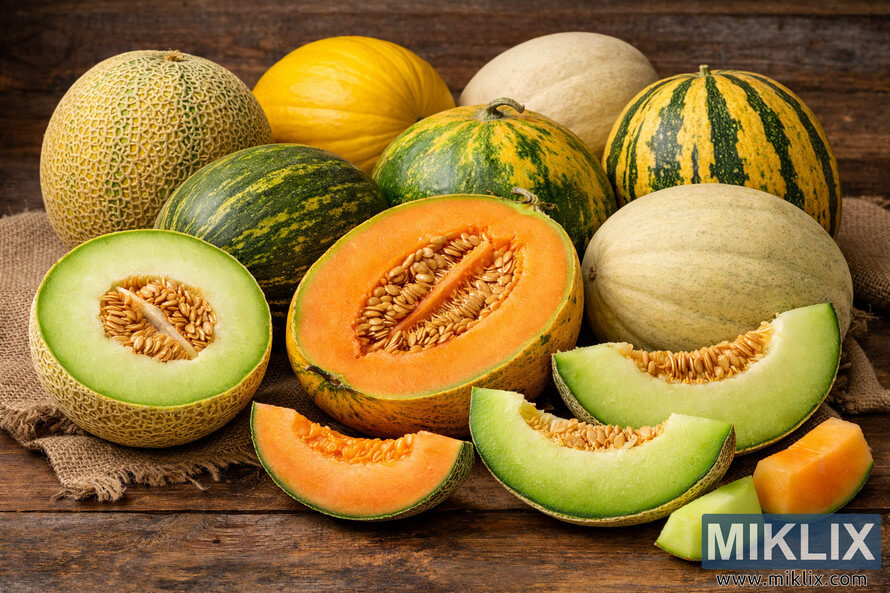
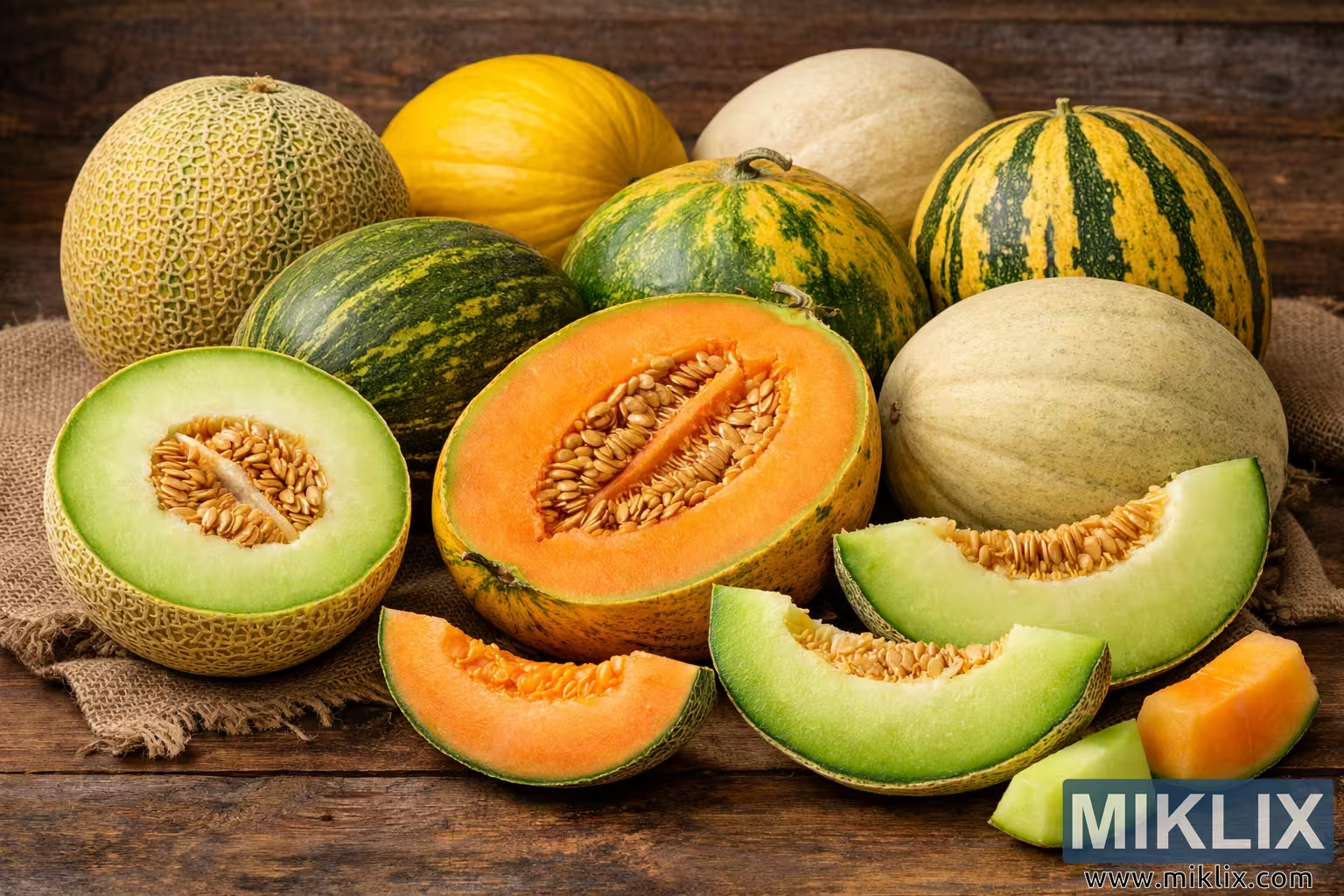
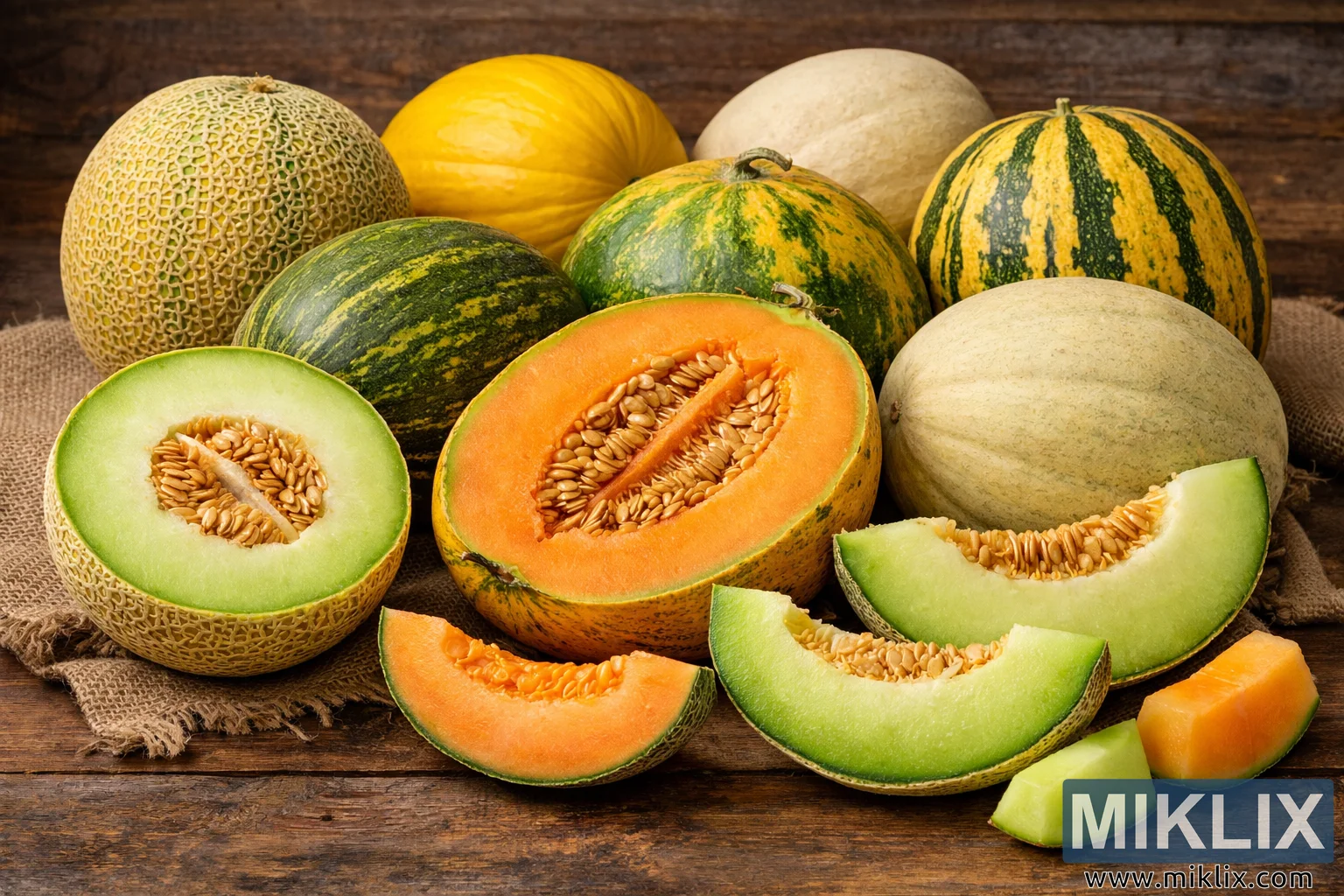
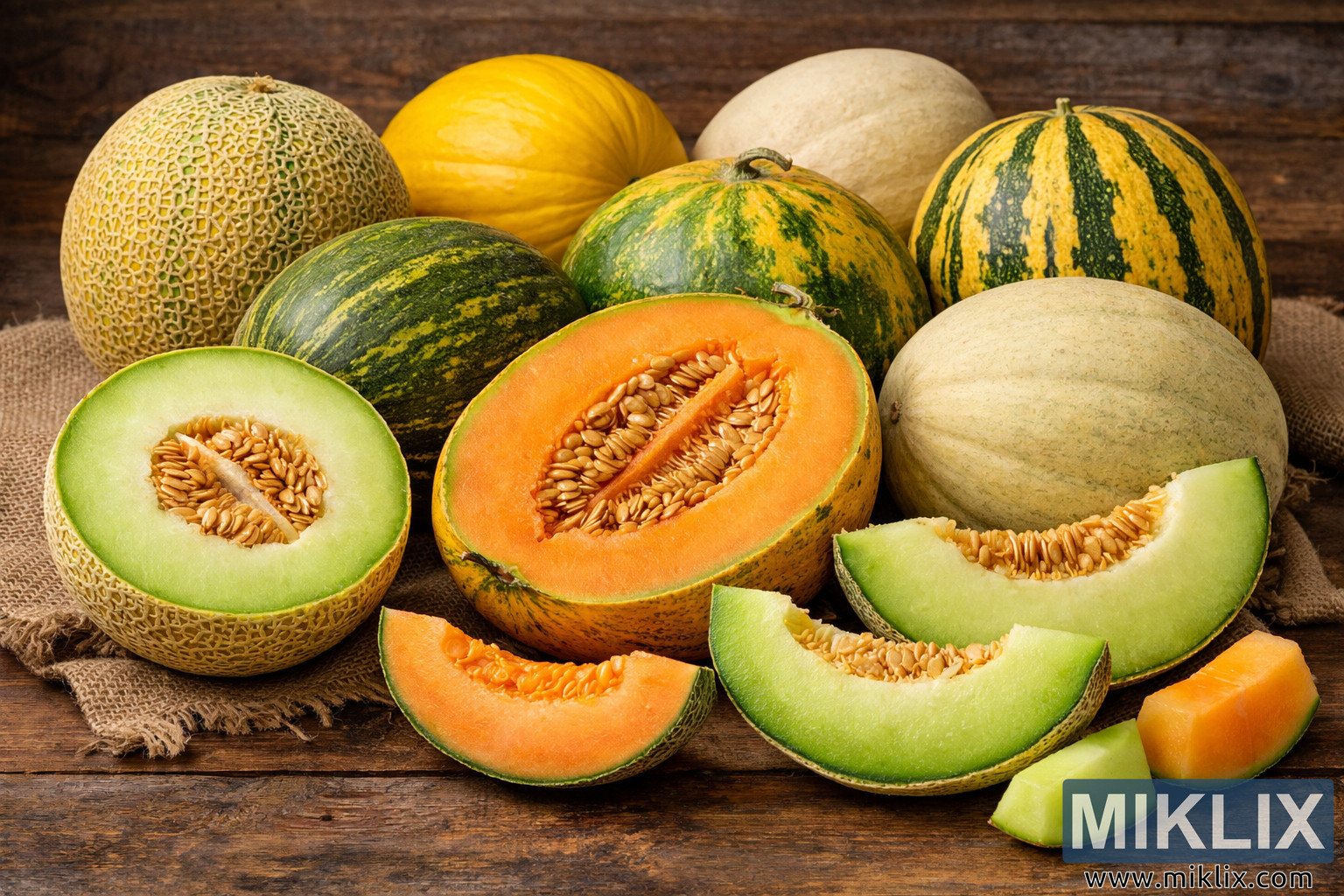
Explore a vivid, high-resolution image of assorted specialty melons—Galia, Crenshaw, honeydew, and more—displayed on a rustic wooden surface with warm natural lighting and rich textures.
Assortment of Specialty Melons on Rustic Surface
Dostępne wersje tego obrazu
Pliki graficzne dostępne do pobrania poniżej są mniej skompresowane i mają wyższą rozdzielczość - a w rezultacie wyższą jakość - niż obrazy osadzone w artykułach i stronach na tej stronie, które są bardziej zoptymalizowane pod kątem rozmiaru pliku w celu zmniejszenia zużycia przepustowości.
Rozmiar regularny (1,536 x 1,024)
Duży rozmiar (3,072 x 2,048)
Bardzo duży rozmiar (4,608 x 3,072)
Bardzo duży rozmiar (6,144 x 4,096)
Komicznie duży rozmiar (1,048,576 x 699,051)
- Wciąż wgrywam... ;-)
Opis obrazu
The image presents a meticulously composed, high-resolution landscape photograph featuring an assortment of specialty melons arranged on a rustic wooden surface. The composition is both natural and deliberate, evoking the atmosphere of a farmer’s market or a countryside kitchen. The lighting is warm and even, casting soft highlights across the melons’ textured rinds and juicy interiors, while subtle shadows add depth and realism to the scene.
In the foreground, a halved Galia melon sits to the left, its rind netted with a fine lattice pattern of pale yellow and green hues. The interior flesh is a delicate, pale green, transitioning smoothly toward the seed cavity filled with light brown seeds surrounded by translucent pulp. The Galia’s surface glistens slightly, suggesting freshness and moisture. Just beside it, occupying the central position, is a halved Crenshaw melon. Its rind is mottled with shades of yellow and green, and its interior reveals a vibrant orange flesh that contrasts beautifully with the surrounding melons. The seed cavity of the Crenshaw is elongated, filled with tan-colored seeds that rest in a fibrous matrix.
To the right of the Crenshaw melon lies a wedge of honeydew melon, its smooth rind pale and creamy, with a faint green tint. The honeydew’s flesh is a cool, pastel green, and the cut surface gleams under the light, emphasizing its juiciness. Scattered around these main melons are smaller slices and wedges—some orange-fleshed, some green—arranged to create a sense of abundance and variety. Each slice is angled slightly differently, allowing the viewer to appreciate the diversity of textures and colors among the melons.
Behind the foreground melons, a whole Galia melon rests to the left, its netted rind catching the light in a subtle pattern. To its right stands a whole Crenshaw melon, slightly larger and more oval, with a surface that transitions from green to yellow in irregular patches. Further back, a striped melon with alternating green and yellow bands adds visual rhythm to the composition. Its stripes curve gently around its form, creating a dynamic contrast against the smoother surfaces of the other melons.
In the background, a bright yellow canary melon sits to the left, its smooth, glossy skin reflecting the warm light. To the right, a white-skinned melon with faint beige undertones provides a neutral counterpoint to the more saturated colors in the foreground. Between them, a Piel de Sapo melon with dark green mottled skin and lighter green stripes introduces a deeper tone to the palette, balancing the composition visually.
The melons rest on a piece of natural burlap fabric that lies casually across the wooden surface. The coarse weave of the burlap contrasts with the smoothness of the melon rinds, adding tactile interest. The wooden surface beneath is aged and textured, with visible grain lines and subtle imperfections that enhance the rustic charm of the scene. The background fades gently into a soft blur, keeping the focus on the melons while maintaining a sense of spatial depth.
The color palette of the image is rich and harmonious, dominated by warm yellows, greens, and oranges. The interplay of these hues creates a sense of freshness and vitality. The lighting, likely diffused natural light, enhances the organic feel of the arrangement, avoiding harsh reflections while emphasizing the melons’ natural sheen.
Overall, the photograph captures not only the visual diversity of specialty melons—Galia, Crenshaw, honeydew, canary, and Piel de Sapo—but also their textural and chromatic nuances. The arrangement feels spontaneous yet balanced, inviting the viewer to appreciate the beauty of these fruits in their natural state. The image conveys abundance, freshness, and the quiet elegance of nature’s produce, making it both aesthetically pleasing and evocative of the sensory experience of ripe, fragrant melons on a summer day.
Obraz jest powiązany z: Honeydew Melon: The Refreshing Fruit Packed with Nutrients