
Obraz: Fresh Licorice Root and Dried Pieces on Wooden Surface
Opublikowano:
Ostatnia aktualizacja: 28 sierpnia 2026 20:35:31 UTC
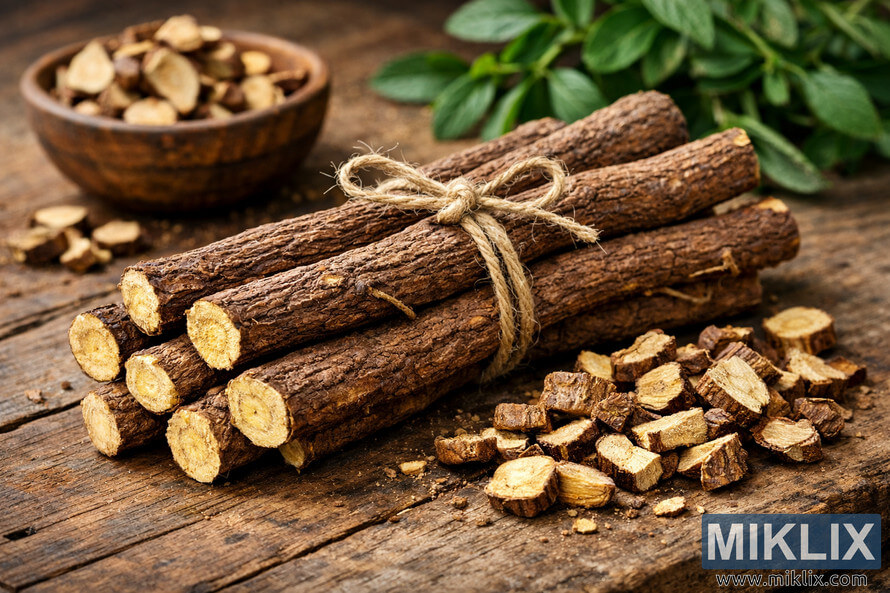
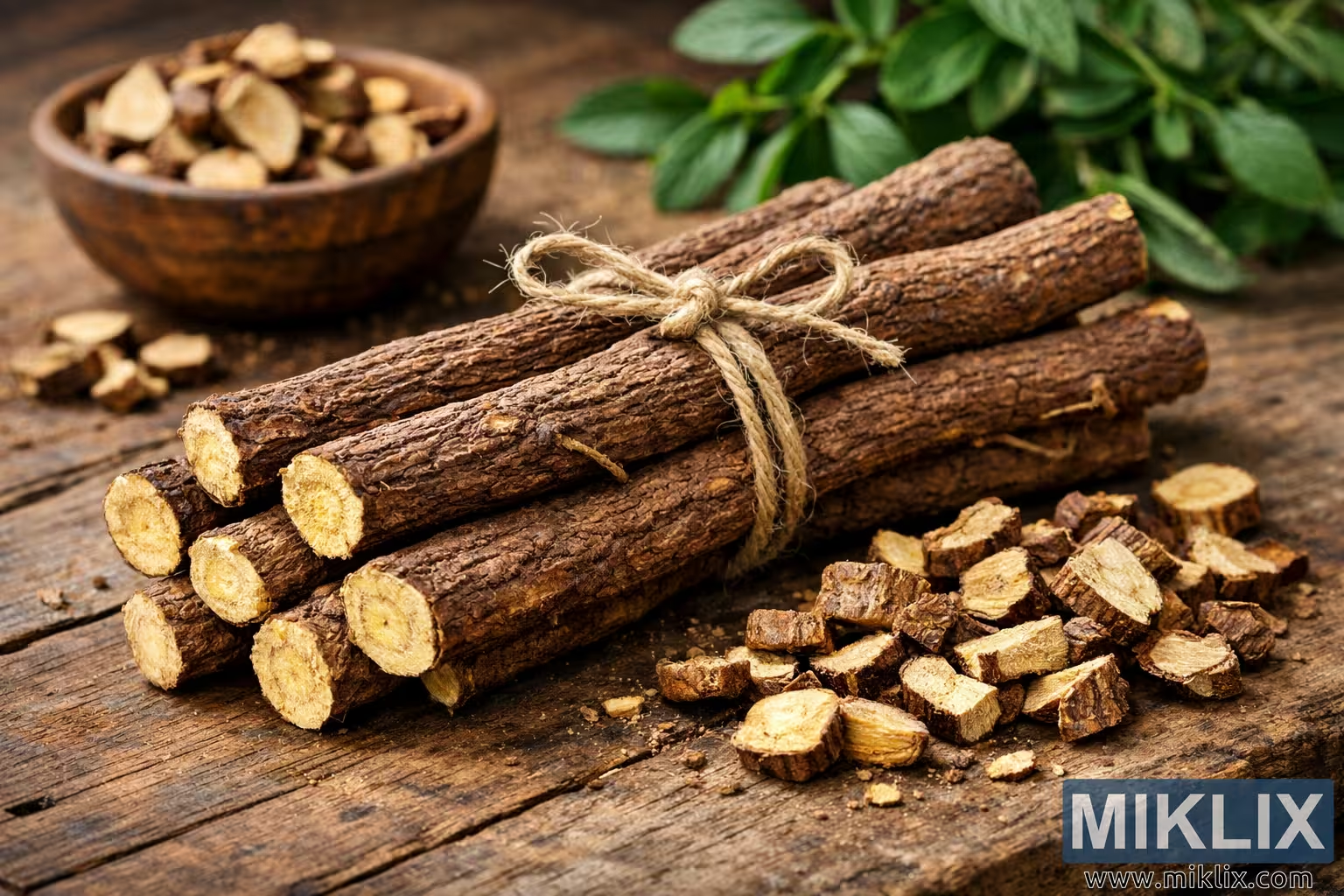
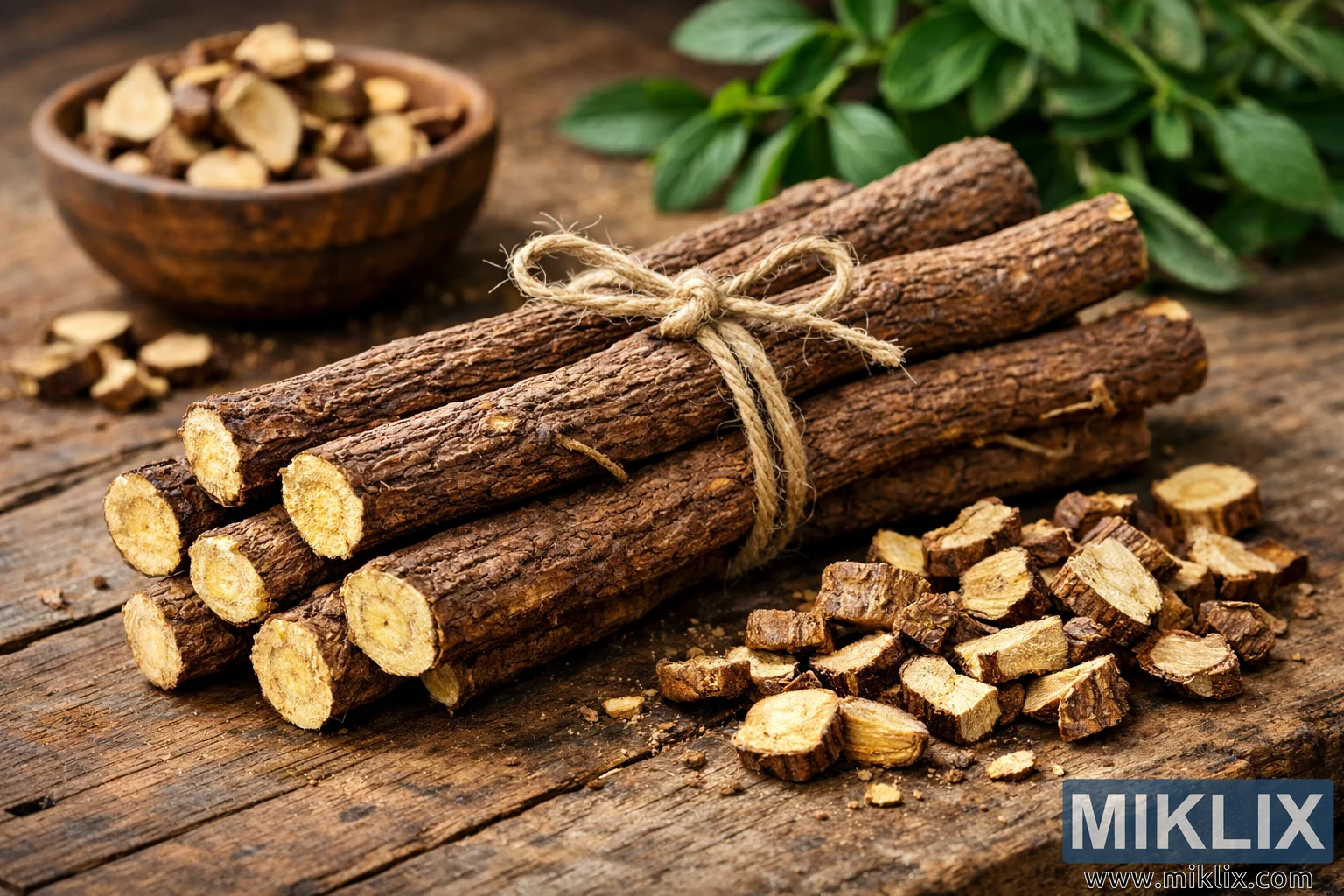
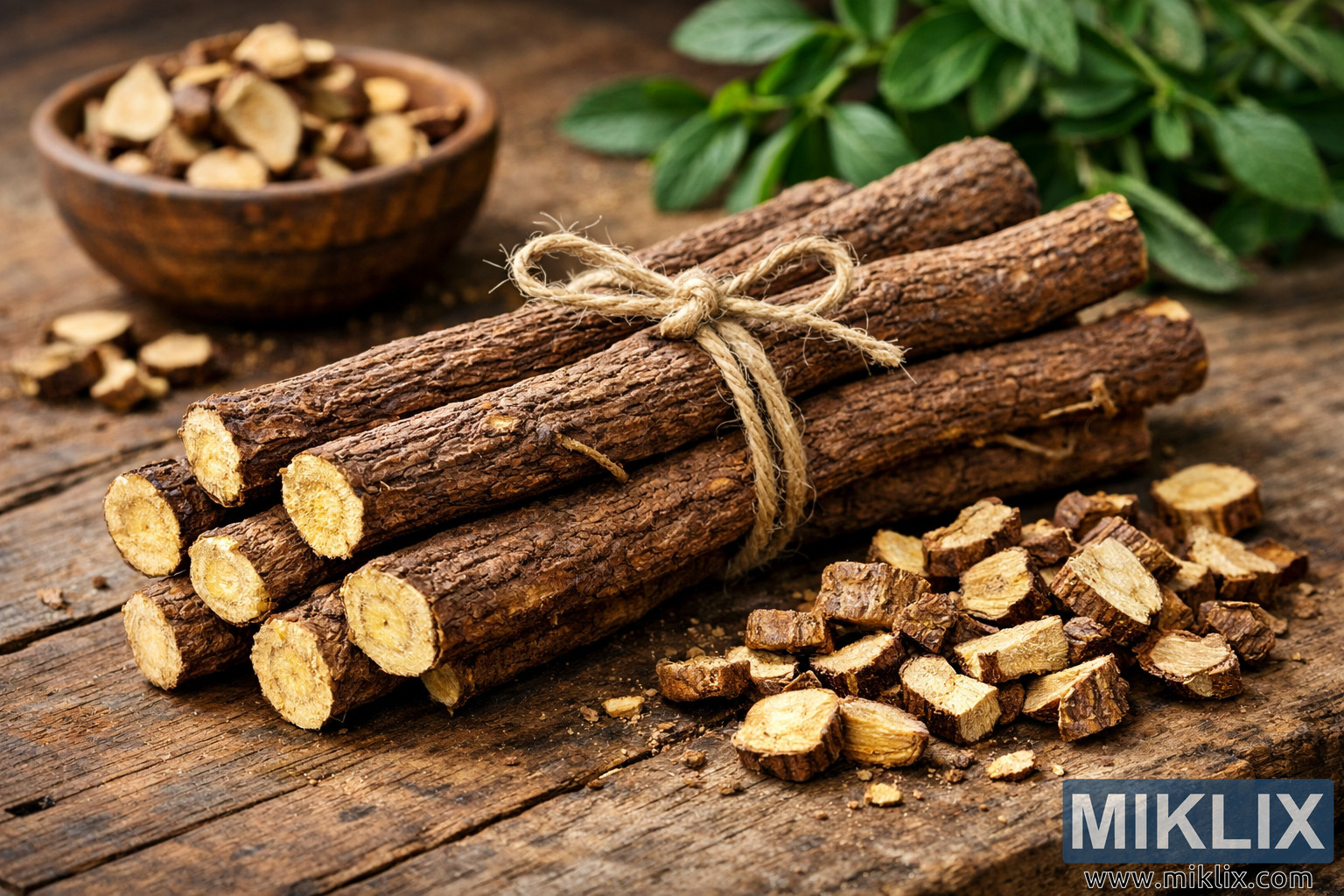
A detailed photograph of fresh licorice roots and dried pieces arranged on a wooden surface, showcasing natural textures and earthy tones.
Fresh Licorice Root and Dried Pieces on Wooden Surface
Dostępne wersje tego obrazu
Pliki graficzne dostępne do pobrania poniżej są mniej skompresowane i mają wyższą rozdzielczość - a w rezultacie wyższą jakość - niż obrazy osadzone w artykułach i stronach na tej stronie, które są bardziej zoptymalizowane pod kątem rozmiaru pliku w celu zmniejszenia zużycia przepustowości.
Rozmiar regularny (1,536 x 1,024)
Duży rozmiar (3,072 x 2,048)
Bardzo duży rozmiar (4,608 x 3,072)
Bardzo duży rozmiar (6,144 x 4,096)
Komicznie duży rozmiar (1,048,576 x 699,051)
- Wciąż wgrywam... ;-)
Opis obrazu
The image presents a richly detailed, high-resolution landscape composition that captures the natural beauty and tactile essence of licorice roots in both their fresh and dried forms. In the foreground, a bundle of freshly harvested licorice roots lies diagonally across a rustic wooden surface. Each root is thick, fibrous, and covered in a textured brown bark that reveals subtle variations in hue—from deep chestnut to lighter tan streaks. The bundle is neatly tied with a piece of coarse beige twine, its fibers slightly frayed, adding an organic authenticity to the scene. The ends of the roots are freshly cut, exposing a creamy yellowish-white interior that contrasts vividly with the darker exterior. This juxtaposition of tones emphasizes the natural complexity of the plant’s anatomy and evokes a sense of freshness and vitality.
To the right of the bundle, dried licorice root pieces are scattered loosely across the wooden surface. These fragments vary in size and shape—some are thin chips, others thicker slices—and their curled edges and uneven textures suggest the slow dehydration process that transforms the supple fresh roots into brittle, aromatic pieces. The dried roots display a muted palette of beige and brown, their surfaces slightly rough and cracked, hinting at their concentrated flavor and medicinal potency. A small wooden bowl sits further back, filled with additional dried slices. Its weathered grain and warm tone harmonize with the surrounding wood, reinforcing the earthy aesthetic of the composition.
Behind the bowl, a cluster of fresh green licorice leaves adds a subtle burst of color to the otherwise warm, neutral scene. The leaves are vibrant and slightly glossy, their delicate veins catching the soft natural light that filters across the frame. The lighting is gentle yet directional, illuminating the fresh roots in the foreground while allowing the background elements to fade into a soft blur. This shallow depth of field draws the viewer’s attention to the tactile details—the fibrous bark, the twine’s texture, the fine dusting of wood particles near the roots—while maintaining a sense of spatial depth and realism.
The wooden surface itself is a character in the composition. Its weathered planks display visible grain patterns, cracks, and imperfections that speak of age and use. Tiny splinters and scattered wood dust contribute to the authenticity of the setting, suggesting a natural workspace where herbs might be prepared or dried. The overall color palette is warm and harmonious, dominated by shades of brown, beige, and muted yellow, balanced by the fresh green of the leaves. The interplay of textures—smooth interior flesh, rough bark, brittle dried slices, and coarse wood—creates a sensory richness that invites the viewer to imagine the scent and feel of the materials.
The photograph’s composition is carefully balanced. The fresh roots occupy the lower left quadrant, commanding attention with their size and clarity, while the dried pieces and bowl form a complementary cluster to the right and rear. The diagonal placement of the bundle introduces a dynamic visual flow, guiding the eye naturally across the frame. The lighting enhances this movement, with highlights on the fresh roots gradually fading into softer shadows toward the background. The overall atmosphere is calm, natural, and artisanal—evoking traditional herbal preparation and the timeless connection between plant and craft.
This image could easily serve as an educational or commercial visual for herbal medicine, natural remedies, or culinary ingredients. It communicates authenticity, purity, and craftsmanship without relying on any branding or artificial elements. Every detail—from the twine’s knot to the subtle sheen on the leaves—contributes to a cohesive narrative of nature’s raw beauty and the transformation of fresh plant material into preserved form. The high resolution ensures that even the smallest textures are rendered with clarity, allowing viewers to appreciate the intricate details of the licorice roots and their environment. The result is a serene yet vivid portrayal of botanical life, grounded in realism and enriched by the warmth of natural light.
Obraz jest powiązany z: Licorice Root: The Ancient Herb with Modern Health Benefits