
Obraz: Classic Southern Fried Okra Served on a Rustic Ceramic Plate
Opublikowano:
Ostatnia aktualizacja: 30 lipca 2026 18:37:36 UTC
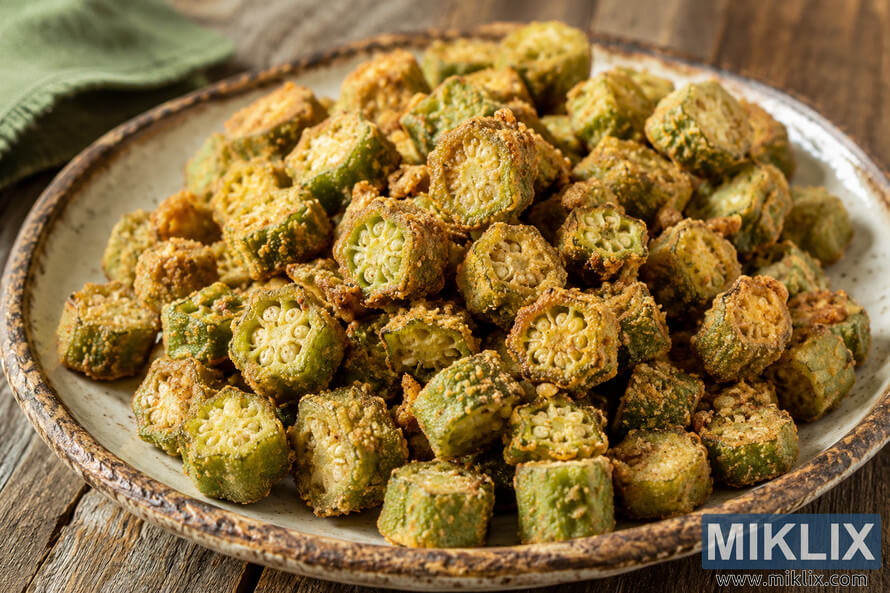
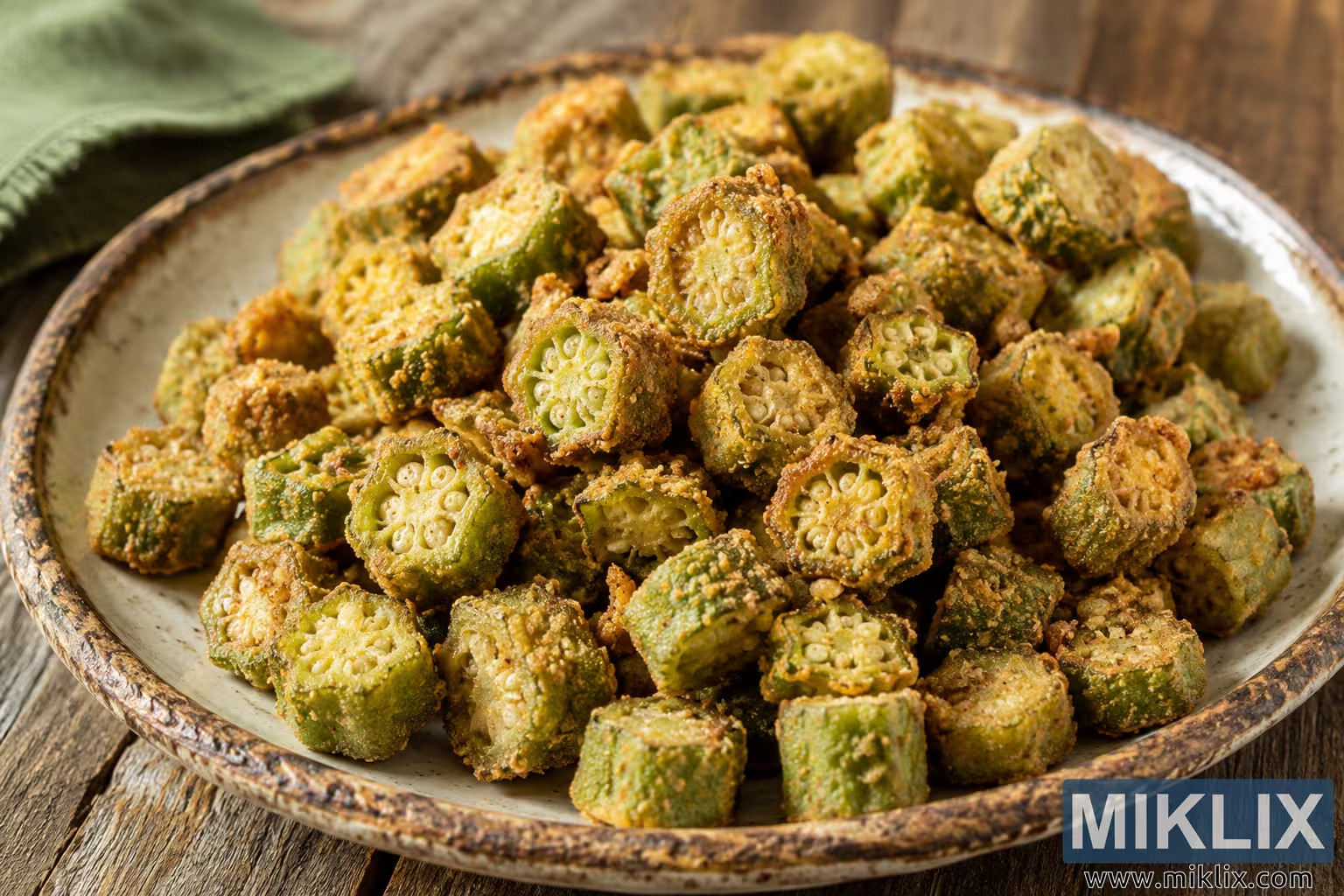
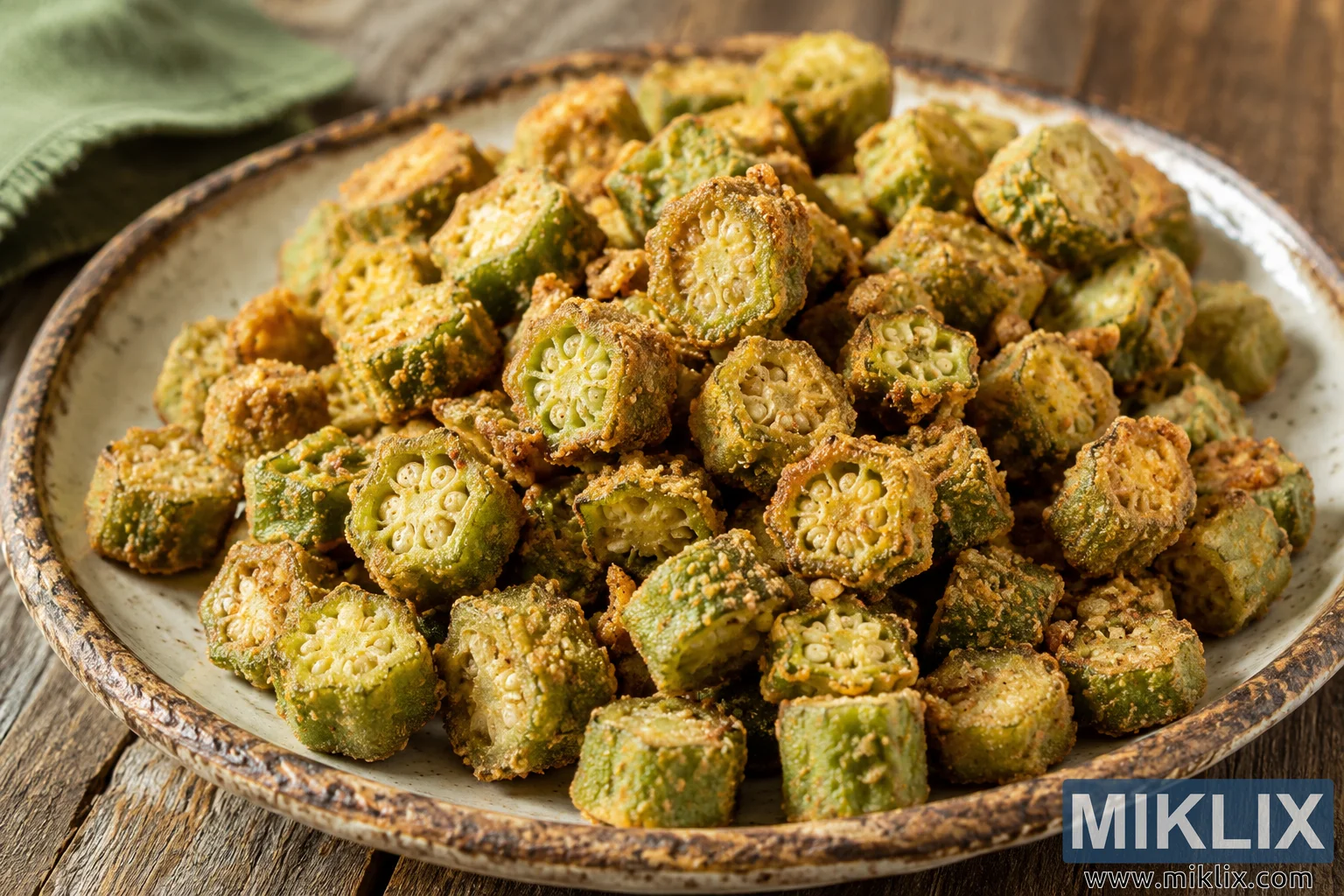
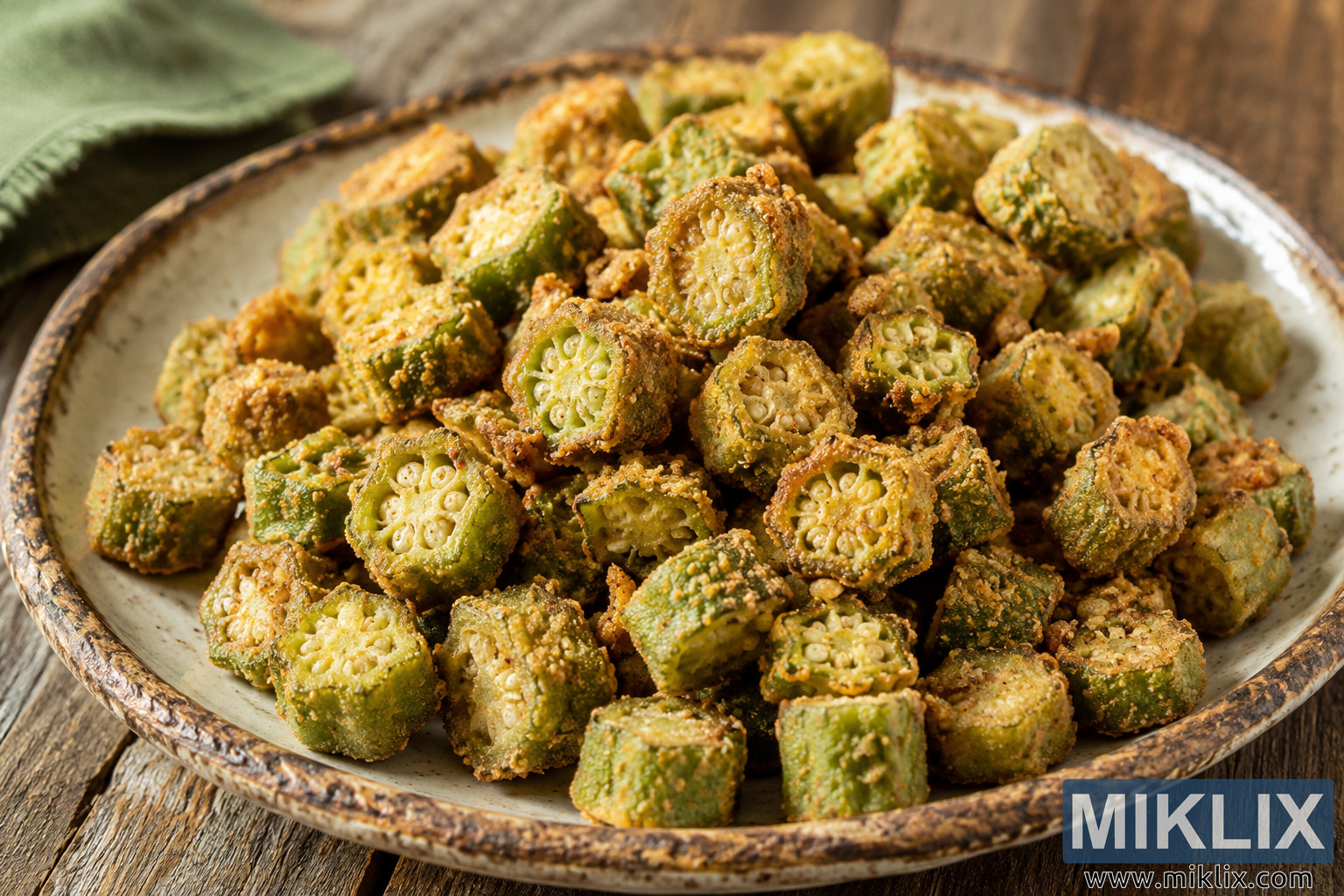
Classic southern fried okra served on a rustic ceramic plate with a crispy golden coating, photographed on a weathered wooden table in warm natural light for an inviting farmhouse-style food presentation.
Classic Southern Fried Okra Served on a Rustic Ceramic Plate
Dostępne wersje tego obrazu
Pliki graficzne dostępne do pobrania poniżej są mniej skompresowane i mają wyższą rozdzielczość - a w rezultacie wyższą jakość - niż obrazy osadzone w artykułach i stronach na tej stronie, które są bardziej zoptymalizowane pod kątem rozmiaru pliku w celu zmniejszenia zużycia przepustowości.
Rozmiar regularny (1,536 x 1,024)
Duży rozmiar (3,072 x 2,048)
Bardzo duży rozmiar (4,608 x 3,072)
Bardzo duży rozmiar (6,144 x 4,096)
Komicznie duży rozmiar (1,048,576 x 699,051)
- Wciąż wgrywam... ;-)
Opis obrazu
This image presents a warm, inviting food scene centered on a generous serving of classic southern fried okra arranged on a large rustic ceramic plate. The composition is captured in a landscape orientation with a close-up perspective that emphasizes texture, color, and the comforting appeal of a freshly prepared side dish. The plate occupies most of the foreground, drawing immediate attention to the crisp, golden coating on each piece of okra while allowing the natural surroundings to softly fade into the background.
The fried okra pieces vary slightly in size and shape, reflecting the irregularity that comes from slicing fresh okra into thick rounds before coating and frying them. Many of the cross-sections are clearly visible, displaying the distinctive star-shaped interior pattern formed by the seed chambers. The interiors retain a light green color, contrasting beautifully with the crunchy golden-brown exterior. Small white seeds remain visible inside the slices, adding authenticity and visual detail. The coating appears lightly seasoned and coarse, with tiny crisp crumbs clinging to every surface. The texture suggests a crunchy exterior that has been fried until crisp while preserving the tender vegetable inside.
The ceramic plate itself has a handcrafted appearance. Its wide rim features subtle earthy tones, with darker brown edging surrounding a creamy off-white center. Slight imperfections in the glaze contribute to the rustic aesthetic, giving the impression of artisan pottery rather than mass-produced dinnerware. The generous pile of fried okra sits naturally on the plate, with individual pieces overlapping and stacking into a loose mound that conveys abundance without appearing overly arranged.
Beneath the plate lies a weathered wooden tabletop composed of broad wooden planks. The visible grain, knots, and worn texture of the wood reinforce the farmhouse-inspired setting and complement the earthy color palette of the dish. The wood's natural browns harmonize with the golden fried coating while allowing the green interior of the okra to stand out subtly.
In the upper left portion of the composition, a soft green cloth napkin appears partially out of focus. Only a small portion of the fabric is visible, gently folded and receding into the blurred background. Its muted green tone echoes the natural color of the okra while introducing an additional layer of visual warmth. The shallow depth of field keeps this fabric intentionally soft, preventing it from competing with the main subject.
Lighting is warm and natural, appearing to originate from one side of the frame. Gentle highlights accentuate the rough, crunchy coating while soft shadows create depth between the stacked pieces of okra. The illumination enhances the subtle variations in color, ranging from pale golden crumbs to deeper toasted edges. The glossy glaze of the ceramic plate catches a small amount of reflected light, adding realism without distracting from the food itself.
The background remains intentionally blurred through the use of a shallow depth of field. This photographic technique isolates the plate of fried okra as the dominant focal point while maintaining enough environmental context to suggest a rustic dining setting. The soft bokeh effect creates an inviting atmosphere and contributes to the overall professional food photography style.
The overall color palette consists primarily of warm earth tones, including golden browns, creamy whites, weathered wood, muted greens, and subtle beige highlights. These colors work together to evoke comfort, homestyle cooking, and traditional southern cuisine. Every visible element supports the rustic aesthetic without introducing unnecessary distractions.
The image contains no visible people, utensils, beverages, table decorations, packaging, logos, labels, or commercial branding. The emphasis remains entirely on the freshly prepared fried okra and its presentation. The composition feels natural rather than heavily styled, suggesting a meal that has just been served. The combination of crisp textures, handcrafted serving ware, warm lighting, and rustic surroundings creates an appetizing scene that celebrates a classic southern comfort food with a simple, authentic presentation.
Obraz jest powiązany z: Okra Benefits: How This Nutritious Vegetable Supports Your Health