
Obraz: Photorealistic Pickled Okra Preserved in a Glass Mason Jar on a Rustic Wooden Table
Opublikowano:
Ostatnia aktualizacja: 30 lipca 2026 18:37:37 UTC
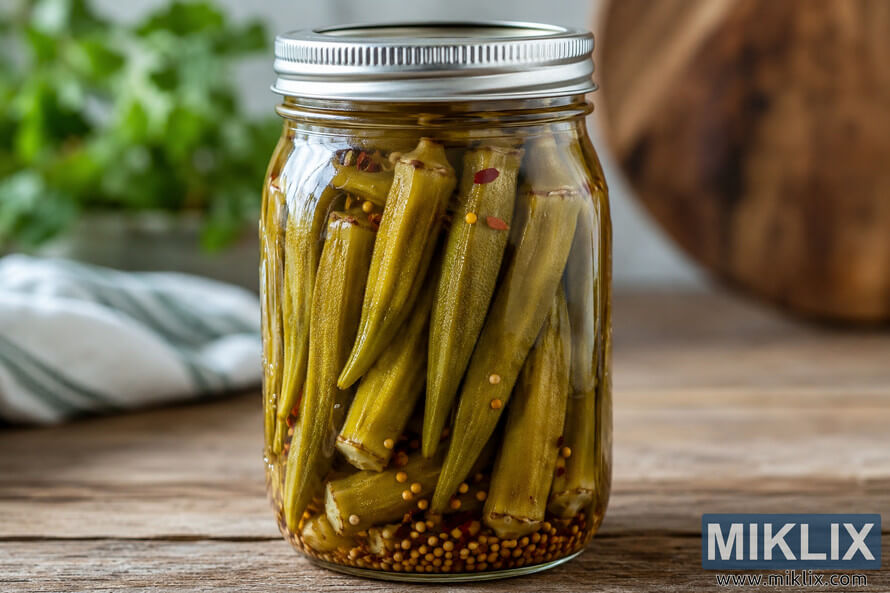
Photorealistic image of pickled okra preserved in a clear glass mason jar with mustard seeds and red pepper flakes, displayed on a rustic wooden table with soft natural lighting and an unbranded, farmhouse-style presentation.
Photorealistic Pickled Okra Preserved in a Glass Mason Jar on a Rustic Wooden Table
Dostępne wersje tego obrazu
Pliki graficzne dostępne do pobrania poniżej są mniej skompresowane i mają wyższą rozdzielczość - a w rezultacie wyższą jakość - niż obrazy osadzone w artykułach i stronach na tej stronie, które są bardziej zoptymalizowane pod kątem rozmiaru pliku w celu zmniejszenia zużycia przepustowości.
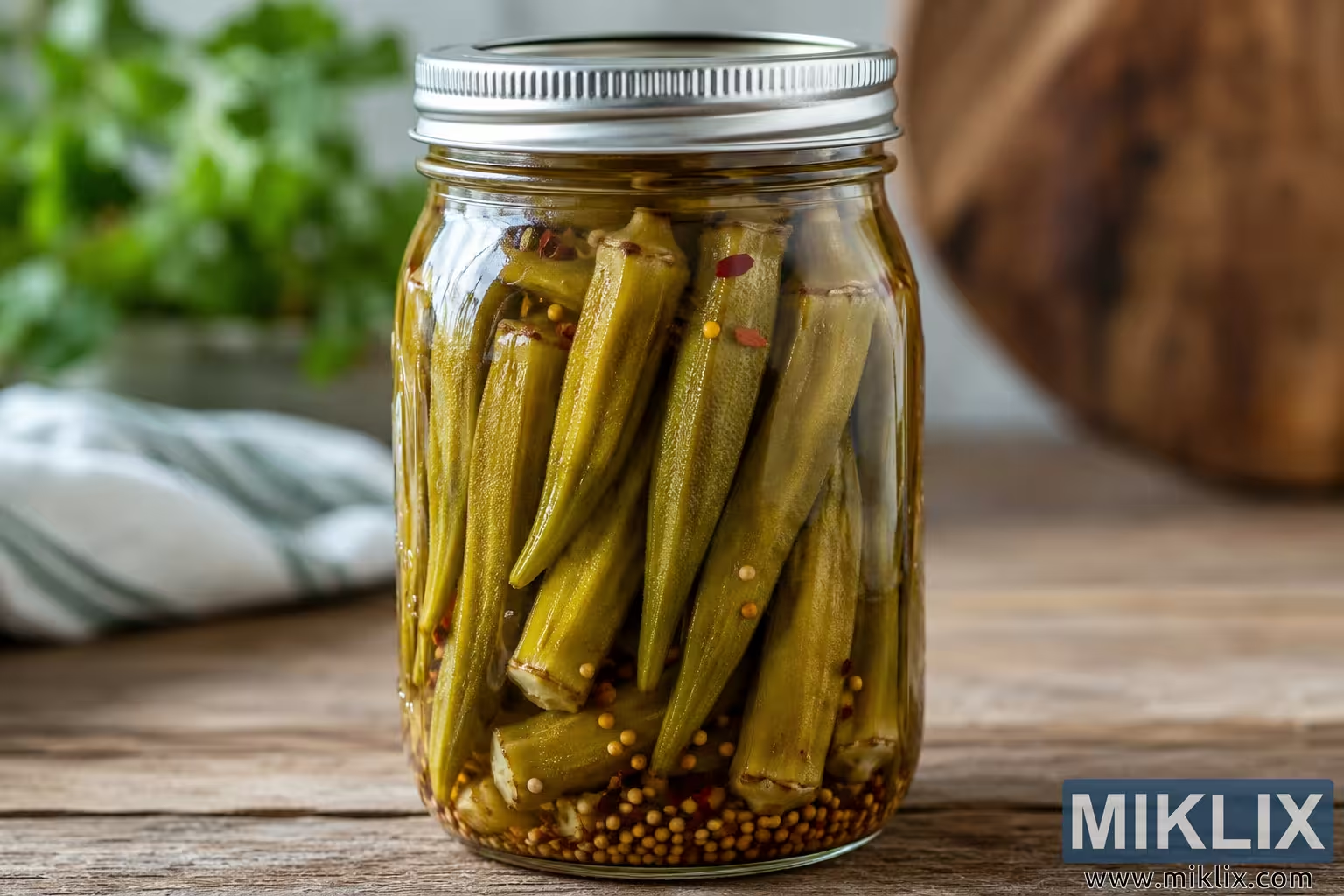
Rozmiar regularny (1,536 x 1,024)
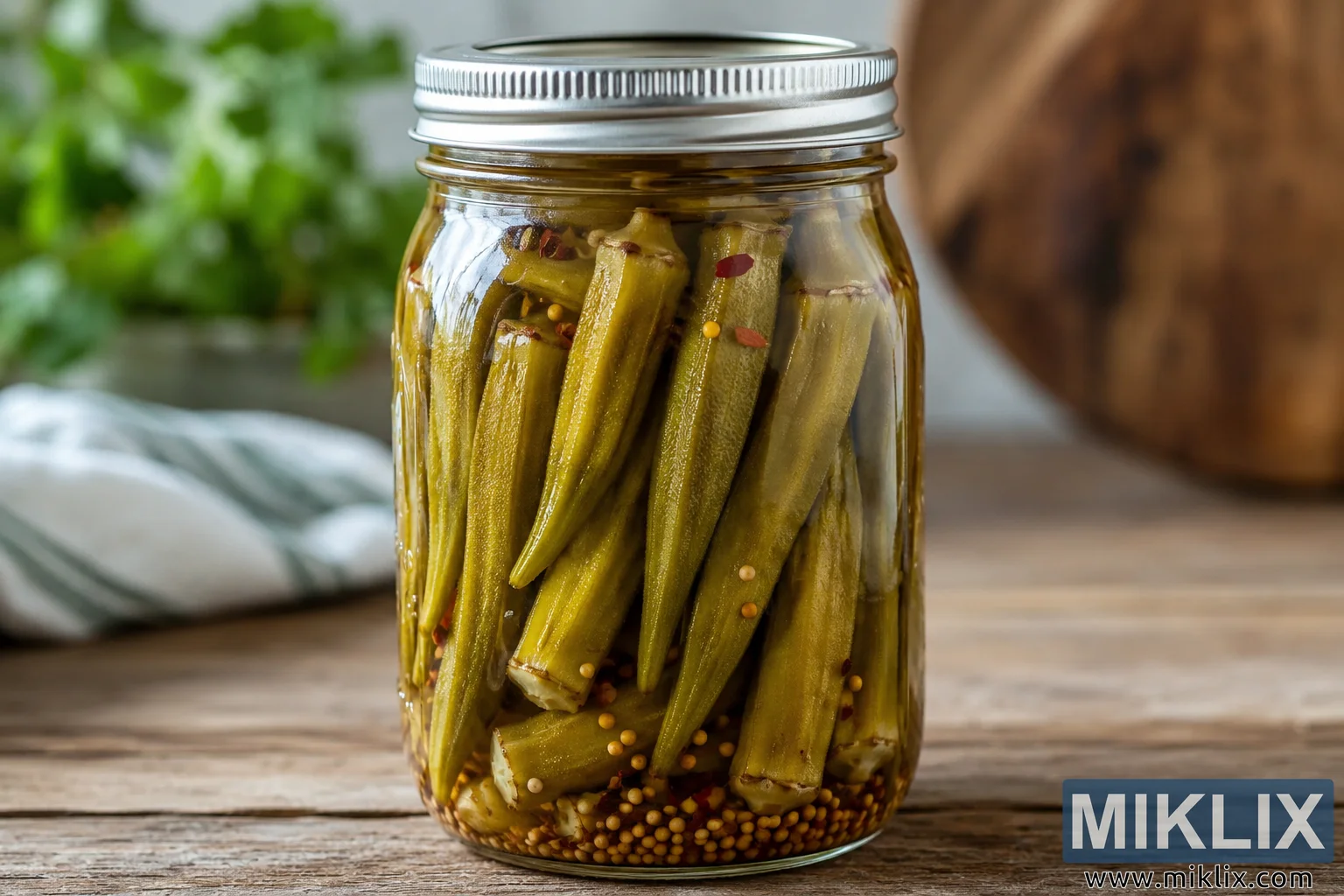
Duży rozmiar (3,072 x 2,048)
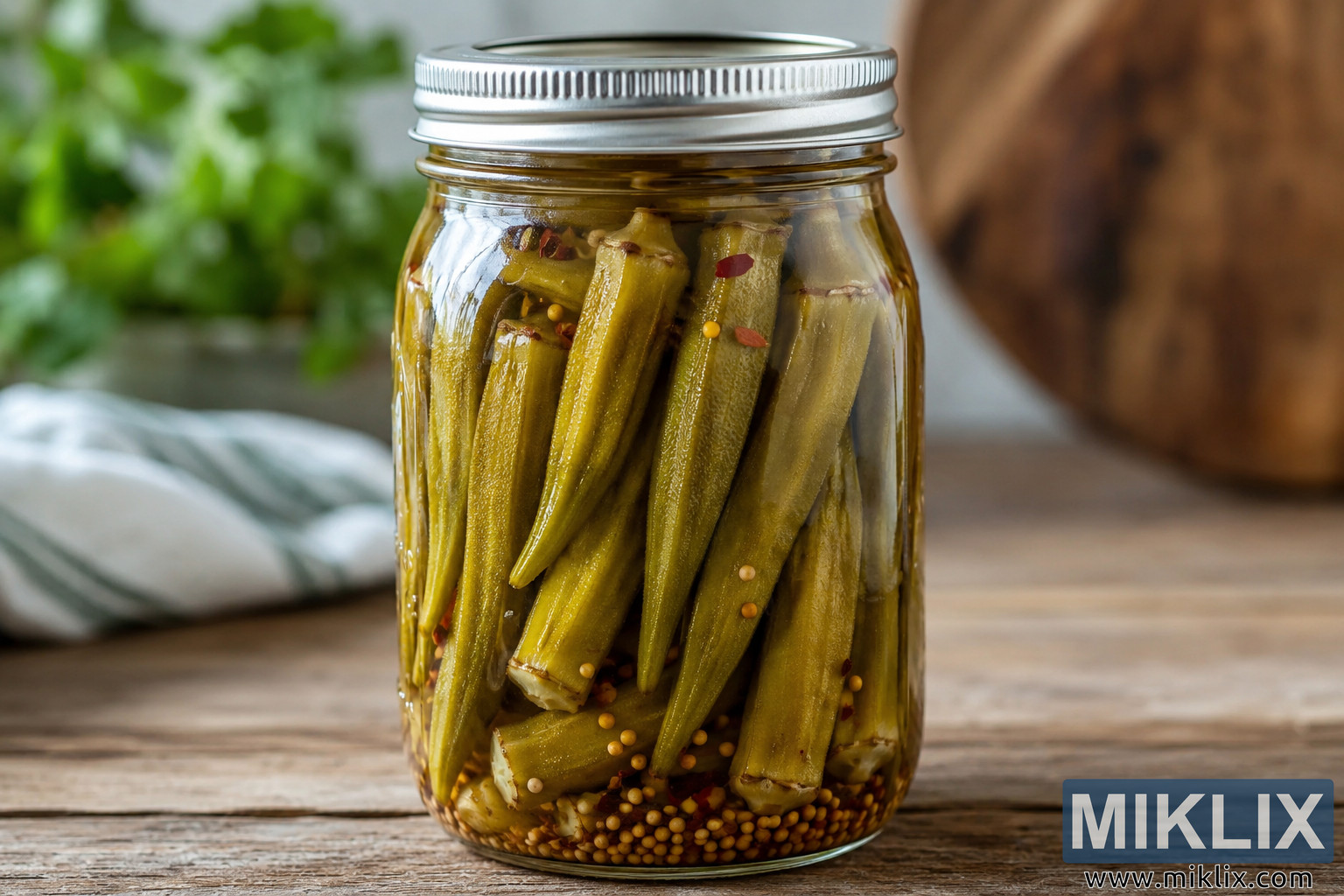
Bardzo duży rozmiar (4,608 x 3,072)
Bardzo duży rozmiar (6,144 x 4,096)
Komicznie duży rozmiar (1,048,576 x 699,051)
- Wciąż wgrywam... ;-)
Opis obrazu
This image presents a highly detailed, photorealistic still life centered on a clear glass mason jar filled with pickled okra. The composition focuses on the jar as the unmistakable subject, placing it prominently in the foreground where every detail of the preserved vegetables and the surrounding environment can be appreciated. The jar stands upright on a rustic wooden tabletop whose visible grain, weathered texture, and natural imperfections contribute warmth and an authentic farmhouse atmosphere. The overall scene is illuminated with soft, natural-looking light that gently wraps around the glass, emphasizing its transparency and creating delicate reflections and subtle highlights without overwhelming the image. Inside the jar, numerous whole okra pods are packed vertically and at slight angles, creating a layered arrangement that appears both practical and visually appealing. Their green color has shifted toward muted olive and yellow-green tones characteristic of vegetables that have been preserved in a vinegar-based brine. The pods display fine ridges running lengthwise, with tapered ends pointing in different directions, giving the arrangement a natural rather than perfectly uniform appearance. The clear pickling liquid fills the jar nearly to the top, allowing the vegetables to remain fully submerged while also acting as a transparent medium through which the contents remain sharply visible. Suspended throughout the brine are small round mustard seeds that introduce bright golden accents. Tiny pieces of crushed red pepper are scattered among the okra, adding touches of deep red that contrast pleasantly with the green vegetables. Additional spices collect naturally near the bottom of the jar, where a denser layer of mustard seeds forms an attractive textured base visible through the glass. The jar itself features thick, clear glass with gently rounded shoulders and slightly faceted sides that catch the incoming light. Small reflections trace the contours of the glass, emphasizing its clean, polished surface. A silver-colored metal lid sits securely on top, displaying fine concentric ridges and a brushed metallic appearance. The lid is completely plain, containing no logos, printed markings, or recognizable branding, preserving the generic presentation of the container. Around the jar, the scene remains intentionally uncluttered. The wooden tabletop extends across the lower portion of the composition with warm brown tones and realistic surface wear. In the softly blurred background, shallow depth of field separates the subject from its surroundings. Gentle green foliage appears off to one side as an indistinct mass of leaves, suggesting fresh herbs or nearby garden plants without drawing attention away from the jar. On the opposite side, a large rounded wooden object, possibly a cutting board or serving board, appears heavily out of focus, contributing additional rustic character and visual balance. Near the lower left corner, a folded cloth with muted light tones and subtle green striping is also blurred, reinforcing the impression of a kitchen or food preparation setting while remaining secondary to the main subject. The lighting appears diffuse and natural, producing soft shadows beneath the jar and subtle reflections along the curved glass surface. Contrast remains moderate, allowing the textures of the okra, seeds, glass, wood, and metal lid to remain clearly distinguishable without harsh highlights or deep shadows. Color harmony is achieved through earthy greens, golden yellow spices, warm brown wood, and neutral metallic silver. The overall mood is calm, inviting, wholesome, and artisanal, evoking the tradition of home preserving and pantry storage. The photographic style resembles a professional food photograph created with careful attention to composition, texture, and realism. Fine detail remains visible throughout the focal plane, especially in the front-facing okra pods, the suspended spices, and the glass reflections, while the background blur creates pleasing separation and emphasizes the preserved vegetables as the central point of interest. No people are present in the scene, and there are no labels, trademarks, decorative graphics, or commercial packaging elements visible anywhere within the image. The composition communicates freshness, craftsmanship, and simple culinary tradition through realistic textures, balanced lighting, and an uncluttered presentation focused entirely on the beautifully preserved pickled okra.
Obraz jest powiązany z: Okra Benefits: How This Nutritious Vegetable Supports Your Health