
Obraz: Proper Portion Sizes and Intake Guidelines for Tangerines
Opublikowano:
Ostatnia aktualizacja: 11 sierpnia 2026 18:22:47 UTC
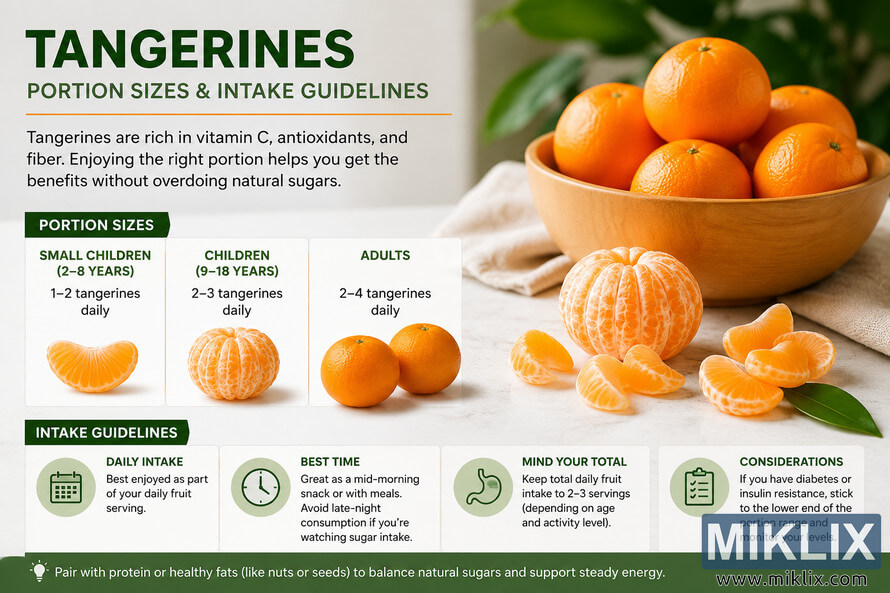
Educational landscape infographic illustrating proper tangerine portion sizes and intake guidelines with realistic fruit photography, age-based serving recommendations, nutrition tips, and a clean, brand-free design suitable for healthy eating and wellness content.
Proper Portion Sizes and Intake Guidelines for Tangerines
Dostępne wersje tego obrazu
Pliki graficzne dostępne do pobrania poniżej są mniej skompresowane i mają wyższą rozdzielczość - a w rezultacie wyższą jakość - niż obrazy osadzone w artykułach i stronach na tej stronie, które są bardziej zoptymalizowane pod kątem rozmiaru pliku w celu zmniejszenia zużycia przepustowości.
Rozmiar regularny (1,536 x 1,024)
Duży rozmiar (3,072 x 2,048)
Bardzo duży rozmiar (4,608 x 3,072)
Bardzo duży rozmiar (6,144 x 4,096)
Komicznie duży rozmiar (1,048,576 x 699,051)
- Wciąż wgrywam... ;-)
Opis obrazu
This landscape-oriented educational infographic presents a visually balanced overview of recommended tangerine portion sizes and practical intake guidelines. The overall design combines a clean nutrition-reference layout with warm, natural food photography. The composition is divided into two primary sections. The left half focuses on structured educational content using clearly separated panels, while the right half showcases an inviting still-life arrangement of fresh tangerines in a bright, softly lit kitchen-inspired setting.
At the very top of the infographic is a large headline reading "TANGERINES," followed immediately by a subtitle indicating that the content concerns portion sizes and intake guidelines. The typography is bold, modern, and highly legible, using dark green lettering that contrasts against a light neutral background. A thin orange divider line separates the title area from the explanatory text below.
Beneath the heading is a short introductory paragraph explaining that tangerines are naturally rich in vitamin C, antioxidants, and dietary fiber. The paragraph emphasizes that appropriate portion sizes allow people to enjoy nutritional benefits while avoiding unnecessary excess intake of naturally occurring sugars. The text is arranged in multiple easy-to-read lines with generous spacing.
The central educational section begins with a dark green banner labeled "PORTION SIZES." Below this banner are three evenly sized information panels placed horizontally next to one another. Each panel represents a different age group. The first panel is dedicated to young children approximately two to eight years old and recommends one to two tangerines daily. The second panel covers older children and teenagers, approximately nine to eighteen years old, suggesting two to three tangerines daily. The third panel is intended for adults and recommends approximately two to four tangerines daily. Each recommendation is paired with a realistic illustration or photograph of peeled or whole tangerines to reinforce the serving suggestion visually.
The lower educational section begins with another green heading labeled "INTAKE GUIDELINES." Four rectangular cards extend across the width of the infographic. Each card contains a circular green icon above explanatory text. The first card discusses incorporating tangerines as part of one's overall daily fruit intake. The second card recommends consuming them during daytime snacks or alongside meals while avoiding excessive late-night consumption for individuals monitoring sugar intake. The third card reminds readers to keep overall fruit intake balanced throughout the day and adjust portions according to age and activity level. The fourth card notes that people managing blood sugar or insulin-related concerns may prefer the lower end of the suggested serving range while monitoring their individual dietary needs.
Running along the very bottom is a wide green footer banner containing an additional nutrition tip. The tip recommends pairing tangerines with protein or healthy fats, such as nuts or seeds, to help create a more balanced snack and support steadier energy throughout the day.
The right half of the composition is devoted almost entirely to appealing food photography. A medium-sized wooden bowl sits on a light-colored tabletop and contains several vibrant orange whole tangerines. The fruit displays natural dimpling and subtle highlights that suggest freshness. In front of the bowl rests one completely peeled tangerine with neatly separated segments still arranged together in a spherical form. Several additional loose segments are scattered naturally across the tabletop, creating visual movement and reinforcing the concept of portion sizes. A single green leaf lies beside some of the fruit, adding color contrast and freshness.
The background is softly blurred using shallow depth of field, featuring muted green foliage and warm neutral tones that evoke a calm kitchen or dining environment. Gentle natural lighting illuminates both the educational panels and the fruit, producing soft shadows without harsh contrast. The overall color palette combines oranges, greens, creams, and light wood tones to create a fresh, healthy, and approachable appearance.
No commercial products, logos, trademarks, packaging, or recognizable brands appear anywhere in the image. The design remains entirely educational and generic. The infographic communicates nutritional guidance through an organized combination of headings, structured information panels, icons, supportive photography, and balanced spacing. The overall presentation is clean, professional, informative, and visually inviting, making it suitable for general nutrition education, wellness resources, healthy eating articles, or informational web content.
Obraz jest powiązany z: Peel Back the Benefits: Why Tangerines Are So Good for You