
Obraz: Step-by-Step Pumpkin Preparation Process
Opublikowano:
Ostatnia aktualizacja: 7 września 2026 06:31:23 UTC
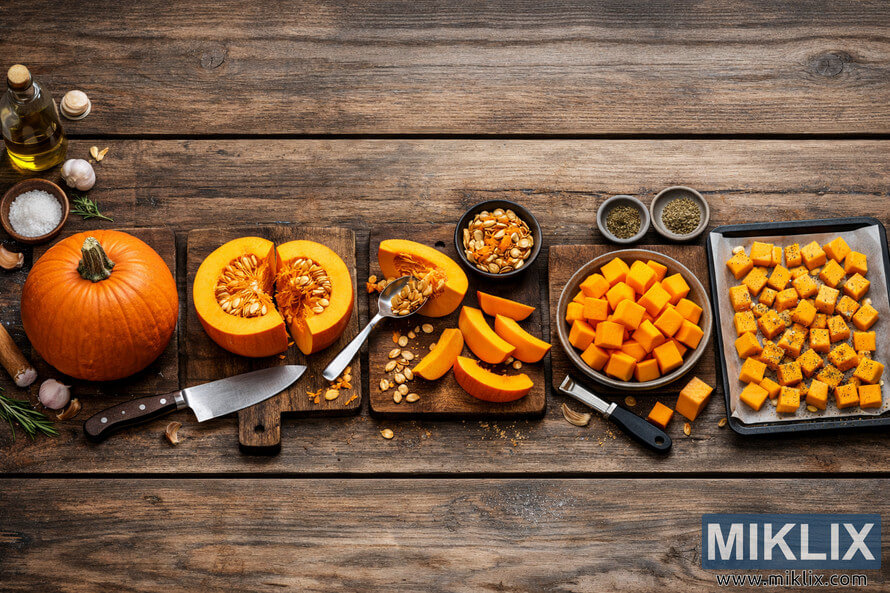
Explore the complete step-by-step pumpkin preparation process, from selecting and cutting a fresh pumpkin to seasoning and roasting the cubes. This detailed visual guide captures each stage with natural lighting and rustic charm.
Step-by-Step Pumpkin Preparation Process
Dostępne wersje tego obrazu
Pliki graficzne dostępne do pobrania poniżej są mniej skompresowane i mają wyższą rozdzielczość - a w rezultacie wyższą jakość - niż obrazy osadzone w artykułach i stronach na tej stronie, które są bardziej zoptymalizowane pod kątem rozmiaru pliku w celu zmniejszenia zużycia przepustowości.
Rozmiar regularny (1,536 x 1,024)
Duży rozmiar (3,072 x 2,048)
Bardzo duży rozmiar (4,608 x 3,072)
Bardzo duży rozmiar (6,144 x 4,096)
Komicznie duży rozmiar (1,048,576 x 699,051)
- Wciąż wgrywam... ;-)
Opis obrazu
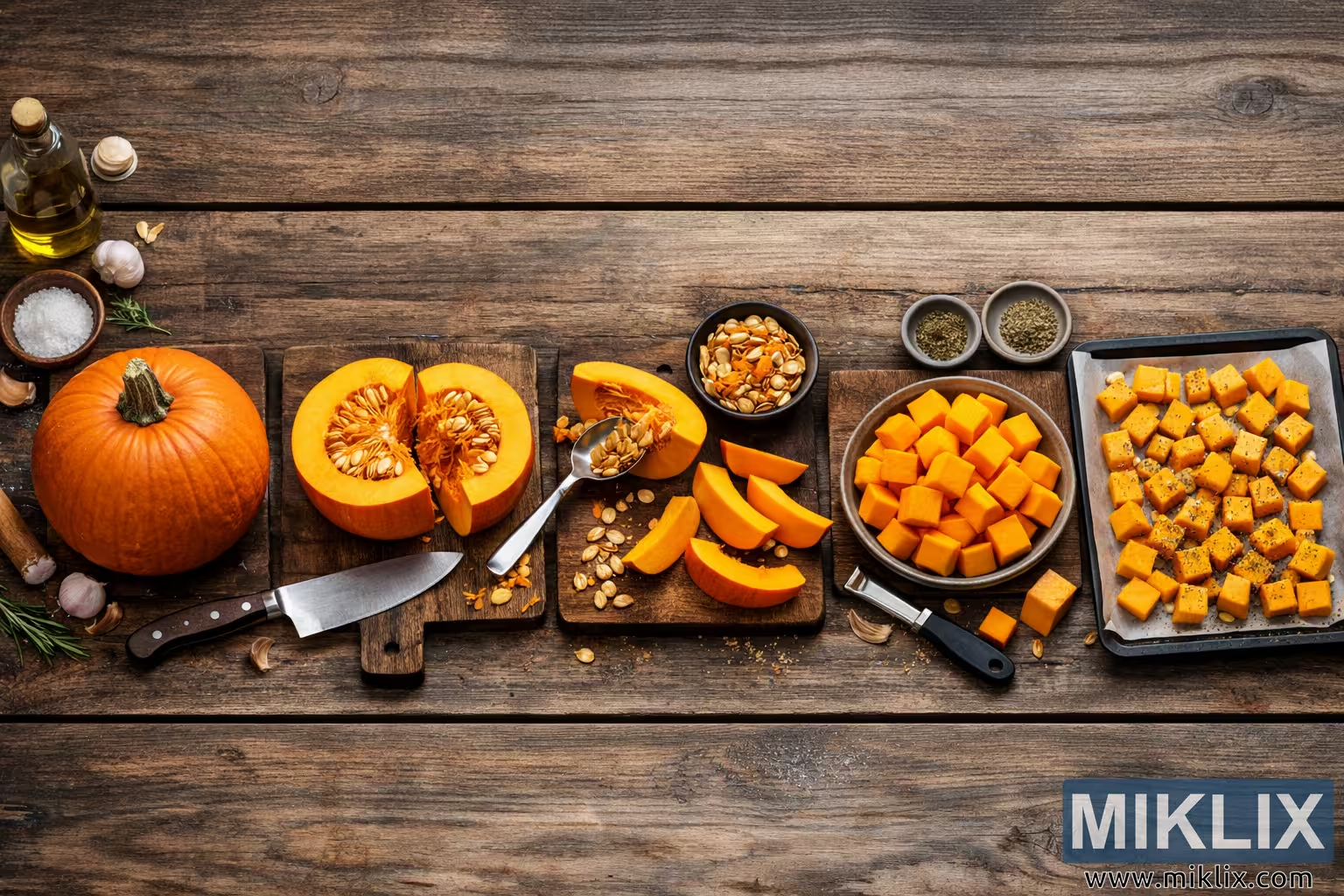
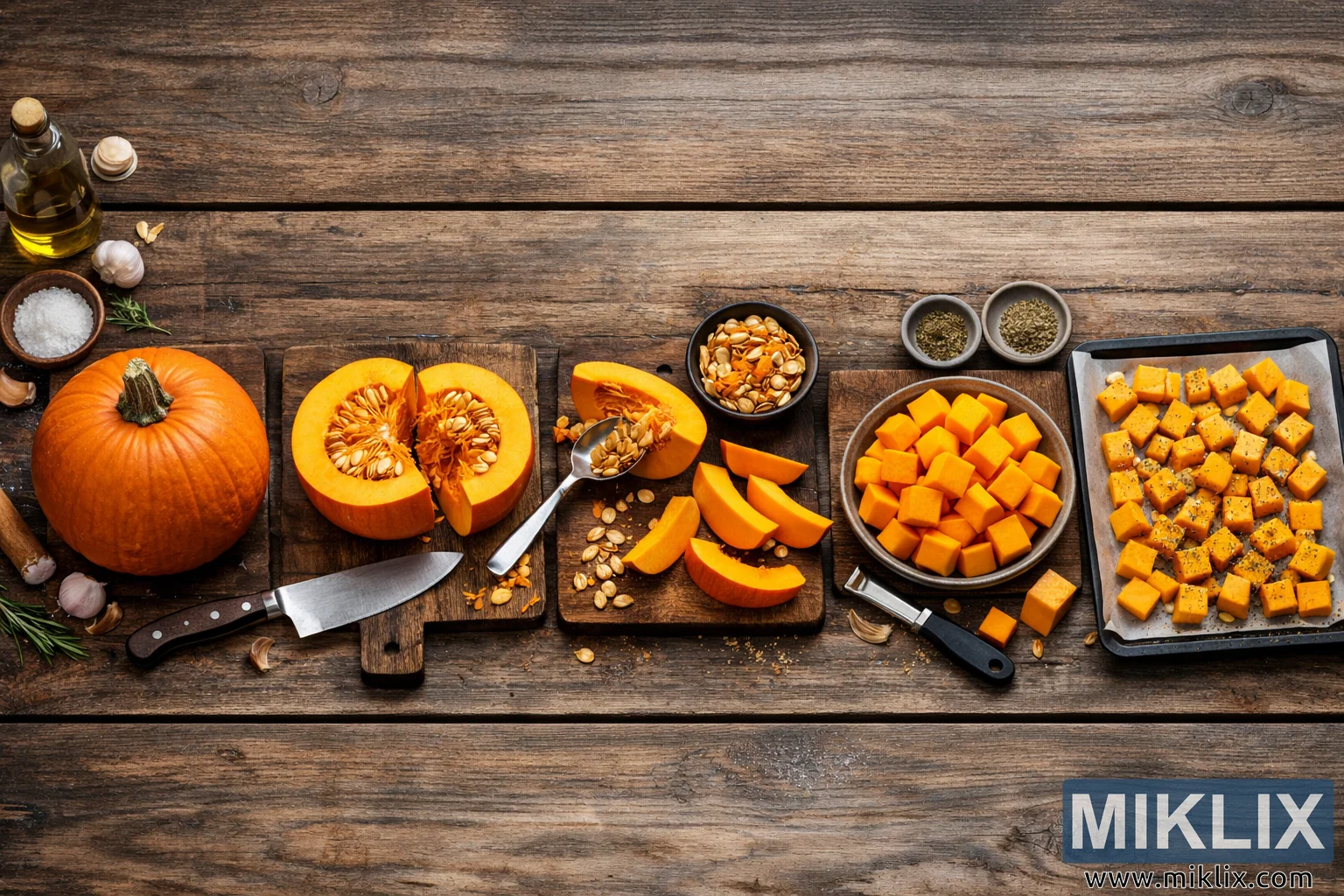
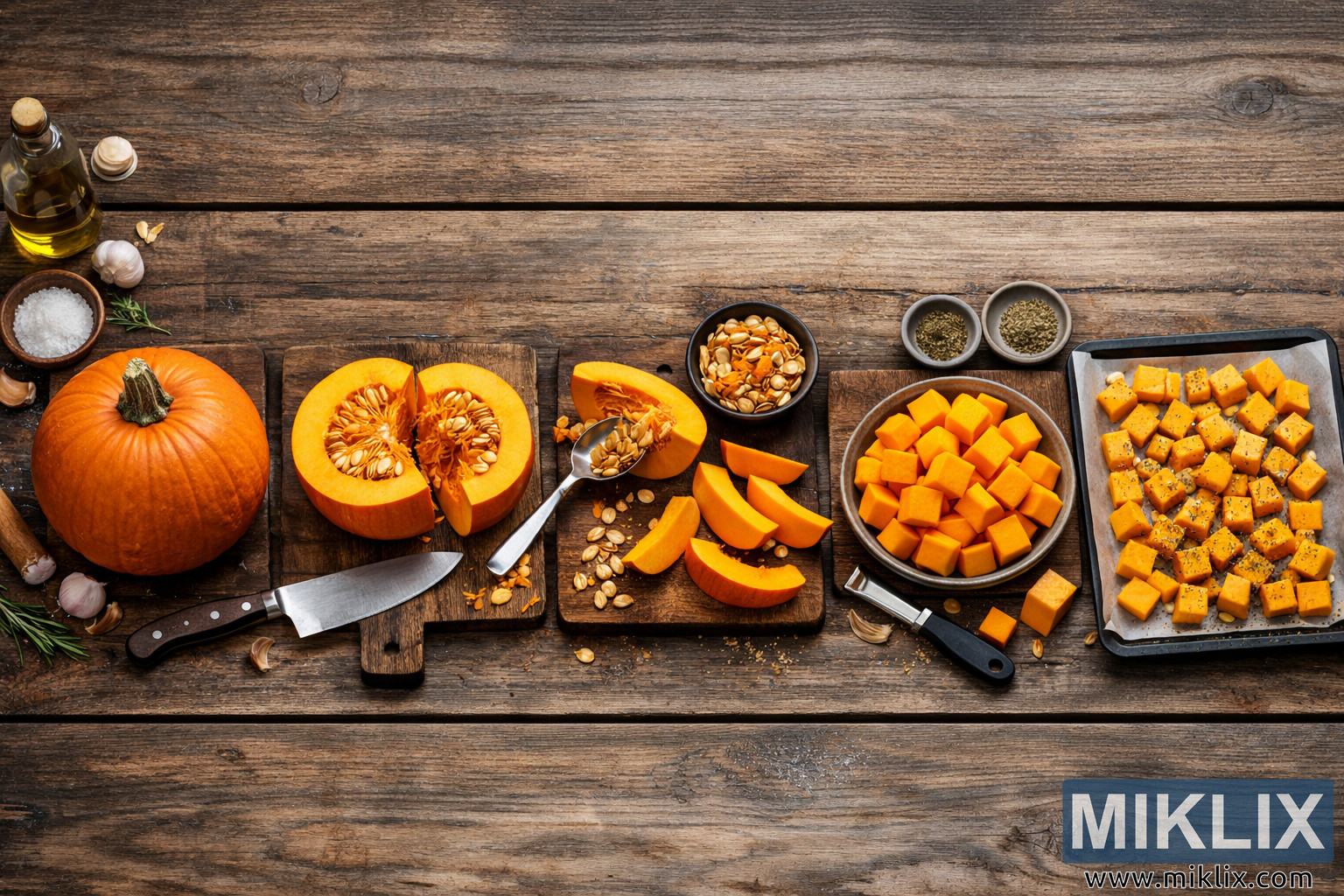
The image presents a comprehensive, visually engaging depiction of the step-by-step pumpkin preparation process arranged horizontally across a rustic wooden surface. The composition unfolds like a culinary timeline, guiding the viewer from the raw, untouched pumpkin to the final stage of seasoned cubes ready for roasting. Each segment of the image is carefully staged to highlight a distinct phase of preparation, with natural lighting that enhances the warm tones of the pumpkin and the earthy texture of the wood beneath it.
On the far left, a whole, round pumpkin with a vibrant orange hue and a greenish-brown stem sits proudly on the wooden surface. Its smooth skin glows under soft daylight, evoking the freshness of autumn harvests. Surrounding the pumpkin are small culinary props that set the scene: a glass bottle of olive oil, a small bowl of coarse salt, a few garlic cloves, and sprigs of rosemary. These elements not only add realism but also suggest the flavors that will later complement the pumpkin. The arrangement feels natural yet deliberate, as if the viewer has just stepped into a cozy kitchen mid-preparation.
Moving to the second stage, the pumpkin is halved on a sturdy wooden cutting board. A large chef’s knife rests beside it, its blade glinting faintly. The interior of the pumpkin reveals a rich, fibrous network of seeds and pulp, glistening with moisture. The contrast between the smooth outer skin and the textured inner cavity creates a striking visual balance. This stage captures the moment of transformation—the transition from whole produce to workable ingredient.
In the third step, the process becomes more tactile. A metal spoon is shown scooping out the seeds and stringy pulp into a small bowl placed nearby. The bowl is partially filled with the extracted contents, and a few loose seeds are scattered across the cutting board, adding authenticity to the scene. The viewer can almost sense the motion of the spoon and the subtle resistance of the fibrous strands being removed. The lighting emphasizes the glossy surface of the seeds and the matte texture of the pumpkin flesh, creating a dynamic interplay of materials.
The fourth stage displays the pumpkin sliced into neat wedges. The cutting board now hosts several crescent-shaped pieces arranged in an orderly fashion. A small bowl containing cleaned pumpkin seeds sits to the upper left, while a handful of seeds are scattered casually nearby. This section conveys a sense of rhythm and precision—the careful progression of culinary preparation. The orange wedges contrast beautifully against the dark wood, their edges sharp and clean, suggesting readiness for the next step.
In the fifth step, the pumpkin wedges have been peeled and cut into uniform cubes. The cubes are collected in a bowl placed on the cutting board, their geometric shapes forming a pleasing pattern. Nearby, a vegetable peeler lies beside the board, hinting at the meticulous work that preceded this stage. Small dishes of ground black pepper and dried herbs rest to the upper right, ready to season the cubes. The composition here feels balanced and methodical, emphasizing the transformation from raw ingredient to refined culinary component.
Finally, the sixth and last stage showcases the culmination of the process: a baking sheet lined with parchment paper, filled with seasoned pumpkin cubes. The cubes are evenly spaced, glistening with a light coating of oil and sprinkled with herbs and spices. To the upper right, a small bowl of oil and a dish of seasoning complete the tableau. The visual narrative concludes with a sense of anticipation—the cubes are ready to be roasted, promising a fragrant, flavorful dish.
Throughout the image, subtle details enrich the storytelling: scattered pumpkin seeds, stray rosemary sprigs, and the gentle interplay of light and shadow across the wooden surface. The overall atmosphere is warm, inviting, and authentically rustic. The lighting is even and natural, ensuring that each stage is clearly visible and aesthetically cohesive. The image not only documents a cooking process but also celebrates the beauty of seasonal produce and the artistry of preparation. It evokes the tactile pleasure of cooking, the aroma of fresh herbs, and the satisfaction of transforming a simple pumpkin into a delicious meal. The composition’s horizontal flow mirrors the logical progression of steps, making it both educational and visually captivating. Every element—from the tools to the ingredients—contributes to a harmonious narrative that embodies the essence of home cooking and autumnal warmth.
Obraz jest powiązany z: Pumpkins: The Nutrient-Packed Superfood You Should Eat Year-Round