
Obraz: Medical Consultation on Dietary Precautions
Opublikowano:
Ostatnia aktualizacja: 5 sierpnia 2026 22:49:18 UTC
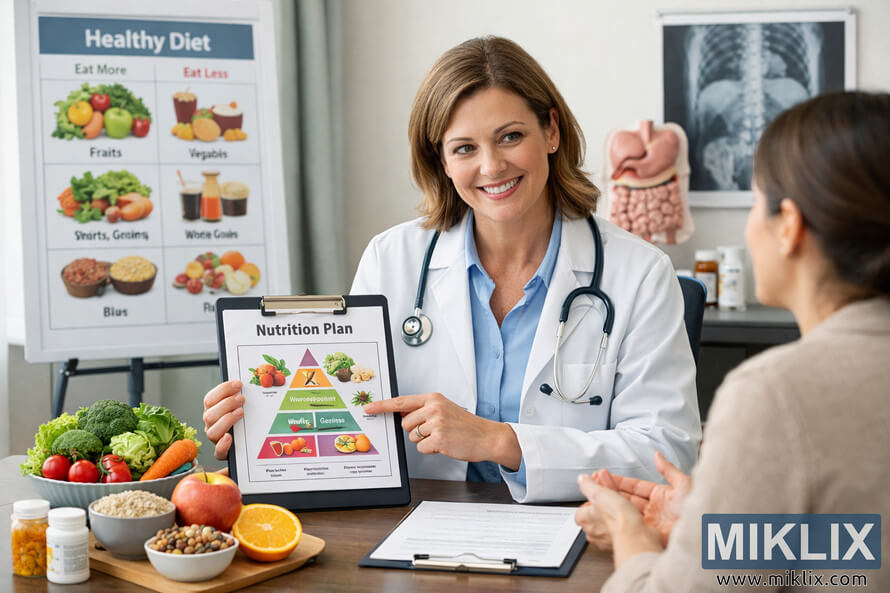
A detailed depiction of a medical consultation focused on dietary precautions, showing a doctor explaining a nutrition plan to a patient with visual aids and healthy foods in a clinical setting.
Medical Consultation on Dietary Precautions
Dostępne wersje tego obrazu
Pliki graficzne dostępne do pobrania poniżej są mniej skompresowane i mają wyższą rozdzielczość - a w rezultacie wyższą jakość - niż obrazy osadzone w artykułach i stronach na tej stronie, które są bardziej zoptymalizowane pod kątem rozmiaru pliku w celu zmniejszenia zużycia przepustowości.
Rozmiar regularny (1,536 x 1,024)
Duży rozmiar (3,072 x 2,048)
Bardzo duży rozmiar (4,608 x 3,072)
Bardzo duży rozmiar (6,144 x 4,096)
Komicznie duży rozmiar (1,048,576 x 699,051)
- Wciąż wgrywam... ;-)
Opis obrazu
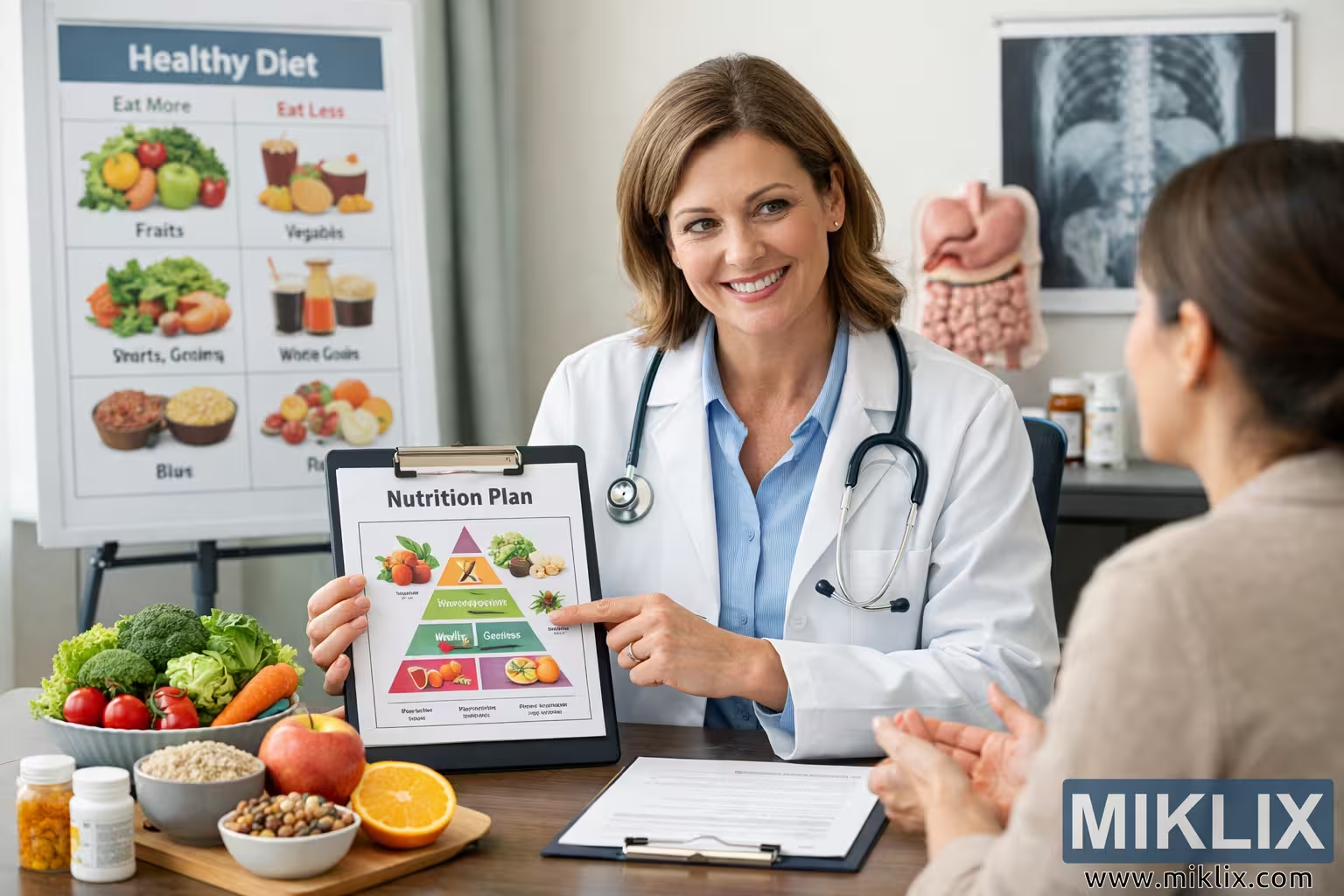
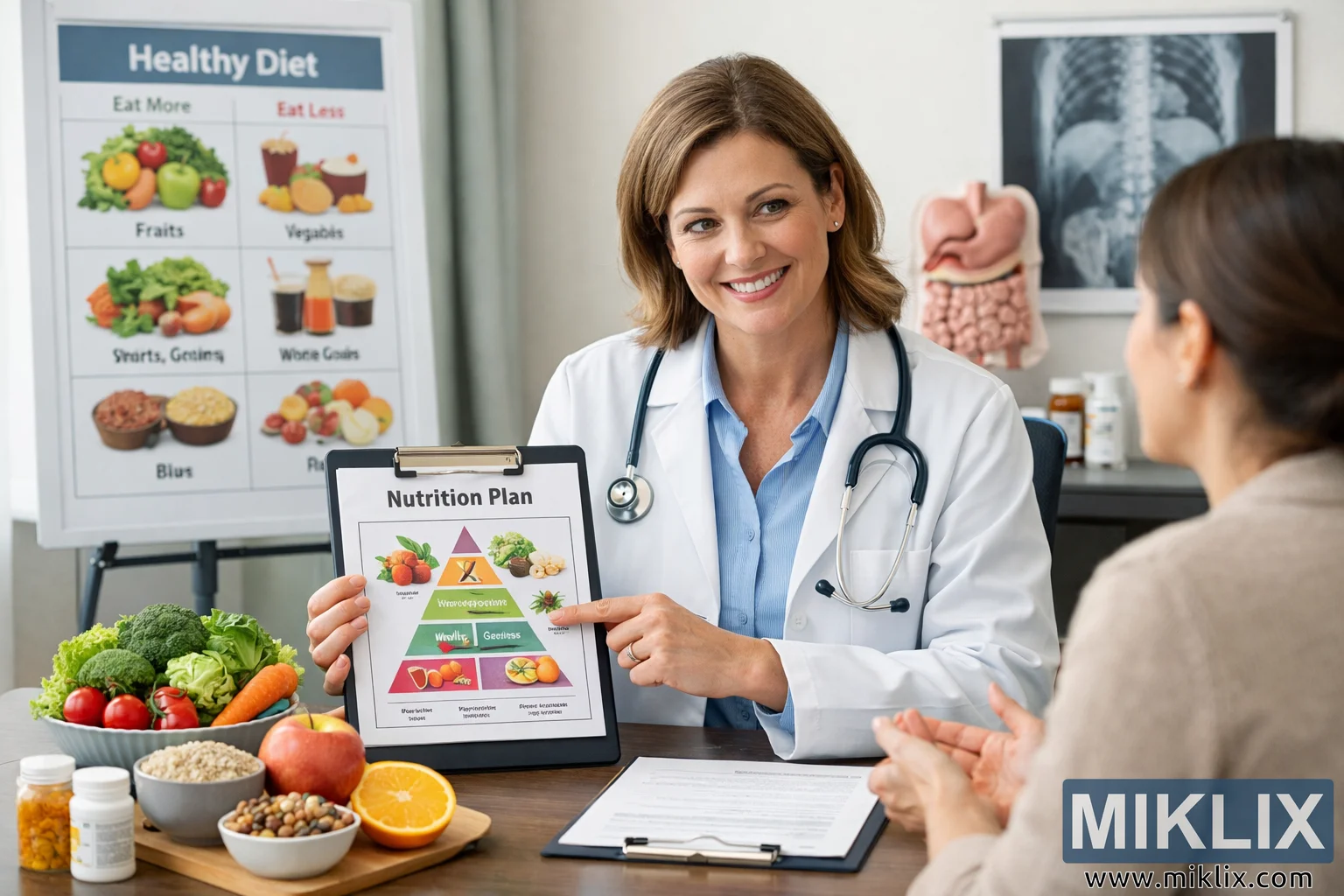
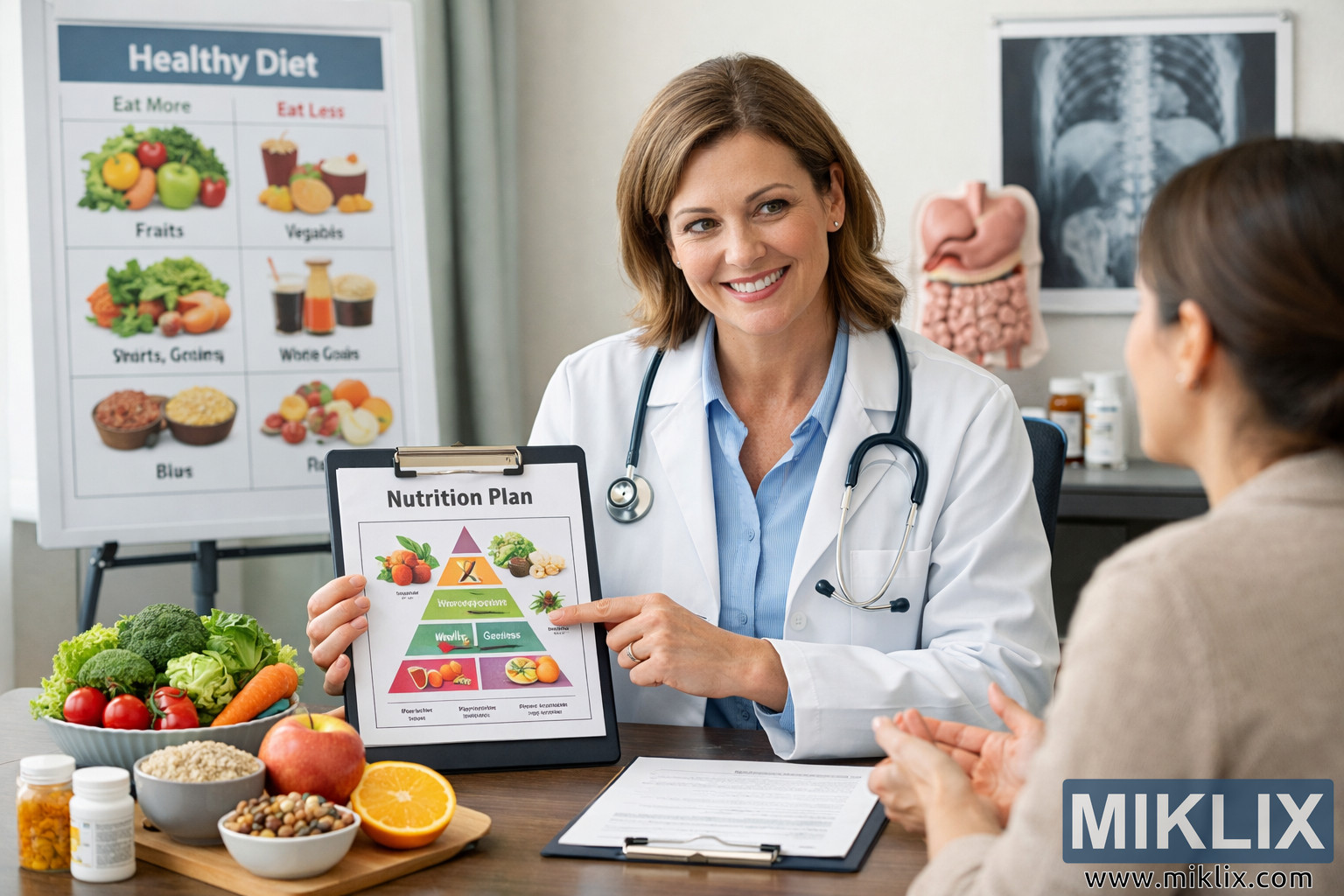
The image portrays a professional medical consultation centered on dietary precautions, captured in a bright, well-organized clinical environment. The composition features a female doctor of Caucasian descent seated on the left side of the frame, wearing a crisp white lab coat over a light blue blouse. A silver stethoscope hangs around her neck, symbolizing her medical authority. Her demeanor is warm and approachable, with a gentle smile that conveys empathy and attentiveness. She holds a clipboard in her left hand, displaying a document titled 'Nutrition Plan.' The chart on the clipboard is colorful and structured, featuring a balanced diet pyramid divided into sections labeled 'Fruits & Vegetables,' 'Whole Grains,' and 'Lean Proteins.' Each section includes small illustrative icons of food items such as apples, fish, and bread, reinforcing the educational nature of the consultation.
The doctor’s right hand points to the pyramid, emphasizing specific dietary recommendations as she speaks to her patient. The patient, seated on the right side of the image, is partially visible from behind and in profile. She wears a beige sweater and listens attentively, her hands gesturing slightly as she engages in the discussion. The interaction between the two figures conveys a sense of trust and collaboration, highlighting the importance of communication in healthcare.
In the foreground, the doctor’s desk serves as a visual anchor for the theme of nutrition. It is neatly arranged with an assortment of healthy food items: a bowl brimming with fresh vegetables including broccoli, tomatoes, carrots, and lettuce; a shiny red apple; a sliced orange revealing its vibrant interior; a bowl of mixed nuts; and a small dish of rice. These items symbolize the practical application of the dietary advice being discussed. To the right of the food display, several prescription pill bottles and a glass of water are placed, subtly connecting the concepts of medical treatment and nutritional therapy.
The background reinforces the educational and clinical atmosphere. On the left side, a large poster titled 'Healthy Diet' stands prominently. It is divided into two sections: 'Eat More' and 'Eat Less.' The 'Eat More' section features colorful illustrations of fruits, vegetables, and whole grains, while the 'Eat Less' section depicts sugary drinks, fast food, and sweets. This visual aid complements the doctor’s explanation, providing a clear and accessible reference for the patient. To the right of the doctor, a model of the human digestive system is displayed on a shelf, adding anatomical context to the discussion. Above it, an X-ray image of the abdominal area is illuminated on a lightbox, suggesting that the consultation may also involve medical evaluation related to digestion or metabolism.
The lighting in the room is soft yet bright, creating a welcoming and professional ambiance. Natural light filters through unseen windows, enhancing the clarity and warmth of the scene. The color palette is dominated by neutral tones—white, beige, and light blue—balanced by the vivid hues of the fruits and vegetables, which draw the viewer’s attention to the theme of healthy living. The overall composition is harmonious, with the doctor and patient positioned symmetrically across the frame, symbolizing balance and mutual respect.
The image captures not only the technical aspects of a medical consultation but also the emotional and educational dimensions. It emphasizes preventive healthcare, patient empowerment, and the integration of nutrition into medical practice. The doctor’s expression and gestures convey reassurance and professionalism, while the patient’s attentive posture reflects engagement and willingness to learn. The presence of visual aids and real food items bridges the gap between theory and practice, making the concept of dietary precautions tangible and relatable.
This scene encapsulates the essence of modern healthcare—where medical expertise meets personalized guidance, and where lifestyle adjustments are discussed with compassion and clarity. It serves as a visual representation of the collaborative relationship between doctor and patient, underscoring the role of education in promoting long-term wellness. The image’s meticulous detail, from the texture of the vegetables to the subtle reflections on the glass of water, contributes to its realism and depth, making it an effective and inspiring portrayal of nutritional counseling in a medical setting.
Obraz jest powiązany z: Shallots: The Small Vegetable with Big Nutritional Benefits