
Obraz: Endive Plants Growing in Agricultural Field with Visible Root System Cross-Section
Opublikowano:
Ostatnia aktualizacja: 24 maja 2026 15:46:23 UTC
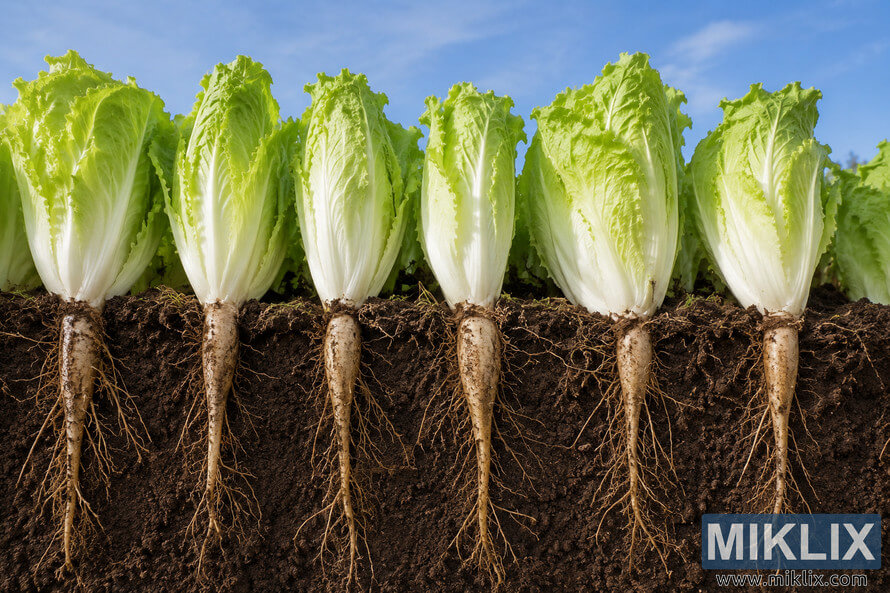
Detailed agricultural cross-section image of healthy endive plants growing in cultivated soil, featuring visible root systems, leafy plant structure, and nutrient-rich earth in a realistic farming landscape.
Endive Plants Growing in Agricultural Field with Visible Root System Cross-Section
Dostępne wersje tego obrazu
Pliki graficzne dostępne do pobrania poniżej są mniej skompresowane i mają wyższą rozdzielczość - a w rezultacie wyższą jakość - niż obrazy osadzone w artykułach i stronach na tej stronie, które są bardziej zoptymalizowane pod kątem rozmiaru pliku w celu zmniejszenia zużycia przepustowości.
Rozmiar regularny (1,536 x 1,024)
Duży rozmiar (3,072 x 2,048)
Bardzo duży rozmiar (4,608 x 3,072)
Bardzo duży rozmiar (6,144 x 4,096)
Komicznie duży rozmiar (1,048,576 x 699,051)
- Wciąż wgrywam... ;-)
Opis obrazu
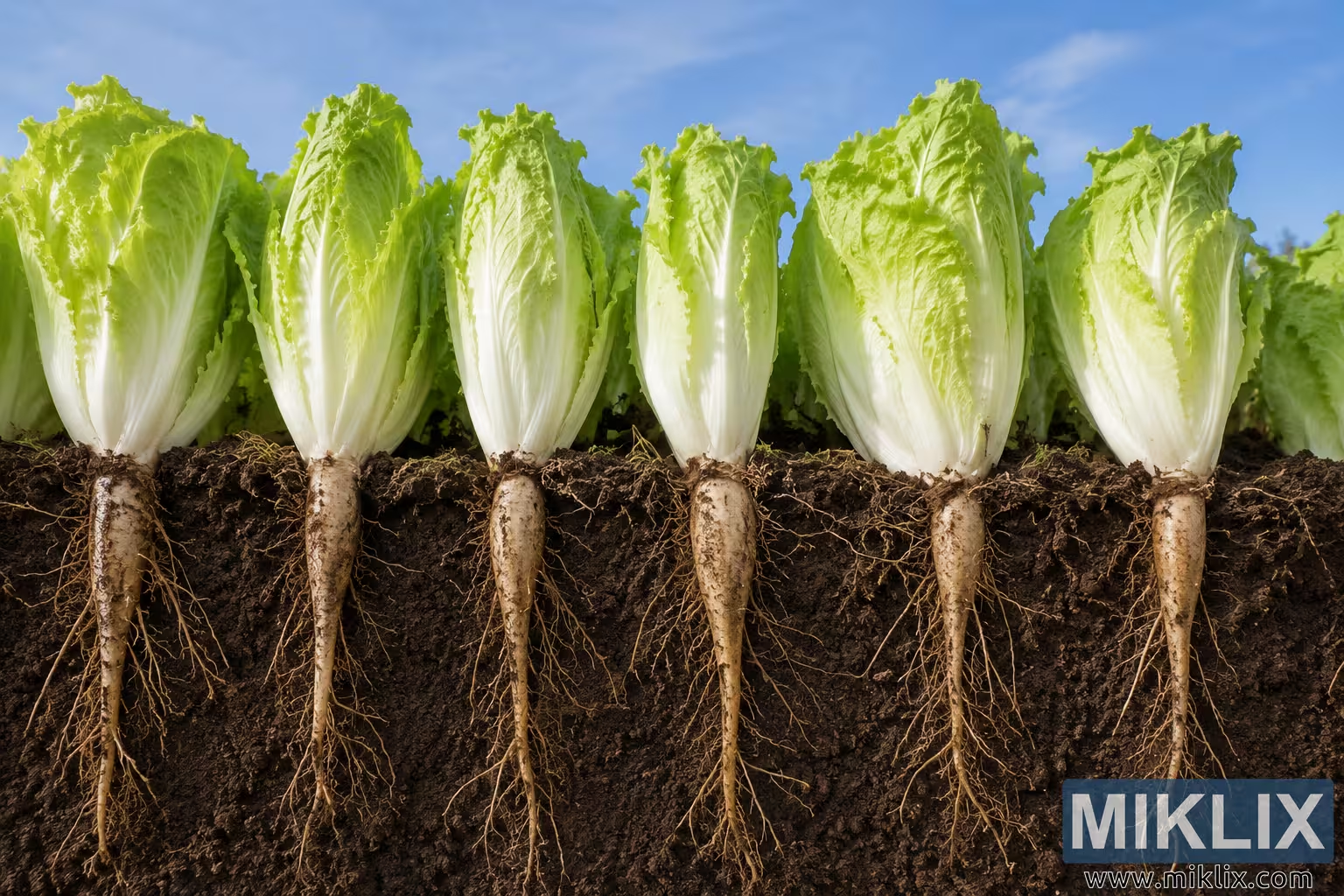
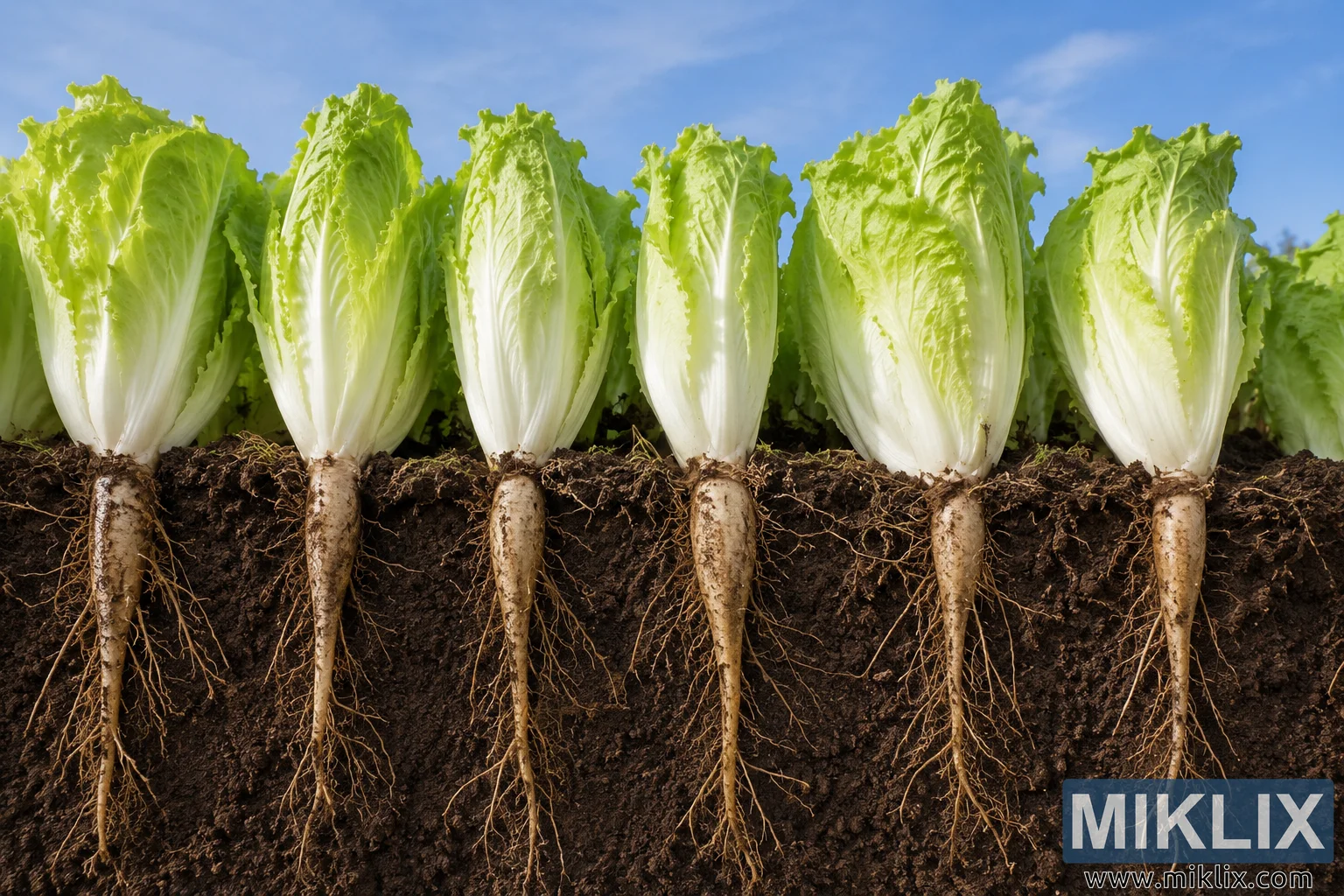
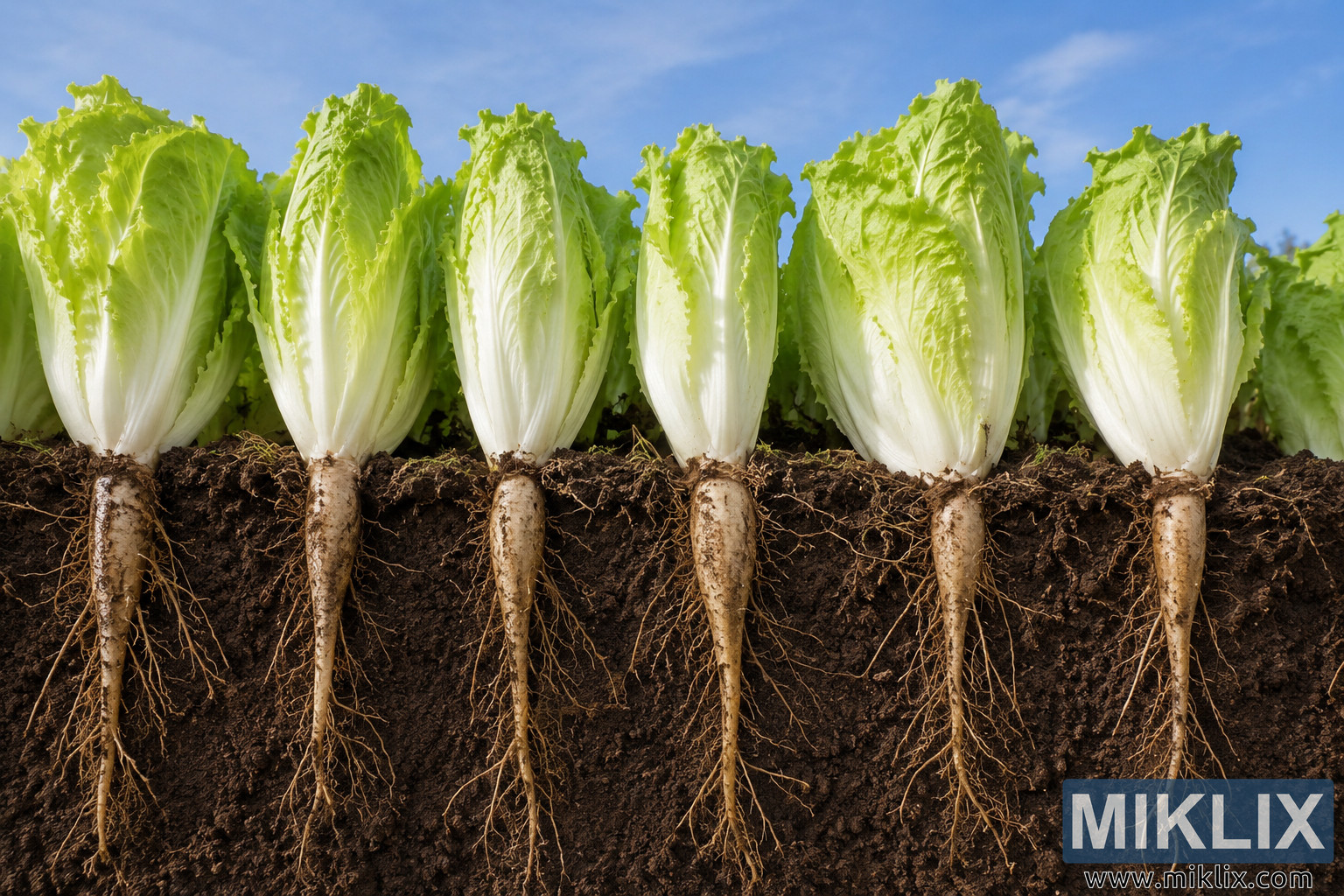
This high-resolution landscape-oriented agricultural image presents a highly detailed cross-sectional view of a cultivated field of mature endive plants growing in rich, dark soil beneath a clear blue sky. The composition is designed to visually communicate both the above-ground morphology and the underground root architecture of the crop in a realistic farming environment. The image captures multiple endive heads aligned in a row across the frame, emphasizing consistency in spacing, growth stage, and agricultural cultivation practices.
Above the soil surface, the endive plants display dense clusters of elongated, upright leaves with gently curled and textured edges. The leaves transition in color from pale creamy white near the center and lower stems to vibrant yellow-green and light green tones toward the outer leaf surfaces. Fine leaf veining is clearly visible throughout the foliage, providing a realistic botanical appearance and demonstrating the layered structure typical of healthy endive plants. The leaves appear crisp, hydrated, and naturally illuminated by soft daylight, suggesting optimal growing conditions. Subtle highlights and shadows across the foliage enhance the three-dimensional form of each plant while maintaining a natural agricultural aesthetic.
The field environment is represented through a clean horizontal arrangement of plants extending from the left side of the image to the right. Each endive head emerges directly from the soil with visible stem bases transitioning into elongated taproots. The orderly spacing of the plants reinforces the appearance of a professionally cultivated agricultural crop. The lighting conditions suggest either early morning or late afternoon sunlight, producing warm natural illumination without harsh contrast.
A defining feature of the image is the exposed underground cross-section revealing the entire root system beneath the soil surface. The soil profile occupies nearly the lower half of the composition and is rendered with exceptional texture and detail. The earth appears dark brown to nearly black in some areas, with visible variations in density, moisture, and organic composition. Fine granules, compacted layers, and irregular clumps of soil create a realistic impression of fertile agricultural land. The cross-sectional cut is clean and precise, allowing the viewer to study the underground structure of the crop.
Each endive plant displays a prominent central taproot extending vertically downward into the soil. The taproots are pale tan to light brown in color and taper gradually toward narrower root tips. Surrounding the main roots is a complex network of fine lateral roots and delicate root hairs branching outward in multiple directions. These smaller roots spread horizontally and diagonally through the soil, illustrating how the plant absorbs nutrients and moisture from the surrounding environment. The intricate root structures vary slightly from plant to plant, adding realism and preventing artificial uniformity.
The exposed roots provide an educational and scientific perspective on endive cultivation, making the image useful for agricultural, botanical, horticultural, and educational applications. The composition effectively demonstrates the relationship between the visible edible portion of the crop above ground and the hidden biological systems below the surface. The balance between plant foliage, soil profile, and root architecture creates a visually informative representation of crop development and plant anatomy.
In the background above the plants, the sky is rendered in soft gradients of blue with faint atmospheric cloud textures that remain unobtrusive and secondary to the agricultural subject matter. The horizon is intentionally minimized to maintain focus on the crop and soil cross-section. The overall visual style combines realism with clarity, producing an image suitable for scientific illustration, farming publications, agricultural education materials, environmental studies, gardening resources, and commercial crop presentations.
The image contains no visible branding, logos, machinery labels, or commercial identifiers. The focus remains entirely on the natural agricultural subject matter, emphasizing healthy endive growth, plant structure, soil composition, and root system visibility in a clean and professional visual presentation.
Obraz jest powiązany z: The Complete Guide to the Health Benefits of Endive