
Obraz: Pickled and Fermented Radishes Beautifully Presented on a Rustic Wooden Table
Opublikowano:
Ostatnia aktualizacja: 10 lipca 2026 16:30:04 UTC
High-resolution food photograph featuring beautifully arranged pickled and fermented radishes in a rustic ceramic bowl on a weathered wooden table with preserved vegetables, herbs, and garlic, creating an inviting artisanal farmhouse presentation.
Pickled and Fermented Radishes Beautifully Presented on a Rustic Wooden Table
Dostępne wersje tego obrazu
Pliki graficzne dostępne do pobrania poniżej są mniej skompresowane i mają wyższą rozdzielczość - a w rezultacie wyższą jakość - niż obrazy osadzone w artykułach i stronach na tej stronie, które są bardziej zoptymalizowane pod kątem rozmiaru pliku w celu zmniejszenia zużycia przepustowości.
Rozmiar regularny (1,536 x 1,024)
Duży rozmiar (3,072 x 2,048)
Bardzo duży rozmiar (4,608 x 3,072)
Bardzo duży rozmiar (6,144 x 4,096)
Komicznie duży rozmiar (1,048,576 x 699,051)
- Wciąż wgrywam... ;-)
Opis obrazu
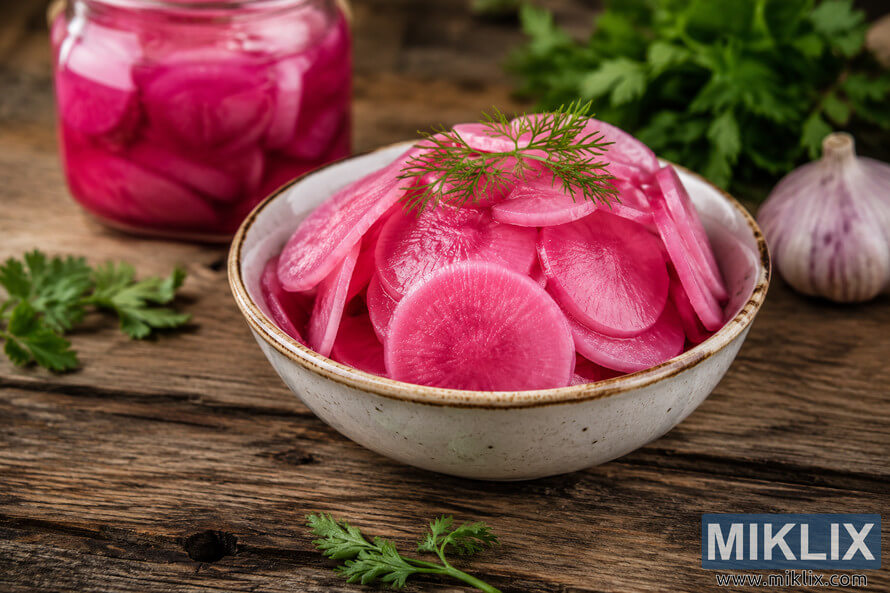
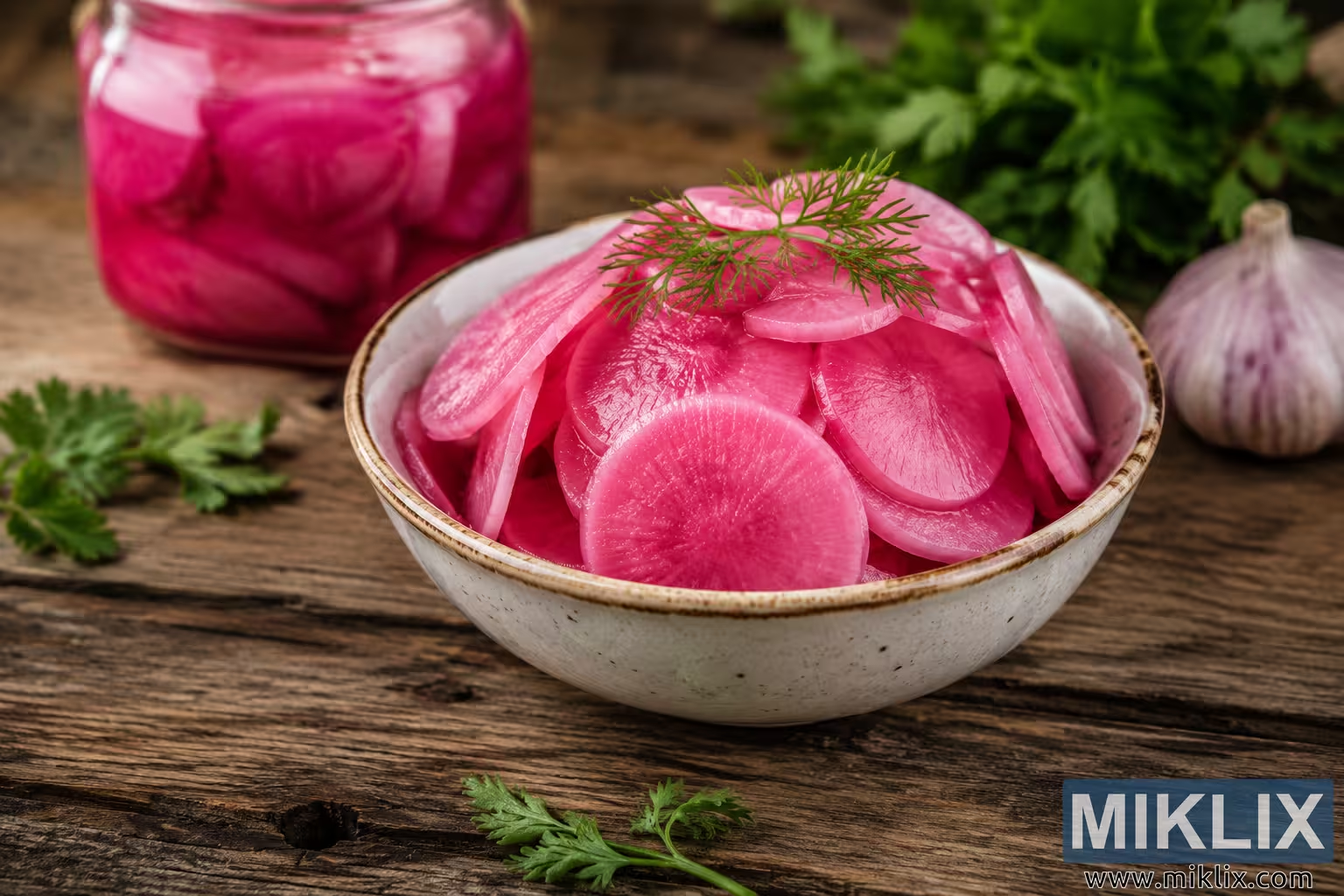
This high-resolution food photograph showcases an inviting rustic tabletop arrangement centered around a ceramic bowl filled with beautifully presented pickled and fermented radishes. The composition highlights the vivid magenta and rosy pink tones of the thinly sliced radishes, whose glossy surfaces catch the soft, natural light and emphasize their fresh, juicy appearance. Each slice is carefully layered in a slightly overlapping pattern, creating a sense of abundance while allowing the circular shapes and subtle variations in color to remain clearly visible. The radishes appear delicately translucent around the edges, suggesting that they have absorbed the pickling liquid while still maintaining their crisp texture.
The bowl itself is crafted from light-colored ceramic with a gently speckled glaze and a darker rim that complements the earthy atmosphere of the scene. Its understated appearance allows the colorful radishes to remain the undeniable focal point while reinforcing the handcrafted, artisanal aesthetic. A delicate sprig of feathery green herbs rests gracefully on top of the radishes, introducing a contrasting burst of vibrant green that enhances the overall visual balance and adds a sense of freshness.
The bowl is positioned on a weathered wooden table whose rich grain, natural cracks, knots, and aged texture contribute significantly to the rustic character of the image. The warm brown tones of the wood provide a harmonious contrast to the cool pink hues of the pickled vegetables, while the visible imperfections tell the story of a well-used farmhouse surface. The table occupies much of the foreground and background, creating a natural stage that emphasizes simplicity, authenticity, and traditional food preparation.
Behind the bowl, softly rendered with a pleasing shallow depth of field, stands a clear glass jar filled with additional pickled radishes immersed in vividly colored brine. Although intentionally blurred, the jar remains easily recognizable and subtly reinforces the theme of home fermentation and preservation. The saturated pink liquid inside the jar echoes the colors of the radishes in the bowl, creating visual continuity throughout the composition without distracting attention from the main subject.
To one side of the arrangement rests a whole garlic bulb displaying delicate purple streaks across its papery outer skin. Its natural shape and muted coloration contribute another organic element that complements the preserved vegetables. Nearby, clusters of fresh leafy herbs appear softly out of focus, introducing lush green textures that frame the scene and suggest ingredients commonly associated with homemade pickling and fermentation. Additional herb sprigs scattered casually across the wooden surface strengthen the impression of a freshly prepared culinary setting.
The lighting is soft, diffused, and warm, resembling natural window light entering from the side. Gentle highlights accentuate the moisture on the radish slices while subtle shadows provide depth and dimension without becoming harsh. The controlled contrast preserves fine details throughout the image, allowing the textures of the ceramic bowl, wooden tabletop, garlic skin, glass jar, and delicate herbs to remain distinct. The shallow depth of field keeps the primary focus firmly on the bowl while smoothly blurring secondary elements, producing a professional food photography aesthetic that feels both intimate and refined.
The color palette is dominated by vivid shades of pink, magenta, earthy brown, creamy white, and fresh green. These complementary colors work together to create a visually striking yet harmonious composition that celebrates the beauty of naturally fermented ingredients. The absence of artificial props or distracting decorative objects reinforces the authenticity of the presentation, allowing the preserved vegetables and rustic materials to speak for themselves.
Overall, the image evokes themes of traditional food preservation, artisanal craftsmanship, seasonal produce, farmhouse kitchens, and wholesome homemade cuisine. Its careful composition, balanced lighting, rich textures, and vibrant colors create an appetizing visual narrative that celebrates fermented radishes as both a flavorful ingredient and a beautiful culinary subject. The photograph conveys warmth, simplicity, and craftsmanship while maintaining a polished, editorial-quality appearance suitable for food blogs, cookbooks, culinary magazines, recipe websites, restaurant marketing materials, educational content about fermentation, or any publication celebrating traditional preserved foods.
Obraz jest powiązany z: The Powerful Health Benefits of Radishes: Your Complete Nutrition Guide