
Fermenting Beer with White Labs WLP008 East Coast Ale Yeast
Publicado:
Última atualização: 5 de março de 2026 às 21:46:35 UTC
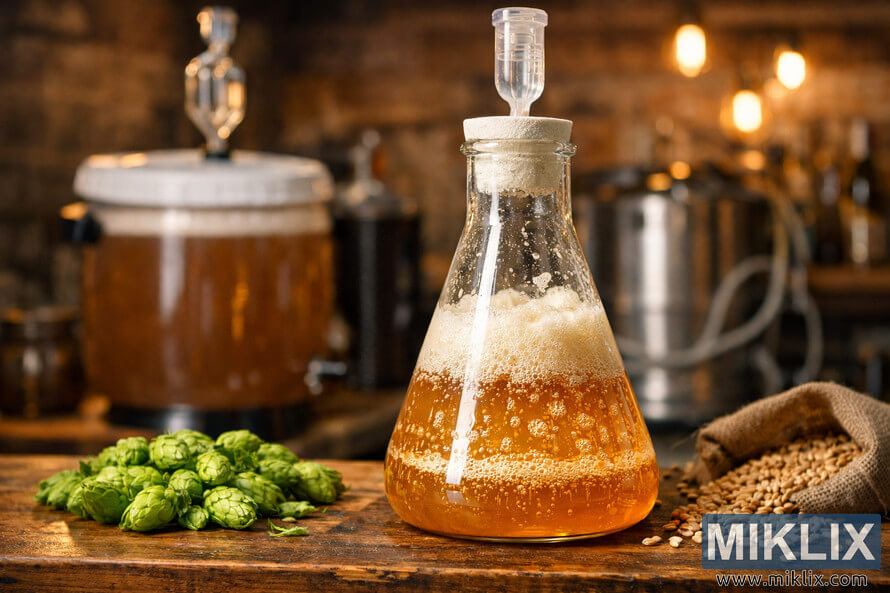
White Labs offers WLP008 East Coast Ale Yeast, a core strain available in organic form with STA1 QC negative. It's favored for American IPA, Hazy/Juicy IPA, pale ales, and various ales and ciders. This versatility makes it a top choice for homebrewers and small commercial breweries.
Fermenting Beer with White Labs WLP008 East Coast Ale Yeast
Clique ou toque na imagem para obter mais informações e resoluções mais altas.
In this WLP008 review, we note that retail vials are priced around $16.99. Recent packaging increases cell counts, allowing many brewers to pitch without a starter at commercial rates. Tests comparing WLP008 to WLP001, WLP066, and others reveal pronounced fruity esters. It also supports haze in NEIPA-style brews and handles heavy dry-hopping well.
This article serves as both a product review and a practical guide to fermenting with White Labs WLP008. It covers the strain's background, fermentation behavior, pitching strategies, recipe fits, and troubleshooting. The goal is to assist brewers in the United States in achieving predictable results with this East Coast Ale yeast.
Key Takeaways
- White Labs WLP008 East Coast Ale Yeast is pitched as a core, organic-capable strain with STA1 negative results.
- WLP008 review highlights fruity esters and strong haze support for NEIPA and juicy IPA styles.
- Retail packaging often allows pitching without a starter at standard commercial rates.
- Well-suited to American IPA, pale ales, and a variety of darker ales and meads.
- This guide offers practical fermentation tips, pitching rates, and troubleshooting for home and small commercial brewers.
Overview of White Labs WLP008 East Coast Ale Yeast
The WLP008 profile offers brewers a clear understanding of its contributions to fermentation. Originating from the East Coast, it strikes a balance between a clean base and subtle fruity esters. This yeast is versatile, suitable for a variety of American styles that prioritize approachability and drinkability.
Strain profile and origin
White Labs notes that this culture is ideal for many American interpretations of classic styles. It's also gaining popularity for East Coast IPAs. Fermentation thrives between 68°–73°F (20°–23°C). The technical details include an attenuation of 70%–75%, flocculation ranging from low to medium, and an alcohol tolerance of 5%–10% ABV.
Primary applications in homebrewing and commercial brewing
Homebrewers favor WLP008 for pale ales, blondes, and amber ales, seeking a balanced, accessible beer. Commercial brewers prefer it for juicy and hazy IPAs, as it handles heavy hopping well without compromising hop clarity. Its cleaner, crisper nature is perfect for beers that require a strong hop presence without excessive yeast-derived funk.
How WLP008 compares to other common ale strains
In White Labs yeast comparisons, WLP008 is seen as more neutral than WLP001 California Ale Yeast but with slightly higher ester production. Trials have shown WLP008 to produce more fruity character and haze than WLP001, WLP002, and WLP095. This makes it a preferred choice for brewers aiming for a juicy, East Coast-style IPA with predictable fermentation.
Clique ou toque na imagem para obter mais informações e resoluções mais altas.
Why Choose White Labs WLP008 for East Coast and Hazy IPAs
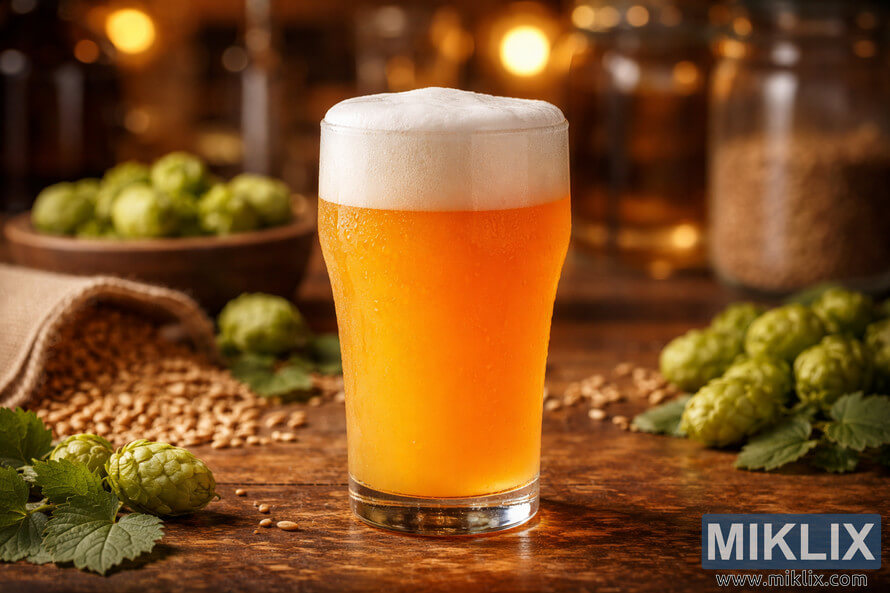
WLP008 strikes a perfect balance between fruity esters and a clean fermentation profile. This makes it ideal for the modern East Coast and hazy IPA styles. Brewers choose it for its ability to enhance hop aroma while maintaining a hint of yeast-driven fruitiness. The yeast contributes enough body to support the juicy hop flavors, ensuring a soft finish.
Flavor and ester contributions for juicy/hazy profiles
White Labs highlights that WLP008 produces slightly higher esters than WLP001. These esters manifest as soft citrus and stone fruit notes. They complement the hops, adding a juicy midpalate. For a WLP008 hazy IPA, this subtle fruitiness harmonizes the hops and malt, creating a cohesive, enjoyable beer.
Interaction with heavy dry-hopping
WLP008 excels at handling aggressive dry-hopping. Trial batches showed it can withstand large hop charges, preserving citrus and tropical hop aromas. This makes WLP008 a top choice for brewers aiming for maximum aroma and a juicy profile.
Role in haze development compared to other strains
Compared to some haze-focused strains, WLP008 remains relatively crisp. Yet, it still promotes turbidity when combined with heavy dry hops and certain adjuncts. Experiments with WLP066 and WLP008 revealed rapid haze formation after dry-hopping. WLP008 contributes to a stable, golden haze without overwhelming phenolic or solvent notes.
- Helps preserve hop aroma while adding yeast fruitiness.
- Pairs well with modern dry-hopping regimes for juiciness.
- Offers haze-friendly behavior without sacrificing drinkability.
Clique ou toque na imagem para obter mais informações e resoluções mais altas.
Fermentation Characteristics and Performance
White Labs WLP008 exhibits consistent behavior, allowing brewers to anticipate outcomes. Its attenuation, flocculation, and alcohol tolerance influence the final beer's body, clarity, and compatibility with high-gravity recipes.
Typical attenuation range and what it means for body
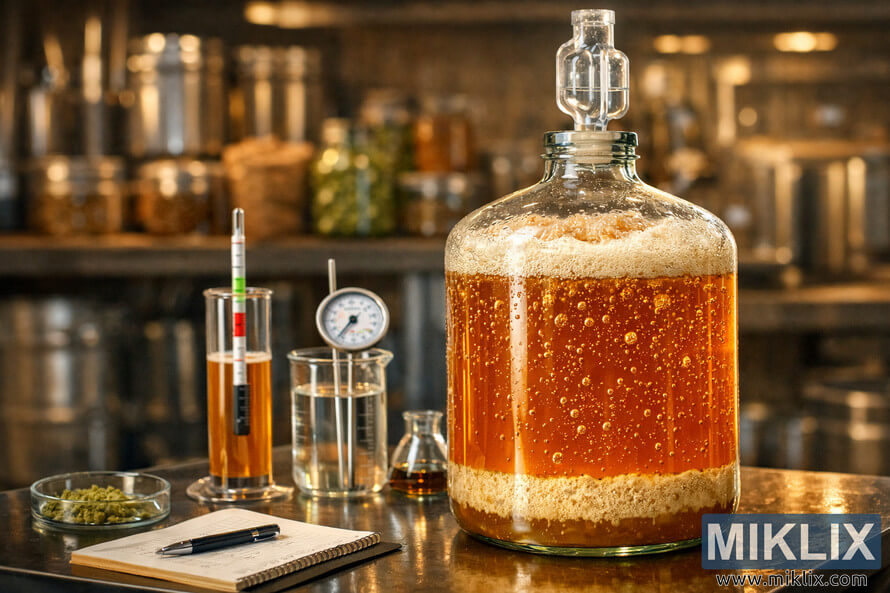
WLP008's attenuation usually ranges from 70% to 75%, as noted by White Labs. In practice, a trial with an original gravity of 1.070 reached a final gravity near 1.012. This resulted in roughly 7.6% ABV, with a hint of residual sweetness. The mid-to-high attenuation ensures a balanced mouthfeel, preventing juicy IPAs from becoming too dry.
Flocculation behavior and implications for clarity
White Labs categorizes this strain as having low to medium flocculation. This means the yeast stays suspended longer. Such behavior aids in retaining haze and enhancing the softness of hazy styles. For those aiming for a bright, clear beer, extended conditioning, filtration, or fining will be necessary to remove yeast and improve clarity.
Alcohol tolerance and limits for higher-gravity beers
WLP008's alcohol tolerance is in the medium range, approximately 5%–10% ABV. Brewers should exercise caution when brewing above 10% ABV. For high-gravity brews, blending with a more alcohol-tolerant strain or step-pitching can help ensure complete fermentation and prevent yeast stress.
- Plan recipes with 70%–75% WLP008 attenuation in mind when targeting final gravity and mouthfeel.
- Use extended conditioning or fining to address low-to-medium flocculation if clarity is desired.
- For beers near or above 10% ABV, supplement WLP008 to manage alcohol tolerance limits effectively.
Clique ou toque na imagem para obter mais informações e resoluções mais altas.
Optimal Fermentation Temperature and Management
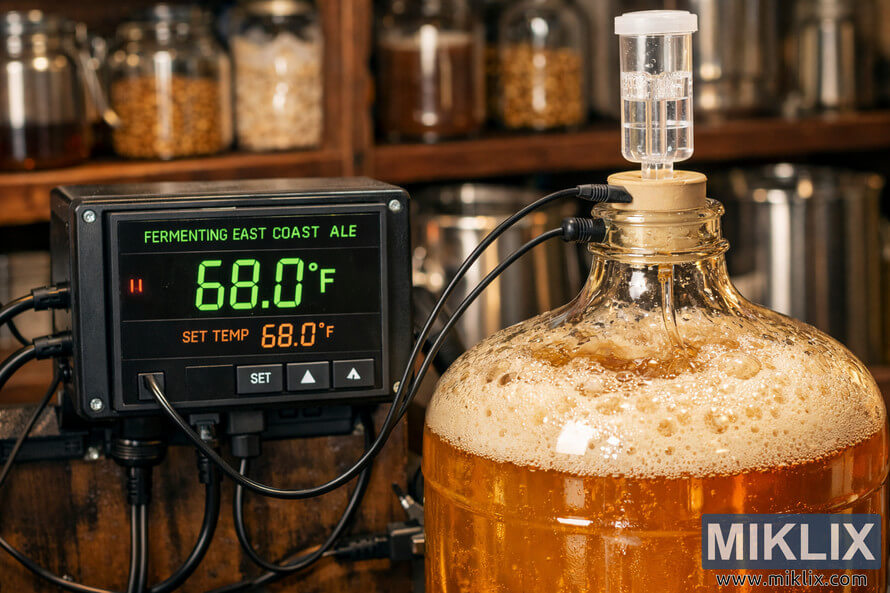
When brewing with White Labs WLP008, controlling fermentation heat is crucial. A consistent environment ensures the strain reaches its attenuation goals and influences ester formation. Use the provided range as a starting point and adjust based on desired flavors.
The recommended fermentation range is 68°–73°F (20°–23°C). This range allows WLP008 to ferment reliably, enhancing the fruit-forward character brewers often seek. For a cleaner, crisper finish, aim for the lower end. For a more tropical or stone-fruit ester profile, target the upper end.
Temperature control tips for homebrewers:
- Utilize a thermostatic fridge with a temperature controller for precise yeast temperature control during fermentation.
- Swamp coolers with a wet towel and fan are effective in mildly warm ambient temperatures.
- Apply a heat wrap with a simple controller in cool cellars to prevent temperature drops below target.
- Monitor both ambient and wort temperatures with a probe. Avoid temperature swings greater than 3–4°F once fermentation starts.
Effects of temperature on ester production and attenuation:
- Warmer fermentations enhance ester formation, increasing fruity esters and juiciness perception.
- Cooler fermentations decrease ester production, resulting in a drier, crisper mouthfeel with higher apparent attenuation.
- Rapid or wide temperature swings can lead to off-flavors and uneven attenuation. Consistent control ensures predictable results.
Choose a target within the 68°–73°F range based on your style goals. For East Coast and hazy IPAs, favor the upper half for enhanced fruitiness. For clean pale ales or beers emphasizing hop clarity, aim cooler and maintain consistent yeast temperature control during fermentation.
Clique ou toque na imagem para obter mais informações e resoluções mais altas.
Pitching Rates, Starters, and Packaging Considerations
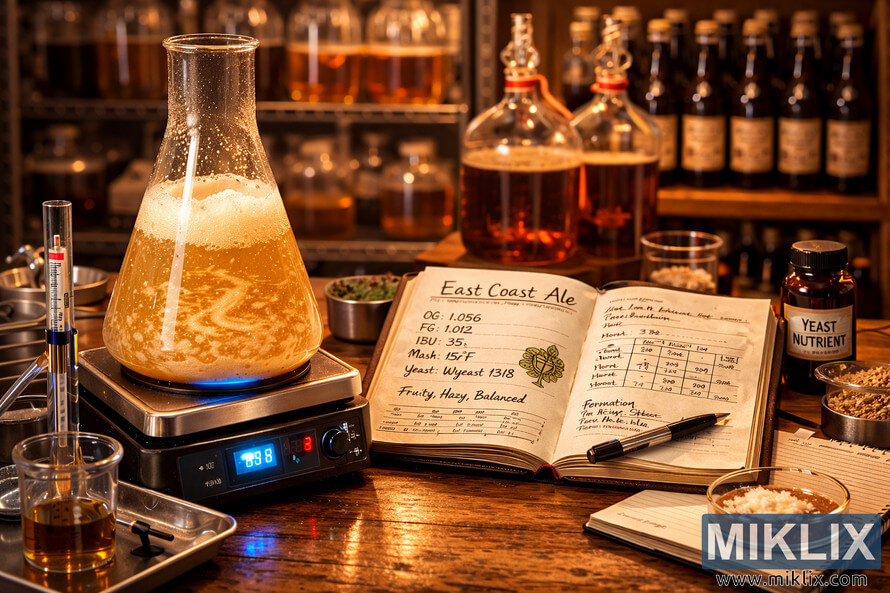
Choosing the right pitch approach is crucial for a clean, reliable fermentation. Consider when a starter is necessary and when a full-strength White Labs pouch will suffice. Also, pay close attention to packaging and shipping details to ensure cell viability before brewing.
When to use a starter versus a full-strength pouch
- Use a starter for higher-gravity beers, split batches, or when the yeast's age or storage history is uncertain. It boosts cell count and vitality for challenging worts.
- For typical gravity pale ales and most IPAs, a modern White Labs pouch usually contains enough cells to hit the target WLP008 pitching rate without a starter.
- If you need faster fermentation onset or want to be conservative, building a small starter is safer than risking a slow or stuck fermentation.
Commercial pitching rates and higher-cell-count pouches
- Commercial brewers follow cell-per-milliliter guidelines tied to original gravity. White Labs aligns their packaging with these standards to help achieve consistent results.
- Newer higher-cell-count White Labs pouches reduce or remove the need for a starter in many homebrew scenarios. This makes achieving the recommended WLP008 pitching rate simpler for homebrewers.
- If you choose not to make a starter, confirm the pouch cell count and match it to your batch gravity to avoid underpitching.
Shipping and storage notes
- White Labs ships liquid yeast with a 3 oz ice pack. The company recommends adding a Thermal Shipping Package when ordering multiple units or during warm months to keep yeast cool longer.
- Each thermal pack can protect up to five liquid yeasts in transit. Still, long transit times or high temperatures may warm the pouch despite precautions.
- Store yeast refrigerated immediately upon arrival. If a pouch arrives warm or swollen, consider making a starter to revive cell health before pitching.
Practical yeast starter advice
- For a reliable WLP008 pitching rate, calculate cells needed by gravity and batch size. If in doubt, err on the side of more viable cells for consistent attenuation.
- Keep starters aerated and made from wort around one-tenth the strength of your brew day gravity. This encourages healthy, reproductively active cells.
- Label pouch dates and store cold to preserve viability. Fresh, well-handled yeast reduces the need for corrective measures during fermentation.
Clique ou toque na imagem para obter mais informações e resoluções mais altas.
Recipe Examples Best Suited to WLP008
WLP008 is versatile across various ales. Below, you'll find concise recipe outlines and practical tips. These are for brewers aiming to harness its fruity esters, moderate attenuation, and mouthfeel.
American IPA and East Coast IPA outline
For a full-bodied IPA, target an OG between 1.058 and 1.070. Use a grain bill of American two-row, with 5–10% light crystal, and a touch of Vienna or Munich for depth.
- Mash temp: 152°F (67°C) for balanced body and attenuation.
- Ferment: 68°–73°F (20°–23°C) to keep fruity ester character.
- Dry-hop: heavy dosing late (day 3–7) and post-fermentation to highlight citrus and tropical notes.
For an East Coast IPA, aim for a juicy, full mouthfeel and bright hop character. WLP008 enhances hops like Citra, Mosaic, and Amarillo.
Pale, blonde, and amber ale considerations
For sessionable pale ales, target an OG of 1.044–1.056. Keep fermentation in the middle of the recommended range to reduce strong esters and preserve drinkability.
- Grain: pale 2-row, 3–6% light crystal for color and sweetness.
- Hops: Saaz or Willamette for balance, or Cascade for classic American brightness.
- Body: WLP008 pale ale fermentations leave a pleasant residual that softens perceived bitterness.
Blonde and amber ales benefit from the strain’s moderate flocculation. Expect stable head retention and an inviting malt backbone.
Using WLP008 in stouts, porters, and meads
WLP008 can add subtle fruitiness to darker beers and braggots. Be mindful of alcohol tolerance when pushing higher gravities.
- For stouts and porters, aim OG under 1.070 or co-pitch with a higher-tolerance ale for stronger beers.
- For meads or braggots, consider sequential pitching or blending with a wine or champagne strain when final ABV exceeds 10%.
- Ferment cooler if you want the yeast to play a background role and let roasted malts or honey dominate.
These WLP008 recipes reward careful pitching and temperature control. Small adjustments to mash and hopping create distinct outcomes while keeping the yeast’s character consistent.
Mash, Grain Bill, and Wort Considerations
Creating a recipe with WLP008 requires balancing a clean malt base with enough body to highlight fruity esters. Opt for a simple base and use adjuncts sparingly to enhance haze and mouthfeel.
Begin with high-quality pale 2-row as the base. Incorporate small amounts of Munich or Vienna for depth and light crystal malts for sweetness. Flaked oats or wheat can boost mouthfeel in hazy IPAs without adding roast character that could mask hop-driven fruit.
Set your mash profile to favor moderate dextrin retention for a softer finish. A step or single infusion mash around 152°F (67°C) preserves body and allows WLP008 to leave pleasant residual sweetness. For drier results, slightly raise the mash temperature or push ferment temperature to encourage attenuation.
- WLP008 grain bill tip: keep dark malts under 5% to avoid muting esters.
- Use 3–8% Munich or Vienna for malt complexity in balanced ales.
- Include 5–15% flaked oats or wheat for haze and creamy mouthfeel.
Choose wort OG targets with the yeast’s 70%–75% attenuation in mind. Higher OGs tend to leave a softer FG with WLP008, enhancing juicier IPAs. For example, a 1.070 OG often finishes around 1.012 with this strain. If a drier finish is desired, lower the OG or manage fermentation temperature to push attenuation upward.
Adjuncts such as dextrin malt or maltodextrin help retain body without adding sweetness. Use them when creating full, round hazy beers. Avoid excessive roasted or crystal malts in hop-forward styles where you want bright fruit and citrus esters to dominate.
- Plan mash profile for target body: 150–154°F (65–68°C) for more attenuation, 154–156°F (68–69°C) for more dextrins.
- Adjust wort OG targets based on final mouthfeel goals and expected attenuation.
- Balance adjuncts to support hops: use oats/wheat for mouthfeel, dextrins for body, keep specialty malts low.
Finally, match malt bitterness to hop intensity so WLP008’s residual sweetness can play the counterpoint. Thoughtful grain selection, a deliberate mash profile, and measured wort OG targets will let this yeast strain express its best traits in East Coast and hazy-style beers.
Hop Selection and Dry Hopping Strategies
Choosing the right hops and timing dry additions are crucial for the final aroma of beers fermented with White Labs WLP008. This strain offers citrus and stone-fruit esters, complemented by bright, tropical hops. Selecting hops thoughtfully and timing dry hops correctly helps preserve the yeast character. This avoids harsh or vegetal notes.
Hop varieties that pair well
Citra, Mosaic, Amarillo, Motueka, and Ekuanot are excellent choices for WLP008. Citra and Motueka enhance fresh citrus and lime, while Mosaic adds tropical depth. Using lupulin-forward products like Cryo hops in moderation boosts intensity without overpowering yeast-derived fruit.
Timing and dosage for dry hopping
Adding hops near the end of high krausen (day 3–5) or after primary fermentation maximizes aroma. Early additions can interact with active yeast, enhancing biotransformation. Post-fermentation hops help preserve delicate esters. Aim for moderate dosages and consider split additions for balanced impact.
Risks of aggressive dry-hopping and mitigation
Heavy single-dose dry hops can introduce vegetal or harsh herbal notes. An experiment with aggressive Cryo Ekuanot resulted in a dominant cracked-pepper character that overpowered yeast fruitiness. To mitigate risks, reduce total grams per liter, use two smaller additions, or opt for standard pellet hops over concentrated extracts. Allow conditioning time after dry hopping for flavors to meld.
Practical tactics include a modest late-fermentation addition for biotransformation and a smaller post-fermentation aroma drip. Monitor dry hop timing against fermentation progress, not calendar days. Adjust doses when using high-alpha or cryo products to protect the subtle esters WLP008 provides.
Fermentation Timeline and Expected Gravity Changes
Grasping the WLP008 fermentation timeline is crucial for planning your brew day and conditioning phase. Active fermentation typically starts within 12–48 hours, provided the pitching rates and temperatures are correct. For beers with moderate gravities, primary fermentation usually concludes in 4–7 days under ideal conditions.
Keep an eye on krausen development, vigorous airlock activity, and steady specific gravity drops. For an OG around 1.050, expect to see activity by day one or two. The gravity should near its final value within the first week. The pace of fermentation can be influenced by pitch size, yeast health, and fermentation temperature.
White Labs estimates the expected attenuation for this strain to be 70%–75%. For instance, a trial with a 1.070 OG finished at 1.012 FG, resulting in about 7.6% ABV. Scaling this attenuation to lower OG beers will yield FGs consistent with that range.
- Example gravity timeline for 1.050 OG: day 0 = 1.050, day 2 = ~1.020–1.030, day 5 = ~1.012–1.015 (approximate).
- Example for 1.070 OG: day 0 = 1.070, day 3 = ~1.030–1.035, day 6 = ~1.012 (approximate).
Daily gravity checks early in fermentation provide the most accurate data for expected FG. This helps in identifying any stalls. Use the same hydrometer or refractometer method each time to avoid mixed readings. Also, record temperatures alongside gravity to correlate yeast activity with conditions.
Addressing slow starts involves diagnosing common causes. Low pitching rate, old or heat-stressed yeast, cold wort, or inadequate oxygenation can cause delays. For troubleshooting WLP008, try raising the temperature towards the upper end of the recommended range. Gently aerating the wort if safe to do so can also help.
If the ferment remains sluggish after adjustments, consider making a starter or repitching with a fresh White Labs vial or high-cell-count slurry. Avoid aggressive oxygenation late in fermentation to reduce oxidation risk. Proper sanitation and patient monitoring usually restore a stalled batch to normal progress.
Flavor, Aroma, and Tasting Notes
White Labs WLP008 offers a clear, drinkable base with a subtle fruit lift. It's perfect for modern East Coast and hazy IPAs. Brewers appreciate the gentle citrus and stone fruit presence, which complements bold hop bills without overpowering them.
The esters from WLP008 manifest as light citrus, orange peel, and faint pear. These esters enhance the beer's approachability and juiciness, preventing it from becoming overly sweet.
WLP008 contributes modest residual sweetness and a soft mouthfeel. This balance enhances the perceived juiciness in the finish. It also supports the addition of strong late-hop and dry-hop flavors.
- Pre-dry hop: often shows bread-like and slightly sweet malt character.
- Post-dry hop: ester character becomes fruitier and complements citrus-forward hops.
- Overall: clean backbone with fruit-forward accents, ideal for aromatic hop-forward beers.
When comparing strains, WLP008 vs WLP001 reveals WLP008's more noticeable fruity esters. WLP001 remains the cleanest and most neutral. WLP066 can match WLP008 in terms of haze and bright citrus, but it might emphasize haze stability more.
Other strains like WLP095 and WLP002 trend more malt-forward and clearer. For brewers aiming for a balance of hop clarity and fruity character, WLP008's tasting notes are ideal. They favor beers that feel juicy and rounded without excessive ester weight.
Conditioning, Finishing, and Packaging Advice
WLP008 conditioning and finishing steps are crucial for achieving the final clarity, aroma, and mouthfeel of your beer. This strain is known for its low–medium flocculation, which contributes to the soft haze characteristic of New England–style IPA. The conditioning time should be adjusted based on your desired outcome. Longer cold conditioning can help in reducing chill haze and improving stability. Conversely, shorter conditioning periods preserve the beer's haze and volatiles, enhancing its juicy character.
Cold conditioning at 35–40°F (2–4°C) for one to three weeks is effective in dropping out more yeast and polyphenols. For hazy IPAs, a shorter conditioning period of three to seven days is recommended to maintain turbidity and hop aroma. It's important to allow at least a few days after dry hopping for the hop compounds to integrate with the yeast, softening any harshness.
- Short condition (3–7 days): retain haze, preserve aroma for hazy styles.
- Medium condition (7–14 days): balance clarity and hop integration for pale ales.
- Long condition (14+ days): best when clarity or stability is a priority.
Carbonation levels should be set according to the style and desired mouthfeel. For hazy IPAs, aim for moderate carbonation around 2.4–2.8 volumes CO2. This enhances hop aroma and juiciness without introducing sharpness. Pale ales and blondes typically require slightly lower carbonation, at 2.2–2.6 volumes, to highlight malt balance and residual sweetness.
Adjust the amount of bottle conditioning sugar or keg force-carbonation accordingly. Bottle conditioning involves live yeast, which can alter perceived carbonation and flavor over time. Kegging, on the other hand, offers precise control and minimizes oxidation risks during filling.
Choose your packaging method based on distribution and appearance requirements. Canning and kegging are best for minimizing oxygen pickup and ensuring consistent carbonation. If canning a hazy beer and desiring less haze, consider cold crashing and gentle filtration or use fining agents like gelatin or Biofine Clear before packaging. Bottle-conditioned hazy beers will continue to evolve, potentially increasing haze or changing mouthfeel due to packaging yeast effects.
- Bottle: watch for ongoing yeast activity and possible overcarbonation with high residual gravity.
- Keg: easiest way to set exact volumes CO2 and reduce oxidation.
- Can: ideal for retail; cold stabilization or light clarification may be needed if clarity is required.
Keep transfers cold and limit splashing to preserve hop aromatics and avoid oxidation. For White Labs liquid yeast, maintain chilled storage before pitching and avoid exposing yeast or beer to warm conditions during packaging. Thoughtful conditioning, proper carbonation for hazy IPA, and awareness of packaging yeast effects will help your WLP008 beers reach their intended flavor and presentation.
Common Problems and Troubleshooting for WLP008 Fermentations
WLP008 is a reliable East Coast ale strain, but brewers will face issues from time to time. This short guide covers practical fixes for sluggish starts, off-flavors, and clarity choices. You can get beers back on track without guesswork.
Handling stuck or sluggish fermentations
Stuck or slow fermentations often stem from underpitching, heat-stressed or old yeast, cold wort, or low oxygen at high gravities. Begin with gentle warming into the recommended 68°–73°F range. This simple step can revive many sluggish batches.
- Oxygenate or aerate the wort early if you suspect low dissolved oxygen.
- Build and pitch a starter when cell counts look low, or use a fresh high-cell-count pouch from White Labs.
- For viable but stressed yeast, make a small starter with dry yeast or a fresh slurry and repitch.
- Rouse the yeast by swirling the fermenter gently to resuspend trub and yeast before adding new cultures.
Managing off-flavors and oxidation risks
Harsh hop-derived notes or green vegetal flavors can appear after aggressive dry-hopping or rough handling. Minimize oxygen exposure during transfers and packaging to reduce stale or cardboard-like oxidation. Use closed transfers and purge kegs or cans with CO2 when possible.
- Age heavily hopped beers briefly to let sharp hop edges smooth out.
- Avoid excessive splashing when moving beer and when bottling or kegging.
- Sanitation and proper yeast health cut the risk of sulfur and solvent-like off-flavors.
Addressing haziness when clarity is desired
WLP008 tends toward low–medium flocculation, which favors haze in NEIPAs. For clearer beers, use cold-crash, finings such as gelatin or isinglass, or filtration to speed clarification. Allow extended conditioning when time is available; natural settling often yields the best polish.
- Cold-crash for 24–72 hours at near-freezing temperatures to let yeast and protein drop.
- Use fining agents according to manufacturer instructions to avoid stripping hop aroma.
- If haze reduction is not desired, skip finings and avoid cold-crash to preserve juiciness.
When you document interventions and monitor gravity, clarity, and aroma, troubleshooting becomes proactive. Keep notes on pitching rates, temperatures, and dry-hop schedules. This helps refine future batches and reduce repeats of common problems identified under WLP008 troubleshooting, stuck fermentation solutions, and haze reduction.
Advanced Techniques with WLP008
WLP008 invites experimentation beyond a single-recipe approach. Brewers can explore yeast-driven differences, layering of cultures, and hybrid fermentations. This allows for the enhancement of flavor, haze, and mouthfeel in modern ales.
Split-batch experiments let you isolate yeast impact while keeping grain and hopping constant. Pitch identical wort into separate vessels and ferment one with WLP008 and others with different ale strains. Track finishing gravity, ester profile, and haze to see how WLP008 split-batch trials influence juice, turbidity, and attenuation.
Run a controlled NEIPA trial by measuring OG, recording FG, and conducting side-by-side sensory checks after dry hop. Small adjustments to temperature or oxygen can reveal how WLP008 shapes mouthfeel and haze stability compared with its peers.
- Keep pitch rate and temperature steady across splits.
- Label and sample at 24-hour intervals for early kinetics.
- Note haze with simple chill tests and refractometer readings.
Co-pitching strategies let brewers blend traits from two yeasts in one ferment. Co-pitching WLP008 with a faster-attenuating, high-tolerance strain can help finish high-gravity beers while retaining WLP008’s fruity esters.
Sequential pitching offers another path. Start fermentation with a dominant strain to establish attenuation, then introduce WLP008 to contribute aroma and haze without surrendering overall attenuation control.
- For very high OG beers, add a tolerant Saccharomyces first, wait until active fermentation slows, then pitch WLP008.
- When targeting ester balance, pitch equal cells of both strains and monitor ester rise over the first 72 hours.
- Adjust oxygenation to favor the intended dominant strain.
Hybrid fermentations and mixed-culture work pair WLP008 with Brettanomyces or lactic organisms for complex, layered beers. WLP008’s moderate alcohol tolerance and flocculation make it a useful base for hybrid projects when managed carefully.
Introduce Brett for long-term funk after primary attenuation, or add Lactobacillus during mash or kettle souring to avoid competing growth during primary fermentation. Track attenuation and acidity closely so WLP008’s fruitiness remains audible in the final beer.
Document each variable in hybrid fermentations: pitch timing, cell counts, temperature schedule, and sampling notes. This practice helps replicate successes and avoid surprises when combining co-pitching WLP008 approaches with mixed cultures.
Buy, Store, and Legal Considerations in the United States
Acquiring White Labs WLP008 in the United States is simple once you know the right places to look and how to maintain viability during transport. Small choices at the time of purchase and upon delivery significantly impact fermentation outcomes and yeast preservation.
Where to buy White Labs WLP008 and typical pricing
- White Labs sells WLP008 directly from its website and through homebrew retailers like MoreBeer, Northern Brewer, and local brew shops.
- The standard liquid vial or pouch typically costs around $16.99, with prices fluctuating based on retailer and package size.
- An organic version is available in certain outlets; verify availability and shipping options before purchasing WLP008 US stock.
Storage best practices and shelf-life notes
- Store in the refrigerator immediately upon arrival, adhering to White Labs' advice to maintain cell viability.
- Do not freeze the vial or pouch; freezing can harm cells and diminish performance.
- Verify the production and expiration dates on the package. Fresh yeast minimizes the necessity for a starter.
- For brief storage, place yeast in the coldest fridge section. For extended storage, refer to White Labs' guidelines on shelf life and viability testing.
Shipping concerns during warm months and use of thermal packs
- White Labs shipping includes a 3 oz ice pack for standard orders. This is sufficient during cooler weather but insufficient in heat.
- In summer, consider adding a Thermal Shipping Package if the retailer offers it to mitigate temperature fluctuations.
- Extended transit times or extremely warm delivery days can cause packs to warm up. Inspect the package upon arrival and refrigerate the yeast promptly.
- If a vial arrives warm or swollen, contact the retailer or White Labs for advice before pitching.
Conclusion
The White Labs WLP008 East Coast Ale yeast review highlights its reliability for modern East Coast and New England–style IPAs. It offers moderate attenuation, around 70%–75%, and low–medium flocculation. The ester levels enhance citrus and stone-fruit hop characters without overpowering the beer. This balance is ideal for both bright pale ales and hazy, juicy IPAs.
Practical handling is crucial. Ferment at 68°–73°F, use appropriate cell counts or a starter for higher gravities, and control dry-hopping intensity. This prevents vegetal or harsh hop flavors. The yeast can tolerate alcohol levels of 5%–10% ABV, requiring careful conditioning and packaging to preserve aroma and stability.
Buying and storage are straightforward. White Labs and established homebrew retailers offer WLP008, including an organic option. Shipments include ice packs or insulated packaging in warm months. Store the yeast in the refrigerator upon arrival to maintain viability. Treat it like any active culture when building starters or repitching.
For brewers aiming for the best yeast for hazy IPA, WLP008 is a top choice. It highlights citrus and fruit hop notes, producing a softer haze and cleaner finish than many haze-specialist strains. Use it for split-batch trials or as the primary fermentation strain in East Coast IPAs to enhance mouthfeel, aroma, and drinkability.
FAQ
What is White Labs WLP008 East Coast Ale Yeast and where is it best used?
WLP008 East Coast Ale Yeast is a liquid ale strain from White Labs. It offers a cleaner, crisper profile than many haze-capable yeasts. It also produces slightly more esters than WLP001. This yeast is versatile for American styles, including East Coast/NEIPA, American IPA, hazy/juciy IPAs, pale ales, blondes, amber ales, brown ales, porters, stouts, and even meads and ciders in lower gravity applications. It is available as a core product (Part No. WLP008) and in an organic variant.
What are the technical fermentation specs for WLP008?
White Labs lists typical specs for WLP008. Attenuation is about 70%–75%, flocculation is low to medium, and alcohol tolerance is medium (roughly 5%–10% ABV). The recommended fermentation range is 68°–73°F (20°–23°C). STA1 QC is negative. Expect yeast to stay in suspension longer, contributing to haze and a softer mouthfeel. It also produces subtle fruity/citrus esters.
How does WLP008 compare to WLP001, WLP066, and other ale strains?
WLP008 is slightly fruitier than WLP001 but cleaner than many haze strains. In homebrew trials, WLP008 and WLP066 produced the most haze and pronounced fruity/citrus notes. WLP001 was the cleanest and most neutral. WLP002 and WLP095 were more malt-forward and clearer.
How does WLP008 interact with heavy dry-hopping?
WLP008 handles aggressive dry-hopping well. Trials showed it preserved and even accentuated citrus hop characters (examples include Citra and Motueka). It also contributed to rapid haze formation after dry-hopping. However, very aggressive Cryo or heavy single-hop loads can introduce herbal or peppery notes. Split additions and measured doses reduce that risk.
What fermentation temperature should I use to get the profile I want?
Ferment 68°–73°F (20°–23°C). Use the lower part of that range for a crisper, cleaner finish. The upper end enhances fruity esters and juiciness. Temperature control matters—avoid large swings and monitor wort temps to guide ester vs. attenuation balance.
Do I need to make a starter or can I pitch a full-strength pouch/vial?
White Labs recently increased cell counts in their pouches. Many homebrewers can pitch without a starter for typical gravity pale ales and IPAs. Use a starter when brewing higher-gravity beers, if yeast age/storage is uncertain, when splitting batches, or if pitching rates look low for the batch size.
What pitching and commercial considerations should brewers know?
For commercial-scale pitching, follow White Labs’ recommended cell counts; higher-cell-count pouches reduce starter needs. For high-gravity beers near or above WLP008’s upper alcohol tolerance (~10% ABV), consider co-pitching or sequential pitching with a more alcohol-tolerant strain, or build larger starters to ensure robust fermentation.
How should WLP008 be stored and shipped to maintain viability?
White Labs ships liquid yeast with a 3 oz ice pack and recommends using a Thermal Shipping Package for warmer transit. Store refrigerated immediately upon arrival, avoid freezing, and check production/expiration dates. Warm transit or long shipping times can reduce viability even with ice—inspect and refrigerate right away.
What attenuation and final gravities can I expect in practice?
Expect 70%–75% attenuation. A practical example: a 1.070 OG fermented with WLP008 finished around 1.012 (about 7.6% ABV) in a split-batch test. Lower OG beers will finish proportionally higher FGs consistent with that attenuation range, leaving some residual sweetness and body.
How does WLP008’s flocculation affect clarity and mouthfeel?
Low–medium flocculation means yeast tends to remain in suspension longer, contributing to haze and a softer mouthfeel—desirable for NEIPAs and juicy ales. If clarity is desired, use cold-crash, fining agents (gelatin, isinglass), filtration, or extended conditioning to reduce haze.
Which grains and adjuncts pair best with WLP008?
Use pale 2-row as the base for a clean backbone. Add small amounts of Munich, Vienna, or light crystal malts for body and sweetness that complements WLP008’s residual sugars. For hazy IPAs, include flaked oats or wheat for mouthfeel. Avoid heavy dark malts if you want fruit esters to shine. Dextrins and oats are useful for extra body in juicy styles.
What hops work best with WLP008 and how should I dry-hop?
Citrus- and tropical-forward varieties like Citra, Mosaic, Amarillo, Motueka, and Ekuanot pair exceptionally well with WLP008’s citrus/fruit esters. Dry-hop timing options include late fermentation (high krausen tail) or post-primary. Split additions help preserve yeast-derived fruitiness and reduce harsh hop character. Keep cryo and high-potency additions measured to avoid vegetal or peppery notes.
What carbonation levels should I target for beers fermented with WLP008?
For hazy/juciy IPAs aim for moderate carbonation around 2.4–2.8 volumes CO2 to enhance juiciness. Pale ales and blondes may sit slightly lower (around 2.2–2.6 volumes). Adjust to taste and to balance residual sweetness from WLP008’s attenuation.
How long does primary fermentation typically take and when should I check gravity?
Active fermentation often starts within 12–48 hours depending on pitching rate and temperature. Primary may complete in roughly 4–7 days for moderate gravities. Measure gravity daily early on; once gravity readings are stable for a few days, proceed to conditioning or dry-hopping as planned.
What common problems occur with WLP008 and how do I troubleshoot them?
Slow or stuck fermentations can result from underpitching, old/heat-stressed yeast, cold wort, or low oxygen. Remedies: raise temperature into the recommended range, oxygenate wort, prepare and pitch a starter or fresh pouch, or repitch healthy yeast. Off-flavors from aggressive dry-hopping or oxidation can be mitigated by splitting hop additions, minimizing oxygen exposure, and allowing conditioning time.
Can WLP008 be used in higher-gravity beers, stouts, or meads?
WLP008 can contribute desirable esters to darker beers and meads but has medium alcohol tolerance (5%–10% ABV). For high-gravity stouts, imperial styles, or meads above ~10% ABV, use co-pitching, sequential pitching, or blend with a higher-tolerance strain to ensure complete fermentation and avoid stuck beers.
Is WLP008 suitable for split-batch or experimental trials?
Yes. Split-batch experiments clearly demonstrate yeast-driven differences; WLP008 stood out for fruity character and haze in tests. Running the same wort across multiple strains (WLP008, WLP001, WLP066, etc.) is a practical way to dial in desired ester, haze, and attenuation traits before scaling recipes.
Where can I buy WLP008 and what is the expected price range?
White Labs sells WLP008 directly and through homebrew retailers across the United States. Retail examples show prices around $16.99 per vial/pouch, though prices vary by retailer. An organic variant is available. Always refrigerate upon receipt and consider thermal shipping options in warm months.
How should I package beers fermented with WLP008 for best shelf stability?
Bottle, keg, and canning all work. For hazy beers, avoid aggressive fining and cold-crash to preserve haze and aroma. If aiming for clear packaged beer, cold-crash, use fining agents or filtration, and minimize oxygen pickup during transfers and packaging. Store packaged beer cold to retain hop aroma and yeast-derived fruitiness.
Leitura adicional
Se você gostou deste post, você também pode gostar destas sugestões:
- Fermentação de cerveja com a levedura CellarScience Berlin
- Fermentação de cerveja com levedura Lallemand LalBrew BRY-97
- Fermentação de cerveja com levedura White Labs WLP510 Bastogne Belgian Ale