
Imagem: Inflammation Reduction Through Persimmon Antioxidant Compounds
Publicado:
Última atualização: 4 de junho de 2026 às 18:32:49 UTC
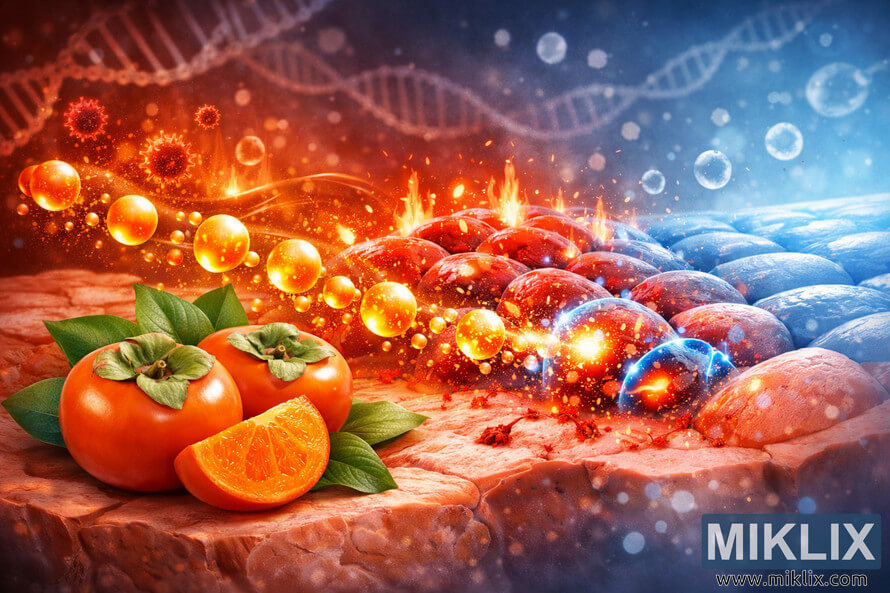
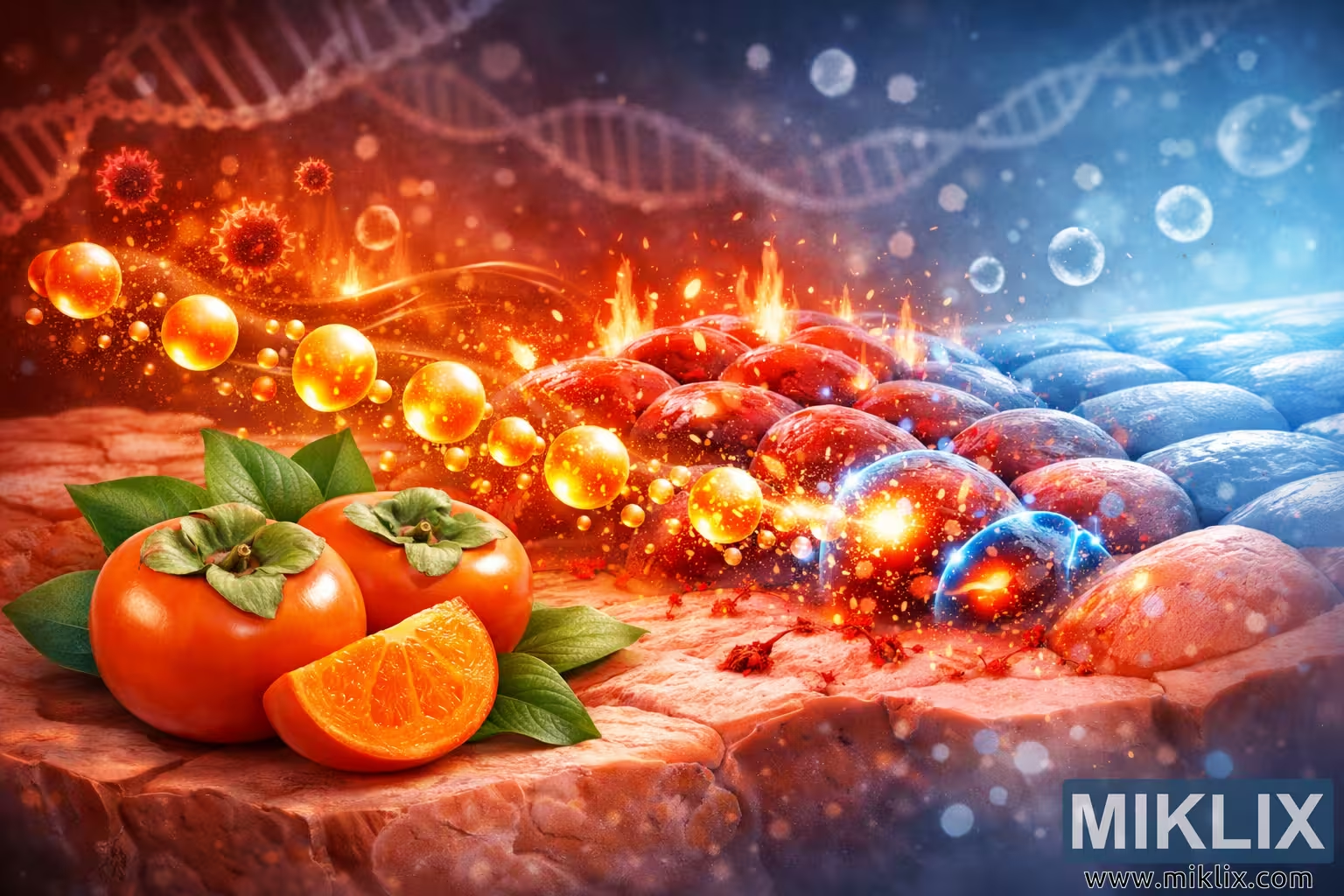
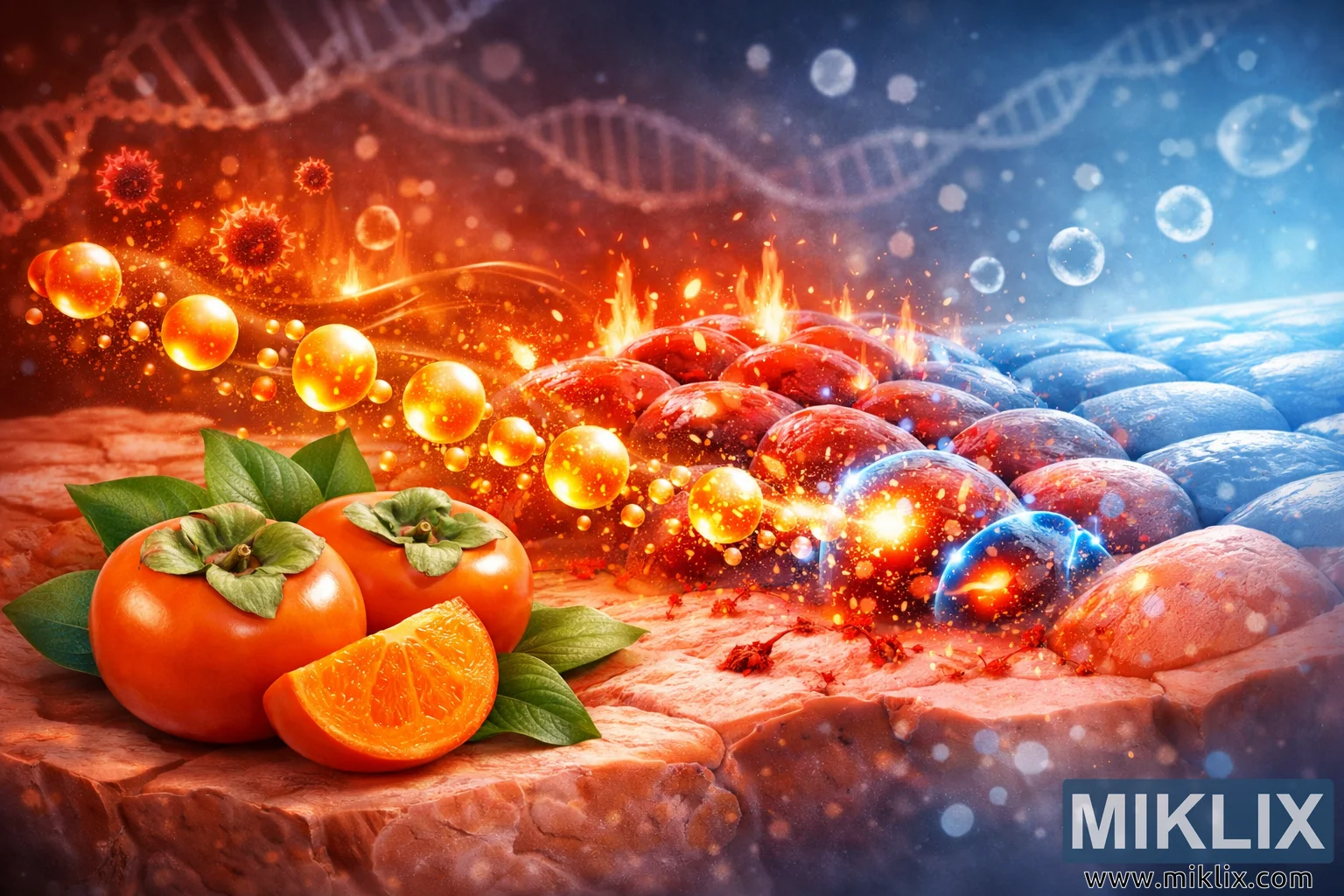
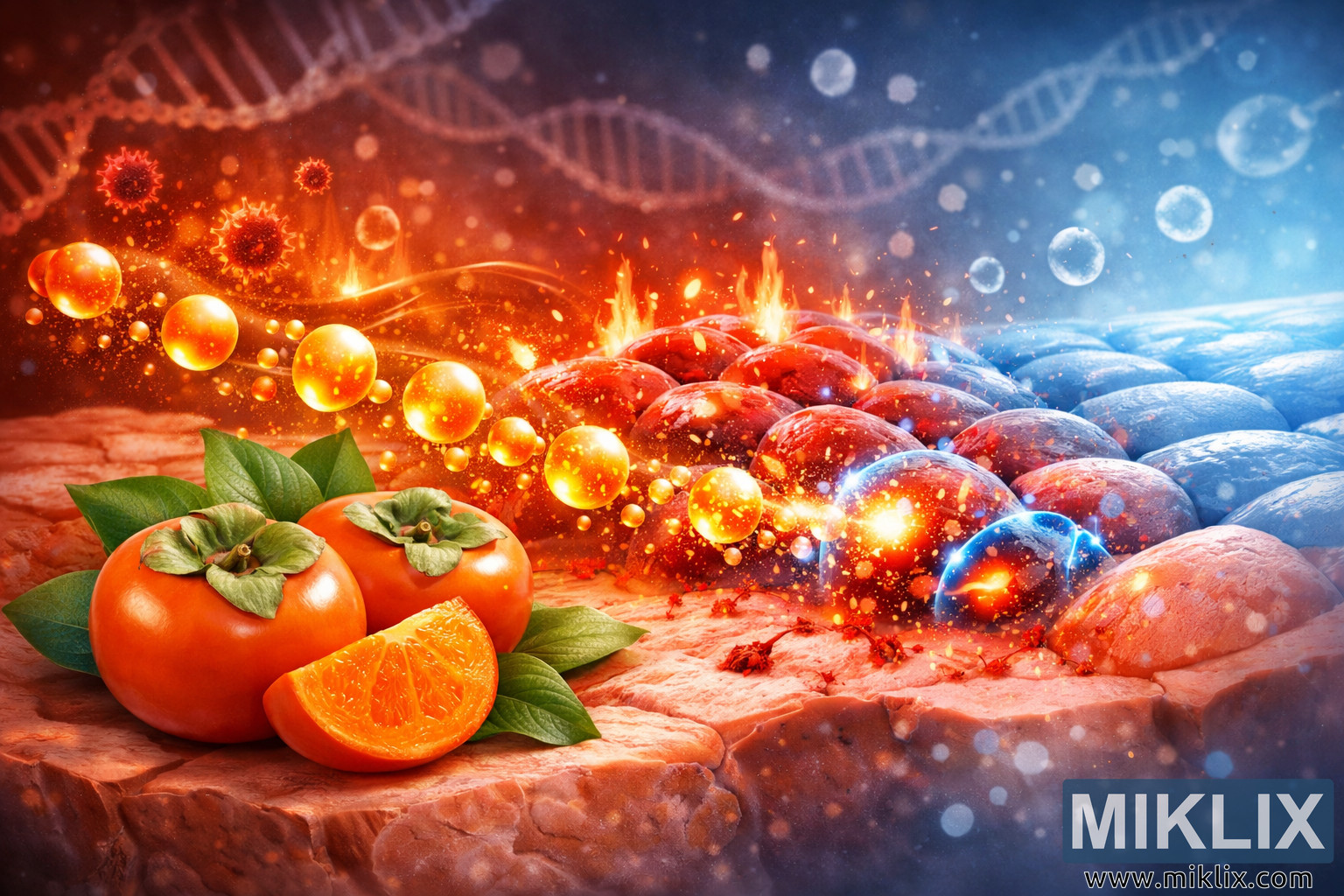
Detailed scientific-style illustration of inflammation reduction through persimmon antioxidant compounds, showing persimmons releasing glowing molecules that neutralize free radicals, cool inflamed red tissue, and transition it into calm blue healed tissue within a stylized cellular and DNA-rich environment.
Inflammation Reduction Through Persimmon Antioxidant Compounds
Versões disponíveis desta imagem
Os arquivos de imagem disponíveis para download abaixo são menos compactados e de maior resolução - e, como resultado, de maior qualidade - do que as imagens incorporadas em artigos e páginas deste site, que são mais otimizadas para o tamanho do arquivo a fim de reduzir o consumo de largura de banda.
Tamanho normal (1,536 x 1,024)
Tamanho grande (3,072 x 2,048)
Tamanho muito grande (4,608 x 3,072)
Tamanho extragrande (6,144 x 4,096)
Tamanho comicamente grande (1,048,576 x 699,051)
- Ainda estou fazendo o upload... ;-)
Descrição da imagem
This image is a detailed scientific-style illustration that visualizes the concept of inflammation reduction through antioxidant compounds derived from persimmons. On the left side of the composition, in the foreground, a group of ripe persimmons is prominently displayed as the primary natural source of the protective compounds. One persimmon is shown whole, with a vivid orange peel and a fresh green leafy calyx, while another is sliced open to reveal its rich, glistening orange flesh and juicy interior. The fruit appears almost luminous, emphasizing its vitality and nutritional potency. Behind the persimmons, soft green leaves add a botanical context, reinforcing the idea that these beneficial compounds originate from plant-based sources.
Adjacent to the persimmons, small droplets of golden liquid hover or rest near the fruit, each droplet containing stylized molecular structures. These droplets symbolize concentrated antioxidant extracts or bioactive components derived from the persimmon. The molecules inside the droplets are depicted as simplified, glowing shapes, suggesting complex chemistry in an accessible, visually engaging way. The lighting around the fruit and droplets is warm and radiant, creating a sense of energy and health emanating from the persimmon and its antioxidant compounds.
Moving toward the center-right of the image, the scene transitions into a microscopic or cellular environment. Here, a section of biological tissue is depicted in a state of inflammation. This inflamed area is rendered with intense reds, oranges, and glowing highlights, giving the impression of heat, swelling, and irritation. The tissue surface appears uneven and agitated, with clusters of inflamed cells that emit fiery light. Some of these cells are surrounded by small, flame-like shapes, visually representing oxidative stress, inflammatory mediators, and damaging free radicals that contribute to tissue injury.
From the persimmons on the left, a stream of spherical, orange antioxidant molecules begins to flow toward the inflamed tissue. These spheres are bright and luminous, connected by trails of light that form a dynamic arc across the image. The path of these molecules visually links the natural source—the persimmon fruit—to the site of inflammation, clearly conveying the idea that compounds from the fruit travel through the body to reach and protect vulnerable tissues. As the antioxidant spheres move closer to the inflamed cells, they release smaller, sparkling particles that disperse into the surrounding environment.
These smaller particles interact directly with the inflamed cells and the red, spiky free radical symbols that populate the inflamed region. The free radicals are depicted as jagged, aggressive-looking shapes with sharp protrusions, colored in intense reds and oranges to suggest their damaging nature. As the antioxidant particles contact these free radicals, the spiky shapes begin to dissolve, fragment, and fade. The visual effect suggests neutralization: the harmful species are being disarmed and rendered harmless by the antioxidant action. In the same area, the once-fiery cells start to cool and calm, their colors shifting from hot reds and oranges toward softer purples and eventually cooler blues.
Around some of the cells that have been reached by the antioxidant molecules, translucent blue shields or halos appear. These shields represent cellular protection, reduced oxidative stress, and the stabilization of cell membranes and internal structures. The shields glow gently, indicating a protective barrier that prevents further damage. The tissue surface in this region becomes smoother and more uniform, contrasting sharply with the rough, inflamed texture seen earlier. This visual progression—from inflamed and chaotic to calm and orderly—illustrates the therapeutic effect of persimmon-derived antioxidants on inflamed tissue.
In the far-right portion of the image, the tissue appears fully healed or significantly improved. The colors here are dominated by cool blues and soft teals, with subtle gradients that evoke a sense of balance, comfort, and restored function. The cells in this region are evenly spaced, rounded, and free of fiery highlights or spiky radicals. The blue light surrounding them is gentle and soothing, suggesting a stable, low-inflammation state. The transition from the central inflamed area to this calm region is gradual but clear, reinforcing the narrative of progressive healing driven by antioxidant activity.
In the background, behind the main action, a stylized cellular and molecular landscape stretches across the width of the image. Faint DNA double helix strands curve gracefully through the scene, symbolizing the underlying genetic and biochemical context in which inflammation and antioxidant defense occur. Additional floating molecular shapes and particles drift through the background, hinting at complex signaling pathways, enzymes, and biochemical reactions. These elements are rendered with a soft focus and cooler tones so they do not distract from the main foreground narrative but still contribute to the scientific atmosphere.
Throughout the image, small glowing particles trace a left-to-right journey that mirrors the movement of the antioxidant molecules. On the left, near the persimmons, some particles are warm-toned and energetic, representing the initial release of antioxidant compounds. As they travel toward the inflamed tissue, they interact with red, spiky free radical symbols, gradually transforming them. By the time these particles reach the right side of the composition, they have become calm, blue, and rounded, visually echoing the shift from oxidative stress to balance. This continuous flow of particles ties together the fruit, the molecular action, and the healing tissue into a single coherent story.
The overall lighting of the illustration is dynamic, with a warm glow concentrated around the persimmons and the inflamed region, and a cooler, tranquil light dominating the healed tissue on the right. This contrast in lighting and color temperature reinforces the conceptual journey from inflammation to resolution. The image combines realistic elements—such as the recognizable persimmon fruit and leafy calyx—with stylized scientific motifs like DNA strands, molecular icons, and glowing shields. The result is a visually rich, educational depiction of how antioxidant compounds from persimmons can help reduce inflammation at the cellular level, protect tissues from oxidative damage, and support a healthier, more balanced physiological state.
A imagem está relacionada a: The Complete Guide to the Health Benefits of Persimmons