
Obrázok: Advanced Homebrewing with Bramling Cross Hops and Hop Bursting
Publikované:
Posledná aktualizácia: 18. septembra 2026 o 16:08:47 UTC
Explore advanced homebrewing with Bramling Cross hops, featuring hop bursting, generous late hop additions, brewing notes, fresh ingredients, and a steaming brew kettle.
Advanced Homebrewing with Bramling Cross Hops and Hop Bursting
Dostupné verzie tohto obrázka
Obrázkové súbory, ktoré sú k dispozícii na stiahnutie nižšie, sú menej komprimované a majú vyššie rozlíšenie - a vďaka tomu aj vyššiu kvalitu - ako obrázky vložené do článkov a stránok na tejto webovej lokalite, ktoré sú viac optimalizované z hľadiska veľkosti súborov, aby sa znížila spotreba šírky pásma.
Bežná veľkosť (1,536 x 1,024)
Veľká veľkosť (3,072 x 2,048)
Veľmi veľká veľkosť (4,608 x 3,072)
Extra veľká veľkosť (6,144 x 4,096)
Komicky veľká veľkosť (1,048,576 x 699,051)
- Stále nahrávam... ;-)
Popis obrázku
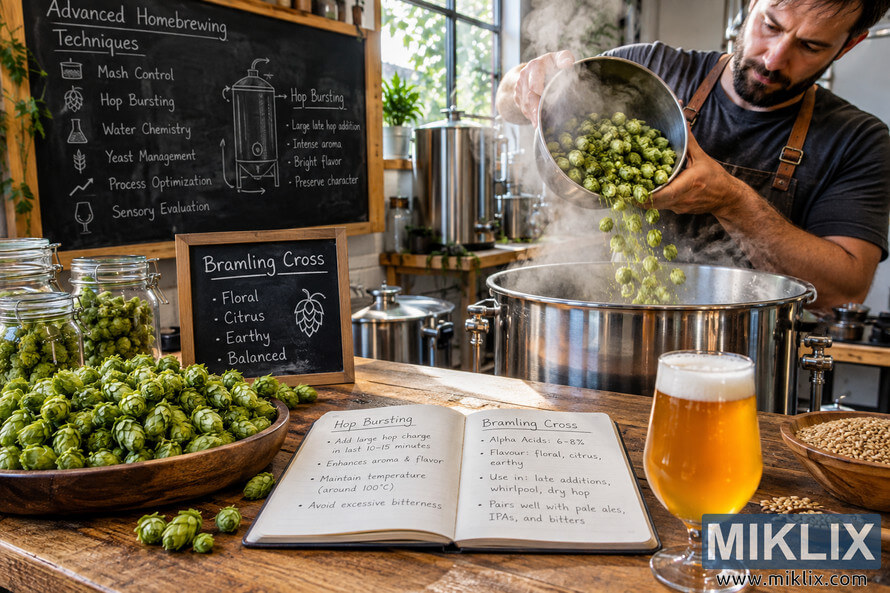
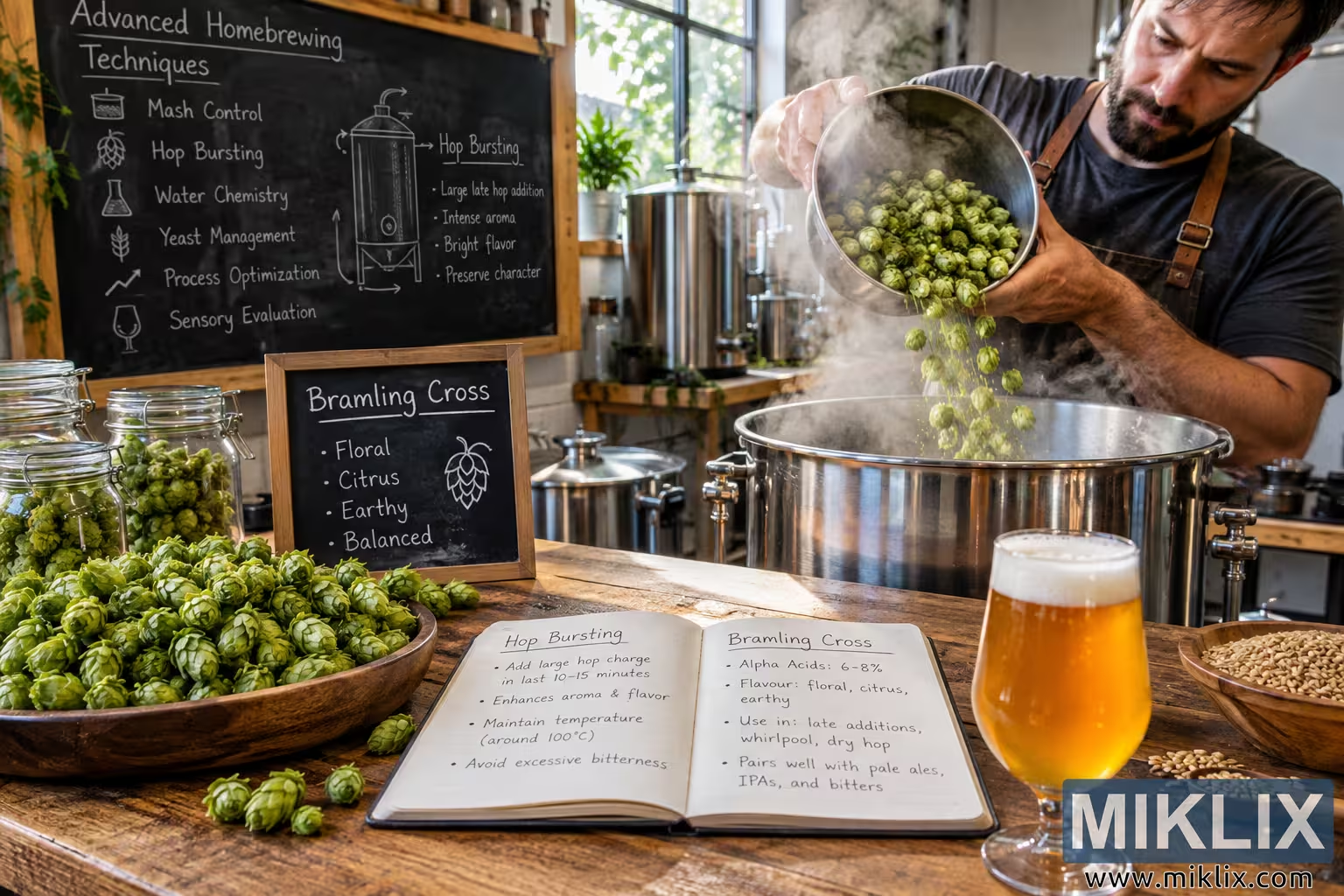
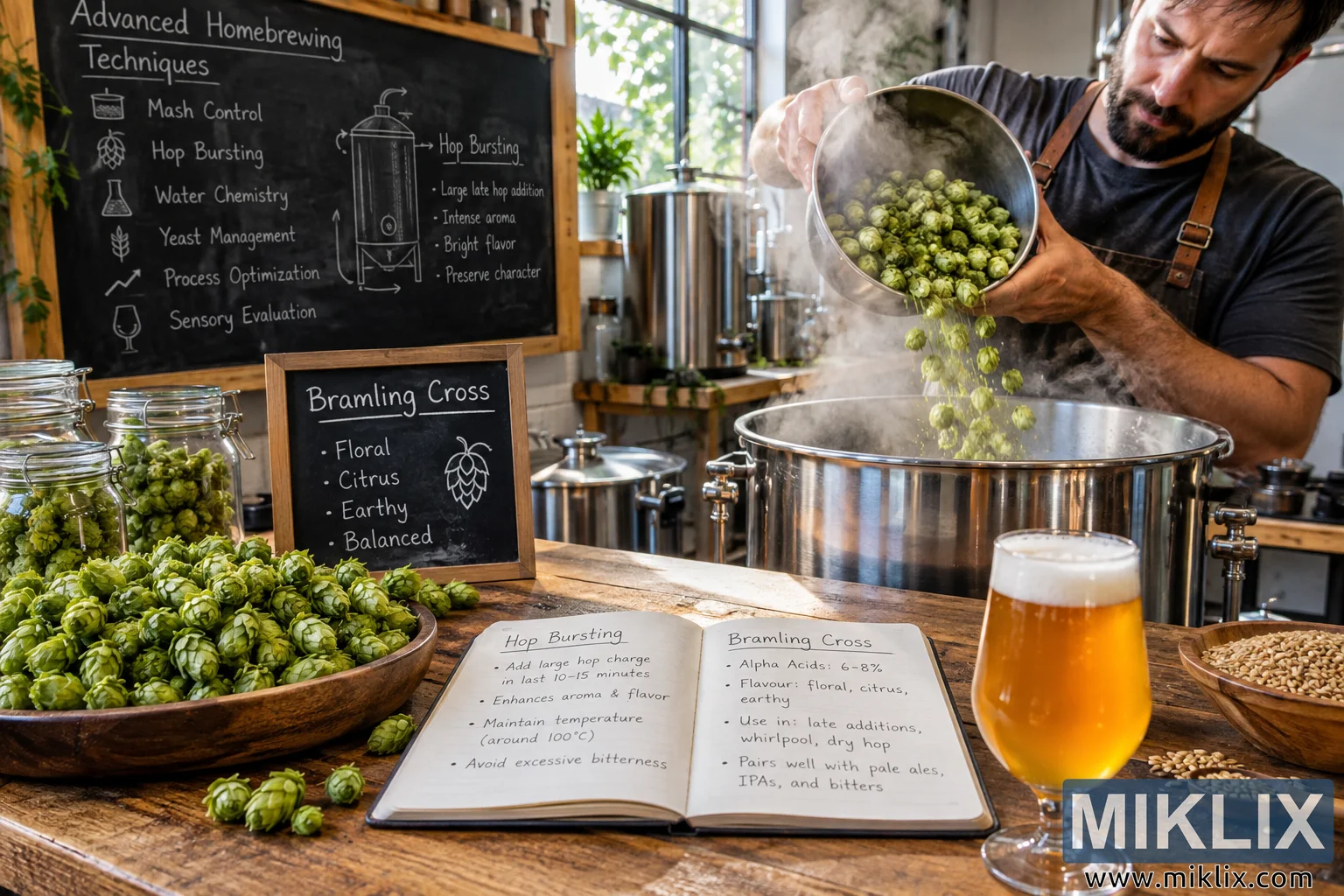
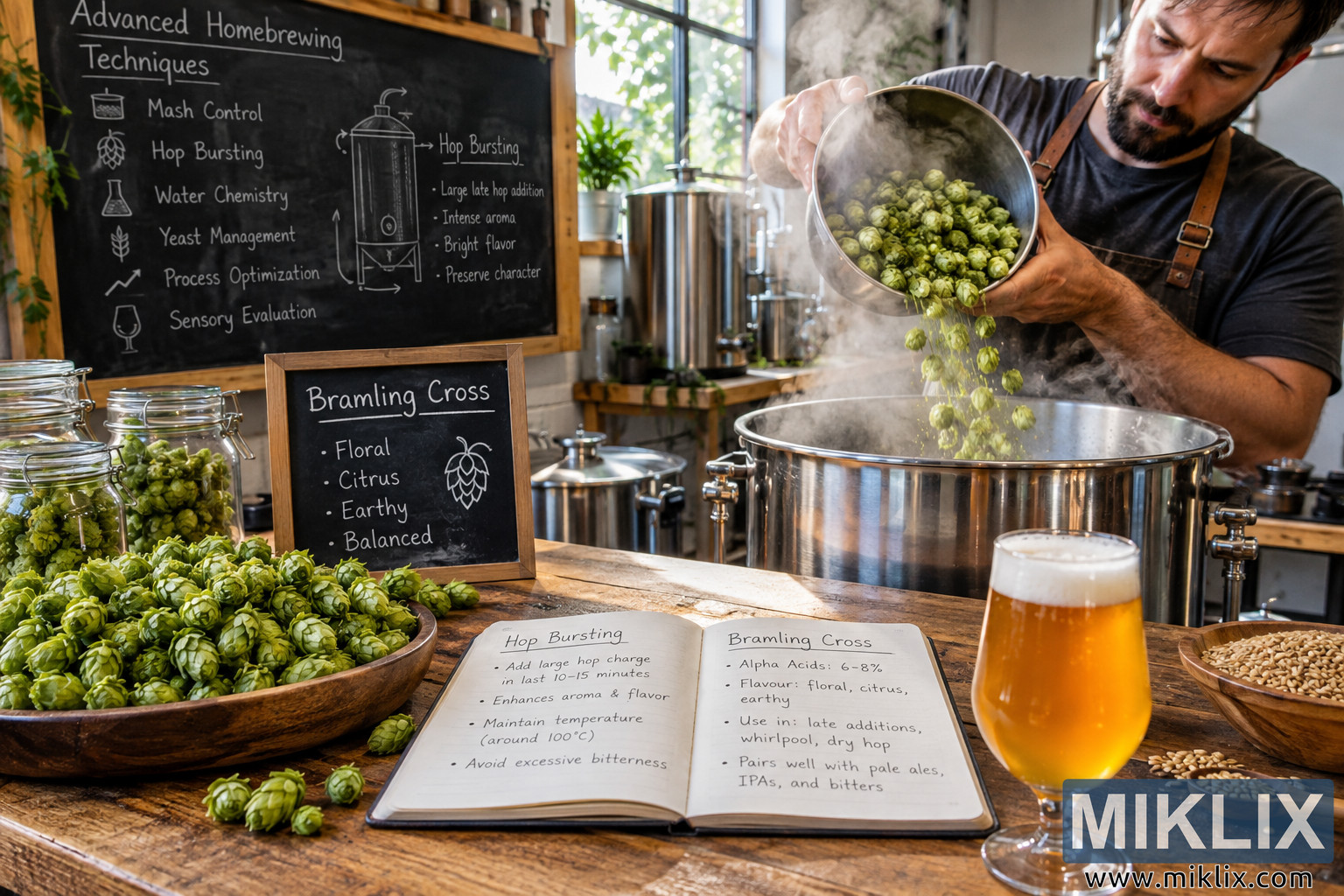
A wide, landscape-oriented photograph depicts an advanced homebrewing session in a bright but warmly atmospheric indoor brewing workspace. The composition centers on a homebrewer standing behind a large polished stainless-steel brew kettle. He wears a dark short-sleeved shirt and a brown leather-style apron, and he is captured in the middle of adding a generous quantity of green hop cones to the steaming kettle. Holding a metal container with both hands, he tips it downward so that the hops tumble through the air toward the hot wort. Several hop cones are frozen in motion between the container and the kettle, emphasizing the active brewing process and visually illustrating the technique of hop bursting. Thick wisps of steam rise from the open vessel and curl around the falling hops, giving the scene a sense of heat, movement, and immediacy. The brewer looks carefully toward the kettle and the hops he is adding, reinforcing the impression of concentration and precise process control.
The foreground is arranged like a detailed homebrewing workbench. On the left is a broad wooden bowl overflowing with fresh-looking green hop cones. Additional hops are scattered naturally across the rustic wooden surface. Behind the bowl stand several clear glass storage jars containing more hops, suggesting that substantial quantities are being prepared for late additions. Near the center foreground is an open brewing notebook filled with handwritten notes. One page is headed with information about hop bursting and describes the concept of adding a large hop charge late in the boil to enhance aroma and flavor while avoiding excessive bitterness. The facing page contains notes about Bramling Cross hops, including characteristics, brewing applications, and suggested uses. These handwritten details make the image feel educational as well as practical, as though the brewer is following or documenting an advanced recipe during an experimental brewing session.
A small framed chalkboard positioned behind the notebook prominently identifies Bramling Cross and lists sensory descriptors beneath the heading. A simple hand-drawn hop cone illustration accompanies the notes. The chalkboard helps establish the specific hop variety as the focus of the brewing session without relying on commercial packaging or brand imagery. To the left and farther into the background, a much larger blackboard is mounted on the wall. It is headed with a reference to advanced homebrewing techniques and contains a series of brewing topics, including mash control, hop bursting, water chemistry, yeast management, process optimization, and sensory evaluation. A hand-drawn diagram of brewing equipment appears beside the list, along with additional notes explaining the goals of hop bursting, such as using a substantial late hop addition to produce intense aroma and bright hop character. The chalk markings and diagrams contribute to the feeling of a serious enthusiast's workshop or small educational brewing space.
On the right side of the foreground stands a clear stemmed beer glass filled with bright golden-amber beer. A dense white foam head rests on top, and the liquid catches the warm light coming through the room. The finished beer creates a visual connection between the raw ingredients, the active brewing process, and the eventual result. At the far right are shallow wooden dishes containing pale brewing grains or malt, adding another recognizable brewing ingredient to the composition. Together, the hops, grain, notebook, brewing vessel, and finished beer create a complete visual narrative that moves from ingredients and technical planning to production and final product.
The central stainless-steel kettle is large and professional-looking, with a reflective surface, sturdy handles, fittings, and valves. Its polished metal contrasts with the rough grain of the wooden workbench and the organic green texture of the hops. Additional stainless-steel brewing vessels and equipment can be seen behind it, suggesting a sophisticated homebrew setup rather than a simple kitchen experiment. No visible commercial logos, branded packages, or recognizable corporate marks appear on the equipment or ingredients. The emphasis remains on the brewing craft, the hop variety, and the brewing technique itself.
Natural daylight enters through large industrial-style windows in the background. Green foliage can be seen outside and around the window area, introducing fresh natural tones that complement the hops. The sunlight combines with warm interior illumination to produce an inviting craft-workshop atmosphere. Highlights reflect from the metal brewing equipment while the chalkboards and darker clothing provide visual contrast. The depth of field keeps the brewer, falling hops, brew kettle, and foreground ingredients clearly prominent while still preserving enough detail in the surrounding environment to communicate the scale and sophistication of the setup.
The brewer occupies the upper-right portion of the frame, while the large chalkboard balances the composition on the upper left. The brew kettle forms the central anchor, and the workbench stretches across the entire lower part of the image. This arrangement creates multiple layers of information without losing the primary action: a large late-stage addition of hops. The abundant quantity of hops is especially important to the visual concept because hop bursting typically emphasizes substantial hop additions toward the end of the boil rather than relying primarily on early bittering additions. The falling hop cones therefore function as both a dynamic photographic element and a direct visual representation of the brewing technique.
Overall, the image presents advanced homebrewing as a combination of technical knowledge, careful experimentation, quality ingredients, and hands-on craftsmanship. Bramling Cross hops are treated as the featured ingredient, with fresh hop cones appearing throughout the scene and dedicated brewing notes reinforcing their role. The steaming kettle and active hop addition communicate hop bursting immediately, while the surrounding chalkboards, brewing notebook, grain, glass jars, stainless-steel vessels, and finished beer add educational and contextual detail. The result is a richly textured, realistic brewing photograph that would suit an article, guide, tutorial, or feature about advanced homebrewing techniques, late-boil hop additions, aroma-focused brewing, or experimentation with Bramling Cross hops.
Obrázok súvisí s: Hops in Beer Brewing: Bramling Cross