
Слика: Chamomile Laboratory Research Environment
Објављено:
Последње ажурирано: 14. јул 2026. 20:26:36 UTC
Explore a high-resolution depiction of a scientific laboratory researching chamomile, featuring Petri dishes, test tubes, flasks, and a microscope in a bright, clean setting.
Chamomile Laboratory Research Environment
Доступне верзије ове слике
Сликовне датотеке доступне за преузимање испод су мање компримоване и веће резолуције - и као резултат тога, квалитетније - од слика уграђених у чланке и странице на овој веб страници, које су више оптимизоване за величину датотеке како би се смањила потрошња пропусног опсега.
Правилна величина (1,536 x 1,024)
Велике димензије (3,072 x 2,048)
Веома велика величина (4,608 x 3,072)
Екстра велика величина (6,144 x 4,096)
Комично велика величина (1,048,576 x 699,051)
- Још увек отпремљујем... ;-)
Опис слике
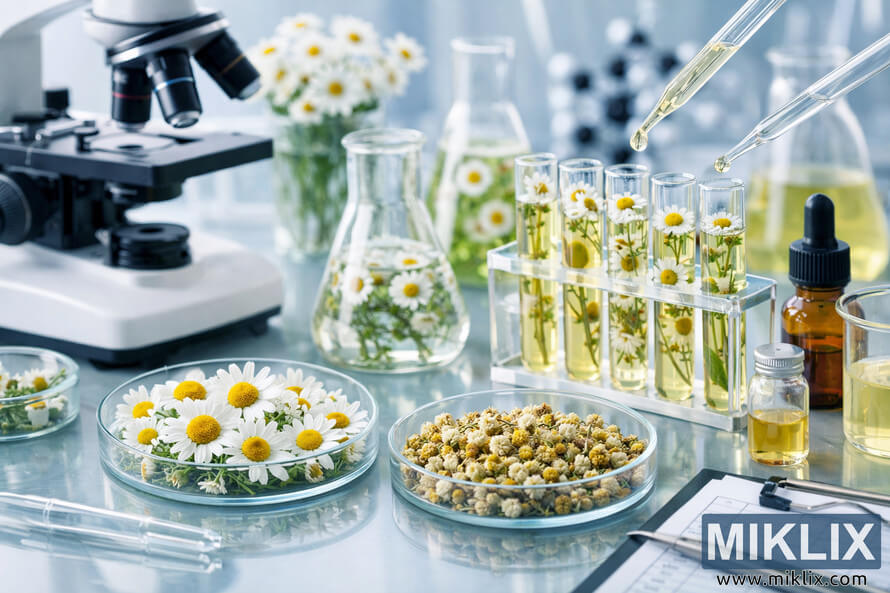
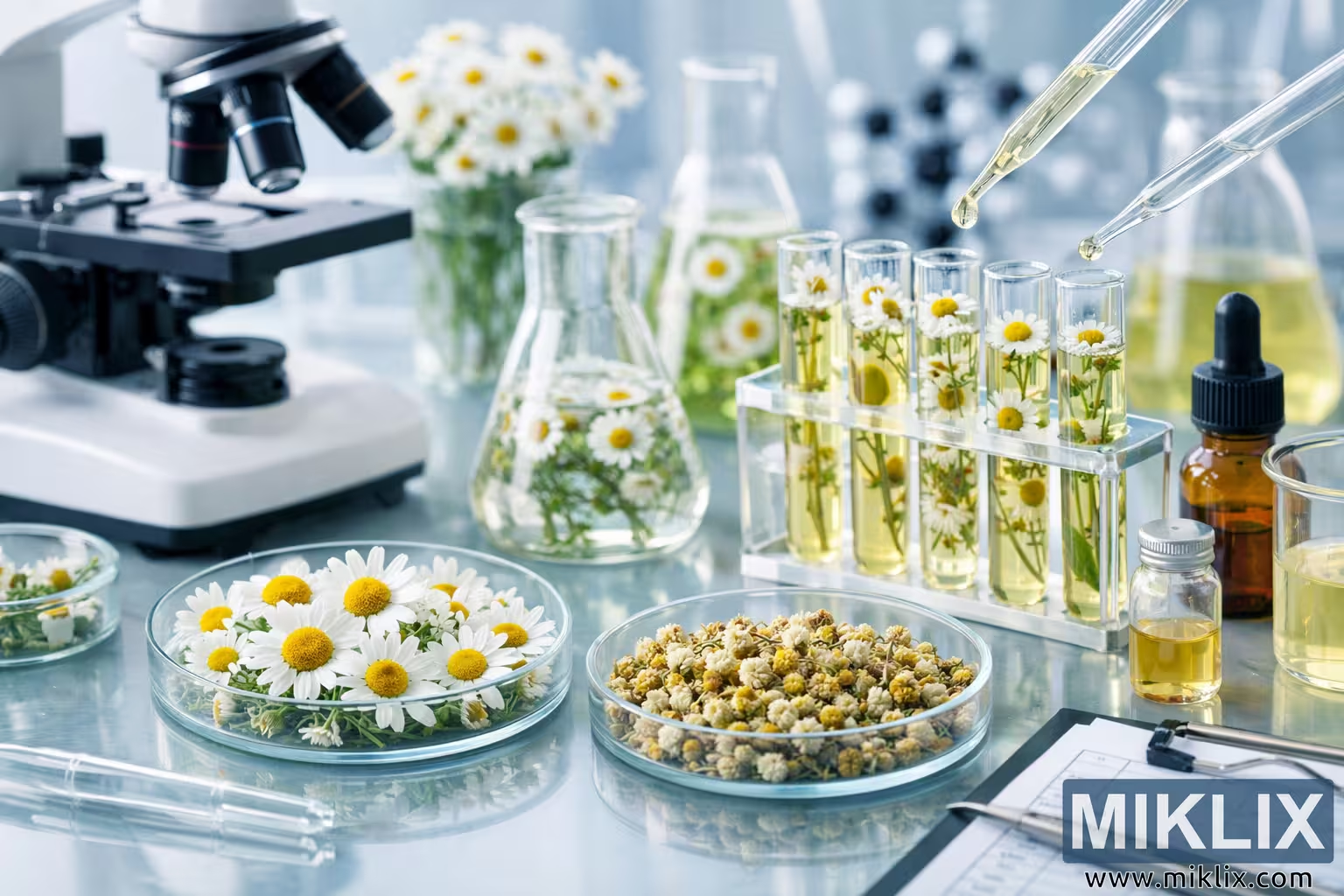
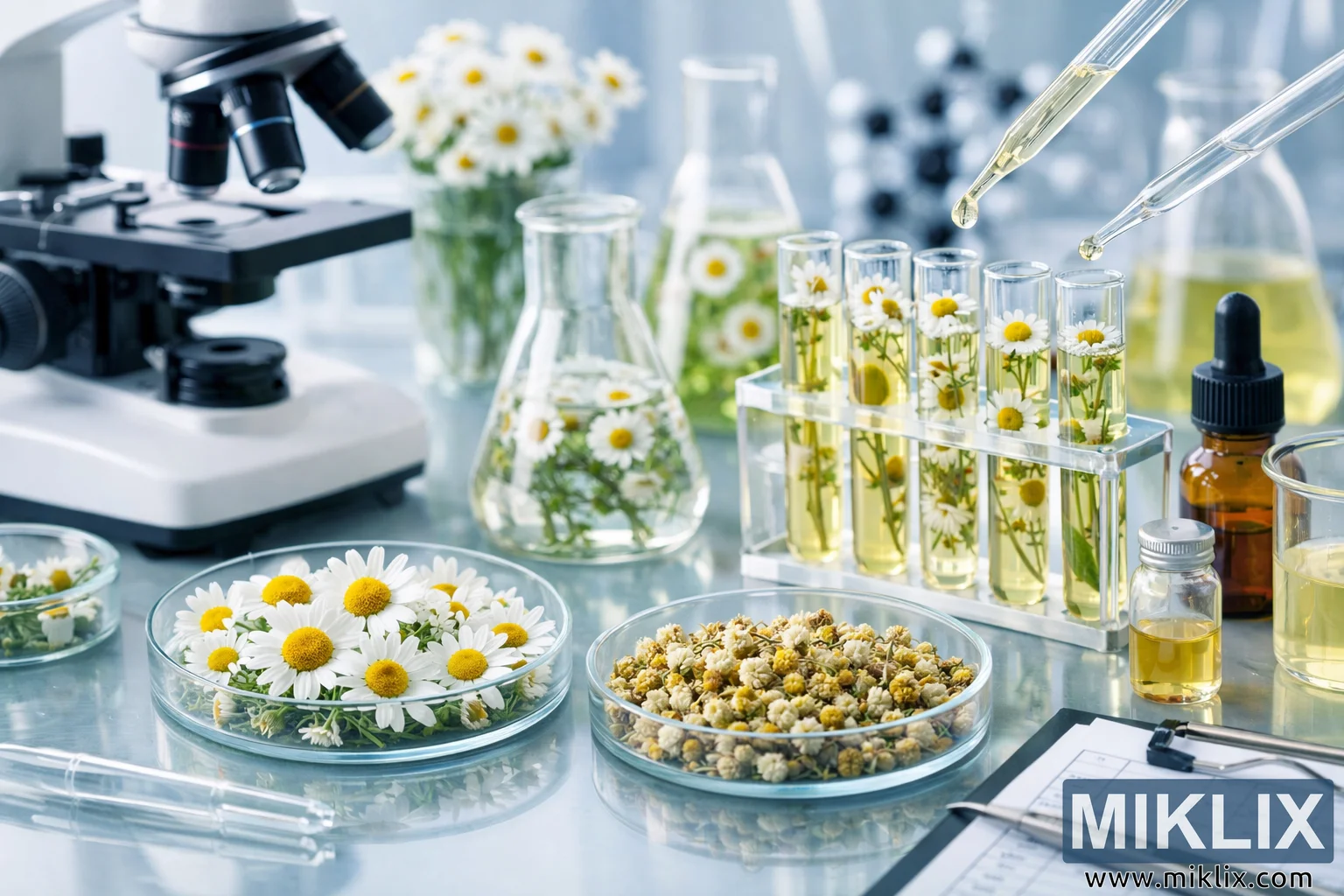
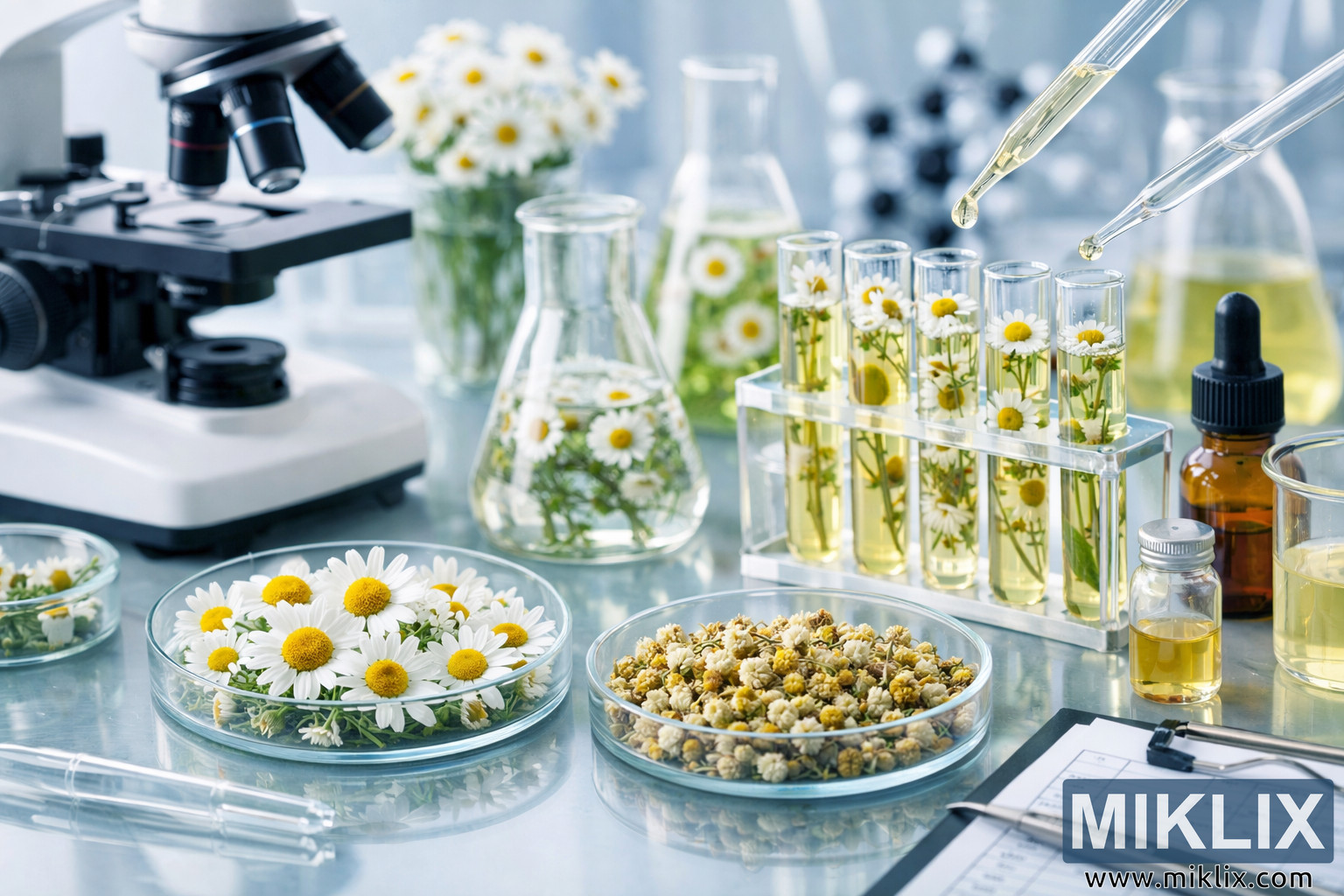
The image presents a meticulously arranged laboratory environment dedicated to the scientific study of chamomile, captured in landscape orientation with exceptional clarity and depth. The composition is balanced and visually rich, emphasizing both the precision of laboratory work and the natural beauty of chamomile flowers. In the foreground, two Petri dishes rest on a reflective glass surface. The dish on the left contains fresh chamomile blossoms, their white petals and golden-yellow centers radiating under the cool laboratory lighting. The dish on the right holds dried chamomile buds and fragmented petals, representing different stages of botanical analysis. Between them, stainless steel tweezers and a glass pipette lie neatly beside a clipboard with a printed data sheet, suggesting ongoing documentation of experimental results.
To the right of the Petri dishes, a transparent test tube rack holds several test tubes filled with liquids of varying hues—from clear to pale yellow—each containing submerged chamomile flowers or stems. Above the rack, two glass pipettes hover, one releasing a droplet of liquid into a test tube, symbolizing the active process of chemical testing or extraction. The pipettes glisten under the laboratory lights, their reflections merging with the glassware to create a sense of precision and cleanliness.
On the left side of the image, a compound microscope stands prominently, its white body and black objective lenses gleaming. The microscope’s presence anchors the scene in scientific rigor, contrasting beautifully with the organic forms of the chamomile flowers. Behind the microscope, a small bouquet of chamomile blooms in a glass beaker adds a touch of natural charm to the otherwise sterile environment. The juxtaposition of living flowers and analytical instruments underscores the harmony between nature and science.
In the middle ground, two Erlenmeyer flasks are positioned behind the Petri dishes. One flask contains a clear liquid with chamomile flowers floating gracefully inside, while the other holds a greenish solution with stems partially submerged. The liquids refract light, creating subtle gradients of color that enhance the visual depth of the composition. To the far right, an amber glass bottle with a dropper cap stands next to a small vial filled with golden liquid—possibly an extract derived from the chamomile samples. A clear beaker containing a pale yellow solution completes the arrangement, reinforcing the theme of botanical experimentation.
The background is softly blurred, drawing attention to the foreground details while still providing contextual depth. Molecular models and additional laboratory glassware are faintly visible, suggesting a broader research environment beyond the immediate workspace. The lighting is bright and evenly distributed, with cool tones that emphasize the cleanliness and precision of the setting. Reflections on the glass surfaces create a sense of dimensionality, while the interplay of transparency and opacity among the liquids and flowers adds visual complexity.
Every element in the image contributes to a narrative of scientific inquiry and natural exploration. The chamomile flowers, both fresh and dried, symbolize the transition from raw botanical material to refined scientific data. The instruments—microscope, pipettes, flasks, and test tubes—represent the tools through which knowledge is extracted and analyzed. The clipboard and tweezers hint at human presence and meticulous record-keeping, while the overall composition conveys calm focus and intellectual curiosity.
The color palette is a harmonious blend of whites, yellows, greens, and transparent blues. The white petals and yellow centers of the chamomile flowers stand out vividly against the neutral tones of the laboratory equipment. The greenish liquids introduce a natural contrast, while the amber and golden hues of the extracts evoke warmth and vitality. The reflective glass surfaces amplify the brightness of the scene, creating a crisp, modern aesthetic typical of advanced research facilities.
This image captures not only the physical details of a laboratory but also the essence of scientific dedication. It evokes the quiet concentration of researchers working to unlock the secrets of nature through observation and experimentation. The chamomile samples serve as both subject and symbol—representing the intersection of botanical beauty and scientific precision. The overall atmosphere is serene yet intellectually charged, inviting viewers to appreciate the delicate balance between empirical study and the organic world.
In summary, the photograph is a celebration of scientific artistry. It portrays a laboratory where every object—from the smallest Petri dish to the largest microscope—plays a role in advancing understanding. The chamomile flowers, rendered with exquisite detail, remind us that even in the most controlled environments, nature remains the heart of discovery. The image stands as a testament to the elegance of research and the enduring connection between science and the natural world.
Слика се односи на: Chamomile Health Benefits: Natural Wellness From an Ancient Herb