
Slika: Parsnips vs. Carrots: Visual Comparison of Health Benefits and Nutritional Strengths
Objavio:
Poslednje izmene: 3. avgust 2026. 22:13:40 UTC
Explore a visual comparison of parsnips and carrots featuring a side-by-side infographic highlighting nutritional characteristics, vitamins, fiber, antioxidants, and key health benefits in an easy-to-read landscape design.
Parsnips vs. Carrots: Visual Comparison of Health Benefits and Nutritional Strengths
Dostupne verzije ove slike
Slikovne datoteke dostupne za preuzimanje ispod su manje komprimovane i veće rezolucije - i kao rezultat toga, kvalitetnije - od slika ugrađenih u članke i stranice na ovoj veb stranici, koje su više optimizovane za veličinu datoteke kako bi se smanjila potrošnja propusnog opsega.
Pravilna veličina (1,536 x 1,024)
Velike dimenzije (3,072 x 2,048)
Veoma velika veličina (4,608 x 3,072)
Ekstra velika veličina (6,144 x 4,096)
Komično velika veličina (1,048,576 x 699,051)
- Još uvek otpremljujem... ;-)
Opis slike
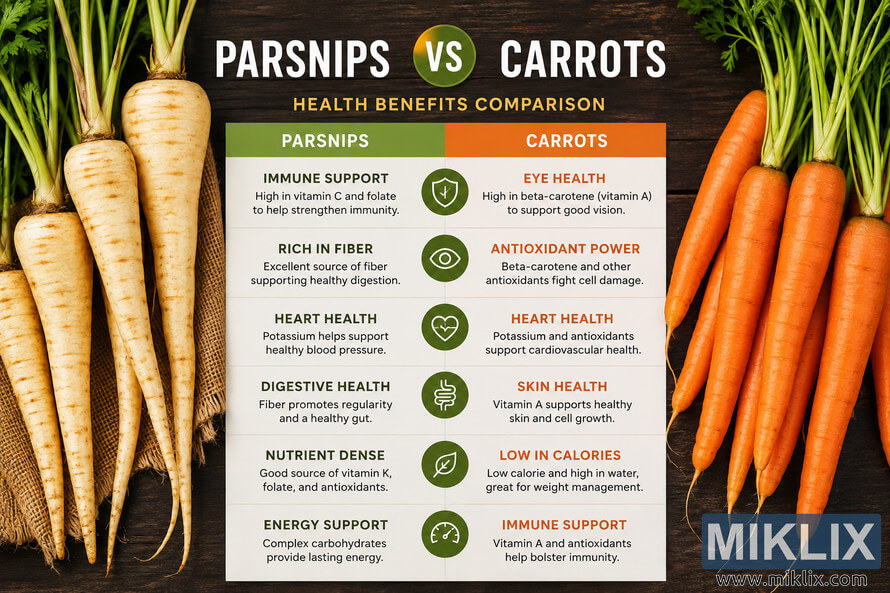
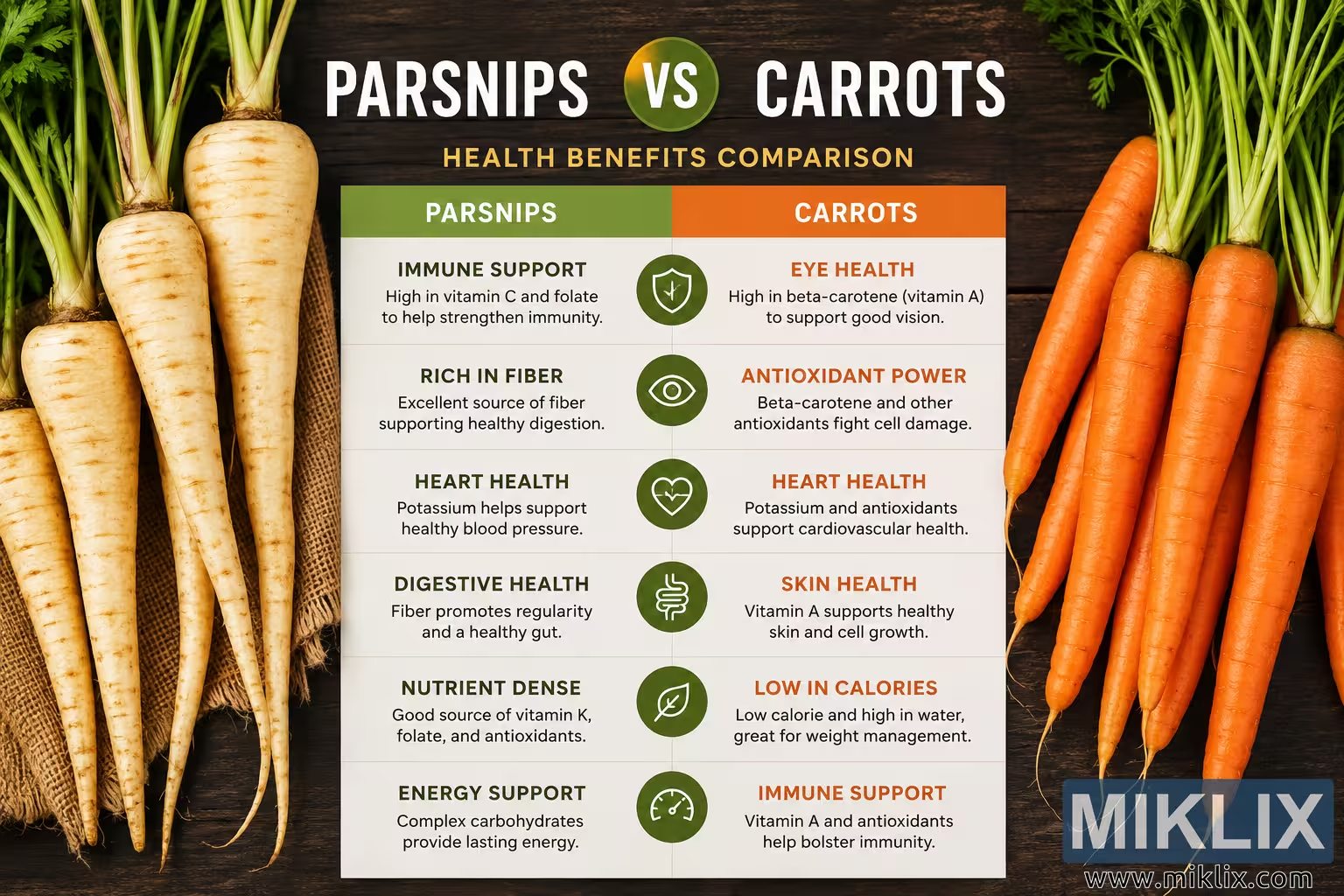
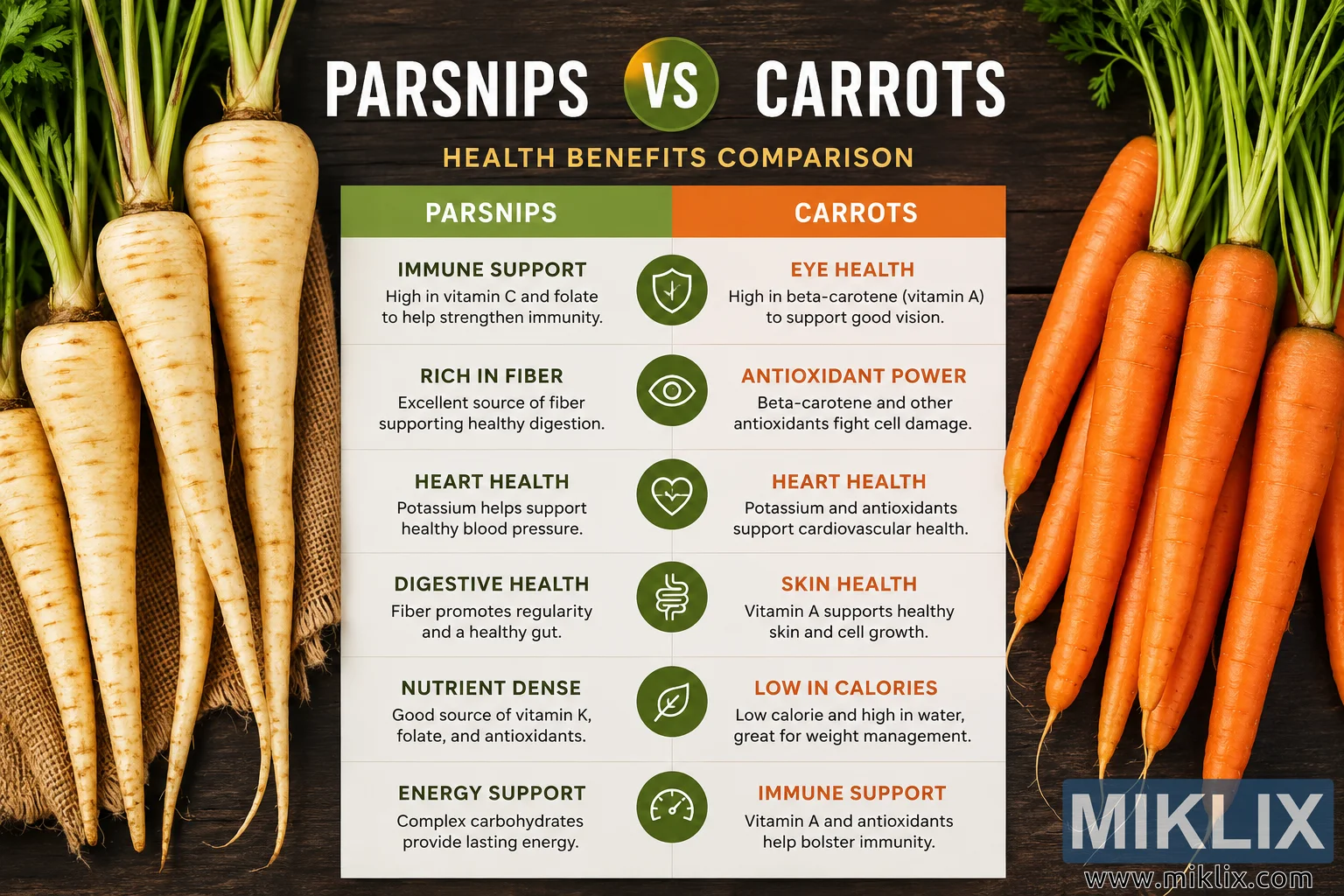
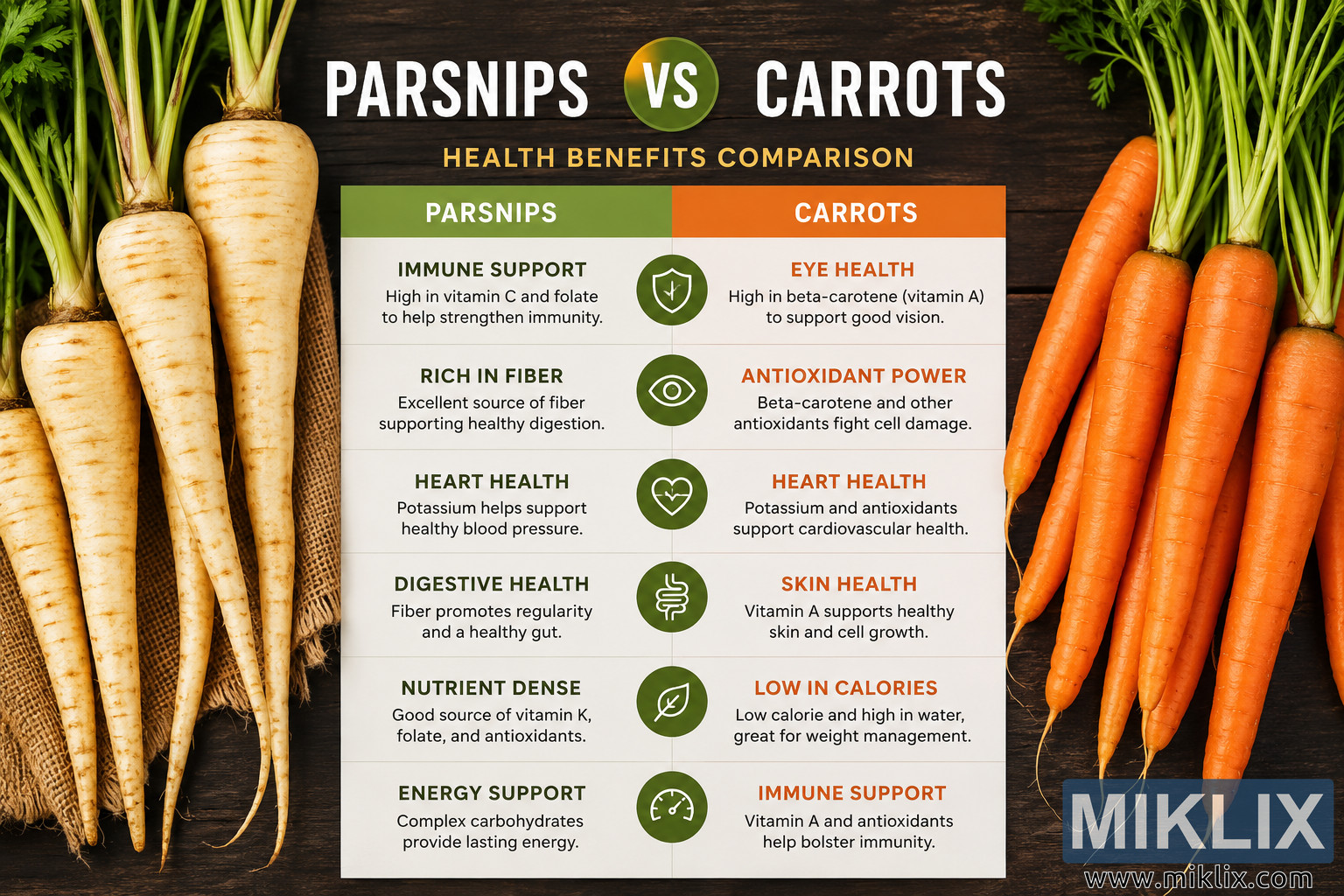
This landscape-oriented infographic presents a side-by-side comparison of parsnips and carrots, emphasizing their nutritional qualities and commonly associated health benefits. The composition is symmetrical and designed to be easy to scan visually. A rustic dark wooden tabletop serves as the background, providing strong contrast against the light-colored parsnips on the left and the bright orange carrots on the right. The natural wood texture gives the overall image a fresh, farm-inspired appearance while helping the vegetables stand out prominently.
Across the top of the image, a large headline reads "Parsnips vs Carrots," with the word "VS" displayed inside a circular green emblem positioned between the two vegetable names. Beneath the main heading appears a secondary title indicating that the image is a health benefits comparison. The typography is bold, uppercase, and highly legible, creating a clear visual hierarchy that immediately communicates the subject of the infographic.
The left side of the composition features several fresh parsnips with their leafy green tops still attached. The parsnips are cream to pale beige in color with subtle horizontal ridges and natural surface markings that suggest they have recently been harvested. They rest on a coarse burlap fabric that reinforces the rustic, natural aesthetic. The vegetables vary slightly in size and thickness, making the arrangement appear authentic rather than perfectly uniform.
The right side mirrors the left with a bundle of fresh carrots. These carrots are vibrant orange with green leafy tops extending upward. Their smooth surfaces contrast visually with the rougher texture of the parsnips. They are arranged diagonally so the tapered ends point downward while the leafy tops spread outward near the upper-right corner, balancing the composition and framing the central information panel.
At the center of the image is a vertically oriented comparison table divided into two columns. The left column is labeled "Parsnips" using a green header, while the right column is labeled "Carrots" using an orange header. Each row compares one nutritional or health-related characteristic. A vertical line of circular green icons separates the columns, with each icon representing the topic discussed in that row. The icons include symbols such as a shield, an eye, a heart, a digestive tract, a leaf, and a speedometer-like gauge, visually reinforcing the health themes presented throughout the infographic.
The parsnip column highlights attributes including immune support, fiber content, heart health, digestive health, nutrient density, and sustained energy support. Supporting text explains that parsnips are rich in nutrients such as vitamin C, folate, fiber, potassium, vitamin K, and complex carbohydrates. These descriptions indicate that parsnips may contribute to immune function, digestive regularity, cardiovascular health, and longer-lasting energy due to their carbohydrate profile.
The carrot column focuses on eye health, antioxidant content, heart health, skin health, low calorie content, and immune support. Supporting text references beta-carotene, vitamin A, antioxidants, potassium, and water content. These descriptions emphasize carrots as being widely recognized for supporting vision, providing antioxidant compounds, promoting healthy skin, supporting cardiovascular health, and serving as a low-calorie vegetable option suitable for balanced diets.
The design uses a consistent color palette of green, orange, white, brown, and natural vegetable tones. Green is consistently associated with the parsnip side and orange with the carrot side, making the information intuitive to follow. The central white comparison panel contrasts strongly with the darker wood background, ensuring excellent readability. Thin dividing lines organize each comparison row, while generous spacing prevents the layout from appearing crowded.
The infographic combines realistic food photography with clean graphic design elements. The vegetables are rendered with detailed textures, natural lighting, and realistic shadows, while the central information panel has a polished, modern appearance suitable for educational or health-related content. The image contains no commercial branding, logos, product packaging, or advertising elements. Instead, it focuses entirely on visually comparing two common root vegetables and summarizing their nutritional characteristics in a balanced, easy-to-understand format. Overall, the composition communicates the similarities and differences between parsnips and carrots through an attractive blend of food photography, organized typography, iconography, and structured comparative information.
Slika se odnosi na: Don't Overlook Parsnips: Here's Why They're So Good for You