
Slika: Cooking Methods for Parsnips: Preserving Health Benefits and Nutrients
Objavio:
Poslednje izmene: 3. avgust 2026. 22:13:40 UTC
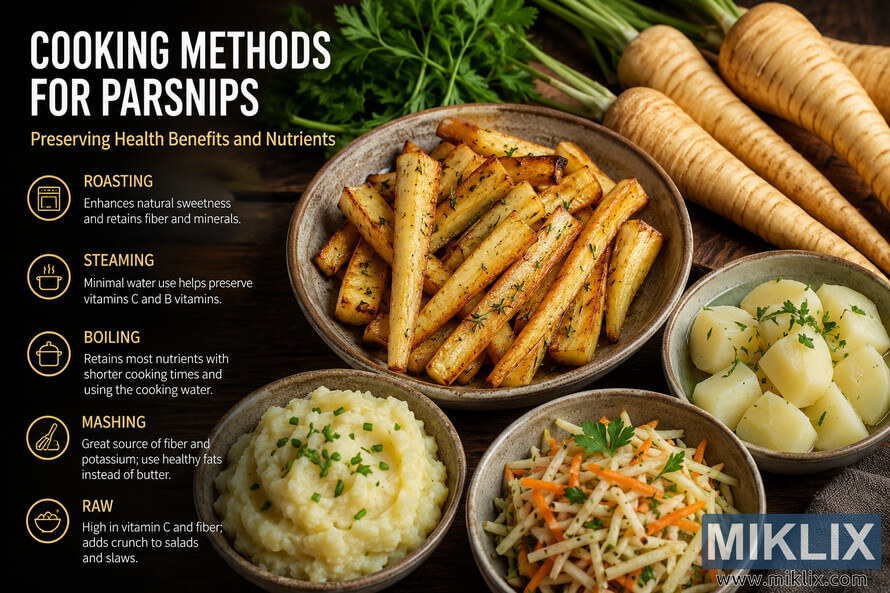
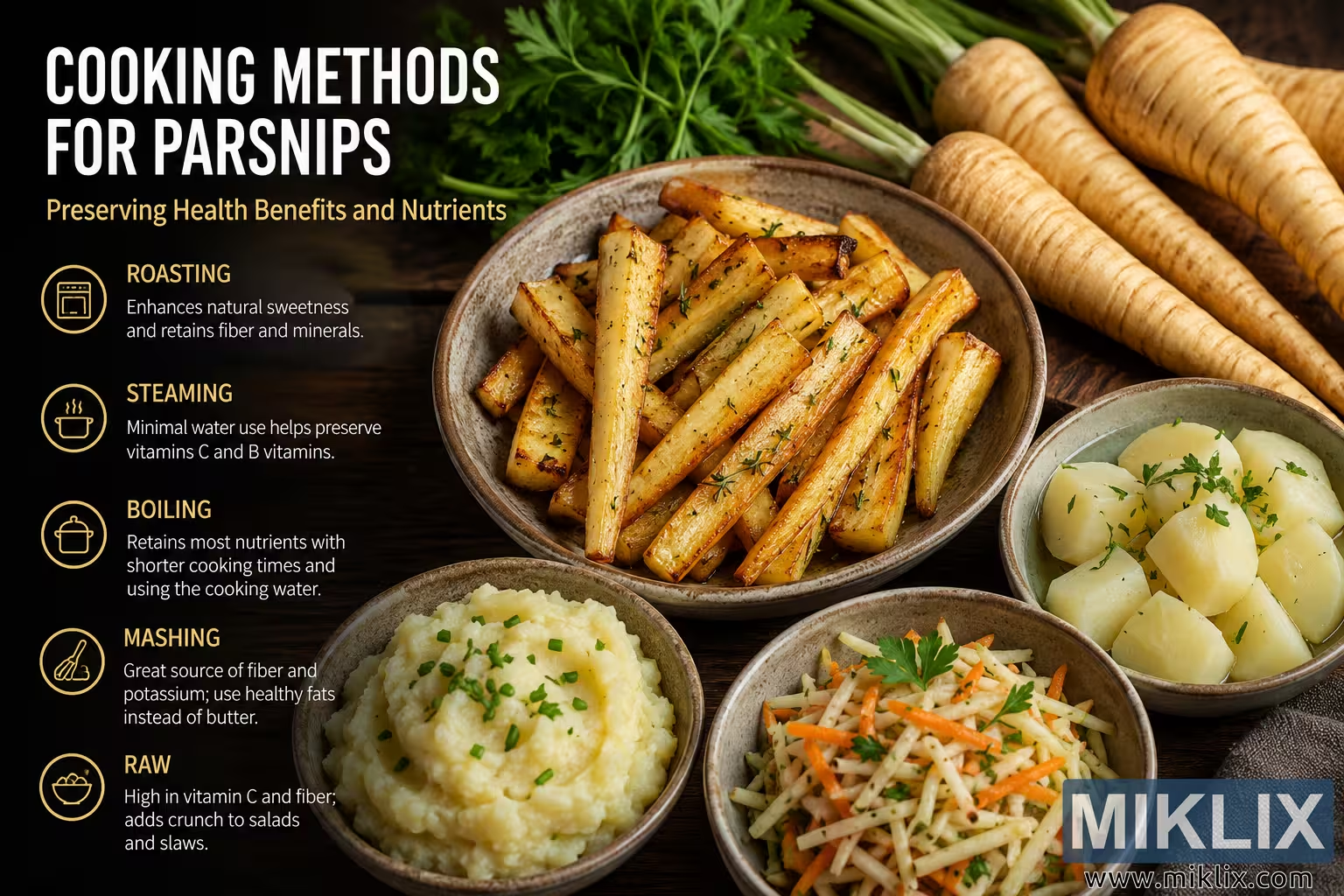
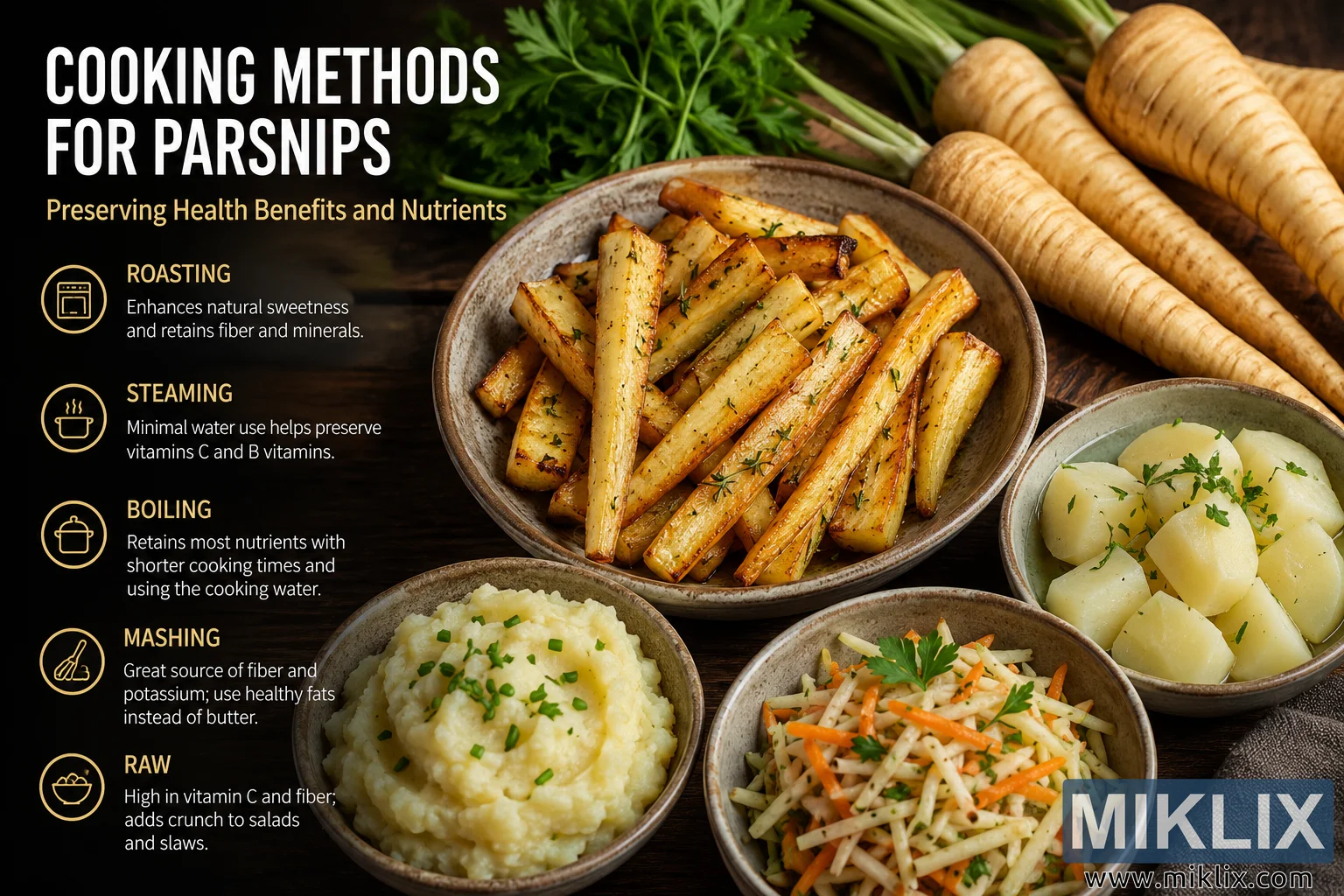
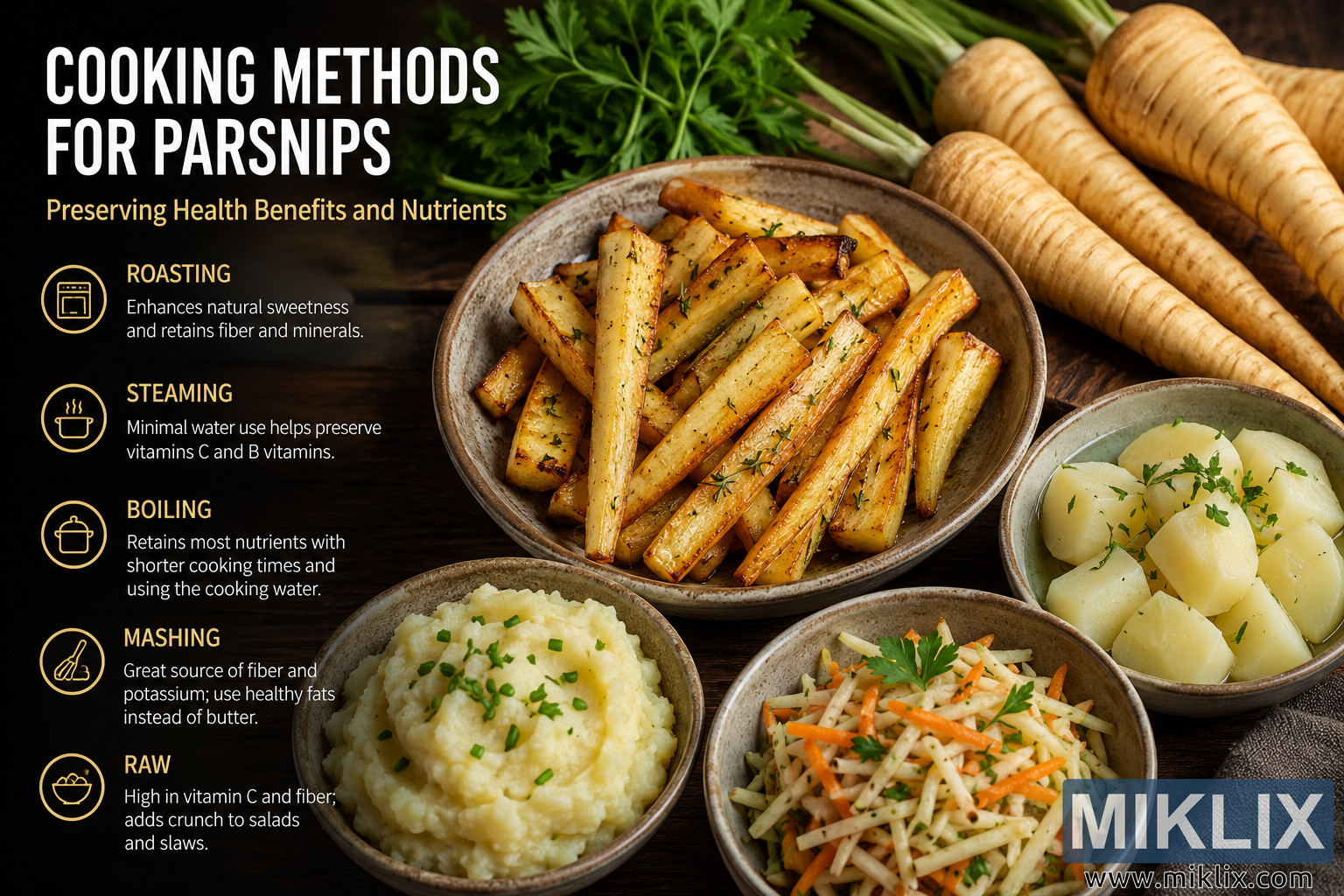
Landscape infographic illustrating healthy cooking methods for parsnips, including roasting, steaming, boiling, mashing, and raw preparation, paired with rustic food photography that highlights fresh ingredients and nutrient-conscious cooking techniques.
Cooking Methods for Parsnips: Preserving Health Benefits and Nutrients
Dostupne verzije ove slike
Slikovne datoteke dostupne za preuzimanje ispod su manje komprimovane i veće rezolucije - i kao rezultat toga, kvalitetnije - od slika ugrađenih u članke i stranice na ovoj veb stranici, koje su više optimizovane za veličinu datoteke kako bi se smanjila potrošnja propusnog opsega.
Pravilna veličina (1,536 x 1,024)
Velike dimenzije (3,072 x 2,048)
Veoma velika veličina (4,608 x 3,072)
Ekstra velika veličina (6,144 x 4,096)
Komično velika veličina (1,048,576 x 699,051)
- Još uvek otpremljujem... ;-)
Opis slike
This landscape-oriented infographic combines a clean educational layout with high-quality food photography to illustrate several common cooking methods for parsnips while emphasizing nutrient preservation. The overall composition is divided into two primary sections. The left side features a dark, textured background overlaid with large, bold typography, while the right side showcases an inviting rustic tabletop scene filled with fresh and prepared parsnips. The warm lighting and earthy color palette create a wholesome, natural atmosphere associated with healthy home cooking.
At the top left, a prominent headline reads \"Cooking Methods for Parsnips\" with a smaller subtitle underneath stating \"Preserving Health Benefits and Nutrients.\" The typography uses large white lettering for the main title and a warm golden accent for the subtitle, providing excellent contrast against the dark background. Below the heading is a vertical list of cooking methods. Each method is accompanied by a simple circular line icon representing the preparation technique. The icons are rendered in a matching golden color, maintaining visual consistency throughout the design.
The listed cooking methods include roasting, steaming, boiling, mashing, and eating parsnips raw. Each entry contains a concise explanatory sentence describing potential nutritional advantages. Roasting is described as enhancing natural sweetness while retaining fiber and minerals. Steaming emphasizes minimal water usage to help preserve vitamins. Boiling notes that shorter cooking times and making use of the cooking water can help retain nutrients. Mashing highlights fiber and potassium while recommending healthier fats instead of excessive butter. The raw preparation notes a high vitamin C content and crunchy texture suitable for salads and slaws. The wording is presented as general educational guidance rather than strict scientific claims.
Occupying most of the right side of the composition is an appetizing food photograph arranged on a rustic wooden surface. In the center sits a large ceramic bowl filled with roasted parsnip batons. The pieces display caramelized golden-brown edges with lightly browned surfaces that suggest oven roasting. Small green herb leaves are scattered across the roasted vegetables, adding color contrast and visual freshness. The bowl itself has a handcrafted appearance with muted earth-tone glazing that complements the natural food presentation.
Behind the roasted dish lie several whole raw parsnips arranged diagonally across the upper-right portion of the image. Their pale cream-colored skin, tapered shape, and slightly textured surface clearly identify them as freshly harvested root vegetables. Fresh parsley with vibrant green leaves is positioned nearby, introducing additional color while reinforcing the fresh ingredient theme.
Along the bottom portion of the image are three additional bowls illustrating alternative preparations. One bowl contains smooth mashed parsnips with a creamy consistency, garnished with finely chopped chives placed at the center. Another bowl contains boiled parsnip chunks that appear tender and lightly seasoned with chopped parsley. A third bowl contains a raw shredded parsnip salad mixed with thin strips of orange carrot and green herbs, creating a colorful slaw-like presentation that emphasizes freshness and texture.
The lighting throughout the image is soft and directional, highlighting the natural textures of the vegetables without harsh reflections. Shadows remain gentle and realistic, helping the bowls stand out from the dark wooden tabletop. The overall color palette combines warm browns, creamy ivory tones, fresh greens, and subtle golden accents, reinforcing themes of wholesome nutrition and home cooking.
The layout balances informative text with visually appealing food photography, making the graphic suitable for educational articles, nutrition blogs, recipe collections, healthy eating guides, cooking classes, or informational web pages discussing root vegetables and methods that may help preserve nutrients during preparation. No commercial branding, logos, trademarks, or product packaging appear anywhere in the image. The emphasis remains entirely on parsnips, their various preparation techniques, and an attractive presentation intended to encourage healthy cooking practices.
Slika se odnosi na: Don't Overlook Parsnips: Here's Why They're So Good for You