
Fermenting Beer with Wyeast 3724 Belgian Saison Yeast
Publicerad:
Senast uppdaterad: 6 juni 2026 kl. 14:17:26 UTC
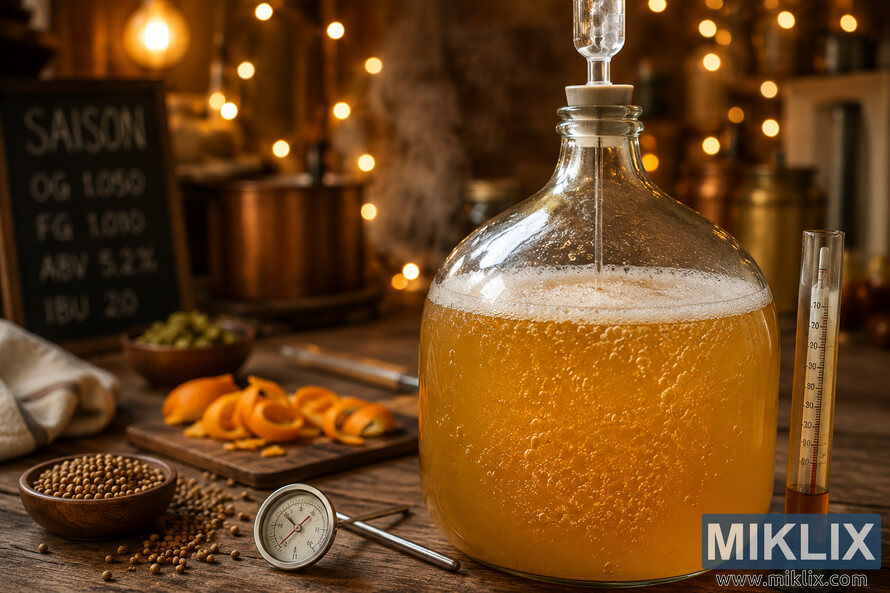
Saison strains offer a unique blend of fermentation power and aromatic complexity, attracting homebrewers. They can achieve a bone-dry finish while retaining lively esters and spicy notes. This versatility allows brewers to create a wide range of beers, from rustic farmhouse ales to modern hoppy saisons.
Fermenting Beer with Wyeast 3724 Belgian Saison Yeast
Klicka eller tryck på bilden för mer information och högre upplösning.
Key Takeaways
- Wyeast 3724 Belgian Saison Yeast delivers classic fruity and spicy saison character when managed with proper temperature and pitching rate.
- Starter sizing and viability checks are important for consistent fermentations in Belgian saison homebrew.
- Temperature control shapes ester and phenol balance during primary fermentation.
- Expect high attenuation; plan malt bill and mouthfeel accordingly.
- This saison yeast review emphasizes practical, step-by-step guidance for homebrewers and small brewers in the United States.
Why Choose Belgian Saison Strains for Homebrewing
Characteristics that define saison yeasts
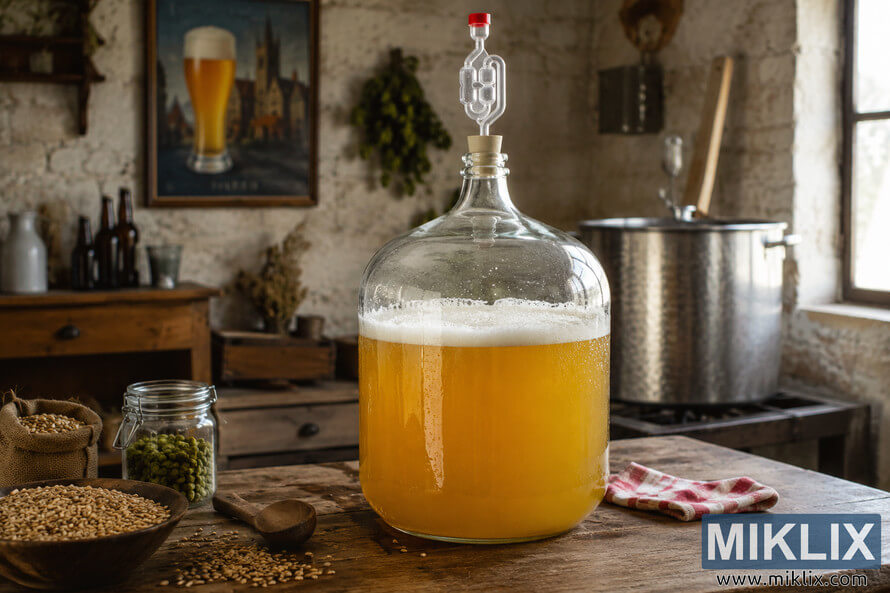
Saison yeasts are known for their high attenuation and tolerance for warm fermentation. They exhibit variable flocculation and produce both esters and phenolics. This combination results in an effervescent mouthfeel and a dry body, making them ideal for light, refreshing beers.
Flavor profiles typical of Belgian-style saisons
Belgian saisons are characterized by peppery phenolics and bright stone-fruit esters like apricot and pear. Some strains also introduce subtle tartness, enhancing complexity without overpowering the malt. Adjusting fermentation temperature can alter the balance of clove-like phenols and citrusy esters, leading to different aromatic profiles.
How saison strains perform in different beer styles
Saison strains are versatile, excelling in farmhouse ale yeast roles but also suitable for other styles. They are used in pale ales, grisettes, and hop-forward beers to enhance hop aroma and dry the finish. However, careful recipe design is crucial to avoid over-attenuation, which can thin the body unless balanced by malt or adjuncts.
Klicka eller tryck på bilden för mer information och högre upplösning.
Overview of Wyeast 3724 Belgian Saison Yeast
Wyeast 3724 is a farmhouse-style strain from Wyeast Laboratories, celebrated for its authentic Belgian saison character. It's favored by brewers for its high attenuation, lively fermentation, and a balanced mix of fruity esters and peppery phenolics. This brief introduction aims to guide brewers on how to utilize this yeast, covering its origin, fermentation behavior, and flavor profile.
History and origin of the strain
The lineage of Wyeast 3724 traces back to traditional farmhouse cultures in Belgian saisons. Wyeast Laboratories made this culture available to modern brewers, aiming to replicate the rustic profile of farmhouse ales. This heritage is why many homebrewers and craft breweries seek it for its authentic saison character.
Primary fermentation characteristics and attenuation
The fermentation profile of 3724 is marked by a fast, vigorous start when the yeast is well propagated. It is renowned for its strong attenuation, resulting in a very dry finish, especially at warmer temperatures. The yeast's flocculation is moderate to low, allowing some yeast to remain in suspension. This can lead to conditioning in the bottle or keg over time.
Typical flavor and aroma contributions
The strain contributes a blend of fruity esters and spicy phenolics, characteristic of many saisons. Expect notes of pear, orange, and lemon esters, balanced with pepper and clove-like phenolics. Temperature variations influence the flavor: moderate temperatures enhance fruit notes, while higher temperatures emphasize spice and farmhouse funk.
- Use Wyeast 3724 origin information to guide strain selection for authentic saisons.
- Monitor the 3724 fermentation profile to avoid over-attenuation in lighter recipes.
- Read a saison yeast Wyeast review to compare user experiences on flavor and handling.
Klicka eller tryck på bilden för mer information och högre upplösning.
Packaging, Handling, and Viability of Wyeast Packs
Proper care of liquid yeast is crucial for a successful fermentation. Wyeast 3724 comes in foil packs with a nutrient pouch. Quick checks and correct storage are key to maintaining cell health and consistent results.
Inspecting the yeast pouch upon arrival is essential. Look for signs of damage such as swelling, punctures, or frozen seams. Gently press the foil to feel the nutrient pouch inside. If you notice any leaks or damage, set it aside and contact your supplier immediately.
Proper storage of yeast packs is straightforward when following temperature guidelines. Store them in the refrigerator at 33–40°F (1–4°C). Avoid freezing and long exposure to warm temperatures. Keep them away from sunlight and extreme temperature swings to preserve yeast viability.
Best-before dates provide a baseline for yeast viability Wyeast 3724. However, viability decreases over time. Always check the manufacture and expiration dates. For older packs, consider a viability test or make a starter to rebuild cell counts before pitching.
Simple viability checks can save a batch. A microscope count is precise. Alternatively, a small growth check in wort or wort substitute offers practical confirmation. Wyeast often recommends making a starter for packs older than a few weeks to restore vigor.
The decision to overbuild starter or pitch directly depends on the pack's age and beer strength. For average 5-gallon batches, a fresh pack is usually sufficient for lower gravity beers. However, pitching high-gravity wort or lager styles often requires more cells.
Overbuild starter when the pack is older, for high OG beers, or when aiming for very vigorous saisons. Use cell-count calculations to size a starter. This approach protects fermentation timing and reduces the risk of off-flavors from stressed yeast.
Preparing a Starter for Wyeast 3724 Belgian Saison Yeast
To maximize the performance of Wyeast 3724, a well-planned starter is essential. It should align with the batch size and gravity. Below, you'll find practical calculations, a step-by-step guide for creating a yeast starter, and tips on oxygenating the starter wort and nutrient use. Before starting, use a yeast cell count calculator to set a reliable target for pitch rate.
Calculating cell counts and starter size
- Standard calculators from tools like Mr. Malty or Brewer’s Friend help find target cells. For high-attenuating saison yeasts, aim for about 0.75–1.0 million cells per mL per degree Plato.
- For example, a 5-gallon (19 L) batch at 1.050 OG typically needs roughly 200–250 billion cells. Adjust this number with a yeast cell count calculator based on pack age and viability.
- If planning a higher gravity beer, increase the target pitch rate and scale the starter size accordingly.
Step-by-step guide to making a healthy starter
- Sanitize a flask or jar and all tools. Cleanliness prevents contamination and preserves vitality.
- Make starter wort by boiling 100 g (3.5 oz) DME per liter of water for 10–15 minutes. Cool it to room temperature until it reaches a target of 1.040–1.050 SG.
- Pour cooled wort into your sanitized vessel. Pitch the Wyeast package or a measured slurry, seal with an airlock or foam stopper.
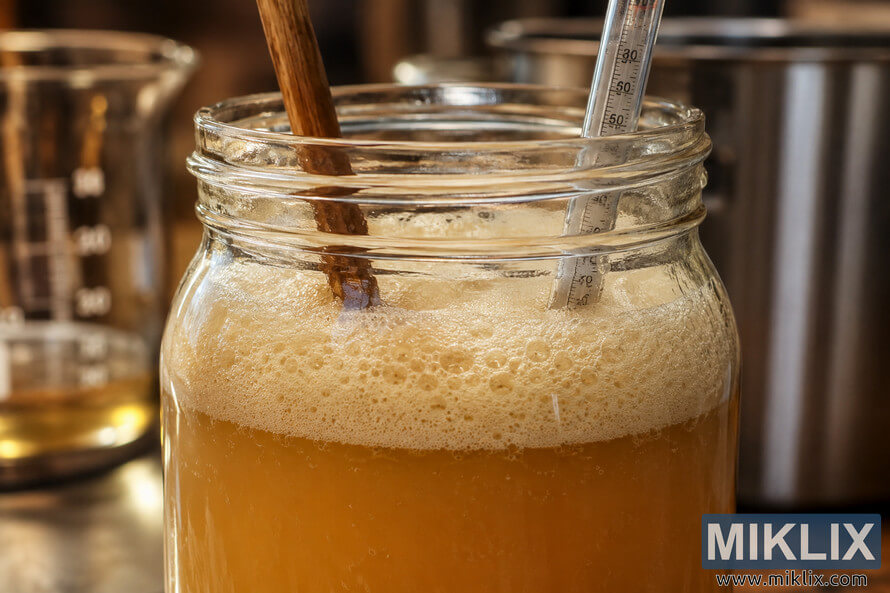
- Place the starter on a stir plate or swirl by hand several times a day. Expect visible activity in 12–48 hours and full propagation in 24–72 hours depending on starter volume.
- Before brewing, check yeast health and, for large starters, decant most of the spent wort to reduce off-flavor carryover.
Tips for oxygenation and nutrient additions
- Oxygenate starter wort right before pitching. Vigorous shaking or an aquarium pump with a sterile filter boosts growth. Practical oxygenating starter steps support healthy reproduction without pushing too much oxygen into the wort.
- Add a small pinch of yeast nutrient or energizer when making a yeast starter for high-gravity builds. This helps cell walls form and shortens lag time.
- Avoid over-oxygenation. Starters need just enough dissolved oxygen to fuel growth. Excess oxygen can change flavor or stress cells.
- If you plan a large step-up, split into two smaller starters rather than one huge batch. That reduces risk and improves viability.
Klicka eller tryck på bilden för mer information och högre upplösning.
Optimal Fermentation Temperatures and Schedules
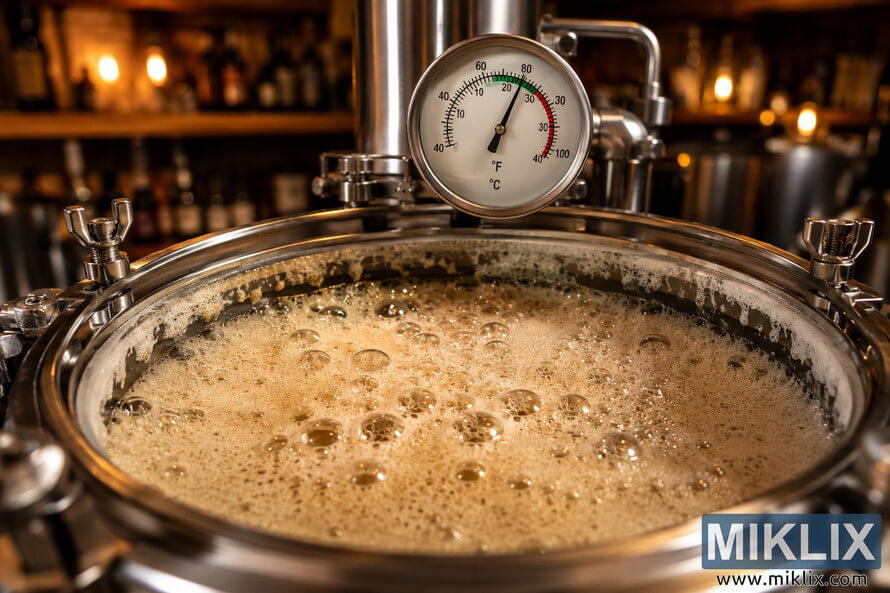
Mastering fermentation is key to creating a lively saison. Wyeast 3724's fermentation temperature range is broad. This flexibility allows brewers to control esters, phenolics, and attenuation through precise timing and temperature control.
Temperature ranges for primary fermentation with Wyeast 3724
- Typical range: 64–95°F (18–35°C). Most homebrewers choose 68–80°F (20–27°C) to balance fruit and spice.
- Clean profile: keep fermentation toward the low end, around 68–72°F (20–22°C).
- Rustic, peppery character: push into the mid-to-high 70s (24–26°C), but avoid sustained temps above 85°F (29°C) to reduce solvent risks.
Temperature ramping and dry hopping considerations
- Start cool for a strong yeast takeoff. Begin at 68–72°F (20–22°C) for a healthy, controlled start.
- Allow a gradual rise to mid-70s during active attenuation. This temperature ramping saison approach encourages esters and phenolics without harsh fusels.
- Time dry hops near the end of active fermentation or during conditioning. A short temperature hold at fermentation finish helps preserve hop aromatics and limits yeast reabsorption.
Using temperature control to shape esters and phenols
- Lower temps favor cleaner yeast activity and fewer phenolic notes. Use a fermentation fridge or temperature controller for precision.
- Higher temps amplify spicy phenolics and fruit-forward esters. Controlled increases give predictable flavor shifts.
- Practical tools: a PID controller, fermentation fridge, or well-managed swamp cooler will keep your saison fermentation schedule on target.
Example saison fermentation schedule
- Day 0–2: 68–72°F (20–22°C) for yeast establishment.
- Day 3–7: rise to 74–76°F (23–24°C) to drive attenuation and flavor development.
- Day 8–14: settle at 72–75°F (22–24°C) for conditioning and dry hop additions if used.
Keep detailed notes on each batch. Small adjustments to Wyeast 3724 fermentation temp and the saison fermentation schedule will refine your house character over time.
Klicka eller tryck på bilden för mer information och högre upplösning.
Wyeast 3724 Belgian Saison Yeast and Attenuation Performance
The Wyeast 3724 strain often delivers very high attenuation in well-fermentable worts. Brewers report Wyeast 3724 attenuation commonly landing between 75% and 90%, with many saison recipes finishing quite dry. Typical targets for final gravity saison fall around 1.002 to 1.010, depending on mash profile and fermentation temperature.
High attenuation shapes body and mouthfeel. A strongly attenuated saison feels light, crisp, and effervescent. If you want more residual body, add dextrin-rich malts such as Vienna or Munich, include a small portion of flaked oats, or raise mash temperature slightly to leave more unfermentable sugars.
Manage fermentation to hit final gravity saison goals. Temperature, pitching rate, and oxygenation influence how completely sugars ferment. Wyeast 3724 produces more attenuation when fermented warm and given a healthy cell count and nutrients.
Troubleshooting stuck or incomplete fermentations starts with diagnosis. Common causes include underpitching, low yeast viability, poor oxygenation at the start, or fermentation temperatures that are too cool. Use systematic stuck fermentation troubleshooting steps to restore activity.
- Raise temperature by a few degrees to revive sluggish yeast during active trouble.
- Re-pitch a healthy starter or fresh Wyeast pack when viability is questionable.
- Add yeast nutrient early in fermentation for worts with limited nitrogen.
- Ensure proper oxygenation prior to pitching for higher-gravity batches.
For high-gravity saisons, consider staggered oxygenation and nutrient additions, plus a larger starter to avoid long lag times. Careful attention to these variables reduces the need for emergency fixes and helps achieve predictable Wyeast 3724 attenuation and reliable final gravity saison readings.
Flavor Profile: Fruity Esters and Spicy Phenolics
Wyeast 3724 brings a vibrant mix of fruity esters and spicy phenolics, key to many saisons' charm. Brewers appreciate the blend of delicate pear and apple notes with a peppery, clove-like spice. This section explores the main compounds, how to balance malt and hops with yeast, and two recipes that highlight the Wyeast 3724 flavor.
Wyeast 3724 produces ethyl acetate and isoamyl acetate, creating pear, apple, and stone-fruit aromas. It also contributes 4-vinylguaiacol and related phenolics, adding peppery and clove-like spice. At warmer temperatures, fruity alcohols and secondary aromatics emerge, enhancing complexity.
To balance malt, hops, and yeast, start with a simple, fermentable base. Use Pilsner or pale malt to highlight yeast esters. Limit specialty malts to keep saison esters and phenolics in the forefront. Adjust mash temperature to control body: a lower mash temp results in a drier finish, while a higher temp adds fullness.
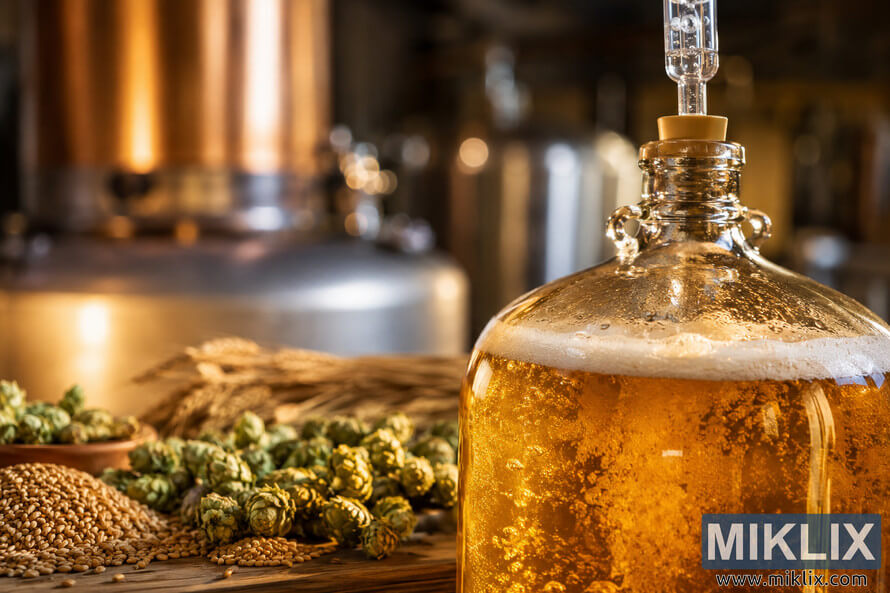
Hop choices should complement, not overpower. Opt for noble or floral hops at low rates to enhance yeast aromas. Late hop additions can elevate floral notes without masking spice. Keep bitterness moderate to support dryness and let Wyeast 3724's flavor profile shine.
- Simple Pale Saison: 90% Pilsner, 5% Vienna, 5% wheat. OG 1.048. Mash 148–150°F (64–66°C). Saaz or Styrian Goldings for low bitterness. Pitch a healthy Wyeast 3724 starter. Ferment at 68°F rising to mid-70s to coax bright esters and peppery phenolics.
- Rustic Saison: 80–85% Pilsner, 5–10% Munich or oats, 5–10% wheat. OG ~1.052. Mash 152–154°F (67–68°C) for more body. Use restrained noble hops. Aim for the same yeast handling to balance saison esters phenolics with a fuller malt backbone.
To master balancing saison flavors, focus on a clean grain bill, measured hopping, and consistent fermentation control. These choices allow the yeast to express its signature esters and phenolics, creating a lively, drinkable beer.
Recommended Grain Bills and Malt Choices
Creating a saison grain bill requires a delicate touch. Start with a light, clean base malt. Then, add small percentages of specialty malts to enhance yeast-driven flavors. It's crucial to manage fermentability targets to let Wyeast 3724 take center stage.
Base malts that complement saison yeast character
- Pilsner malt or pale two-row is perfect as a base. These malts offer a neutral background, allowing the yeast's esters and phenolics to shine.
- For a hint of malt character, consider adding a small amount of German Vienna or pale ale malt. Keep these additions under 10% to maintain dryness.
Specialty malts and adjuncts to enhance complexity
- Light crystal malts (2–5%) introduce a subtle biscuity sweetness without overpowering the beer.
- Small amounts of Munich or Vienna (3–8%) add bready depth, ideal for saisons needing more structure.
- Wheat or flaked oats enhance head retention and mouthfeel, ensuring yeast flavors remain dominant.
- When aiming for a fuller body, use dextrin malts like CaraMunich sparingly. However, monitor fermentability targets closely.
Fermentability targets and mash strategies
- For a very dry saison, aim for a lower mash temperature: 148–152°F (64–67°C). This approach results in a highly fermentable wort, supporting strong attenuation.
- To achieve a fuller body, increase the mash temperature to 152–156°F (67–69°C) or incorporate higher-dextrin malts.
- Step mashing can extract sugars from complex malts while controlling fermentability. However, keep the overall grist simple with aggressive yeast strains.
- Design your saison grain bill with 90–95% base malt and 5–10% specialty malts. This balance preserves yeast character and meets common fermentability goals.
Hop Selection and Timing for Belgian Saisons
When selecting hops for a Belgian saison, balance is key. The yeast's influence on the beer's character is significant. Therefore, choose hops that complement yeast-driven citrus, pepper, and floral notes. The choice can range from traditional noble varieties to modern, restrained aromatics, depending on the desired beer direction.
Here are some practical hop choices and timing strategies to enhance Wyeast 3724 without overpowering it.
Hop varieties to consider
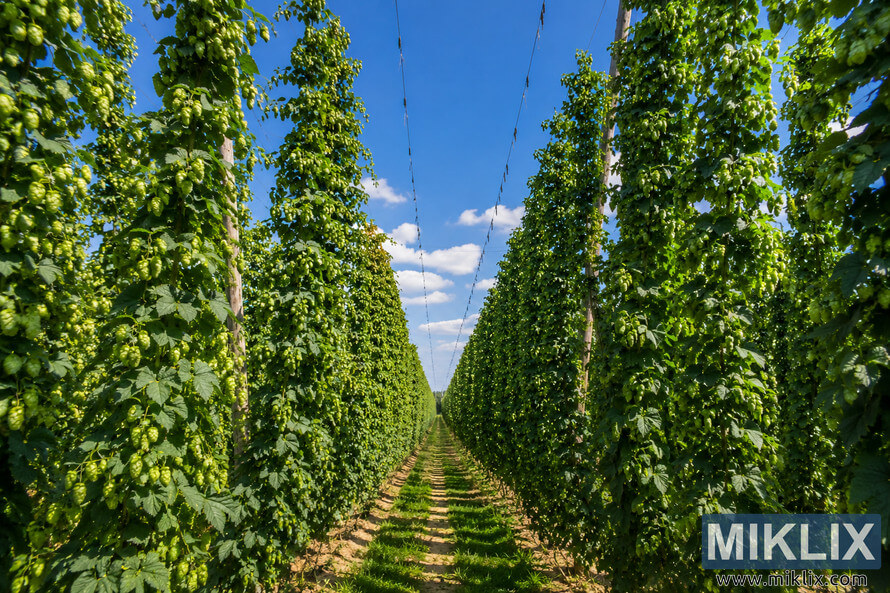
- Saaz and Tettnang: gentle spice and floral lift that echo phenolic yeast notes.
- Styrian Goldings and East Kent Goldings: earthy, rounded character that supports malt and yeast.
- Nelson Sauvin or Citra in small, controlled amounts: bright citrus or tropical hints that can highlight esters if used sparingly.
Bitterness and late additions
- Strive for moderate bitterness, typically 20–35 IBU, to keep the beer lively without drying it out excessively. Use early additions for the base bitterness. Add hops late in the boil or in a whirlpool to lift hop flavor while preserving yeast esters. Late additions at 5–15 minutes bolster hop flavor without overwhelming the yeast-derived complexity.
Dry hopping strategy
- Dry hopping saison beers benefits from restraint. Typical rates range from 0.25–0.75 oz/gal (2–6 g/L). Dry hop near the end of active fermentation or during conditioning to limit yeast uptake of hop volatiles and to preserve the yeast’s spicy-citrus signature. Track hop timing saison closely so hop aroma complements rather than competes with the strain.
Tactical notes for homebrewers
- Match hop selection to the yeast: choose hops for Wyeast 3724 that enhance peppery and citrus esters.
- When testing modern hops, use small pilot batches to find the right balance.
- For blended or mixed-fermentation saisons, reduce dry hopping intensity to let complex yeast and barrel notes remain audible.
Klicka eller tryck på bilden för mer information och högre upplösning.
Conditioning, Carbonation, and Packaging for Saison Beers
Saison beers require meticulous finishing to showcase their full potential. Cold conditioning or a brief maturation period helps to round out esters and phenolics. It's crucial to minimize oxygen exposure during packaging and select the right vessel to preserve flavor and extend shelf life.
Bottle conditioning versus forced carbonation
Wyeast 3724 often leaves behind low fermentable dextrins and active yeast. This makes bottle conditioning a viable option, though results can be inconsistent. Many brewers prefer forced carbonation in kegs for more predictable results and quicker turnaround.
Choosing bottle conditioning for saisons? Be conservative with priming sugar. Cold-conditioned beers might need fresh yeast for reliable carbonation. Healthy yeast or a small re-pitch can prevent under-carbonation and long conditioning times.
Target carbonation levels for style
Saisons are known for their lively, effervescent quality. Aim for 2.5–3.0 volumes of CO2 for a bright mouthfeel. For a more prickly finish, farmhouse variants and traditional Belgian pours can reach 3.5 volumes.
Higher carbonation volumes enhance dryness and elevate yeast-driven aromatics. Adjust priming sugar or keg pressure to achieve your desired carbonation levels without overdoing it.
Packaging tips to preserve complexity and shelf life
- Cold condition or mature the beer before packaging to let flavors integrate and harsh notes mellow.
- Use dark glass bottles or kegs to reduce light exposure and protect hop and yeast character.
- Minimize headspace oxygen at transfer and seal well. Consider counter-pressure filling for bottles or purging kegs with CO2.
- For longer shelf life, keep packaged saisons refrigerated and label with packaging dates for tracking.
- If extended distribution is planned, consider pasteurization or cold-chain management to stabilize the product.
Attention to detail in saison carbonation, bottle conditioning, and packaging is key. It ensures yeast character remains lively while preserving clarity and aroma. Small packaging decisions can significantly impact the final product's quality.
Common Fermentation Issues and How to Fix Them
Saison beers often face unique challenges during fermentation. Brewers may encounter issues like solvent-like heat notes, unexpected sourness, or a thin, dry body. This guide helps identify common causes and offers practical steps to address these problems. It aims to preserve the intended character of Wyeast 3724 and related strains.
Solvent or hot-alcohol notes usually indicate high fermentation temperatures or stressed yeast. Compare the batch to a known control or previous successful brew to confirm the deviation. To fix off-flavors, lower fermentation temperature and provide time for the yeast to clean up at a moderate finish. If solvent character persists, consider blending with a clean batch for commercial runs or lengthen conditioning to allow volatile compounds to dissipate.
Excessive phenolic clove-like notes can be part of the saison profile, yet when overpowering they may come from wild contamination or chlorine in water. Use Campden tablets or carbon filtration to remove chlorophenols in your water. If wild microbes are suspected, tighten sanitation and isolate the batch; pitching a fresh, vigorous culture into a small test sample helps confirm the cause.
Sourness can be intentional in mixed fermentation saisons. When sourness is unintended, suspect lactic or acetic bacteria. Check equipment seals, thermowells, and drafts where oxygen ingress can encourage acetic bacteria. For accidental bacterial infection, segregate the beer, document the timing and gravity, and review sanitation logs to prevent recurrence.
Managing thin body and over-attenuation
When a saison finishes paper-thin, first evaluate original mash and fermentability. Raise mash temperature by a few degrees or use dextrin-rich malts like CaraMunich to build body. Adding small percentages of wheat or oats can increase perceived fullness without masking yeast character.
Over-attenuation solutions include reformulating the next batch with less highly fermentable sugars and adjusting mash rest to a higher temperature. If the yeast itself drives extreme dryness, accept that as a stylistic choice for some saisons or blend a portion of unfermented wort in controlled trials for commercial panels to reach a target mouthfeel.
Sanitation, oxygen, and temperature troubleshooting
Strict sanitation prevents wild bacteria such as Pediococcus from causing long-term souring. Clean and disinfect fermenters, gaskets, and transfer lines after every use. Use no-rinse sanitizers for easy coverage.
Adequate oxygen at initial pitch supports cell growth and reduces stress-related off-flavors. Use measured aeration or pure oxygen and avoid oxygen exposure after active fermentation, which leads to oxidation.
Temperature control is critical. Start in the lower end of the recommended range to limit volatile solvent formation. Use gentle temperature rises later to encourage attenuation and ester development. If you encounter stress signs, drop temperature slightly and hold to let yeast recover.
- Document fermentation schedules and gravity readings to catch deviations early.
- Use healthy starters and proper pitching rates to reduce stress and off-flavors.
- When in doubt, replicate conditions on a small scale to test corrective steps before applying them to full production.
Wyeast 3724 Belgian Saison Yeast
Wyeast 3724 is widely praised by U.S. homebrewers and small breweries for its clear farmhouse character and dry finish. Feedback from the community highlights pronounced fruit esters and peppery phenolics when fermented at warmer temperatures. This is a common theme in many Wyeast 3724 reviews and tasting notes from local brew clubs.
Many brewers share their experiences with Wyeast 3724, noting its aggressive attenuation and fast sugar uptake. They emphasize the importance of healthy pitching, a well-sized starter, and careful temperature control to ensure predictability. Commercial microbreweries also report consistent results by following these practices.
When comparing saison yeasts, brewers often choose based on the desired character. Wyeast 3724 is known for its dry, rustic profile, differentiating it from strains like White Labs WLP565 or other Wyeast isolates. While some strains offer cleaner or fruitier esters, 3724 adds a peppery spice at higher fermentation temperatures.
Community reviews suggest adjusting recipes to balance 3724’s dryness. Raising mash temperature or adding dextrin malts can soften the body without obscuring the yeast's character. Many brewers recommend modest hopping and restrained specialty malts to highlight the yeast's unique qualities.
- Consistency: Small breweries find 3724 reliable when cell counts and oxygenation are managed.
- Versatility: Homebrewers use it for traditional saisons, farmhouse ales, and experimental saisons.
- Control: Fermenting in the lower part of the strain’s range reduces phenolic bite.
When comparing saison yeasts for a project, consider the desired dryness and spice. Wyeast 3724 performs best with attention to starter size and fermentation schedule. Brewer experiences with Wyeast 3724 show that it rewards careful handling with distinctive, classic saison results.
Conclusion
Wyeast 3724 stands out as a robust Belgian saison strain. It offers fruity esters, peppery phenolics, and a dry finish. This makes it perfect for both traditional farmhouse ales and contemporary interpretations. Brewers aiming for a clear, lively saison character will find Wyeast 3724 rewarding. It requires careful handling but offers consistent high attenuation and a versatile flavor profile.
Following best practices for saison yeast is crucial. This includes building an appropriate starter or pitching enough healthy cells. It also involves controlling primary fermentation temperatures to balance esters and phenols. Designing grain bills for the right body and fermentability is also essential. Managing hopping and conditioning helps preserve yeast nuances. Additionally, following troubleshooting steps for attenuation or off-flavor issues is important.
For homebrewers and small breweries in the United States, Wyeast 3724 is a reliable choice for a characterful saison. With proper attention to starter size, oxygenation, and temperature control, this strain can elevate a variety of recipes. It delivers the crisp, complex profile that saison enthusiasts adore.
FAQ
What is Wyeast 3724 Belgian Saison Yeast and what can I expect from it?
Wyeast 3724 is a liquid Belgian saison yeast strain from Wyeast Laboratories. It's known for high attenuation and vigorous fermentation. Expect pronounced fruity esters and spicy phenolics, often yielding a very dry finish and lively carbonation. It performs well for traditional saisons and experimental pale ales when handled with proper starter sizing and temperature control.
What fermentation temperatures work best for Wyeast 3724?
Wyeast 3724 is tolerant of warm fermentation, typically performing between 64–95°F (18–35°C). Many brewers start around 68–72°F (20–22°C) and allow a rise into the mid-70s (24–26°C) to balance esters and phenolics. Avoid prolonged fermentation above ~85°F (29°C) to reduce risk of solvent-like off-flavors. Use a fermentation fridge or temperature controller to shape character.
Do I need to make a starter for a 5-gallon batch with a single Wyeast pack?
Often yes. A fresh pack may suffice for lower-gravity beers, but because 3724 is aggressive and many packs vary in viability over time, making a starter is recommended—especially for average to high OG (e.g., 1.048–1.060) batches, older packs, or when targeting higher pitch rates. Use a yeast calculator (Mr. Malty or Brewer’s Friend) to size the starter based on desired cells/mL/°P.
How do I size and build a healthy starter for Wyeast 3724?
Sanitize gear and prepare starter wort using 100 g DME per liter boiled to ~1.040–1.050 SG. Cool, pitch the pack into a sanitized flask, and oxygenate by shaking or using an aquarium pump. Place on a stir plate or swirl periodically. Typical propagation times are 24–72 hours depending on starter volume. Adjust starter size per cell-count targets; for a 5-gallon batch at 1.050 OG aim for roughly 200–250 billion cells total.
How does Wyeast 3724 affect attenuation and final gravity?
3724 is a high-attenuating strain; brewers commonly see 75–90% attenuation. Final gravities often land between 1.002–1.010 depending on mash fermentability and temperature. Expect a very dry body and crisp mouthfeel. To retain more body, raise mash temperature or include small percentages of dextrin malts, oats, or Munich malts.
What grain bill and mash strategy best complement Wyeast 3724?
Use a clean base such as Pilsner or two-row pale malt to showcase yeast character. Add 2–10% Vienna, Munich, or light crystal for complexity, and 3–8% wheat or flaked oats for head retention. For a drier saison mash at 148–152°F (64–67°C); for fuller body, mash at 152–156°F (67–69°C) or add small amounts of dextrin malt. Tailor fermentability to avoid over-thin results given the strain’s strong attenuation.
Which hops work well with this strain and when should I add them?
Noble and floral hops like Saaz, Tettnang, East Kent Goldings, or Styrian Goldings pair nicely. Modern citrus hops (Nelson Sauvin, Citra) can be used sparingly to echo yeast esters. Keep IBUs moderate (20–35) and rely on late/kettle whirlpool additions for aroma. If dry hopping, use light rates (0.25–0.75 oz/gal or 2–6 g/L) late in fermentation or conditioning to preserve volatile hop aromatics without masking yeast-derived character.
How should I handle Wyeast 3724 packs for best viability?
Inspect foil packs on arrival for swelling, leaks, or freeze damage. Store refrigerated at 33–40°F (1–4°C), away from light and temperature swings. Check manufacture and expiration dates; if near or past the best-before date, plan a starter or viability test. Overbuild a starter for older packs, high-gravity worts, or when brewing lagers and vigorous saisons.
What oxygenation and nutrient practices work for starters and wort?
Oxygenate starter wort by shaking or sparging with an aquarium pump prior to pitching to support yeast growth. For production wort, provide adequate oxygen at pitch (e.g., oxygenation stone) based on gravity. Consider a yeast nutrient or energizer for high-gravity beers or stressed ferments. Avoid oxygen additions after active fermentation begins to prevent oxidation.
How do I avoid or fix a stuck fermentation with Wyeast 3724?
Common causes are underpitching, low viability, insufficient oxygen/nutrients, or cold temps. Remedies include gently raising temperature, oxygenating early in active fermentation, re-pitching a healthy starter or fresh yeast, and adding nutrient. For persistent stalls in high-gravity worts, consider re-pitching a more attenuative ale yeast blend or using a staggered nutrient program.
What flavor off-notes should I watch for and how do they arise?
Excessive solvent or hot alcohol notes can come from too-high fermentation temps or stressed yeast. Overbearing phenolics may be stylistic up to a point but can also indicate wild contamination or chlorophenols. Sourness usually signals bacterial infection unless intentionally produced. Manage these by controlling temperature, sanitation, pitching adequate viable yeast, and monitoring oxygen exposure.
Is bottle conditioning possible with this strain, or should I force-carb?
Bottle conditioning is possible since residual yeast often remains active, but 3724’s high attenuation and low residual sugars can make results less predictable. For consistent carbonation many brewers prefer forced carbonation in kegs. If bottle conditioning, calculate priming sugar conservatively and consider adding a small amount of fresh yeast for reliable carbonation, especially after cold conditioning.
What carbonation levels and packaging practices suit saisons fermented with 3724?
Saisons benefit from high carbonation—target around 2.5–3.0 volumes CO2, with some farmhouse variants reaching 3.5 volumes. Cold condition or mature the beer to allow ester/phenol integration before packaging. Minimize headspace oxygen, use dark bottles or kegs to reduce light strike, and track package dates for shelf stability. For commercial runs, consider pasteurization or refrigeration for longer life.
How does Wyeast 3724 compare to other saison strains like White Labs WLP565?
Compared to strains like White Labs WLP565 or Wyeast 3711, 3724 often produces a drier finish with pronounced peppery phenolics at higher temps. Some strains offer fruitier or cleaner profiles. Brewers choose 3724 when seeking a more rustic, classic farmhouse profile and when they can manage starter sizing and fermentation control to harness its aggressive attenuation.
What troubleshooting steps help manage over-attenuation and thin body?
To counter thin body, raise mash temperature, add small amounts of dextrin malts (CaraMunich, dextrin malt), or include adjuncts like oats or wheat. For commercial blending, some brewers add unfermented wort to increase mouthfeel. Accepting some dryness is also stylistically appropriate—balance recipe design and mash profile to reach your target mouthfeel before fermentation.
Can small breweries reliably use Wyeast 3724 for consistent results?
Yes. Many U.S. small breweries report reliable, repeatable results when they manage pitching rates, create appropriately sized starters or propagation schedules, and maintain stringent temperature control. Consistency improves with proper cell counts, sanitation, oxygenation practices, and careful packaging to preserve yeast character and prevent contamination.
Vidare läsning
Om du gillade det här inlägget kanske du också gillar dessa förslag:
- Jäsande öl med White Labs WLP521 Hornindal Kveik Ale Yeast
- Jäsning av öl med Fermentis SafAle K-97-jäst
- Jäsning av öl med Wyeast 2487-PC Hella Bock Lager-jäst