
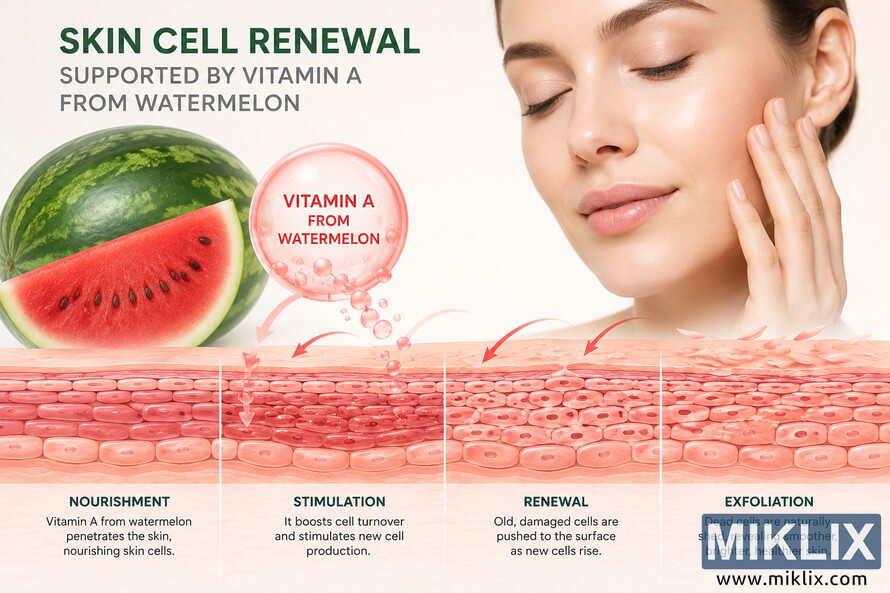
Picha: Skin Cell Renewal Process Supported by Vitamin A from Watermelon
Iliyochapishwa:
Mara ya mwisho kusasishwa: 16 Agosti 2026, 19:10:31 UTC
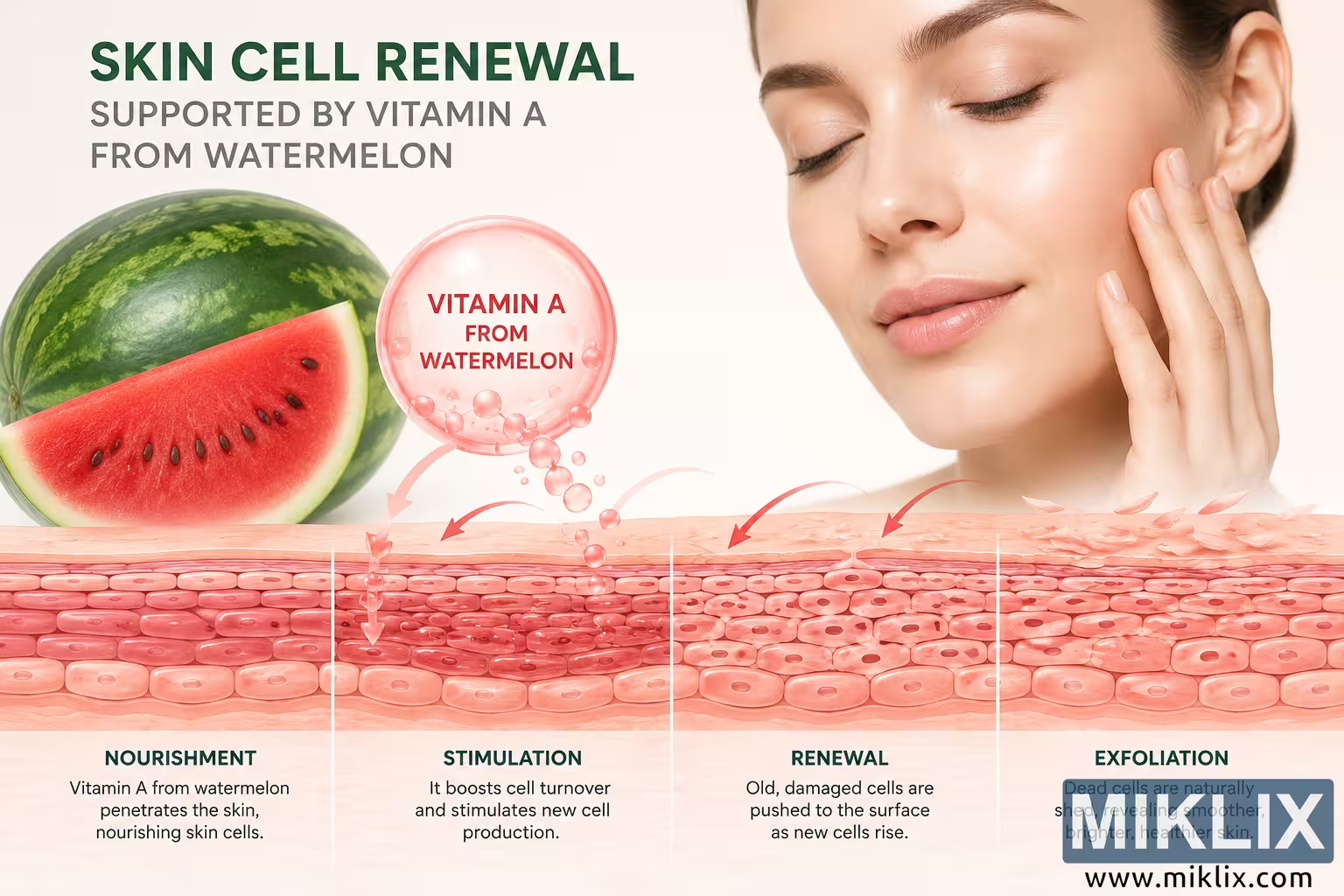
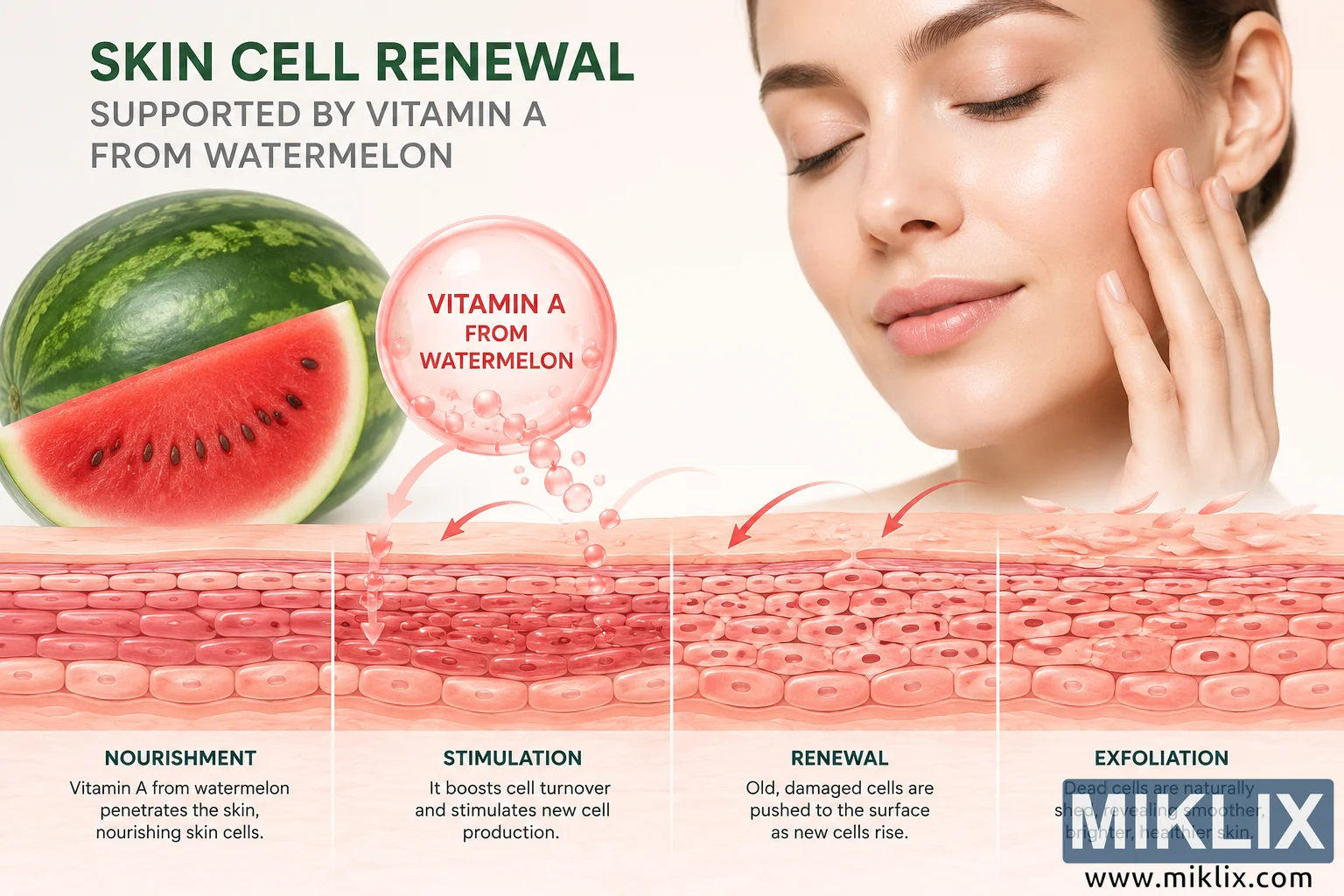
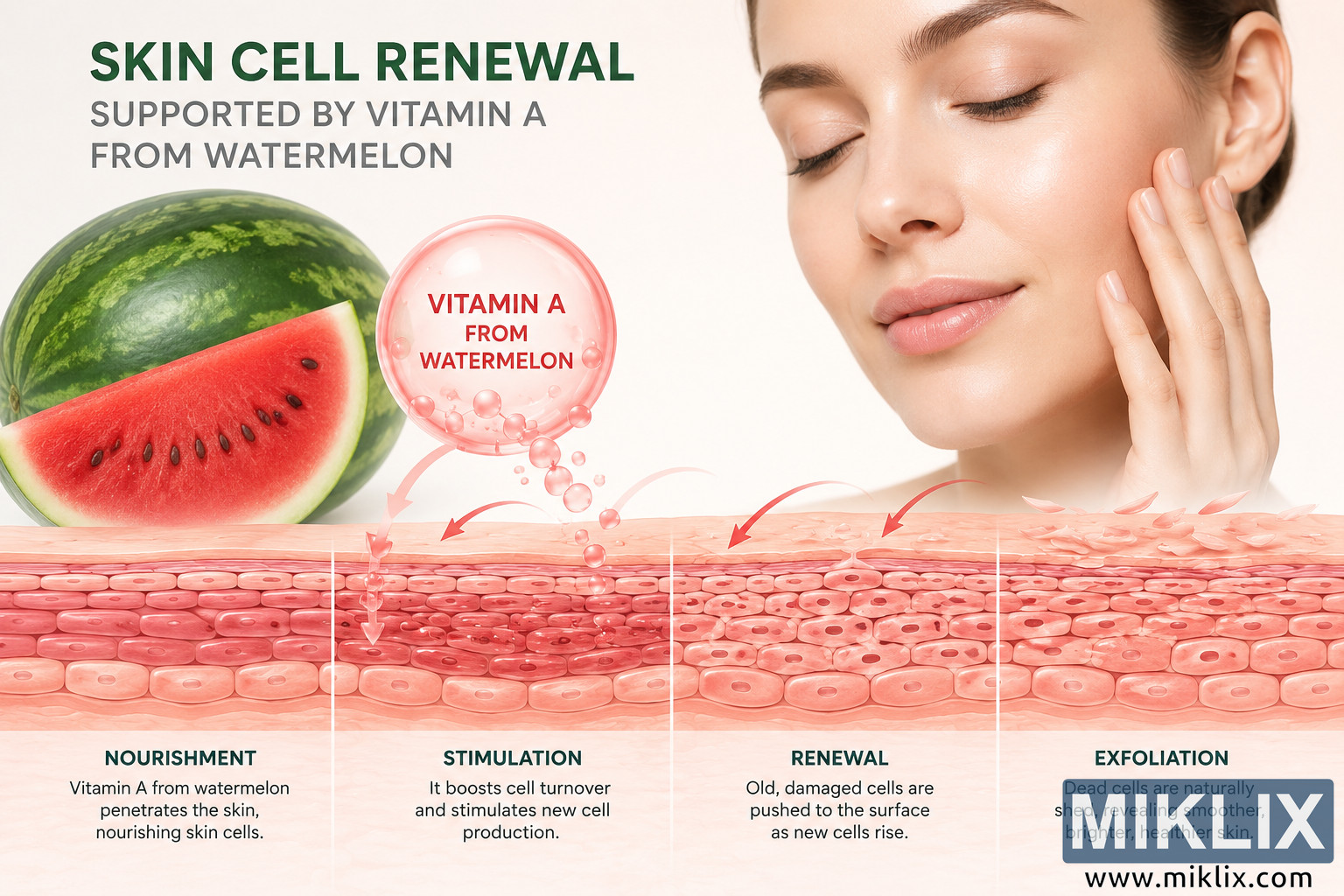
Educational landscape infographic illustrating the conceptual skin cell renewal process supported by vitamin A from watermelon. Features realistic watermelon imagery, a layered skin diagram with nourishment, stimulation, renewal and exfoliation stages, and a healthy glowing face in a clean modern skincare design without brands or logos.
Skin Cell Renewal Process Supported by Vitamin A from Watermelon
Matoleo yanayopatikana ya picha hii
Faili za picha zinazopatikana kwa kupakuliwa hapa chini hazijabanwa sana na zina ubora wa juu zaidi - na kutokana na hilo, ubora wa juu zaidi - kuliko picha zilizopachikwa katika makala na kurasa kwenye tovuti hii, ambazo zimeboreshwa zaidi kwa ukubwa wa faili ili kupunguza matumizi ya kipimo data.
Ukubwa wa kawaida (1,536 x 1,024)
Ukubwa mkubwa (3,072 x 2,048)
Ukubwa mkubwa sana (4,608 x 3,072)
Ukubwa mkubwa zaidi (6,144 x 4,096)
Ukubwa mkubwa wa vichekesho (1,048,576 x 699,051)
- Bado inapakia... ;-)
Maelezo ya picha
This landscape-oriented educational illustration presents a clean, modern infographic explaining the concept of skin cell renewal in relation to vitamin A from watermelon. The overall composition is bright, minimalistic, and visually balanced, using soft white and light beige background tones that emphasize cleanliness, freshness, and skincare. The layout is divided into distinct visual sections that guide the viewer naturally from left to right while keeping the focus on the central educational message.
In the upper-left corner, a large headline reads "Skin Cell Renewal Supported by Vitamin A from Watermelon" using bold, modern typography. The title is highly legible and contrasts clearly against the bright background. Directly below and slightly to the left sits a realistic whole watermelon accompanied by a freshly cut watermelon slice. The watermelon has a vibrant green rind with darker green striping and bright red flesh containing several black seeds. The fruit appears fresh and juicy, symbolizing natural nutrition and serving as the visual source of the featured nutrient.
Above the illustrated skin layers near the center-left is a translucent circular graphic representing vitamin A. Inside the circular element, the text "Vitamin A from Watermelon" appears in bold lettering. Semi-transparent glowing droplets emerge from this circle and descend toward the skin, visually suggesting the delivery or support of beneficial nutrients. Curved arrows accompany the droplets, directing the viewer's attention toward the underlying skin illustration and indicating the progression of the educational process.
Occupying the entire lower portion of the composition is a highly stylized cross-sectional illustration of human skin. The skin is rendered in layered shades of pink, peach, and light coral, with neatly organized rows of cells that become progressively different across four sequential stages. Thin vertical separators divide the skin illustration into four equal educational panels that demonstrate the conceptual progression of renewal.
The first panel is labeled "Nourishment." Here, the skin cells appear orderly and healthy while the vitamin droplets are shown entering the upper skin layers. This section communicates the idea of nourishment and support. The accompanying explanatory text describes vitamin A from watermelon as nourishing skin cells. The imagery is symbolic rather than clinical, emphasizing healthy skin without depicting microscopic biological accuracy.
The second panel is labeled "Stimulation." In this section, the central skin cells appear more active, with subtle visual differences suggesting increased cellular turnover. Additional droplets continue moving downward, and red directional arrows reinforce the concept of stimulation. The educational caption explains that cell turnover and new cell production are encouraged. The artwork remains clean and simplified while visually communicating increased biological activity.
The third panel carries the label "Renewal." The arrangement of cells changes slightly to indicate the emergence of newer cells while older cells appear to move upward. Large curved arrows continue across the surface, visually connecting this phase with the preceding and following stages. The accompanying caption explains that older, damaged cells move toward the surface as newer cells develop beneath them. The illustration emphasizes smooth transitions instead of abrupt changes, maintaining a polished infographic aesthetic.
The fourth and final panel is labeled "Exfoliation." Here, small skin flakes appear lifting away from the uppermost layer of skin, representing the natural shedding of dead surface cells. The remaining surface appears smoother and more uniform than in earlier stages. The educational caption explains that dead cells are naturally shed to reveal smoother, brighter, healthier-looking skin. The flakes are subtle and cleanly illustrated, avoiding any unpleasant appearance while effectively conveying the concept of exfoliation.
Dominating the upper-right portion of the image is a close-up portrait of a young adult with clear, glowing skin. The subject's eyes are gently closed, conveying relaxation and wellness. One hand lightly touches the cheek, reinforcing themes of skincare, softness, and healthy complexion. Soft lighting creates gentle highlights across the forehead, cheeks, and nose while preserving natural-looking skin texture. The facial expression communicates calmness and confidence rather than overt emotion.
The overall color palette consists primarily of whites, creams, soft pinks, peach tones, coral hues, fresh watermelon reds, and natural greens. These colors reinforce themes of freshness, health, nutrition, hydration, and skincare. The infographic combines realistic food photography-inspired rendering with simplified medical-style illustration to create an accessible educational visual. No commercial logos, brand names, watermarks, or product packaging are present anywhere in the image. The composition is designed to be informative, visually appealing, and easy to understand, using arrows, layered diagrams, realistic fruit imagery, and a healthy human portrait to communicate the conceptual stages of skin renewal supported by vitamin A from watermelon.
Picha inahusiana na: Watermelon: The Hydrating Superfruit You Should Eat More Often