
Resim: Healthy Rhubarb Cooking Methods Without Added Sugar
Yayınlandı:
Son güncelleme: 7 Haziran 2026 19:12:58 UTC
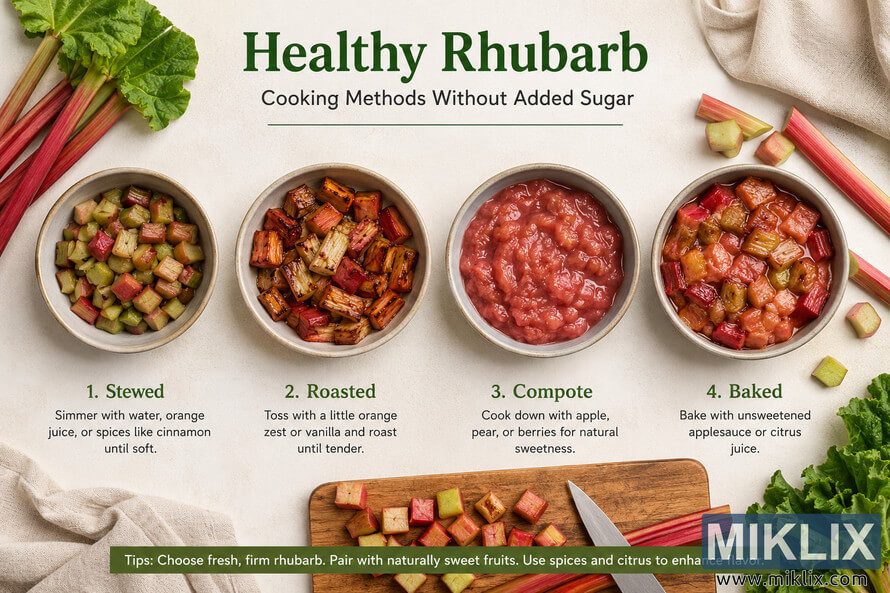
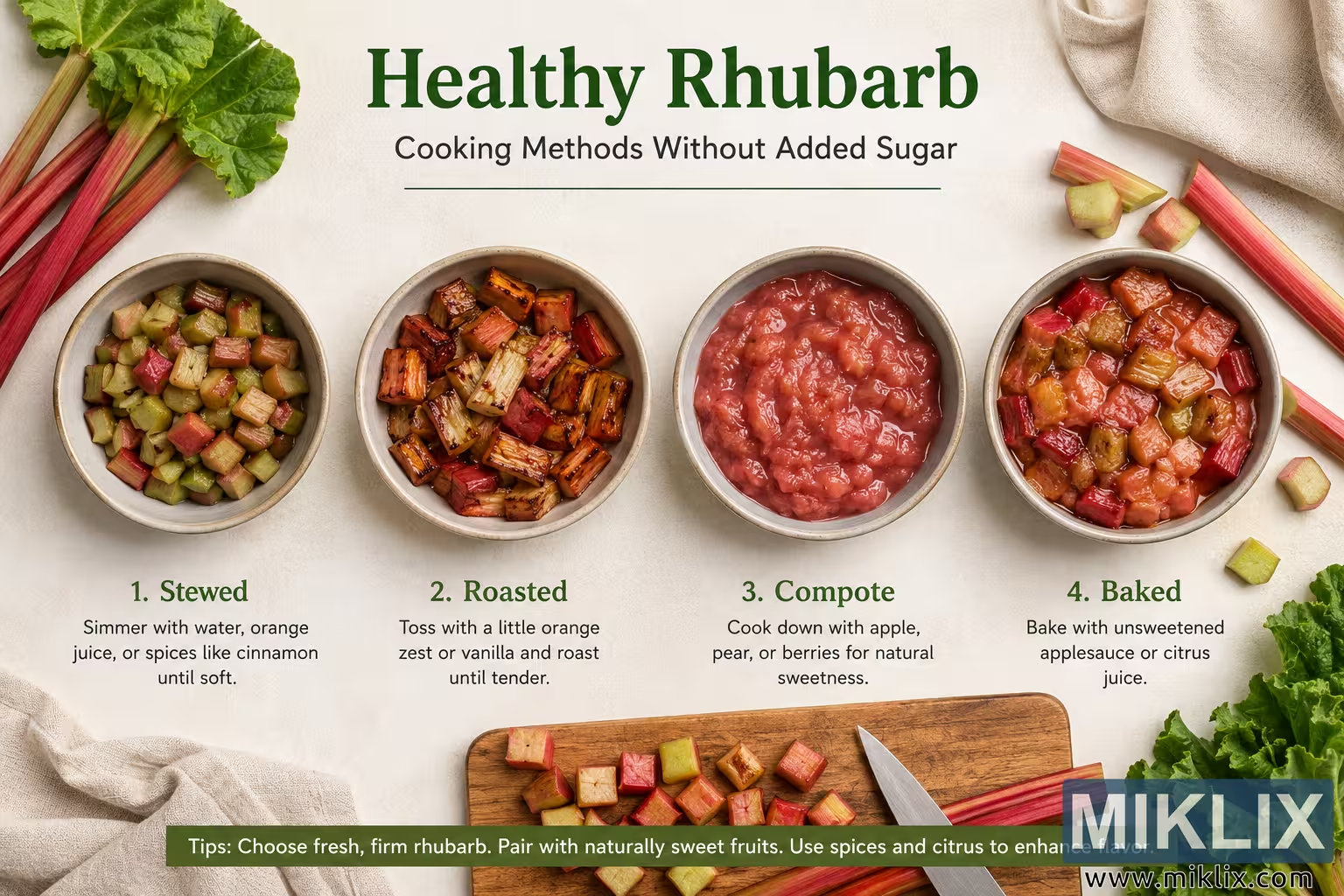
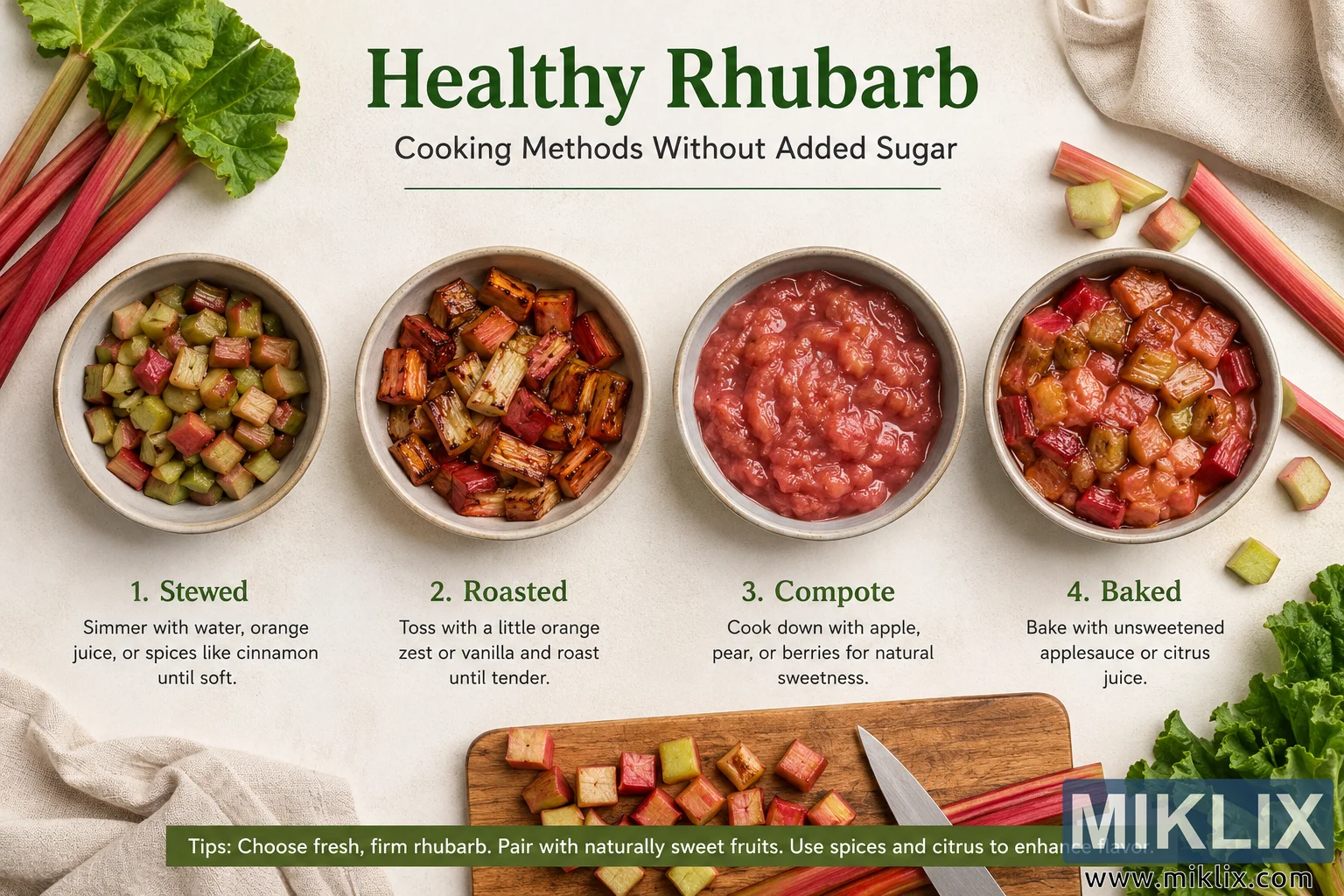
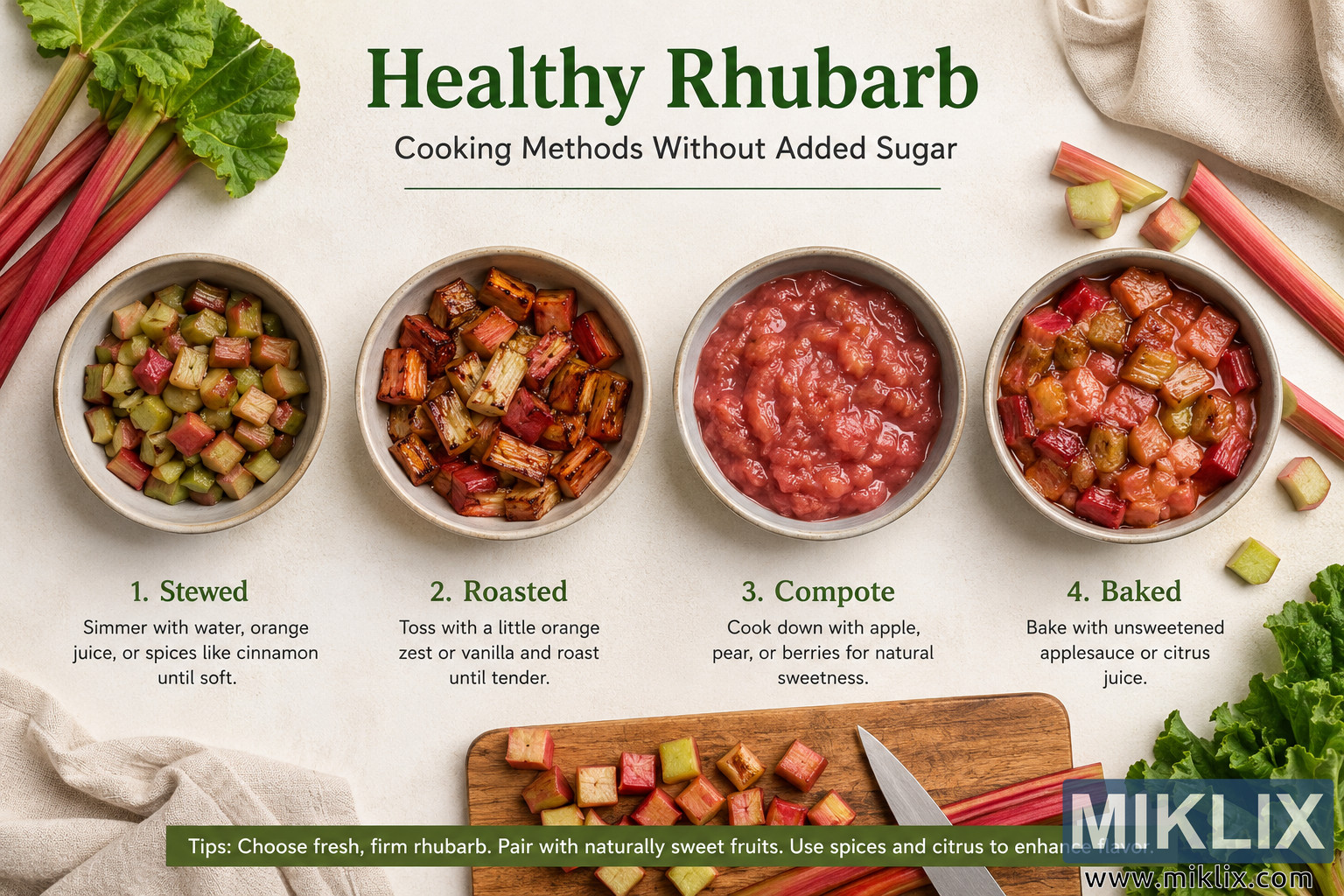
A bright overhead-style food infographic featuring healthy rhubarb cooking methods without added sugar. The image showcases stewed, roasted, compote, and baked rhubarb preparations with fresh ingredients, natural textures, and clean editorial styling.
Healthy Rhubarb Cooking Methods Without Added Sugar
Bu resmin mevcut versiyonları
Aşağıda indirilebilecek resim dosyaları, bant genişliği tüketimini azaltmak için dosya boyutu açısından daha optimize edilmiş olan bu web sitesindeki makalelere ve sayfalara yerleştirilmiş resimlerden daha az sıkıştırılmış ve daha yüksek çözünürlüklü - ve bunun sonucu olarak daha yüksek kalitelidir.
Normal beden (1,536 x 1,024)
Büyük boy (3,072 x 2,048)
Çok büyük boy (4,608 x 3,072)
Ekstra büyük boy (6,144 x 4,096)
Komik derecede büyük boyut (1,048,576 x 699,051)
- Hala yüklüyorum... ;-)
Resim açıklaması
This high-resolution landscape-oriented food infographic presents a clean, bright, and visually balanced overview of healthy rhubarb cooking methods that avoid added sugar. The image is styled as an overhead flat-lay composition with a soft neutral background that resembles lightly textured stone or matte kitchen parchment. The overall color palette combines warm cream tones, natural wood textures, fresh green leaves, and vibrant shades of pink, red, and pale green from the rhubarb stalks. The design has a modern editorial food-photography aesthetic with a focus on wellness, natural cooking, and wholesome ingredients.
Centered prominently near the top of the composition is the large headline text reading “Healthy Rhubarb,” displayed in a dark green serif font with a polished, elegant appearance. Directly beneath the title is the subtitle “Cooking Methods Without Added Sugar” in a clean, modern sans-serif typeface. A thin green divider line stretches horizontally under the subtitle, visually separating the heading area from the cooking examples below.
Four ceramic bowls are aligned horizontally across the center of the image, each representing a different rhubarb preparation method. The bowls are evenly spaced and photographed from directly overhead, emphasizing texture, color, and ingredient detail.
The first bowl on the left contains stewed rhubarb. The rhubarb pieces are cut into small chunks with softened edges and display muted green and pink tones. The surface appears moist and lightly glossy, suggesting gentle simmering. Below the bowl is the label “1. Stewed” in green serif typography. Smaller descriptive text underneath explains that the rhubarb can be simmered with water, orange juice, or warming spices such as cinnamon until soft.
The second bowl contains roasted rhubarb. These rhubarb pieces appear darker and caramelized with visible roasted edges and deeper red-brown coloration. The roasting process is emphasized through slight charring and glossy texture highlights that imply concentrated flavor. Underneath this bowl is the heading “2. Roasted,” followed by explanatory text describing roasting with orange zest or vanilla for natural sweetness and tenderness.
The third bowl contains rhubarb compote. This preparation has a smooth, thick, spoonable consistency with a soft pink-red color. The compote appears partially blended with visible fruit texture remaining. The label “3. Compote” appears beneath the bowl along with descriptive text mentioning cooking the rhubarb with naturally sweet fruits such as apples, pears, or berries.
The fourth bowl on the far right contains baked rhubarb. The baked pieces retain more structural shape and are immersed in a glossy syrup-like liquid created naturally during cooking. The rhubarb displays vivid pink and red tones with some pale green accents. The label “4. Baked” appears below with additional text suggesting baking the rhubarb with unsweetened applesauce or citrus juice.
Fresh rhubarb stalks and leafy tops are arranged decoratively around the composition to frame the infographic naturally. In the upper left corner, several long rhubarb stalks with attached green leaves extend diagonally into the image. Additional rhubarb pieces are scattered around the upper right area beside a soft beige linen cloth that adds texture and warmth. In the lower right corner, more leafy rhubarb greens partially enter the frame, balancing the composition visually.
Near the bottom center of the image is a rustic wooden cutting board with diced rhubarb pieces arranged casually across its surface. A silver kitchen knife lies diagonally on the board with its reflective blade catching soft light. The cutting board adds a practical kitchen-preparation atmosphere and reinforces the fresh ingredient theme.
At the very bottom of the infographic is a green rectangular banner containing a healthy cooking tip in white text. The tip encourages choosing fresh, firm rhubarb, pairing it with naturally sweet fruits, and using spices or citrus to enhance flavor instead of refined sugar.
The lighting throughout the image is soft, diffuse, and natural, creating gentle shadows and realistic highlights without harsh contrast. The overall mood is fresh, educational, inviting, and wellness-oriented. The composition successfully combines food photography, instructional infographic design, and rustic kitchen styling into a polished visual presentation centered around healthy rhubarb preparation without added sugar.
Görüntü ile ilgilidir: A Guide to the Health Benefits of Rhubarb