
Зображення: Proper Storage Methods for Fresh Dill in the Refrigerator and Freezer
Опубліковано:
Останнє оновлення: 23 липня 2026 р. о 18:43:23 UTC
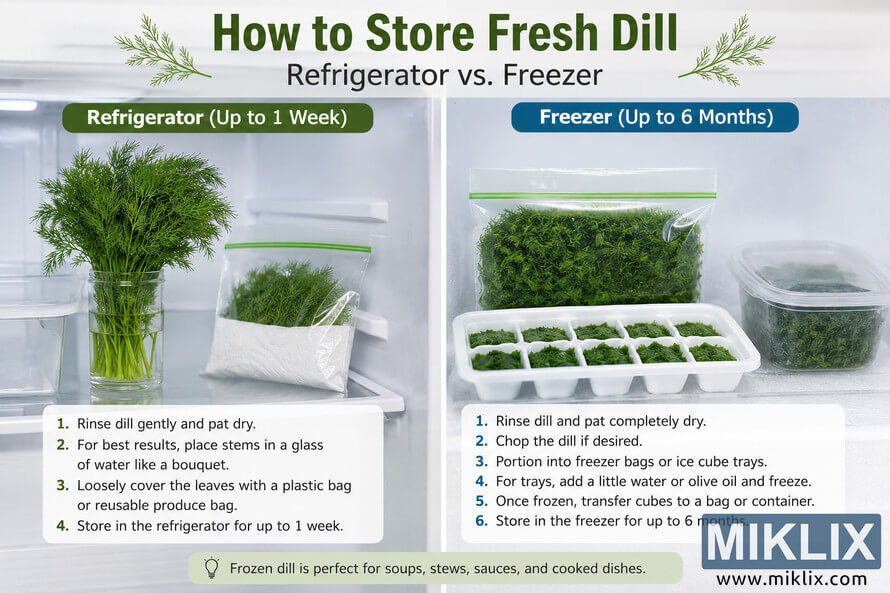
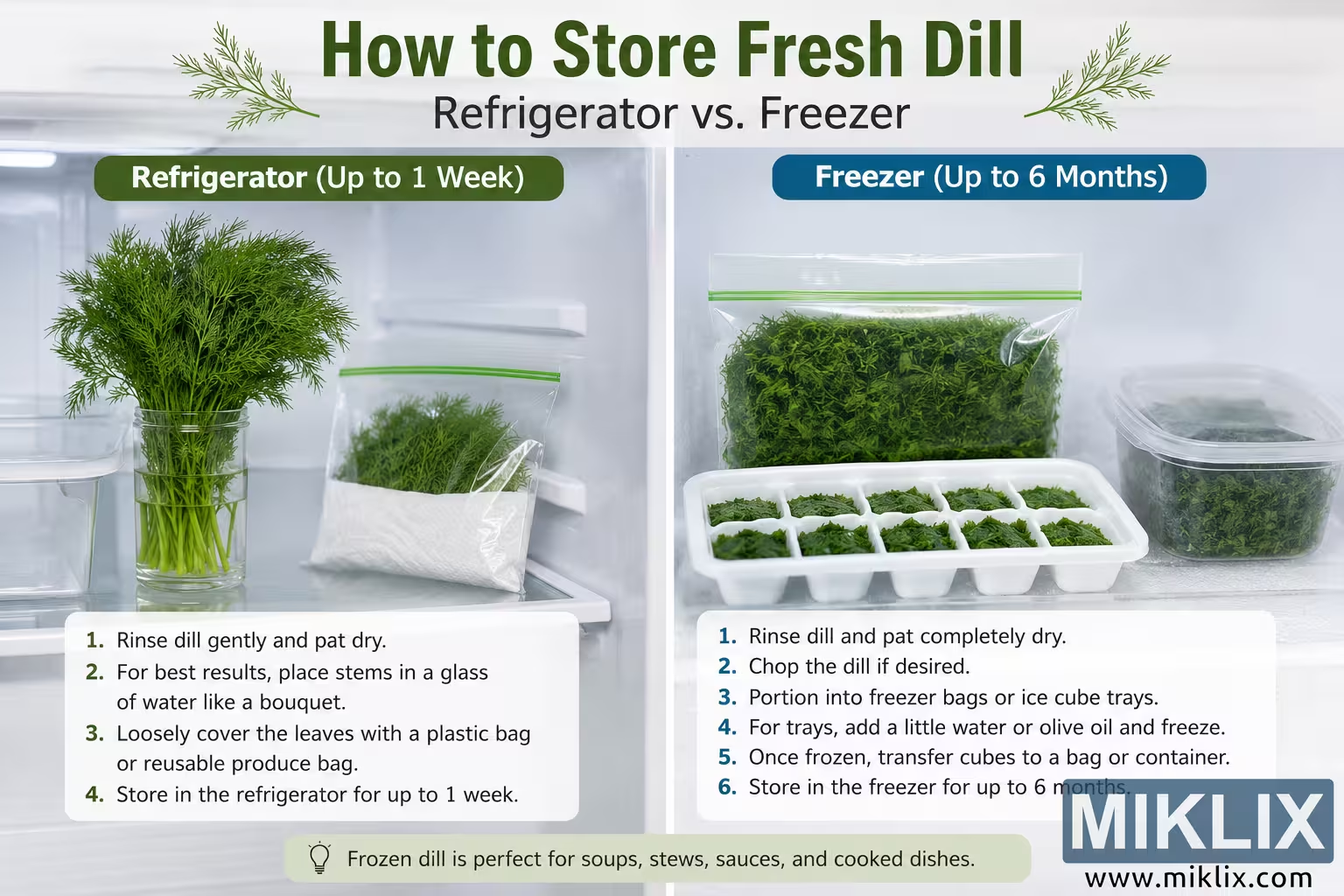
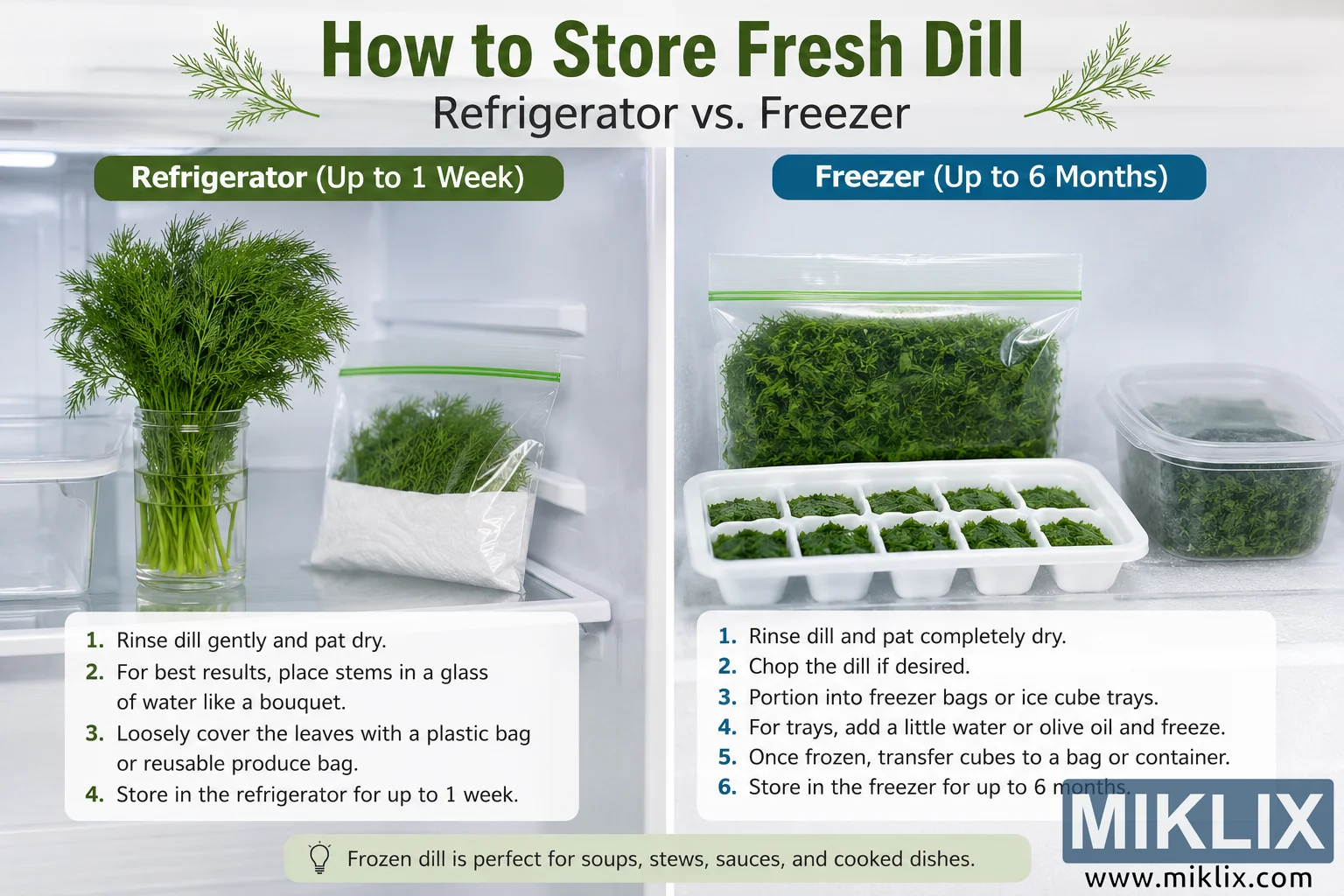
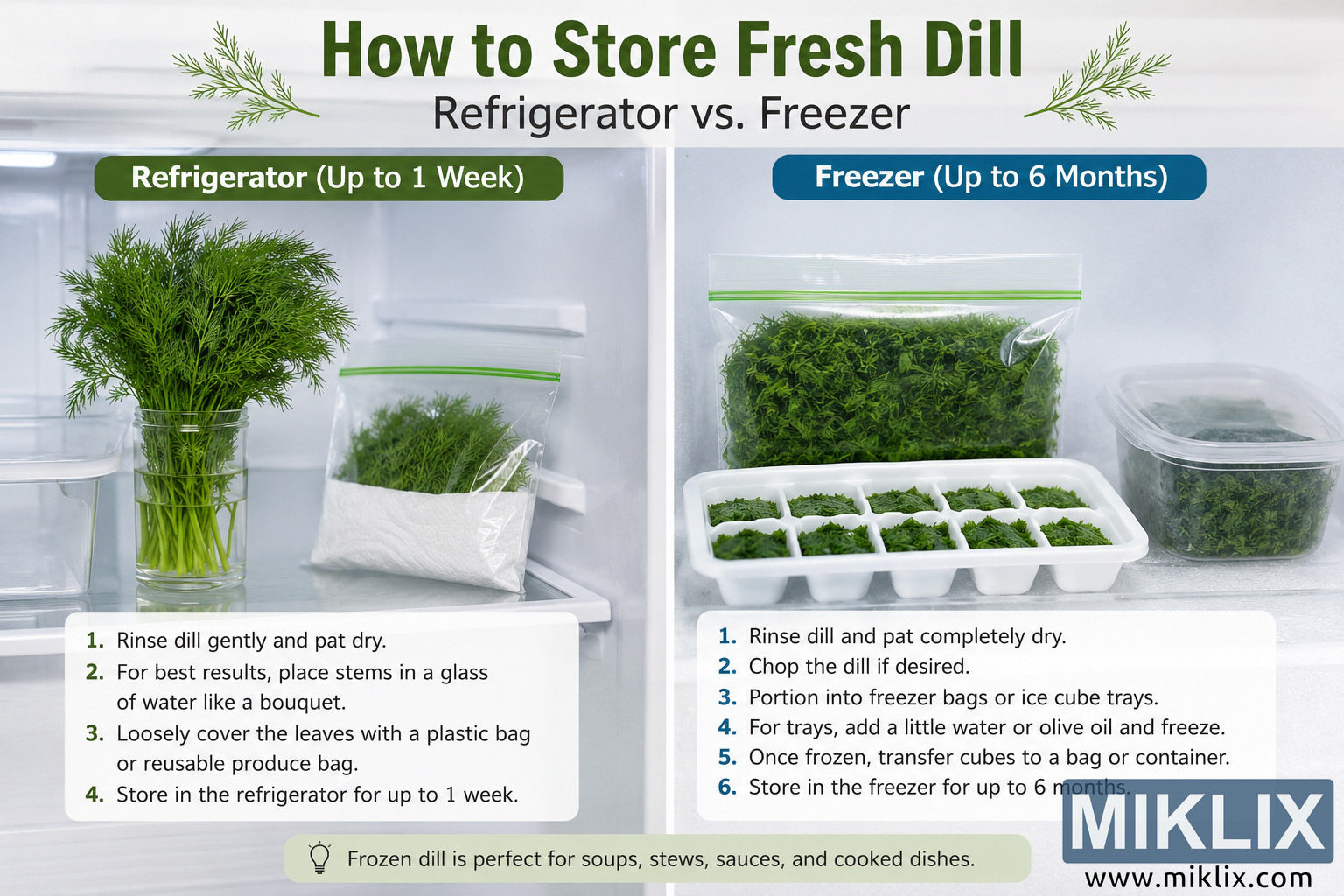
Learn how to properly store fresh dill in the refrigerator and freezer with this easy-to-follow infographic. It compares refrigeration and freezing methods, shows recommended storage containers, and explains how to maximize freshness and long-term preservation.
Proper Storage Methods for Fresh Dill in the Refrigerator and Freezer
Доступні версії цього зображення
Файли зображень, доступні для завантаження нижче, менш стиснуті і мають вищу роздільну здатність - і, як наслідок, вищу якість - ніж зображення, вбудовані в статті та сторінки цього веб-сайту, які більш оптимізовані за розміром файлу з метою зменшення споживання пропускної здатності.
Звичайний розмір (1,536 x 1,024)
Великий розмір (3,072 x 2,048)
Дуже великий розмір (4,608 x 3,072)
Надзвичайно великий розмір (6,144 x 4,096)
Комічно великий розмір (1,048,576 x 699,051)
- Все ще завантажуємо... ;-)
Опис зображення
This landscape-oriented educational infographic presents a clear side-by-side comparison of two recommended methods for storing fresh dill: refrigeration for short-term freshness and freezing for long-term preservation. The composition is evenly divided into two vertical sections, allowing viewers to quickly compare the two approaches. At the top of the image, a large heading introduces the subject of storing fresh dill, while decorative illustrations of dill sprigs frame the title and reinforce the botanical theme. The overall visual style is bright, clean, modern, and instructional, resembling a high-quality kitchen reference guide or food preservation poster. The color palette is dominated by fresh greens, cool whites, and soft gray-blue refrigerator tones, creating an impression of cleanliness, freshness, and food safety.
The left half of the infographic focuses on refrigerator storage. The background depicts the interior of a clean refrigerator with softly illuminated shelves and a cool, slightly blurred environment that emphasizes the freshness of the ingredients. Prominently displayed in the foreground is a lush bunch of fresh dill standing upright in a clear glass partially filled with water, similar to the way flowers are stored in a vase. The stems extend into the water while the delicate feathery leaves spread naturally above the rim of the glass. Nearby sits a transparent storage bag wrapped loosely around another bunch of dill together with a folded white paper towel. The bag is not tightly sealed, visually communicating airflow and moisture control rather than airtight storage. A green heading identifies this section as refrigerator storage with an indication that this method is appropriate for approximately one week. Beneath the photographs appears a numbered instructional list explaining the refrigerator process. The steps include gently rinsing the dill, carefully patting it dry, placing the stems into a glass containing water, loosely covering the leafy portion with a bag, and storing the prepared herbs inside the refrigerator. The typography is bold, readable, and organized so viewers can quickly follow each step.
The right half of the infographic demonstrates freezer storage. The background again depicts a clean cold storage environment, but this section includes several different freezing containers that communicate flexibility in preservation methods. A large transparent freezer-safe bag filled with chopped dill occupies the upper portion of the scene. Below it is a white ice cube tray containing neatly portioned green dill, suggesting individual serving sizes that can later be transferred for storage. Alongside these containers is a sealed rectangular food storage container holding frozen chopped dill. The arrangement emphasizes organization, convenience, and long-term preservation rather than immediate use. A blue heading identifies this section as freezer storage and notes that frozen dill may remain suitable for several months. A second numbered instruction panel explains the freezing procedure, including rinsing and thoroughly drying the dill, optionally chopping the herb before freezing, dividing it into freezer-safe bags or ice cube trays, optionally adding a small amount of water or cooking oil when using trays, transferring frozen portions into larger storage containers once solid, and storing them in the freezer for extended preservation. The instructional formatting mirrors the refrigerator section, making comparison easy and intuitive.
Across the bottom of the infographic, a highlighted information banner provides an additional practical tip. The note explains that frozen dill is particularly well suited for cooked recipes such as soups, stews, sauces, and other hot dishes where the herb's fresh texture is less important than its flavor. A small lightbulb icon accompanies the message, visually indicating that this is a helpful recommendation rather than a required storage step.
The overall layout is highly symmetrical, with refrigerator guidance on the left and freezer guidance on the right, separated by a subtle vertical divider. Consistent typography, balanced spacing, and organized numbering contribute to an educational appearance suitable for cooking websites, recipe blogs, food preservation articles, or kitchen reference materials. Lighting throughout the image is bright and diffuse, with no harsh shadows, emphasizing cleanliness and freshness. The containers are generic and unbranded, with no commercial logos or trademarks visible anywhere in the scene. The infographic communicates best practices for preserving fresh dill while making it easy for viewers to understand the differences between short-term refrigerated storage and long-term freezer storage at a glance.
Зображення пов'язане з: Health Benefits of Dill: Your Complete Guide to This Powerful Herb