
Зображення: Okra vs Other Vegetables Nutritional Comparison Chart
Опубліковано:
Останнє оновлення: 30 липня 2026 р. о 18:37:51 UTC
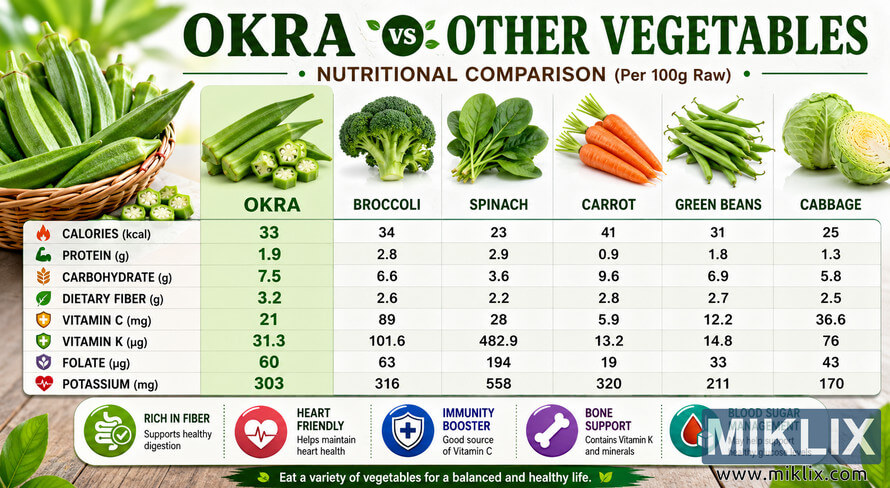
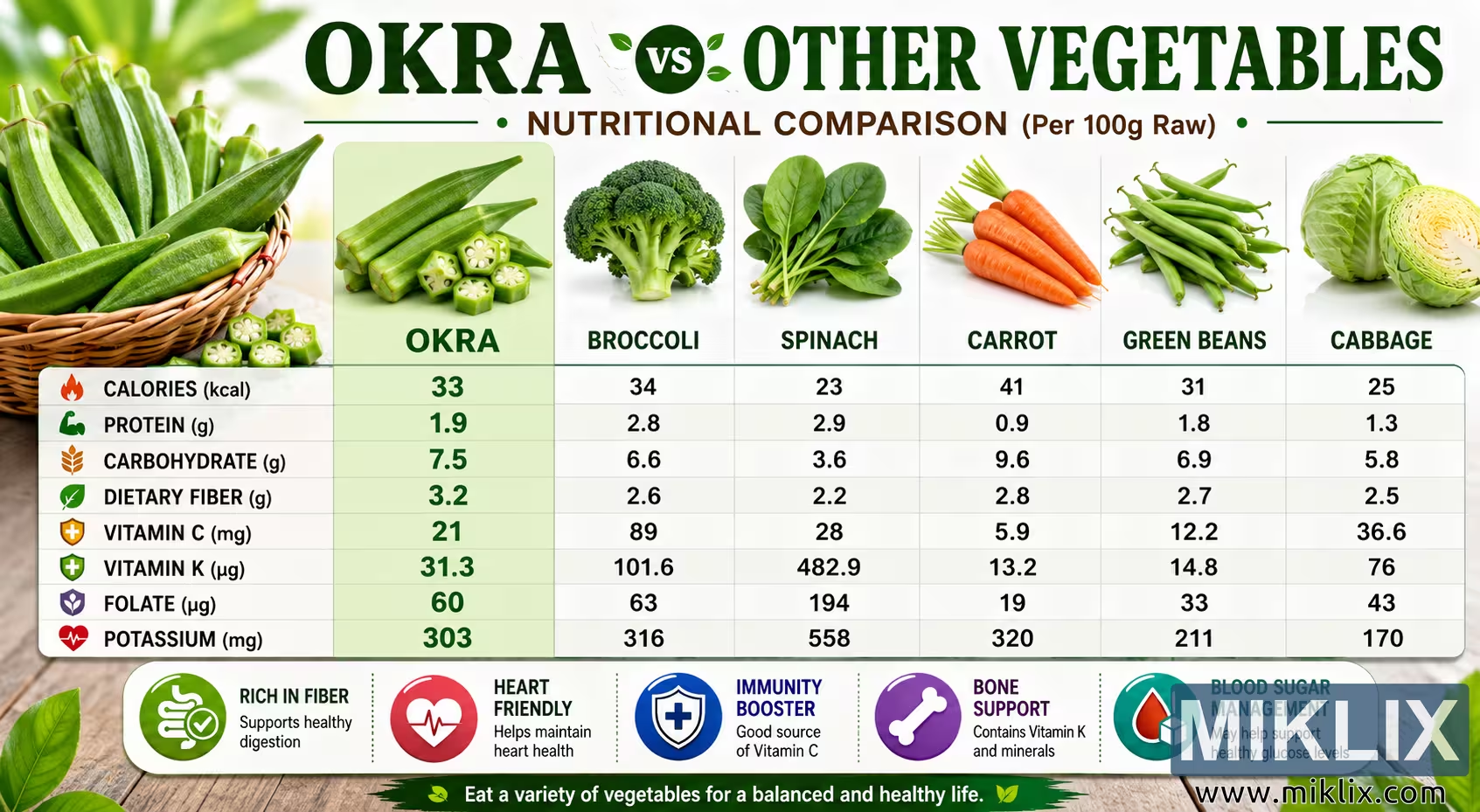
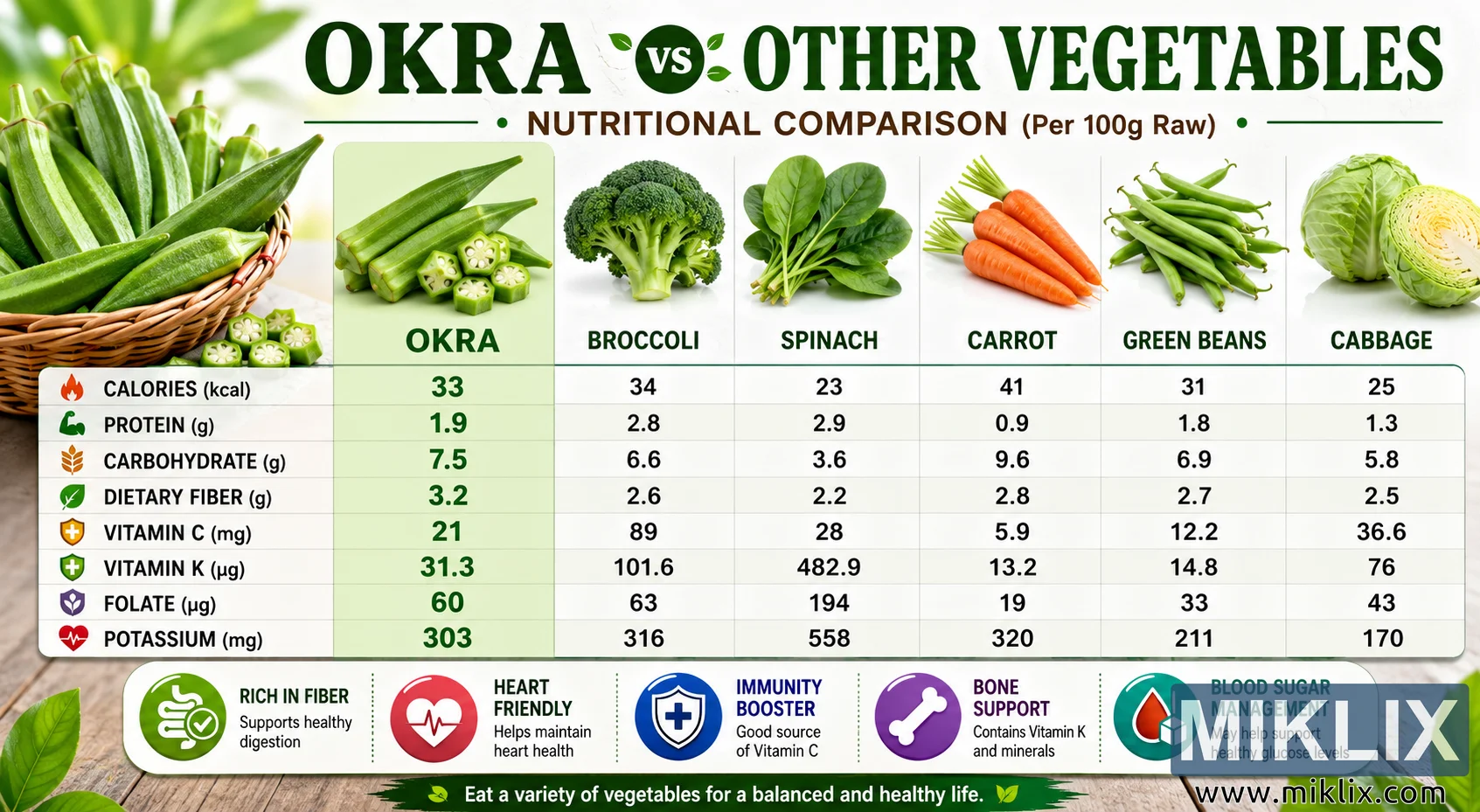
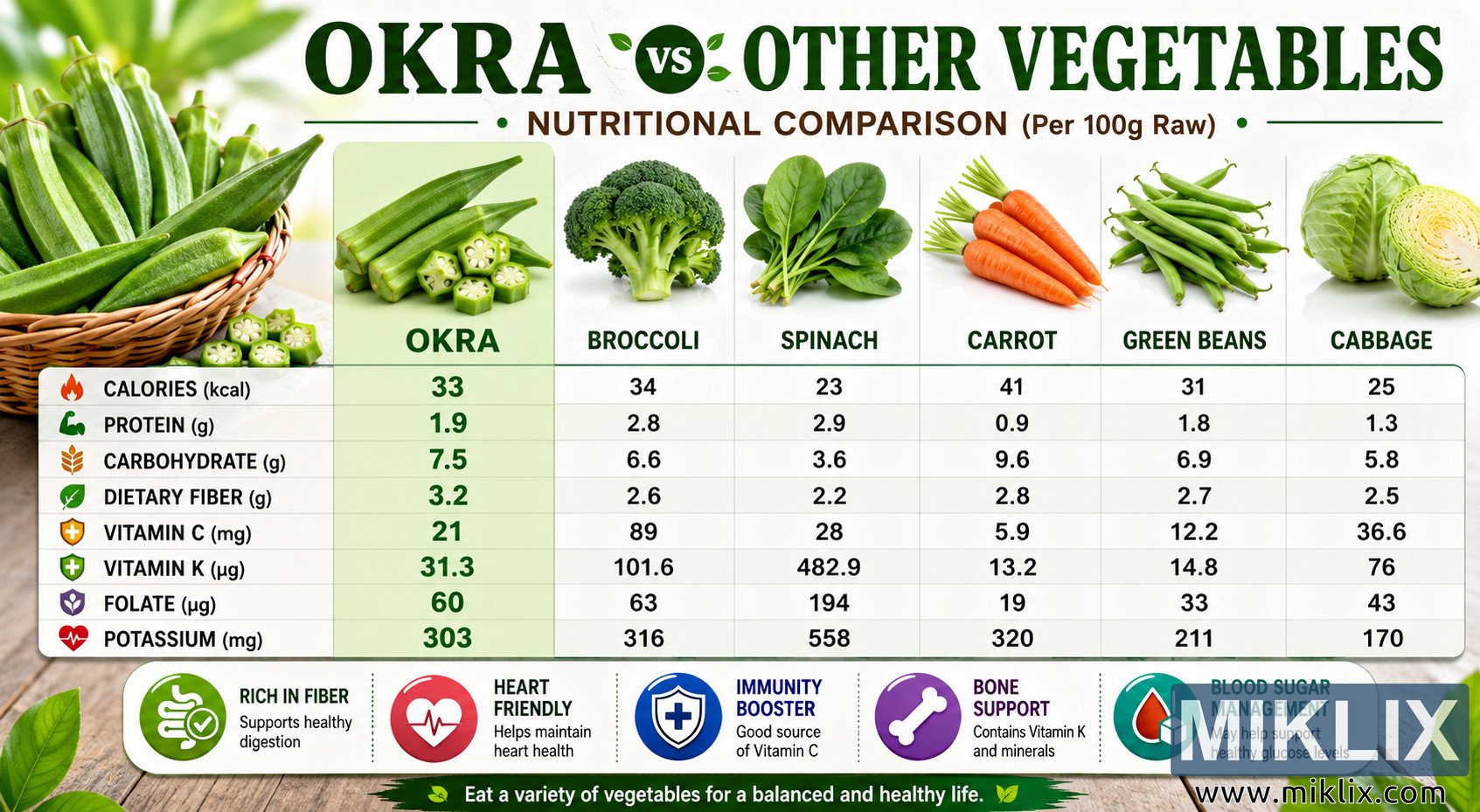
A detailed okra nutrition comparison chart showing calories, carbohydrates, protein, fiber, vitamins, minerals, and potassium beside other vegetables.
Okra vs Other Vegetables Nutritional Comparison Chart
Доступні версії цього зображення
Файли зображень, доступні для завантаження нижче, менш стиснуті і мають вищу роздільну здатність - і, як наслідок, вищу якість - ніж зображення, вбудовані в статті та сторінки цього веб-сайту, які більш оптимізовані за розміром файлу з метою зменшення споживання пропускної здатності.
Звичайний розмір (1,693 x 929)
Великий розмір (3,386 x 1,858)
Дуже великий розмір (5,079 x 2,787)
Надзвичайно великий розмір (6,772 x 3,716)
Комічно великий розмір (1,048,576 x 575,385)
- Все ще завантажуємо... ;-)
Опис зображення
A wide, landscape-oriented nutritional infographic compares okra with several other common vegetables in a clean, bright, green-themed visual style. The composition is arranged like a polished educational poster, with the large headline “OKRA vs OTHER VEGETABLES” across the top in bold dark green lettering. Beneath it, a subtitle reads “Nutritional Comparison (Per 100g, Raw),” clarifying that the values shown are based on raw vegetables measured in equal 100 gram portions. The overall design uses a fresh white background with soft green accents, rounded panels, and a crisp table layout that makes the nutrition information easy to scan. The image does not show any brands, packaging, logos, or commercial product names. Instead, it focuses entirely on whole vegetables, nutrient categories, and health-oriented presentation.
Across the upper half of the infographic, realistic vegetable images are displayed in a neat row. On the far left, okra is shown prominently in a woven basket, with several sliced okra pieces placed nearby to reveal the pale green interior and round seed pattern. The okra section is visually emphasized because it is the main subject of the chart. Next to it are glossy spinach leaves, a fresh head of broccoli, a cluster of orange carrots with green tops, a green bell pepper, and sliced cucumber. The vegetables are photographed or rendered in a clean studio style, with soft shadows and bright lighting that gives the image a fresh, healthy, produce-market appearance. The color palette is dominated by greens and whites, with orange carrots adding contrast and helping guide the eye across the chart.
The lower half of the image contains the main comparison table. Each vegetable has its own vertical column, with the headers reading Okra, Spinach, Broccoli, Carrot, Bell Pepper, and Cucumber. The okra column is highlighted with a pale green tint and darker green text, making it stand out from the rest of the vegetables. The table compares multiple nutritional metrics including calories, carbohydrates, protein, dietary fiber, vitamin C, vitamin K, folate, calcium, iron, potassium, and magnesium. Each row includes a small colorful icon on the far left, such as a flame for calories, a leaf for fiber, and other simple health-related symbols for vitamins and minerals. The numbers are large and legible, using a dark typeface with green emphasis in the okra column. This creates a straightforward educational feel, as though the infographic could be used in a health article, classroom handout, recipe website, or nutrition guide.
The chart presents okra as a nutrient-dense vegetable with moderate calories, notable fiber, and a variety of vitamins and minerals. Okra is listed with 33 calories, 7.45 grams of carbohydrates, 1.93 grams of protein, 3.20 grams of dietary fiber, 23.0 milligrams of vitamin C, 31.3 micrograms of vitamin K, 88 micrograms of folate, 81 milligrams of calcium, 0.62 milligrams of iron, 299 milligrams of potassium, and 57 milligrams of magnesium. The surrounding vegetables provide context for comparison: spinach appears lower in calories but much higher in vitamin K, folate, potassium, iron, and magnesium; broccoli stands out for vitamin C; carrot is higher in carbohydrates and potassium; bell pepper is highlighted with high vitamin C; and cucumber appears light and low in calories with comparatively low fiber and mineral values. The structure encourages viewers to compare nutrients across vegetables rather than treat one food as universally superior.
At the bottom of the infographic, a rounded green callout bar summarizes the main message: “Okra is a rich source of fiber, vitamins, and minerals that support overall health and wellness.” This statement is placed beneath the table and paired with a small sprout icon, reinforcing the natural, health-conscious tone of the design. Additional decorative okra slices appear in the lower-right corner, visually tying the footer back to the main subject. The image is designed to feel informative, approachable, and visually appealing, with enough detail for nutrition education while remaining simple enough for quick reading. It is a balanced chart-style image rather than a brand advertisement, and its landscape format makes it suitable for blog headers, social media posts, slide presentations, or website educational content.
Зображення пов'язане з: Okra Benefits: How This Nutritious Vegetable Supports Your Health