
Зображення: Swiss Chard vs Spinach: A Detailed Visual Comparison
Опубліковано:
Останнє оновлення: 12 вересня 2026 р. о 14:51:01 UTC
Explore a detailed visual comparison between Swiss chard and spinach leaves, highlighting their distinct colors, textures, and nutritional appeal in a high-resolution landscape image.
Swiss Chard vs Spinach: A Detailed Visual Comparison
Доступні версії цього зображення
Файли зображень, доступні для завантаження нижче, менш стиснуті і мають вищу роздільну здатність - і, як наслідок, вищу якість - ніж зображення, вбудовані в статті та сторінки цього веб-сайту, які більш оптимізовані за розміром файлу з метою зменшення споживання пропускної здатності.
Звичайний розмір (1,536 x 1,024)
Великий розмір (3,072 x 2,048)
Дуже великий розмір (4,608 x 3,072)
Надзвичайно великий розмір (6,144 x 4,096)
Комічно великий розмір (1,048,576 x 699,051)
- Все ще завантажуємо... ;-)
Опис зображення
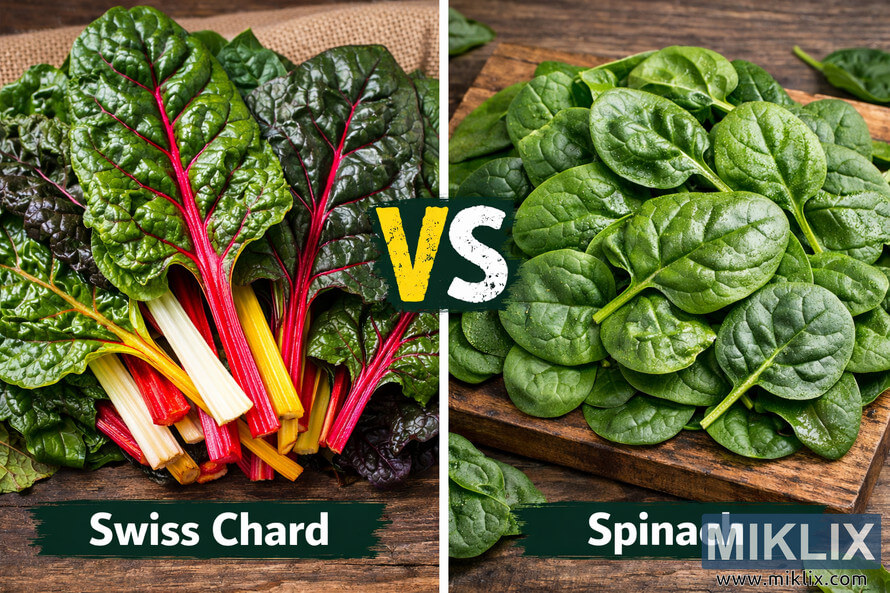
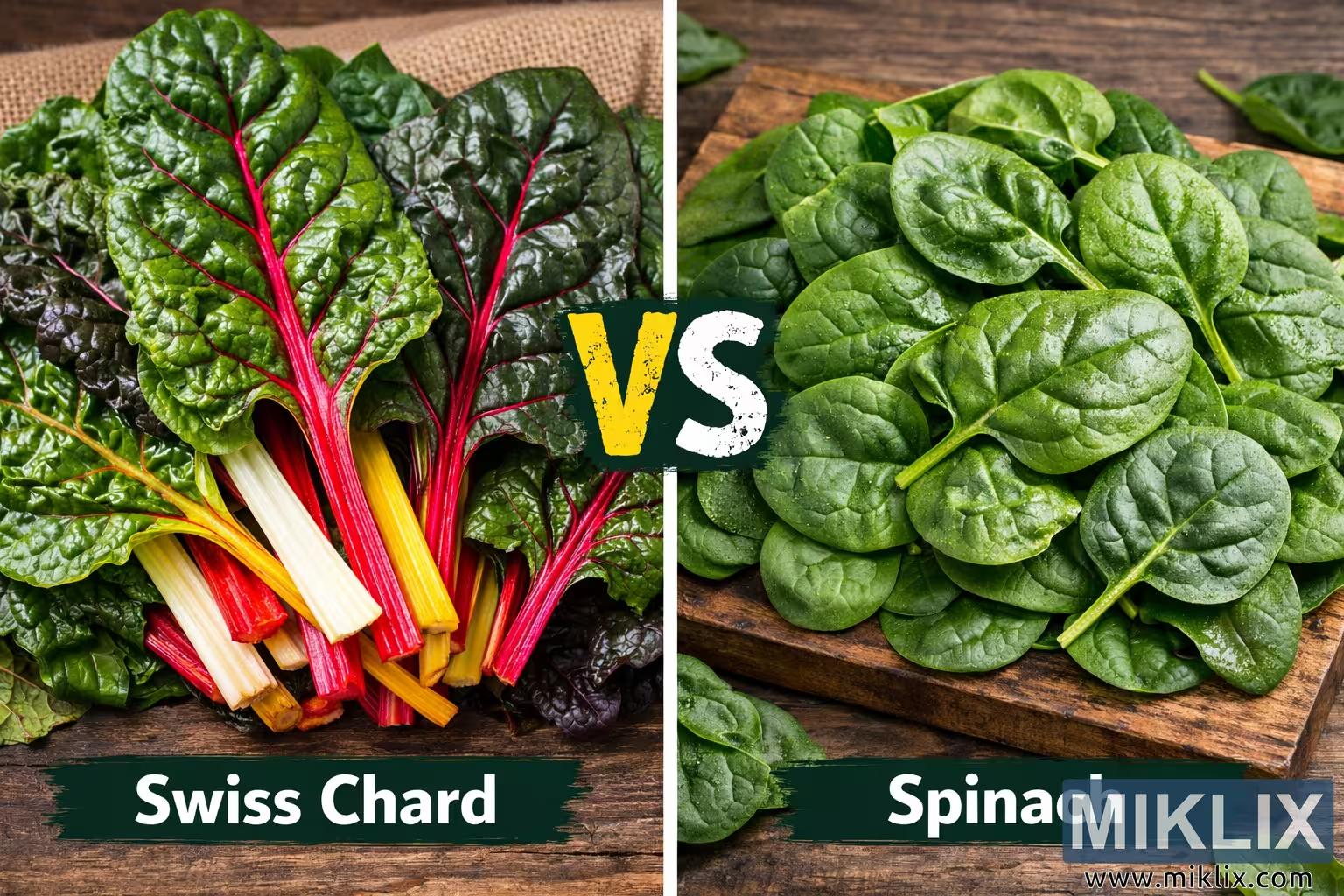
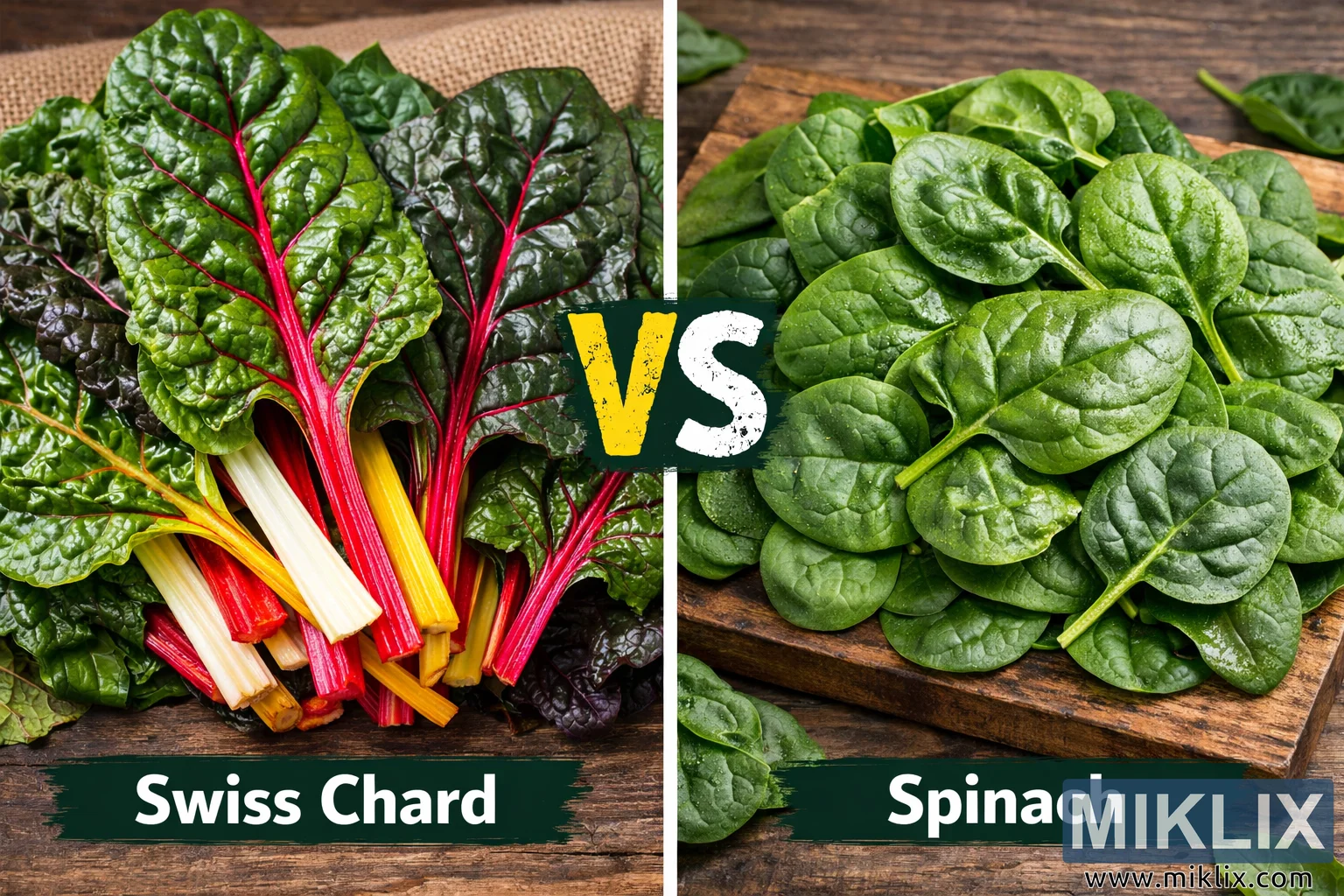
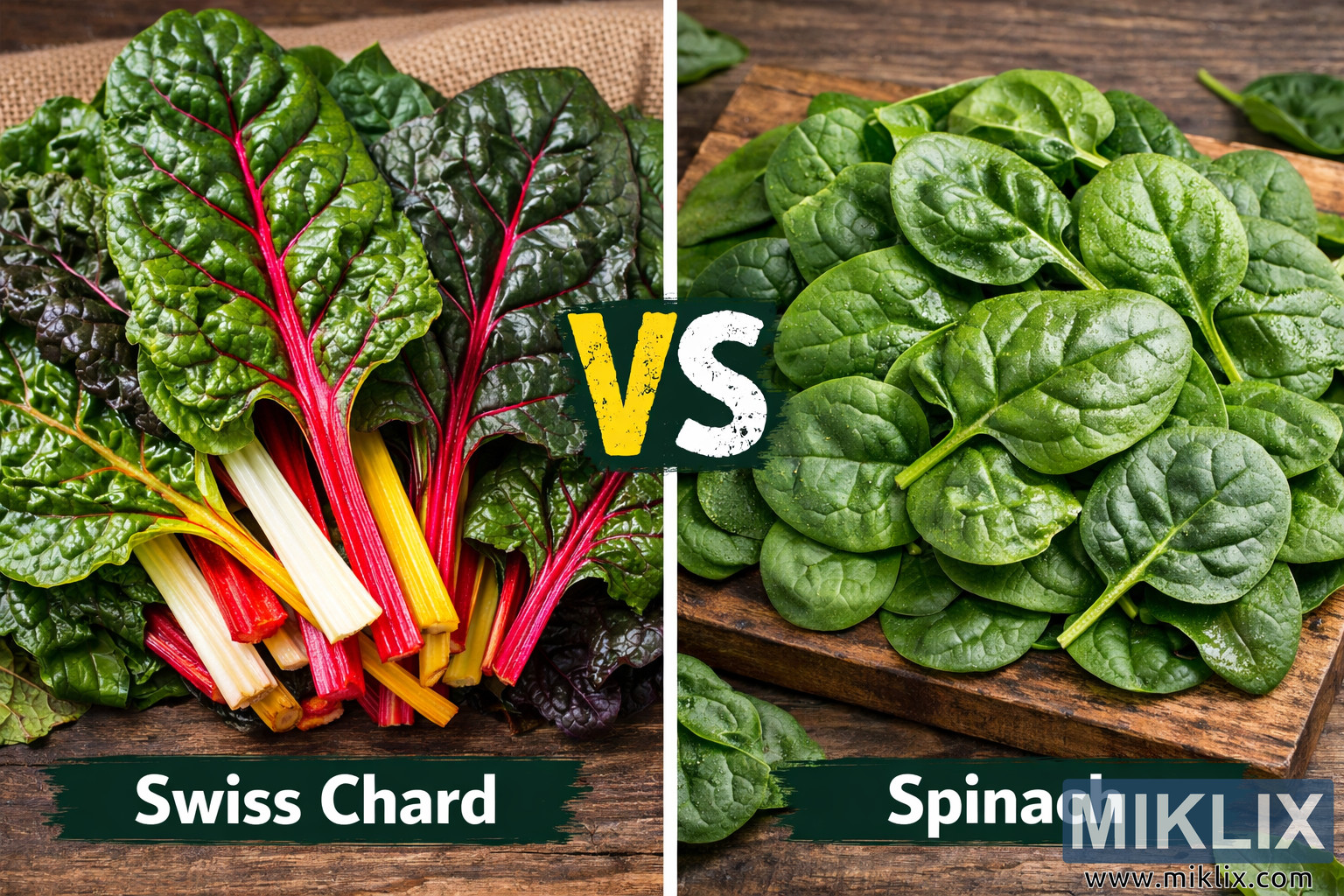
The image presents a vivid, high-resolution landscape composition that contrasts two of the most recognizable leafy greens: Swiss chard and spinach. On the left side of the frame, Swiss chard leaves are arranged in a visually striking display, their large, crinkled surfaces catching the light to reveal deep green hues interlaced with veins of red, yellow, and white. The stems are thick and vibrant, each color representing a different variety of chard—ruby red, golden yellow, and creamy white—creating a natural palette that feels both rustic and energetic. The leaves themselves are broad and slightly curled, with a glossy texture that suggests freshness and vitality. The veins extend from the stems into the leaves, forming intricate patterns that emphasize the plant’s robust structure and nutrient density. Beneath the chard, a dark green banner labeled “Swiss Chard” in bold, white, capitalized letters anchors the composition, adding clarity and balance to the visual narrative.
On the right side, spinach leaves form a contrasting cluster that is smaller, smoother, and more uniform in shape. Each leaf is oval and gently curved, with a rich, dark green color that conveys tenderness and delicacy. The spinach leaves are layered neatly atop one another, their thin stems and subtle veins creating a sense of softness and simplicity compared to the more dramatic chard. The surface of the spinach leaves reflects light in a muted way, emphasizing their matte texture and the fine details of their natural folds. Below the spinach, a matching dark green banner labeled “Spinach” in bold, white, capitalized letters provides symmetry to the overall design.
Between the two groups of leaves, a vertical white dividing line runs through the center of the image, symbolizing the clear distinction between the two greens. At the midpoint of this line, the letters “VS” appear in large, distressed yellow and white typography, adding a dynamic focal point that evokes the idea of comparison or competition. The background consists of a rustic wooden surface, with the Swiss chard resting on a burlap cloth and the spinach placed on a wooden board. This natural setting enhances the organic feel of the image, suggesting a farm-to-table aesthetic that celebrates the earthy origins of both vegetables.
The lighting is even and well-balanced, illuminating the textures and colors without creating harsh shadows. The composition is carefully arranged to highlight the unique characteristics of each plant: the bold, multicolored vibrancy of Swiss chard versus the understated, deep green elegance of spinach. The overall mood of the image is fresh, wholesome, and educational, inviting viewers to appreciate the visual and nutritional diversity of leafy greens.
The photograph’s meticulous attention to detail makes it suitable for culinary, botanical, or educational contexts. It captures not only the physical differences between the two greens but also their symbolic contrast—Swiss chard representing strength and variety, while spinach embodies simplicity and purity. The juxtaposition of textures, colors, and forms creates a balanced visual harmony that draws the eye across the frame, encouraging a deeper appreciation of nature’s artistry. The image’s high resolution ensures that every vein, stem, and leaf edge is rendered with clarity, allowing viewers to observe the fine distinctions that define each plant.
In essence, this image is a celebration of natural beauty and diversity within the world of edible greens. It communicates freshness, vitality, and the richness of plant life through its composition, lighting, and color balance. The rustic background and clean typography reinforce the sense of authenticity and craftsmanship, making the image not only visually appealing but also informative. Whether used in a culinary guide, a nutrition article, or a botanical study, this detailed comparison of Swiss chard and spinach serves as a compelling visual representation of two beloved vegetables that, while similar in purpose, differ profoundly in appearance and character.
Зображення пов'язане з: Swiss Chard: Why It Is One of the Healthiest Leafy Greens