
Зображення: Cross-Section of a Potato Showing Nutrient Distribution in the Skin and Flesh
Опубліковано:
Останнє оновлення: 4 серпня 2026 р. о 13:57:15 UTC
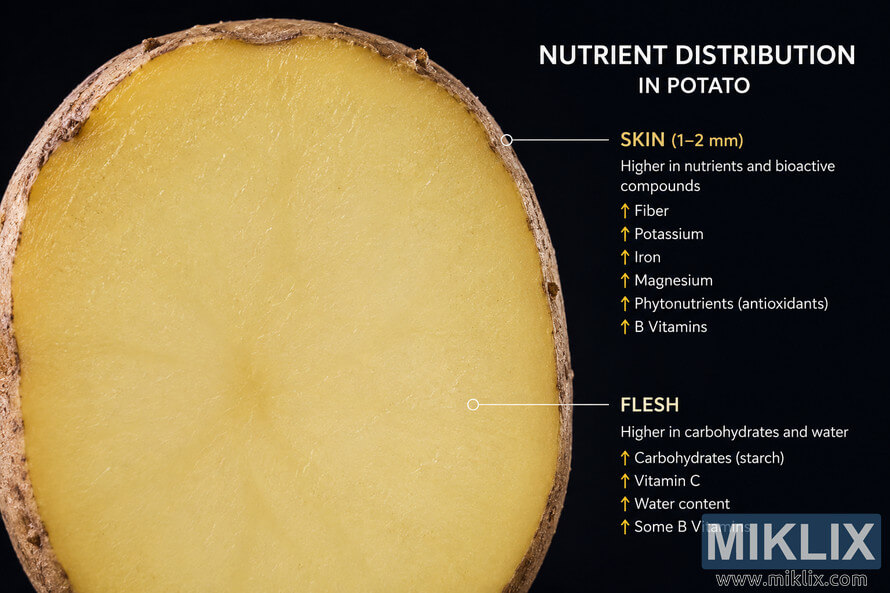
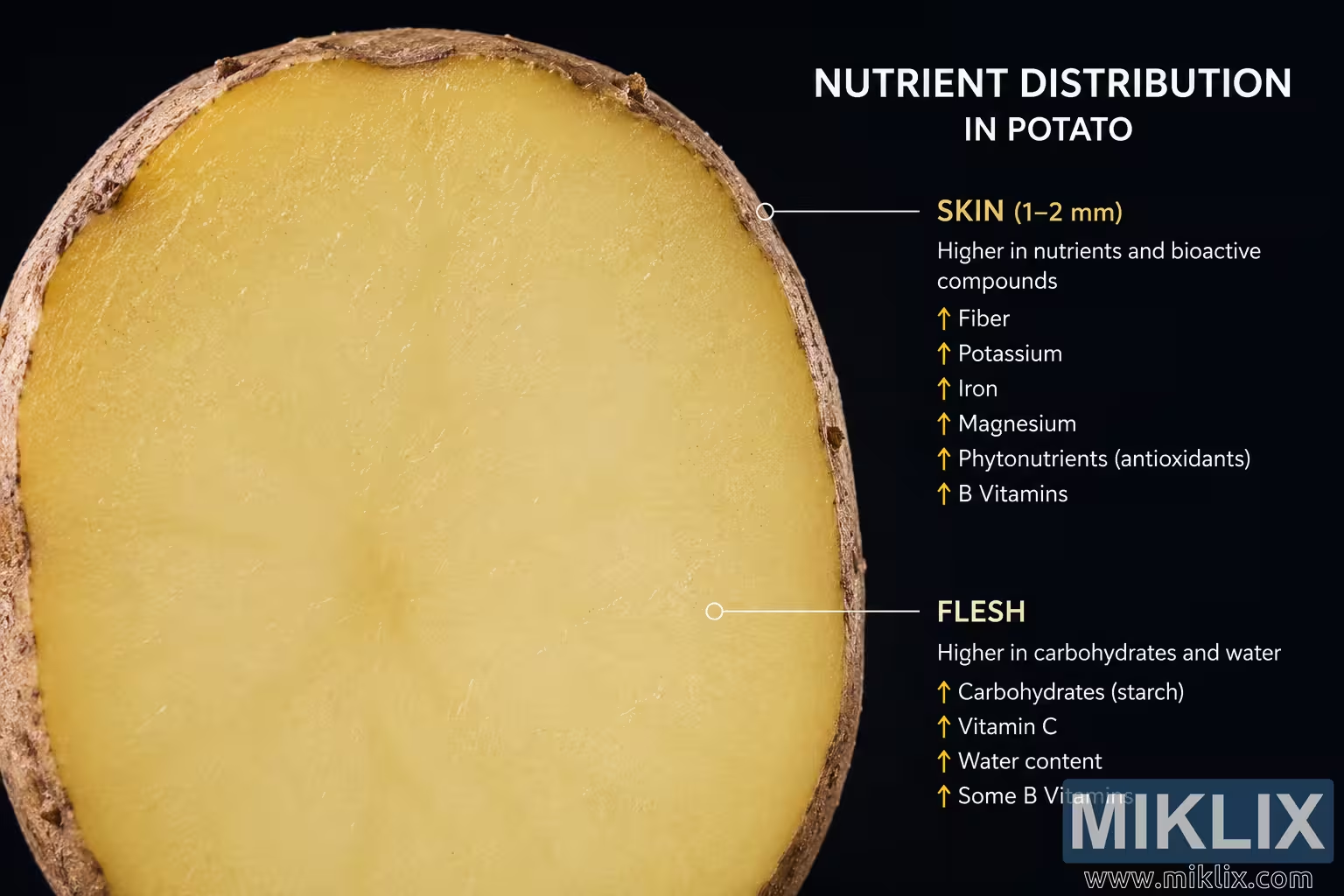
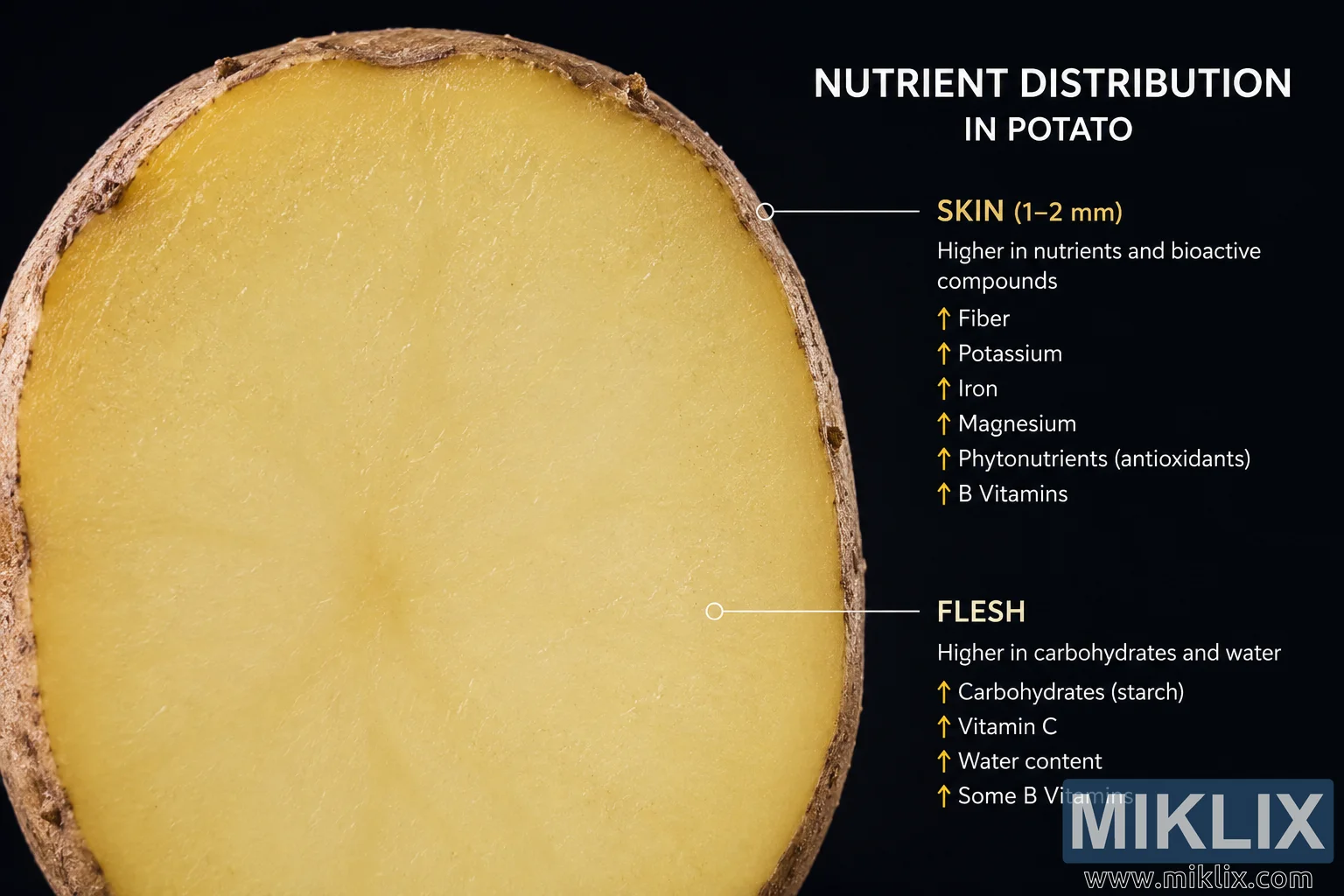
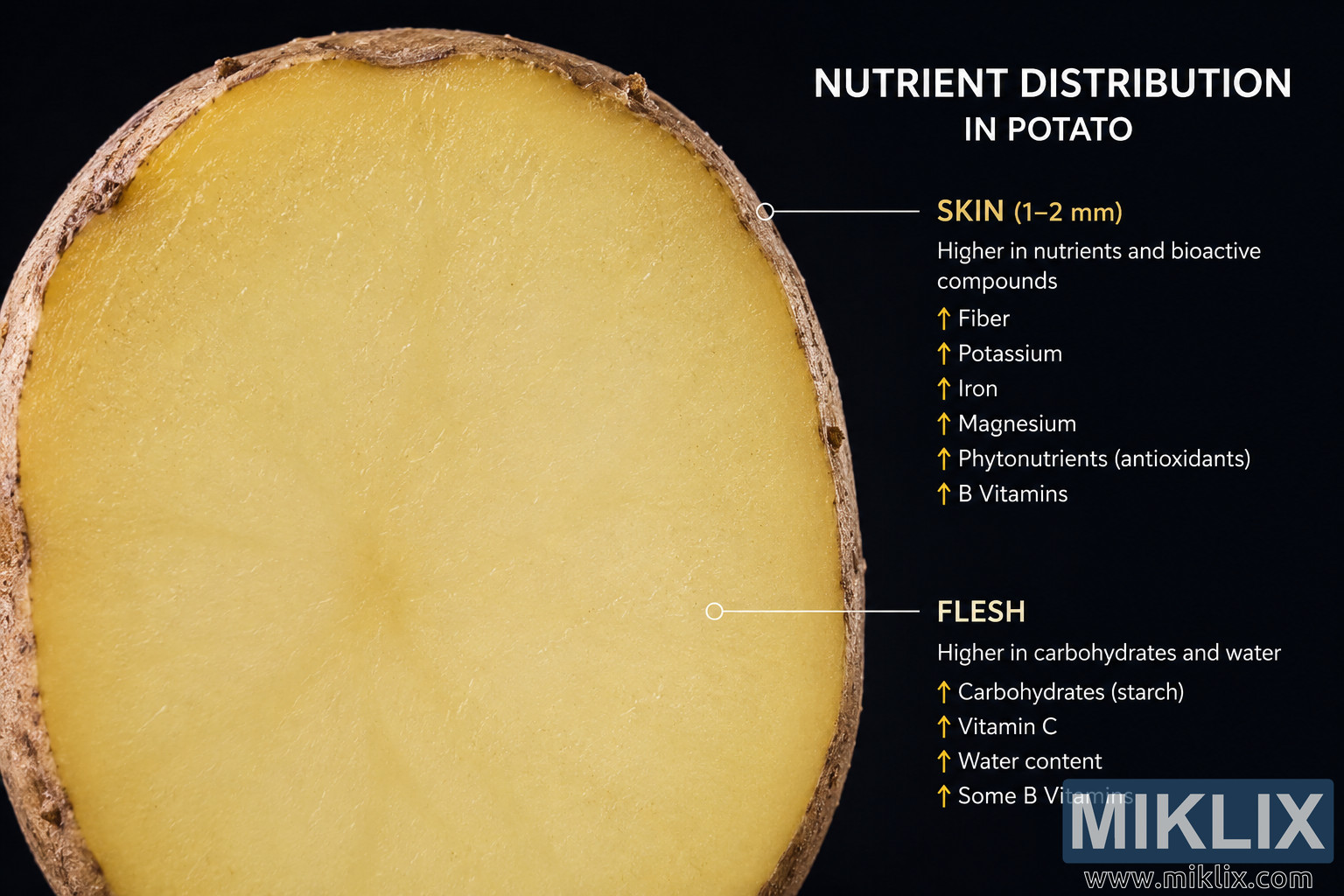
Scientific-style infographic illustrating a potato cross-section with annotated nutrient distribution between the skin and flesh. The image explains which nutrients are more concentrated in the outer skin versus the inner flesh using clear labels and a clean educational layout.
Cross-Section of a Potato Showing Nutrient Distribution in the Skin and Flesh
Доступні версії цього зображення
Файли зображень, доступні для завантаження нижче, менш стиснуті і мають вищу роздільну здатність - і, як наслідок, вищу якість - ніж зображення, вбудовані в статті та сторінки цього веб-сайту, які більш оптимізовані за розміром файлу з метою зменшення споживання пропускної здатності.
Звичайний розмір (1,536 x 1,024)
Великий розмір (3,072 x 2,048)
Дуже великий розмір (4,608 x 3,072)
Надзвичайно великий розмір (6,144 x 4,096)
Комічно великий розмір (1,048,576 x 699,051)
- Все ще завантажуємо... ;-)
Опис зображення
This image is a landscape-oriented, high-resolution educational infographic that presents a detailed cross-sectional view of a potato together with explanatory annotations describing how nutrients are distributed between the potato's outer skin and its inner flesh. The composition combines a realistic photographic rendering of the potato with a clean scientific infographic layout. The background is nearly black with a subtle dark gradient, providing strong visual contrast against the light-colored potato and bright typography. The overall aesthetic resembles a modern educational poster intended for nutrition education, food science presentations, or health-related publications.
The potato occupies the left portion of the image and is shown as though it has been sliced vertically through its center. The exposed interior reveals a smooth, pale yellow flesh with subtle natural variations in tone and texture. Fine radial patterns extend gently outward from the approximate center of the cut surface, creating the appearance of authentic potato tissue. The flesh has a soft matte appearance with slight natural highlights that emphasize realism without appearing glossy. Around the perimeter is a relatively thin brown skin that wraps consistently around the cross-section. The skin displays a rougher, more textured appearance than the interior, including irregular ridges, small creases, and natural variations in brown coloration that reinforce the impression of an unpeeled potato.
The right half of the composition contains the informational content. At the top is a large uppercase heading reading "NUTRIENT DISTRIBUTION IN POTATO." The heading is set in a clean sans-serif typeface using white lettering, creating excellent readability against the dark background. Below the title are two clearly separated information sections connected to the potato by thin white leader lines ending in small circular markers that visually indicate the referenced regions of the potato.
The upper annotation identifies the potato skin. The label reads "SKIN (1–2 mm)" and is highlighted in a warm golden-yellow color to distinguish it from the surrounding white body text. A leader line extends from the label to the thin outer layer of the potato. Beneath the heading, explanatory text states that this region is higher in nutrients and bioactive compounds. A vertical list follows, with each nutrient preceded by an upward-pointing arrow indicating relatively higher concentration. The listed nutrients include fiber, potassium, iron, magnesium, phytonutrients identified as antioxidants, and B vitamins. The typography is consistent throughout, using a modern sans-serif font with careful spacing that makes each line easy to distinguish.
Further down the right side, another annotation identifies the potato flesh. A second leader line points toward the central interior of the potato. The heading "FLESH" appears in large white uppercase letters. Below it, explanatory text indicates that the flesh is higher in carbohydrates and water. Another vertically arranged list with upward arrows identifies carbohydrates in the form of starch, vitamin C, water content, and some B vitamins as characteristics associated with the inner portion. The formatting mirrors the upper section, producing visual balance throughout the infographic.
The image emphasizes educational clarity through strong visual hierarchy. Large headings establish the primary topics, medium-sized section labels distinguish the two anatomical regions of the potato, and smaller explanatory text provides supporting nutritional information. White connecting lines ensure viewers can immediately associate each annotation with the appropriate physical structure. The restrained color palette consisting primarily of black, white, warm yellow, light cream, and natural brown helps maintain focus while giving the presentation a professional scientific appearance.
Lighting within the illustration is soft and even. The potato is illuminated sufficiently to reveal subtle texture within both the flesh and the skin without producing harsh shadows. The dark background remains unobtrusive, allowing the subject and text to dominate the composition. The spacing between elements prevents visual clutter, and generous margins contribute to an organized layout suitable for educational use.
Overall, the infographic communicates the concept that nutrients are not distributed uniformly throughout a potato. Instead, the outer skin is presented as containing relatively greater concentrations of several minerals, fiber, phytonutrients, and B vitamins, whereas the interior flesh is presented as containing relatively greater amounts of carbohydrates, vitamin C, water, and some B vitamins. The design effectively integrates realistic food photography with clearly organized scientific annotations, resulting in an image that is visually appealing, easy to interpret, and well suited for nutrition education, classroom instruction, health communication, food science references, or editorial content discussing the nutritional characteristics of potatoes.
Зображення пов'язане з: The Surprising Health Benefits of Potatoes: A Complete Nutrition Guide