
Зображення: Watermelon Nutritional Breakdown Infographic
Опубліковано:
Останнє оновлення: 16 серпня 2026 р. о 19:09:49 UTC
Explore a detailed watermelon nutritional breakdown infographic highlighting vitamins, minerals, hydration, calorie content, and antioxidant benefits in a vibrant, high-resolution design.
Watermelon Nutritional Breakdown Infographic
Доступні версії цього зображення
Файли зображень, доступні для завантаження нижче, менш стиснуті і мають вищу роздільну здатність - і, як наслідок, вищу якість - ніж зображення, вбудовані в статті та сторінки цього веб-сайту, які більш оптимізовані за розміром файлу з метою зменшення споживання пропускної здатності.
Звичайний розмір (1,536 x 1,024)
Великий розмір (3,072 x 2,048)
Дуже великий розмір (4,608 x 3,072)
Надзвичайно великий розмір (6,144 x 4,096)
Комічно великий розмір (1,048,576 x 699,051)
- Все ще завантажуємо... ;-)
Опис зображення
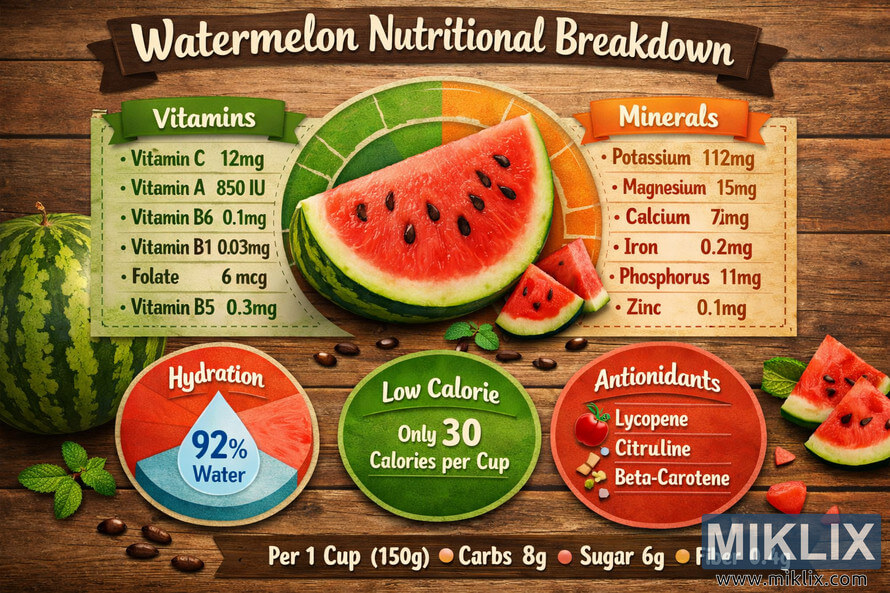
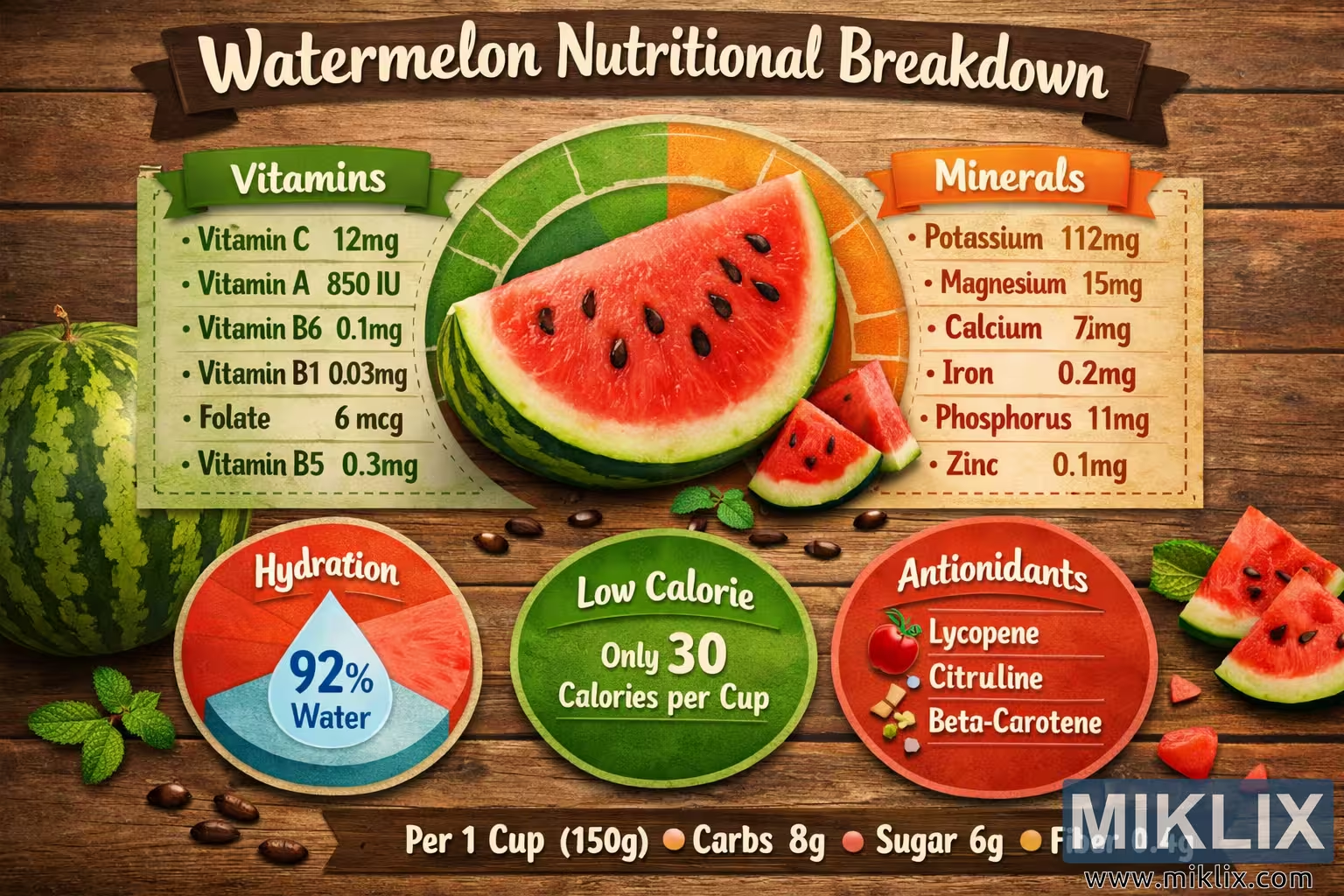
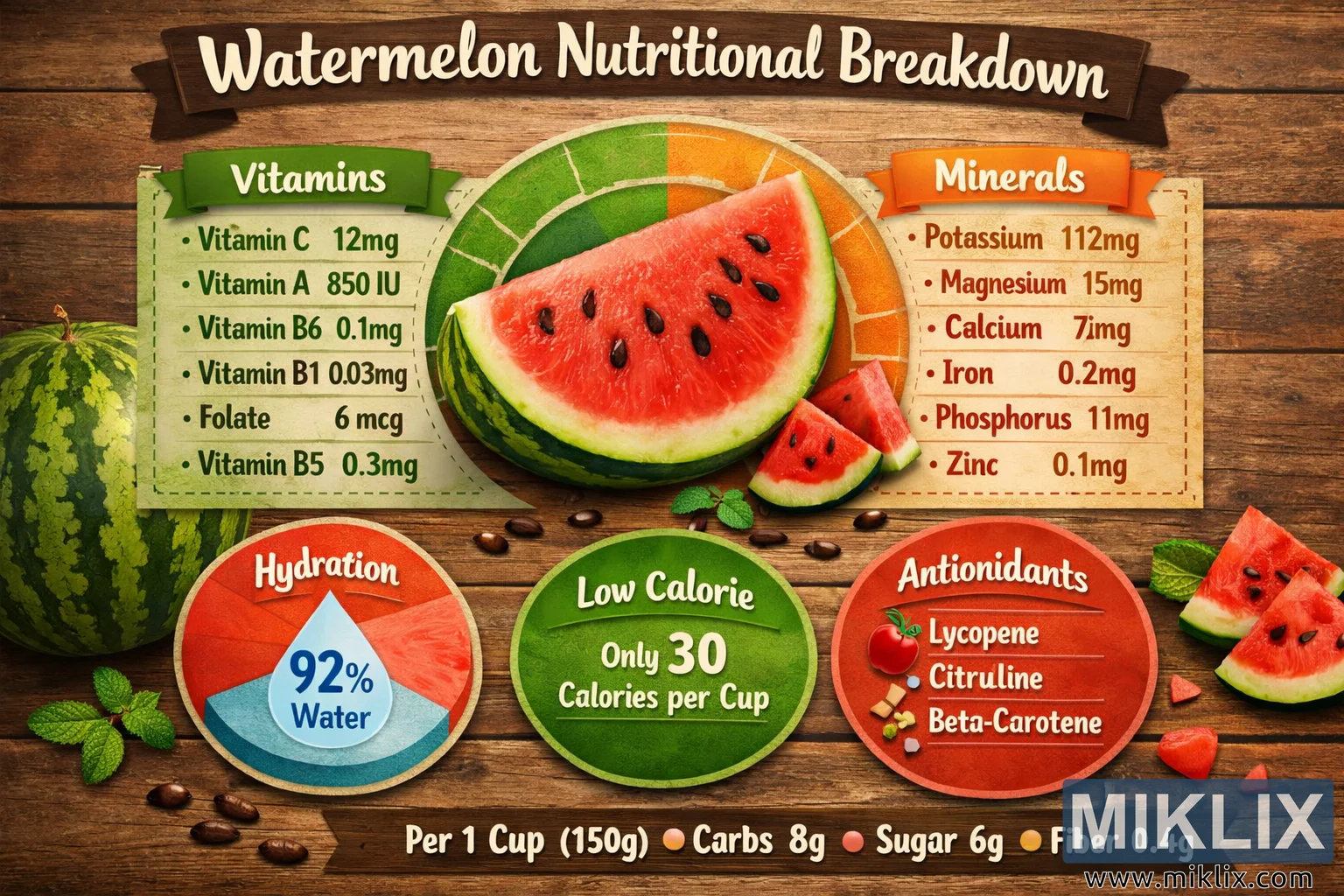
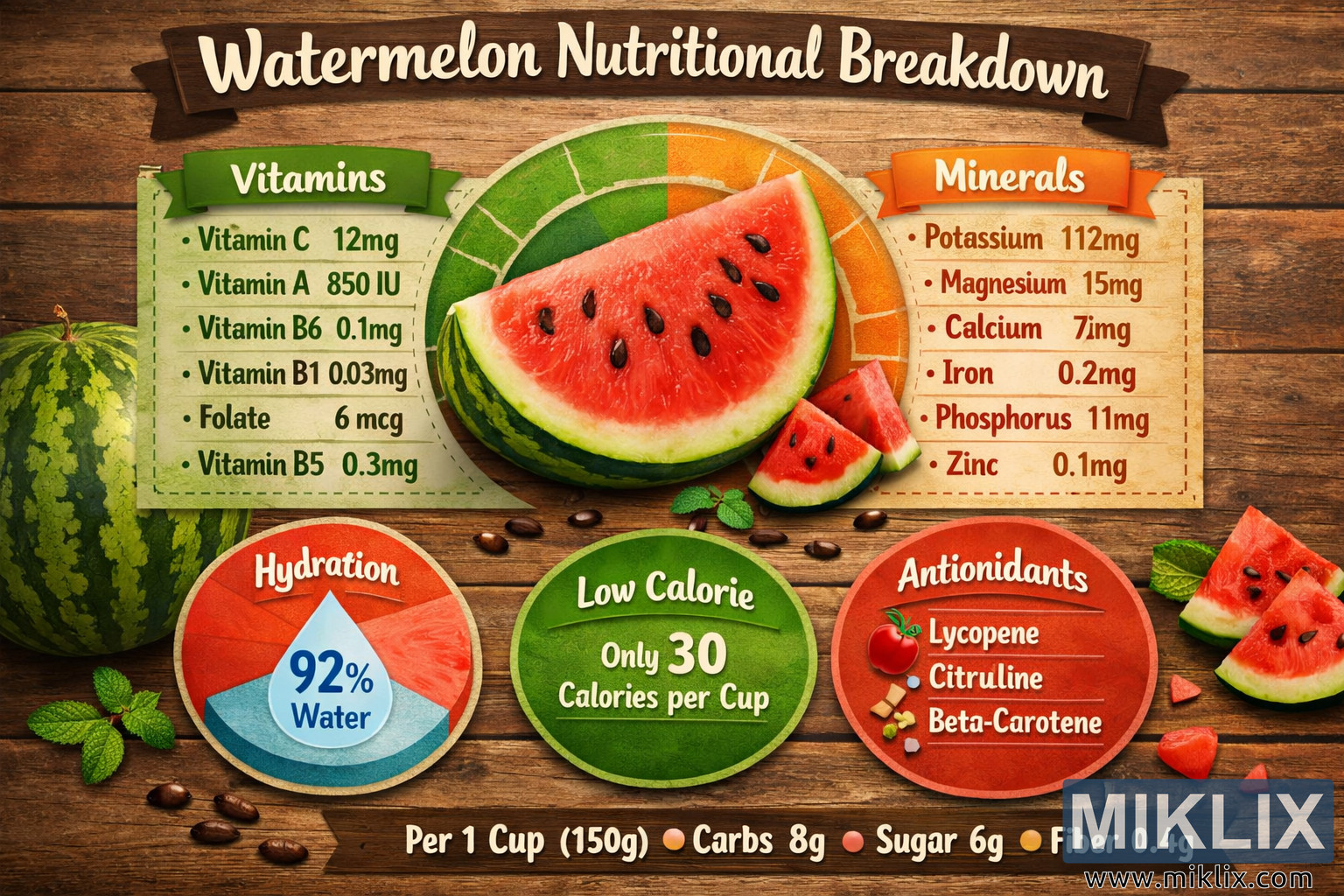
The image presents a visually rich and educational infographic titled "Watermelon Nutritional Breakdown," designed in a landscape orientation with a rustic wooden background that evokes a natural, wholesome atmosphere. At the top, the title appears in a bold, playful white font, standing out against a warm wooden texture that immediately draws attention. On the left side of the composition, a whole watermelon sits prominently, its green rind patterned with dark stripes, symbolizing freshness and vitality. To the right, a large slice of watermelon reveals its vibrant red flesh dotted with glossy black seeds, surrounded by a crisp green rind. Smaller slices and mint leaves are scattered nearby, adding a touch of realism and freshness to the scene, while a few seeds rest at the bottom, reinforcing the organic theme.
The central focus of the infographic is a 3D illustration of a watermelon slice encircled by two distinct circular charts. The left chart, labeled "Vitamins," is shaded in green tones and topped with a white banner bearing the section title. It lists essential vitamins found in watermelon: Vitamin C (12mg), Vitamin A (850 IU), Vitamin B6 (0.1mg), Vitamin B1 (0.03mg), Folate (6 mcg), and Vitamin B5 (0.3mg). Each nutrient is accompanied by small icons and subtle gradients that make the information visually engaging while maintaining clarity. The right chart, labeled "Minerals," adopts a warm orange palette and mirrors the layout of the vitamin section. It enumerates key minerals: Potassium (112mg), Magnesium (15mg), Calcium (7mg), Iron (0.2mg), Phosphorus (11mg), and Zinc (0.1mg). The symmetry between the two charts creates balance and harmony, guiding the viewer’s eye naturally across the composition.
Below the central watermelon slice, three circular sections provide additional insights into the fruit’s health benefits. On the left, a red pie chart labeled "Hydration" features a light blue droplet icon and the text "92% Water" in bold white letters, emphasizing watermelon’s exceptional hydrating properties. In the middle, a green circle titled "Low Calorie" displays the phrase "Only 30 Calories per Cup," highlighting its suitability for weight-conscious diets. On the right, a red circle labeled "Antioxidants" lists three powerful compounds—Lycopene, Citrulline, and Beta-Carotene—each accompanied by small illustrative icons such as a tomato and a molecular structure, symbolizing their biochemical significance.
At the bottom of the infographic, a wooden banner provides concise nutritional data per serving size: "Per 1 Cup (150g)." Beneath this, three icons represent macronutrient values—Carbs (8g), Sugar (6g), and Fiber (0.4g)—each rendered in a clean, minimalist style that complements the overall design. The color palette throughout the image is harmonious, blending natural greens, reds, and oranges with earthy browns to evoke freshness and health. The lighting is even and well-balanced, ensuring that all text and graphical elements remain sharp and legible.
The composition effectively combines scientific accuracy with aesthetic appeal, making it both informative and visually captivating. The use of circular charts and icons enhances comprehension, while the rustic background and realistic fruit imagery create an inviting, organic feel. The infographic succeeds in communicating the nutritional richness of watermelon—its vitamins, minerals, hydration, and antioxidant properties—through a design that feels both modern and natural. Every element, from typography to color gradients, contributes to a cohesive visual narrative celebrating the fruit’s health benefits and refreshing qualities.
Зображення пов'язане з: Watermelon: The Hydrating Superfruit You Should Eat More Often