
Зображення: Potassium from Watermelon Supporting Bone Mineral Retention
Опубліковано:
Останнє оновлення: 16 серпня 2026 р. о 19:09:51 UTC
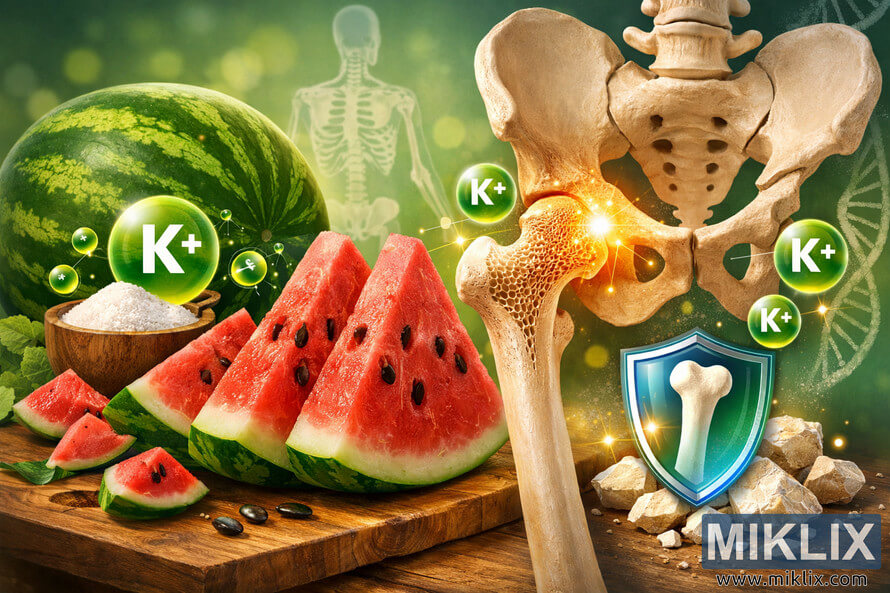
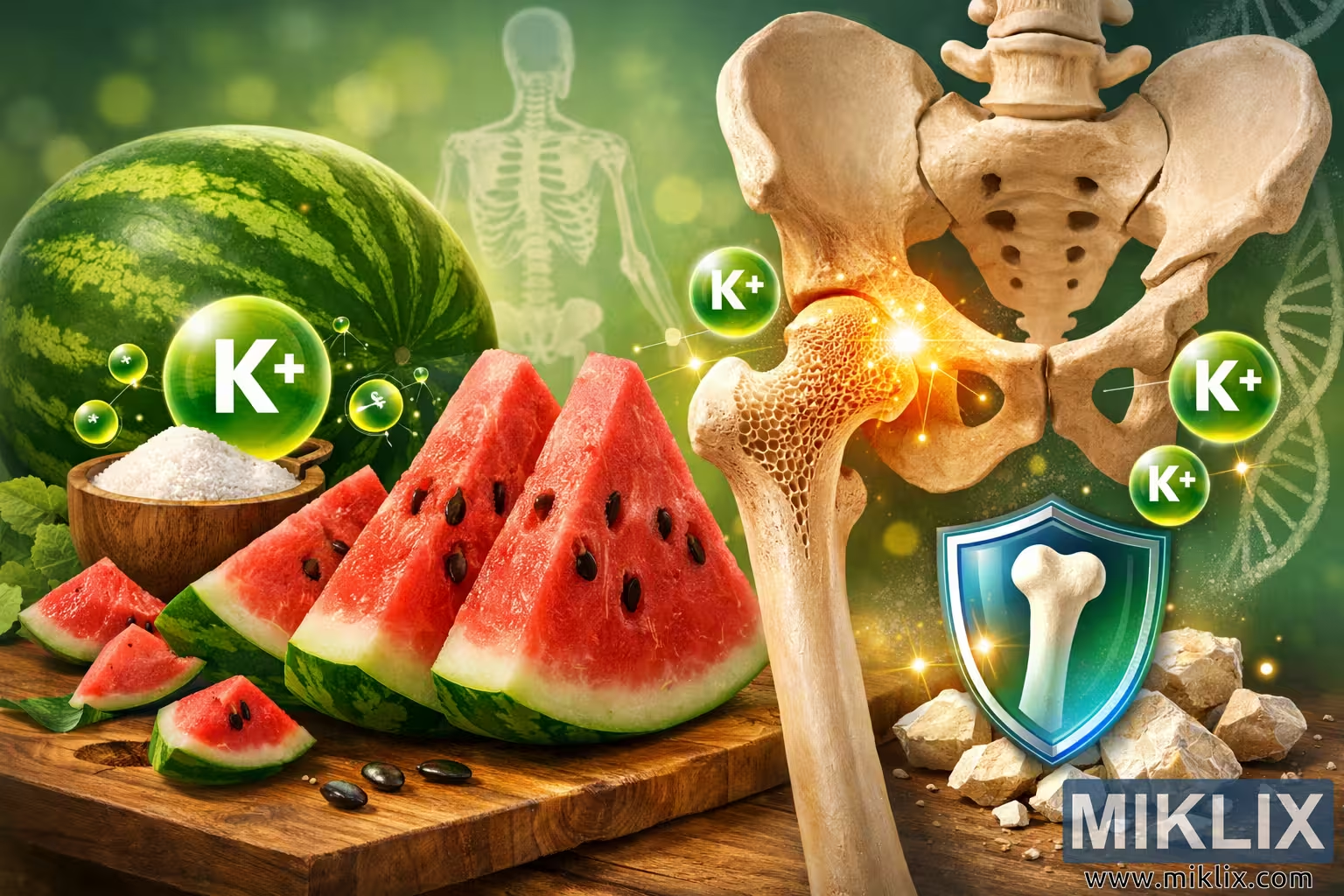
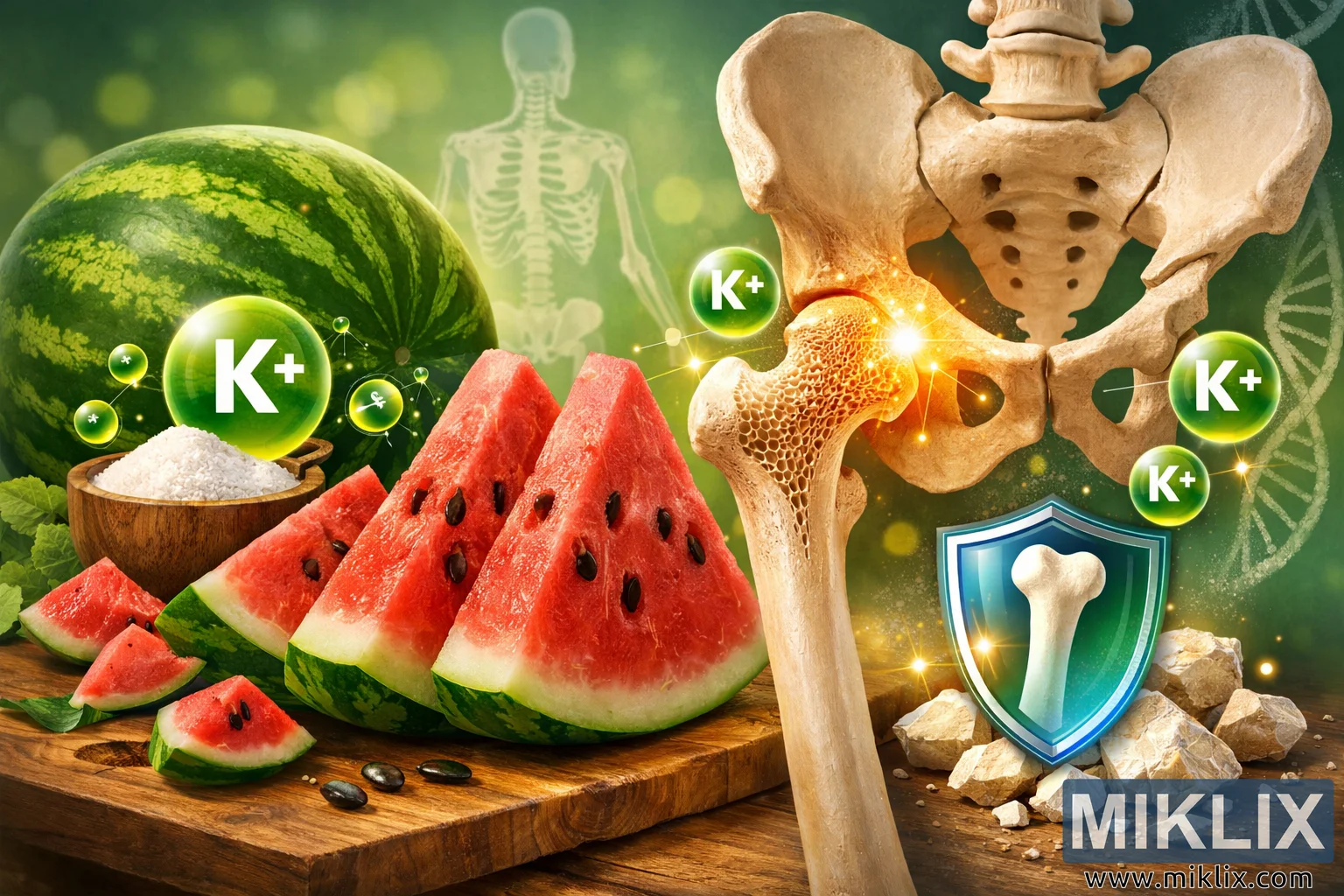
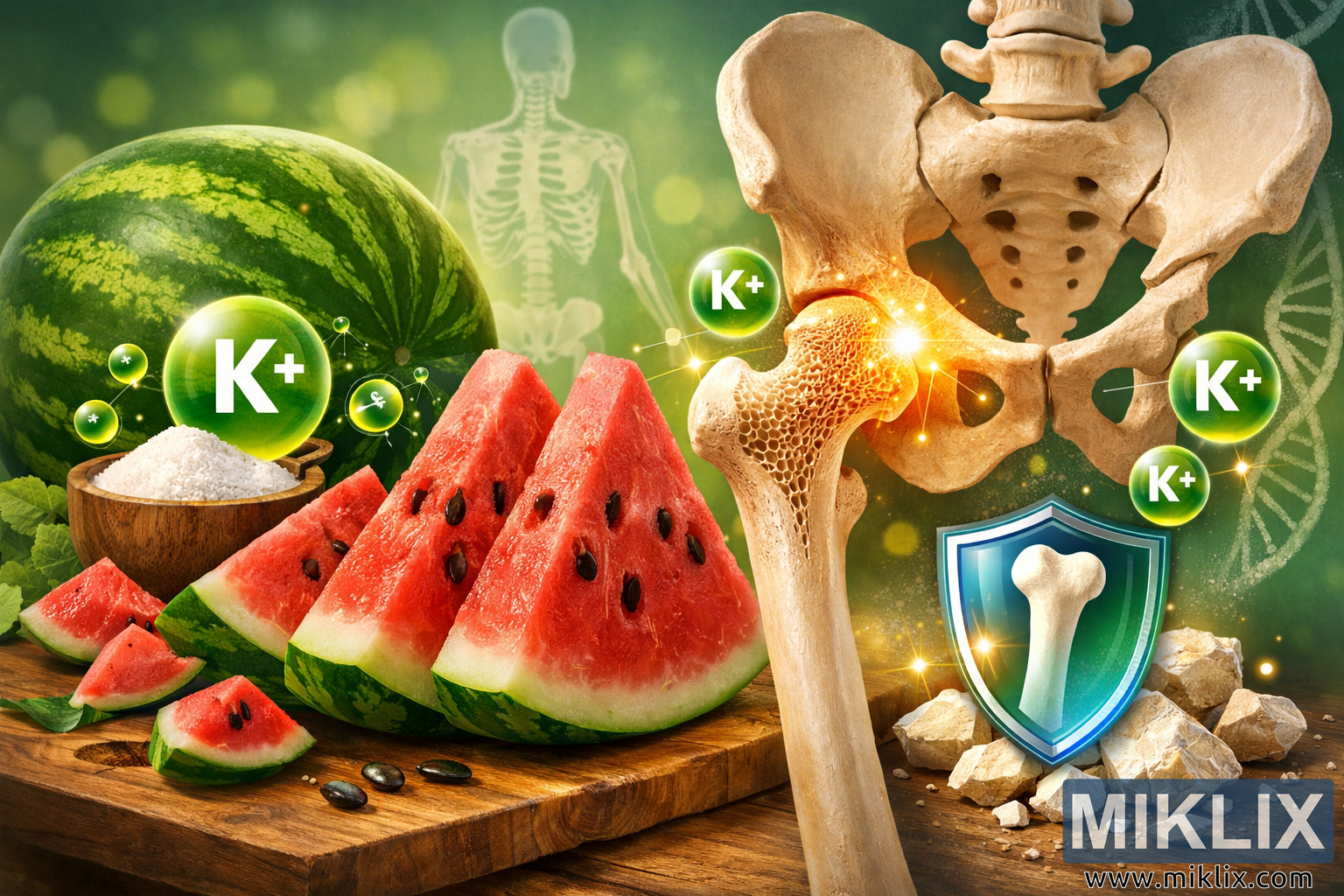
A vivid scientific artwork depicting how potassium from watermelon supports bone mineral retention, featuring watermelon slices, potassium ions, and a glowing femur bone symbolizing skeletal strength.
Potassium from Watermelon Supporting Bone Mineral Retention
Доступні версії цього зображення
Файли зображень, доступні для завантаження нижче, менш стиснуті і мають вищу роздільну здатність - і, як наслідок, вищу якість - ніж зображення, вбудовані в статті та сторінки цього веб-сайту, які більш оптимізовані за розміром файлу з метою зменшення споживання пропускної здатності.
Звичайний розмір (1,536 x 1,024)
Великий розмір (3,072 x 2,048)
Дуже великий розмір (4,608 x 3,072)
Надзвичайно великий розмір (6,144 x 4,096)
Комічно великий розмір (1,048,576 x 699,051)
- Все ще завантажуємо... ;-)
Опис зображення
This digital illustration presents a detailed and visually rich representation of the concept of potassium derived from watermelon contributing to bone mineral retention and overall skeletal health. The composition is arranged in a landscape orientation, balancing natural elements with scientific symbolism. On the left side of the image, a close-up of a sliced watermelon dominates the foreground. Two large triangular pieces rest on a wooden surface, their red flesh glistening with moisture and dotted with small black seeds. The rind displays a gradient of green hues transitioning to a pale white inner layer, emphasizing the fruit’s freshness. Behind these slices, a whole watermelon with a striped green rind adds depth and context, while smaller pieces and scattered seeds create a sense of realism and texture.
Next to the watermelon, a small wooden bowl filled with white granulated potassium is placed, symbolizing the nutrient source. Hovering above the bowl is a glowing green orb marked with the letter “K,” representing potassium ions. Around this orb, several luminous green spheres labeled “K+” float gently, connected by faint energy lines that suggest molecular activity and nutrient transfer. The lighting in this section is warm and natural, highlighting the organic origin of potassium while maintaining a scientific aesthetic.
Transitioning to the right side of the composition, the focus shifts to human anatomy. A highly detailed 3D-rendered femur bone and pelvis occupy the center-right area, rendered in realistic bone textures and subtle shading. The femur’s spongy interior structure is visible, showing the porous network that retains minerals. A radiant golden light emanates from the joint where the femur connects to the pelvis, symbolizing the strengthening effect of potassium on bone density and mineral retention. Surrounding the bones, glowing green potassium ions float in the air, visually linking the fruit’s nutrients to the skeletal system.
Behind the anatomical elements, a semi-transparent illustration of a human skeleton fades into the background, providing scientific context without overwhelming the main subjects. To the far right, a faintly glowing DNA double helix adds a molecular dimension, suggesting the biological processes influenced by potassium at the genetic level. The background is composed of soft, blurred green tones, evoking vitality and natural harmony.
In the lower right corner, crystalline fragments representing bone minerals such as calcium are scattered near a glowing shield emblem. The shield bears a white bone icon at its center, surrounded by a blue aura, symbolizing protection and resilience. This visual metaphor reinforces the idea that potassium intake from watermelon contributes to maintaining strong, healthy bones.
The overall color palette blends vibrant reds and greens from the watermelon with golden and blue highlights around the bones and shield, creating a balanced interplay between organic and scientific motifs. The lighting is dynamic yet cohesive, guiding the viewer’s eye from the fruit to the bone structure and finally to the protective symbols. The image conveys both aesthetic beauty and educational clarity, merging nutritional science with artistic expression.
Every element—from the floating potassium ions to the glowing femur—works together to narrate a story of nourishment and strength. The watermelon serves as a natural source of potassium, while the anatomical and molecular visuals illustrate how this nutrient supports bone mineral retention. The composition achieves harmony between realism and abstraction, making it both visually engaging and scientifically informative. The result is a high-resolution, landscape-oriented artwork that celebrates the connection between diet and skeletal health through vivid color, precise detail, and symbolic depth.
Зображення пов'язане з: Watermelon: The Hydrating Superfruit You Should Eat More Often