
影像: Pale Ale with Fresh Hops in a Rustic Brewery Setting
已發佈:
最後更新: 2026年9月14日 晚上8:35:39 [UTC]
Photorealistic golden pale ale in a chilled pint glass surrounded by fresh green hops, rustic wood, burlap, and brewery-inspired details.
Pale Ale with Fresh Hops in a Rustic Brewery Setting
此圖片的可用版本
以下可供下載的圖片檔案壓縮程度較低,解析度也較高 - 因此品質也較高 - 相較於本網站文章和網頁中內嵌的圖片,這些圖片的檔案大小經過優化,以減少頻寬消耗。
一般尺寸 (1,536 x 1,024)
大尺寸 (3,072 x 2,048)
非常大的尺寸 (4,608 x 3,072)
超大尺寸 (6,144 x 4,096)
超大尺寸 (1,048,576 x 699,051)
- 仍在上傳中... ;-)
圖片說明
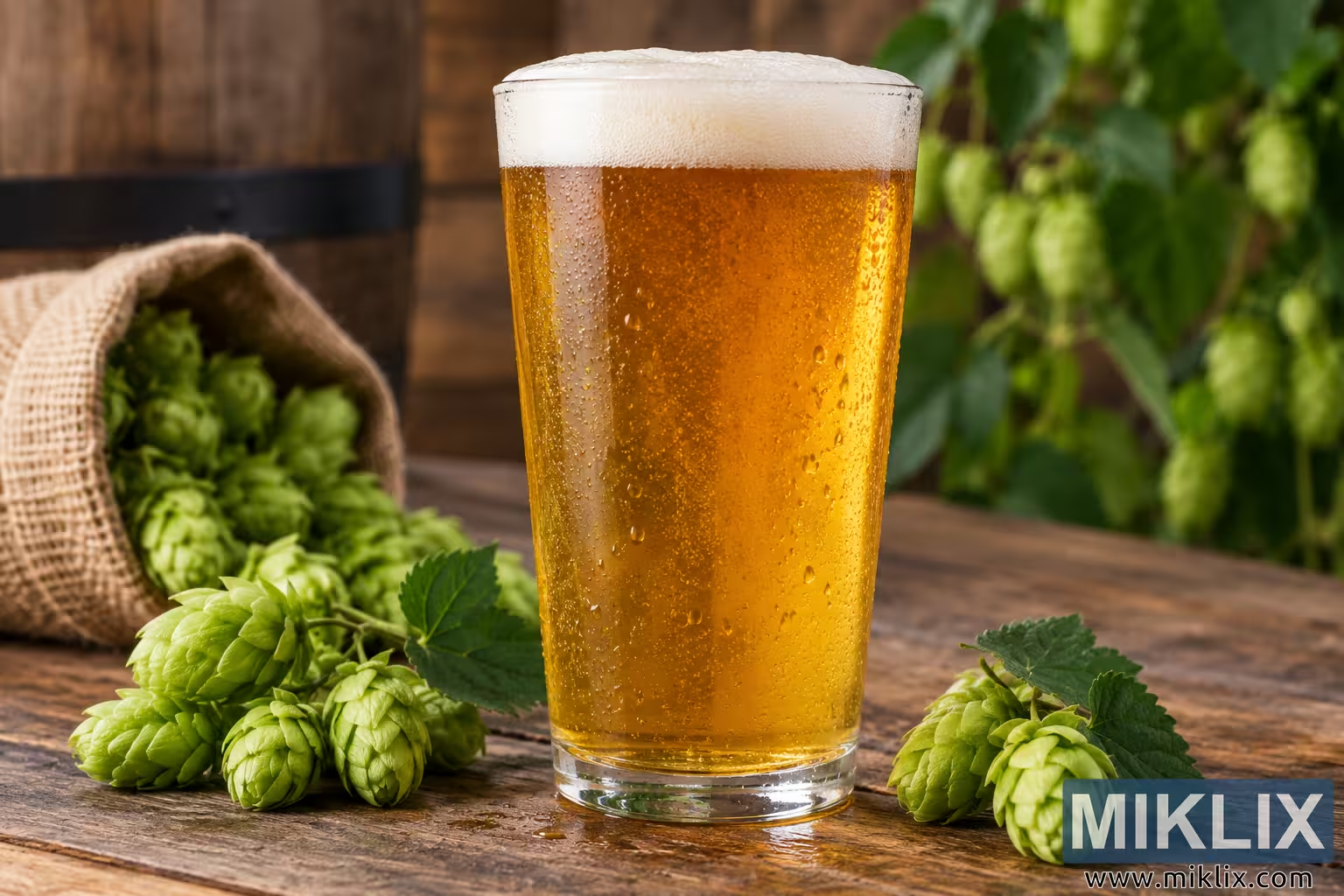
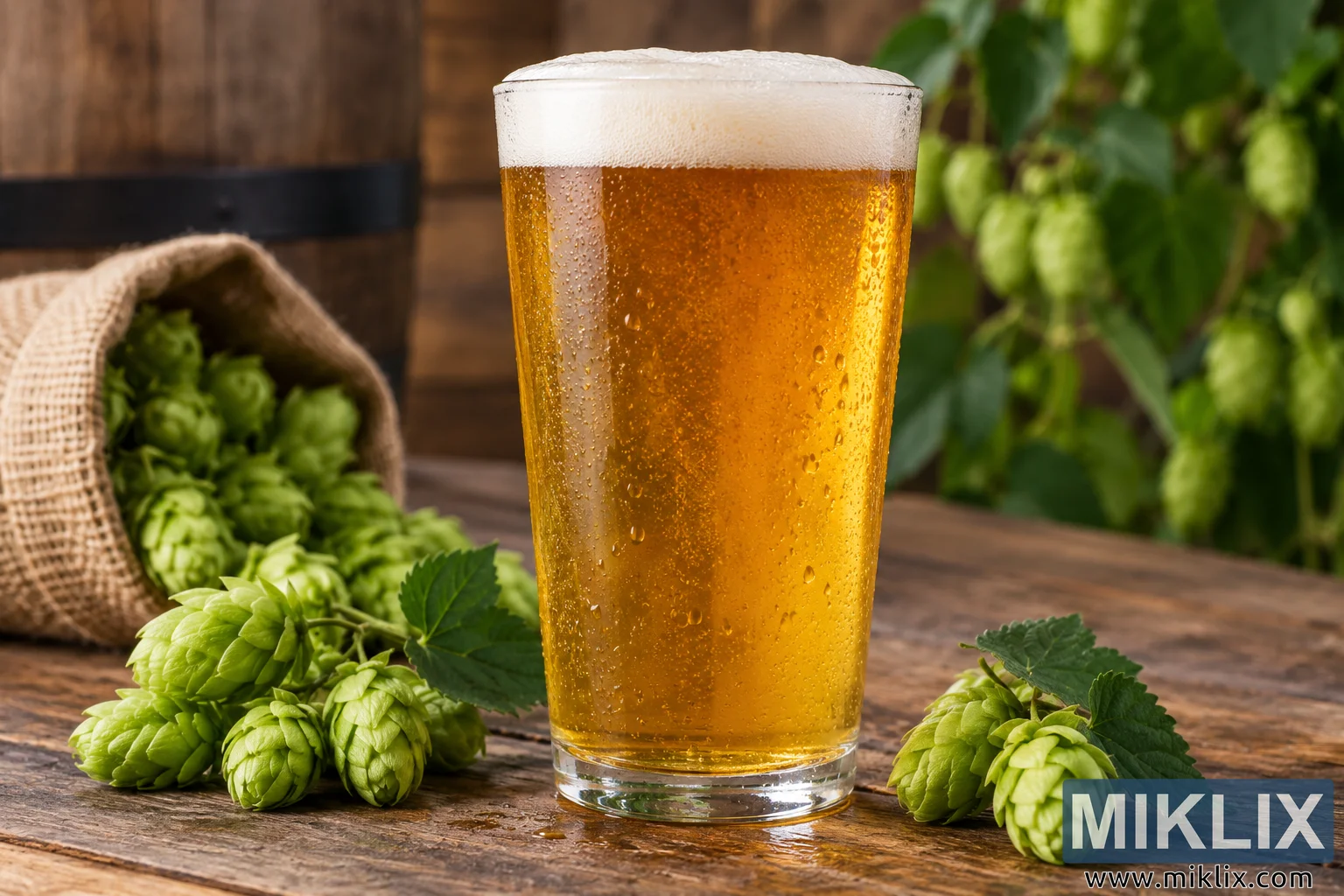
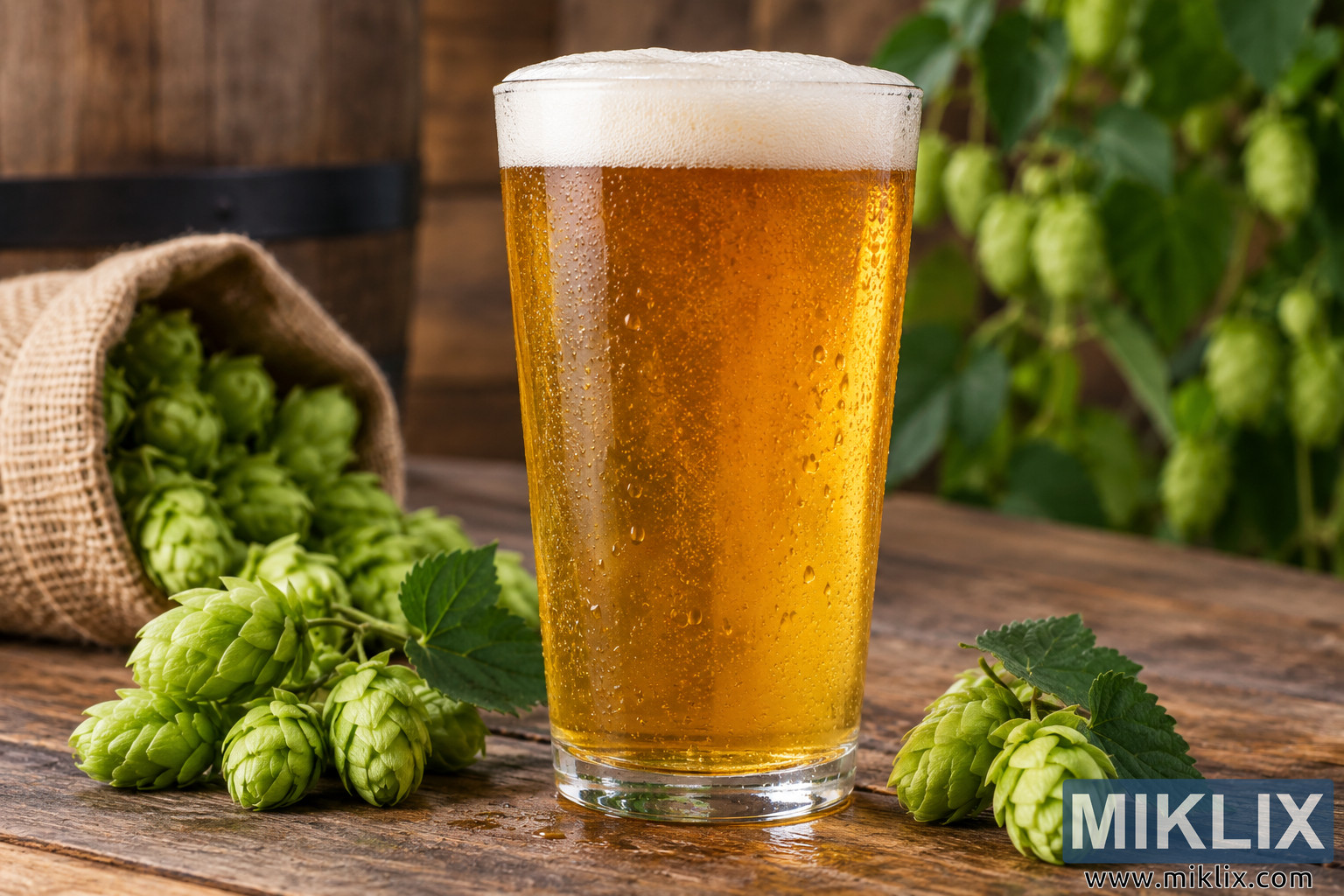
A photorealistic landscape-oriented still-life image presents a freshly poured pale ale in a clear pint glass, surrounded by green hop cones and rustic brewing elements. The pint glass stands prominently in the center of the composition and is the unmistakable focal point. It is filled almost to the rim with a clear, luminous golden-amber beer whose warm color ranges from deeper honey and amber tones in the shaded areas to bright gold where the light passes through the liquid. A generous, creamy white head of foam rests on top of the beer. The foam forms a thick, slightly uneven layer with a softly textured surface and many tiny bubbles, suggesting that the beer has only recently been poured. The upper edge of the glass is visible immediately beneath the foam, giving the pint a natural, freshly served appearance. Numerous small droplets of condensation cover the outside of the glass. These droplets vary in size and catch the light individually, reinforcing the impression that the beer is cold and refreshing. Inside the beer, very fine bubbles are visible throughout the liquid, adding subtle visual texture and conveying carbonation. The glass itself is a simple, unbranded pint glass with straight-to-gently-tapered sides and a substantial transparent base. There are no logos, labels, trademarks, lettering, or other brand identifiers anywhere on the glass or elsewhere in the scene. The base catches reflections from the wooden surface and from the golden beer above it, creating bright highlights and a convincing sense of transparent glass. Around the pint are several clusters of fresh green hop cones. In the lower-left foreground, a particularly prominent group of hops lies directly on the wooden tabletop. The cones are richly detailed, with overlapping pale-to-medium green bracts forming their characteristic compact, layered shapes. Darker green hop leaves and short stems are mixed among the cones, providing additional variation in shape and tone. On the lower-right side of the glass, another smaller cluster of hop cones rests on the table. These hops help visually frame the beer while leaving the pint unobstructed. Their crisp detail contrasts with the softer, more out-of-focus vegetation farther into the background. On the left side of the scene, behind the foreground hops, a coarse burlap or hessian sack lies tipped onto its side. Its open mouth faces diagonally toward the center of the image, and numerous green hop cones appear to spill naturally from the sack onto the tabletop. The rough woven texture of the sack is clearly visible and provides an earthy, agricultural contrast to the smooth glass and sparkling beer. Behind this arrangement is part of a large wooden barrel. The barrel is softly blurred because of the shallow depth of field, but its vertical wooden staves and a dark horizontal metal band remain recognizable. The barrel contributes to the traditional brewery and cellar atmosphere without distracting from the central pint. The background on the right is filled with lush hop vines. Broad green leaves and multiple hanging hop cones can be seen among the foliage. These background plants are deliberately rendered with softer focus than the glass and foreground hops, creating a convincing sense of depth while visually connecting the finished beer with the hop plant from which one of its defining ingredients comes. The shallow depth of field produces a gentle photographic blur behind the main subject, allowing the beer, condensation, foam, and nearest hop cones to remain exceptionally sharp. The entire arrangement sits on a rustic wooden table made from broad, weathered boards. The surface contains visible grain, small imperfections, darker seams, and variations in warm brown color. Near the base of the glass, the wood appears slightly damp, with small wet patches and subtle reflections that could have resulted from condensation running down the cold pint. These details strengthen the natural, tactile quality of the still life. Lighting is warm and directional, resembling soft natural sunlight entering a brewery, farmhouse, or rustic taproom. It illuminates the beer especially strongly from the right and slightly behind, causing the liquid to glow with saturated golden tones. Bright highlights appear along the right side of the glass, while gentler shadows shape the left side and the surrounding hops. The illumination also reveals the translucency of individual hop bracts and produces small sparkling highlights in the condensation droplets. Despite the warm surroundings, the cool moisture on the pint gives the central subject a distinctly refreshing appearance. The color palette is dominated by golden amber, fresh botanical green, creamy white, burlap beige, and warm natural brown. The vivid green hops provide a complementary contrast to the glowing gold of the ale, while the subdued wood and sack textures create a neutral rustic setting. Compositionally, the pint is positioned almost exactly at the center and occupies much of the vertical height of the frame. The surrounding ingredients and brewing props are arranged asymmetrically but remain visually balanced: the larger sack and spilled hops add weight to the left side, while the smaller foreground hop cluster and abundant hop vines balance the right. The barrel in the background provides a broad, understated shape behind the left portion of the scene. The photograph has the polished appearance of professional beverage and food photography while retaining a natural, handcrafted atmosphere. Fine details such as the beads of water, tiny carbonation bubbles, layered hop cones, woven burlap fibers, wood grain, and delicate foam texture make the scene feel tangible and realistic. The image communicates the character of a hop-focused pale ale through visual cues rather than text or branding. The abundance of fresh hops suggests an aromatic beer in which hop character is important, while the bright golden clarity and persistent white foam identify the beverage visually as a pale, refreshing ale. The scene does not attempt to depict a specific commercial product or brewery. Instead, it presents a generic, brand-free interpretation of pale ale made with hops, emphasizing freshness, natural ingredients, brewing tradition, and the sensory appeal of a cold pint. The landscape composition provides generous environmental context around the central drink, allowing the viewer to see both the finished beer and the hop cones and vines associated with its production. Overall, the image is inviting, rustic, detailed, and warmly illuminated, combining the visual freshness of green hops with the rich golden glow of a chilled pale ale.