
影像: Laboratory Analysis of Hop Alpha Acids Using Chromatographic Equipment
已發佈:
最後更新: 2026年9月15日 下午5:17:43 [UTC]
Scientific laboratory analysis of hop alpha acids with a researcher examining hop extract beside chromatography equipment, hop samples, and analytical data.
Laboratory Analysis of Hop Alpha Acids Using Chromatographic Equipment
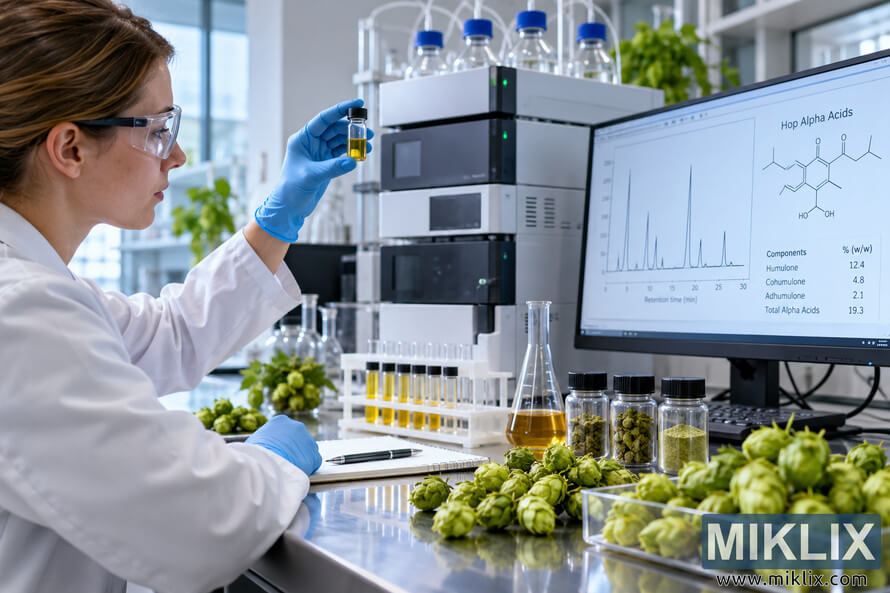
此圖片的可用版本
以下可供下載的圖片檔案壓縮程度較低,解析度也較高 - 因此品質也較高 - 相較於本網站文章和網頁中內嵌的圖片,這些圖片的檔案大小經過優化,以減少頻寬消耗。
一般尺寸 (1,536 x 1,024)
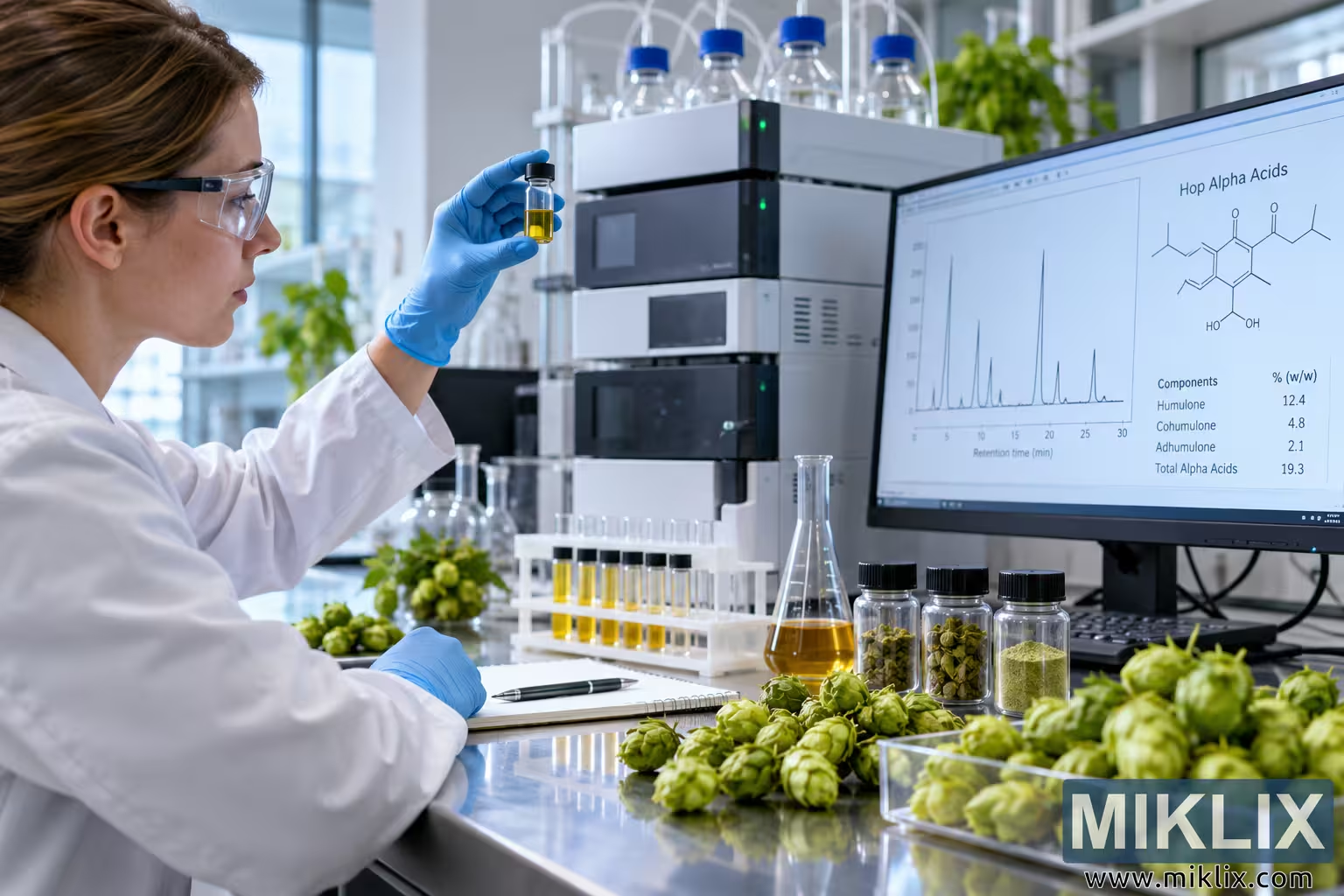
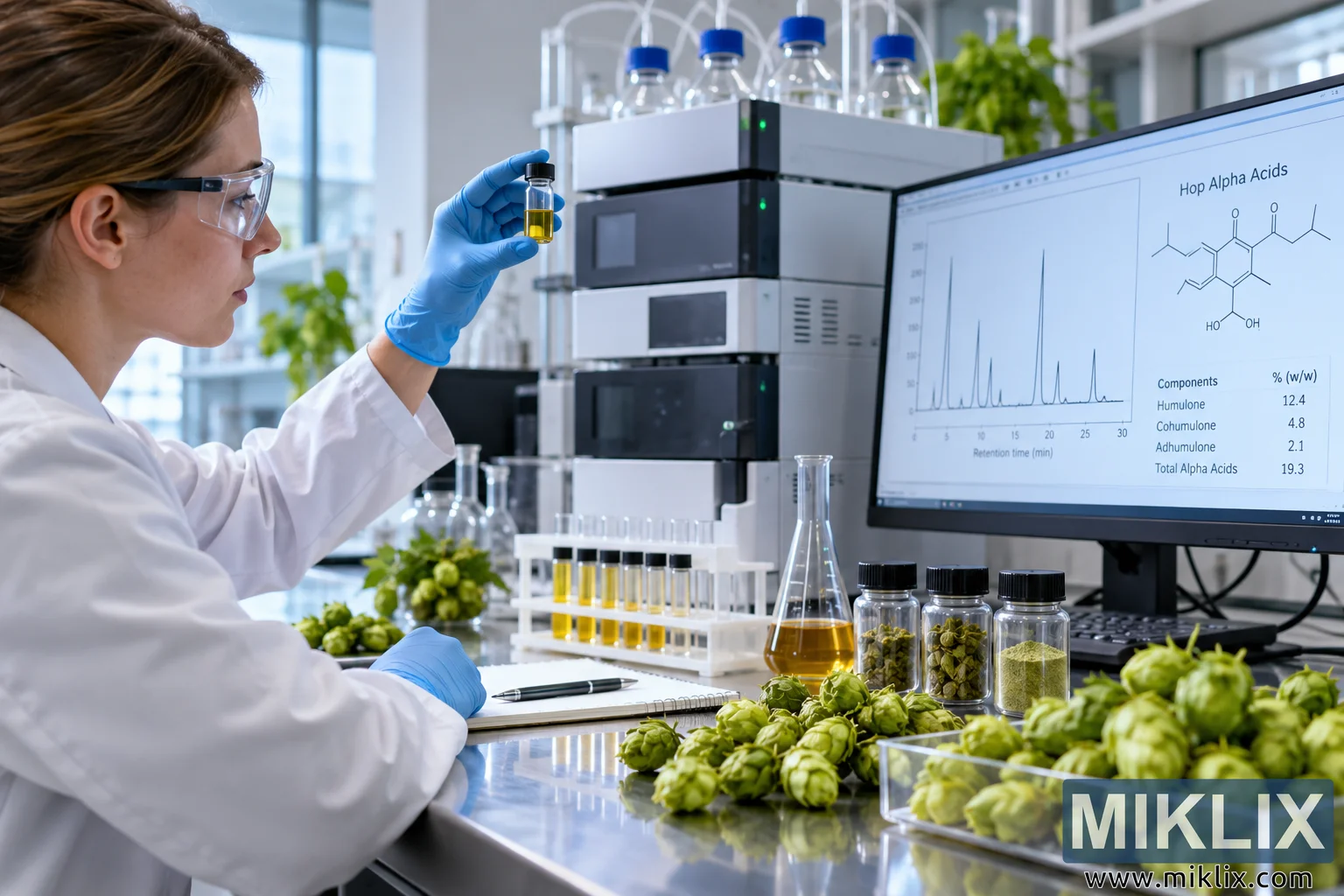
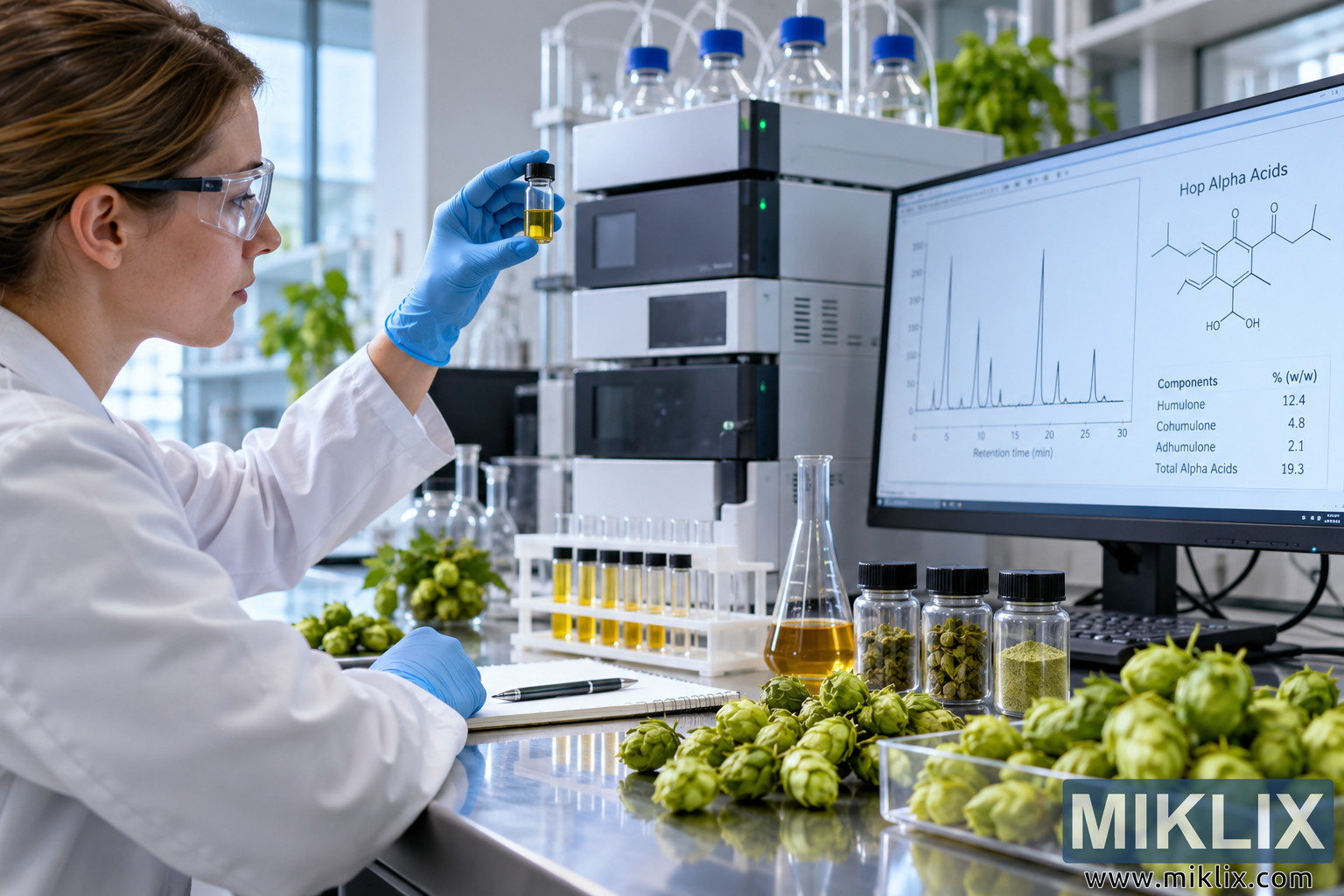
大尺寸 (3,072 x 2,048)
非常大的尺寸 (4,608 x 3,072)
超大尺寸 (6,144 x 4,096)
超大尺寸 (1,048,576 x 699,051)
- 仍在上傳中... ;-)
圖片說明
The image presents a crisp, photorealistic laboratory scene focused on the scientific analysis of alpha acids in hops. The composition is arranged in a wide landscape format and depicts a modern analytical chemistry laboratory with bright, controlled lighting, stainless-steel work surfaces, glassware, sample containers, and sophisticated analytical instrumentation. On the left side of the image, a laboratory scientist is seated or positioned beside the workbench. She wears a clean white laboratory coat, transparent protective safety glasses, and blue disposable laboratory gloves. Her brown hair is pulled back neatly, keeping it away from the working area. She is shown in profile and appears highly focused on the sample she is examining. With one gloved hand raised approximately to eye level, she holds a small transparent sample vial containing a clear golden-yellow liquid. Her gaze is directed toward the vial, suggesting that she is visually inspecting the prepared hop extract or analytical sample before or after instrumental measurement.
The laboratory bench contains numerous objects associated with chemical sample preparation and analysis. Directly in front of the scientist is a white test-tube rack holding a row of narrow transparent tubes. Several of these tubes contain varying amounts of yellow or amber-colored liquid, visually connecting them with the sample being held by the scientist. Nearby is a clear laboratory flask containing a larger volume of amber-golden solution. A notebook lies open on the reflective work surface, accompanied by a pen, suggesting that experimental observations, sample identifiers, or analytical results are being documented as part of the laboratory workflow. The polished metal surface of the bench reflects portions of the equipment, glassware, samples, and surrounding light, contributing to the clean and technically controlled appearance of the environment.
Fresh green hop cones are prominently incorporated into the foreground and middle ground, clearly establishing the agricultural material being analyzed. A substantial group of intact hop cones extends across the lower portion of the image, with their characteristic layered, leafy structure and pale-to-medium green coloration clearly visible. Additional hops are arranged near the test-tube rack and laboratory glassware. Several transparent sample jars with dark screw caps stand near the center-right portion of the bench. These containers hold different forms of hop material, including whole or fragmented dried hop cones and a finely ground greenish powder. Together, these materials visually represent different stages of sample handling, from raw botanical material through processed laboratory samples and liquid extracts.
Behind the workbench stands a large modular analytical instrument resembling a high-performance liquid chromatography system. The equipment consists of several stacked rectangular modules with neutral gray and dark surfaces, indicator lights, tubing, and solvent bottles positioned at the top. Multiple clear bottles with blue caps are connected by narrow laboratory tubing, suggesting a solvent-delivery system typical of chromatographic analysis. The instrument has no visible commercial branding or manufacturer logos. Its placement directly behind the prepared samples reinforces the impression that chromatography is being used to separate, identify, and quantify the alpha-acid compounds extracted from the hops.
On the right side of the image, a large computer monitor displays analytical results associated with hop alpha acids. The screen includes a chromatogram with several distinct peaks distributed across a retention-time axis, representing compounds separated during instrumental analysis. One particularly prominent peak rises near the central region of the graph, while several smaller peaks appear before and after it. Alongside the chromatographic data is a schematic chemical structure representing an alpha-acid-related molecule. The screen also contains a clearly organized analytical summary referring to hop alpha acids and listing components such as humulone, cohumulone, and adhumulone, along with percentage values and a total alpha-acid result. These visual elements communicate the quantitative nature of the analysis and indicate that the laboratory procedure is intended to characterize the chemical composition and alpha-acid concentration of the hop sample.
The background further reinforces the modern scientific setting. Bright windows admit soft daylight, while white and gray laboratory surfaces create a clean, hygienic atmosphere. Additional glassware and laboratory items are visible farther back, but they remain slightly less prominent than the scientist, samples, analytical instrument, and computer display. Green plants and hop-related botanical material introduce natural color into an otherwise cool and highly controlled technical environment. The combination of botanical specimens and precision laboratory technology creates a clear visual relationship between agricultural raw materials and chemical quality analysis.
Overall, the image illustrates a professional laboratory workflow for determining hop alpha-acid composition. The scientist's careful inspection of the golden sample, the prepared extracts in test tubes, the raw and processed hop materials, the chromatography-style analytical equipment, and the chromatogram displayed on the computer collectively communicate a process of extraction, separation, identification, and quantitative measurement. The scene is particularly relevant to hop chemistry, brewing science, agricultural quality control, food and beverage research, and analytical chemistry. Alpha acids are visually presented as the central subject through both the physical hop samples and the analytical data shown on the monitor. The photograph has a polished scientific and editorial quality, with sharp foreground details, realistic laboratory textures, natural reflections, and a balanced composition that gives approximately equal visual importance to the human researcher, the biological samples, and the analytical technology. No recognizable commercial brands or logos are visible, keeping the scene generic and suitable for illustrating laboratory research, hop quality assessment, brewing-related chemical analysis, or scientific investigation of hop constituents.