
影像: Laboratory Alpha Acid Analysis of Bor Hops
已發佈:
最後更新: 2026年9月17日 下午4:26:42 [UTC]
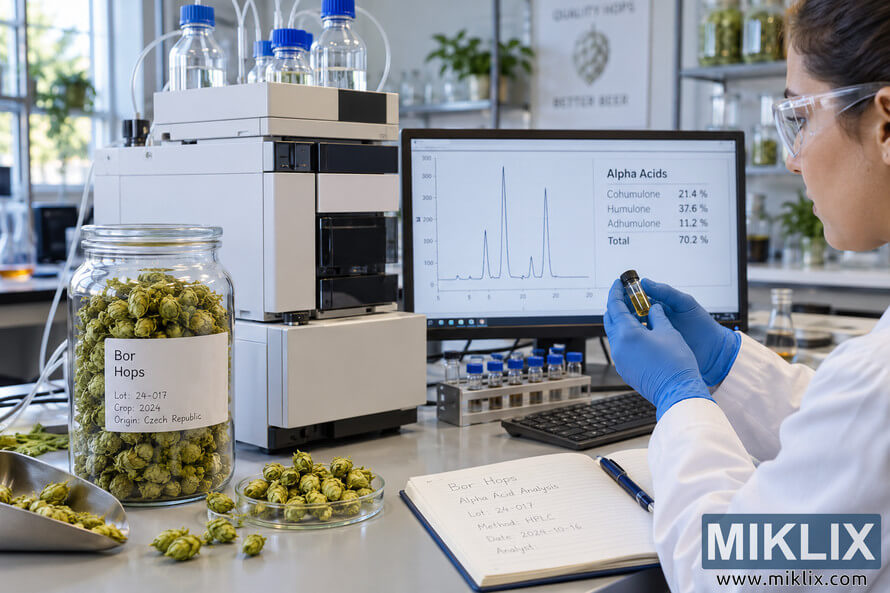
Laboratory analysis of Bor hops showing hop samples, chromatography equipment, prepared vials, and alpha acid measurement results in a professional brewing science lab.
Laboratory Alpha Acid Analysis of Bor Hops
此圖片的可用版本
以下可供下載的圖片檔案壓縮程度較低,解析度也較高 - 因此品質也較高 - 相較於本網站文章和網頁中內嵌的圖片,這些圖片的檔案大小經過優化,以減少頻寬消耗。
一般尺寸 (1,536 x 1,024)
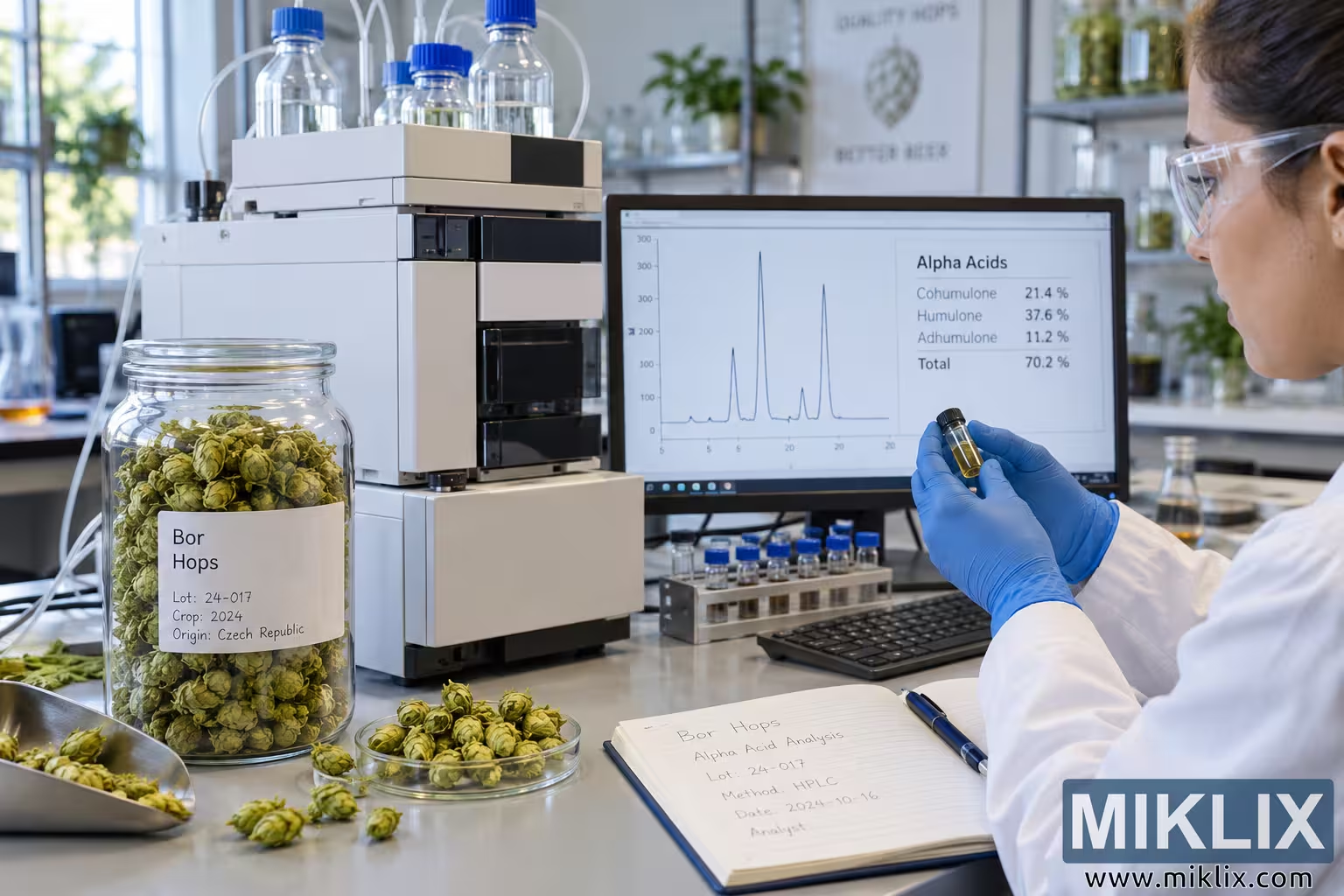
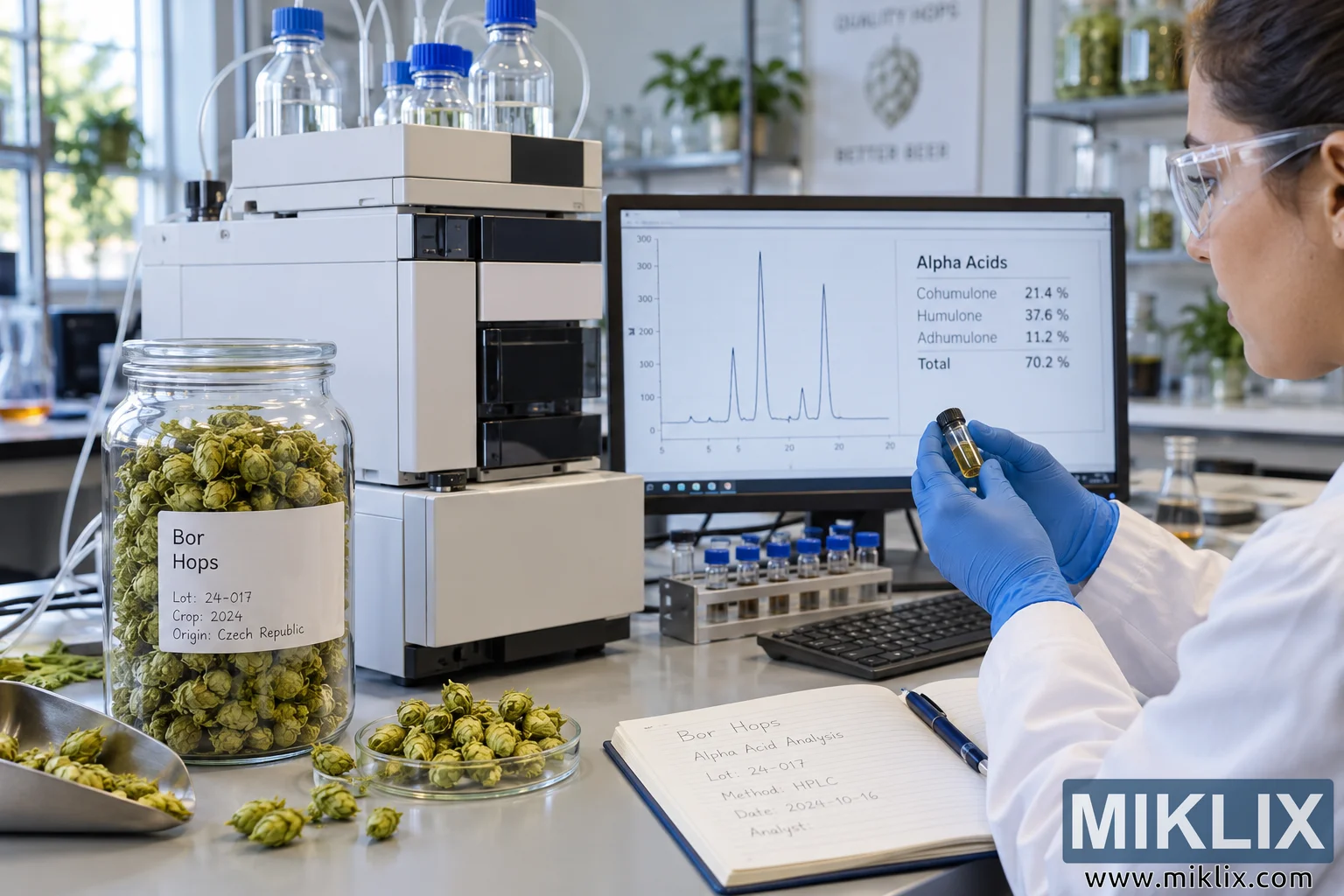
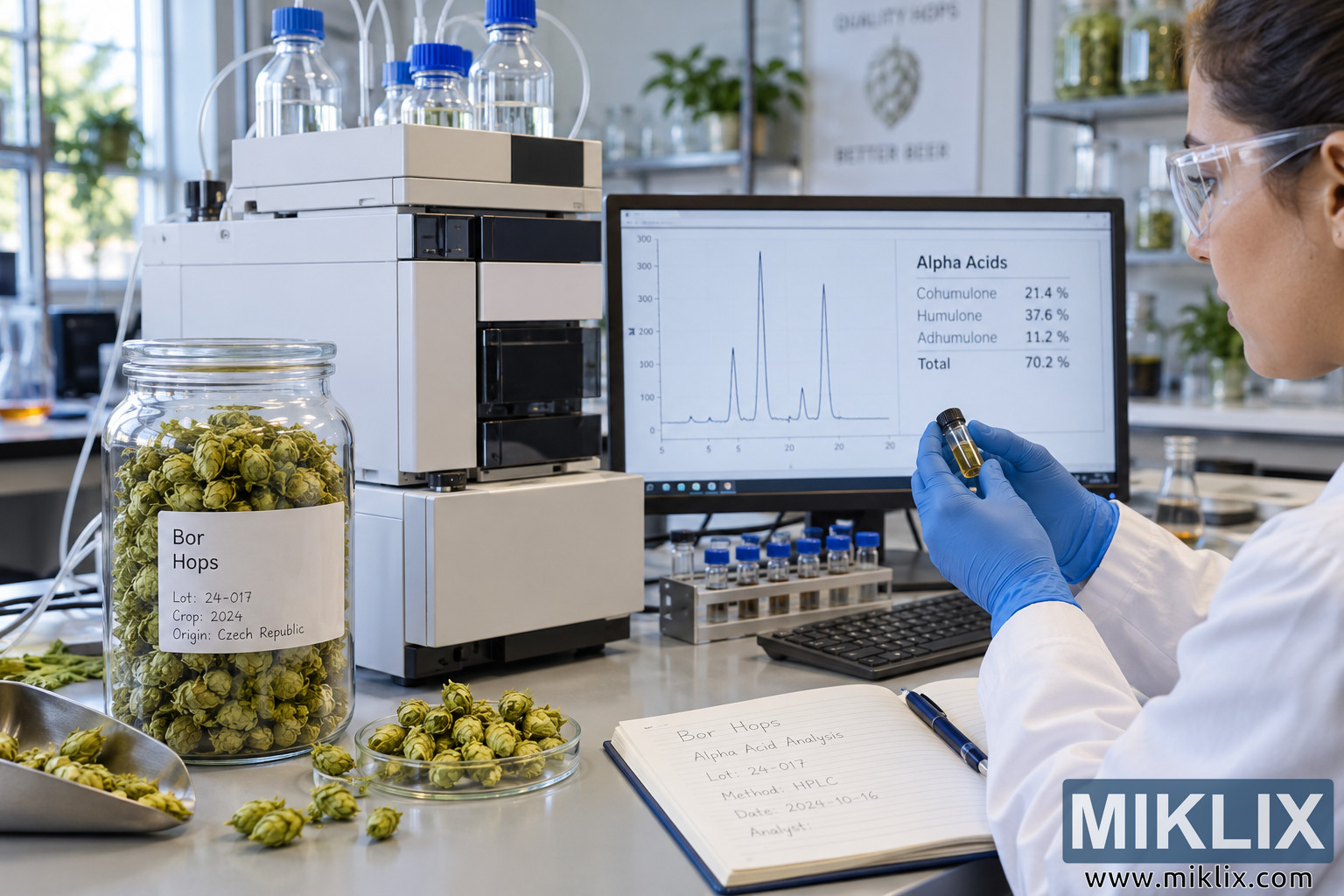
大尺寸 (3,072 x 2,048)
非常大的尺寸 (4,608 x 3,072)
超大尺寸 (6,144 x 4,096)
超大尺寸 (1,048,576 x 699,051)
- 仍在上傳中... ;-)
圖片說明
A high-resolution landscape photograph depicts a clean, bright laboratory workspace dedicated to the analytical testing of Bor hops, with a particular emphasis on measuring alpha acids. The scene combines recognizable hop material, modern laboratory instrumentation, sample preparation equipment, analytical results, and a laboratory researcher into a coherent technical setting. Natural daylight enters through large windows in the background and blends with the laboratory lighting, producing a crisp, professional appearance with neutral surfaces and clearly visible details throughout the foreground.
On the left side of the image, a large transparent glass storage jar is filled with dried green hop cones. A plain white laboratory label identifies the material as Bor hops and includes additional batch-style information, such as a lot number, crop year, and Czech Republic as the origin. The label is deliberately generic and does not display a commercial brand or company logo. The hop cones inside the jar have a dry, textured appearance, with overlapping pale and medium green bracts that make the botanical material immediately recognizable. Additional loose hop cones are arranged on the stainless-steel work surface in front of the jar. Some are collected in a shallow glass dish, while others are scattered naturally across the bench. At the extreme lower-left corner, part of a metal laboratory scoop containing more hop material is visible, reinforcing the impression that a sample has recently been weighed, sorted, or prepared for analysis.
Immediately behind the hop jar stands a substantial piece of analytical laboratory equipment resembling a high-performance liquid chromatography system. The instrument consists of stacked rectangular modules in a neutral white and dark finish, with transparent solvent bottles positioned on top. Several bottles have blue screw caps and are connected to narrow laboratory tubing that leads into the analytical system. The equipment is intentionally unbranded, with no manufacturer name, product logo, or recognizable commercial identity visible. Its modular configuration, solvent reservoirs, tubing, and sample-handling components communicate the type of precision instrumentation commonly associated with chromatographic analysis.
At the center-right of the photograph, a large computer monitor presents analytical data associated with alpha acid measurement. The screen displays a chromatogram with a horizontal baseline and several distinct peaks of different heights, visually suggesting the separation and quantification of chemical compounds in the hop sample. Beside the graph is a clearly organized results area headed with the words Alpha Acids. Individual alpha-acid-related components are listed with numerical percentage values, followed by a total. This display provides an immediate visual connection between the physical Bor hop sample on the bench and the laboratory measurement being performed. The interface is generic rather than modeled on a specific commercial software package, and no actual software or equipment brand is shown.
In front of the monitor is a metal sample rack holding a row of small transparent laboratory vials with blue caps. The vials are arranged neatly and appear ready for, or recently removed from, instrumental analysis. A standard black computer keyboard rests on the workbench below the monitor. These details contribute to the impression of an active analytical workflow in which prepared hop extracts are placed into vials, introduced into the chromatographic system, and evaluated using the resulting chemical data.
A laboratory researcher occupies the right side of the composition. The researcher is shown primarily in profile and from the upper torso rather than as a formal portrait, keeping the emphasis on the scientific procedure. The person wears a clean white laboratory coat, transparent protective safety glasses, and blue disposable laboratory gloves. Both gloved hands hold a small sample vial containing a clear amber or golden liquid. The vial is raised toward eye level as though the researcher is visually inspecting the prepared hop extract before or after instrumental measurement. The pose conveys concentration, careful handling, and professional laboratory practice without appearing staged as a commercial advertisement.
An open laboratory notebook lies on the bench in the foreground near the researcher. Handwritten-style notes refer to Bor hops and alpha acid analysis, accompanied by generic analytical information such as a lot reference, method notation, date, and analyst field. A pen rests across the notebook. The notebook adds context to the analytical process by suggesting that sample identity, methods, and results are being documented as part of routine laboratory quality control. As with the equipment and software interface, the documentation avoids real company names and brands.
The background is softly rendered compared with the sharply focused foreground. Shelving contains laboratory bottles, glass containers, and additional hop-related materials, while a small green plant introduces a subtle natural element to the otherwise technical environment. A generic wall graphic related to hops and beer quality is visible but does not contain a commercial trademark. The shallow depth of field keeps attention on the Bor hop sample, chromatographic instrument, analytical monitor, sample vial, and researcher while still establishing the broader laboratory environment.
Overall, the image communicates a scientifically controlled analysis of Bor hops for alpha acid content. The combination of whole hop cones, prepared liquid sample, chromatographic equipment, sample vials, plotted analytical peaks, numerical alpha acid results, protective laboratory clothing, and written documentation illustrates the progression from agricultural raw material to quantitative laboratory measurement. The composition is suitable for illustrating hop chemistry, brewing science, hop quality control, alpha acid determination, laboratory testing, chromatographic analysis, or technical evaluation of brewing ingredients. The landscape framing provides ample environmental context while maintaining a strong visual hierarchy, with the jar of Bor hops and analytical equipment on the left, the measurement results in the center, and the researcher inspecting the sample on the right. No actual commercial brands, manufacturer logos, or identifiable branded products are intentionally depicted.