
Beeld: Scientific Research Laboratory Investigating the Health Benefits of Tarragon Through Clinical Trials
Gepubliseer:
Laas opgedateer: 20 Junie 2026 om 07:52:26 UTC
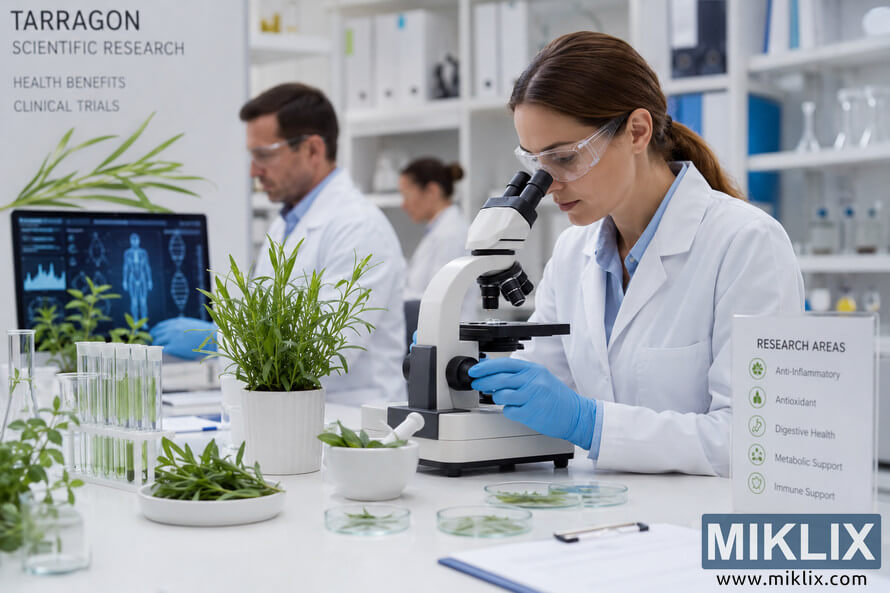
High-resolution image of a modern scientific research laboratory conducting clinical trials on the health benefits of tarragon, featuring scientists analyzing botanical samples with microscopes, laboratory equipment, and digital medical research displays.
Scientific Research Laboratory Investigating the Health Benefits of Tarragon Through Clinical Trials
Beskikbare weergawes van hierdie beeld
Die beeldlêers wat hieronder beskikbaar is om af te laai, is minder saamgepers en het 'n hoër resolusie - en gevolglik hoër gehalte - as die beelde wat in artikels en bladsye op hierdie webwerf ingebed is, wat meer geoptimaliseer is vir lêergrootte om bandwydteverbruik te verminder.
Gewone grootte (1,536 x 1,024)
Groot grootte (3,072 x 2,048)
Baie groot grootte (4,608 x 3,072)
Ekstra groot grootte (6,144 x 4,096)
Komies groot grootte (1,048,576 x 699,051)
- Laai steeds op... ;-)
Beskrywing van die beeld
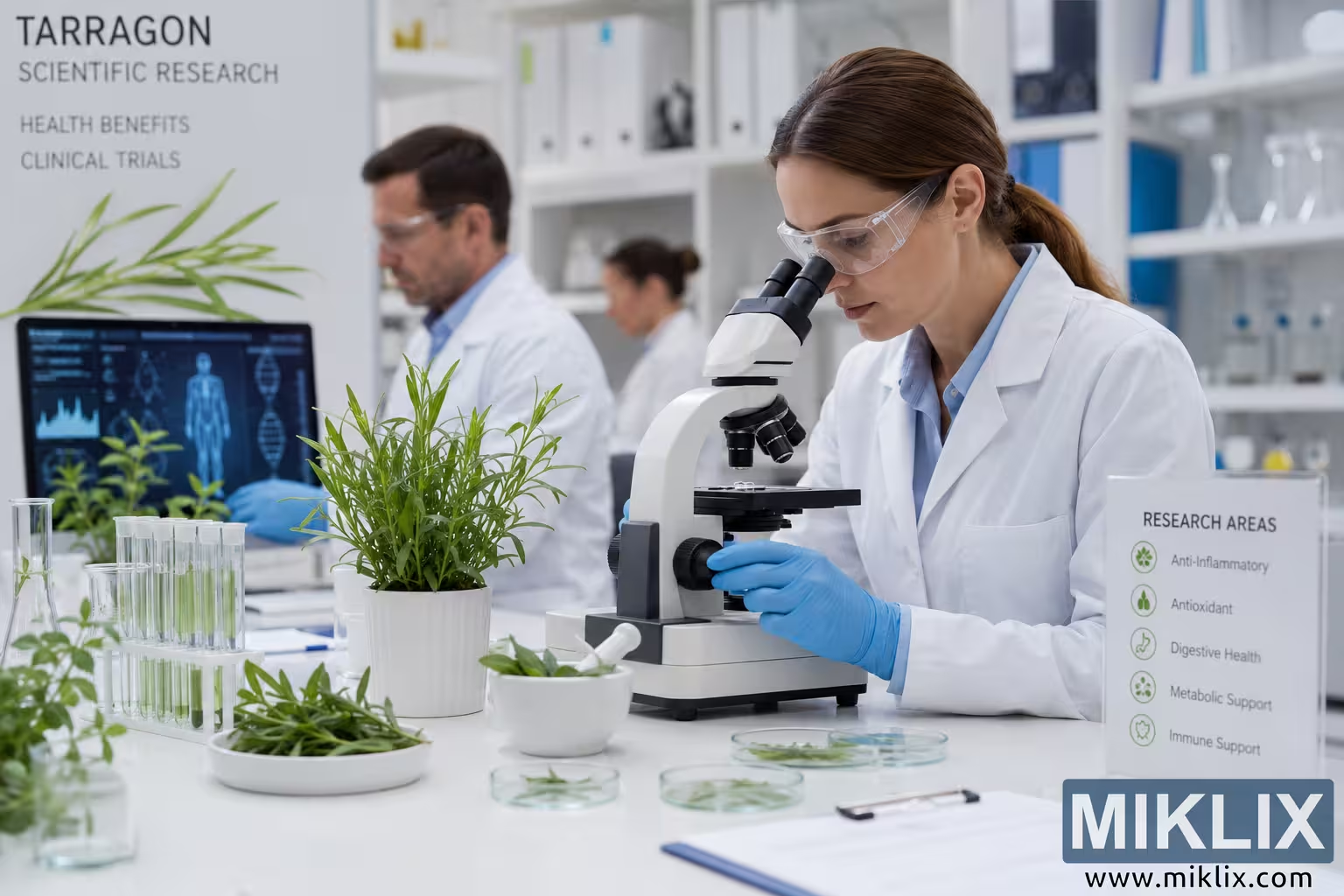
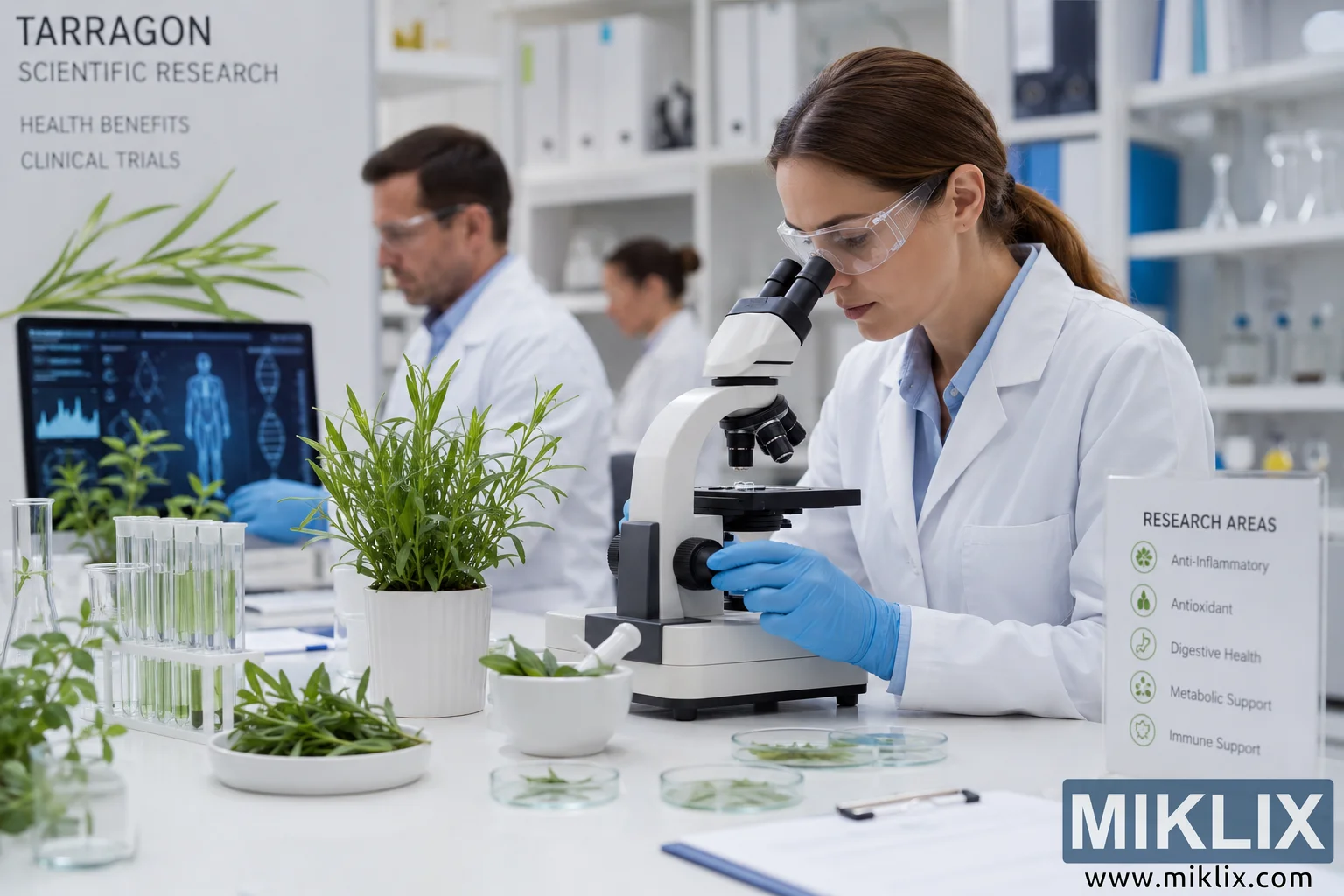
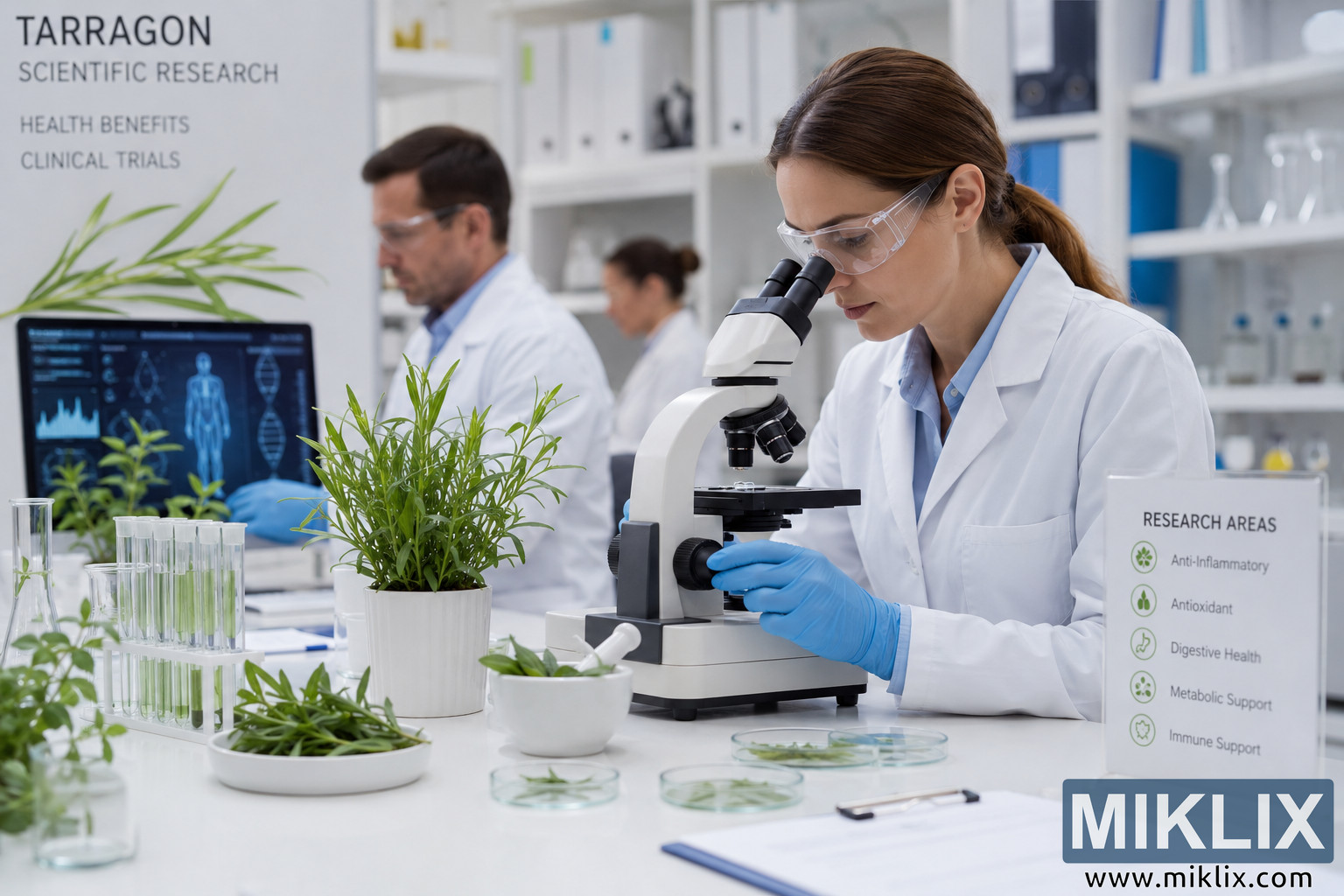
A bright and highly advanced scientific research laboratory is shown in a clean, modern clinical environment dedicated to studying the potential health benefits of tarragon through controlled clinical trials and botanical research. The scene is captured in landscape orientation with exceptional detail and clarity, emphasizing professionalism, innovation, and evidence-based medical science. In the foreground, a focused female scientist wearing a white laboratory coat, transparent protective safety glasses, and blue nitrile gloves carefully adjusts a precision microscope while examining plant-derived samples. Her expression conveys concentration and scientific rigor as she performs detailed laboratory analysis related to herbal health compounds.
The laboratory workspace surrounding her is meticulously organized and filled with scientific equipment associated with pharmacological and nutritional research. Multiple transparent test tubes containing pale green liquid extracts are positioned in laboratory racks beside glass beakers, petri dishes, and sample trays holding fresh tarragon leaves and prepared botanical specimens. A small white ceramic container filled with vibrant green tarragon plants sits prominently on the workstation, visually reinforcing the subject of the research while adding a natural organic element to the otherwise sterile environment.
Several petri dishes on the counter contain sliced botanical samples prepared for microscopic evaluation, chemical testing, or biological assays. Additional laboratory instruments and analysis materials are arranged throughout the workstation, including pipettes, notebooks, data collection forms, and scientific containers commonly used in clinical research studies. The overall laboratory aesthetic is highly realistic, with smooth white surfaces, polished equipment, and bright overhead lighting that reflects a hygienic and technologically advanced research setting.
In the middle ground, another researcher wearing laboratory attire works at a digital workstation equipped with advanced medical analysis software displayed on a large monitor. The monitor presents scientific visualizations, including anatomical imagery, biological metrics, and data graphics associated with clinical trial analysis and health outcome monitoring. The inclusion of these digital medical research elements reinforces the scientific and evidence-driven nature of the investigation into the herb’s potential therapeutic properties.
Additional laboratory staff members are visible in the softly blurred background, contributing to the impression of an active multidisciplinary research team engaged in collaborative health science studies. White shelving units filled with organized binders, laboratory containers, and scientific glassware line the background walls, creating depth while emphasizing the professional research environment. The shallow depth of field draws primary attention toward the lead scientist and the botanical analysis taking place at the central workstation.
A research information board positioned within the scene highlights several study focus areas associated with the investigation, including anti-inflammatory properties, antioxidant effects, digestive health support, metabolic support, and immune system research. These visual references suggest that the laboratory is conducting comprehensive scientific evaluations to determine whether tarragon may provide measurable wellness benefits under controlled clinical conditions.
The lighting throughout the image is soft, balanced, and natural-looking, with cool white tones that enhance the clinical atmosphere without appearing cold or artificial. Reflections on the microscope, glass containers, and polished surfaces contribute to the realism and high production quality of the image. The color palette combines clean whites, subtle grays, medical blues, and fresh botanical greens, visually balancing scientific precision with natural plant-based research.
Overall, the image conveys the intersection of modern medical science and botanical health research. It presents a realistic depiction of researchers conducting rigorous scientific studies on herbal compounds in a professional laboratory setting, emphasizing themes of innovation, healthcare advancement, nutrition science, and clinical validation. The composition communicates trust, expertise, and scientific integrity while showcasing the detailed processes involved in investigating the health-related potential of tarragon through laboratory experimentation and clinical research methodologies.
Die beeld hou verband met: A Guide to the Health Benefits of Tarragon