
Hops in Beer Brewing: Ahtanum
Published: March 4, 2026 at 8:32:30 PM UTC
Ahtanum, an American aroma hop, was introduced by Yakima Chief Ranches in 1997. It's mainly used for late-boil and dry-hop additions. This adds bright citrus, gentle pine, and light floral notes, enhancing the beer without heavy bitterness.
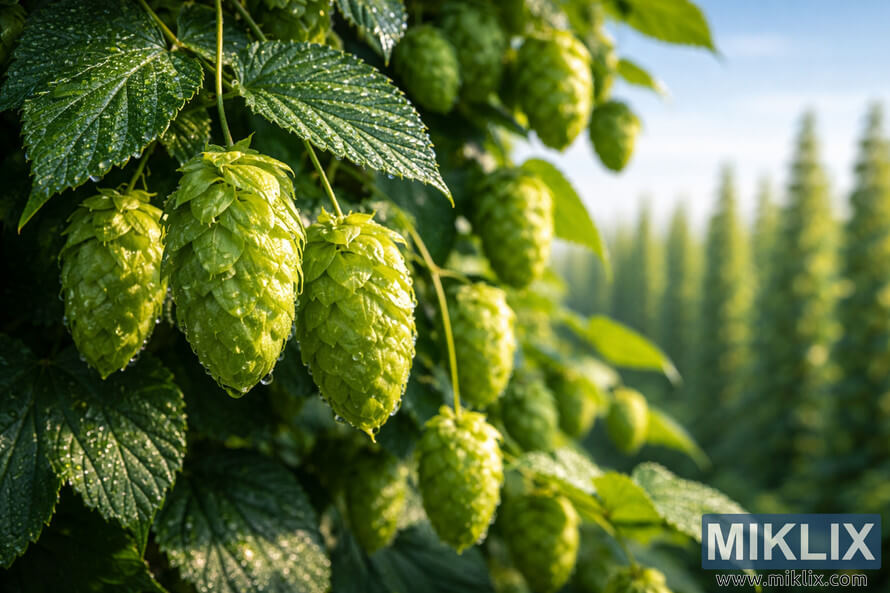
Click or tap the image for more information and higher resolutions.
Named after Ahtanum Creek near Yakima, Washington, Ahtanum embodies Pacific Northwest terroir. It reflects the region's long history in hops. It carries the international code AHT and cultivar ID YCR 1 CV, making it easily identifiable.
The availability of Ahtanum can vary by harvest year and vendor. It is sold through distributors and online retailers. As an Ahtanum aroma hop, it's a dependable choice for pale ales, American IPAs, and other styles needing citrus lift and aromatic clarity.
Key Takeaways
- Ahtanum was developed and released by Yakima Chief Ranches in 1997.
- Used primarily as an aroma hop for late additions and dry hopping.
- Noted for citrusy, floral, and piney character with low bitterness.
- Named after Ahtanum Creek, reflecting Yakima Valley origins.
- Readily available through multiple suppliers, with variations by harvest year.
Overview of Ahtanum Hops
Ahtanum is a top choice among American aroma hops, celebrated for its floral and citrus flavors. It's a favorite among craft brewers. This overview delves into its origins and market position, offering insights for growers and buyers.
Origin and breeder
In 1997, Yakima Chief Ranches introduced Ahtanum, with cultivar ID YCR 1 CV and international code AHT. It's believed to be a cross involving Brewer’s Gold, Fuggle, East Kent Golding, and Bavarian aroma hops. However, the exact lineage remains unclear.
The name Ahtanum is rooted in Yakima Valley history, near Ahtanum Creek and the Carpenter homestead. This connection enriches its history and explains its popularity among Pacific Northwest growers.
Place in the hop market
Ahtanum is highly valued by craft and small commercial brewers for its aroma. It never gained traction with large industrial breweries. This limited appeal has kept its planted acreage relatively small compared to other varieties.
- In 2019, Ahtanum ranked 26th in U.S. hop production by acreage and tonnage.
- Between 2014–2019, it saw the second-highest increase in production yield among established varieties.
- Typical harvest timing for U.S. aroma hops, including Ahtanum, is mid-to-late August.
Yakima Chief Ranches owns the trademark and distribution rights. Ahtanum is available in pellets, lupulin, or Cryo formats. This availability and variety position Ahtanum as a reliable choice for brewers seeking a high-quality American aroma hop.
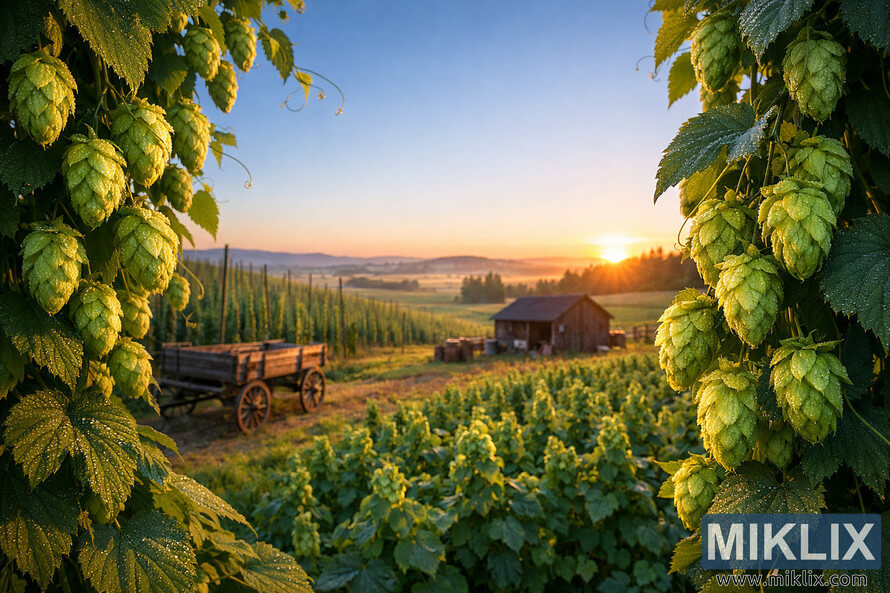
Click or tap the image for more information and higher resolutions.
Aroma and Flavor Profile of Ahtanum Hops
Ahtanum hops present a clear, distinct aromatic profile. Its scent is predominantly citrus, with a soft floral undertone. This combination offers a bright, uplifting quality that enhances various beer styles.
- Citrus: pronounced lemon and grapefruit highlights that add snap to the nose.
- Floral: a marked floral presence that reads as garden-like and aromatic.
- Pine and resin: gentle piney and resinous edges that give backbone to the scent.
The secondary and supporting notes subtly enhance the overall profile.
- Earth and cedar show up on the mid-palate and add depth.
- Herbal and grassy hints create an organic, fresh quality.
- Minor spice, lychee and blackcurrant flickers can appear in certain beers and blends.
The aroma's presence in finished beer is influenced by timing and technique.
- Late-boil and whirlpool additions lock in the volatile oils that define the Ahtanum flavor profile.
- Dry hopping emphasizes the citrus grapefruit geranium facets and keeps the floral top notes vivid.
- Used sparingly in lagers, Ahtanum offers a clean floral pine earth lift without overwhelming delicate malt characters.
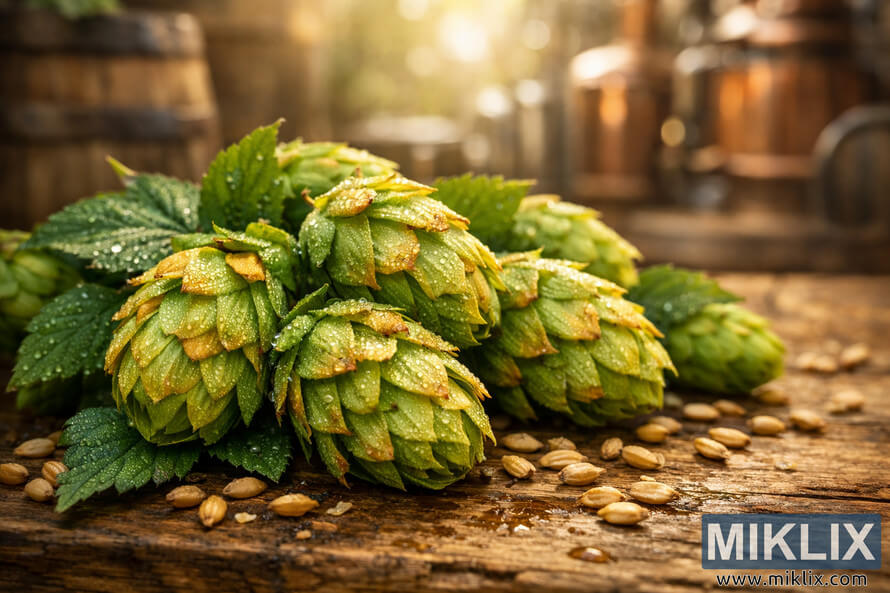
Click or tap the image for more information and higher resolutions.
Brewing Values and Chemical Composition
Ahtanum offers a clear chemical profile, aiding brewers in planning bittering and aroma work. The typical alpha and beta acid ranges, oil totals, and storage behavior guide the dosage, timing, and storage of the hops. This ensures the best aromatic output.
Alpha and beta acids
Ahtanum's alpha acids fall in the low-to-moderate range, roughly 3.5–6.5 percent, with averages near 5 percent. Some suppliers report slightly higher ranges, near 5.7–6.3 percent. Beta acids range about 4–6.5 percent, averaging near 5.3 percent. This places Ahtanum primarily as an aroma hop, not a primary bittering hop.
Co-humulone and bitterness character
Cohumulone in Ahtanum typically makes up 30–35 percent of the alpha acids, averaging near 32.5 percent. This often results in a smoother, less harsh bitterness. Brewers seeking a gentle backbone will find this balance valuable in recipe design.
Total oils and oil breakdown
Ahtanum's total oil content ranges from roughly 0.5 to 1.7 mL per 100 g, averaging near 1.1 mL/100 g. Myrcene dominates at about 45–55 percent, contributing resinous, citrus, and fruity notes. Humulene averages 15–22 percent, adding woody and spicy tones. Caryophyllene, at about 9–12 percent, contributes peppery, herbal character. Farnesene is very low, near 0–1 percent, with trace components like β-pinene, linalool, geraniol, and selinene making up the remainder. Understanding Ahtanum oils and their proportions is crucial for predicting aroma evolution through different stages of brewing.
Hop Storage Index and freshness
Reported HSI Ahtanum values are around 0.70, indicating fast loss of volatile acids and oils at room temperature. For optimal retention, store Ahtanum cold and in an oxygen-limited environment. Proper storage preserves hop character for late additions and dry hopping, maintaining desirable citrus, resinous, and floral notes.
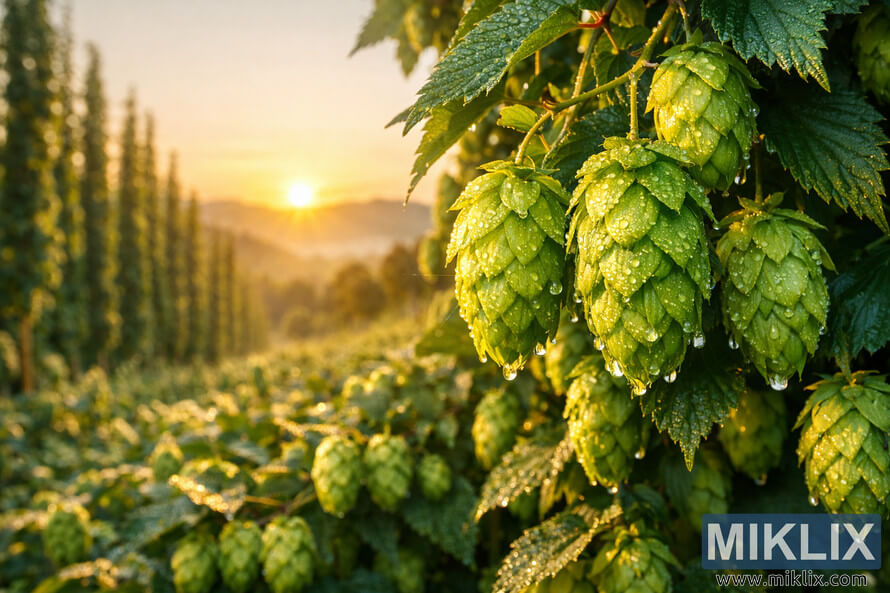
Click or tap the image for more information and higher resolutions.
How and When to Use Ahtanum in the Brew Kettle
Timing is everything when it comes to adding hops to your beer. Ahtanum shines as an aroma hop, not a bittering hop. Even small adjustments in timing or technique can significantly alter the beer's flavor.
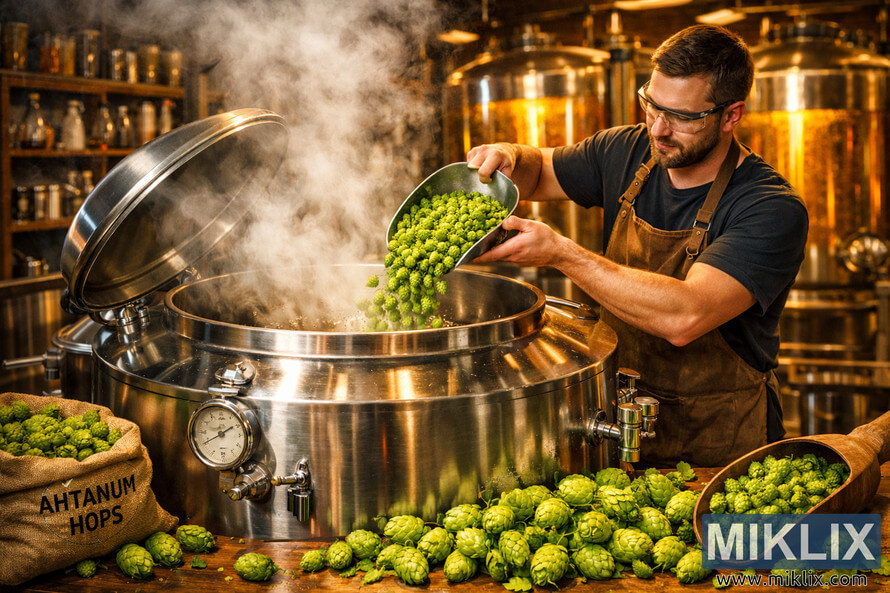
Ahtanum's moderate alpha acids and rich volatile oils are best preserved with short boiling times. For a clean bitterness, use a small early addition. Reserve the majority of Ahtanum for late additions to enhance citrus, floral, and pine notes.
Adding hops late in the boil, at five to ten minutes, or during flameout, helps retain volatile oils. This method ensures hop-derived freshness while adding a gentle bitterness. When planning your Ahtanum additions, aim to minimize exposure to high heat to protect essential oils.
Whirlpool and hop stand techniques
Whirlpool and hop stand methods offer a more pronounced aroma than full-boil additions. Cooling the wort to 160–180°F and holding it for 10–30 minutes extracts oils effectively. This method highlights the beer's citrus and floral notes without harsh tannins.
When using concentrated products like pellets, lupulin powder, or Cryo lupulin, adjust the rates accordingly. These forms are more potent, so reduce the quantities to avoid overpowering the beer. For whirlpool Ahtanum, start with 25–50% less when substituting concentrated forms.
- Use a small bittering charge early if needed.
- Save most of the hops for late-boil additions to protect aroma.
- Employ whirlpool or hop stand at 160–180°F for 10–30+ minutes.
- Cut rates for pellet, lupulin, or Cryo versions to balance potency.
Click or tap the image for more information and higher resolutions.
Dry Hopping with Ahtanum
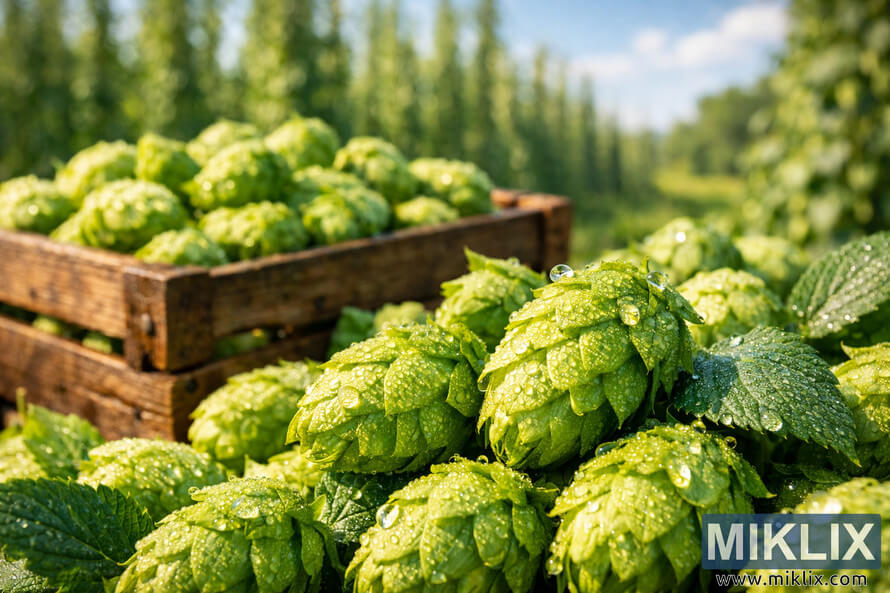
Ahtanum excels as a finishing hop, enhancing citrus and floral notes without bitterness. The timing and duration of Ahtanum's contact will influence the aroma. It's crucial to plan these additions with the beer's desired profile in mind.
There are two primary timing strategies. Adding during active fermentation triggers biotransformation, enhancing fruity esters. Alternatively, adding after fermentation preserves a cleaner, top-note aroma. Both methods are effective for dry hopping Ahtanum.
Contact time for Ahtanum varies based on desired intensity. For beers with a strong hop presence, 3–5 days is a good range. This duration offers a bright, citrus-forward scent. However, longer contact, up to 7–10 days, can add depth but risks introducing grassy or vegetal flavors.
- Active fermentation: enhances tropical and estery lift through biotransformation.
- Post-fermentation: preserves crisp grapefruit, lemon, and floral top notes.
- Extended contact: increases resinous and pine undertones, with higher risk of vegetal notes.
Adjust amounts for concentrated forms. Use roughly half the pellet rate when using lupulin powder or Cryo to avoid over-extraction. This guideline applies whether you're dry hopping Ahtanum during fermentation or post-fermentation.
Expect a clean and expressive sensory impact. Dry hopping Ahtanum accentuates grapefruit and lemon, along with floral highlights and a subtle resin backbone. Fermentation-phase dry hopping often reveals additional fruity complexity and a richer aromatic character.
Click or tap the image for more information and higher resolutions.
Common Beer Styles that Feature Ahtanum
Ahtanum hops are a staple in craft beers, sought for their clean, citrusy aroma and gentle pine notes. They are chosen for adding floral lift without overpowering malt or yeast. Late additions and dry hopping are preferred to preserve the hop's volatile oils.
Below, we explore the most common applications of Ahtanum hops and their impact on each beer style.
- Pale ales and American IPAs
- In pale ales and hop-forward IPAs, Ahtanum excels. It adds bright citrus, light floral, and mild resinous notes on a pale malt base. It's often used in place of or blended with Cascade and Centennial to introduce softer citrus and herbal notes. Small-batch Ahtanum IPAs aim for an aromatic profile that's attention-grabbing yet balanced.
- Double and session variants
- In double IPAs, Ahtanum adds aromatic complexity alongside higher-alpha varieties. For session IPAs, it enhances aroma without increasing alcohol or bitterness, balancing drinkability with hop character.
- Lagers and lighter ales
- Ahtanum lagers are less common but effective when used with restraint. Added late in fermentation or as a short dry-hop, it introduces a subtle citrus-herbal lift. This complements crisp lager malt, making specialty lagers, golden ales, and saisons more interesting.
- Experimental and hybrid styles
- Craft brewers use Ahtanum in saisons, farmhouse ales, and blended brews for fresh herbal top notes. Its moderate alpha acids and pleasing aroma make it versatile for creative hop schedules.
When crafting a recipe, consider how Ahtanum will balance malt, yeast, and other hops. For Ahtanum IPAs, aim for pronounced aroma with moderate bitterness. In Ahtanum lagers, strive for subtlety and late additions to preserve the hop's delicate character.
Hop Pairings and Complementary Varieties
Ahtanum's soft citrus-floral character complements many modern American hops. It adds bright top notes, while other hops provide backbone, bitterness, or resinous depth. Below are practical pairing ideas and a simple approach to build balanced blends.
- Common complementary hops: Amarillo, Simcoe, Chinook, Centennial, Cascade. These hops often appear together in commercial recipes and blind-tasting data.
- For citrus and floral lift, lean on Cascade, Centennial, or Amarillo to enhance Ahtanum’s grapefruit and orange notes.
- If you want resin or pine, add Simcoe or Chinook to bring a firmer backbone and dank edge without masking Ahtanum.
When selecting hops to pair with Ahtanum, consider their roles: bittering, mid-boil/whirlpool, and finishing. A clean, high-alpha hop can handle early bittering, while Ahtanum excels late in the kettle and in dry hop.
- Start with a neutral, high-alpha bittering hop for early additions.
- Use Ahtanum with a citrus or resin partner in whirlpool or hop stand for layered flavor.
- Finish with an Ahtanum-forward dry hop to keep aroma bright and fresh.
Formulating multi-hop schedules Ahtanum follows straightforward layering. Keep late additions and dry hop doses focused on aroma compounds. Reduce quantities when using lupulin or Cryo products to avoid an overly resinous finish.
- Bittering: 60–90 minutes — use Centennial or Chinook for clean bitterness.
- Flavor/whirlpool: 10–30 minutes — blend Ahtanum with Amarillo or Cascade.
- Dry hop: 3–7 days — Ahtanum dominant, with a small addition of Simcoe if you want pine/dank lift.
For recipe scaling, monitor hop utilization and oil concentrations. Multi-hop schedules Ahtanum should aim for balance: preserve the hop’s soft citrus while allowing supporting hops to contribute structure and complexity.
Substitutes for Ahtanum Hops
Ahtanum hops bring a vibrant mix of citrus, floral, and gentle pine to beer. Brewers often face the challenge of finding suitable substitutes. They need clear guidance on which hops to use and how to adjust recipes to maintain balance. Below, we outline practical options and simple swapping rules to preserve the beer's aroma and bitterness.
Closest replacements
Several well-known varieties closely match Ahtanum's profile. Centennial and Cascade are top choices for brewers seeking a similar sensory experience. Amarillo adds similar citrus and fruity notes for a brighter citrus edge. Willamette offers softer floral and earthy notes, perfect for malt-focused beers.
- Centennial — citric, floral; close in aroma and good for late additions and dry hop.
- Cascade — grapefruit and floral; works well in pale ales and IPAs as a substitute for Ahtanum.
- Amarillo — orange and tropical fruit; useful when a fruitier substitute for Ahtanum is wanted.
- Willamette — mild floral and earth; ideal for session beers needing subtle aroma lift.
Adjusting recipes when substituting
When substituting, focus on how you use the hop rather than just alpha acids. Use the substitute in the same way as Ahtanum for late additions or dry hopping to preserve aroma. For bittering, recalculate early additions based on the substitute's alpha acid to achieve your target IBUs.
Consider oil levels and composition. Amarillo's fruity oils may require lower weight than a higher-alpha bittering hop. When swapping Ahtanum hops for lupulin or Cryo forms, reduce pellet quantity by about half or follow manufacturer dosing guidelines.
- Use late additions and dry hopping for aroma parity.
- Recompute IBUs for boil additions using the substitute’s alpha acids.
- Scale down when moving from pellets to lupulin or Cryo concentrates.
Consider trial batches when possible. A measured approach ensures the original beer character while exploring how each substitute affects citrus, floral, and pine notes.
Formats and Processing: Pellets, Lupulin, and Cryo
Ahtanum hops are available in various processed forms, each impacting brewing techniques. The choice of format influences handling, storage, extraction, and aroma. Small adjustments in dosage and timing can significantly alter the intensity and vegetal notes of the beer.
Brewers often choose between Ahtanum pellets and whole-cone hops based on scale and personal preference. Pellets provide consistent dosing and easier storage, making them ideal for commercial use. Whole-cone hops, on the other hand, offer a unique extraction profile, preferred by some for cask or small-batch ales.
Using Ahtanum whole-cone results in more vegetal matter in the trub. It's essential to account for extra trub loss and handle the hops gently to preserve delicate oils. Ahtanum pellets, with their consistent grind and distribution, facilitate batch-to-batch consistency.
Ahtanum lupulin and concentrated formats alter dosing requirements. Lupulin powder isolates hop resins and oils, enhancing aroma with less vegetal material. It's recommended to use about half the weight of lupulin compared to pellets for a comparable aromatic boost.
Ahtanum Cryo products, such as Cryo and LupuLN2 from suppliers like Yakima Chief Hops and BarthHaas, concentrate alpha acids and oils. These products improve aroma efficiency in whirlpool and dry-hop additions. When substituting Ahtanum Cryo for pellets, reduce the weight to avoid overbittering or overpowering hop aroma.
- Storage: vacuum-seal and freeze pellets or Cryo to retain Ahtanum pellets aroma and keep Hop Storage Index low.
- Efficiency: use roughly 50% weight for Ahtanum lupulin or Ahtanum Cryo compared to pellets for similar aromatic results.
- Process: expect less vegetal drag and faster aroma extraction with lupulin and Cryo during whirlpool and dry-hop stages.
Adjust recipes when switching formats. Convert pellets to lupulin or Cryo by reducing weight, monitor IBUs when using Cryo concentrates, and plan trub management for whole-cone batches. Small test batches help dial in the right balance for Ahtanum pellets, Ahtanum whole-cone, Ahtanum Cryo, or Ahtanum lupulin.
Agronomy and Growing Characteristics
Ahtanum hops flourish in environments with cool nights and warm days. The Pacific Northwest, particularly the Yakima Valley in Washington, provides the ideal soil and climate. Growers aim for a mid-to-late August harvest for mature cones.
Attention to irrigation and soil pH is crucial for cone quality. Ahtanum thrives in well-drained loam with balanced fertility. Trellis systems support vigorous bine growth. Irrigation is scheduled to prevent stress during cone development.
Planting density and training methods impact harvest labor and efficiency. Smaller acreages require precise trellis design and timely pruning. Crop managers monitor vine vigor to ensure consistent aroma expression.
- Typical yield figures: growers report about 800–1,000 kg per acre, reflecting solid Ahtanum yield under good management.
- Planting timing: bud break in spring, cone maturation by mid-August.
Disease management is vital in Ahtanum agronomy. The variety shows measurable downy mildew tolerance, reducing losses in wet seasons. Integrated pest management and scouting are essential to protect yields and oil profiles.
Fertility programs focus on balanced nitrogen and potassium for cone development and essential oil formation. Crop advisors test tissue and soil to fine-tune inputs and protect aroma compounds.
Market dynamics influence planting decisions. Craft brewery demand increased planting between 2014 and 2019. Growers consider market signals and downy mildew tolerance when choosing acreage for Ahtanum agronomy.
Commercial Use and Notable Beers Using Ahtanum
Ahtanum hops have become a staple in brewery taprooms and production lines. Their bright citrus and floral notes make them a favorite among brewers. They are used in a variety of beers, from small-batch experiments to seasonal releases.
Thornbridge Brewery showcases Ahtanum's versatility in Quiet Storm Ahtanum and Jaipur. The Hop Kettle’s Lode Star Golden Ale highlights grapefruit, lychee, pine, and blackcurrant notes, all attributed to Ahtanum. Many regional brewers use it in IPAs, pale ales, golden ales, and special series to enhance aroma without excessive bitterness.
Commercial brewers employ Ahtanum in various ways, depending on their scale and goals. It's commonly added in late-boil, whirlpool, and dry-hop stages to emphasize its citrus and floral aspects. Larger breweries might blend it with other hops like Cascade, Centennial, Amarillo, Simcoe, or Chinook to add complexity while controlling bitterness.
- Small and regional Ahtanum craft breweries often highlight the hop alone in single-varietal releases.
- Mid-size brewers use it as a component in layered hop schedules for balanced aroma.
- Some commercial use scenarios put Ahtanum in blend packs to control supply and consistency for year-round beers.
Beers with Ahtanum remain popular for their floral-citrus clarity, avoiding aggressive resinous dankness. The hop's role in commercial brewing focuses on aroma, making it suitable for both pilot systems and larger fermenters.
Ahtanum hops
Ahtanum is a reliable choice for brewers and growers, thanks to its market performance and sensory fit. Here's a brief overview of recent data and the reasons brewers choose it for their recipes.
Data-driven statistics and trends
In 2019, Ahtanum was the 26th most produced hop in the United States. It saw the second-highest increase in production yield among established varieties from 2014 to 2019. These statistics highlight steady grower adoption and stable supply.
Analysis of pairings shows Ahtanum is often used with Amarillo, Simcoe, Chinook, Centennial, and Cascade in popular beers. Tracking these trends helps recipe developers identify common blends and evolving flavor pairings.
- Production rank: 26th in the U.S. (2019).
- Yield growth: second-highest rise among non-new varieties (2014–2019).
- Common partners: Amarillo, Simcoe, Chinook, Centennial, Cascade.
Why brewers choose Ahtanum
Brewers value Ahtanum for its bright citrus and floral aroma, complemented by soft pine and earthy notes. Its aromatic strength is ideal for late additions and dry hopping, enhancing flavor without harsh bitterness.
Moderate alpha acids and a lower cohumulone share—about 30–35%—result in a smoother bitter finish when used earlier in the boil. This balance is why brewers choose Ahtanum for its aroma prominence and controlled bitterness.
Format flexibility supports varied workflows. Brewers can use pellets, whole-cone, lupulin, or Cryo to adjust aroma intensity. Lupulin and Cryo offer concentrated aroma at lower doses, crucial for scaling recipes and managing costs.
- Sensory profile: lemon, grapefruit, floral, soft pine, earthy support.
- Bitterness profile: moderate alpha acids with smoother perceived bitterness.
- Formats: pellets, whole-cone, lupulin, Cryo for dosing options.
- Agronomy: disease tolerance and reliable yields aid supply consistency.
The combination of Ahtanum statistics and trends explains why brewers choose it. It offers versatility and aromatic depth, making it a dependable option for brewers seeking high-quality hops.
Conclusion
Ahtanum summary: This American aroma hop from Yakima Chief Ranches is known for its clear citrus and floral notes. It also has a piney, earthy backbone. Its myrcene-driven oil profile and moderate alpha range make it ideal for late kettle additions and dry hopping. This allows the aroma to shine without harsh bitterness.
Brewers opt for Ahtanum to add bright lemon and grapefruit character to their beers. It pairs well with Cascade, Centennial, Amarillo, Simcoe, or Chinook. To preserve its roughly 1.1 mL/100g oil content and favorable HSI, use fresh, cold-stored lots. Consider pellet, lupulin, or Cryo formats to adjust intensity and hop utilization.
Brewing with Ahtanum is versatile, suitable for pale ales, American IPAs, and select lagers. It offers both versatility and aromatic clarity. When developing recipes, balance its citrus-pine signature with complementary hops. Plan additions for aroma-first extraction to achieve the best sensory results.
FAQ
What is Ahtanum and who developed it?
Ahtanum is an American aroma hop, released by Yakima Chief Ranches (YCR) in 1997. It is marketed under the international code AHT and cultivar ID YCR 1 CV. Developed in the Yakima Valley, it was named after Ahtanum Creek near Yakima, Washington.
What are Ahtanum’s primary aroma and flavor characteristics?
Ahtanum is known for its citrus-forward profile, with clear lemon and grapefruit notes. It also has pronounced floral top notes and a soft piney or resinous backbone. Brewers often report subtle earthy, cedar, herbal, lychee, and blackcurrant hints in its use.
How does Ahtanum perform in finished beer?
When used as late-boil additions, whirlpool/stand hops, or for dry hopping, Ahtanum adds bright citrus and floral top notes. It also contributes resinous depth. It shines in pale ales and IPAs. When used sparingly, it can add a clean citrus-herbal lift to lagers and lighter styles.
What are the typical alpha and beta acid ranges for Ahtanum?
Ahtanum's alpha acids range about 3.5–6.5%, with averages near 5–6%. Beta acids typically range around 4–6.5%, with averages near 5.3%. These moderate values make it primarily an aroma hop rather than a bittering workhorse.
How does co-humulone affect Ahtanum’s bitterness?
Cohumulone in Ahtanum is commonly reported near 30–35% of total alpha acids, about 32.5% average. This level tends to yield a relatively smooth bitterness compared with varieties high in cohumulone when Ahtanum is used in earlier boil additions.
What is the oil composition and how does it drive aroma?
Total oil content averages around 1.1 mL/100g. Myrcene is dominant (~45–55%), providing citrus and fruity character. Humulene (~15–22%) gives woody and spicy notes. Caryophyllene (~9–12%) adds peppery/herbal tones. Trace farnesene and other terpenes contribute green and floral nuances.
How should Ahtanum be stored for best aroma retention?
Ahtanum’s Hop Storage Index (HSI) is reported around 0.70. This means it loses aromatic oils relatively quickly at room temperature. Store cold, vacuum- or oxygen-limited, and use fresh harvest-year hops to preserve volatile oils for late-boil and dry-hop use.
Should I use Ahtanum for early boil bittering?
Because of its modest alpha acids and desirable volatile oils, Ahtanum is best reserved for late-boil, whirlpool, hop-stand, or dry-hop additions. Long, early boils will isomerize alpha acids but strip many aromatics, reducing the variety’s primary value.
How do whirlpool and hop-stand techniques affect Ahtanum?
Whirlpool or hop-stand additions at sub-boiling temperatures (roughly 160–180°F) for 10–30+ minutes retain more essential oils. This method extracts citrus, floral, and pine notes without producing harsh bitterness. For concentrated forms, reduce quantity accordingly.
What are recommended dry-hop timings and contact durations?
Ahtanum excels in dry-hop applications. Common approaches include adding during active fermentation for biotransformation or post-fermentation for 2–7 days. For hop-forward beers, 3–5 days is often enough; longer contact up to 7–10 days can increase extraction but risks grassy notes.
How do lupulin and Cryo forms change dosing and character?
Lupulin powder and Cryo concentrates concentrate resins and oils. They generally require roughly half the pellet weight to achieve similar aromatic intensity. They reduce vegetal matter and increase aroma efficiency in whirlpool and dry-hop applications, so adjust dosing downward.
Which beer styles most commonly feature Ahtanum?
Ahtanum is most common in American pale ales, IPAs, and double IPAs for its citrus/floral/pine profile. It can also be used sparingly in lagers, saisons, and golden ales to add a citrus-herbal lift without overpowering delicate malt characters.
What hops pair well with Ahtanum?
Ahtanum blends well with Amarillo, Simcoe, Chinook, Centennial, and Cascade. Use these to build layered schedules: high-alpha varieties for early bittering, Ahtanum in whirlpool/stand for flavor, and Ahtanum-forward dry hops for finishing top notes.
What are good substitute hops for Ahtanum?
Closely related substitutes include Centennial, Cascade, Amarillo, and Willamette. When substituting, match the usage style (late additions/dry hop) rather than alpha alone. Adjust early-bittering additions for IBU targets and concentrated formats if using Cryo or lupulin.
Is Ahtanum available in different formats and from multiple suppliers?
Yes. Yakima Chief Ranches owns Ahtanum, which is sold widely as whole-cone and pellets, plus lupulin and Cryo-style concentrates. Suppliers like Yakima Chief Hops, Hopsteiner, and BarthHaas offer it. Availability, harvest year, and prices vary by retailer.
Where is Ahtanum grown and what are its agronomic traits?
Ahtanum is grown primarily in the Pacific Northwest, especially Yakima Valley, Washington. It shows tolerance to downy mildew, yields around 800–1,000 kg per acre historically, and is harvested typically in mid-to-late August for aroma varieties.
How widely used is Ahtanum in commercial brewing and production trends?
Ahtanum is favored by craft brewers for aroma roles and not widely used by large-scale brewers, so acreage remains modest. In 2019, it ranked 26th in U.S. hop production and recorded one of the largest production yield increases between 2014–2019 among established varieties.
Can you name examples of commercial beers that use Ahtanum?
Craft beers citing Ahtanum include Thornbridge’s Quiet Storm Ahtanum and beers from The Hop Kettle such as Lode Star Golden Ale. Many regional breweries also use Ahtanum in IPAs, pale ales, and specialty lagers for its citrus and floral character.
Why do brewers choose Ahtanum over similar hops?
Brewers choose Ahtanum for its bright lemon and grapefruit top notes, pronounced floral character, and soft pine/resin support. Its moderate alpha and lower cohumulone yield smooth bitterness when needed. Availability in pellets, lupulin, and Cryo forms gives flexibility for aroma-focused recipes.
Further Reading
If you enjoyed this post, you may also like these suggestions: