
Hops in Beer Brewing: Challenger
Published: July 14, 2026 at 7:49:20 PM UTC
Challenger hops, bred in England in the 1980s at Wye College, has become a staple for both homebrewers and commercial breweries. Its dual-purpose nature makes it ideal for both bittering and late additions. This versatility is perfect for brewing a variety of beers, including bitters, pale ales, porters, and experimental brews.
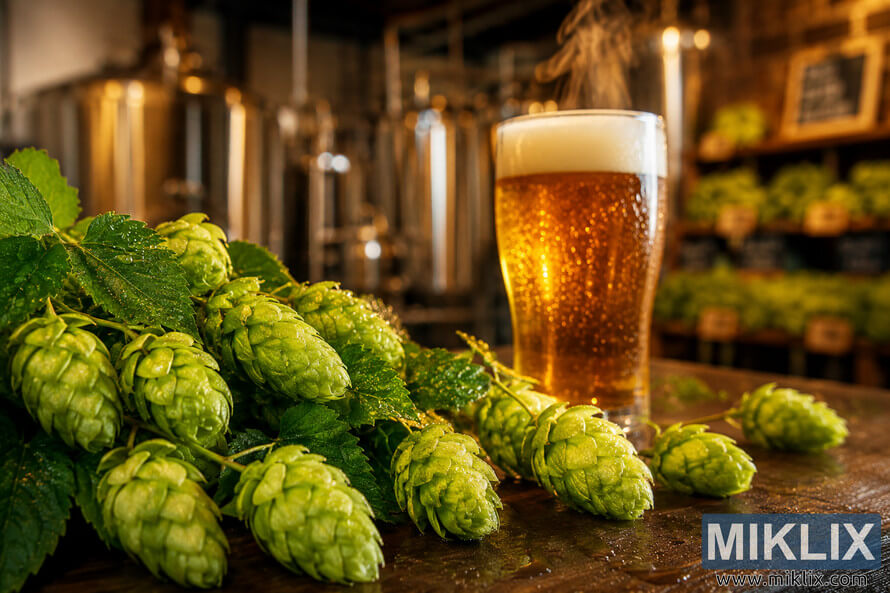
Click or tap the image for more information and higher resolutions.
The aroma profile of Challenger hops is notable for its balance. It offers floral top notes, a subtle spiciness, and earthy undertones. This combination complements both traditional English malt bills and modern adjuncts. Brewers appreciate its consistent alpha acids and broad flavor spectrum, allowing for precise control over bitterness and aroma.
This article delves into the essence of Challenger hops. It explores their character, availability in U.S. markets, and practical brewing techniques. We'll also discuss recipe ideas, troubleshooting tips, and the economic and sustainable aspects that concern both hobbyists and small breweries.
Key Takeaways
- Challenger hops is an English-bred, dual-purpose hop used for both bittering and aroma.
- Its Challenger aroma profile mixes floral, spicy, and earthy notes that suit many styles.
- Brewing with Challenger gives predictable bitterness for precise IBU targeting.
- Available as cones and pellets; sourcing and storage are important for freshness.
- This guide covers practical techniques, recipes, and troubleshooting for U.S. brewers.
Introduction to Challenger hops and its place in craft brewing
Challenger hops hold a key position in English ales and modern craft beers. They are celebrated for their balance of bittering and aroma. This balance bridges classic English hop profiles with the boldness of American styles.
Brief history and origin
The history of Challenger hops begins in the UK's late 20th-century breeding programs. By crossing Northern Brewer, breeders aimed to create a hop with robust disease resistance and consistent yields. This origin explains why it quickly gained popularity in England and worldwide.
Why brewers choose Challenger
Both amateur and professional brewers rely on Challenger for its dependable performance. Its consistent alpha acid levels simplify bitterness calculations. The hop's clean bitterness and aromatic profile, featuring floral, spicy, and earthy notes, make it a favorite for recipe planning.
How Challenger compares to other hops
Compared to English varieties like East Kent Goldings and Fuggle, Challenger is a middle ground. Goldings offer delicate floral and sweet herbal notes, while Fuggle provides a woody, earthy character. Challenger balances a strong bittering backbone with enough aroma to complement dual-purpose hops like Cascade or Centennial.
- From a bittering perspective, Challenger offers reliable IBUs without dominating the malt.
- As an aroma hop, it adds spice and floral notes suitable for traditional ales.
- Compared to modern dual-purpose hops, it is less citrusy, retaining a more classic English character.
For brewers pondering the use of Challenger hops, versatility and consistency are key. It excels in various styles, excels in both bittering and aroma roles, and suits recipes that blend traditional English flavors with modern craft aspirations.
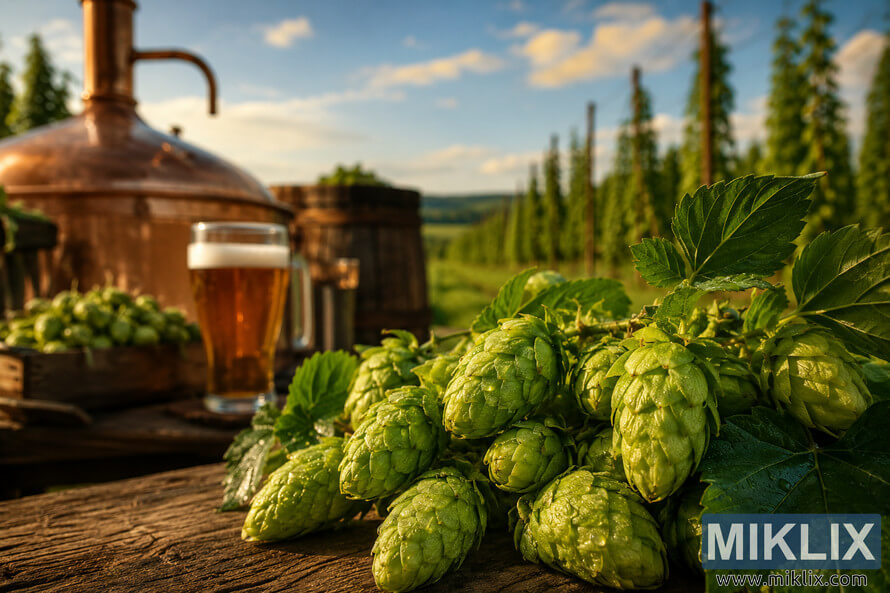
Click or tap the image for more information and higher resolutions.
Challenger hops characteristics and aroma profile
Challenger hops offer a balanced, classic English hop character, suitable for both ales and lagers. They are known for their steady bittering power and pleasant aroma. The timing and form of hop addition can significantly influence the final beer's character.
Taste notes: floral, spicy, and earthy elements
The aroma of Challenger hops is marked by floral top notes that elevate the beer's nose. A subtle spice, reminiscent of black pepper or clove, complements malt-driven recipes. Beneath these layers lies an earthy, woody base, grounding the profile. Late or dry-hop additions can reveal mild berry or stone fruit hints, enriching the flavor profile.
Aroma intensity and how it changes with usage
The intensity of the aroma depends on the form of the hops, their age, and when they are added. Whole cone or pellet, fresh or aged, and timing of addition all impact the aroma. Dry hopping and late-boil additions yield the strongest aroma. Conversely, long, rolling boils can strip volatile oils, reducing the aroma and emphasizing the bittering character.
Typical alpha acid range and what it means for bitterness
Alpha acids in Challenger hops typically range from 6–9%, influenced by crop year and supplier. This moderate range makes it an excellent choice for bittering without dominating malt or yeast flavors. It's crucial for brewers to consult lot-specific lab sheets to accurately calculate IBUs in their recipes.
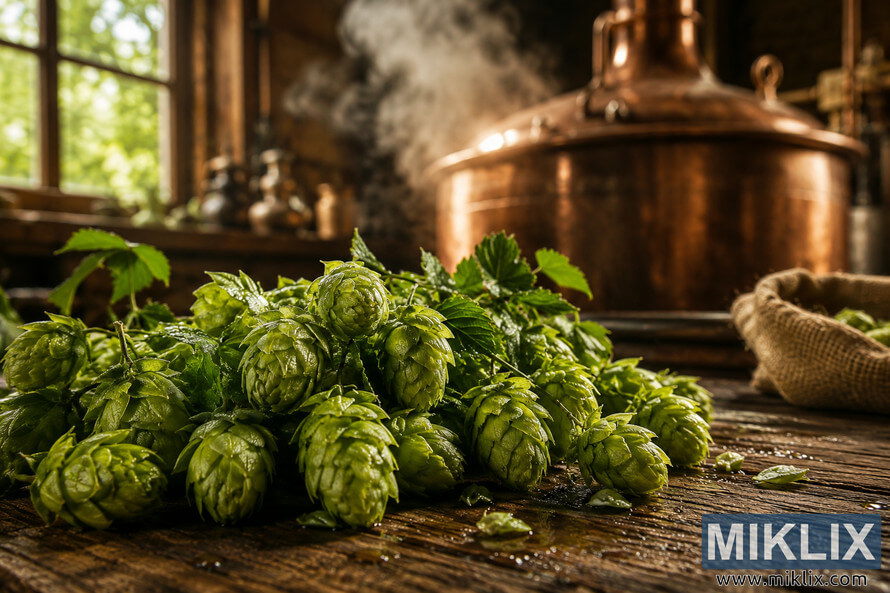
Click or tap the image for more information and higher resolutions.
Growing and sourcing Challenger hops
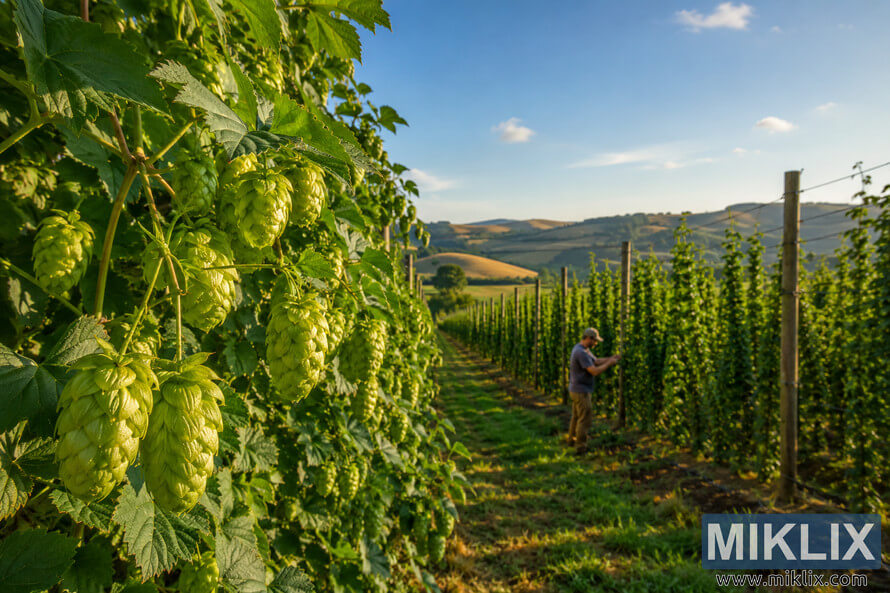
Challenger hops thrive in temperate climates with consistent summers and well-drained soil. Originating in the United Kingdom, it remains a staple there. For those in the U.S. looking to grow Challenger hops, choose areas with moderate temperatures. Ensure the soil drains well and provide a sturdy trellis for support.
In the U.S., areas like the Pacific Northwest and northern hop regions are suitable for growing Challenger hops. Small farms and hobbyists in Washington and Oregon have successfully cultivated this variety. Seek regions with cool nights and moderate rainfall when considering where to grow Challenger hops.
To purchase Challenger hops in the USA, turn to established merchants and cooperatives. Reliable sources include Yakima Valley Hops, Hops Direct, and Bell-Carter Foods. Homebrew shops and online retailers offer both pellets and whole cones. Always request a recent certificate of analysis to verify alpha acids and oil composition before making a purchase.
The choice between hop pellets and cones depends on your brewing needs. Pellets are denser, store longer, and provide consistent bitterness in the boil. Whole cones, on the other hand, offer fresher aroma for late additions and dry hopping. Many brewers prefer pellets for bittering and cones for enhancing aroma.
- Harvest timing: New-crop Challenger follows the northern hemisphere hop season, usually late summer to early fall.
- Storage basics: For best preservation, buy new-crop hops when available and limit oxygen exposure.
- Temperature: Vacuum-sealed and frozen storage at -18°C (0°F) preserves oils; refrigeration works short-term.
Proper packaging is crucial for storing hops. Use airtight bags with oxygen absorbers for both pellets and cones. Note that pellets generally withstand shipment and long-term storage better than cones, which require gentler handling to preserve aroma.
When sourcing, prioritize suppliers with traceable crop dates and lab data. This ensures consistency for brewing. It also helps homebrewers who wish to grow Challenger hops compare their local results with commercial batches.
Click or tap the image for more information and higher resolutions.
Using Challenger hops in bittering
Challenger hops are ideal for bittering, offering a clean, steady bitterness. They are perfect for English ales and balanced pale ales. Brewers often prefer them for their firm backbone without harshness.
When planning bittering, consider the alpha acids. Use the alpha acid percentage from the Certificate of Analysis to calculate additions. For a typical five-gallon batch aiming for mid-range Challenger IBUs, treat the 60-minute addition as the primary source of stable iso-alpha acids.
Typical additions for effective IBUs
- Begin with a 60-minute addition for base bitterness. This ensures predictable utilization and forms the bulk of Challenger IBUs.
- Add a 15–20 minute addition for some hop flavor along with bitterness.
- Include a 5–10 minute late addition to enhance hop character without overpowering aroma.
Estimate dosages using a Tinseth or Rager calculator. For instance, a 7% AA Challenger added at 60 minutes can reach about 30–40 IBUs in a five-gallon batch. Adjust for actual AA% to achieve your precise target.
Recommended boil times and hop schedules
- 60 minutes — primary bittering addition to set the target IBUs.
- 15–20 minutes — builds flavor while retaining some bitterness.
- 5–10 minutes — late flavor with less isomerization.
- Flameout/whirlpool — aroma boost and smoothness without raising bitterness.
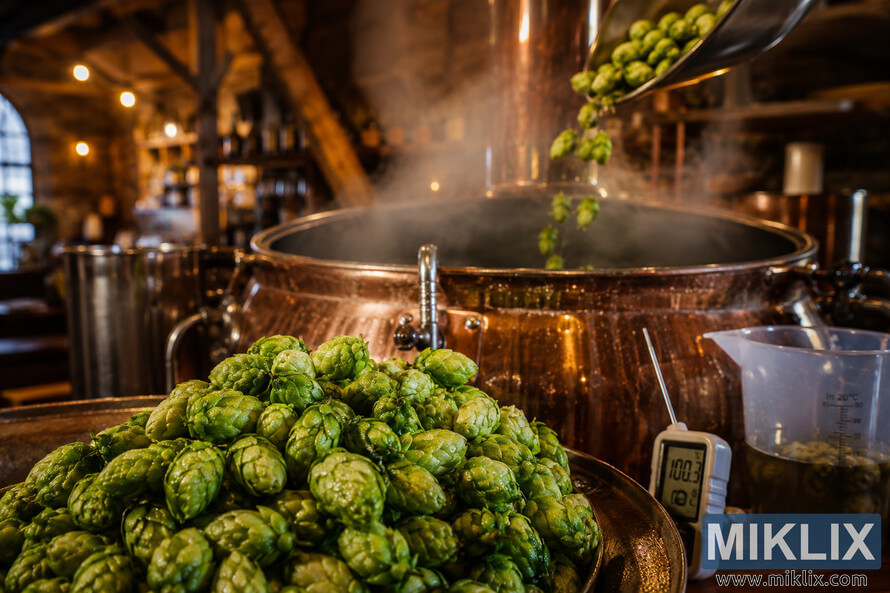
Be flexible with the hop schedule for Challenger. Longer boil times result in stronger, more stable bitterness. Shorter boil times and whirlpool additions are better for spice and floral notes. Tracking boil times for Challenger in your brew log ensures consistent results.
Click or tap the image for more information and higher resolutions.
Using Challenger hops for flavor additions
The timing and malt choices significantly influence the final beer's taste. Mid-boil additions highlight the hop's spicy and fruity aspects. The malt selection then molds these flavors, enhancing the hop's brightness or softening it into an English style.
Adding Challenger hops at 15–30 minutes preserves their volatile oils. This ensures the beer retains its spicy and fruity aromas. A 15–20 minute addition emphasizes floral and spicy notes. Meanwhile, a 25–30 minute addition results in a more robust, integrated bitter spice that complements the malt.
- 15–20 minutes: brighter floral and spice notes, useful when you want distinct hop character.
- 20–30 minutes: balanced spice and gentle fruitiness, good for session bitters and brown ales.
- Single mid-boil dose versus split dosing: splitting keeps complexity while taming harshness.
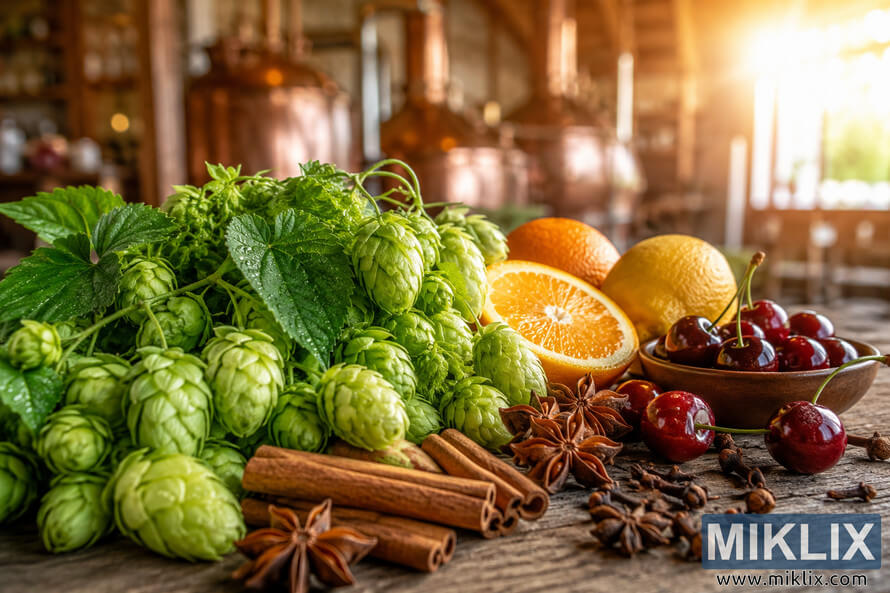
Choosing the right malt is crucial for the Challenger's role. For a traditional English taste, pair it with Maris Otter or pale English malts, along with a bit of medium crystal. These malts add biscuit and caramel flavors that enhance the hop's earthy and spicy notes.
For a modern twist, opt for a clean pale malt or pilsner with a hint of Munich or Vienna. This combination offers bready sweetness, balancing the mid-boil Challenger while keeping the spice and fruit hops prominent.
- Light malt bill: lets hop brightness and spice lead; use sparingly to avoid harshness.
- Moderate specialty malts: softens bitterness and reveals complementary earthy complexity.
- Adjust sweetness: small amounts of crystal can smooth perception of hop bite without hiding aroma.
When crafting recipes, consider the beer's body and caramel levels. Lighter bodies accentuate hop edges and spicy notes. Sweeter, fuller malts, on the other hand, soften the hop bite, allowing spicy notes to blend into the background. Use mid-boil Challenger with a plan for malt pairing Challenger to achieve a balanced, layered flavor profile.
Click or tap the image for more information and higher resolutions.
Using Challenger hops for aroma and dry hopping
Challenger hops add floral and spicy notes, perfect for late boil additions or dry hopping. Timing and handling are crucial to preserve hop oils. Adjustments in temperature and contact time significantly impact the outcome, so plan accordingly for your beer style.
Late additions and dry hop strategies
For late hop additions, Challenger excels at flameout, within the 0–10 minute window, or in a cool whirlpool. These methods help retain volatile aromatics while minimizing vegetal flavors. Use gentle whirlpool circulation to keep oils suspended without damaging hop matter.
When dry hopping, use 0.5–2 oz per 5 gallons, depending on the desired intensity. Solo Challenger dry hopping offers a classic English profile. Blend it with fruity New World hops for extra lift and layered complexity.
- Flameout or 0–10 minute additions capture floral and spice.
- Whirlpool at 160–180°F for 10–30 minutes for smooth extraction.
- Dry hop dosages of 0.5–2 oz per 5 gallons for ales.
Temperature and contact time for best aroma extraction
Cold temperatures are ideal for gentle aroma extraction. Aim for 50–68°F (10–20°C) during active ale fermentation for balanced results. Lower temperatures with longer contact times result in smoother, less green flavors.
Dry hopping contact time is critical. Typical ranges are 2–7 days to capture aroma without grassy notes. For lager-style beers, cold-conditioning dry hops at lower temperatures for longer durations slowly and cleanly extracts delicate aromatics.
- Target 50–68°F for ale dry hops to maximize aroma extraction Challenger.
- Start with 2–4 days for bold aromas; extend to 5–7 days for subtlety.
- Monitor beer daily once dry hops are removed to avoid over-extraction.
Recipe examples featuring Challenger hops
Challenger hops are versatile, fitting into many beer styles. Below, we explore recipes and hop bills that highlight its use in English ales, American brews, and experimental beers. This showcases how Challenger can shape malt-forward ales, adapt to American tastes, and explore new flavors.
English-style ales that highlight Challenger
Classic bitters and pale ales benefit from a Maris Otter base. Add 2–5% crystal malt for color and light caramel notes.
- Suggested hop schedule: Challenger at 60 minutes for bittering, 10–15 minutes for flavor, and a 5–10 minute late addition for lift.
- Yeast: Wyeast 1968 or White Labs WLP002 for traditional English esters.
- Example target: Original gravity 1.044–1.048, IBU 25–35 for a balanced profile.
American craft styles that adapt Challenger as a character hop
Challenger adds English spice to modern American ales. Pair it with citrus-forward hops for unique results.
- Try Challenger bittering at 60 minutes, then finish with late additions of Cascade or Citra for aroma.
- Yeast: SafAle US-05 or Wyeast 1056 to keep fermentation neutral and let hops speak.
- Typical build: Challenger pale ale recipe OG 1.050–1.056, IBU 35–45 for a drinkable, hop-forward beer.
Hybrid or experimental recipes to showcase versatility
Challenger is great in darker or funky beers. It adds earthy, floral spice that complements roast or sour elements.
- Porter/brown ale: 5–10% roast or chocolate malts, Challenger late additions at 10 minutes and a small dry hop. Target IBU 20–30.
- Kettle-sour saison: Sour to pH 3.3–3.5, then ferment with Saison yeast and a restrained Challenger dry hop to balance funk.
- Yeast pairings: Brettanomyces blends and Saison strains for complexity in experimental beers Challenger.
These ideas are just starting points for homebrewers and professionals. Feel free to adjust hop weights, contact times, and yeast to match your water profile and desired aroma intensity.
Hop combinations that pair well with Challenger
Challenger often anchors blends, aiming for a balance between old-world spice and new-world brightness. Below are pairing ideas for brewers looking for reliable hops to blend with Challenger. Also, adjunct and yeast choices that shape the final character.
- Traditional English partners
- Pair Challenger with East Kent Goldings for softer floral sweetness and Fuggle for woodsy depth. These English hop blends create a rounded aromatic frame. Challenger's spicy, herbal backbone complements them well.
- American and New World complements
- Try Cascade, Centennial, Citra, Amarillo, or Simcoe for citrus, tropical fruit, or resin notes. Modern hop combos with Challenger produce hybrid beers. They keep an English spice base while adding bold top notes.
- Layered pairing strategies
- For balanced bouquets, use Challenger in mid-boil for flavor, then add Citra or Amarillo late for lift. For hop-forward ales, boost Centennial or Simcoe in dry hop. This emphasizes resin and pine without losing the original spice.
- Adjuncts that work
- Adjuncts like orange peel, coriander, or a hint of honey pair well with Challenger’s spice. Use them sparingly to support hop character rather than mask it.
- Yeast choices that complement hops
- Choose English ale strains to enhance fruity esters and soften sharp edges. Clean American strains let hop pairings Challenger stand forward with clarity. For experimental brews, Belgian or mixed fermentation strains can create novel interactions with Challenger’s spice and add complexity.
When planning blends, aim for contrast rather than full overlap. Thoughtful use of English hop blends alongside modern hop combos Challenger will help you craft beers that feel both familiar and fresh.
Brewing process adjustments when using Challenger hops
Integrating Challenger hops into your recipe requires subtle adjustments. These tweaks enhance the spice and floral notes, ensuring they stand out without overwhelming malt or yeast. By making targeted changes to mash, boil, and fermentation, you can highlight Challenger's unique characteristics.
Mash schedule and grain bill considerations
Opt for a moderate mash temperature of 148–154°F (64–68°C). This range supports better attenuation and a leaner body, allowing the hop's spice and floral notes to shine. Conversely, a higher mash temperature can add fullness and balance out bitterness in hoppier brews.
When aiming for hop brightness, limit the use of heavy crystal malts. Incorporate light crystal or Vienna malts for color and a hint of sweetness. These choices help maintain a balance between mouthfeel and hop-driven aroma.
Boil vigor and hop utilization changes
A vigorous rolling boil enhances extraction efficiency. The boil's size, kettle shape, and wort gravity all impact hop utilization. Given Challenger's moderate alpha acids, you may need to increase hop additions to achieve desired IBUs.
Employ longer late additions and consider hop stands to enhance aroma while managing bitterness. Adjust hop addition weights rather than extending boil time to optimize hop utilization.
Fermentation practices to preserve hop character
Control fermentation temperature to prevent yeast esters from overshadowing Challenger's subtleties. Fermenting at the lower end of the yeast strain range helps preserve hop clarity. Warmer fermentation temperatures can introduce fruity esters, altering the perceived spice.
Minimize oxygen exposure during transfers and conditioning to safeguard hop aroma. Dry hopping in a bright, stable environment and limiting contact time can prevent grassy notes while maintaining hop aroma and freshness.
- Use a moderate mash schedule Challenger for balance.
- Monitor boil vigor to optimize hop utilization Challenger.
- Ferment cool and limit oxygen to preserve hop aroma.
Measuring and controlling bitterness with Challenger
Accurate bitterness control starts with precise data. Measure your batch volume and record the boil gravity. Note the boil time and use the alpha acid percentage from the supplier’s certificate of analysis. These details are crucial for calculating additions that meet your target without uncertainty.
The Tinseth method is a favorite among homebrewers. It estimates hop utilization based on gravity and time, providing reliable numbers for batches of 5 to 10 gallons. For better precision, use the exact lab-reported alpha acid percentage instead of a rounded value.
- Record measured batch volume in gallons or liters.
- Enter boil gravity; higher gravity lowers utilization.
- Use the supplier AA% for each lot of Challenger hops.
- Choose a formula: Tinseth Challenger is simple and widely used.
For example, a 5-gallon batch aiming for 35 IBUs with Challenger at 7% AA and a 60-minute addition requires precise hop weight calculation. Use hop dosing tools or brewing software to convert from IBUs to grams or ounces. This approach ensures repeatable results and simplifies scaling recipes.
Recommended hop dosing tools include BeerSmith and Brewer's Friend, as well as stand-alone Tinseth calculators for quick checks. Commercial brewers should combine software estimates with lab analysis and pilot batches when scaling up. Regular testing of new hop lots is essential for maintaining Challenger bitterness control across vintages.
When adjusting bitterness midstream, re-run calculations with updated boil volume or gravity. Small changes in hop weight or boil time can significantly alter IBUs. Keep detailed notes on each batch to refine your IBU calculation routine over successive brews.
Sensory evaluation and tasting notes for Challenger-focused beers
Developing a detailed tasting plan is crucial for understanding Challenger's impact on beer. Ensure you use clean glassware and maintain a serving temperature between 50–55°F. This makes it easier to discern the beer's aroma and flavor. When tasting, compare a Challenger-focused beer with a control beer side by side.
Adopt a straightforward tasting methodology to maintain consistency in your notes. Begin by smelling the beer, then take small sips to assess its flavor, mouthfeel, and finish. Use brief tasting sessions to avoid palate fatigue when evaluating multiple samples.
How to conduct a focused tasting of Challenger beers
- Use identical glassware and pour volumes for each sample.
- Label samples and taste blind when possible to reduce bias.
- Keep water and plain crackers nearby to cleanse the palate between sips.
- Record serving temperature, carbonation level, and sample age before tasting.
Common descriptors to document during evaluation
- Floral and spicy top notes, with mild fruity hints.
- Earthy and woody tones, noting any vegetal or grassy off-notes.
- Bitterness level and how it balances with the malt backbone.
- Aroma intensity, duration of the finish, and perceived hop presence.
Recording and iterating on recipe tweaks
- Log exact hop lot alpha acids, form (pellet or whole cone), addition times, and dry-hop durations.
- Note fermentation temperature and yeast strain, since both affect hop expression.
- Adjust hop quantities, timing of additions, or mash profile based on tasting feedback.
- Repeat side-by-side tests after each change to refine Challenger tasting notes and confirm improvements.
Common issues and troubleshooting when brewing with Challenger
Brewers often encounter specific problems when using Challenger hops. This guide aims to help identify and solve these issues. It covers common off-character beers, methods to preserve fresh hop notes, and adjusting recipes for alpha acid variations.
Off-flavors and likely causes
Grassy or vegetal flavors can arise from aggressive dry hopping or extended hot-side contact. Minimize the time hops spend in the whirlpool or fermenter. Too many late additions can introduce astringency, disrupting the balance of malt and yeast.
- Verify the hop's age and storage if the aroma seems weak.
- Decrease the amount of hops or shorten their contact time to reduce green notes.
- Ensure proper sanitation and fermentation temperature to avoid off-flavors from bacteria or yeast.
Preventing oxidation and preserving fresh hop aroma
Oxygen exposure after boiling can strip away the oils that define Challenger's flavor. Implement cold-side aeration control during racking and use CO2 purging for kegs and fermenters to minimize oxygen intake.
- Store cones or pellets in airtight, cold environments. Use the newest hops first.
- Reduce transfers and top up with deaerated wort or beer when feasible.
- Employ fresh hops and avoid prolonged storage at room temperature to preserve hop aroma.
Adjusting for variations in hop crop alpha acids
Alpha acid variations in Challenger lots can alter bitterness levels. Always refer to the certificate of analysis for each batch. Recalculate hop additions to achieve the desired IBUs if alpha acid values deviate from recipe expectations.
- Keep track of lot numbers and measured AA values for future use.
- Adjust pellet or cone weight based on the new alpha acid percentage.
- In cases of significant variations, conduct a small pilot batch or scale adjustments cautiously to avoid excessive bitterness.
Commercial beers and examples using Challenger hops
Challenger hops are a staple in commercial brewing, known for their balanced bitterness and mild spice. They support sessionable English styles and adapted American recipes. Many breweries highlight Challenger in ingredient notes for bitters, pale ales, and seasonal releases. They aim for an approachable hop character.
In the UK, regional breweries like Fuller’s and Adnams have long used Challenger in their bitters and pale ales. This preserves an English profile. Meanwhile, select U.S. craft brewers use Challenger for limited runs. They seek a classic backbone without overpowering modern citrus or resin notes.
Production lines showcase how Challenger hops can be blended with other varieties. Brewers pair it with aroma-forward hops to balance bitterness while adding bright top notes. This strategy explains why Challenger remains a favorite for blended hop strategies in larger batches.
Commercial practices offer valuable lessons for smaller breweries. Regular COA checks, bulk purchasing, and strict cold storage ensure consistent hop quality. Breweries using Challenger stress the importance of recipe standardization and blending. This maintains flavor stability when scaling up.
When adapting commercial beers using Challenger for homebrew, expect changes in hop utilization and kettle dynamics. Start with pilot batches, adjust additions for kettle size, and run small sensory panels. This will help match expected outcomes from commercial implementations.
- Buy COAs and store cold to mirror commercial breweries using Challenger.
- Blend Challenger with aroma hops to replicate Challenger hop examples found in larger recipes.
- Pilot small batches to adapt commercial beers Challenger recipes to homebrew volumes.
Cost, availability, and sustainability considerations
Challenger hops fall into a mid-range price category, compared to rare New World aromatics. Growers experience yield fluctuations, impacting the Challenger hop price. Brewers can find the best time to purchase by comparing prices across suppliers.
Small-scale brewers should buy hops in quantities matching their recipes to prevent stale hops. Hops' aroma diminishes over time. Proper cold storage is essential to maintain their value. Buying Challenger hops in bulk can lower costs but requires freezer space and specific packaging.
Commercial brewers benefit from bulk purchases. Lower costs per kilogram help manage tight margins. Opt for pellets for longer shelf life if storage and inventory turnover are inconsistent. Before making large purchases, compare suppliers based on freight and seasonal discounts.
- Price checks: compare per-ounce and per-kilogram rates across U.S. sellers.
- Storage: vacuum-sealed bags and frozen conditions extend freshness.
- Formats: cones for immediate use, pellets for stability.
Sustainability is becoming a key factor in hop selection. Look for suppliers who practice water-efficient farming and integrated pest management. Inquiring about regenerative farming or third-party audits helps assess sustainable practices.
Buying locally supports U.S. growers and reduces transport emissions. Request details on farming practices and certifications. Brands and farms that share data facilitate evaluating true sustainability and supply reliability.
When considering cost and values, weigh the Challenger hop price against storage needs and environmental claims. Brewers buying in bulk should plan inventory, storage, and turnover. Hobbyists should match purchases to use patterns to preserve aroma and reduce waste.
Conclusion
Challenger hops summary: Challenger is a versatile, English-bred dual-purpose hop. It brings floral, spicy, and earthy notes. Its moderate alpha acids make it effective for bittering, mid-boil flavor work, and late additions or dry hopping to enhance aroma. It's adaptable across traditional English ales and contemporary hybrid styles.
Brewing with Challenger summary: For the best results, verify the Certificate of Analysis before dosing. Adjust mash profiles and fermentation to preserve delicate hop nuance. Favor late additions or dry hops when aroma is key. Pair Challenger with malts like Maris Otter or British crystal and neutral English yeasts for classic character. Or combine with New World hops for brighter fruit layers.
Challenger hop takeaways: U.S. brewers should source from reputable domestic suppliers. Store cones or pellets cold and airtight. Run small test batches to dial schedules and rates. Keep tasting notes and measure IBUs against lab values. Iterating will reveal how Challenger shines in balanced beers and experimental recipes alike.
FAQ
What is Challenger hops and where did it originate?
Challenger is an English-bred hop, developed at Wye College. It was introduced in the UK in the late 20th century. It combines Northern Brewer traits with disease resistance and adaptable alpha-acid levels. Brewers value it for both bittering and aroma, offering a classic English character.
What flavor and aroma profile does Challenger provide?
Challenger hops have floral top notes, subtle spice, and an earthy tone. Some detect fruity or berry notes with mid- or late additions. The aroma intensity varies by hop form, age, and timing, with late-boil or dry-hop additions preserving volatile oils best.
What is the usual alpha-acid range for Challenger and how does that affect bitterness?
Challenger's alpha-acid range is roughly 6–9%. This moderate AA makes it effective for balanced IBUs. Always use the lot-specific COA to calculate precise IBU additions.
How do I source quality Challenger hops in the United States?
Buy from reputable hop merchants like Yakima Valley Hops and Hops Direct. Request recent analysis sheets (COA) for alpha acids and oil composition. Pellets are easier to store long-term, while whole cones are preferred for certain flavor uses.
When is Challenger available and how should I store it?
New-crop Challenger is available late summer to early fall. For best freshness, buy new-crop when possible. Store hops vacuum-sealed at -18°C (0°F) for long-term or refrigerated for short-term. Keep airtight packaging with oxygen absorbers; pellets usually withstand storage and handling better than cones.
How should I use Challenger for bittering in a typical 5-gallon batch?
Use a 60-minute addition for primary bittering. With an example AA of 7%, target 30–40 IBUs by calculating hop weight using Tinseth, Rager, or software like BeerSmith or Brewer’s Friend. Adjust quantities by the COA AA% and account for boil gravity and utilization differences in your system.
What boil schedule is recommended to showcase Challenger’s flavor?
A common schedule is: 60 minutes for bittering, 15–20 minutes for mid-boil flavor to highlight spice and subtle fruit, 5–10 minutes for late flavor, and flameout or whirlpool additions for aroma. Challenger’s balanced character allows it to work across these timing windows depending on the desired result.
How do I use Challenger for aroma and dry hopping?
Add Challenger at flameout or whirlpool (0–10 minutes) to preserve floral and spicy volatiles. For dry hopping, typical dosages range from 0.5–2 oz per 5 gallons depending on intensity desired. Dry-hop at 50–68°F (10–20°C) for 2–7 days to extract aroma while minimizing grassy notes; adjust for lager or cold-conditioning approaches.
What malts and yeast pair best with Challenger?
Challenger pairs naturally with English malts like Maris Otter and light crystal malts. For American-style beers, use base pale malt or pilsner with a touch of Munich or Vienna. Yeast choice matters: English ale strains enhance fruity esters and soften hop sharpness, while clean American strains (e.g., US-05 or Wyeast 1056) let hop character stand forward.
Which hop varieties blend well with Challenger for hybrid or modern beers?
Combine Challenger with classic English hops like East Kent Goldings and Fuggle for traditional blends. For New World accents, pair with Cascade, Centennial, Citra, Amarillo, or Simcoe to add citrus, tropical, or resin notes while keeping Challenger’s spice backbone. Balancing proportions produces hybrid beers that marry old- and new-world characters.
Can Challenger be used in darker beers or experimental styles?
Yes. Challenger complements porters and brown ales by adding spicy and earthy complexity against roast malts. It can also play in saisons or kettle-sour beers where floral-spice notes interact with Brettanomyces or mixed fermentation. Adjust hop amounts and pairing ingredients to avoid clashing with heavy roast profiles.
How should I adjust mash and fermentation to preserve Challenger’s nuance?
Use moderate mash temperatures (148–154°F / 64–68°C) to control body and let hop spice sit well in the balance. Control fermentation temperatures at the lower end of your yeast’s range to preserve hop nuance; warmer ferments increase esters that will interact with Challenger’s spice. Minimize oxygen pickup post-boil to protect aroma.
What common issues arise when using Challenger and how do I troubleshoot them?
Common problems include grassy or vegetal off-notes from over-aggressive dry hopping or hot-side contact, astringency from excessive late additions, and muted aroma from old or poorly stored hops. Troubleshoot by shortening dry-hop contact time, improving cold-side oxygen control, rotating fresh hop stock, and recalculating additions using the lot COA.
How do I calculate IBUs for Challenger additions?
Use the measured batch volume, boil gravity, boil time, and the exact alpha-acid percentage from the supplier’s COA. Apply a formula such as Tinseth or use software like BeerSmith or Brewer’s Friend. For example, with 7% AA and a 60-minute addition, input those values to determine the ounces needed to reach your target IBUs.
What sensory evaluation practices help dial in Challenger-focused recipes?
Conduct focused tastings with clean glassware at controlled serving temps (50–55°F for ales). Evaluate aroma first, then flavor, mouthfeel, and finish. Document descriptors—floral, spicy, earthy, fruity suggestions, bitterness, and balance. Keep detailed brew logs including hop lot AA, form, addition times, and conditioning to iterate effectively.
How do commercial brewers use Challenger at scale, and what can homebrewers learn?
Commercial brewers check COAs per lot, purchase in bulk with proper cold storage, standardize recipes, and often blend Challenger with other aroma hops for consistency. Homebrewers can learn to validate COAs, pilot small batches to confirm hop behavior, and adopt record-keeping and blending strategies for repeatable results.
Is Challenger an expensive hop and should I buy in bulk?
Challenger is generally mid-range in price compared with specialty New World varieties. Hobby brewers should buy quantities aligned with expected use to avoid staleness. Pellet form offers better stability for longer storage, while bulk purchasing benefits frequent brewers and commercial operations if proper cold storage is available.
What sustainability issues relate to sourcing Challenger hops?
Consider suppliers that practice water-efficient farming, integrated pest management, and reduced chemical inputs. Buying from U.S.-based growers or distributors when available reduces transport emissions. Ask suppliers about sustainability practices, certifications, and traceability when selecting hop sources.
How should I adapt recipes when Challenger’s alpha-acid varies between crop years?
Always check the lot-specific COA and recalculate hop additions to meet target IBUs. Keep flexible recipes and detailed logs of past lot AA values to guide future dosing. If AA is higher or lower than expected, adjust hop weight or timing rather than relying on fixed ounce-per-recipe rules.
Further Reading
If you enjoyed this post, you may also like these suggestions: