
Fermenting Beer with White Labs WLP041 Pacific Ale Yeast
Published: December 22, 2025 at 7:53:52 PM UTC
WLP041 is described as a Pacific Northwest ale strain. It highlights malt character, produces mild esters, and clears well due to high flocculation. This makes it a versatile choice for various styles, including American IPA, Pale Ale, Blonde Ale, Brown Ale, Double IPA, English Bitter, Porter, Red Ale, Scotch Ale, and Stout.
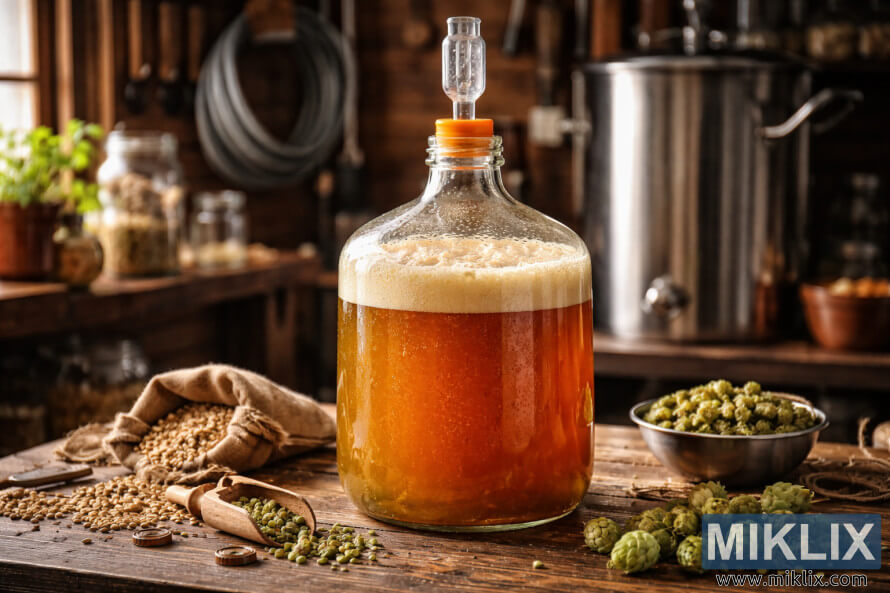
Click or tap the image for more information and higher resolutions.
This article compiles lab basics, user reports, and comparative notes. Later sections summarize key metrics — attenuation, flocculation, alcohol tolerance, fermentation temperature, and STA1. It offers practical guidance for fermenting with WLP041. Expect a balanced view, including common homebrewer experiences, such as a sometimes slow start and ways to manage it.
Key Takeaways
- WLP041 is a Pacific Northwest ale strain that emphasizes malt and gives mild esters.
- It works across many styles from Pale Ale to Stout, making it a flexible homebrew Pacific yeast.
- High flocculation helps the beer clear, but some batches show a slow fermentation onset.
- Later sections will detail attenuation, alcohol tolerance, and optimal temperature ranges.
- This Pacific Ale yeast review includes hands-on tips for pitching, handling, and troubleshooting.
Overview of White Labs WLP041 Pacific Ale Yeast
WLP041 Pacific Ale Yeast originates from the Pacific Northwest. It is part of White Labs' Vault lineup. The Vault strain boasts a clear quality profile, with STA1 QC Result: Negative. This indicates minimal diastatic activity, reassuring brewers.
The White Labs yeast background highlights its popularity among homebrewers and craft breweries. It is pitched as versatile for both American and British-style ales. It enhances malt character while keeping fruity esters modest.
- Product name and SKU: WLP041 Pacific Ale Yeast, sold through common homebrew suppliers such as Great Fermentations.
- Intended use: Enhances malt presence and supports restrained hop expression in a range of ale recipes.
- Brand positioning: Marketed to create malty, drinkable beers with balanced esters and hop clarity.
This WLP041 overview aids brewers in choosing the right time to use the strain. It's ideal for malt-forward pale ales, amber ales, and session beers. The clear White Labs yeast background notes facilitate matching yeast selection to recipe goals and flavor outcomes.
Key Fermentation Characteristics and Metrics
White Labs WLP041 Pacific Ale yeast is ideal for a variety of pale ales and modern American styles. The attenuation ranges can vary, leading to differences in each batch and recipe.
Attenuation figures range from 72–78% as reported by White Labs, while retailers suggest 65–70%. These variations are due to differences in wort composition, mash schedule, and yeast health. Monitoring gravity readings is essential to gauge actual performance.
Flocculation for this strain is high. This characteristic aids in faster beer clearing and can reduce conditioning times with standard cold-crash or fining routines.
The strain tests STA1 negative, indicating no diastaticus activity. This means brewers can avoid hyperattenuation from dextrin fermentation with common grain bills and specialty malts.
Alcohol tolerance is in the mid range, roughly 5–10% ABV. This information is crucial for formulating recipes and pitching strategies for stronger beers.
- Recommended fermentation temp: 65–68°F (18–20°C) per White Labs guidance.
- Typical retail cell counts: about 7.5 million cells/mL for certain vials and packs; plan starters or multiple packs for higher gravity worts.
- Key yeast metrics to monitor: attenuation flocculation alcohol tolerance, and viable cell counts during propagation.
Recording yeast metrics and maintaining consistent sanitation, oxygenation, and pitch protocols will lead to more predictable WLP041 characteristics. Monitoring final gravities and tasting notes is key to refining future brews.
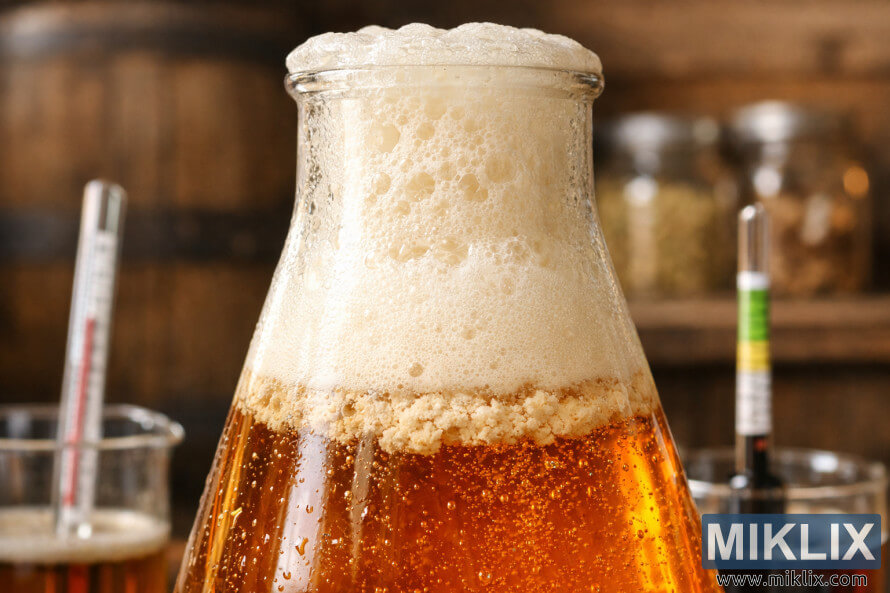
Click or tap the image for more information and higher resolutions.
Optimal Fermentation Temperature Range
White Labs recommends a WLP041 temperature range of 65–68°F (18–20°C). This range is ideal for achieving a clean flavor profile and enhancing malt character. It minimizes the presence of fruity esters.
Fermenting at 65-68°F results in mild esters and consistent attenuation. This temperature range ensures a predictable finishing gravity. It's particularly beneficial for American Pale Ale and IPA styles.
Yeast temp effects become pronounced outside the recommended range. Warmer temperatures can accelerate yeast activity and increase ester levels. This might introduce tropical or pear notes to the beer.
Colder temperatures, on the other hand, slow down yeast metabolism. This can delay the formation of krausen and visible head. Homebrewers have noted that WLP041 may be slow to show vigorous activity at 65°F, even when it's viable.
- Target: 65–68°F for balanced flavor and malt clarity.
- If pushed warmer: expect faster attenuation and more esters.
- If kept cooler: expect slower fermentation and delayed visible activity.
Controlling ambient temperature is crucial for achieving desired yeast temp effects. Utilize a temperature-controlled fridge, wrap, or fermentation chamber. This ensures a consistent range and batch-to-batch consistency.
Pitching Rates, Cell Counts, and Yeast Handling
Start by checking the packaged baseline: retail listings report a yeast cell count of 7.5 million cells per milliliter for single vials. Use this figure to calculate total viable cells for your batch size. This simple baseline ensures consistent math when estimating WLP041 pitching rate needs.
For typical ales, aim for a healthy ale pitching rate of about 0.75 to 1.5 million cells per mL per degree Plato. Match this to your original gravity and batch volume to determine if one vial is enough or if you need a starter. White Labs offers a pitch rate calculator for precise numbers, but a rule of thumb helps plan quickly.
As wort gravity increases, plan for a larger cell mass. For higher gravity beers, rehydrate or build a starter to increase viable counts. Vault strains like WLP041 are concentrated. Treat them like other White Labs cultures and consider a starter when pitching from a single vial into a standard five-gallon batch.
Good yeast handling White Labs practices enhance starts and attenuation. Allow sealed vials to warm to pitching temperature before opening. Oxygenate wort well at the time of pitch to feed the cells. Gentle swirling of a rehydrated slurry helps distribute cells without stressing them.
- Calculate total cells: vial volume × yeast cell count 7.5 million.
- Adjust pitch: use the WLP041 pitching rate guideline for desired lag and attenuation.
- For high OG: make a starter or use multiple vials to reach target cells.
Short lag times result from fresh yeast and correct handling. If you must store vials, keep them cool and use within White Labs recommended windows. Proper yeast handling White Labs methods protect viability and preserve strain character for dependable fermentations.
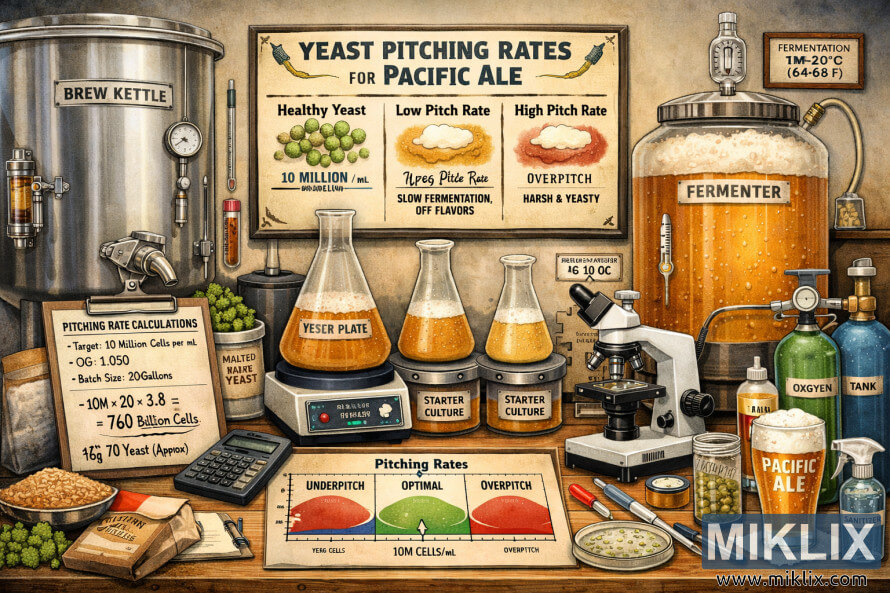
Click or tap the image for more information and higher resolutions.
Fermentation Timeline and Signs of Activity
White Labs indicates that WLP041 fermentation follows a typical ale timeline within the recommended temperature range. Expect a primary fermentation phase lasting several days. Flocculation begins shortly after fermentation slows down. The beer's clarity improves rapidly due to moderate to high flocculation.
Signs of fermentation include airlock bubbling, a sheen on the wort, and krausen formation. Some batches develop a full foam cap, while others have only a thin layer or delayed krausen. Even at 65°F, some brewers have reported no krausen at about 36 hours with fresh yeast.
Low pitching rates or fermenting at the cool end of the range often result in slow starts. A slow start in krausen formation does not necessarily mean the yeast has failed. Gravity readings are the definitive way to confirm fermentation activity when visual signs are delayed.
To track fermentation progress, take hydrometer or refractometer readings every 24 to 48 hours. Monitor gravity until it stabilizes within the published attenuation window. Once the gravity fall is consistent, the beer will finish within the typical WLP041 fermentation timeline.
- Look for small persistent CO2 release as a sign of fermentation.
- Note thin or delayed krausen but check gravity to verify sugar conversion.
- Allow time at the upper end of the temperature range to encourage a stronger finish if attenuation is slow.
Flavor Contributions and Recipe Pairings
WLP041's flavor profile is characterized by a clear malt backbone and mild esters. These esters introduce a gentle fruit note. Brewers appreciate its malty finish, which is rounded but never cloying. The yeast also enhances hop flavors, making hop-forward recipes even more vibrant.
WLP041 is ideal for recipes where malt character is paramount. In American Pale Ales and IPAs, it allows modern American hops to take center stage while supporting the beer's body. For English styles like Bitter or English IPA, it preserves traditional maltiness while keeping fruitiness in check.
Recommended pairings for Pacific Ales include Blonde Ale, Brown Ale, Red Ale, and Porter. Double IPA and Stout also benefit from this yeast, which adds structure without overpowering high hop or roast profiles. Scotch Ale gains depth from the yeast's smooth malty finish.
- For hop-forward beers, keep fermentation temps steady to boost hop perception without raising ester levels.
- For malty ales, slightly lower temps help highlight a rich, malty finish.
- When designing Pacific Ale recipe pairings, balance specialty malts so WLP041 flavor profile supports rather than competes with complex grain bills.
In summary, this strain is highly versatile. It excels in recipes that emphasize a pronounced malt backbone, offers a pleasing malty finish, and pairs well across a wide range of Pacific Ale recipe pairings. Clarity and balance are key.
Conditioning, Flocculation, and Clearing Times
White Labs WLP041 exhibits high flocculation, leading to rapid sedimentation of yeast and protein. This results in clearer beer sooner, significantly reducing conditioning time for many ales.
Shorter conditioning times mean less time in the cellar and quicker packaging. This aligns tank turnover with production schedules for pale ales and session beers.
Practical benefits include less need for filtration or fining in straightforward recipes. This saves labor and material costs, benefiting breweries aiming for quick turnaround.
However, there's a caveat: rapid flocculation can cause yeast to drop out of suspension in high-gravity worts. To avoid stuck fermentation and ensure full attenuation, use a healthy starter or increase pitching rates.
- High flocculation: clearer beer and shorter clearing time in most cases.
- Conditioning time: typically shorter than low-flocculating strains, but depends on style and chill conditioning.
- Operational tip: adjust pitching and oxygenation in strong worts to prevent premature drop-out.
Test small batches to fine-tune conditioning times for your recipes. Recording clearing time and attenuation helps refine schedules and maintain consistent quality with WLP041 flocculation characteristics.
Attenuation Variability and Final Gravity Expectations
White Labs indicates WLP041 attenuation at 72-78%. However, brewers often report variable results. Retail sources sometimes list 65-70%, showing how wort composition and fermentation conditions can differ.
Several factors influence final gravity expectations. A higher mash temperature can leave more unfermentable dextrins, increasing the FG. Low pitching rates or stressed yeast cells also slow fermentation, leading to a higher FG.
Temperature and oxygen levels are crucial. Cooler fermentations can stall, resulting in a higher FG. On the other hand, warmer, controlled ferments with proper oxygenation tend to achieve cleaner attenuation, closer to the WLP041 range of 72-78%.
For a typical pale ale or IPA, aiming for a medium FG is reasonable. To achieve a drier finish, target the warmer end of the yeast's range. Use healthy pitching practices to meet your final gravity expectations.
Keep track of gravity readings throughout fermentation to observe variable attenuation in action. If attenuation stalls, focus on yeast health interventions. Consider adding a starter, gentle rousing, or managing oxygen levels. Blame the strain only if all else fails.
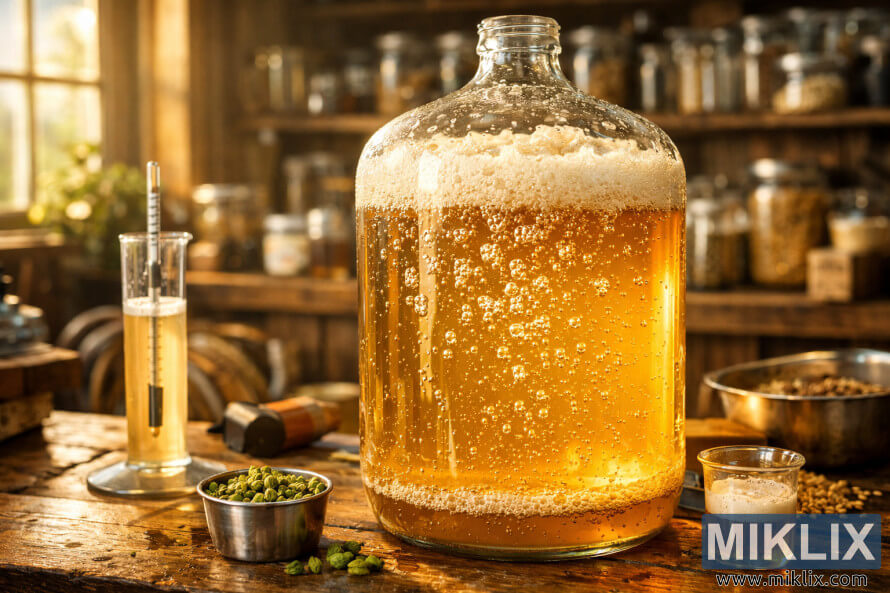
Click or tap the image for more information and higher resolutions.
Alcohol Tolerance Considerations for Strong Beers
White Labs rates WLP041 alcohol tolerance at 5-10%, categorizing Pacific Ale yeast as medium-tolerant. This range is suitable for most ordinary ales and many American pale styles. However, brewers aiming for beers with higher ABV should be mindful of this limit.
For beers aiming above 8–9% ABV, expect slower or stalled attenuation as the yeast approaches its tolerance. To avoid stuck fermentation, consider using larger starters, multiple yeast packs, or step-feeding fermentable sugars. These methods help maintain yeast activity during the fermentation of strong beers.
For very high gravity worts, a multi-pitch strategy can be beneficial. Adding more yeast mid-fermentation can revitalize the fermentation process and increase attenuation. If achieving an ABV above 10% is crucial, select a yeast strain known for its high alcohol tolerance.
Nutrition and oxygen are vital during high ABV fermentation. Adequate zinc, yeast nutrients, and early oxygenation are essential for yeast health. Without proper nutrition or oxygen, yeast stress increases, leading to unwanted flavors like sulfur, solvents, or fusels when near tolerance limits.
Consistent fermentation temperatures within the yeast's recommended range are crucial to minimize stress. Cooler, controlled finishes often result in cleaner flavors as alcohol levels rise. Monitor gravity and aroma closely; signs of stress may require re-oxygenation early on or a fresh, vigorous yeast pitch if fermentation stalls.
- Build a large starter or use multiple packs when targeting upper tolerance.
- Step-feed fermentables to avoid osmotic shock in early fermentation.
- Provide proper nutrients and oxygen at pitch to support vitality.
- Switch to a more alcohol-tolerant strain if consistent >10% ABV performance is needed.
Comparing WLP041 to Similar Pacific Northwest and English Strains
WLP041 stands out as a practical choice for brewers. It offers a milder ester profile compared to traditional English strains. Yet, it retains more malt presence than clean American ale yeasts like White Labs WLP001.
Flocculation is a significant advantage of WLP041. It clears faster than many West Coast ale strains, which stay suspended and attenuate heavily. This trait aids in achieving better visual clarity without the need for extended conditioning times.
In a Pacific Northwest yeast comparison, consider the intended use. WLP041 complements resinous or floral hops, preserving their character while adding gentle fruit notes. This balance makes it ideal for hop-forward Pacific Northwest styles and beers that benefit from a richer malt body.
Reviewing English ale yeast differences reveals subtle nuances. Traditional English strains often produce stronger, heavier esters and lower attenuation. WLP041, however, attenuates a bit more and keeps its ester profile restrained. This characteristic bridges English styles with modern American ales.
- Malt-forward balance: more noticeable than very clean American strains.
- Moderate ester profile: less pronounced than classic English strains.
- Higher flocculation: better clarity than many West Coast strains.
- Versatility: works for both Pacific Northwest hop-forward beers and English-style ales.
When deciding between WLP041 and other strains, consider your recipe goals. If you aim for hop aroma to shine with a solid malt backbone, WLP041 is a good fit. For those prioritizing heavy English fruitiness or an ultra-clean canvas, opt for a more specialized strain.
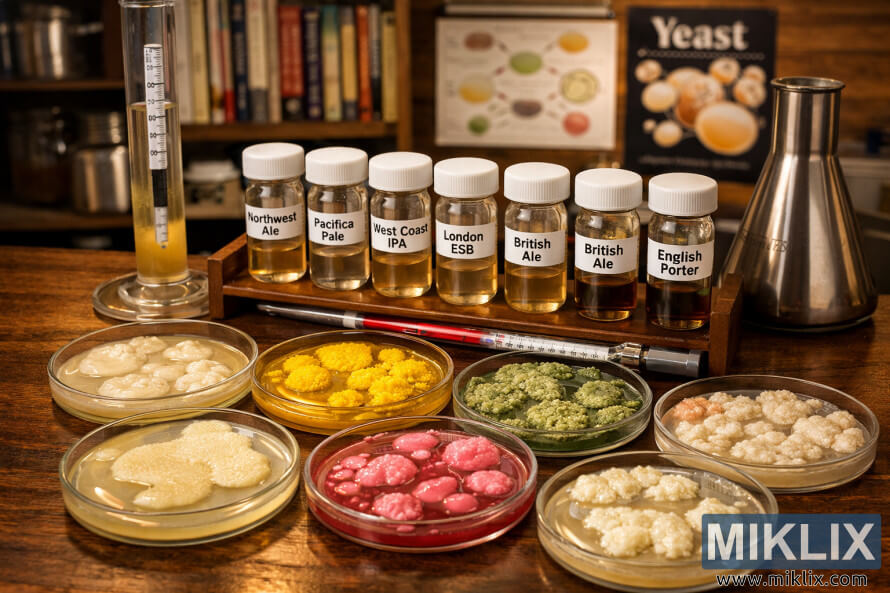
Click or tap the image for more information and higher resolutions.
Common Troubleshooting Scenarios from Homebrewers
Many brewers worry when they see little to no krausen at 36 hours, fearing their batch stalled. However, a lack of visible foam does not always indicate failure. It's crucial to check the specific gravity with a hydrometer or refractometer before taking any action.
If the gravity remains steady after 48–72 hours, a clear plan is needed. First, verify the fermentation temperature, ensuring it falls within the recommended 65–68°F range. Common issues include low temperature or a low pitching rate.
- Slow fermentation fix: raise the fermenter temperature by a few degrees within the yeast’s safe range to encourage activity.
- Slow fermentation fix: gently swirl the fermenter to resuspend yeast and release some CO2 without introducing oxygen late in the process.
- Slow fermentation fix: pitch a healthy starter or a fresh packet of dry or liquid ale yeast when gravity shows no change after 72 hours.
To prevent repeat issues, take preventative steps. Ensure proper pitch rates and create starters for high-OG beers. Oxygenate the wort at transfer before pitching, maintain fermentation at 65–68°F, and handle yeast with care. These actions can significantly reduce the likelihood of no krausen at 36 hours in future batches.
When troubleshooting, it's essential to document each intervention and recheck gravity every 12–24 hours. Keeping detailed records aids in diagnosing persistent issues and enhances results with WLP041 troubleshooting on subsequent brews.
Buying, Storage, and Vault Product Notes
Retail availability for WLP041 SKU WLP041 is robust. White Labs sells this strain directly, and many shops like Great Fermentations also carry it. When searching to Buy WLP041, expect product pages to indicate it's a Vault item.
As a Vault strain, WLP041 is highly concentrated and requires cold handling. Packaging details often highlight its malty profile, high flocculation, and recommended beer styles. Listings usually show the SKU WLP041 for easy ordering.
Follow White Labs Vault storage recommendations to maintain viability. Store it refrigerated and use it while fresh. Proper cold storage ensures performance during fermentation and preserves expected attenuation and flavor.
Shipping is crucial when buying WLP041. Opt for retailers that maintain a cold chain and offer insulated packaging. Many sellers provide free shipping over a certain threshold. However, confirm the shipping methods to protect the Vault product.
- Confirm SKU WLP041 when ordering to avoid mix-ups.
- Keep the yeast refrigerated until pitching.
- Plan to use Vault yeast soon after receipt for best results.
Practical Step-by-Step Fermentation Guide for WLP041
- Prepare your wort according to your recipe and desired attenuation. Follow the mash and boil steps as instructed. Ensure the fermentability aligns with your style and expected final gravity.
- Determine the right amount of yeast to use. Utilize White Labs’ pitch calculator or the cell count provided by your retailer, approximately 7.5 million cells/mL. This is crucial for high OG or large batches. Ensure the yeast reaches the desired pitching temperature before adding it to the wort.
- Adequate oxygenation is essential. Use aeration or pure oxygen to support early yeast growth and promote healthy fermentation with Pacific Ale yeast.
- Pitch the yeast at the correct cell count and temperature. Aim for the recommended cells per milliliter for your specific gravity. Pitch WLP041 at a temperature of about 65–68°F for a clean, balanced fermentation profile.
- Monitor fermentation daily. Krausen formation can be slow. Regularly check the gravity every 24–48 hours if fermentation activity is not evident. A hydrometer or digital refractometer can confirm fermentation progress.
- Troubleshoot gently if fermentation stalls. If gravity shows no change after 48–72 hours, slightly increase the temperature or gently swirl the fermenter to resuspend the yeast. Avoid vigorous agitation to prevent oxidation.
- Allow the yeast to complete fermentation and conditioning. WLP041's medium to high flocculation aids in faster beer clearing. Provide sufficient conditioning time for flavor maturation and natural settling.
- Verify the final gravity before packaging. Bottle or keg only when the final gravity matches your expectations and remains stable over 24–48 hours. This step prevents over-carbonation and ensures safety.
Use this step-by-step WLP041 checklist to maintain consistency in your fermentation process. Record temperatures, gravity readings, and any adjustments made. This will help refine your process with each batch.
Conclusion
White Labs WLP041 Pacific Ale Yeast is a valuable addition to any homebrewer's arsenal. It offers a balanced profile, perfect for pale ales, IPAs, and other malt-forward styles. The yeast's high flocculation and clean fermentation characteristics result in clearer beer and shorter conditioning times.
However, there are some limitations to consider. Its alcohol tolerance is medium, and attenuation can vary. This means that monitoring gravity is crucial, especially when fermentation starts slowly. These factors are key to understanding the yeast's performance.
To achieve the best results, ensure a sufficient cell count by using a starter for high OG beers. Maintain a temperature of 65–68°F during fermentation. WLP041 is ideal for ales where hop and malt flavors can complement each other. It's a reliable choice for brewers who prioritize quality and consistency.
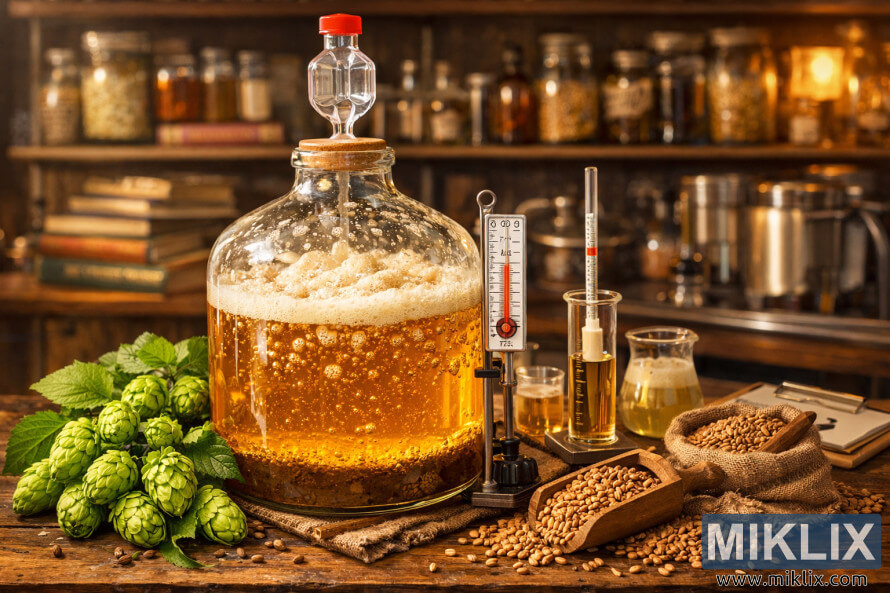
Click or tap the image for more information and higher resolutions.
Further Reading
If you enjoyed this post, you may also like these suggestions:
- Fermenting Beer with Fermentis SafBrew LA-01 Yeast
- Fermenting Beer with Wyeast 1214 Belgian Abbey Style Ale Yeast
- Fermenting Beer with Wyeast 1882-PC Thames Valley Ale II Yeast