
Fermenting Beer with White Labs WLP001 California Ale Yeast
Published: November 26, 2025 at 10:52:29 PM UTC
White Labs WLP001 California Ale Yeast has been a cornerstone since 1995. It's available in both liquid and Premium Active Dry Yeast forms. The article will merge White Labs yeast technical data, community experiment notes, and retail feedback. This blend aims to offer clear guidance on fermenting with WLP001.
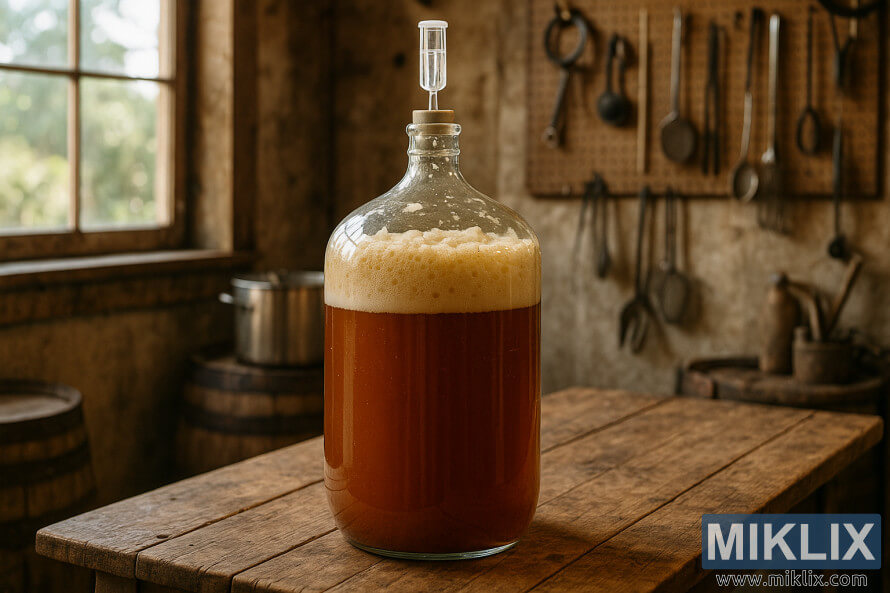
Click or tap the image for more information and higher resolutions.
Key Takeaways
- White Labs WLP001 California Ale Yeast is a long-standing flagship strain available in liquid and premium dry forms.
- The article synthesizes manufacturer specs, lab data, and community tests for practical guidance.
- Expect clear handling advice for homebrewing and small commercial batches.
- Retail notes cover Pure Pitch Next Gen offerings and common customer feedback.
- Useful for brewers looking to compare California Ale yeast performance and fermentation results.
Overview of White Labs WLP001 California Ale Yeast
White Labs introduced WLP001 in 1995, marking its first commercial strain. The description often emphasizes its clean fermentation, strong flocculation, and versatility across various styles. Brewers appreciate it for its reliable, hardy fermentations and predictable attenuation.
The California Ale yeast background reveals why many breweries prefer WLP001 for hop-forward beers. It enhances hop flavors and aromas, creating a neutral malt canvas. Retail listings clearly name the product, such as WLP001 California Ale - White Labs Yeast Pure Pitch Next Gen. White Labs also supports purchases with tech sheets and pitch rate calculators.
WLP001 is available in liquid culture and Premium Active Dry Yeast forms. An organic option is available for brewers seeking certified inputs. These formulations allow brewers to choose the format best suited for their scaling, repitching plans, and storage needs.
Marketing materials highlight WLP001 as a top choice for IPAs and hoppy ales. However, its uses extend beyond these categories. It handles higher gravity ales well, making it a common choice for various American and hybrid styles.
- Core traits: clean profile, hop lift, steady attenuation.
- Formats: liquid pitch, active dry, organic option.
- Support: tech sheets, calculators, R&D resources from White Labs.
Key Fermentation Characteristics for WLP001
WLP001 fermentation characteristics are marked by consistent vigor and dependable performance. Brewers often note a hardy yeast that initiates fermentation swiftly. It maintains steady activity throughout primary fermentation, avoiding prolonged lag phases.
Attenuation for this strain typically ranges from 73% to 85%. This range tends to result in a drier finish, especially when fermentations reach the upper end.
Flocculation is medium, leading to reasonable clearing and a clean, crisp beer. Expect to see visible settling in typical conditioning times, without excessive haze retention.
- Fermentation profile: fast start, steady activity, and predictable terminal gravity.
- Diacetyl reabsorption: efficient when fermentations progress normally, reducing the risk of residual buttery notes.
- STA1: QC results report negative, reflecting a standard starch metabolism profile for ale strains.
These characteristics make WLP001 a versatile choice for many American ales and hybrids. Its balance of attenuation, flocculation, and a reliable fermentation profile aids brewers in consistently achieving their targets.
Optimal Fermentation Temperature Range
White Labs recommends fermenting WLP001 between 64°–73° F (18°–23° C). This range ensures a clean, balanced flavor and highlights the hops in American-style ales.
Staying within 64°–73° F reduces fruity esters and phenolic spice. For beers that focus on hop flavor, aim for the lower end of this range.
Increasing the fermentation temperature can speed up fermentation and increase ester production. However, be cautious with higher temperatures. They may introduce banana, pear, or spicy notes, depending on the pitch rate and wort composition.
Practical handling is crucial for flavor outcomes. Adhere to the manufacturer's guidelines for cooling, pitching, and early fermentation with WLP001.
- Target 64°–68° F for the cleanest results and clear hop expression.
- Use 69°–73° F to finish faster or add mild ester character.
- Monitor yeast health; oxygenation, pitch rate, and nutrition change how fermenting temperature WLP001 affects flavor.
Community trials show that processing methods like drying or rehydration can alter flavor at specific temperatures. When using fresh liquid yeast, stick to the recommended temperature range to preserve the intended flavor profile from White Labs.
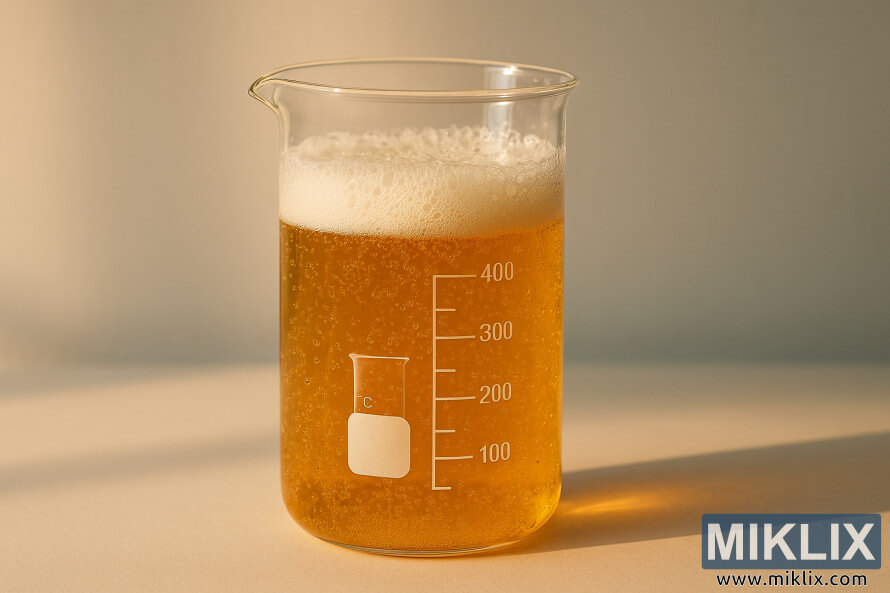
Click or tap the image for more information and higher resolutions.
Flavor and Aromatic Profile Produced by WLP001
White Labs WLP001 is known for its clean fermenting yeast character. This allows hop flavors and aromas to take center stage. Brewers praise its crisp and neutral flavor, enhancing the hop bitterness and oils in American ales.
The California Ale yeast aroma is subtle, with warm fermentation producing restrained fruit esters. However, these esters are less pronounced compared to English strains. Proper temperature control ensures a dry finish, highlighting citrus, resin, and floral hop notes.
Homebrewers and professional brewers often find fewer off-notes with WLP001 than with dry strains. Liquid handling helps preserve its neutral traits. However, drying and rehydration can introduce minor flavor-active compounds.
Diacetyl uptake is quick with WLP001, following White Labs guidelines. Sulfur character is rarely an issue in standard ale schedules. This supports WLP001's reputation as a clean fermenting yeast for hop-forward styles.
Practical tasting notes include a bright mouthfeel and restrained esters. The clean backbone is ideal for IPAs, pale ales, and other hoppy beers. Brewers aiming to emphasize hop aroma will find WLP001 particularly useful.
Best Beer Styles to Brew with WLP001
White Labs WLP001 California Ale yeast excels in hop-forward beers. It offers clean attenuation and a subtle ester profile, making it ideal for American IPA, Double IPA, and Pale Ale. This yeast ensures crisp hop expression, bringing clarity to both bitterness and aroma.
WLP001 is not limited to IPAs. It's also great for Blonde Ale, American Wheat Beer, and California Common. These styles benefit from its neutral character, allowing malt and hops to shine equally. The yeast's ability to produce a dry finish without losing character is noteworthy.
High-gravity beers also perform well with WLP001. Barleywine, Imperial Stout, and Old Ale ferment reliably, reaching the expected attenuation. Its robustness ensures a strong finish in stronger recipes, preserving malt complexity.
Hybrid and specialty beers also suit this yeast. Porter, Brown Ale, Red Ale, and Sweet Mead respond well to its steady fermentation and moderate phenolic restraint. Brewers working with cider or dry mead will appreciate its clean conversion and consistent results.
- Hop-forward: American IPA, Double IPA, Pale Ale
- Session to mid-strength: Blonde Ale, American Wheat Beer, California Common
- Malt-forward/high gravity: Barleywine, Imperial Stout, Old Ale
- Hybrid and specialty: Porter, Brown Ale, Red Ale, Cider, Dry Mead, Sweet Mead
Choosing styles for California Ale yeast reveals its versatility. It balances attenuation and character, making it suitable for a wide range of ales. This versatility is why many brewers consider it for everything from crisp pales to robust stouts.
To match a recipe to WLP001 recommended styles, focus on fermentation temperature and pitching rate. Adjusting these variables can tailor dryness and ester presence. Small tweaks allow brewers to emphasize hops, malt, or balance, depending on the style.
Pitching Rates and Starter Recommendations
Accurate WLP001 pitching rates are crucial for clean fermentation and consistent attenuation. White Labs provides a tech sheet and tools for calculating cell counts based on batch size and original gravity. This helps homebrewers optimize their brewing process.
For low- to moderate-gravity ales, a single liquid vial is often sufficient for five-gallon batches. However, for high-gravity recipes or large volumes, a yeast starter WLP001 is recommended. It boosts cell count and reduces lag time, ensuring a smoother fermentation process.
The pitch calculator WLP001 is a valuable tool for targeting specific cells per milliliter based on your beer’s gravity. A higher pitching rate helps preserve the strain’s neutral profile. It can also limit ester production, which is important if you aim to avoid certain flavors.
- Small batches: one vial may be enough; watch fermentation speed and krausen development.
- High-gravity beers: build a starter or step up volume to reach recommended cell counts.
- Repitching: track viability and step up with a fresh starter when cell health drops.
Community trials have shown that startered liquid WLP001 can change the yeast's metabolic state compared to dry packs. This change can affect attenuation and subtle flavor cues.
Practical tip: prepare a starter two to three days ahead for larger batches. If exact counts matter, plug your batch specs into the pitch calculator WLP001 and follow White Labs’ recommendations.
When time is tight, a slightly larger pitch can substitute for a starter. However, for consistency across batches, a yeast starter WLP001 provides the most predictable results.
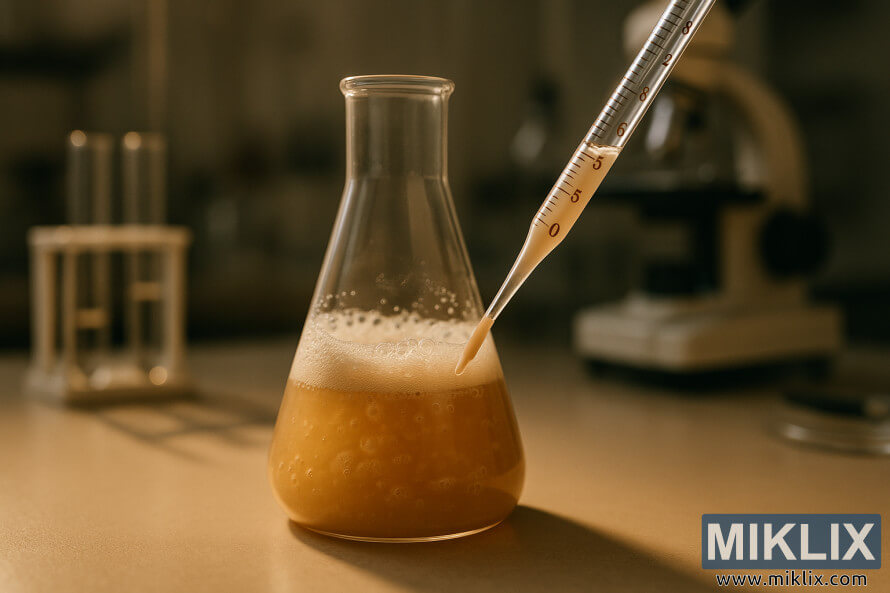
Click or tap the image for more information and higher resolutions.
Dry vs Liquid: Performance Differences and Considerations
Brewers considering WLP001 liquid vs dry should first understand the basics. White Labs offers WLP001 as a liquid Pure Pitch Next Gen culture and a Premium Active Dry Yeast. Although both share a common origin, their preparation and performance in wort differ significantly.
The differences between dry and liquid yeast manifest in flavor, lag time, and consistency. Homebrewers often find that liquid WLP001 produces a clean, consistent flavor profile, aligning with White Labs' technical specifications. In contrast, dry California-style strains like US-05 may introduce spicy or fruity notes, especially at certain temperatures or generations.
Rehydration impacts yeast in tangible ways. Dry yeast requires precise rehydration to restore cell membranes and enzyme activity. Adhering to the manufacturer's rehydration temperature guidelines is crucial to minimize stress and potential off-flavors.
Liquid yeast benefits from a starter, especially when cell count or vitality is a concern. A starter promotes cell growth and aligns metabolic states with the wort. This approach can reduce variability between first-generation dry pitches and later liquid generations.
Practical handling tips:
- Pitch liquid WLP001 directly or use a starter for large batches to match manufacturer profile.
- If using dry yeast, rehydrate at the recommended temperature range to limit rehydration effects yeast can cause.
- Consider repitching harvested slurry to stabilize flavor when switching between dry and liquid generations.
For brewers aiming for White Labs' profile, liquid WLP001 is the preferred choice. If opting for dry yeast, a starter or repitch strategy can help bridge the metabolic gap. This approach can mitigate the differences between dry and liquid yeast in the final beer.
Repitching and Yeast Management with WLP001
Repitching WLP001 is effective in small breweries and home setups. This California ale strain is known for its robust nature and stable flavor profile. It maintains consistency across multiple generations with proper handling.
Monitoring repitch cycles is crucial. Avoid using very old yeast slurries. Good practices include tracking repitch numbers, observing yeast health, and smelling the slurry before reuse.
- Collect trub after a controlled cold crash to improve yeast harvesting WLP001 quality.
- Use sanitized containers and cool storage for short-term holds.
- Discard slurries that show off aromas, discoloration, or low activity.
When planning a repitch, measure viability or build a starter. Proper oxygenation and nutrients in the starter reduce stress. This helps avoid attenuation shifts during fermentation.
- Cold-crash and decant beer to separate most trub from the yeast.
- Siphon healthy yeast into clean, sanitized vessels for storage.
- Count or estimate cells and create a starter if pitch rates look low.
Limit repitches to a conservative number based on brewery scale and testing. Yeast management White Labs stresses the importance of sanitation, record-keeping, and treating liquid cultures like perishable ingredients.
Good yeast harvesting WLP001 yields faster starts and cleaner fermentations. Regularly refresh your working bank. Avoid cumulative stressors like high alcohol, heat, and repeated high oxygen exposure.
Keep a log of generations, gravity ranges, and observed flavors. This log helps decide when to retire a slurry and when to propagate fresh yeast. It ensures consistent results with WLP001 repitching.
Measuring and Managing Attenuation with WLP001
WLP001 attenuation typically ranges from 73% to 85%, resulting in a dry finish for ales. To measure attenuation, take an accurate original gravity (OG) reading before fermentation and a corrected final gravity (FG) reading after. Use a hydrometer or a refractometer with an alcohol correction calculator to ensure accurate results.
Calculate apparent attenuation as a percentage using the formula: (OG − FG) / (OG − 1.000) × 100. This formula shows how much sugar the yeast consumed. It helps compare real performance to the expected WLP001 attenuation range.
To manage attenuation, WLP001 responds to wort composition, fermentation temperature, and pitch rate. Lower mash temperatures create a more fermentable wort, increasing attenuation. To lower attenuation and preserve body, raise mash temperatures or add dextrin-rich malts.
Control fermentation temperature to steer attenuation within the strain’s range. Cooler primary fermentation can limit ester production and slightly reduce attenuation. Warmer, well-oxygenated starts and adequate pitching rates encourage healthy yeast activity and higher attenuation up to the strain’s potential.
- Measure attenuation precisely with corrected FG readings and consistent sampling.
- Manage attenuation WLP001 by adjusting mash rest and malt bill for desired mouthfeel.
- Optimize pitching rate and oxygenation to reach target attenuation within 73%–85%.
High attenuation yields drier beers that highlight hop bitterness and aroma. When brewing malt-forward styles, plan mash adjustments or add specialty malts to avoid a thin finish. This ensures the beer respects the expected WLP001 attenuation.
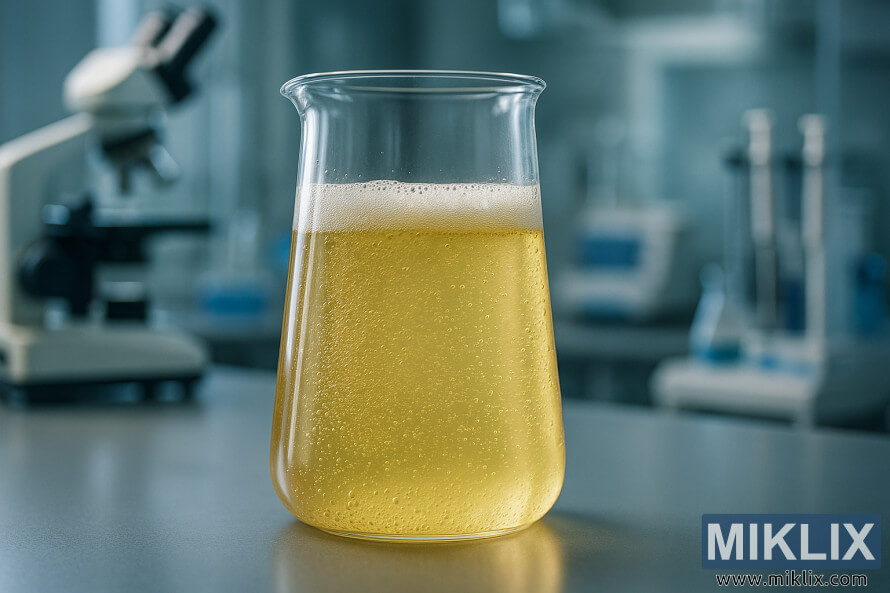
Click or tap the image for more information and higher resolutions.
Alcohol Tolerance and High-Gravity Fermentations
White Labs indicates WLP001's alcohol tolerance is medium, typically between 5%–10% ABV. Brewers find this strain robust, capable of high attenuation even with high starting gravities. It's an excellent pick for American ales aiming for robust flavors.
For WLP001 high gravity brews, it's crucial to plan yeast nutrition and cell count ahead. A larger or stepped starter is recommended to ensure a healthy pitch. Oxygenating the wort at transfer is also key, providing the necessary sterols and fatty acids for yeast to handle the stress of higher alcohol.
Practical steps for fermenting high ABV with WLP001 include staggered nutrient additions and frequent gravity checks. Nutrient additions at early and mid-fermentation support yeast performance. Daily gravity measurements are essential to detect stalled activity early.
However, pushing beyond 10% ABV without extra care can lead to limitations. For extremely high-gravity beers, consider adding fresh yeast, blending with a more alcohol-tolerant strain, or increasing the pitching rate. These strategies help maintain aroma and prevent long fermentation tails.
- Make a stepped starter when target ABV is above 8%.
- Oxygenate wort prior to pitching for strong fermentations.
- Feed nutrients in stages to sustain yeast health.
- Monitor gravity and temperature to prevent stalls.
Managing Off-Flavors and Diacetyl with WLP001
WLP001 is renowned for its clean fermentation profile, provided it is handled properly. To prevent off-flavors, maintain a consistent fermentation temperature between 64–73°F. Avoid sudden temperature changes, as they can stress the yeast.
Ensuring the correct cell count is crucial. Underpitching can lead to fusel alcohols and excessive esters. For bigger or more complex brews, creating a starter or using multiple yeast packs is advisable. This ensures active yeast and consistent fermentation.
Oxygenation at the time of pitching is essential. Adequate dissolved oxygen supports healthy yeast growth. Without enough oxygen, sulfur and solvent-like aromas may develop, spoiling the ale's clean character.
Diacetyl production peaks early in fermentation and is then reabsorbed by active yeast. To manage diacetyl in WLP001, allow for a complete primary fermentation. This gives the yeast ample time to clean up. White Labs emphasizes that WLP001 quickly reabsorbs diacetyl once fermentation concludes and conditioning begins.
If diacetyl's buttery flavor persists, a diacetyl rest can help. Raise the temperature slightly for 24–48 hours. This boosts yeast activity, aiding in diacetyl reduction. If fermentation is slow, consider repitching a healthy yeast slurry or adding a starter to revitalize yeast activity.
- Follow 64–73°F target range to reduce ester and fusel formation.
- Ensure adequate pitching rates or use a starter for high-gravity beers.
- Oxygenate wort at pitch to promote clean fermentation.
- Allow conditioning time for yeast to reduce diacetyl California Ale yeast commonly produces.
To address persistent off-flavors, review fermentation logs for temperature fluctuations. Check the final gravity to confirm fermentation activity. Verify yeast viability. With proper management, WLP001's neutral character can be fully appreciated, minimizing off-flavors.
Comparisons to Popular Dry Strains (US-05, S-04 and others)
Homebrew forums and split-batch trials often pit WLP001 against common dry strains to show real-world differences. Many experienced brewers report WLP001 as a consistently clean, neutral fermenter. This makes it a go-to for West Coast–style ales.
When comparing WLP001 vs US-05, tasters sometimes note a subtle spice or fruitiness from US-05, especially if fermentation drifts above the recommended range. Pitching method matters. A starter for WLP001 versus rehydrated dry US-05 can change ester expression.
The thread WLP001 vs S-04 comes up in English-style ales. S-04 has a reputation for slight fruitiness and sulfate handling that can shift perception of bitterness. S-04 can show bolder esters if stressed, while WLP001 tends to stay restrained under the same conditions.
Liquid vs dry yeast comparison goes beyond strain genetics. The drying process may alter cell behavior. Emulsifiers and storage life in some dry brands can affect rehydration performance and initial metabolism.
- Genetics: Base alleles set potential ester profiles and attenuation.
- Preparation: Starters or rehydration level metabolic state at pitch.
- Processing: Drying and additives can shift early fermentation kinetics.
- Repitching: Multiple repitches often reduce perceived differences between liquid and dry strains.
To isolate true strain character, growers recommend equalizing yeast condition. Use harvested slurries or make starters for both strains to match cell health and count. Many bench brewers find flavor gaps narrow after an equalized trial.
Practical brewers should note that small recipe tweaks and fermentation control can overshadow strain choice. Temperature control, oxygenation, and pitch rate shape the final beer as much as the WLP001 vs US-05 or WLP001 vs S-04 debate. The liquid vs dry yeast comparison remains useful when planning starters, repitches, and split-batch tests.
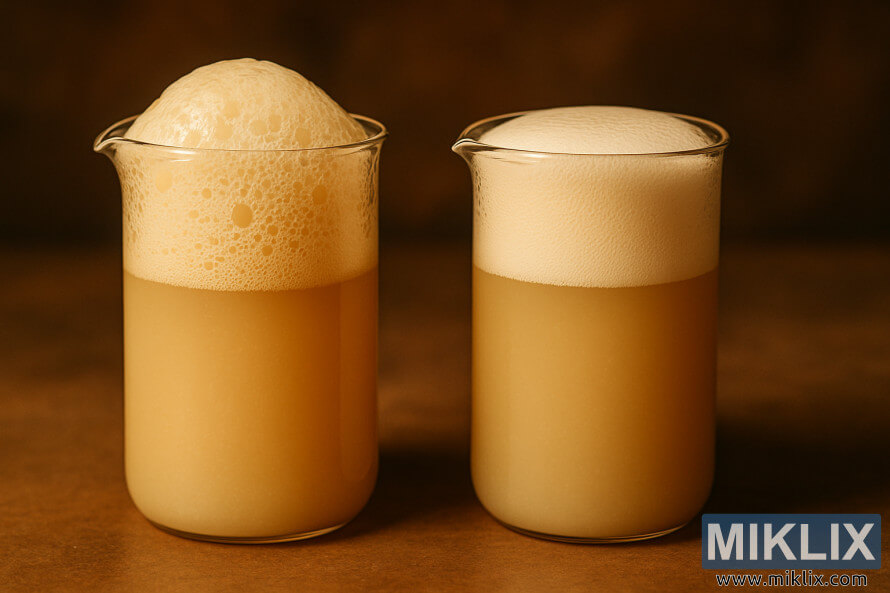
Click or tap the image for more information and higher resolutions.
Practical Brewing Protocol for Using WLP001
Begin by acquiring fresh White Labs WLP001, available as a liquid Pure Pitch Next Gen vial or Premium Active Dry Yeast. Refer to the White Labs tech sheet and employ a pitch rate calculator to verify cell counts. This initial step is crucial for achieving consistent results.
For standard gravity ales, a single liquid vial is usually sufficient. However, for high-gravity beers or larger batches, create a starter to achieve the necessary cell count. When opting for dry yeast, adhere to the manufacturer's rehydration instructions or prepare a starter to match the target cell count. These steps are essential for ensuring reliable fermentation performance with WLP001.
Ensure wort is adequately oxygenated at the time of yeast pitching. Sufficient dissolved oxygen is vital for yeast growth and minimizes stress during the initial fermentation phase. This is particularly crucial for beers with higher gravities and those aiming for minimal ester presence.
Adhere to a detailed fermentation schedule and maintain the recommended temperature range of 64–73°F (18–23°C). Allow active fermentation to complete and provide sufficient conditioning time for yeast to reabsorb diacetyl. If diacetyl is detected, consider a short diacetyl rest by increasing the temperature slightly for 24–48 hours.
Here is a concise guide to the main WLP001 fermentation steps:
- Confirm viable cell count and prepare starter if needed.
- Pitch yeast into properly oxygenated, cooled wort.
- Maintain 64–73°F (18–23°C) during active fermentation.
- Allow conditioning time and perform diacetyl rest when required.
- Cold crash for clarity, then package after gravity is stable.
When packaging, ensure final gravity is stable and off-flavors have diminished. WLP001's medium flocculation typically results in a clear beer after conditioning. Adhere to these steps to transition from brewday to a bright, clear beer with consistent outcomes.
Troubleshooting Common Issues with WLP001 Fermentations
Stuck or sluggish fermentations can derail a batch fast. Check pitching rate first, then verify wort oxygenation and fermentation temperature. If yeast viability is in doubt, build a starter or repitch healthy cells to fix stuck fermentation WLP001 and restore activity.
Diacetyl or unexpected buttery notes usually respond to time and heat. Allow extra conditioning or raise the fermenter temperature by a few degrees to encourage diacetyl reabsorption. Review fermentation temperature control and pitching technique to prevent repeat issues when working on WLP001 fermentation problems.
Haze and clarity concerns are common with medium-flocculent strains. Try a cold crash, finings, or gentle filtration. Extended conditioning often clears beers without stripping desired character.
First-pitch odd behavior may appear if using a different yeast format. Some brewers notice atypical first-generation flavors with dry strains compared with liquid cultures. If flavors stabilize after repitching, document the change for future batches to aid WLP001 troubleshooting.
High-ABV beers need careful planning. For beers above 8–10% ABV, make larger starters, increase pitch rates, oxygenate wort well, and add yeast nutrients. These steps reduce stress on cells and lower the chance of stalled fermentation when you try to fix stuck fermentation WLP001.
- Quick checks: gravity drop, krausen, fermentation temp.
- Actions: build a starter, repitch, warm the fermenter, oxygenate.
- Preventive steps: accurate cell counts, good aeration, and nutrient support.
When troubleshooting, keep records of pitch size, temperature profile, and yeast source. Clear notes make diagnosing WLP001 fermentation problems easier and improve outcomes in future batches.
Resources, Tech Sheets, and Purchasing Information
White Labs provides an official WLP001 tech sheet. It outlines attenuation, flocculation, and optimal temperature ranges for the California Ale strain. The sheet also includes fermentation notes. It offers lab data and handling tips, helping brewers understand how the yeast performs in various recipes.
Retail pages for White Labs WLP001 buy often list different product variations. These include Pure Pitch Next Gen liquid, Premium Active Dry Yeast, and occasional organic lots. Product listings frequently include user reviews and SKU details, aiding in selection.
The WLP001 pitch calculator from White Labs is invaluable. It helps size starters or rehydration volumes for single- and multi-gallon batches. The calculator makes it easier to determine the right pitch rate for standard and high-gravity brews.
For more in-depth WLP001 product information, refer to both manufacturer notes and community reports. Experimental Brewing and Brulosophy have documented experiments. These compare dry and liquid performance and detail repitching outcomes over multiple generations.
- Manufacturer resources: tech sheet, R&D notes, and the WLP001 pitch calculator for accurate pitching.
- Retail tips: check for Pure Pitch Next Gen listings and read customer feedback on handling and cold-chain shipping.
- Community reading: forum threads and xBmt posts on pitching, rehydration, and strain behavior across fermentations.
When purchasing White Labs WLP001, ensure cold-chain handling. Also, inquire about return or support policies related to batch issues. Proper storage and prompt pitching enhance yeast vitality and fermentation consistency.
For lab-grade details, the WLP001 tech sheet and other White Labs documentation are essential. They provide reliable, up-to-date specifications and handling guidance.
Conclusion
WLP001 summary: White Labs WLP001 California Ale Yeast is a top choice for brewers. It offers clean fermentations and consistent results. This yeast is great for hop-forward American ales and many other styles. It absorbs diacetyl well and has a neutral ester profile, enhancing malt and hop flavors.
White Labs WLP001 review: To get the best from WLP001, follow White Labs’ recommended fermentation range of 64°–73°F. Use a pitch calculator for accurate pitching rates. For high-gravity beers, a starter is crucial for healthy cell counts. Liquid WLP001 is the closest to the manufacturer's profile; dry alternatives require careful management.
fermenting with WLP001 summary: WLP001 is a reliable choice for both homebrewers and commercial producers. It's perfect for modern American styles and is easy to manage with proper practices. For those seeking consistency and versatility, WLP001 is an excellent option.
Further Reading
If you enjoyed this post, you may also like these suggestions:
- Fermenting Beer with Wyeast 1099 Whitbread Ale Yeast
- Fermenting Beer with White Labs WLP800 Pilsner Lager Yeast
- Fermenting Beer with Bulldog B44 European Ale Yeast