
Fermenting Beer with Wyeast 1581-PC Belgian Stout Yeast
Published: January 4, 2026 at 4:04:47 PM UTC
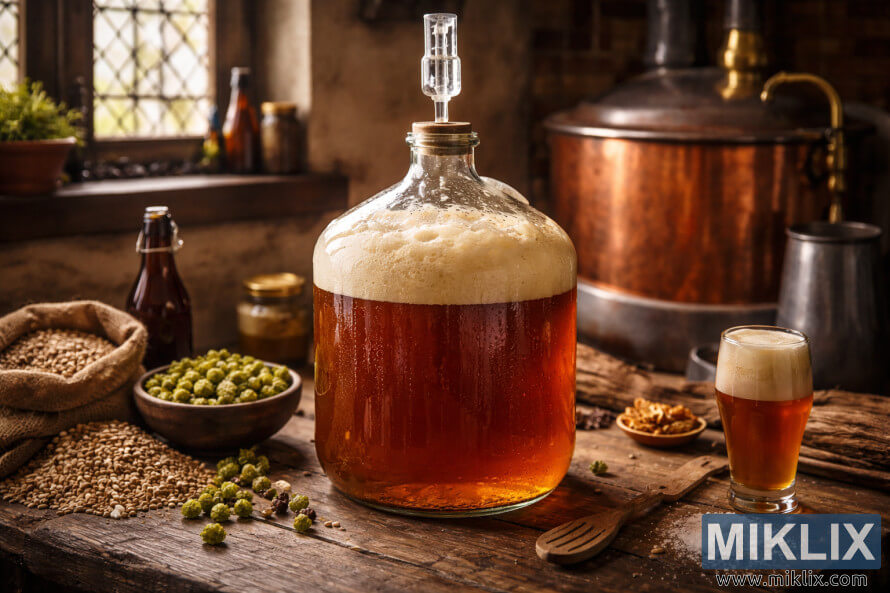
Wyeast 1581-PC Belgian Stout Yeast is designed for Belgian-style stouts and darker Belgian specialty ales. It offers a balance of ester-driven character and robust attenuation. The strain is seasonal, perfect for brewers seeking Belgian complexity in roasty, malt-forward beers.
Click or tap the image for more information and higher resolutions.
Wyeast 1581-PC Belgian Stout has medium flocculation and an attenuation range of 70–85%. It can handle alcohol near 12%. Fermentation temperatures are between 65–75°F. A healthy pitch is roughly 100 billion cells. Later sections will provide practical steps for homebrewers.
This introduction frames the yeast’s core attributes, typical uses, and expected fermentation behavior. Whether brewing a rich imperial stout with Belgian esters or a lighter specialty ale, this review sets expectations before fermentation.
Key Takeaways
- Wyeast 1581-PC Belgian Stout Yeast is a seasonal liquid yeast from Wyeast Laboratories for Belgian-style dark ales.
- Expect medium flocculation, 70–85% attenuation, and fermentation at 65–75°F.
- Alcohol tolerance is around 12%, suitable for stronger stouts and specialty ales.
- Cell count per pitch is approximately 100 billion; starters improve reliability for high-OG batches.
- This review focuses on practical guidance for fermenting Belgian stout with authentic Belgian ale character.
Overview of Wyeast 1581-PC Belgian Stout Yeast
Wyeast Laboratories introduced the Wyeast 1581-PC strain as a versatile choice for Belgian ales. It is celebrated for its clean attenuation and balanced ester profile. This makes it a top pick for crafting rich, dark beers.
As a Belgian stout yeast, it offers moderate fruity esters without the overpowering phenolic spice found in other Belgian yeasts. This characteristic makes it ideal for Belgian stouts and specialty ales. It ensures that the roast and malt complexity remains at the forefront.
Wyeast categorizes this culture as a seasonal offering. It is available from April through June and can be found in hobby shops until late autumn. Homebrewers should plan their purchases accordingly to ensure a reliable supply.
- Typical liquid pack: about 100 billion cells per pitch.
- Best for: Belgian stouts, specialty Belgian ales, and robust dark ales.
- Fermentation: ferments toward dryness with steady attenuation.
For standard gravity beers, one pack is usually sufficient with a good starter. For higher gravities, a larger starter or multiple packs are recommended to achieve the desired pitching rates. The packaging and cell count align with common homebrew practices.
The strain's main advantage is its balance. It offers noticeable Belgian character without the heavy clove or pepper often associated with other yeasts. This balance allows for creative freedom in recipe formulation, ensuring the yeast complements the beer without overpowering it.
Key Fermentation Characteristics for Homebrewers
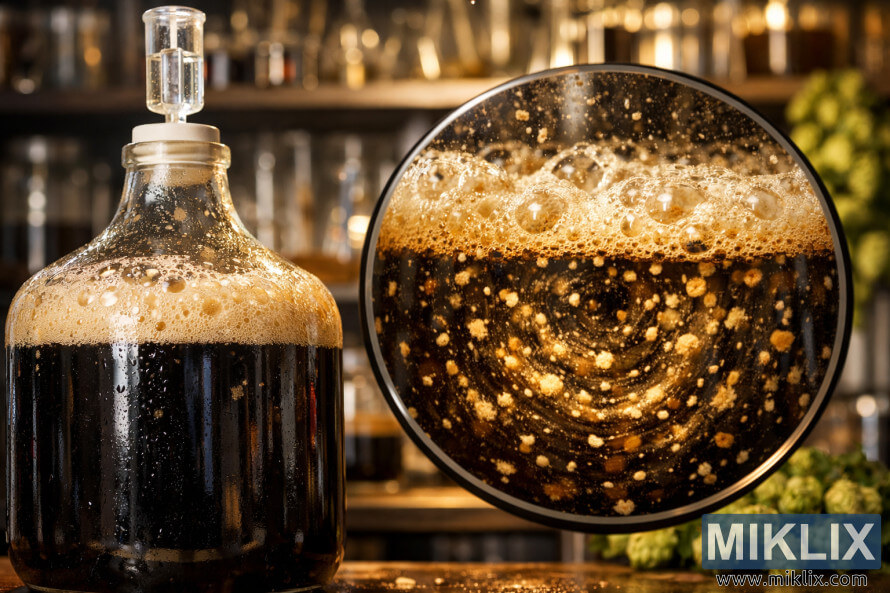
Wyeast 1581 fermentation traits make this strain a solid pick for strong ales and stouts. Expect average attenuation of 70–85%, which yields a relatively dry finish. This helps predict final gravity when formulating recipes.
Flocculation is medium, so the yeast drops out at a steady pace. Brewers will often see a stable beer without extreme brightening. However, extended conditioning or filtration will improve clarity if desired.
Alcohol tolerance reaches up to about 12% ABV. This alcohol tolerance supports quads, Belgian strong ales, and high-gravity stouts. Provided you pitch healthy yeast and add nutrients for big worts.
Fermentation produces moderate esters that bring gentle fruit notes into the beer. These esters complement malt and roast flavors without overwhelming them. This leaves room for complex profiles in stout recipes.
This strain shows little phenolic spice, unlike many Belgian strains. That cleaner profile allows brewers to showcase malt body and roast character. It retains subtle Belgian fruitiness.
- Attenuation: plan for dry finishes and adjust mash or dextrinous malts if more body is wanted.
- Flocculation: expect moderate clearing; cold conditioning speeds settling.
- Alcohol tolerance: suitable for up to 12% ABV when yeast health is prioritized.
- Flavor balance: moderate esters, low phenolics, good for complex stouts.
Practical implications are straightforward: target final gravities with the noted attenuation, manage conditioning to control clarity, and ensure strong yeast nutrition for high-gravity brews. These Wyeast 1581 fermentation traits deliver a balanced, dry finish with moderate fruitiness. This preserves roast and malt detail.
Click or tap the image for more information and higher resolutions.
Temperature Management and Fermentation Profile
The ideal temperature for Wyeast 1581 fermentation is between 65–75°F (18–24°C). This range ensures a balance between ester production and fermentation vigor. It's crucial for achieving the desired flavor profile.
At 65°F, fermentation is cleaner, with fewer fruity esters. As the temperature increases to 75°F, fermentation speeds up, and Belgian esters and phenolics become more pronounced. This flexibility allows brewers to fine-tune the final flavor.
Start primary fermentation in the lower-to-mid range for better control. Once fermentation is active, you can gradually increase the temperature. This approach enhances ester character and accelerates attenuation.
Keep an eye on krausen height and gravity readings to gauge fermentation vigor. Wyeast 1581 exhibits moderate-to-strong activity, making regular monitoring essential. This practice helps avoid unexpected outcomes during fermentation.
For high-gravity beers, near Wyeast 1581's tolerance of 12%, maintaining strict temperature control is vital. Adding yeast nutrients is also beneficial. Proper temperature management is key to preventing fermentation stalls and ensuring healthy yeast performance.
After primary fermentation, maintain a stable conditioning temperature. This allows the yeast to complete attenuation and flocculation. A consistent temperature or a slight decrease, depending on your desired outcome, aids in clarification and flavor maturation.
- Target range: 65–75°F (18–24°C)
- Start low, finish higher for more esters
- Watch krausen and gravity for progress
- Use nutrients and steady temps for high-gravity batches
Flavor and Aroma Contributions in Belgian Stouts
The flavor profile of Wyeast 1581 is characterized by a subtle fruitiness. This enhances the dark malt without overpowering it. In strong stouts, the yeast contributes esters that bring out plum, raisin, or light stone-fruit notes. These notes complement the roasted barley and chocolate malt.
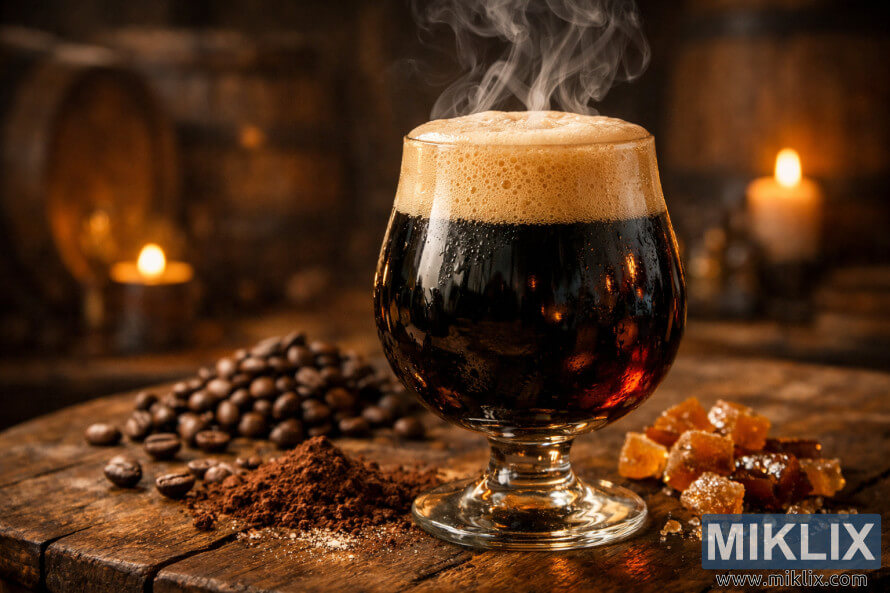
Belgian stout aroma is predominantly malt-forward, with minimal spicy notes. The yeast strain lacks significant phenolic clove or pepper traits. This allows the classic roast, coffee, and dark-cocoa flavors to stand out.
Using Wyeast 1581 with high gravity grists results in a dry finish. This balances the alcohol warmth and roasty bitterness. The yeast-derived esters add complexity and roundness, enhancing the beer's depth without obscuring the roast.
Adjustments in fermentation temperature and oxygenation can fine-tune the ester output. Cooler, well-oxygenated ferments produce fewer esters, leading to a leaner profile. Slightly warmer ferments encourage fruit notes that complement molasses and dark sugar in Belgian stouts.
- Moderate esters enhance but do not mask roasted malts.
- Low phenolics keep the beer focused on malt and roast.
- Dry attenuation emphasizes a clean, complex finish.
In tasting, look for a dry, complex stout with noticeable yet measured fruitiness. The combination of roast presence and subtle esters defines the flavor profile Wyeast 1581. It builds a distinct Belgian stout aroma, perfect for strong, aged ales.
Click or tap the image for more information and higher resolutions.
Recommended Beer Styles and Recipe Ideas
Wyeast 1581 is perfect for Belgian stout, Belgian dark strong ale, and various Belgian specialty ales. It offers a dry finish and spicy phenols, complementing dark malts without cloying the beer.
Belgian stout recipes benefit from a balanced roast bill. Use moderate roast and chocolate malts, then add specialty malts like brown malt or cara-amber for depth. The yeast’s 70–85% attenuation ensures a crisp finish.
For higher gravity beers, aim for Belgian dark strong ale. Target staggered nutrient additions, thorough oxygenation, and a larger starter or multiple Wyeast packs for fermentations up to 12% ABV. Add dark candy sugar for complexity and a lighter body.
Consider Belgian specialty ale recipe ideas that go beyond stouts. Belgian blonde, Belgian pale ale, saison, and Belgian golden strong are great for pronounced ester and phenolic character with a drier finish.
Adjust mash profiles to control body. Use a slightly higher mash temperature or add dextrine malt if you want more mouthfeel to balance the yeast-driven dryness. Set original and final gravities with expected attenuation in mind.
Example builds: an imperial Belgian-style stout with restrained roast and yeast-forward spice; a Belgian dark strong ale finished with dark sugar and warm ester notes; a specialty stout with coffee or cacao where the yeast’s esters complement adjunct flavors.
Follow standard practices for high ABV beers. Pitch adequate cell counts, plan oxygenation, and manage nutrients. These steps will help Wyeast 1581 recommended styles reach full attenuation while preserving desirable Belgian character.
Pitching Rates, Yeast Health, and Starter Guidance
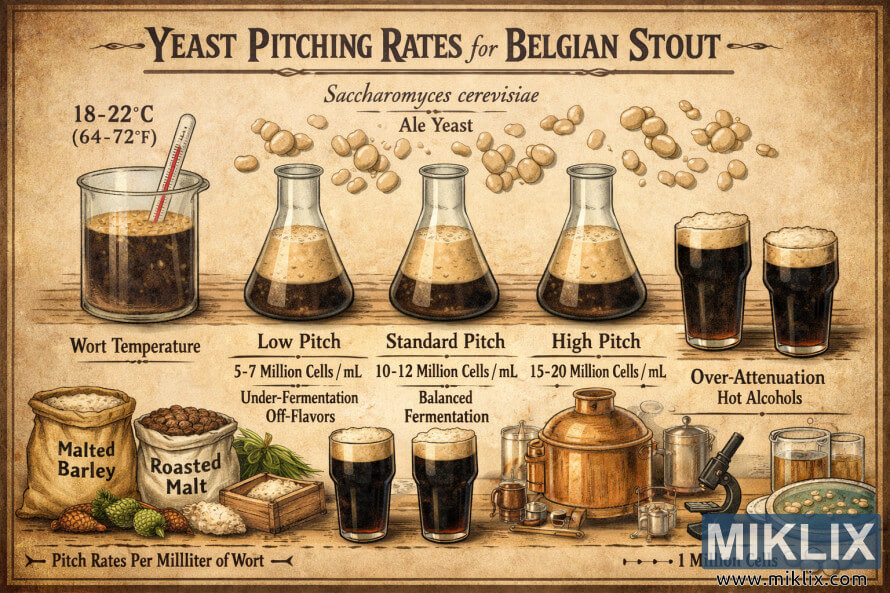
Begin by examining the liquid yeast cell count on the Wyeast package. Typically, a single pack contains about 100 billion cells. This amount is usually sufficient for many average-strength ales, eliminating the need for a starter.
However, for beers with higher gravities or those above 8–9% ABV, a larger yeast pitching rate is necessary. This can be achieved by creating a starter or using multiple packs. A well-prepared starter increases viable cells and shortens the lag phase.
Creating a yeast starter is straightforward: sanitize your equipment, briefly boil the wort, cool it, and then pitch a healthy slurry. Stirring or using a small airlock can help oxygenate the starter, promoting robust growth.
- Target cell counts relative to gravity and batch size.
- Use one pack for 5 gallons of average-strength wort; scale up for higher OG.
- Consider two-stage starters for beers nearing 12% ABV to boost viability.
Oxygenation at pitching is crucial. Ensure sufficient dissolved oxygen, especially for high-gravity worts. Also, include yeast nutrients to support metabolism and prevent stuck fermentations.
Keep an eye on yeast health by observing an active krausen within 12–48 hours and a steady decline in gravity. These indicators suggest that the yeast pitching rate Wyeast 1581 and starter choices are effectively supporting fermentation.
When tracking liquid yeast cell count, remember that viability decreases with age. Fresh packs and recently built starters will yield the best performance and clean attenuation for Belgian stouts.
Practical tip: aim for strong early growth to minimize stress on the culture. Healthy early growth allows Wyeast 1581 to express its dry, ester-balanced profile while tolerating elevated alcohol levels.
Click or tap the image for more information and higher resolutions.
Practical Fermentation Timeline and Monitoring
Begin by anticipating fermentation activity within 12–48 hours post-pitching. The speed of Wyeast 1581's activation is influenced by starter size and mash temperature. This knowledge is crucial for scheduling sampling and temperature monitoring.
Primary attenuation for this yeast strain typically ranges from 70% to 85%. This indicates primary fermentation can last anywhere from a few days to two weeks. Beers with higher original gravity will require longer primary fermentation and conditioning periods.
To track fermentation with Belgian yeast, maintain daily temperature logs. Consistency in recording temperature at the same time each day is key. Utilize a reliable thermometer or a brewery controller for accurate readings.
Gravity readings should be checked every 2–3 days after peak activity has subsided. Aim for a steady decline towards your desired final gravity. A consistent reading over 48–72 hours signals the end of fermentation.
Observe krausen and airlock activity as visual indicators. A diminished krausen and stable gravity readings suggest the yeast has completed most sugar conversion. Allow additional conditioning time for clarity and flavor maturation.
- High-gravity beers: extend primary and conditioning windows.
- If fermentation stalls: consider oxygen boost, yeast nutrient, or a small temperature rise.
- Record OG, FG, and fermentation temperatures to refine future batches.
Keep a simple logbook with OG, FG, pitch date, peak activity date, and attenuation. Accurate records enable you to predict future fermentation behavior with Wyeast 1581 and refine recipes for consistent outcomes.
Secondary Fermentation, Conditioning, and Packaging
Secondary fermentation with Wyeast 1581 is optional. Many brewers move their beer to a secondary vessel. This helps clarify the stout, settle yeast and trub, or to macerate adjuncts like coffee or cacao. With medium flocculation, a short secondary often improves clarity without stripping flavor.
Allow time for conditioning Belgian stout. Lighter stouts may clear in a few weeks. Strong Belgian ales and high-ABV stouts benefit from months of conditioning. This lets esters and roast notes meld. Cold-conditioning, often called cold crash, helps drop particles and speeds clarification for medium-flocculating strains.
Target moderate carbonation for most stouts and dark ales. Bottle or keg to a level that supports mouthfeel without lifting roast character. Measure final gravity twice over several days to ensure fermentation is complete before packaging Belgian beers. Stable gravity reduces the risk of overcarbonation during bottle conditioning.
Use careful packaging practices for high-ABV beers. Combine extended conditioning with cellaring to smooth alcohol warmth and integrate yeast-derived esters with malt complexity. Kegging allows precise CO2 control, while bottle conditioning offers traditional development when priming rates are calculated for the style.
- When considering secondary fermentation Wyeast 1581, weigh the need for adjunct infusion against exposure to oxygen.
- Cold-conditioning can enhance clarity due to the strain's flocculation profile.
- Always confirm stable gravity before packaging Belgian beers to avoid uncontrolled carbonation.
Store conditioned bottles upright for initial settling, then on their side for long-term cellaring if desired. Proper conditioning Belgian stout and careful packaging Belgian beers extend shelf life and preserve intended aroma and flavor balance.
Common Fermentation Issues and Troubleshooting
Stalled fermentation can occur with Wyeast 1581 in high-gravity worts due to low pitching rates or insufficient oxygen and nutrients. To troubleshoot, oxygenate the wort, add yeast nutrient, or gently increase the temperature. If gravity still refuses to budge, consider repitching with a fresh, active culture.
Under-attenuation or over-attenuation can alter the beer's body and balance. If the beer is too dry, adjust the mash to favor more dextrins or include dextrin malts. These tweaks can enhance mouthfeel without changing the yeast strain.
Warm fermentations with Belgian strains often produce stronger esters. To control this, maintain a temperature between 65–75°F and start fermentation at the cooler end. This approach helps prevent excessive fruity esters and mitigates heat-related Belgian yeast issues.
Haze and clarity problems are common with medium-flocculent strains like Wyeast 1581. Achieve clarity by extending conditioning times, cold crashing before packaging, or using fining agents. These methods are effective for visual polish.
Poor viability from old or improperly stored packs can weaken fermentation. Use fresh Wyeast seasonal packs or build a starter to ensure a healthy cell count. Proper storage and starters are crucial for troubleshooting Wyeast 1581 failures.
- Pitch correct rates based on gravity and batch size.
- Oxygenate wort adequately before pitching.
- Add yeast nutrient for complex or high-gravity worts.
- Manage fermentation temperature and ramp carefully.
- Allow extended conditioning for haze reduction.
By following these steps, you can significantly reduce the risk of stuck fermentation. Proper pitching, oxygenation, nutrient care, and temperature control are key to preventing common Belgian yeast issues with this strain.
Yeast Handling, Storage, and Viability
Keep packs refrigerated from purchase until use. When you store Wyeast 1581, check the pack date and expiry. Wyeast is made seasonally, often manufactured April–June and carried by retailers into winter. Confirm freshness before brewing.
Liquid yeast viability declines over time even under refrigeration. Plan to brew soon after buying or build a starter to raise cell counts. For higher gravity beers, make a larger starter to reach target cells for healthy fermentation.
Follow yeast handling best practices when activating a pack. Inspect for swelling, leakage, or off odors. Gently swirl the package to resuspend yeast before dosing. If anything seems off, discard the pack rather than risking a stuck fermentation.
Transport and purchasing matter for final viability. Ask retailers for cold shipping when buying online. Check cell count guidance and pack date on receipt. Typical Wyeast packs contain about 100 billion cells, which pairs well with a modest starter for most homebrew volumes.
- Refrigerate at 35–40°F and avoid temperature shocks.
- Use within recommended shelf-life or plan a starter to boost viability.
- Keep sanitation strict when preparing a starter or repitching yeast.
Record keeping helps track liquid yeast viability across batches. Note pack date, refrigeration time, and any starter size you used. Clear records speed troubleshooting and improve consistency in future brews.
Adopt yeast handling best practices in every step, from purchase to pitch. Proper storage and gentle activation protect cell health and support predictable fermentations with Wyeast 1581.
Comparisons to Similar Belgian Ale Strains
Wyeast 1581 distinguishes itself from other Belgian strains with its moderate esters and restrained phenolics. It offers a cleaner profile, ideal for those seeking Belgian fruitiness without the heavy clove or spice found in traditional yeasts.
Attenuation for Wyeast 1581 ranges from 70–85%, leading to a dry finish akin to many strong Belgian ales. This means less residual sweetness, necessitating adjustments to mash profiles or dextrin malts to maintain body in quads or stouts.
- Flocculation: medium, offering a middle ground between highly flocculent strains and low-settling strains.
- Alcohol tolerance: about 12% ABV, aligning it with many Belgian strong ale yeasts for high-gravity projects.
In Belgian ale yeast comparisons, the White Labs WLP500 series and other Wyeast Belgian options serve as useful contrasts. WLP500 often exhibits more pronounced phenolics and spice, making it suitable for recipes where clove and pepper notes are desired.
The choice between Wyeast 1581 and other Belgian strains hinges on balance. If aiming for roast or adjunct-forward beers, Wyeast 1581's avoidance of overpowering phenolics is beneficial. Conversely, for recipes emphasizing spice and farmhouse character, an alternative Belgian strain is preferable.
When comparing Wyeast to White Labs Belgian strains, consider ester intensity, phenolic presence, and flocculation. These factors significantly influence mouthfeel, clarity, and the yeast's interaction with malt and hops in the final product.
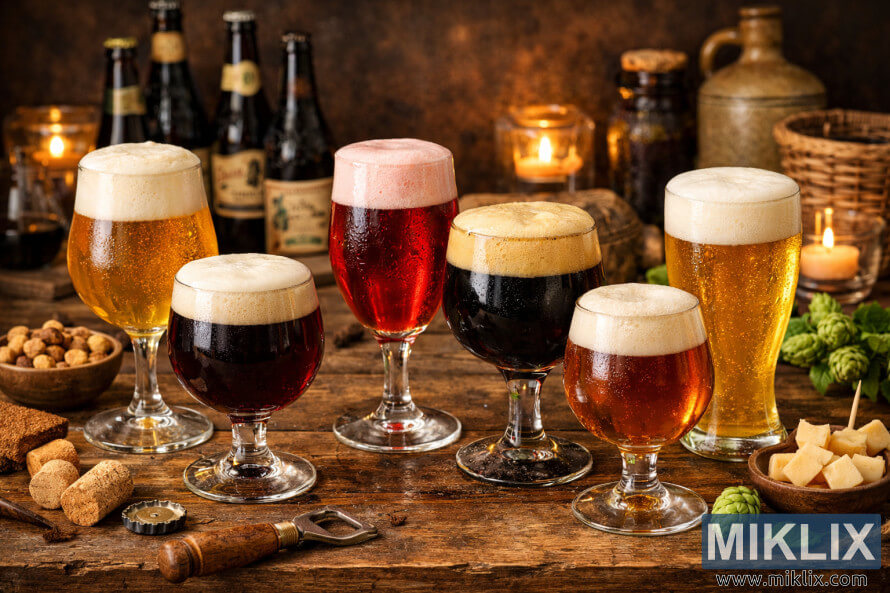
Click or tap the image for more information and higher resolutions.
Tested Recipes and Brewer Case Studies
Homebrewers testing Wyeast 1581 recipes observe a consistent trend. The strain tends to dry out stouts while adding a moderate ester character. Brewers find minimal phenolic spice, ensuring malt flavors remain prominent.
Recipe notes suggest using restraint with roast and chocolate malts. Heavy roast can obscure the yeast's ester profile. Therefore, many recommend lighter roast additions or a touch of dark crystal for added complexity. For Belgian dark strong ale variants, adjunct sugars or candi syrup enhance the beer without masking the yeast's fruitiness.
- Pitching: vigorous starters and nutrient support are common in brewer experiences for high-ABV batches.
- Fermentation: maintain steady temps to keep esters balanced and avoid fusel alcohols.
- Conditioning: extended aging helps integrate esters and mellow alcohol heat.
Belgian stout case studies highlight successful ferments up to 12% ABV. This is achieved when brewers adhere to strict aeration and pitching practices. Field reports confirm consistent attenuation, making recipe targeting predictable for gravity and final balance.
Experienced brewers recommend documenting original gravity, pitching method, fermentation temperature profile, and final sensory notes. Consistent records aid in refining Wyeast 1581 recipes, ensuring repeatable results.
Practical brewer experiences show that small adjustments to specialty malts or sugar additions yield distinct results. By fine-tuning roast level and ferment management, brewers can produce stouts and strong ales that showcase malt character while keeping the yeast's fruity esters in play.
Where to Buy and Seasonal Availability in the United States
Wyeast 1581-PC is produced seasonally, from April to June, with limited stock lasting into December. If you're looking to buy Wyeast 1581 USA, planning ahead is crucial. Seasonal yeast availability leads to quick sell-outs at many stores.
For early-season stock, check local homebrew supply shops. Many stores offer preorders or reserve packs for loyal customers. Calling ahead increases your chances of securing yeast before it's gone.
Major online vendors and specialty stores list Wyeast strains. Compare lead times and shipping options when ordering from Wyeast retailers United States. Request refrigerated or cold-pack shipping to ensure viability during transit.
Here are practical steps for sourcing seasonal yeast:
- Contact Wyeast retailers United States early in the season to inquire about allocation and preorder options.
- Verify the pack date on receipt and inspect for bloated or damaged packs.
- Create a starter if the pack date is several weeks old or if shipping delays occurred.
Local shops often receive limited allotments. If a local homebrew supply shop is out, check national online suppliers that specialize in liquid yeast. Consider shipping temperature and avoid long transit times in summer.
When planning a batch that relies on this strain, order at the start of the production window. This approach improves your chances of securing Wyeast 1581 USA and helps navigate seasonal availability constraints from Wyeast retailers United States.
Conclusion
Wyeast 1581 summary: This liquid Belgian stout yeast offers 70–85% attenuation and medium flocculation. It thrives in an optimal fermentation range of 65–75°F. It can handle up to 12% alcohol, making it perfect for high-gravity stouts and strong Belgian ales. Ester production is moderate, and phenolic spice is low.
Belgian stout yeast review conclusion: It's ideal for brewers aiming for a dry finish with subtle Belgian character. Proper pitching rates and temperature management are key. This ensures clean, complex beers without overpowering banana or clove notes.
Best uses Wyeast 1581 include Belgian stouts, Belgian specialty ales, and strong dark ales. These beers benefit from its clarity and firm attenuation. Keep in mind its seasonal availability. Ensure steady fermentation in the 65–75°F range and allow for adequate conditioning. This will help achieve the desired flavor balance.
Click or tap the image for more information and higher resolutions.
Further Reading
If you enjoyed this post, you may also like these suggestions:
- Fermenting Beer with White Labs WLP013 London Ale Yeast
- Fermenting Beer with White Labs WLP550 Belgian Ale Yeast
- Fermenting Beer with Fermentis SafBrew HA-18 Yeast