
Fermenting Beer with White Labs WLP400 Belgian Wit Ale Yeast
Published: December 12, 2025 at 10:01:26 PM UTC
White Labs WLP400 Belgian Wit Ale Yeast is a top choice for brewers aiming to create authentic witbier. It offers high phenolic notes and a bright, herbal aroma, which complements the flavors of orange peel and coriander perfectly.
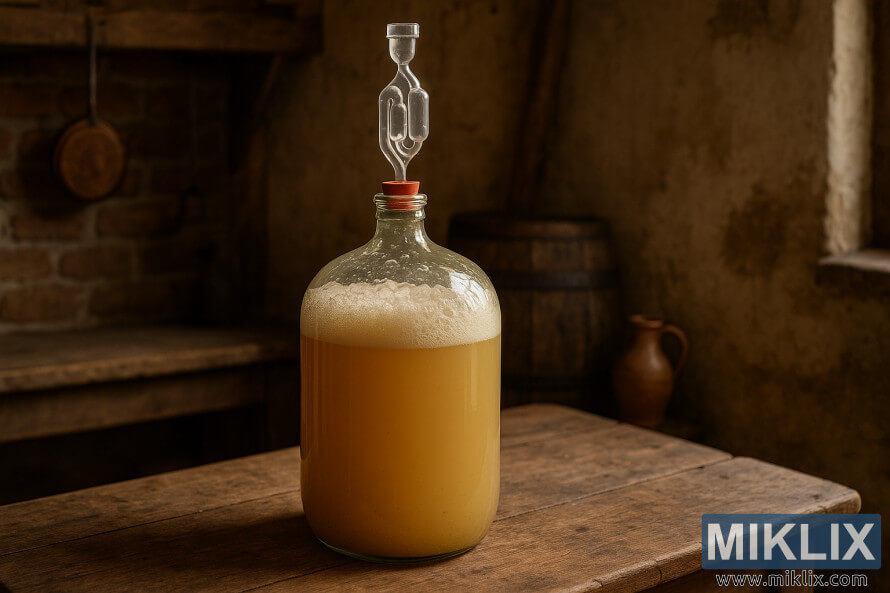
Click or tap the image for more information and higher resolutions.
Fermenting with WLP400 results in a dry finish and a slightly lower pH than many English or American ale yeasts. Homebrewers often see active fermentation start within 8–48 hours at the right temperature. For fresh packs, skipping a starter is common in lower OG witbier recipes. However, older slurries benefit from a starter to avoid underpitching.
Community feedback and reviews highlight that clean, vigorous fermentation minimizes off-flavors like sulfur or “hotdog” aromas. Brewers aiming for traditional wit character use WLP400 in recipes with modest bitterness (around 12 IBU) and OGs near 1.045. This strain is available as a core option and in an organic variant. It also suits Belgian Pale Ale, Tripel, Saison, and cider experiments.
Key Takeaways
- White Labs WLP400 Belgian Wit Ale Yeast produces herbal, phenolic aromas ideal for witbier.
- Recommended fermentation temperature is 67–74°F (19–23°C) for best results.
- Expect 74–78% attenuation and a dry, slightly lower final pH.
- Pitch fresh for clean wit character; make a starter if using older slurry.
- Proper, vigorous fermentation helps prevent sulfur or off-aroma issues.
Overview of White Labs WLP400 Belgian Wit Ale Yeast
WLP400 is the go-to choice for brewers aiming to create authentic Belgian witbiers. It boasts a high phenolic character, imparting herbal and slight clove notes. Brewers appreciate its perfect balance of fruity esters and spicy phenols.
The technical specs for WLP400 reveal an attenuation of 74–78%, with flocculation ranging from low to medium. It can handle alcohol levels up to 10%. The ideal fermentation temperature is between 67–74°F (19–23°C). It's a core catalog strain, available in organic form, and has a negative STA1 QC result.
Performance can vary based on pitch temperature and oxygenation levels. Pitched warm, fermentation can start within hours. Homebrewers often achieve near-80% attenuation, resulting in a drier finish. The final pH is slightly lower than that of English or American ale strains.
- Typical attenuation: 74–78%
- Flocculation: low-to-medium
- Alcohol tolerance: medium (5–10%)
- Temperature range: 67–74°F (19–23°C)
This brief overview of WLP400 is essential for planning your recipes and fermentation schedules. Before pitching, study the WLP400 technical specs and the White Labs yeast profile. This will help you match your wort composition and adjunct choices to the strain's strengths.
Why choose this yeast for Belgian Witbier and related styles
WLP400 for Witbier is celebrated for its high phenol production. This creates the herbal, clove-like spice that's a hallmark of Belgian white ales. Brewers use it to craft a base of peppery and spicy flavors. These complement traditional ingredients like orange peel and coriander perfectly.
The yeast selection Belgian wit often results in near-80% attenuation. This, along with a slightly lower final pH, leads to a drier finish. This characteristic keeps witbiers crisp and refreshing. It also makes WLP400 a versatile choice for Belgian pale ales, saisons, and even some lighter tripels and fruit-forward ciders.
Homebrewers prefer fresh WLP400 for witbier because yeast character is key to the style. They often pair this strain with citrus peels and subtle spice in low-IBU, wheat-forward recipes. This highlights the yeast rather than hops.
When comparing strains, many craft brewers choose WLP400 for its traditional Belgian character. It avoids sulfur issues. Brewers might contrast it with strains like WLP410 for sharper, peppery phenolics. However, WLP400's flavor profile remains a reliable way to achieve the rounded, aromatic results expected in classic white ales.
- Distinctive phenolic spice that supports orange and coriander adjuncts
- High attenuation for a clean, dry finish in wheat-forward beers
- Consistent performance across Belgian-style pale ales, saisons, and some ciders
Preparing your wort for WLP400 fermentation
Construct a grain bill that complements WLP400 by focusing on pale Pilsner malt and a significant amount of flaked wheat or white wheat malt. Aiming for an original gravity of 1.045 with a low bitterness of 10–15 IBUs will highlight the strain's bright, dry character.
Control the mash temperature to enhance fermentability. Target a slightly lower saccharification range to allow the yeast to achieve high attenuation, resulting in a crisp finish. When using flaked adjuncts, perform a mash-out to improve lautering and maintain efficiency.
Manage lautering by incorporating rice hulls if you encounter stuck sparges due to high wheat percentages. Achieve the desired mash thickness and follow a stepped rinse schedule to hit your target gravity before cooling and transferring to the fermenter.
Ensure proper wort oxygenation for WLP400 just before pitching. White Labs advises sufficient dissolved oxygen for a swift, healthy start. Employ an oxygenation stone or vigorous aeration for several minutes, depending on your batch size.
Adjust the wort's pitch temperature; cooler temperatures preserve delicate phenolics, while warmer temperatures expedite initial activity. Balance your temperature choice with your desired flavor outcome and plan oxygenation for WLP400 accordingly to prevent sluggish starts.
- Grain tips: Pilsner base, flaked wheat, small specialty malts like acidulated for mash pH control.
- Mash tips: Lower saccharification range, mash-out for better lautering with adjuncts.
- Oxygenation tips: Aerate or oxygenate thoroughly just before pitching to promote healthy fermentation.
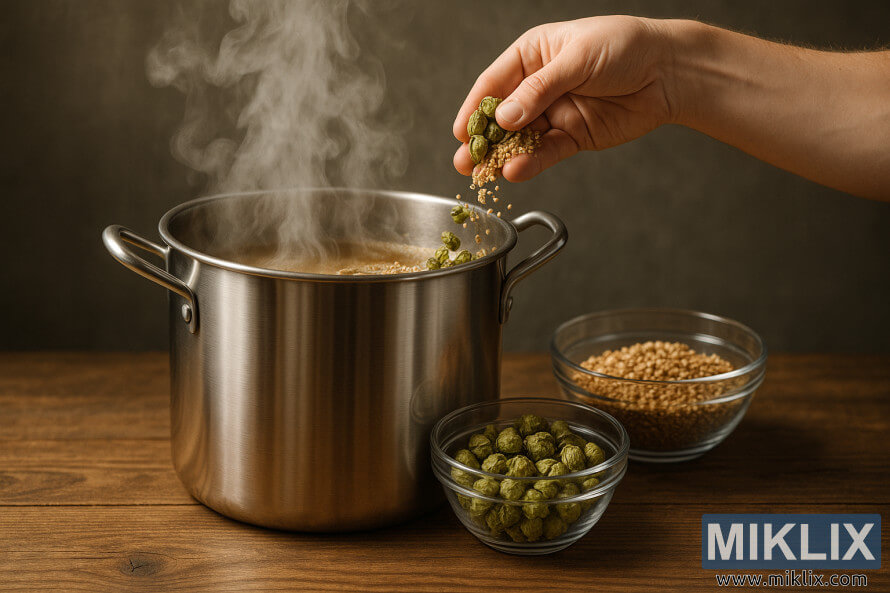
Click or tap the image for more information and higher resolutions.
Pitching rates and starter guidance
Accurate WLP400 pitching rates are crucial for a clean, expressive witbier. White Labs suggests using their pitch rate calculator. Add yeast to five gallons of well-aerated wort. This method helps the culture establish itself quickly, reducing the risk of off-flavors from stressed cells.
Fresh packs of White Labs WLP400 generally yield the most consistent results. Homebrewers find that fresh yeast preserves the delicate phenolic and ester profile typical of Belgian wit strains. If older slurry is used, a rebuild is necessary to restore cell numbers and vitality.
When using older slurry, a modest WLP400 starter is recommended. This is especially true when viability estimates from tools like BrewersFriend suggest low counts. A 1 L refresher can revive a tired culture. Building an active WLP400 starter the day before pitching ensures a lively, fermentative starter, helping to avoid underpitching.
When assessing yeast viability WLP400, treat calculator outputs as guides rather than absolute truths. If estimated viability returns near zero, a starter is essential to rebuild cells. Homebrewers who reuse yeast frequently often split slurry to create multiple starters as a safeguard.
- For fresh White Labs packs: follow the recommended WLP400 pitching rate for five-gallon batches.
- For older slurry: create a WLP400 starter or a 1 L refresher to recover yeast viability WLP400.
- If time is short: warm, gently aerate wort and pitch at a controlled temperature to encourage a timely ferment.
Pitch temperature significantly impacts how the culture awakens. Warming a low-viability pitch can jump-start activity. However, controlled aeration and a proper starter lead to more predictable flavor results. Balancing speed with flavor goals is key to preserving the witbier's signature character.
Fermentation temperature management with WLP400
WLP400 excels in a moderate temperature range. White Labs advises fermenting between 67–74°F (19–23°C). This range enhances the yeast's ability to produce distinctive phenolic and spicy flavors without harshness.
Pitching at a slightly warmer temperature can expedite yeast activity. Traditionally, brewers aimed for 70–75°F to ensure a quick start. However, many now prefer the 67–74°F range. They adjust the pitching temperature based on their recipe's specific needs.
Active fermentation typically begins within 8–48 hours. Warmer wort and adequate aeration can lead to quicker yeast activity. This increased activity can elevate ester and phenol levels. Therefore, it's crucial to monitor gravity and krausen closely.
To achieve a cleaner flavor profile, ferment slightly cooler. Cooler temperatures within the recommended range can reduce yeast spice and lower the risk of sulfur compounds. This approach is beneficial when you want the malt and hops to take center stage.
Consistent temperature control is essential to avoid temperature fluctuations. Sudden temperature increases can result in higher levels of solvent-like esters. Maintaining a steady temperature with WLP400 ensures predictable attenuation and preserves the witbier's delicate character.
- Target range: 67–74°F for typical witbier character.
- Warm pitch for faster start; cooler ferment for cleaner flavor.
- Monitor for activity in 8–48 hours and adjust as needed.
When planning the fermentation temperature for witbier, consider the balance of your recipe and the desired phenolic levels. Small adjustments in temperature can significantly impact the spice intensity and mouthfeel. Document each batch and refine your temperature control with WLP400 to achieve your ideal flavor profile.
Attenuation and final gravity expectations
White Labs indicates WLP400 attenuation at 74–78%. However, many brewers observe it reaching up to 80% in practice. This results in a drier beer than what English or American ale strains typically offer. Brewers should aim for a leaner finish and a slightly lower pH to enhance bright, crisp flavors.
Classic witbier recipes usually start at an original gravity of 1.045. With WLP400's high attenuation, the final gravity is expected to be in the low 1.00x range. A starting gravity of 1.045 typically results in a final gravity of 1.008–1.012. This leaves the beer with a light body and a lively carbonation feel.
Community reports highlight the impact of mash temperature, adjunct sugars, and yeast health on attenuation. For instance, one brewer achieved a 75% apparent attenuation by moving from 1.050 to 1.012. However, extreme numbers like 91% are often due to measurement errors, high simple-sugar additions, or heavy diastatic malts, rather than pure yeast performance.
- Manage mash temp to control body; a cooler saccharification favors fermentability.
- Pitch healthy WLP400 yeast and use a modest starter for higher OGs to reach target WLP400 final gravity.
- Monitor fermentation temp to avoid stuck fermentations and to hit consistent WLP400 attenuation across batches.
When designing mouthfeel and carbonation, consider the yeast's drying power. Adjust the malt bill or add dextrins if you desire more body than the typical witbier FG expectations.
Click or tap the image for more information and higher resolutions.
Flavor development and common sensory characteristics
The WLP400 flavor profile is marked by spicy, herbal, and citrus notes, typical of witbiers. The yeast's influence often overshadows the grain and hops, making the yeast's character prominent. This is what defines the beer's essence.
High levels of WLP400 phenolics contribute to herbal and clove-like aromas. These aromas complement traditional adjuncts well. Brewers often use sweet orange peel and coriander in small amounts. This is to enhance the yeast's flavors without overpowering them.
It's important to keep spice additions in check. Typically, one ounce of dried orange peel per five gallons is used. This amount is scaled according to the recipe. Light coriander is added to enhance the yeast's citrus and herbal notes, rather than compete with them.
Witbier yeast flavors include a peppery bite and subtle fruitiness when fermentation is healthy. Brewers sometimes compare different strains to note variations. WLP400 tends to emphasize herbal phenols, while other strains might highlight pepper or esters.
Under certain conditions, WLP400 can produce transient sulfur or "hotdog" aromas. Vigorous fermentation and proper off-gassing at roughly 70°F usually allow those compounds to dissipate within a week.
Temperature and pitch rate control both WLP400 phenolics and sulfur risk. Cooler, steady fermentations temper phenolic intensity. Warmer or stressed starts, however, can increase spicy and sulfur attributes.
- Expect a spicy/herbal backbone with citrus highlights.
- Use modest orange peel and coriander to enhance, not overpower.
- Manage fermentation vigor to reduce sulfur and balance phenolics.
Adjuncts and recipe choices to complement WLP400
WLP400 excels with light, bright grain bills and a subtle hop profile. A classic witbier recipe with WLP400 features a Pilsner base, 20–40% flaked wheat, and wheat malt. It also includes low bittering hops, around 10–15 IBUs. This setup allows the yeast to shine with herbal notes, unobscured by heavy malt or hop bitterness.
Common adjuncts include sweet orange peel, bitter orange peel, and coriander seed. Brewers often report success with modest doses, keeping the yeast in the spotlight. Fresh, high-quality spices from specialty markets ensure consistent flavor.
Coriander and orange peel dosages vary in recipes. Some use about 1 oz of orange peel for a 5-gallon batch, while others opt for 2 oz for larger batches. Coriander doses range from 0.7 oz to 2 oz per 5 gallons. Freshly ground coriander adds a brighter, more assertive flavor than pre-ground.
When planning WLP400 adjuncts, follow these practical guidelines:
- Begin with conservative spice amounts; you can always increase them in the next brew if needed.
- Add orange peel late in the boil or in the whirlpool to preserve its citrus aroma.
- Crush coriander coarsely and add it near flameout for maximum aroma lift.
For those aiming to highlight yeast-driven complexity, keep adjuncts in a supporting role. This approach allows the witbier recipe with WLP400 to showcase the yeast's spicy, herbal profile. Orange and coriander then play supportive roles, enhancing the beer's overall character.
Batch testing is effective for fine-tuning coriander and orange peel dosages. By making small 1–2 gallon batches and varying one variable at a time, brewers can gain clear insights into how each adjunct interacts with WLP400 and the base beer.
Packaging, conditioning, and carbonation recommendations
WLP400’s high attenuation leaves a crisp, dry base that needs gentle handling before packaging WLP400 beer. Let the fermenter rest until activity falls and gravity readings are stable for several days. This allows sulfur and phenolic compounds to mellow.
Many brewers taste after two weeks, then judge whether more time is useful. For consistent results, confirm final gravity is steady over a 48-hour span. Stable gravity helps prevent overcarbonation when conditioning in bottles or kegs.
Decide between natural conditioning and force carbonation based on aromatic goals. Natural methods like krausening or priming can protect delicate esters and give a softer mouthfeel. Force-carbonation speeds turnaround and offers precise control over volumes.
- Target lively witbier carbonation in the range of 2.5–3.0 volumes CO2 for classic effervescence.
- When priming bottles, use measured sugar additions and account for residual CO2 at packaging temperature.
- For kegging, carbonate at 35–45°F and 12–15 psi as a starting point, then adjust to taste.
Allow extra conditioning time for fuller flavor harmonization after packaging WLP400 beer. Bottle conditioning often benefits from several weeks to develop rounded phenolics. Kegged beer may show improvements over days when kept cold and carbonated.
Remember off-gassing patterns. At typical homebrew temperatures near 70°F, sulfur off-aromas often blow off within a week in the fermentor. If noticeable notes persist, give the beer more time before final packaging WLP400 beer or consider a short cold rest to help clear haze and refine mouthfeel.
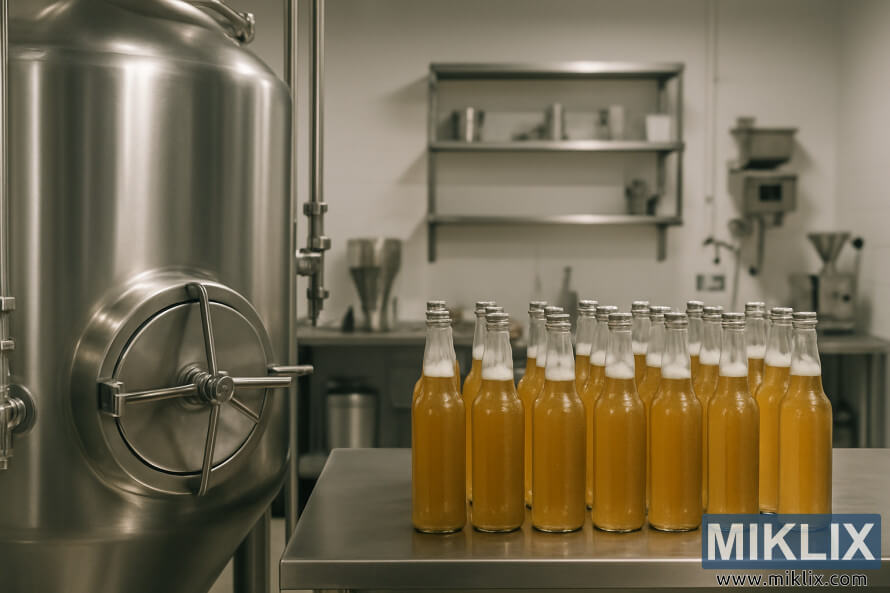
Click or tap the image for more information and higher resolutions.
Yeast handling and reuse considerations
When working with WLP400, it's crucial to handle the yeast gently to preserve its health. Harvesting WLP400 from a completed fermentation requires a clean environment and sanitized tools. Transfer the slurry to sanitized containers to maintain its integrity. Cold storage can slow down the decline of WLP400, ensuring its viability for short-term use.
Many brewers opt for fresh White Labs vials or packs to achieve the classic wit character. Fresh pitching ensures consistent attenuation and flavor profiles. White Labs provides packaged vials and a pitch rate calculator to assist in determining the appropriate starter size.
For those looking to reuse WLP400 slurry, it's important to monitor its remaining viability. Tools like BrewersFriend can help assess this. If viability is low, creating a starter is a better option than pitching directly from the stored slurry.
Adopting certain guidelines can help minimize risks associated with yeast reuse. Harvested slurry should be used within a few weeks for optimal results. Store it in the refrigerator promptly and avoid exposing it to oxygen. Label the containers with the date and beer style to track performance over time.
When reusing WLP400, ensure the starter size matches the beer's gravity. Low-gravity beers are particularly sensitive to underpitching, which can alter the ester and phenolic balance. A modest refresher starter can restore the yeast's vigor and reduce off-flavors.
- Sanitation: sanitize everything that touches yeast.
- Storage: keep slurry cold and in airtight containers.
- Testing: check WLP400 viability with a cell count or viability tool when in doubt.
While some brewers prefer one-time use for recipes where yeast character is paramount, harvesting WLP400 can be cost-effective when done correctly. Use a starter for older slurry, monitor viability, and prioritize sanitation to safeguard fermentation quality.
Comparisons to other Belgian wit and ale strains
Brewers often compare WLP400 and WLP410 when selecting a starter culture. WLP400 is known as a classic witbier strain, offering herbal phenolics and a dry finish. On the other hand, WLP410 presents more pronounced peppery phenols and better flocculation, leading to clearer beer.
The choice between WLP400 and WLP410 depends on flavor preferences. WLP400 provides a drier, sharper finish and consistent attenuation. WLP410, however, may leave more residual sweetness and might require a longer diacetyl rest to remove buttery notes.
Some brewers opt for Wyeast 3787 Trappist ale yeast for different ester profiles. This strain offers richer esters and less citrus-herbal character, typical of wit strains. The decision depends on whether yeast-driven pepper, clove, or fruit notes align with your recipe.
- WLP400: herbal phenolics, drier finish, pointed attenuation.
- WLP410: peppery phenols, slightly lower attenuation, better flocculation.
- Wyeast 3787: bolder esters, different mouthfeel and aroma focus.
For those seeking the best witbier yeast, consider the strain's impact on body, pH, and dryness. Match yeast to your grist, hop choices, and adjuncts like coriander or orange peel to shape the final beer.
When comparing Belgian wit yeasts, running small test batches is advisable. Tasting them side-by-side can highlight subtle differences in phenolics, attenuation, and conditioning needs. This approach helps refine fermentation temperature, pitch rate, and diacetyl rests for the desired flavor.
Common troubleshooting scenarios and fixes
Slow starts often stem from underpitching or using old slurry. Creating a starter or employing a fresh White Labs pack can help. If salvaging a batch, incrementally increase fermentation temperature to the upper limit for quicker activity.
Stuck fermentations require a systematic approach. Verify temperature, oxygenation history, and yeast health. For WLP400 stuck fermentations, a warm water bath and gentle swirling might revive activity. If this fails, prepare a robust starter and re-pitch with clean, active yeast.
Sulfur or “hot dog” aromas are common with this strain. Allow the beer to mature at warm ale temperatures; sulfur often dissipates within a week. If WLP400 off-flavors persist, consider racking off the lees and extending conditioning or transferring to secondary to minimize dead yeast contact.
High final gravities can indicate alcohol stress. WLP400 can handle moderate ABV but may falter above 10%. For very strong beers, opt for a more alcohol-tolerant strain or accept a higher finishing gravity and adjust your recipe accordingly.
- Under-expressive fermentations: ensure proper pitch rate or build a starter.
- Haze from low flocculation: allow extra time to settle or add finings.
- Persistent off-aromas: extended conditioning or racking helps.
Accurate records of original gravity, pitch method, and temperatures are crucial. Detailed notes facilitate future WLP400 troubleshooting. They help replicate the desired Belgian wit character without unwanted flavors.
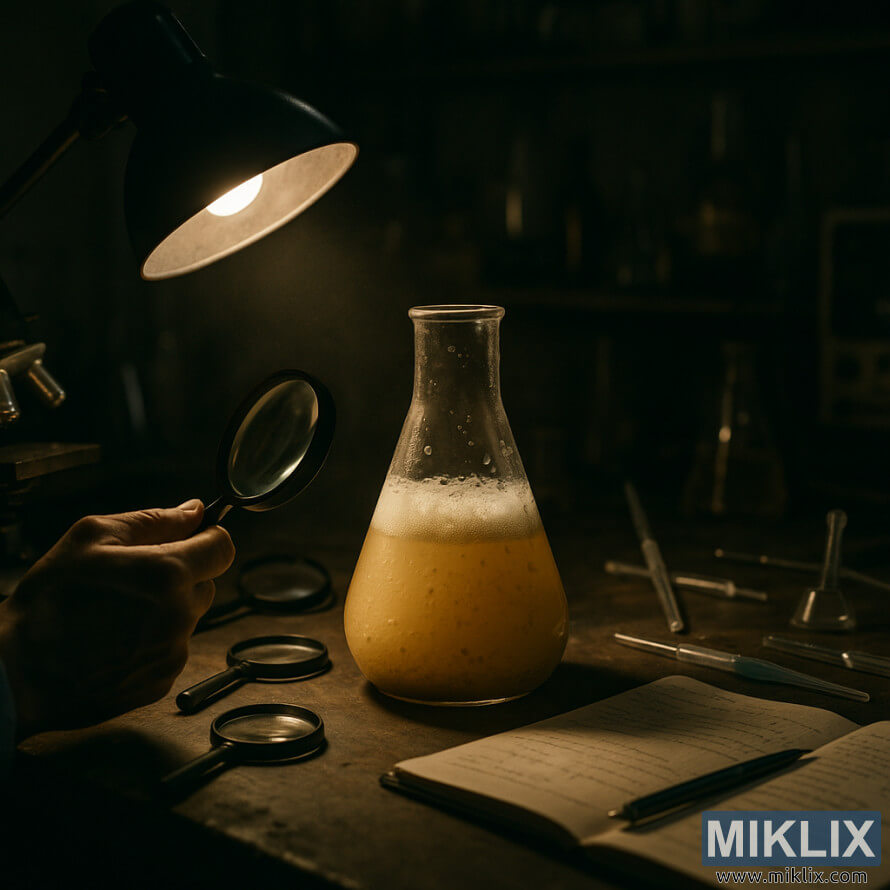
Click or tap the image for more information and higher resolutions.
Practical brewing notes from community experience
Homebrewers using White Labs WLP400 share simple, repeatable tips for better consistency. They find one fresh pack for a 5-gallon batch results in clean fermentation. Older slurry, however, benefits from a fresh starter. Many split a single starter to seed two fermenters in shared batches.
When brewing, brewers add about 1 ounce of bitter orange peel per 5 gallons. They also use 0.7–2 ounces of coriander per 5 gallons. Freshly ground coriander adds a brighter, punchier spice, so adjust to taste.
Temperature is crucial for a strong start. Older advice suggested pitching near 70–75°F. Today, brewers aim for 67–74°F to balance ester production and yeast health. Pitching at the warmer end of this range can lead to faster fermentation, sometimes within eight hours.
Community tips on handling adjuncts in mashing and lautering are practical. A mash-out is helpful when using flaked oats or wheat. Water-bath heaters and insulated mash tuns are common hacks to maintain mash temperature. Brewers also recommend good aeration before pitching and regular gravity checks during early fermentation.
- Pitch one fresh pack per 5 gallons or build a starter from older yeast.
- Use 1 oz sweet orange peel and 0.7–2 oz coriander per 5 gallons as starting points.
- Target fermentation temps 67–74°F for balanced flavors and steady attenuation.
- Perform mash-outs with flaked adjuncts and ensure thorough wort aeration.
Community notes WLP400 emphasize patience during yeast clean-up. Fermentation can be vigorous and fast, yet yeast needs extra days to condition and clarify. Monitor gravity rather than time alone, and avoid rushed transfers until a stable terminal gravity is reached.
These practical pointers reflect White Labs’ technical positioning of WLP400 as a strain for traditional wit character. Apply the WLP400 homebrew tips and learn from brewers experience WLP400 to refine process choices and recipe tweaks over several batches.
Safety, sanitation, and quality control tips
Begin with high-quality yeast from White Labs and adhere to the manufacturer's guidelines. White Labs QC reports, like STA1 testing, highlight the importance of early detection of contaminants. The STA1 QC result for WLP400, showing a negative result, emphasizes the significance of using verified yeast and following best practices for yeast QC WLP400.
Ensure all equipment that comes into contact with wort, yeast, or beer is sanitized. This is crucial when handling and storing yeast slurry. The community warns that using old slurry can introduce bacteria and decrease viability. Store the yeast in the refrigerator in clean, sealed containers. Prepare a fresh starter to recover cell health before pitching.
Monitor and record fermentation variables to maintain quality control. Track temperatures, original gravity, and final gravity using calibrated hydrometers or refractometers. Reliable thermometers are essential for verifying temperature control. White Labs suggests an attenuation range of 74–78%, so compare OG and FG to confirm expected performance.
Proper aeration before pitching and pitching at the recommended temperature range for WLP400 are key. These steps help prevent off-flavors and stalled fermentations. They are crucial for brewing safety WLP400, ensuring yeast completes fermentation cleanly.
- Sanitize transfer lines, kegs, and bottling gear before use.
- Keep harvested yeast cold and use within a safe timeframe.
- Run small QC checks: smell, quick microscopic look, and viability via starter activity.
Allow sufficient conditioning time for transient off-flavors to mellow. If attenuation or flavor shifts are outside expected ranges, review sanitation records, yeast QC WLP400 logs, and fermentation data. Consistent record keeping aids in quick troubleshooting and reinforces brewing safety WLP400 protocols.
Conclusion
White Labs WLP400 is renowned for its distinctive phenolic and herbal notes, essential for traditional Belgian witbier. This review highlights its clean fermentation, achieving 74–78% attenuation and a dry finish. It thrives in temperatures between 67–74°F. Fresh packs or well-built starters are crucial to preserve its delicate orange-coriander flavors and prevent sulfur off-notes.
Effective process control is key. Moderate aeration, proper pitching rates, and consistent temperatures are vital. They minimize the risk of unwanted sulfur and foster steady phenol development. Both community feedback and lab specifications affirm WLP400 as a top choice for brewers seeking a classic witbier profile. It offers medium alcohol tolerance and low-to-medium flocculation.
To brew the quintessential witbier, use WLP400 with traditional adjuncts like orange peel and coriander. Allow for sufficient conditioning. When used correctly, this strain produces a beer that is bright, spicy, and tangy, aligning perfectly with the style's essence.
Further Reading
If you enjoyed this post, you may also like these suggestions:
- Fermenting Beer with CellarScience German Yeast
- Fermenting Beer with Wyeast 2042-PC Danish Lager Yeast
- Fermenting Beer with Lallemand LalBrew London Yeast