
Fermenting Beer with Wyeast 1084 Irish Ale Yeast
Published: December 9, 2025 at 8:34:17 PM UTC
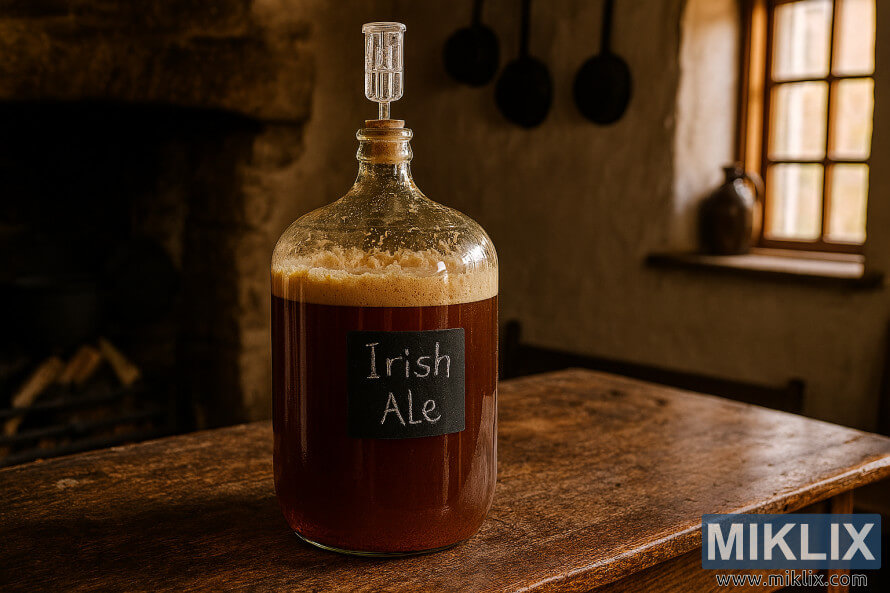
Wyeast 1084 is celebrated for its reliability and versatility in brewing darker worts. It is known for its ability to handle high-gravity beers with ease. This yeast is particularly well-suited for stouts, porters, and malty ales.
Click or tap the image for more information and higher resolutions.
Key Takeaways
- Wyeast 1084 Irish Ale Yeast is a versatile liquid ale yeast suitable for malty, dark beers and traditional Irish styles.
- Typical lab specs: 71–75% attenuation, medium flocculation, optimum 62–72°F, ~12% alcohol tolerance.
- Use a starter for high-gravity or lag-prone batches; single Activator packs often suffice for standard 5-gallon beers.
- Monitor temperature actively—1084 favors steady, moderate temps to retain malt character and ferment cleanly.
- This article series combines product data and brewer logs to offer practical troubleshooting and recipe pairing advice.
Overview of Wyeast 1084 Irish Ale Yeast
The yeast's characteristics are notable for a clean, slightly malty flavor at cooler temperatures. It exhibits restrained fruit esters when temperatures remain low. However, above 64°F (18°C), it produces more pronounced fruit and complex ester notes. This can be beneficial in certain ale styles.
Wyeast 1084's uses are diverse, ranging from Dry Stout and Oatmeal Stout to Irish Red Ale and Robust Porter. It is also suitable for Imperial IPA, American Barleywine, Baltic Porter, Scottish ales, and wood-aged beers.
- Fermentation behavior: strong attenuation and good alcohol tolerance for rich, dark worts.
- Flavor control: lower temps yield drier, crisper finishes; warmer temps increase fruitiness.
- Delivery format: sold in Wyeast’s Activator Smack-Pack to verify viability and reduce lag time.
Brewers opt for Wyeast 1084 when they seek a dependable yeast for malt-forward recipes. The Activator Smack-Pack system ensures quick start-ups. This is crucial for maintaining consistency in both homebrew and small commercial batches.
Performance Characteristics and Laboratory Specs
Wyeast 1084 boasts a stated attenuation of 71–75%. This range is ideal for achieving a dry finish in various ale styles. It's particularly beneficial for brown ales, porters, and some pale ales when fermented within the recommended temperature range.
The strain exhibits medium flocculation behavior. It settles out reasonably well, forming a firm yeast cake in many fermenters. However, it doesn't clear as quickly as high-flocculant strains. This characteristic makes it versatile for transfers and racking without excessive haze.
Optimal fermentation temperature for Wyeast 1084 is between 62–72°F (16–22°C). Most brewers aim for 65–68°F to balance ester production with attenuation. This temperature range helps the yeast perform optimally, minimizing off-flavors.
Wyeast 1084 has an alcohol tolerance near 12% ABV. This makes it suitable for high-gravity ales, barleywines, and many imperial styles. However, proper management of nutrients and oxygenation during brewing is crucial.
The Activator Smack-Pack contains about 100 billion cells per pack. The activator releases nutrients when smacked, proofing the culture for many brewers. Activation can shorten lag time, but direct pitching of a fresh pack often succeeds when pitching rates match the gravity.
To utilize Wyeast 1084 effectively, monitor fermentation temperatures and ensure healthy cell counts. Be mindful of its attenuation and flocculation medium tendencies when planning conditioning time and transfers. Understanding its ABV tolerance is key to deciding when to build a starter or oxygenate for heavy worts.
Packaging, Activation, and Cell Count
The Wyeast 1084 comes in the Activator Smack Pack format. Inside, you'll find an internal activator pouch. This pouch is struck to release a nutrient solution. The instructions on the bag guide you through a simple activation process. This primes the yeast for pitching.
Each Smack Pack contains approximately 100 billion cells. This cell count is crucial for deciding whether to pitch directly or create a starter. For bigger beers or larger batches, a starter can increase cell numbers. It also helps reduce stress on the yeast culture.
Retailers stress the importance of careful handling during liquid yeast shipping. They suggest using insulated mailers and ice packs to keep the yeast viable in warm weather. While these methods can help keep the yeast cooler, they don't ensure cold temperatures at every point.
Storage advice from sellers includes refrigeration and a shelf life of about six months when kept cold. Always check the expiration date on the bag before use. Brewers find that the pack swells quickly after activation. This makes it suitable for direct pitching or starter use, provided it's handled correctly.
- Activator pack instructions: strike, wait for swelling, then pitch or build a starter.
- 1084 cell count: about 100 billion cells per Smack Pack for pitching decisions.
- Liquid yeast shipping: consider insulated options and order early in the week to avoid weekend delays.
Customer feedback and product details confirm the Wyeast Smack Pack's reliability. This is when users follow the activation steps. The reliability, combined with clear cell count information, simplifies yeast management for homebrewers.
Pitching Rates and When to Make a Starter
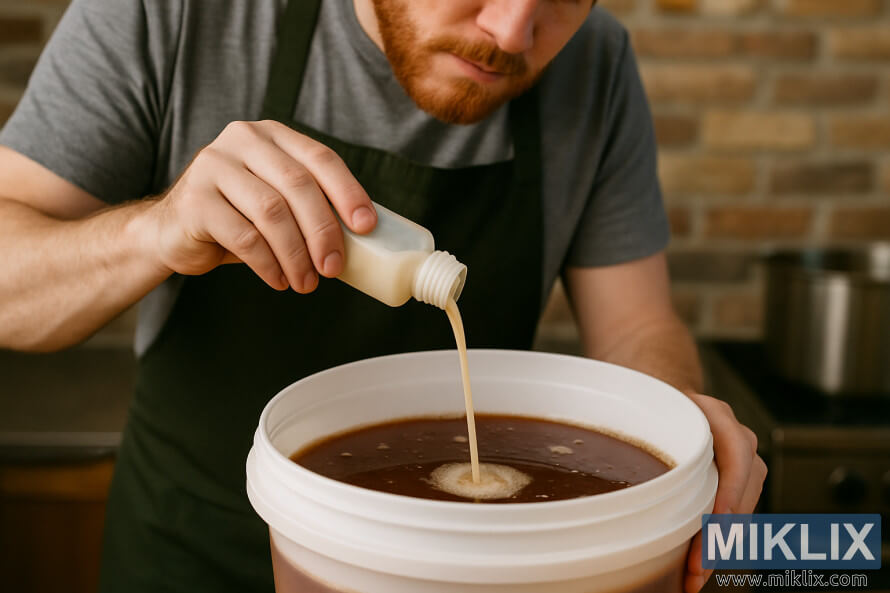
Homebrewers often find a 100B Wyeast smack-pack provides a suitable 1084 pitching rate for ales under 1.050. Direct pitching from a fresh pack can initiate fermentation swiftly in batches around 1.040. This approach results in a clean start and a normal krausen without additional steps.
For beers with gravities above 1.060–1.070, increasing cell counts is necessary. A yeast starter Wyeast 1084 or a commercial starter kit can enhance cell viability and accelerate fermentation. Retailers and seasoned brewers agree that using a starter leads to faster, healthier fermentations in high-gravity beers.
Deciding when to make a starter is straightforward: do so for OGs above 1.060, in cases of lagging worts, or when the yeast is old. A 0.6 L starter can be moderately beneficial, while a 1.5 L starter often results in vigorous activity and a robust krausen, as documented in user logs.
- Direct pitch: suitable for many ales
- Small starter (0.6 L): useful for slightly higher gravities or older packs.
- Larger starter (1.5 L): recommended for high-gravity worts or when rapid onset is needed.
When fermenting high-gravity worts, using yeast nutrient can mitigate stress. Commercial products like Propper Starter serve as alternatives to large DME starters for those seeking convenience.
If fermentation appears slow or sluggish, creating a starter is a low-risk strategy to ensure sufficient cell count and quicker fermentation onset. Paying attention to 1084 pitching rates and selecting the right yeast starter Wyeast 1084 can prevent stuck or slow fermentations, keeping the brew day on track.
Click or tap the image for more information and higher resolutions.
Ideal Fermentation Temperatures and Temperature Management
Wyeast recommends fermenting between 62-72°F for this strain. This temperature range ensures consistent ester levels and reliable attenuation, perfect for Irish and British-style ales.
Fermenting at the lower end of this range, around 62°F, results in a drier, cleaner beer with fewer fruity esters. On the other hand, fermenting closer to 72°F enhances fruitiness and complex esters, ideal for amber and brown ales.
User experiences show that Wyeast 1084 can tolerate a range of temperatures. Many brewers achieve strong results at temperatures between 66–72°F. Some have even pitched at cooler temperatures, between 58–61°F, and still observed active fermentation. This highlights the yeast's adaptability.
Effective temperature control is crucial for consistent results with Wyeast 1084. Simple methods include insulating the fermenter, using a temperature-controlled fridge, or employing a brew belt during slow periods.
Some homebrewers choose to extend the primary fermentation period rather than forcing a warm rest. If fermentation appears stuck, a gradual warming can help without causing dramatic temperature swings. One brewer accidentally raised the temperature to 78°F without restarting fermentation, illustrating the unpredictable nature of temperature changes.
Retailers stress the importance of keeping liquid yeast cool during transport. However, packages can arrive warm. To maintain consistency, aim for a steady temperature range of 62-72°F to manage ester profile and final gravity.
- Target range: 62–72°F for consistent flavor and attenuation.
- Use insulation, temperature-controlled chambers, or brewing jackets for Wyeast 1084 temperature control.
- When in doubt, give the beer more time in primary instead of rapid temperature shifts.
Krausen, Activity, and Typical Fermentation Timeline
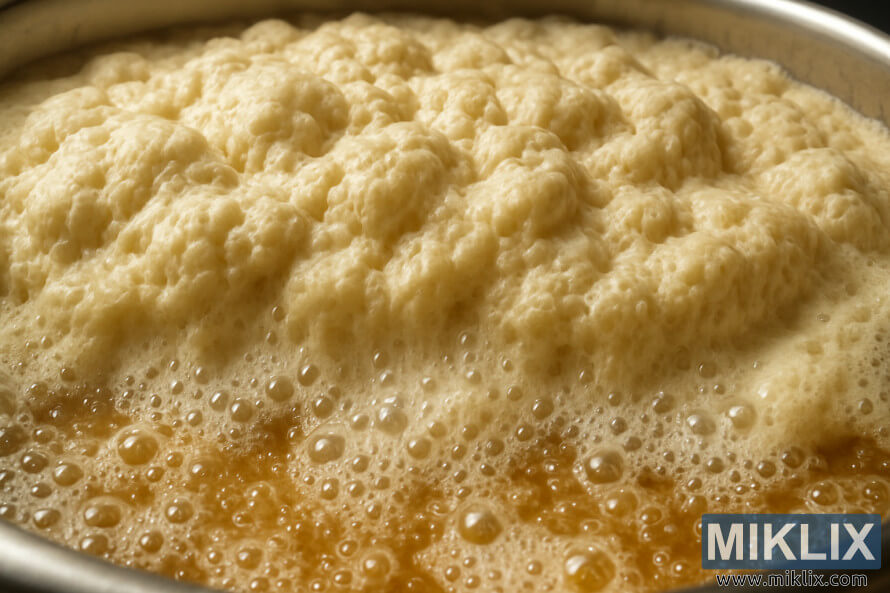
Wyeast 1084 krausen can vary greatly from batch to batch. Some brewers see a thin, low krausen that barely rises and collapses in two days. Others witness a massive krausen that tops a six-gallon carboy, exerting pressure on the airlock.
Active fermentation starts quickly with a healthy starter or well-activated pack. Many brewers notice signs of life within 12–24 hours. Some batches show activity in the first 12 hours, impacting the fermentation timeline 1084 for ales.
Primary fermentation usually lasts three to seven days. Some brewers see strong bubbling for a week, finishing primary fermentation by day eight. Others prefer to leave the beer on the yeast for two to four weeks, noting better clarity and flavor.
Krausen behavior with Irish ale yeast is so varied that monitoring specific gravity is more reliable than observing krausen height. Gravity readings accurately track sugar conversion and final attenuation, unlike krausen height alone.
When fermentation seems to stall, patience is key. Many homebrewers found that waiting longer brought gravity down to expected levels. In cases where bubbling stopped early and gravity remained high, adding fresh yeast or a re-pitch solved the issue.
Practical steps to track progress include:
- Take gravity readings at regular intervals rather than relying on krausen.
- Use a starter to reduce lag and improve initial activity for a predictable fermentation timeline 1084.
- Allow two to four weeks in primary when aiming for clearer results, especially with darker or higher-gravity worts.
Understanding krausen behavior with Irish ale yeast helps set realistic expectations. Expect variability, watch gravity, and adjust practices based on how the yeast performs in your specific wort and environment.
Click or tap the image for more information and higher resolutions.
Flavor Profile and How It Affects Different Beer Styles
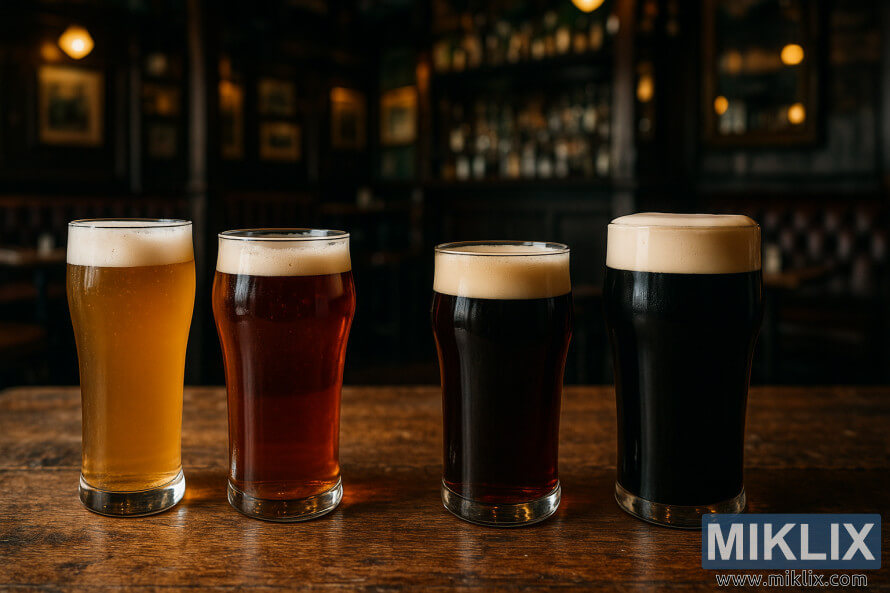
Wyeast 1084's flavor profile is highly adaptable, changing with fermentation temperature. At cooler temperatures, it remains dry and crisp. This allows malt toast and caramel notes to take center stage in Irish Red ales.
However, as temperatures climb above 64°F, the Irish ale yeast esters become more evident. Brewers note the introduction of gentle fruity esters. These add depth to brown ales and porters, enhancing their complexity without overpowering the base malt.
When used in oatmeal stouts and robust stouts, 1084's stout yeast character is particularly praised. It supports a full-bodied beer with a dry finish. This improves the beer's balance and mouthfeel, setting it apart from more neutral strains.
Many appreciate the authentic Irish red flavor that 1084 imparts. It combines toasty malt, caramel sweetness, and a clean yeast presence. This combination showcases traditional Irish profiles while ensuring the beer remains drinkable.
- Lower-temp use: dry, malt-forward, subtle fruit.
- Mid-temp range: increased Irish ale yeast esters and complexity.
- Higher-temp use: pronounced fruity esters that suit dark beers.
Homebrewers frequently choose 1084 for Irish Reds and to enhance stout mouthfeel. The stout yeast character helps preserve roast and chocolate notes. It does so without over-attenuating, resulting in a satisfying finish.
Comparisons to Similar Ale Yeasts
Homebrewers often note that Wyeast 1084 offers a clearer yeast character compared to US-05. US-05 acts as a neutral American ale strain, allowing hops and malt to shine. In contrast, Wyeast 1084 introduces subtle esters at moderate-to-high temperatures, enhancing the depth of Irish reds and stouts.
When comparing 1084 to other Irish yeasts, authenticity stands out. Many brewers appreciate 1084 for its ability to deliver classic Irish flavors without overpowering phenolics. It achieves excellent clarity with cold conditioning, sometimes reaching commercial standards without additional finings when fermented and rested correctly.
The debate between liquid vs dry yeast often revolves around flavor impact. Many prefer liquid 1084 for its contribution to malt-forward styles. They find that liquid yeast adds complexity that dry strains often lack, especially in traditional Irish recipes.
Practical comparisons also highlight fermentation behavior and krausen. Some users have noted a longer krausen with US-05 but less yeast-driven flavor. Wyeast 1084, on the other hand, offers balanced attenuation and predictable performance across typical ale temperatures.
- Flavor: 1084 leans toward mild esters, US-05 stays neutral.
- Clarity: 1084 clears reliably with proper conditioning.
- Form: liquid vs dry yeast trade-offs favor 1084 for complexity.
When deciding between 1084 and other Irish yeasts, consider the beer style and desired yeast expression. For Irish ales where character is key, Wyeast 1084 frequently emerges as the winner in blind tastings and brewer reports. However, for ultra-clean profiles, a dry strain like US-05 remains a compelling choice.
Practical Troubleshooting and Common User Experiences
Brewers often report a short krausen or an early krausen collapse with Wyeast 1084 Irish Ale yeast. Some batches show variable krausen height from one brew to the next. These observations do not always mean the yeast failed.
Check gravity readings before taking action. Many users who thought fermentation stopped found gravity still inching down. Wait longer in primary when in doubt; several homebrewers left beer on the yeast for three to four weeks and saw steady clearing and finishing.
When gravity stalls, common troubleshooting Wyeast 1084 steps include building a starter or repitching with a reliable dry yeast like Safale US-05. Reports of early fermentation stop were often resolved by a small, active starter or adding a fresh pack of dry ale yeast.
Temperature plays a big role in perceived activity. 1084 user experiences show this strain can stay active across a wide range of temps. One brewer pitched at 58°F and still recorded vigorous activity. Maintain consistent temperatures for a predictable ester profile and fewer surprises.
For consistency, many recommend a starter for higher gravity beers. For moderate OGs, several brewers had success pitching straight from the Wyeast pack. Use slow fermentation solutions such as slightly warmer conditioning or a nutrient top-up when tackling rich, high-sugar worts.
- Allow extra time in primary rather than racking too soon.
- Measure gravity to confirm progress before repitching.
- Create a starter for high-OG batches to boost cell count.
- Consider repitching with a dry ale yeast if fermentation is stalled.
Shipping and storage are frequent sources of trouble. Retailers caution that liquid yeast can arrive warm during summer. Order an insulated shipper or ice pack in hot months and check the expiration date upon receipt to reduce risks.
Keep notes after each batch to build a personal log of 1084 user experiences. Track krausen timing, final gravity, pitch method, and temperature. This simple record helps identify recurring issues and effective slow fermentation solutions for future brews.

Click or tap the image for more information and higher resolutions.
Tips for Fermenting Dark Worts and Stouts with 1084
Wyeast 1084 stouts are a top pick for dark beers. They handle dark malts well and deliver a clean, dry finish with proper care.
Begin with a robust yeast population. For high gravity stouts, create a large starter or add extra cells. This approach reduces stress and fusel alcohols during fermentation.
Consider yeast nutrient for very high gravities. Nutrients ensure complete fermentation and preserve malt character. This tip is crucial for rich, complex recipes.
Opt for cooler fermentation temperatures. Aim for 62–66°F to achieve a drier, less fruity taste. Cooler temperatures enhance malt complexity without excess esters.
- Pitch rate: follow calculator guidance and err on the higher side for 1.080+ OG.
- Oxygenation: oxygenate well at pitch to support a strong first growth phase.
- Nutrition: add zinc or a blended nutrient for very large beers.
Many brewers achieve great results with oatmeal and dry stouts. The yeast maintains roast and chocolate flavors while adding a rounded mouthfeel. These experiences validate the practical dark wort tips.
Allow for extended conditioning in primary. Two to four weeks allows Wyeast 1084 stouts to refine byproducts and develop body. Cold crashing before packaging enhances clarity without thinning the beer.
Keep an eye on gravity and taste before transferring or packaging. Patience is rewarded with a balanced finish and preserved malt complexity when fermenting stouts with 1084.
Conditioning, Flocculation, and Clearing the Beer
Wyeast 1084 exhibits a medium flocculation behavior in homebrew setups. Once fermentation slows, cells form a firm cake. This cake then settles clear from the beer.
To ensure clear beer with Wyeast 1084, maintain stable gravity before conditioning. Many brewers keep beer in primary for one to three weeks. Then, they cold crash at packaging to enhance sedimentation.
For those prioritizing clarity in Irish reds or pale ales, adopt a mild conditioning schedule. A short cold storage period can achieve commercial-clear results without the need for heavy finings.
- Verify final gravity; wait two to four days for stability before transferring or packaging.
- Cold crash for 24–72 hours before bottling or kegging to aid in settling.
- Reserve longer conditioning for styles that benefit from yeast contact, such as stouts.
Stouts and other malt-forward beers may benefit from moderate 1084 conditioning. This helps retain mouthfeel and subtle yeast character. The goal is to balance conditioning time so trub settles but body remains intact.
If additional clearing is required, lightly fining with gelatin or polyclar and a short chill can be effective. This method leverages the yeast's natural settling tendency. Gentle racking off the yeast cake minimizes haze and preserves flavor.
How Wyeast 1084 Handles High ABV and Stressful Ferments
Wyeast 1084 is known for its ability to handle high ABV beers, with an alcohol tolerance near 12% ABV. This makes it a popular choice for brewing barleywines, imperial stouts, and big ales. Its robust nature allows it to thrive in challenging fermentation conditions.
To ensure successful fermentation at high gravities, it's crucial to use a well-prepared starter and proper oxygenation at the pitching stage. Experts recommend adding yeast nutrient and following proper starter practices, especially when dealing with extreme gravities.
Homebrewers have successfully used Wyeast 1084 in brewing imperial IPAs and barleywines. They achieve good attenuation by pitching at adequate rates. Additionally, careful feeding and staggered nutrient additions help maintain cell activity under stress.
- Make a larger starter for very high ABV targets.
- Oxygenate wort thoroughly before pitching.
- Add yeast nutrient early and in stages for long ferments.
Wyeast 1084's stress tolerance improves with cell count and nutrient support. When brewing high ABV beers, it's essential to plan your starter, oxygenation, and nutrient schedule. This approach helps avoid stuck fermentations and ensures a successful brew.
Real-World Review: Homebrewer Experiences and Case Studies
Homebrewers' experiences with Wyeast 1084 are varied. Some batches saw a modest krausen that quickly subsided, finishing clean. Others experienced explosive krausen and vigorous bubbling, even at low temperatures.
One brewer's detailed account describes pitching at an original gravity under 1.040 after aerating and adding yeast nutrient. The krausen was thin and brief. After full conditioning, the beer was praised for its balance and mouthfeel.
An anecdote about an accidental pitch at 58°F is noteworthy. Despite the cool temperature, the ferment was vigorous, nearly blowing the airlock. This story is echoed in several Wyeast 1084 homebrew reviews, highlighting fast starts in cool conditions.
- Starter vs direct pitch variability shows up in day-to-day practice.
- A 1.5 L starter produced strong, sustained krausen over several days in one report.
- The same recipe, pitched differently on separate runs, yielded one quiet fermentation after 36 hours and one rocket-like ferment on another run.
Retail-site reviews highly rate the strain for Irish Reds and stouts. Reviewers praise its fast starts, reliable attenuation, and consistent clearing. This feedback is common in Wyeast 1084 homebrew reviews and 1084 case studies.
Practical lessons from these experiences include allowing sufficient conditioning and considering a starter for higher gravities. Expect variability, even with the same pitch method. These insights help set realistic expectations for activity, krausen behavior, and final clarity.
Recipe Pairings and Suggested Brew Plans
Wyeast 1084 excels in beers that emphasize malt. An Irish red recipe showcases toasted malts and a subtle ester profile. Target an original gravity of 1.044–1.056 and ferment between 62–68°F. This ensures balanced dryness and a hint of fruitiness.
For a 5-gallon batch, use a single 100B pack. Alternatively, create a 0.5–1.5 L starter for more vigor. Ensure thorough oxygenation at pitch. Allow for a 2–4 week primary fermentation to mature flavors before cold crashing and packaging.
In darker styles, a stout recipe benefits from a larger starter and thorough oxygenation. Aim for a cooler fermentation, 62–66°F, to keep esters in check and preserve roasted notes.
High-gravity brews and imperial ales require extra attention. Prepare a 1.5 L or larger starter based on OG. Add yeast nutrient and closely monitor fermentation temperature to avoid stuck fermentations and off-flavors.
- Irish Red Ale: OG 1.044–1.056, 100B pack or 0.5–1.5 L starter, ferment 62–68°F.
- Dry Stout: OG 1.040–1.060, larger starter, oxygenate well, ferment 62–66°F.
- Oatmeal Stout / Robust Porter: moderate starter, consider mash temp for body, ferment cooler for a drier finish.
Conditioning and packaging follow a simple plan. Extend primary conditioning for 2–4 weeks, then cold crash to improve clarity. Finally, carbonate or keg. For barrel-aged recipes, rely on 1084’s medium flocculation and reliable attenuation to create a stable base beer before aging.
When planning multiple brews with 1084, maintain consistent yeast management. Rehydrate or build starters in sanitized vessels, track pitch rates, and use oxygenation and nutrients for high gravity projects. These steps enhance attenuation and reduce secondary process issues like barrel aging.
Pairing ingredients is straightforward. Use caramel and light roast malts for an authentic Irish red recipe. For stouts, select flaked oats, roasted barley, and chocolate malts. The stout recipe with 1084 will benefit from restrained hopping to preserve the yeast-driven malt character.
Click or tap the image for more information and higher resolutions.
Storage, Shelf Life, and Best Practices for Buying Liquid Yeast
Keep Wyeast 1084 cold from the moment it arrives. Refrigeration is key to keeping cells alive and extending its shelf life. Many users and retailers agree that it stays viable for about six months when stored at a consistent cold temperature.
Always check the expiration date before purchasing. The shelf life of liquid yeast can vary based on handling and temperature fluctuations. It's best to buy only what you can use within the recommended storage period to ensure strong fermentations.
Be cautious when shipping during warm months. Request insulated shipping with ice packs. While ice packs don't guarantee a cold arrival, they significantly increase the chances of the yeast staying viable until it reaches you.
Inspect the pack upon arrival. If the liquid appears cloudy or the pack is swollen after activation, don't pitch it immediately. Reach out to the seller about their return and replacement policies if the yeast arrives warm or compromised.
For high-gravity beers or when using older packs, create a starter. A starter boosts cell count and shortens the lag phase. Many brewers suggest using a starter, even if the pack claims it has enough cells, to reduce variability.
- Buy from reputable retailers with clear shipping policies.
- Keep yeast refrigerated until you are ready to create a starter or pitch.
- Plan fermentation temperature control before you pitch to avoid stress on the culture.
When storing Wyeast 1084, rotate your stock to use older packs first. Proper rotation and cold storage ensure consistent fermentations and maximize the shelf life of liquid yeast.
Adhere to best practices when buying 1084: verify expiration dates, request chilled shipping in hot weather, and prepare a starter for critical brews. These steps minimize risks and enhance the chances of a clean, robust fermentation.
Conclusion
This Wyeast 1084 summary reveals a yeast that excels in versatility and adaptability. It boasts a 71–75% attenuation rate, medium flocculation, and thrives in a 62–72°F environment. It can handle beers up to 12% ABV, making it ideal for Irish reds, stouts, porters, and high-gravity ales. Brewers note varied krausen heights but consistent final outcomes, provided proper pitching and conditioning are followed.
To maximize 1084's potential, it's crucial to control fermentation temperatures. Using a starter or the Activator Smack-Pack on high OG beers is recommended. Adequate oxygenation, nutrient additions, and conditioning time are also key. These practices enhance clarity and flavor, improving the beer's mouthfeel in darker, fuller worts.
In conclusion, Wyeast 1084 is a dependable choice for homebrewers aiming for authentic Irish-style ales. With careful attention to pitching rates, temperature management, and patience, it delivers consistent attenuation and clarity. This yeast is a testament to the power of proper brewing techniques, offering a wide range of ale styles.
Further Reading
If you enjoyed this post, you may also like these suggestions:
- Fermenting Beer with Fermentis SafAle F-2 Yeast
- Fermenting Beer with Bulldog B5 American West Yeast
- Fermenting Beer with Wyeast 1275 Thames Valley Ale Yeast