
Fermenting Beer with White Labs WLP023 Burton Ale Yeast
Published: January 26, 2026 at 10:30:15 PM UTC
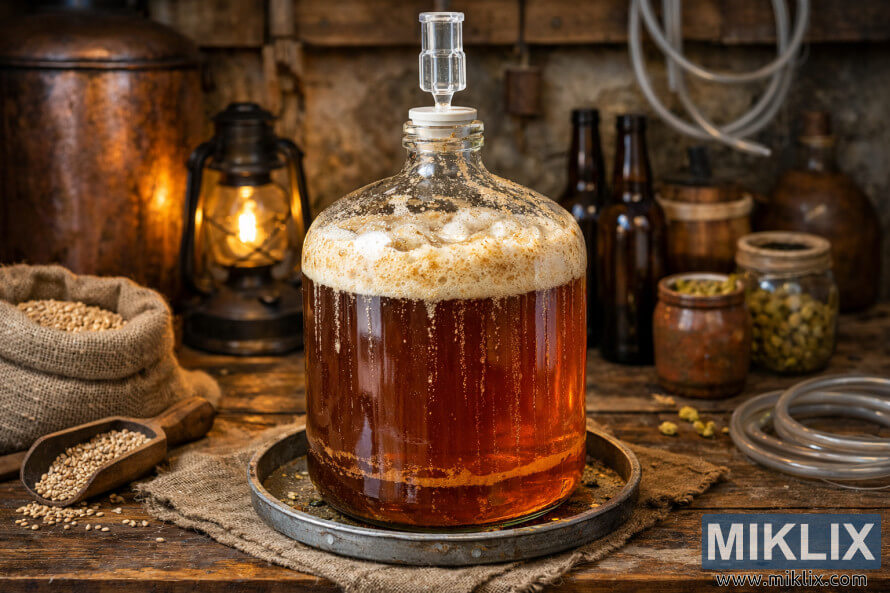
White Labs WLP023 Burton Ale Yeast comes from Burton upon Trent. It's known for its clean, malt-friendly character. Brewers appreciate its subtle fruity esters, like apple, pear, and clover honey. There's also a faint sulfur note that often disappears with time.
Click or tap the image for more information and higher resolutions.
Brewers use WLP023 for beers that highlight malt depth or firm bitterness. This includes English IPA, California Common, brown ales, and stouts.
White Labs provides specs: attenuation around 72–78%, medium flocculation, and alcohol tolerance near 5–10%. The recommended fermentation range is 68–73°F (20–23°C). Homebrewers often report similar results, with some variations based on mash schedule and pitch rate.
Commercial packs with higher cell counts make it possible to pitch without a starter. However, it's crucial to maintain cold shipping and handling to ensure viability.
Key Takeaways
- White Labs WLP023 Burton Ale Yeast originates from Burton upon Trent and favors malt-forward ales.
- Typical attenuation is 72–78% with medium flocculation and moderate alcohol tolerance (5–10%).
- Fermentation is best kept near 68–73°F (20–23°C) to manage esters and sulfur notes.
- WLP023 fermentation can finish around 10 days in many homebrew setups, but results vary by mash and pitch.
- Commercial high-cell-count packs allow no-starter pitching, but maintain cold chain during shipping for best viability.
Overview of White Labs WLP023 Burton Ale Yeast
White Labs WLP023 originates from the rich brewing heritage of Burton upon Trent. It is cherished by brewers for the unique character it imparts to ales. This yeast excels in environments with sulfate-rich water profiles.
The lineage of WLP023 is rooted in the storied tradition of Burton upon Trent. This history illuminates why many American and English pale ales brewed with it exhibit distinct hop clarity and a mineral edge.
The aroma and flavor profile of WLP023 is characterized by subtle fruit esters. Descriptions often include apple, clover honey, and pear, with a faint sulfur note that becomes more pronounced in younger beers.
Feedback from brewers and tasting notes confirm its sensory profile. These reports also highlight its similarity to Wyeast 1275 Thames Valley, making it a common point of comparison. Both strains share esters and an English-style character.
For those seeking a cleaner fermentation, WLP001 is often the go-to choice. However, WLP023 offers a practical alternative. It adds a touch more fruit and traditional Burton character to a balanced, drinkable ale without straying far from the baseline.
- Provenance: Sourced from Burton upon Trent, useful for recreating regional styles.
- Flavor: Apple, clover honey, pear, and a background sulfur note when fresh.
- Comparative use: Often compared to Wyeast 1275 Thames Valley comparison and offered as a WLP001 alternative for more fruity expression.
Key Fermentation Specs for Burton Ale Yeast
White Labs WLP023 Burton Ale yeast offers consistent results when fermentation practices align with its specs. Brewers use practical numbers and simple techniques to achieve target final gravity. They also manage ester and sulfur levels and aim for clarity.
Attenuation range and expected final gravity
White Labs indicates WLP023 attenuation at 72–78%. Homebrew reports often confirm finished beers in the mid-70s percent. However, some batches have shown higher attenuation, reaching up to 82.6%.
Tracking original gravity helps estimate final gravity. Adjust mash temperatures or fermentables to achieve the desired finish.
Fermentation temperature window and control tips
The recommended Burton Ale fermentation temp is 68–73°F (20–23°C). Staying within this range enhances classic apple and pear esters while controlling sulfur. Running cooler, around 65–68°F, can reduce esters and sulfur, but fermentation takes longer.
- Use a chest or refrigerator with a thermostat for tight control.
- Keep active fermentation in the core of the temp window to avoid excess esters.
- If you need lower esters, drop temps a few degrees but expect longer fermentation time.
Flocculation and clarification behavior
White Labs lists yeast flocculation medium for WLP023. In practice, settling can vary. The strain clears well but often remains suspended more than classic English strains like WLP002.
- Siphoning or rousing can kick yeast back into suspension, so handle gently during transfers.
- Cold crashing and finings work well when clearer beer is desired.
- Expect slightly more yeast in the pack when pouring from fermenters compared with highly flocculent strains.
Pitching Rates and Preparation
Timing and cell count are crucial for a clean fermentation. Always read the pack label and use the White Labs pitch rate calculator. Newer White Labs packs have more cells, making a no-starter pitch viable for many ales.
Ready-to-pitch packs make brewing easier for homebrewers. For a 5-gallon batch aiming for mid-strength OGs, a fresh pack can hit the mark without a starter. This is especially true when timing and sanitation are spot on.
For high-gravity beers or multiple repitches, a starter is essential. A small yeast starter for Burton Ale boosts cell health and cuts lag. It's the safer bet with older packs, poor shipping conditions, or multiple repitches.
- Check pack age and transit time.
- Assume lower viability with warm or delayed packs and consider a starter.
- For OGs above typical pale ale strength, increase cell count with a starter.
Sanitation and proper handling are key to viability and preventing contamination. Use clean, sanitized tools when opening vials or smack packs. Pitch at the wort temperature specified in the recipe to avoid thermal shock and control ester production.
Shipping and storage are part of your prep routine. White Labs ships liquid yeast with an ice pack and recommends thermal packaging. Inspect the pack upon arrival: look for swollen vials, off odors, or long transit times. If unsure, create a small yeast starter for Burton Ale to confirm activity before pitching to the main fermenter.
Follow these simple steps to protect fermentation performance:
- Verify the recommended WLP023 pitching rate for your target OG.
- Decide between a no-starter pitch and a starter based on gravity and pack condition.
- Sanitize everything that contacts yeast; avoid cross-contamination.
- Maintain proper pitch temperature and oxygenation for a healthy start.
Water Profile and Its Interaction with WLP023
Brewers using White Labs WLP023 see significant improvements when their water matches the yeast's origins. The Burton water profile, known for its hop bite and crispness, complements WLP023's bright esters and its affinity for hopped ales.
The success of this combination hinges on mineral balance. High sulfate levels boost bitterness and dryness, enhancing hop flavors in IPAs and English pale ales. Brewers aiming for a sharp hop snap should aim for a higher sulfate to chloride ratio with this strain.
However, for malt-forward beers, the strategy shifts. Increasing chloride softens bitterness and enriches the midpalate. To achieve malt richness in brown ales, porters, and English bitters, add calcium chloride while keeping mineral levels in check.
For homebrewers, starting with a water test is essential. Understand your local water's hardness and alkalinity before adding gypsum or calcium chloride. Utilize a brewer's water chemistry calculator to aim for the right sulfate to chloride ratio. This ensures the style is achieved without overcorrecting the mash pH.
- For hop-forward WLP023 beers: increase sulfate with calcium sulfate (gypsum) to highlight hop bite.
- For malt-forward WLP023 beers: add calcium chloride to raise chloride and soften bitterness.
- Balance total alkalinity and calcium to protect mash pH and yeast health when adjusting minerals.
Make adjustments in small increments and monitor each change. Keeping a record of additions and tasting notes helps refine the water chemistry for WLP023. Even slight changes in the sulfate to chloride ratio can significantly alter a beer's character. Thus, it's crucial to test and adjust based on your desired style.

Click or tap the image for more information and higher resolutions.
Best Beer Styles to Brew with This Yeast
White Labs WLP023 Burton Ale yeast brings a unique Burton character to various beer styles. Its ester profile and subtle sulfur note are key considerations when selecting recipes. Here are some practical style suggestions and tips for maximizing this strain's potential.
Opt for WLP023 in beers where fruity esters and a firm hop background enhance the flavor. For hop-forward brews, this yeast amplifies bitterness and dry hop aromas, especially with sulfate-rich water.
- American IPA and Double IPA: A WLP023 IPA showcases resinous and citrus hops, complementing malt without overpowering it. Its character is ideal for high IBU beers, adding depth.
- English IPA: Choose malt-forward hops and let the yeast's mild fruitiness support classic English hop tones for a balanced take on a traditional style.
In darker, malt-centered beers, the strain adds complexity. Brewers achieve good results in styles that welcome a richer, layered profile.
- Brown Ale, Porter, Stout: Burton Ale yeast styles give these beers rounded fruit esters and a restrained background sulfur that can enhance roasted and nutty notes.
- Scotch Ale and Red Ale: Use moderate temperatures and a robust malt bill to let the yeast contribute warming esters without overpowering caramel character.
Specialty English-origin styles suit WLP023 when aiming for a classic regional impression rather than a neutral American profile.
- California Common: This yeast supports the steam beer’s caramel malt backbone while offering a subtle English twist.
- English Bitter: Choose lower hopping and moderate body to let Burton Ale yeast styles add traditional English depth and drinkability.
Be cautious with very pale, delicate ales. Light pale ales with minimal specialty malts can reveal roasted or spicy notes that clash with delicate hop or grain flavors. For the best results, match grain bill and water profile to the yeast’s strengths. Target either hop-forward or malt-rich outcomes accordingly.
Flavor Management During Fermentation
Managing flavor during active fermentation is key to shaping the final character of beers made with WLP023. Focus on temperature, oxygenation, and conditioning time. This balance is crucial for achieving the right mix of fruity esters and clean malt expression.
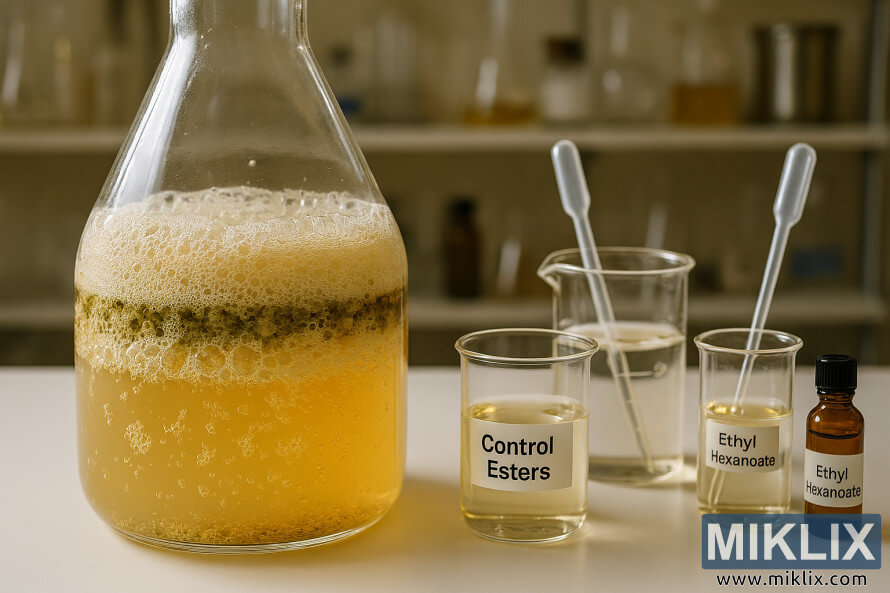
Temperature has a significant immediate impact on ester production. Fermenting at the lower end of the White Labs range helps control esters WLP023 and reduces volatile sulfur. Aiming for 65–68°F can result in slightly higher attenuation with restrained fruit notes. Warmer temperatures, however, enhance apple and pear esters and bring out more clover-honey character.
Oxygenation and yeast health also play a role in sulfur production. Proper oxygen at pitch and healthy cell counts reduce stress and lower sulfur yeast off-aromas. If a mild sulfur note appears, additional conditioning time can help. Cold conditioning for a few weeks or a lager-style chill can speed up sulfur dissipation without harming delicate esters.
Mash choices significantly impact how the yeast's fruitiness is perceived in the finished beer. A single infusion mash near 152°F (67°C) results in balanced body and mid-70s% attenuation, which frames esters well. Higher mash temperatures increase body and mask yeast esters, while lower temperatures enhance fermentability and emphasize mash schedule fruitiness and dryness.
- Keep fermentation steady: aim for a narrow range within 65–72°F to fine-tune esters.
- Ensure proper oxygenation at pitch to reduce sulfur formation and support healthy attenuation.
- Use mash temperature as a tool: higher mash temps reduce perceived fruitiness; lower temps enhance it.
- Allow extended cold conditioning when a background sulfur note needs to fade.
Small adjustments can make a big difference. By combining temperature control with a thoughtful mash schedule and attentive conditioning, you can manage esters and reduce sulfur yeast impact. This approach helps preserve the desirable fruitiness this strain can provide.
Click or tap the image for more information and higher resolutions.
Attenuation, Final Gravity, and Alcohol Tolerance
WLP023 is celebrated for its solid attenuation in homebrew circles. Brewers often achieve mid-70s percent attenuation, provided they manage mash and fermentation for optimal fermentability. The final gravity usually falls within the mid-70s range. However, a well-attenuated batch can drop slightly lower if the wort is highly fermentable.
Real-world examples of WLP023 attenuation range from 72–78%. Three batches reported attenuation of 76.2%, 77.2%, and 82.6%, with final gravities of 1.010, 1.008, and 1.008, respectively. These results highlight the impact of mash profile and temperature control on attenuation. They serve as a guide for setting realistic final gravity expectations in similar recipes.
White Labs classifies WLP023's alcohol tolerance as medium, around 5–10%. It's crucial to plan original gravity targets to keep fermentation within this range. This approach helps avoid stressed yeast, which can lead to off-flavors and stalled fermentations.
To enhance attenuation safely, focus on wort fermentability and yeast health. Lower mash temperatures result in more fermentable wort. Adding small amounts of simple sugars or enzymatic aids like amylase can also boost attenuation without overloading the yeast.
- Pitch a healthy, adequate cell count; use a starter for higher OG batches.
- Oxygenate wort well at pitching to support growth in the early phase.
- Maintain stable fermentation temperatures in the strain’s recommended range to avoid ester spikes or stress.
- Consider step-feeding or staged sugar additions for very high gravity beers to protect yeast.
By combining healthier yeast and more fermentable wort, you can achieve lower FG. Monitor gravity readings and yeast activity to determine if additional intervention is necessary. Targeted increase attenuation techniques can push WLP023 beyond its typical range without compromising flavor.
Flocculation Behavior and Clarification Strategies
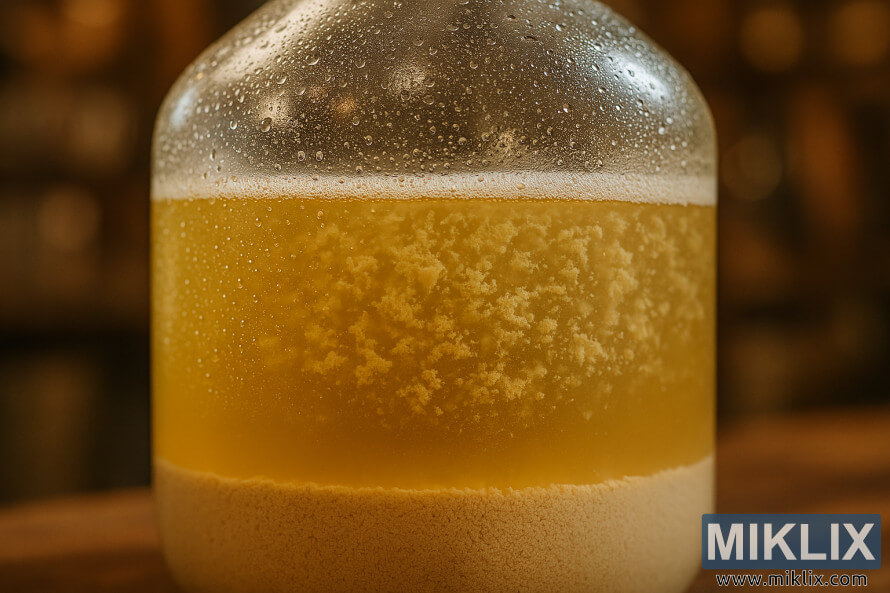
WLP023 is classified as a medium-flocculation strain, yet brewers often find it less settled than anticipated. This results in a light haze in your Burton Ale post-fermentation. It can also re-suspend during transfers, requiring more effort for clarification.
To clarify your Burton Ale without losing its character, employ targeted strategies. These methods are effective for both home and small commercial batches.
- Cold crash finings: Rapidly lower the temperature a few days before packaging to encourage yeast drop-out. A cold crash at 34–40°F for 48–72 hours aids in WLP023 flocculation.
- Boil and post-ferment finings: Add Irish moss or Whirlfloc in the last 10–15 minutes of the boil. Post-fermentation, gelatin, polyclar, or Biofine can enhance clarity.
- Extended conditioning: Allow the beer to age in cold storage for one to four weeks. This improves clarity and softens sulfur or esters.
Packaging demands caution when yeast remains suspended. Gently rack the beer, leaving trub and yeast behind to prevent over-yeasting in kegs and bottles. Bottle conditioning will still have active yeast; adjust priming accordingly and accept some yeast in suspension for natural carbonation.
For keg transfers, purge and push slowly to avoid stirring settled yeast. When using counter-pressure bottles or commercial fillers, allow a settling period after cold crash finings. This minimizes sediment movement with the beer.
To achieve clarity, combine cold crash, fining, and extended conditioning. These methods increase the likelihood of clarifying your Burton Ale while preserving its unique esters and mouthfeel.
Click or tap the image for more information and higher resolutions.
Repitching, Storage, and Viability
Repitching yeast can save money and build a reliable house culture when done carefully. With WLP023, limit repitch generations to preserve performance and flavor. Most homebrewers follow a three- to five-generation guideline and monitor attenuation and sensory changes between batches.
When you plan to repitch WLP023, keep clear records. Note batch number, pitch date, and measured final gravities. If a batch shows creeping attenuation or new off-flavors, stop repitching that line and start fresh from a new vial or pack.
How you store liquid yeast matters. Keep unopened White Labs packs refrigerated and use by the manufacturer-stated window. For longer holds, freeze-drying is better, but for liquid strains like WLP023, refrigeration is the standard. If a shipment spent time warm, expect reduced cell counts and consider making a starter instead of a direct pitch.
- Always check temperature exposure during transit. A Thermal Shipping Package helps maintain cool temps for longer.
- Third-party couriers often use a 3 oz ice pack. That may be inadequate in hot weather for long routes.
- If concerned about yeast viability shipping, build a starter to regain healthy cell numbers before brewing.
Test yeast health before reuse. Smell the slurry for unexpected sour, solvent, or putrid notes. Look for obvious contamination, such as unusual colors or pellicles. Prepare a small starter and watch for vigorous CO2 and krausen within 24–48 hours.
- Perform a visual check for uniform color and a clean yeast sediment.
- Use a starter to confirm activity; lack of visible fermentation in 48 hours is a warning sign.
- If you have access to a microscope or viability stains, perform cell counts and percent viability to guide pitching rates.
When repitching, adjust your pitch rate to compensate for lower viability. If a reused batch shows sluggish fermentation, oxygenate wort and consider nutrient additions to support yeast health. Tracking yeast performance over time helps you decide when to retire a strain and source fresh WLP023.
Recipe Design Tips for Using Burton Ale Yeast
Creating recipes with WLP023 yeast begins with a detailed plan for malt, hops, and mash. This yeast imparts fruity esters and a hint of sulfur to young beers. A focused approach to the grain bill and IBU targets is essential. It helps to highlight the yeast's strengths while avoiding harsh flavors.
Choosing grains is the first step. For hop-forward beers, use a base like Briess Pale 2-Row or a quality British pale malt, making up 85–90% of the grain bill. Add 8–12% Crystal 40 to enhance caramel and roundness. The 90% Pale 2-Row / 10% Crystal 40 ratio has proven effective with WLP023 in many recipes.
- For malt-forward styles, introduce darker malts such as Maris Otter, brown malt, and higher crystal levels. This complements the yeast's esters and tames roasted edges.
- Use small amounts of roast or chocolate malts to add complexity without overpowering the yeast character.
Hop selection should complement the Burton character. Chinook, Centennial, Nugget, and Cascade are good choices when paired with the yeast's fruit and sulfur notes. Set IBU targets WLP023 according to style goals. Aim for 35–40 IBU for balanced pale ales, 40–60 IBU for stronger IPAs, and 60–80+ IBU for double IPAs.
- Balanced pale ale: 35–40 IBU; late hop additions to preserve aroma.
- American/English IPA: 40–60 IBU; mix bittering with flavor hops like Centennial or Chinook.
- Double IPA: 60–80+ IBU; expect higher perceived bitterness when yeast esters are present.
Mash temperature controls body and attenuation. A one-step mash at 152°F (67°C) has produced mid-70s% attenuation with WLP023 and a medium body. Lower the mash to 148–150°F for a drier finish and higher apparent attenuation.
Raise the mash to 154–158°F for a fuller mouthfeel and lower apparent attenuation. This balances ester perception and malt sweetness. Consider a short mash rest or stepped saccharification if using under-modified malts.
Recipe notes for brewers: keep specialty malts modest in hop-forward recipes to let hop and yeast interplay shine. In malt-forward builds, push crystal and darker malts to absorb spice and roast. Track IBU targets WLP023 early in design to avoid clashes between bitterness and yeast-driven fruitiness.
Common Issues and Troubleshooting
Working with White Labs WLP023 can yield rich, characterful beers when matched to the right grain bill. Brewers sometimes encounter unexpected notes, slow activity, or packaging surprises. This short guide helps pinpoint causes and actions for common WLP023 problems while preserving the strain's strengths.
Roasted or spicy aftertastes can show up in lighter ales and read as defects. If a pale ale tastes burnt, check the malt bill first. WLP023 favors darker, malty bases that hide robust esters and trace sulfur. For accidental roast or spice, extend conditioning to let harsh notes mellow and reassess mash temperatures and late roast additions.
Slow fermentations often trace back to pitch rate, yeast health, or oxygen at pitching. Confirm you pitched enough viable cells, especially after long or warm transit. Oxygenate wort well and keep fermentation in the 68–73°F window. If activity lags, gently rouse the fermenter to resuspend yeast and ensure even temperature distribution.
When fermentation stalls, try incremental remedies before repitching. Raise the fermenter temperature a few degrees and swirl gently to wake settled yeast. If those steps do not finish attenuation, build a strong starter and add active culture. These moves form the core of a practical stuck fermentation fix for most homebrew scenarios.
Packaging problems often stem from residual sugar or unexpected attenuation variance. Measure final gravity before bottling or kegging. If FG is higher than expected, wait, warm the fermenter slightly, and allow more conditioning time. For beers that over-attenuate, plan mash schedules and fermentability targets to avoid thin or overly dry results.
- Check pitch rate and viability when diagnosing WLP023 problems.
- Match yeast to malt bill to avoid Burton Ale off-flavors in delicate styles.
- For a stuck fermentation fix: warm, swirl, oxygenate cautiously, then consider an active starter if needed.
- Always confirm FG before packaging to prevent bottle bombs or over-carbonation.
When troubleshooting, document temperatures, gravity readings, and yeast source. Clear records help you identify patterns specific to Burton Ale off-flavors or variability in attenuation. Small adjustments in process often resolve issues without sacrificing the yeast's desirable contributions.
Real-World Brew Notes and Case Studies
Hands-on reports translate lab specs into brewing decisions. Below are observations from experienced homebrewers who used this strain at typical cellar temperatures. They share insights on fermentation timing, final gravity, and recipe choices.
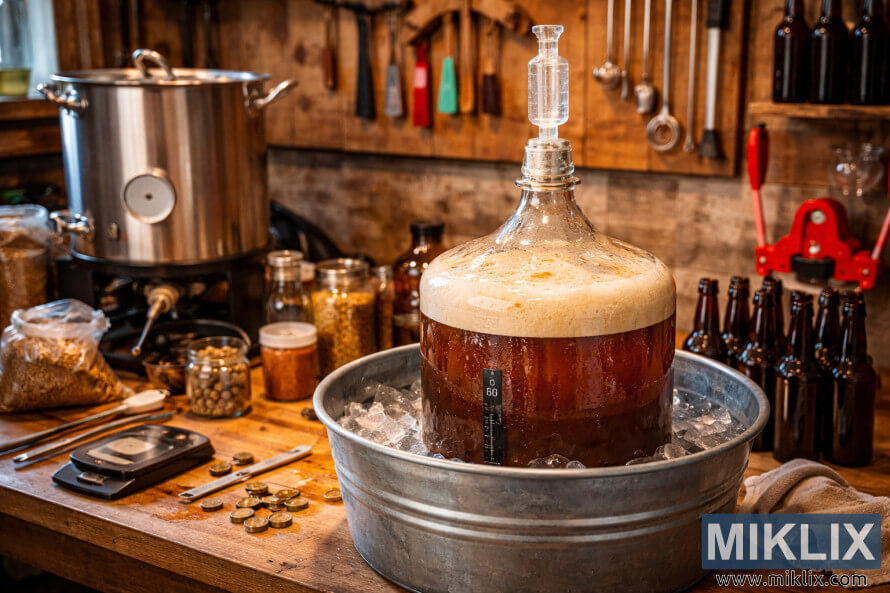
- Most batches finished in about 10 days at home temperatures near 65–68°F. This aligns with many WLP023 homebrew notes that show steady activity without extreme lag.
- Attenuation varied across consecutive brews: measured values included 76.2% (FG 1.010), 77.2% (FG 1.008), and an anomalous 82.6% (reported FG 1.008). These WLP023 FG examples illustrate typical mid-70s attenuation with occasional outliers.
Successful batch examples
- A brewer ran three pale ales using the same grain bill: 90% American Pale 2-row and 10% Crystal 40. Hop pairings were Chinook/Centennial, Nugget/Centennial, and all Cascade.
- Target IBUs were around 35–40 with aroma hops added at 10 minutes. Each beer finished cleanly and displayed balanced bitterness and aroma. These Burton Ale case studies emphasize how hop choice changes perceived fruitiness while remaining consistent with the yeast’s character.
Lessons learned and style fit
- WLP023 works well in hop-forward and malt-forward styles where a touch of fruit and initial sulfur can complement the profile. Brewers referenced the WLP023 homebrew notes when choosing water chemistry and mash temperatures.
- Avoid this strain when a very neutral, ultra-clean yeast is required for extremely light pale ales. Brewers found residual sulfur at packaging that typically faded with conditioning, but it can be noticeable in delicate beers.
- Adjust mash schedule, water sulfate-to-chloride ratio, and hop selection to pair with the yeast. These small choices reduce the chance of off-notes and make the most of the WLP023 FG examples cited above.
Click or tap the image for more information and higher resolutions.
Conclusion
The White Labs WLP023 review highlights its ability to replicate the classic Burton-upon-Trent character. It introduces subtle apple, clover honey, and pear esters, accompanied by a faint sulfur note. Fermentation occurs in the mid-70s attenuation range, ideal when temperatures are kept between 68–73°F. Homebrewers typically report a fermentation period of about ten days.
When brewing with WLP023, temperature management is crucial to control esters. Allowing time for conditioning is essential to reduce sulfur notes. To enhance hop flavors, use higher sulfate water. Select grain bills that complement the yeast's fruitiness. Consider a starter for high-gravity beers or when viability is uncertain.
WLP023 exhibits medium flocculation, resulting in some yeast remaining in suspension. Cold crashing or finings are recommended if clarity is a priority for packaging. In summary, WLP023 is ideal for those seeking a Burton/Thames character in their brews. It's versatile but not suited for very light, delicate pale ales. Overall, it's a reliable choice for brewers aiming to achieve classic English character in their modern brews.
FAQ
What is White Labs WLP023 Burton Ale Yeast and where does it come from?
WLP023 Burton Ale Yeast is a liquid ale strain from Burton upon Trent, England. It carries the historical Burton/Thames character. This yeast is used to produce ales with a fruity, slightly sulfurous profile. It pairs well with high-sulfate water typical of that region.
What are the typical flavor notes produced by WLP023?
WLP023 produces subtle fruity esters like apple, clover honey, and pear. It also has a common background sulfur note. Sulfur often fades with conditioning; esters vary with fermentation temperature and wort composition.
How does WLP023 compare to WLP001 California Ale Yeast and Wyeast 1275 Thames Valley?
Compared with WLP001, WLP023 is less neutral and shows more Burton-derived fruitiness and background sulfur. Community reports link WLP023 closely to Wyeast 1275 Thames Valley in behavior and character. This makes it a Burton-like alternative for many English-leaning ales.
What attenuation should I expect from WLP023 and how reliable is it?
Manufacturer specs list 72–78% attenuation. Homebrew reports typically fall in the mid-70s but have sometimes exceeded that range. Final gravity depends on mash fermentability, pitch rate, and fermentation temperature.
What fermentation temperature should I use for WLP023?
White Labs recommends 68–73°F (20–23°C). Fermenting at the cooler end or slightly below (around 65–68°F) can reduce ester and sulfur production. Warmer temps increase fruity esters. Maintain consistent temperatures to avoid off-flavors.
How does WLP023 flocculate and how clear will my beer be?
White Labs lists medium flocculation. In practice, the strain can appear variable—easily roused during transfer and sometimes less clear than typical English strains like WLP002. Expect some haze unless you cold crash, use finings, or allow extended conditioning.
Can I pitch WLP023 straight from the pack or do I need a starter?
Newer White Labs packs contain larger yeast counts that often allow no-starter pitching for typical-gravity beers. Build a starter for high-gravity beers, long shipping exposure, or when repitching multiple generations to ensure healthy fermentation.
What sanitation and handling steps are important with liquid WLP023?
Use sanitized tools when opening and transferring yeast, store unopened packs refrigerated, and inspect viability after shipping. If yeast experienced warm transit or long delays, make a starter to confirm activity before pitching to primary wort.
Why does Burton/Thames high-sulfate water pair well with this strain?
High sulfate accentuates hop bitterness and crispness, complementing WLP023’s Burton character and ester profile. The sulfate-to-chloride balance helps present hop bite in IPAs and accentuates the yeast’s suitability for hop-forward beers.
How should I adjust water chemistry for hop-forward versus malt-forward beers with WLP023?
Increase sulfate (e.g., gypsum/calcium sulfate) to emphasize hop bite for IPAs. Raise chloride (e.g., calcium chloride) to emphasize malt softness for brown ales and porters. Balance sulfate-to-chloride according to target style and local water baseline.
Which beer styles are the best fit for WLP023?
WLP023 suits American IPA, Double IPA, English IPA, California Common, English Bitter, Pale Ale, Brown Ale, Porter, Red Ale, Scotch Ale, and Stout. It shines in hop-forward beers and deeper, malt-forward ales that can absorb its character.
Is WLP023 a good choice for very light pale ales?
Use caution. Some brewers report roasted or spicy aftertastes in very light, delicate pale ales that were judged as defects. For extremely clean, neutral pale ales, a cleaner American strain like WLP001 may be a better choice.
How do I control ester and sulfur production during fermentation?
Control fermentation temperature (cooler reduces esters and sulfur), pitch with a healthy cell count, and oxygenate wort properly at pitching. Allow adequate conditioning time and consider cold conditioning to help sulfur dissipate.
How does mash temperature affect the yeast’s character and attenuation?
Mash temperature influences wort fermentability: lower mash temps (148–150°F) yield more fermentable wort and drier beers with higher apparent ester expression; higher mash temps (154–158°F) give fuller body and lower attenuation, which can mask some esters and sulfur.
What is the alcohol tolerance of WLP023 and how should I plan OG?
White Labs lists alcohol tolerance as medium (about 5–10%). For reliable single-generation fermentation, plan recipes to produce ABV within that range or make larger starters or step-up cultures for higher-gravity beers.
What techniques safely increase attenuation with WLP023?
Use lower mash temps to increase fermentability, add simple sugars or diastatic enzymes, ensure adequate pitch rate and oxygenation, and use a healthy starter when necessary. Monitor yeast health to avoid off-flavors when pushing attenuation.
What clarification methods work best if WLP023 stays in suspension?
Cold crashing, kettle finings like Irish moss, and post-fermentation finings (gelatin, Biofine, kieselsol/gelatin) help clarity. Give extended conditioning time and use gentle racking to minimize suspended yeast transfer to packaging.
How many generations can I safely repitch WLP023?
While White Labs doesn’t specify an exact limit, standard practice for liquid ale strains is to limit repitching to around 3–5 generations. Watch for shifts in attenuation, off-flavors, or slowed fermentations when repitching repeatedly.
What are safe storage and shipping practices for WLP023?
Store refrigerated and use yeast promptly. White Labs ships with a 3 oz ice pack and recommends thermal packaging for long or warm transit. If packages experienced heat or long transit, make a starter to confirm viability before pitching.
How can I test yeast health before repitching WLP023?
Smell the yeast for off-odors, visually inspect for contamination, and make a small starter to confirm fermentation activity within 24–48 hours. Microscopic viability and cell counts are ideal if available.
What grain bill and hop profiles have worked well in user trials?
A simple pale base (e.g., 90% Pale 2‑Row) with 10% Crystal 40 performed well in home trials. Hops like Chinook, Centennial, Nugget, and Cascade at ~35–40 IBU produced balanced, successful beers. Adjust malt and hops to match desired style and yeast character.
What should I do if I taste unexpected roasted or spicy flavors in a light ale?
Consider whether the yeast is the right choice for that grain bill—WLP023 can produce roasted/spicy aftertastes in delicate pale ales. Allow longer conditioning, check mash and roast malt levels, and avoid using this strain for very light, delicate beers when in doubt.
How long does fermentation typically take with WLP023 in homebrew conditions?
Homebrewers report fermentation finishing in about 10 days at ~65–68°F in several batches. Timing varies with pitch rate, temperature, and wort fermentability; always confirm final gravity before packaging.
What troubleshooting steps help with slow or stuck fermentations?
Check pitch rate and viability (make a starter if needed), ensure proper oxygenation at pitching, gently rouse or raise temperature slightly to restart activity, and consider adding an active starter or fresh yeast if fermentation remains stalled.
How should I handle packaging if attenuation varies from expected?
Measure final gravity before packaging. If FG is higher than expected, allow more conditioning time or warm the fermenter slightly. For unexpectedly low FG or over-attenuation, adjust souring or carbonation plans accordingly and avoid premature bottling.
Any final recipe design tips when using WLP023?
Match grain bills to the strain—use darker specialty malts for malt-forward styles, and a solid pale base for hop-forward beers. Target IBUs based on style (35–40 for balanced pale ales; higher for IPAs), control mash temp to tune body and attenuation, and adjust water sulfate/chloride to complement the beer.
Where can I find more technical specs and a pitch rate calculator for WLP023?
White Labs product pages provide full technical specs, recommended fermentation ranges, and a pitch rate calculator. Check product details for packaging updates and shipping recommendations before ordering.
Further Reading
If you enjoyed this post, you may also like these suggestions:
- Fermenting Beer with Lallemand LalBrew Abbaye Yeast
- Fermenting Beer with Wyeast 3191-PC Berliner Weisse Blend
- Fermenting Beer with Fermentis SafAle K-97 Yeast