
Fermenting Beer with Wyeast 2105-PC Rocky Mountain Lager Yeast
Published: March 27, 2026 at 5:47:50 PM UTC
Wyeast 2105-PC Rocky Mountain Lager Yeast is celebrated for its clean, malt-forward profile. It hails from Colorado and is a favorite for North American lagers.
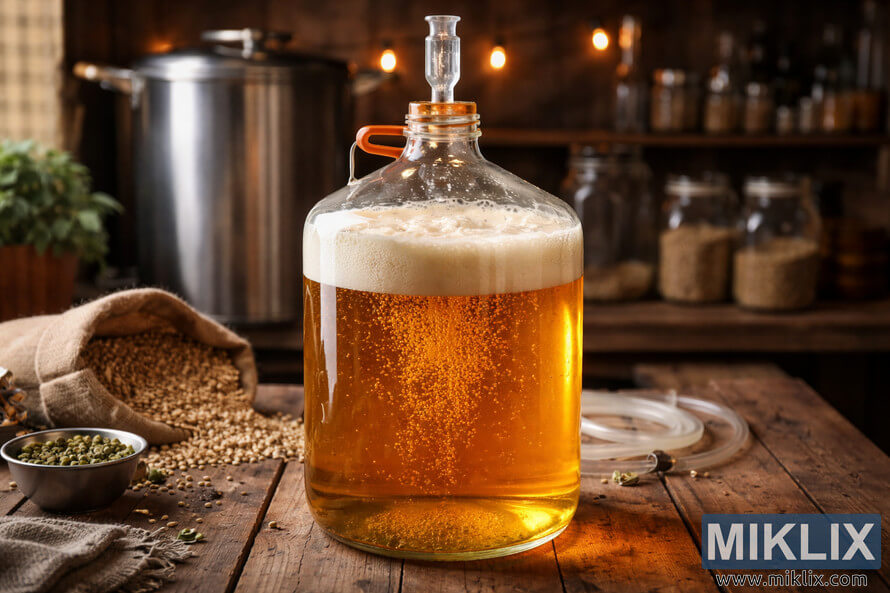
Click or tap the image for more information and higher resolutions.
Wyeast 2105-PC Rocky Mountain Lager Yeast is ideal for beers that showcase malt character, from light pilsners to American lagers. It offers a balanced ester profile, allowing grain and subtle adjuncts to shine.
Its practical specs make recipe planning straightforward. Fermentation occurs between 48–56°F, with an apparent attenuation of 70–74%. Flocculation is medium-high, ensuring predictable final gravities and clarity. For those considering a Wyeast 2105 review, this yeast is known for its dependability and versatility.
Fermenting with 2105 promises steady, cool fermentations. It can tolerate up to roughly 9% ABV with proper pitching and oxygenation. This makes it perfect for everyday lagers and specialty brews. The following sections will provide practical guidance on temperature control, pitching rates, and recipe pairing.
Key Takeaways
- Wyeast 2105-PC Rocky Mountain Lager Yeast favors a malt-forward, balanced profile suited to American and light European lagers.
- Recommended fermentation range is 48–56°F for clean results and predictable attenuation.
- Apparent attenuation around 70–74% yields moderate dryness and FG expectations for recipe planning.
- Medium-high flocculation helps achieve good clarity with standard lagering times.
- Strain tolerates up to ~9% ABV with adjusted pitching and oxygenation for higher-gravity worts.
Overview of Wyeast 2105-PC Rocky Mountain Lager Yeast
Wyeast 2105-PC is a brewer-friendly lager strain with a rich backstory. It hails from the Colorado high country, marketed as a North American lager character. This overview delves into its place in homebrewing and what to anticipate during fermentation.
Origin and brewer lore
Wyeast and retailers claimed this strain was born in the Colorado Rockies. This narrative has woven a Rocky Mountain yeast lore among hobbyists. Limited releases and winter kit pairings furthered the story. Brewers often choose this strain for regional-style lagers and pre-prohibition recreations, referencing its origin.
Target beer styles and typical uses
2105 is suited for brewing American Lager, Light Lager, International Pale Lager, German Pils, and Pre-Prohibition Lager. It excels with adjunct beers like flaked maize, aiming for a clean, malt-forward finish. It's ideal for recipes seeking clarity and a subtle malt backbone, rather than a fruit-forward profile.
Key strain characteristics summary
- Fermentation range: 48–56°F (9–13°C), fitting traditional lager schedules.
- Apparent attenuation: about 70–74%, leading to moderately dry results.
- Apparent ABV tolerance: up to roughly 9% for higher gravity efforts.
- Flocculation: medium-high, aiding natural clearing without aggressive fining.
- Flavor: mild malty core with medium esters and balanced overall impression.
The Wyeast 2105 characteristics make it a reliable choice for North American lager styles. It's perfect for brewers seeking a predictable, malt-forward base. Its profile supports clean lagers and occasional adjunct-heavy recipes, enhancing its appeal in various brewing projects.
Click or tap the image for more information and higher resolutions.
Why Choose Wyeast 2105-PC Rocky Mountain Lager Yeast for Your Lager
Wyeast 2105-PC stands out for many lager enthusiasts. It's perfect for those who desire a malt-forward taste with subtle fruity undertones. This yeast is reliable for crafting lagers that are drinkable yet rich in malt flavor, without overpowering esters.
Its key characteristics make 2105 a top pick. It exhibits a malt-forward profile with moderate ester production. This enhances grain sweetness and body, creating a balanced pale lager with a crisp finish.
It's particularly suited for North American lager styles. Brewers aiming for classic pre-prohibition or banquet lagers will find 2105 ideal. It handles adjuncts well, preserving the corn's grainy-sweet flavor while delivering a refreshing, bitter pale lager.
Practical recipes showcase 2105's strengths. A Rocky Mountain Pre-Prohibition Lager with pilsner and flaked maize exemplifies its ability to elevate malt flavors. It also maintains clarity and drinkability. This profile is also suitable for modern American pale lagers, where malt balance is crucial.
When comparing Wyeast strains, 2105 and 2007 stand out. 2105 offers a more pronounced malt character, while 2007 is cleaner and more neutral. Those who prefer a hint of malt sweetness will choose 2105, whereas those seeking a very neutral base will opt for 2007.
In comparison to other strains, 2105 has medium esters and medium-high flocculation. Its attenuation aligns with many American/European lager yeasts. For brewers seeking the best yeast for American lager with a malt presence, 2105 is a top contender.
Opt for 2105 if you're after a lager with substantial malt weight and a soft ester profile. It excels in adjunct-heavy recipes and North American lager styles. It offers a distinct alternative when comparing Wyeast 2105 vs 2007 for recipe outcomes.
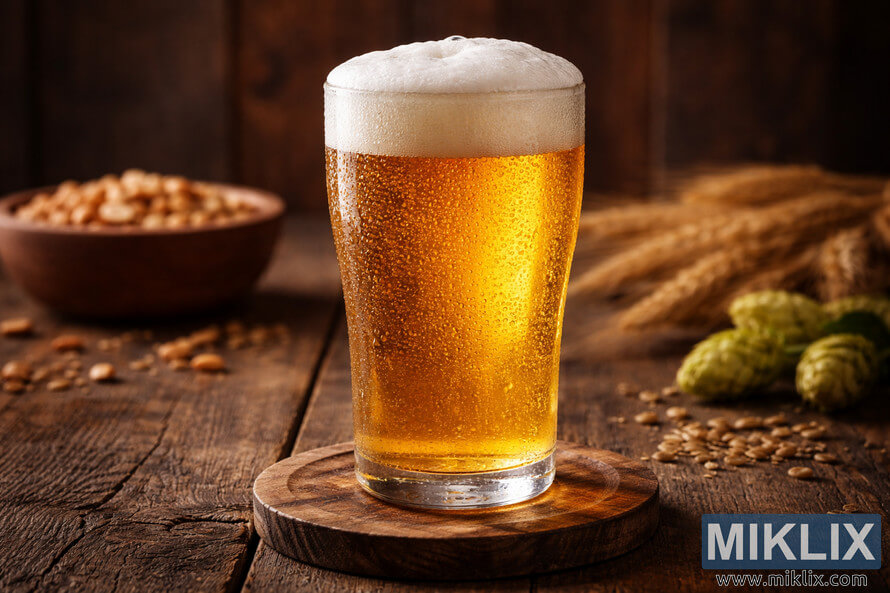
Click or tap the image for more information and higher resolutions.
Fermentation Temperature Range and Its Impact
Wyeast 2105-PC excels in a cool, controlled environment. This setting enhances its malt-forward profile and clean finish. Achieving consistent results, whether brewing a pilsner or a pre-prohibition style, hinges on precise temperature management.
Recommended range of 48–56°F and why it matters
Wyeast recommends fermenting between 48–56°F. This range is crucial for minimizing ester production, emphasizing malt character, and reducing fusel alcohols. It also promotes reliable attenuation and a cleaner mouthfeel in the final lager.
Effects of fermenting at the low end vs high end
Fermenting near 48°F results in slower processes and the cleanest, most malt-driven beers. Esters are kept low, and clarity often improves. However, achieving full attenuation may take longer.
At 56°F, the yeast ferments more vigorously and finishes faster. This temperature range introduces a touch of fruity character and slightly more fermentation heat. It's beneficial when time is of the essence. Expect medium ester expression at higher temperatures.
Managing temperature in homebrew setups
- Use a temperature-controlled refrigerator or chest freezer with a controller such as Inkbird or Johnson for precise homebrew lager temperature control.
- Basement fermentation works when ambient temps fall within the 48–56°F window; add blankets or a small heater if swings occur.
- Swamp coolers and insulated boxes help in mild climates, but monitor with an accurate probe thermometer to avoid stray warm spots.
- Plan a short diacetyl rest by raising the temperature toward the upper end for 24–48 hours if needed, then return to cold conditioning.
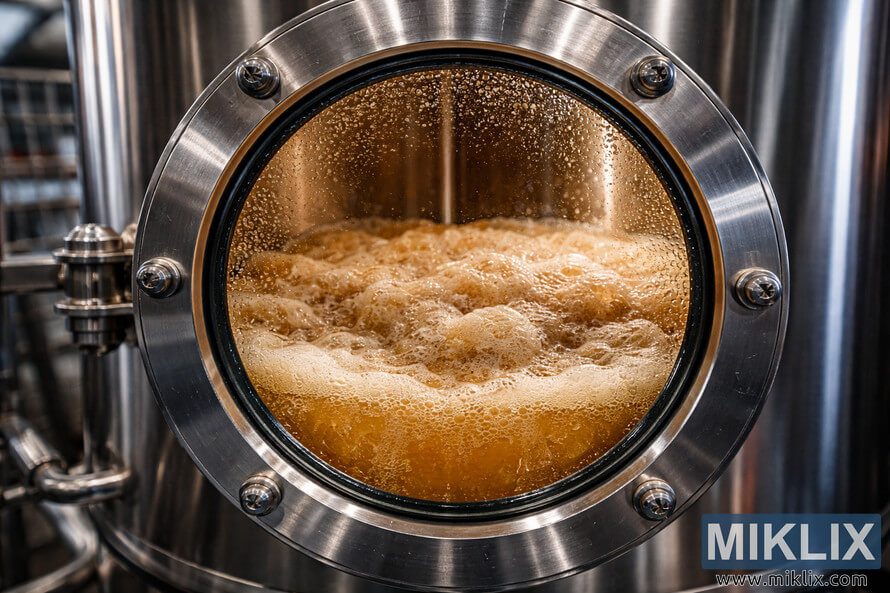
Click or tap the image for more information and higher resolutions.
Attenuation, Flocculation and Final Gravity Expectations
Wyeast 2105-PC offers consistent attenuation and settling, crucial for lager brewing. Use its attenuation numbers to aim for the right dryness and clarity before brewing.
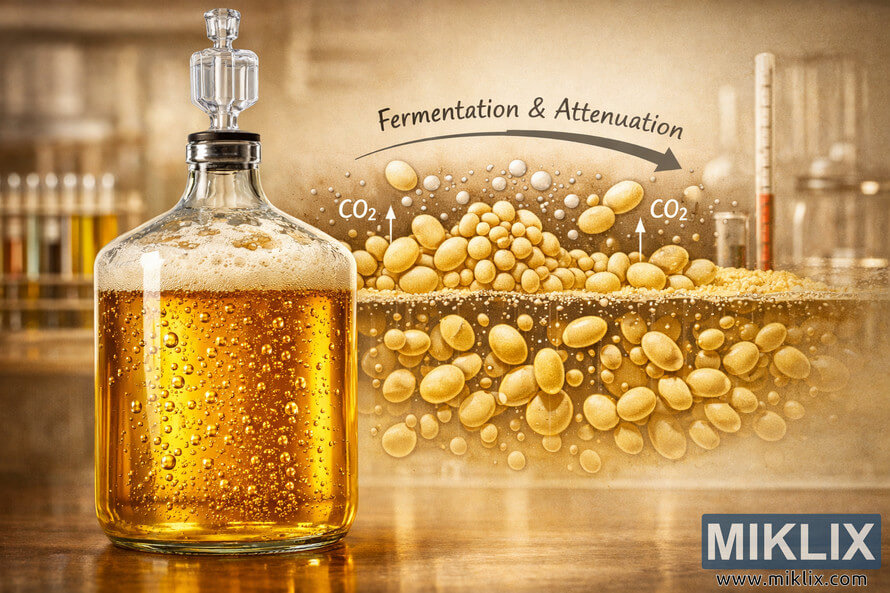
The apparent attenuation is 70–74%, making it ideal for malt-forward pils or pale lagers. For instance, an OG of 1.054 will likely drop to 1.014, resulting in a 5.2% ABV beer. Monitoring 2105 attenuation across batches helps fine-tune mash schedules and fermentability targets.
Flocculation is medium-high, which enhances natural clearing during conditioning. This yeast settles well after fermentation and a cold rest, leading to bright beers without aggressive filtering. Clarity improves with gentle racking and extended lagering.
Calculating FG for lagers is simple with the attenuation range and your OG. For an OG of 1.050, 70–74% attenuation suggests an expected FG of 1.012–1.015. Consider adjuncts like flaked maize, which can increase the final gravity, and adjust mash efficiency for precise mouthfeel.
- Estimate FG early: apply 2105 attenuation to your anticipated OG to set a target FG.
- Adjust recipe: increase simple sugars or modify mash temps to shift finish drier or fuller.
- Use conditioning: a cold lagering period leverages flocculation medium-high to polish clarity and stabilize the expected FG with 2105.
When predicting FG for lagers, record actual OG and FG from each batch. This data helps bridge the gap between theory and reality, enhancing repeatability with this strain.
Click or tap the image for more information and higher resolutions.
Pitching Rates, Starter Advice and Oxygenation
Mastering yeast for lagers is crucial, often overlooked by brewers. Proper pitching techniques prevent slow starts, unwanted flavors, and prolonged lagering. This guide will help you achieve a clean, crisp taste with Wyeast 2105 through cell count, starter timing, and oxygenation.
- Proper cell counts for a typical 5-gallon batch
- For a 5-gallon lager at moderate gravity (OG ~1.048–1.055), aim for roughly 0.75–1.5 million cells per mL per degree Plato. This equates to about 300–400 billion total cells for a healthy lager fermentation. Achieving this cell count minimizes the risk of slow fermentation and off-aromas.
- How and when to make a starter for 2105-PC
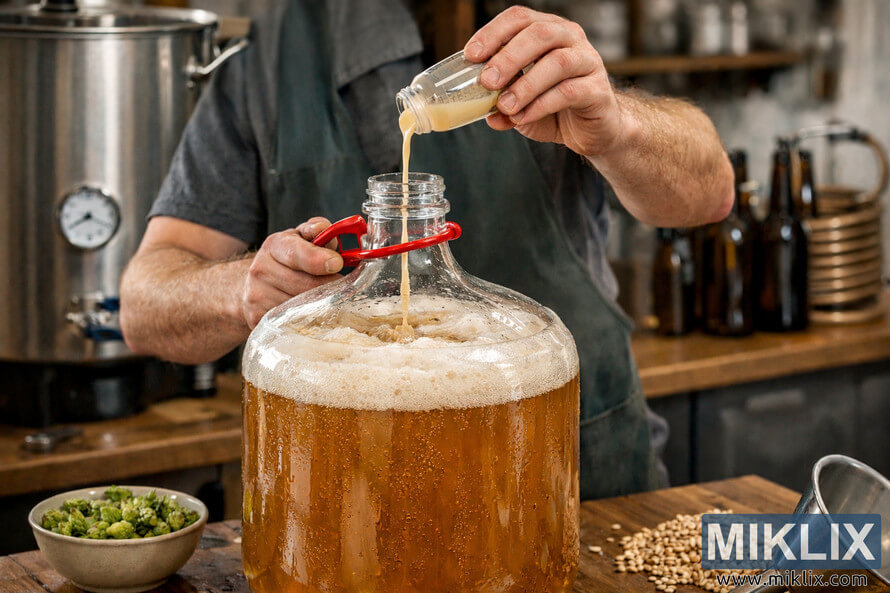
- When using a single Wyeast smack pack or common liquid yeast, plan a lager starter to hit the needed population. Build the lager starter 24–72 hours before pitching, depending on size. For typical 5-gallon lagers, a single-step starter usually suffices.
- For higher gravity worts or older yeast, propagate in stages to reach the needed volume. Increasing starter size reduces stress on cells and improves attenuation in the finished beer.
- Oxygenation strategies for a healthy lager fermentation
- Oxygenation for lagers at pitching is essential. Aim for dissolved oxygen near 8–12 ppm. Use a single-shot of pure oxygen with a diffusion stone or vigorous aeration to reach that range.
- Higher gravity worts require more oxygen and larger starters to supply sterols and membranes for rapid growth. Proper oxygenation supports full attenuation and reduces sulfur or diacetyl issues later.
Follow these steps: calculate the cell count you need, build an appropriately sized lager starter when using liquid yeast, and provide measured oxygenation for a clean, steady fermentation. Small investments in pitching rate Wyeast 2105, a well-timed lager starter, and correct oxygenation for lagers pay off in clarity and flavor.
Click or tap the image for more information and higher resolutions.
Fermentation Timeline and Monitoring with 2105-PC
Creating a detailed timeline is crucial for brewers to plan the conditioning and packaging phases. Wyeast 2105-PC demands patience, unlike ale strains. It's essential to track activity, gravity, and sensory signs to gauge progress and intervene when necessary.
Typical primary fermentation duration at recommended temps
At temperatures between 48–56°F, fermentation should kick off within 24–72 hours after proper pitching. The total fermentation time for primary fermentation can vary from 4 to 10 days. Fermentation at cooler temperatures will extend the duration, while warmer temperatures will shorten it.
Signs of a healthy fermentation and common timelines
Look for a visible krausen, steady airlock activity, and a consistent drop in specific gravity. Use a hydrometer or refractometer to confirm attenuation. Most batches reach a clear terminal gravity trend within one to two weeks with normal pitching rates.
- Day 1–3: lag phase ending, foam and CO2 begin.
- Day 4–10: most gravity drop happens; check readings every 24–48 hours.
- Week 2+: gravity stabilizes; consider moving to conditioning or lagering.
When to perform a diacetyl rest and why
If fermentation nears completion at lower temperatures, raise the temperature by 4–6°F for 24–48 hours. This diacetyl rest for 2105 allows yeast to reabsorb off-flavors, enhancing the beer's profile. Wyeast advises a rest for many lagers, leading to a smoother finish when timed correctly near terminal gravity.
Effective monitoring of lager fermentation involves combining readings with sensory checks. If diacetyl is detected in a sample, extend the rest until the taint subsides and gravity remains stable for two readings spaced 24 hours apart.
Recipe Recommendations and Pairing with Malts and Adjuncts
Wyeast 2105 excels in recipes that emphasize a clean, malt-forward finish. Use light specialty malts and base pilsner or two-row pale malt for flavor. Its restrained ester profile ensures clarity in grain character, making it perfect for classic American and historic lagers.
Consider a grain bill with Pilsner, Vienna, or light Munich malt. Aim for an OG near 1.054 and an SRM in the 5–8 range for a pale, malty impression. Use 90–95% base malt and a small portion of specialty malts to add depth without overpowering the yeast.
For a Rocky Mountain pre-prohibition pale lager, use two-row and Pilsner malt. This recipe keeps specialty grains under 10% for balanced body and malt presence. It delivers an authentic, slightly richer pale lager that remains crisp.
- Example grain split: 90% Pilsner, 5% Vienna, 3% light Munich, 2% crystal light.
- OG target: 1.052–1.056 for session to moderate strength lagers.
- SRM target: 4–8 for a pale, malt-forward look and flavor.
Adjuncts like flaked maize work well with this strain when used modestly. Add flaked maize at 5–20% of the grist to lighten body and introduce a sweet, grainy corn note. Wyeast 2105 ferments adjunct sugars cleanly, preserving malt character.
For a classic flaked maize lager, use 10–15% flaked maize and keep mash temp slightly lower. This results in a dryer finish with a gentle corn flavor that complements the grain bill and allows for subtle yeast nuance.
- Adjunct range: 5% for subtle lift, 15–20% for noticeably lighter body.
- Mash tip: use a single infusion mash near 150–152°F to balance fermentability and mouthfeel.
Hop choices should support malt without overpowering it. Noble-style hops or American aroma varieties with moderate bitterness pair well. Target 35–45 IBU for a pre-prohibition pale lager, ensuring hops add structure and aroma while malt remains central.
Good options include Mt. Hood, Saaz, and Willamette for floral, herbal, or noble character. Opt for subtle citrus or spice notes in hop pairings for 2105, avoiding heavy pine or tropical profiles.
- Bittering: aim for 20–30 IBU from clean bittering hops.
- Aroma: add 5–15 IBU using Mt. Hood or Saaz late in the boil or as a short whirlpool addition.
- Dry hop: generally avoid heavy dry hopping to maintain malt-yeast balance.
When testing new recipes for Wyeast 2105, keep changes small and track mash temps, adjunct percentages, and hop timing. This approach allows for refining recipes while preserving the malt focus that makes this strain so useful for classic and pre-prohibition inspired brews.
High-Gravity and ABV Considerations with this Strain
Exploring the limits of Wyeast 2105 high gravity opens up bold lager possibilities. However, it demands meticulous planning. The strain's apparent ABV tolerance is around 9%, necessitating careful attention to yeast health, oxygenation, and fermentation management.
Knowing the apparent ABV tolerance up to about 9% is crucial for recipe planning. Beyond 8–9%, attenuation slows, and ester profiles change. For stronger worts, additional nutrients and extended maturation times are often required.
To brew high gravity worts, adjust pitching and oxygenation levels. Increase viable cell counts at pitch by using a larger starter or multiple Wyeast packs. Vigorous oxygenation at pitching supports yeast health and reduces stress.
- Target a higher pitch rate than for standard lagers when aiming above 7.5% ABV.
- Consider staggered oxygenation only if homebrew setup and hygiene allow; otherwise boost dissolved oxygen at pitch within safe limits.
- Add yeast nutrients to support extended fermentations and to help avoid stuck fermentations.
Conditioning and maturation for stronger lagers require extended periods beyond typical lagering times. Longer cold conditioning is essential for high gravity lagers. It helps smooth out ethanol, reduce diacetyl, and clarify the beer.
- Complete primary fermentation and allow an extended diacetyl rest to let yeast clean up off-flavors.
- Cold-condition for multiple weeks to months; stronger lagers benefit from three months or more depending on strength and clarity goals.
- Monitor final gravity and sensory cues before packaging to ensure the beer has mellowed and finished properly.
When aiming for high original gravities with Wyeast 2105, anticipate longer brewing timelines and scale up pitching. Proper pitching and patient lager conditioning high gravity lead to a cleaner, more refined final product.
Clarification, Conditioning and Lagering Best Practices
Finishing a lager right can elevate it from good to great. Harness the yeast's natural abilities, manage cold conditioning, and fine-tune carbonation. This approach ensures a clean, vibrant beer that highlights malt and yeast nuances.
How medium-high flocculation aids natural clearing
Wyeast 2105's medium-high flocculation aids in yeast settling during conditioning. This makes lager clarification straightforward, avoiding harsh filtration. For optimal clarity, combine the yeast's settling with gentle finings like gelatin or polyclar.
Cold conditioning times to achieve a crisp finish
After a diacetyl rest, cool to near-freezing for the recommended cold conditioning period. For pale, low-ABV lagers, two to six weeks at 32–40°F is ideal. For stronger or darker lagers, extend this time for fuller maturation and clearer beer.
Carbonation strategies for a clean, smooth lager mouthfeel
Select lager carbonation methods based on style and desired stability. Force carbonation in kegs offers consistent volumes and a refined mouthfeel. Target 2.4–2.8 volumes CO2 for most pale lagers to maintain crispness without harshness.
- For bottle conditioning, calculate priming sugar against residual fermentables and allow extra conditioning time for 2105 to settle fully.
- Cold crash before packaging to reduce yeast in suspension and improve shine in the final pour.
- Use gradual ramping when force carbonating to preserve delicate malt character and avoid over-foaming.
By focusing on these steps, your brewery's output will be cleaner, brighter, and more refined. Balanced attention to lager clarification Wyeast 2105, proper cold conditioning, and precise carbonation techniques will yield the style's signature smoothness and clarity.
Common Off-Flavors and Troubleshooting with Wyeast 2105-PC
The Rocky Mountain lager strain can produce clean lagers, but brewers will sometimes face off-note problems. This short guide covers common causes and practical fixes for esters, diacetyl, stuck fermentation, and sulfur so you can get back to a crisp finish.
Causes and fixes for excessive esters or diacetyl
Excessive esters often come from fermenting too warm or underpitching. To limit fruity esters, ferment near the mid to low end of the recommended 48–56°F range. Use a larger starter or multiple packs to raise pitch rate for a 5-gallon batch. Proper wort oxygenation at pitching helps yeast establish quickly and lowers stress-related ester production.
Diacetyl appears when yeast struggle or when immature beer is rushed to cold. Perform a diacetyl rest by raising the fermenter 4–6°F for 24–48 hours toward the end of active fermentation to prompt yeast reabsorption. Healthy pitching, adequate oxygen, and a timely rest are reliable diacetyl fixes lager brewers use to clean up buttery notes.
Addressing stuck fermentations and poor attenuation
Stuck fermentation 2105 can result from low cell counts, poor oxygenation, or an over-reaching mash gravity. Start with correct pitching rates and make a starter when targeting higher OGs. If fermentation stalls, gently warm the fermenter toward the upper temperature limit to reactivate yeast activity.
- Rouse settled yeast by swirling or gently rocking the fermenter.
- Repitch a fresh, active starter or a dry lager strain if viability is questionable.
- Verify gravity with two readings spaced 24–48 hours apart before taking corrective action.
Managing sulfur or other transient lager aromas
Sulfur in lagers is often transient, produced early and then stripped during conditioning. Extended cold conditioning and time on the yeast typically let volatile sulfur compounds dissipate. Ensure the primary fermentation was healthy; a stronger diacetyl rest can help yeast reabsorb both diacetyl and some sulfur compounds.
If sulfur persists after several weeks of lagering, check for contamination, review water chemistry, and confirm fermentation practices. Often the simplest fix is patient conditioning: many sulfur notes fade with another week or two of cold maturation.
Keeping careful control of pitch rate, oxygenation, and temperature gives the best defense against off-flavors 2105 and reduces the chance of stuck fermentation 2105. Use targeted diacetyl fixes lager protocols and allow proper lagering to minimize sulfur in lagers and achieve a clean, malt-forward profile.
Comparing Wyeast 2105-PC Rocky Mountain Lager Yeast to Similar Strains
Wyeast 2105 occupies a niche between ultra-neutral pilsner yeasts and more aromatic lager strains. It's favored for American-style lagers, pre-prohibition versions, and adjunct beers. This section will delve into the differences between lager strains, aiding in the selection of the right yeast for a recipe.
2105 emphasizes malt presence and mild esters. Strains like WY2001 Urquell and WY2007 Pilsen aim for a dry, crisp finish with minimal ester aroma. WY2105 offers a balance, providing a rounder malt profile while maintaining good attenuation and flocculation.
Flavor and fermentation performance contrasts with WY2007 and WY2035
WY2007 is known for its dry and crisp fermentation. It rarely exhibits sulfur or diacetyl when properly managed. WY2035, on the other hand, adds complexity and aroma, ideal for American Pilsners. Wyeast 2105 vs 2007 is crucial for those seeking a slightly more malt-forward beer with a softer mouthfeel. WY2105 offers a touch higher ester note and a warmer malt perception, yet remains within similar temperature ranges and delivers reasonable attenuation.
- WY2007 — best for very clean, classic pilsner character.
- WY2035 — good for aromatic American pils with more yeast-derived complexity.
- WY2105 — ideal when malt-forward balance matters more than absolute neutrality.
When to pick 2105 over PC Munich, Budvar, or Californian strains
Opt for 2105 vs WY2000 (Budvar) for a North American lager profile with moderate esters. This choice is better than a strongly malty Bavarian finish. PC Munich yeasts, like WY2352, aim for rich Bavarian maltiness, potentially overwhelming certain recipes. Californian and other ultra-neutral strains are better suited for modern, very light lagers. Choose 2105 for a malt-focused lager that retains drinkability and clarity without the Bavarian weight.
When comparing lager strains for a specific beer, align yeast character with grain bill and adjuncts. For recipes using corn or rice adjuncts, 2105 supports malt presence while allowing adjuncts to shine. If aiming for a hop-forward pilsner, a purer strain like WY2007 or WY2001 will better showcase hop aroma.
Practical Brewing Workflow: A Step-by-Step Fermentation Plan
Adopt a structured fermentation plan Wyeast 2105 to ensure your lager brewing schedule is consistent and reliable. This guide outlines the essential steps from preparation to packaging. It helps you plan your time and equipment effectively. Additionally, tracking temperatures, gravity readings, and oxygenation levels is crucial. This allows for batch-to-batch comparisons and the refinement of your brewing techniques.
- Determine the target Original Gravity (OG) and calculate the required cell count for a 5-gallon batch using reliable pitching calculators.
- Prepare a starter 24–72 hours in advance, following the 2105 starter timeline. Size the starter according to the gravity, use sterile glassware, and stir or shake until a dense krausen appears.
- Sanitize the fermenter, airlocks, and transfer tools. Chill the wort to the pitching range of 48–56°F within a few hours of brew day.
- Measure dissolved oxygen or plan for oxygenation. Aim for 8–12 ppm O2 for typical lagers. For higher gravity worts, use a calibrated oxygen stone.
Pitching day to diacetyl rest — milestones and measurements
- Aerate or oxygenate the wort, then pitch the active starter at the target temperature. Record the time, temperature, and starting gravity.
- Monitor the gravity daily. Expect a steady decline during active fermentation. Note krausen activity and airlock motion as visual cues.
- When the gravity nears the final value (within about 1–2 gravity points), raise the temperature 4–6°F for 24–48 hours to perform the diacetyl rest.
- After the rest, confirm the gravity is stable over 48 hours and that diacetyl off-flavors have fallen. Then, reduce the temperature for cold conditioning.
Conditioning, packaging, and timeline to drinking
- Cold crash and lager near-freezing for 2–8+ weeks based on strength. Pale, low-gravity lagers often clear faster, while strong lagers need longer maturation.
- Decide on carbonation method: force carbonate in kegs or bottle condition using calculated priming sugar. Follow a tight lager packaging timeline to avoid oxidation.
- Pale lagers can be ready to drink in roughly 4–8 weeks from brew day when following this lager brewing schedule. Higher ABV lagers require extended lagering and conditioning before peak flavor.
Use this fermentation plan Wyeast 2105 as a starting point. Adjust the 2105 starter timeline and lager packaging timeline to match your recipe and equipment. Consistent records will make each subsequent batch more predictable and enjoyable.
Conclusion
Wyeast 2105-PC Rocky Mountain Lager Yeast is a versatile, malt-forward lager strain. It excels in North American lagers, light pilsners, and adjunct beers. This yeast summary reveals its medium ester production and apparent attenuation of 70–74%. It also has medium-high flocculation, delivering a clean, rounded malt profile at 48–56°F.
Practical takeaways for fermenting with 2105 include pitching adequate cell counts for a 5-gallon batch. Make a starter when needed and provide proper oxygenation. Plan a diacetyl rest before cold conditioning. These steps ensure a clean finish and natural clearing during lagering, achieving the crisp clarity brewers desire.
For higher-gravity beers, note the strain’s ABV tolerance near 9%. Adjust pitching and oxygen strategies accordingly. The best uses for Rocky Mountain yeast are in pre-prohibition lagers and adjunct American styles. Here, a malt-forward, balanced character is the aim. Overall, 2105-PC is a reliable choice for homebrewers aiming for classic lager balance with room for experimentation.
FAQ
What is Wyeast 2105-PC Rocky Mountain Lager Yeast and where did it come from?
Wyeast 2105-PC Rocky Mountain Lager Yeast is a lager strain from the Colorado Rockies. It's designed for North American lagers, aiming for a malt-forward finish and moderate esters. This yeast ferments well at cooler temperatures.
Which beer styles is 2105-PC best suited for?
2105-PC is ideal for American Lager, Light Lager, and International Pale Lager. It also works well for German Pils and Pre-Prohibition Lager. It's great for clean, malt-emphasized lagers with moderate esters, even with adjuncts.
What are the key strain characteristics of 2105-PC?
Key specs include a fermentation range of 48–56°F (9–13°C). It has an apparent attenuation of 70–74%, medium-high flocculation, and can tolerate up to 9% ABV. It produces a mild malty flavor with medium esters.
Why choose 2105-PC when I want a malt-forward lager?
2105-PC focuses on malt with mild esters, perfect for malt-forward lagers. It's great for banquet-style lagers, pre-prohibition recipes, and light pilsners. This yeast balances grain presence without fruity notes.
How well does 2105-PC handle adjuncts like flaked maize?
2105-PC handles adjuncts well, keeping malt focus. It's good for adjunct-heavy lagers. Use adjuncts in small amounts (5–20%) for a balanced flavor.
How does 2105-PC compare to other Wyeast lager strains?
2105-PC is more malt-forward than WY2007 and WY2035, with slightly higher esters. It shares temperature and attenuation with WY2000 and WY2308 but is less neutral than WY2001 or WY2007.
Why is the 48–56°F fermentation range important for 2105-PC?
Fermenting in this range balances esters and highlights malt. It limits harsh fusel alcohols. This range ensures a mild malty profile and medium esters.
What happens if I ferment at the low versus high end of the range?
Near 48°F, you get a clean, malt-driven profile. Near 56°F, fermentation is more vigorous, producing more esters. Choose based on desired balance and schedule.
How can homebrewers manage temperature for 2105-PC?
Use temperature-controlled fridges or chest freezers with controllers. Swamp coolers or cool basements can also work. Always monitor temperature and plan a diacetyl rest if needed.
What does 70–74% apparent attenuation mean for beer dryness?
This attenuation means a moderately dry finish. It's crisp enough for pale lagers without being too thin. For example, an OG 1.054 fermenting to FG ~1.014 yields a balanced mouthfeel.
How does medium-high flocculation affect clarity?
Medium-high flocculation helps yeast settle, improving clarity. Combine it with cold conditioning and optional finings for bright clarity without aggressive filtration.
How do I predict final gravity when using 2105-PC?
Use the attenuation range: for a given OG, expected FG ≈ OG - (OG - 1.000) * attenuation. For example, OG 1.050 at 70–74% attenuation suggests FG around 1.012–1.015. Adjust for adjuncts and mash efficiency.
What pitching rate should I use for a 5-gallon lager with 2105-PC?
Aim for 0.75–1.5 million cells per mL per °P. This translates to roughly 300–400 billion cells total. This helps avoid underpitching issues.
When and how should I make a starter for 2105-PC?
Make a starter whenever a single liquid pack will underpitch a 5-gallon lager. Build starters 24–72 hours before pitching, scaling volume to the gravity and cell requirement. For higher gravities, increase starter size or perform multi-step propagation.
How much oxygen does 2105-PC need at pitching?
Lagers benefit from higher dissolved oxygen—target about 8–12 ppm O2 for 2105-PC at pitching. Increase oxygen delivery for higher gravity worts to support healthy yeast growth.
How long does primary fermentation usually take with 2105-PC?
Expect active fermentation within roughly 4–10 days depending on temperature, pitching rate, and gravity. Cooler fermentations and underpitching extend primary times. Use gravity readings to judge completion.
What are the signs of healthy fermentation and typical timelines?
Healthy signs include visible krausen, steady airlock activity, and consistent gravity decline. Many batches reach near-final gravity within one to two weeks. Confirm by consecutive gravity readings over a few days.
When should I perform a diacetyl rest with 2105-PC?
Perform a diacetyl rest when fermentation nears completion—raise the fermenter temperature by about 4–6°F for 24–48 hours. This lets yeast reabsorb diacetyl, especially after cool fermentations.
What grain bills showcase 2105-PC’s malt finish?
Use Pilsner or two-row pale malts as base and keep specialty malts light. For a Rocky Mountain Pre-Prohibition style, an example OG ~1.054 with pale malts and modest specialty grains yields a pale, malty beer.
What hops pair well with 2105-PC beers?
Noble-style or American aroma hops with moderate bitterness complement 2105-PC. Mt. Hood, Hallertau, Tettnang, or similar varieties provide supporting bitterness and light aroma without overshadowing malt.
How high an ABV can 2105-PC tolerate?
Wyeast lists ABV tolerance near 9%. Practically, brewing up to about 8–9% is feasible with careful pitching, oxygenation, and extended conditioning. Above that, increase yeast cell counts and plan longer maturation.
How should I adjust pitching and oxygenation for higher gravity worts?
For higher gravities, increase starter size or use multiple liquid packs to meet the needed cell count. Provide more dissolved oxygen at pitching and consider staggered nutrient additions. These steps support vigorous fermentation and reduce risk of stuck or sluggish fermentations.
What conditioning and maturation do stronger 2105-PC lagers need?
Stronger lagers require longer cold conditioning to smooth ethanol and remove off-flavors. After diacetyl rest, lager near-freezing (32–40°F) for multiple weeks to months. Extended conditioning helps clarity and flavor integration.
How does medium-high flocculation help clarification?
Medium-high flocculation encourages yeast to settle out during conditioning, yielding clearer beer without aggressive filtration. Combining natural settling with cold crashes or finings speeds brightening and reduces filtration needs.
How long should I cold-condition 2105-PC lagers for a crisp finish?
For pale lagers, after diacetyl rest, lagering 2–6 weeks near-freezing often produces a crisp finish. Stronger or higher-gravity lagers may benefit from several months of cold conditioning to fully mature and clarify.
What carbonation levels suit 2105-PC lagers?
For most pale lagers, target 2.4–2.8 volumes CO2 for a clean, smooth mouthfeel. Force-carbonation is common and efficient. Bottle conditioning is possible but requires careful priming calculations and additional conditioning time.
What causes excessive esters or diacetyl with this strain and how do I fix them?
Excessive esters often stem from high fermentation temps, underpitching, or oxygen stress. Fix by lowering fermentation temperature within the 48–56°F range, increasing pitch rate or starter size, and ensuring proper oxygenation. For diacetyl, perform a diacetyl rest and allow yeast time to reabsorb the compound.
How do I address stuck fermentations or poor attenuation?
Stuck or slow ferments can result from underpitching, low oxygen, low yeast viability, or mash issues. Remedies: warm the fermenter into the upper end of the range, gently rouse yeast, oxygenate if early, or repitch an active lager yeast starter or healthy dry yeast. Verify gravity trends and consider a nutrient addition if needed.
How should I manage sulfur or transient lager aromas?
Sulfur notes are often transient and will dissipate with conditioning. If persistent, allow extended cold conditioning and ensure a healthy diacetyl rest to promote yeast reabsorption and off-gassing. Good pitching rates and healthy fermentation reduce the risk of prolonged sulfur character.
How does 2105-PC differ from classic American and European lager strains?
2105-PC is more malt-forward and displays medium ester production compared with very neutral strains like WY2001 or WY2007. It occupies a middle ground, making it suited to approachable North American lagers.
How does 2105-PC compare to other Wyeast lager strains?
WY2007 (Pilsen) tends to ferment very clean and dry with minimal esters. WY2035 (American Lager) is more complex and aromatic. 2105-PC sits between them, offering greater malt emphasis and moderate ester character.
When should I choose 2105-PC over PC Munich, Budvar, or Californian lager strains?
Choose 2105-PC when you want a malt-focused North American-style lager or adjunct beer with moderate esters. For distinctly Bavarian maltiness, PC Munich or other Munich-type strains are better. For extremely neutral pilsner profiles, WY2007 or WY2001 are preferable.
What pre-fermentation steps and starter schedule work best with 2105-PC?
Plan target OG and calculate required cell count. Prepare a starter 24–72 hours before pitching sized to reach that count. Sanitize equipment, chill wort to within the 48–56°F pitching window, and measure dissolved oxygen readiness. For higher gravities, perform stepped-up starters or use multiple packs.
What are the pitching-day milestones from pitch to diacetyl rest?
Aerate wort to target O2 levels, pitch yeast at the selected temperature, then monitor gravity daily. When gravity is within ~1–2 points of terminal and active fermentation has slowed, raise temperature 4–6°F for 24–48 hours for diacetyl rest. After that, chill and proceed to lagering.
How long from brew day to drinking should I expect with 2105-PC?
Timelines vary by strength. Pale lagers can be ready in roughly 4–8 weeks including primary, diacetyl rest, and a few weeks of lagering. Stronger or high-ABV lagers often need several months of cold conditioning. Always confirm clarity and stable gravity before packaging or drinking.
What practical takeaways should brewers remember about 2105-PC?
Pitch adequate cell counts (use a starter for 5-gallon lagers), oxygenate properly, and control temperature in the 48–56°F range. Use a diacetyl rest when fermentation nears completion and allow sufficient cold conditioning for clarity and flavor. The strain is versatile for malt-forward North American lagers and adjunct beers with an ABV tolerance near 9% when managed carefully.
Further Reading
If you enjoyed this post, you may also like these suggestions:
- Fermenting Beer with Mangrove Jack's M20 Bavarian Wheat Yeast
- Fermenting Beer with Lallemand LalBrew Munich Classic Yeast
- Fermenting Beer with Wyeast 9097 Old Ale Yeast Blend