
Fermenting Beer with White Labs WLP518 Opshaug Kveik Ale Yeast
Published: December 2, 2025 at 9:51:25 PM UTC
This article is a guide for homebrewers on using White Labs WLP518 Opshaug Kveik Ale Yeast. Topics include performance, temperature handling, flavor, and maintenance. The aim is to assist brewers in determining if this kveik yeast from White Labs is suitable for their recipes and schedules.
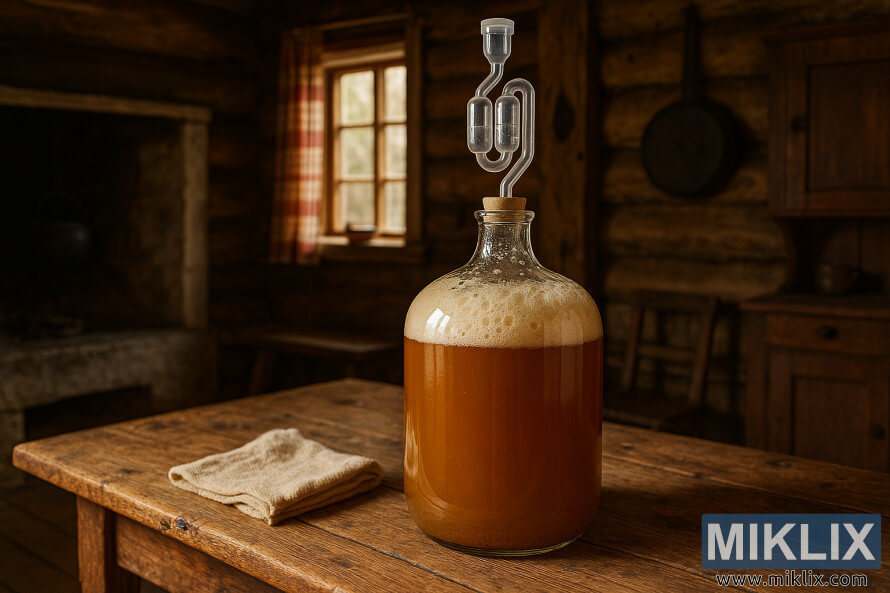
Click or tap the image for more information and higher resolutions.
WLP518 is a commercially available kveik from White Labs. It comes in an organic variant. The strain's origins trace back to Lars Marius Garshol's work. It was isolated from a mixed culture owned by Harald Opshaug, a farmhouse brewer in Stranda, Norway.
Opshaug kveik boasts a rich history. Since the 1990s, it has been domesticated and preserved on traditional kveik rings. It has been used to ferment several kornøl-style farmhouse beers. This heritage is the reason behind its robustness and distinct flavor tendencies.
This WLP518 review will go beyond the basics. Upcoming sections will cover fermentation characteristics, temperature range, and management. They will also discuss ideal beer styles, pitching rates, pseudo-lager use, troubleshooting, and community examples. Stay tuned for practical tips and benchmarks for fermenting with WLP518.
Key Takeaways
- White Labs WLP518 Opshaug Kveik Ale Yeast is a commercially available kveik strain suited for fast, warm fermentations.
- The strain was sourced by Lars Marius Garshol from Harald Opshaug’s farmhouse culture in Stranda, Norway.
- WLP518 review highlights include strong attenuation, high temperature tolerance, and farmhouse kornøl roots.
- Expect straightforward pitching and resilient performance, with options for both organic and standard preparations.
- This guide will cover temperature control, flavor notes, pitching rates, and troubleshooting for U.S. homebrewers.
What is White Labs WLP518 Opshaug Kveik Ale Yeast
WLP518 Opshaug Kveik Ale Yeast is a cultured strain marketed by White Labs as Part No. WLP518. It offers brewers a reliable, fast-fermenting option, available in organic form. The White Labs yeast description highlights it as a Core product with STA1 QC negative. This appeals to brewers seeking predictable attenuation without diastaticus activity.
The WLP518 origin is rooted in a mixed culture owned by Harald Opshaug in Stranda, Norway. Lars Marius Garshol collected and shared the strain, leading to its formal isolation and lab distribution. The Opshaug kveik history notes that the culture was kept on kveik rings for multiple farmhouse kornøl beers in the 1990s.
- Provenance and pedigree are clear: kveik provenance links the strain to traditional Norwegian farmhouse practice.
- Laboratory results support clean, efficient fermentations, matching White Labs yeast description in technical sheets.
- Suitable users include homebrewers and professional brewers seeking a quick, clean kveik for hop-forward ales or for brews made with limited temperature control.
The strain’s Opshaug kveik history is significant for those valuing heritage yeast. Brewers desiring kveik provenance in their recipes will find WLP518 origin and lab classification useful. The overall profile is straightforward, making it a practical choice for many modern brewing contexts.
Fermentation characteristics and performance
WLP518 exhibits robust, consistent attenuation in most ales. White Labs reports apparent attenuation at 69%–80%. Homebrew trials often achieve around 76%, such as a Kveik IPA that fell from OG 1.069 to FG 1.016. This reliable sugar conversion simplifies planning for final gravity and ABV.
Flocculation for this strain is medium to high. Effective WLP518 flocculation results in clear beer after a brief conditioning or cold-crash. Brewers aiming for quick, clear beer will appreciate this trait.
As a fast fermenting kveik, WLP518 rapidly concludes primary fermentation when warmed. At higher temperatures, many batches reach final gravity in just three to four days. White Labs' controlled tests showed finishing in under two weeks for lager-style trials at 68°F (20°C). This demonstrates WLP518's adaptable, swift performance across various styles.
This yeast is POF-negative, ensuring a clean fermentation profile without clove-like phenolics. Lab metabolic data indicates lower acetaldehyde at 20°C compared to a competitor kveik. This reduction in green-apple or raw-pumpkin notes enhances the clarity of hop-forward beers.
The practical benefits of WLP518 include its rapid fermentation and consistent results. Reliable WLP518 attenuation and moderate to high flocculation give brewers confidence in packaging sooner. This preserves clarity and flavor balance. For those seeking speed without unwanted metabolites, WLP518 stands out as a top choice.

Click or tap the image for more information and higher resolutions.
Temperature range and temperature management for kveik
White Labs indicates the WLP518 temperature range as 77°–95°F (25°–35°C) for optimal performance. It can tolerate temperatures up to 95°F (35°C). This broad range makes it ideal for brewers seeking rapid fermentation and high attenuation.
WLP518 excels in high-temperature fermentation, fermenting at 77–95°F. This results in fruity esters and swift finishes. It boasts very active kinetics, quicker gravity drops, and shorter fermentation times than typical ale strains.
WLP518 also demonstrates solid low-temperature performance. White Labs R&D found clean fermentations at 68°F (20°C), finishing in under two weeks. For clearer lagers, pitch cooler and use a higher cell count to avoid off-aromas.
Effective temperature control is crucial at both extremes. For warmer ferments, increase oxygenation and nutrient schedules to prevent yeast stress. For cooler runs, raise pitching rates and maintain a steady 68°F to preserve a cleaner profile.
Shaping flavor is straightforward. Cold-condition or crash to near 38°F after active fermentation to reduce esters and speed clearing. For a cleaner pseudo-lager, consider pitching more yeast and maintaining a stable cool temp during primary.
Even with hardy strains, risks exist. While this kveik thrives in hot conditions, fast fermentation at high temps can lead to fusel formation if oxygen or nutrients are insufficient. Monitor krausen timing and adjust temperature control tips to the recipe’s goals.
- For expressive ales: embrace kveik high-temp fermentation near the upper end of the WLP518 temperature range.
- For cleaner beers: fermenting at 77–95°F is avoidable; stick closer to 68°F and use higher pitching rates.
- Always monitor oxygenation, nutrient additions, and krausen to match the chosen temperature.
Best beer styles to brew with this strain
WLP518 is perfect for hop-forward ales, where the yeast enhances hop flavors. American IPA and Hazy/Juicy IPA are ideal. The yeast provides clean fermentation and bright aromas, amplifying citrus and tropical hop notes.
WLP518 pale ale is a great choice for everyday drinking. It requires a modest malt bill and late hop additions. This approach highlights the yeast's neutrality, resulting in a crisp, drinkable pale ale with clear hop flavors.
For those who value speed, kveik IPAs and double IPAs are excellent choices. The yeast ferments quickly at warm temperatures. This makes it ideal for brewing hoppy beers swiftly, a key reason why it's a favorite for West Coast and American-style IPAs.
WLP518 also works well for maltier beers. Blonde ale and red ale showcase subtle malt flavors. The yeast's medium-to-high flocculation aids in achieving clarity. Porter and stout also benefit, supporting roast and chocolate notes without adding spicy phenols.
For brewers with limited temperature control, WLP518 is a safe choice. Its tolerance for higher fermentation temperatures and clean profile make it perfect for those seeking consistent hop expression. White Labs has even used it in bakery and culinary trials, showcasing its versatility.
Competitive brewers often use WLP518 to win awards in hop-focused categories. An award-winning West Coast IPA fermented with this yeast is a testament to its strength in high-hop, low-ester beers. For homebrewers, start with an IPA or pale ale and then experiment with other styles.
- American IPA — highlights hop aroma and bitterness
- Hazy/Juicy IPA — emphasizes juicy hop esters
- Double IPA — supports intense hop loads and clean fermentation
- Pale Ale — showcases balanced malt and hop clarity
- Blonde Ale — a simple canvas for yeast cleanliness
- Red Ale, Porter, Stout — flexible for darker malts and clarity
Flavor profile and tasting notes
The WLP518 flavor profile is centered on gentle honey and soft bready malt. These flavors are overshadowed by the hop presence. White Labs' test data reveals a clean fermentation character with minimal phenolic contribution. This means malt and hop flavors dominate the taste.
Opshaug kveik tasting notes indicate a restrained ester profile across various temperatures. At warm temperatures up to 95°F (35°C), the strain ferments quickly and remains clear. Cooler temperatures, near 68°F (20°C), result in a crisp, lager-like cleanliness. This is due to fewer esters and tighter grain notes.
Lab comparisons show lower acetaldehyde production at 20°C compared to a common competitor. This reduction minimizes green-apple off-notes. As a result, the kveik's honey and bready clean impressions become more pronounced and stable in the finished beer.
Practical tasting takeaways:
- Expect subtle honey and bready malt to complement hop-forward beers.
- Minimal clove or medicinal phenolics makes this a good choice for American ales and pale styles.
- Use cooler fermentations for cleaner, crisper results; warmer ferments speed attenuation without adding harsh characters.
Overall, Opshaug kveik tasting notes highlight balance. Brewers aiming for a kveik honey bready clean character will find WLP518 delivers. It provides predictable, drinkable flavor that enhances recipe choices without masking them.
Using WLP518 for pseudo-lagers and fast lagers
WLP518 offers brewers a chance to achieve lager-like qualities without the lengthy cold aging process. In White Labs trials, WLP518 and a competitor kveik strain completed a lager recipe in under two weeks at 68°F (20°C). The outcome was clean, crisp fermentations that rival traditional lagers but in a fraction of the time.
Lab metabolite data revealed WLP518 produced less acetaldehyde at 20°C than the competitor strain. Lower acetaldehyde contributes to a cleaner, more lager-like taste. This makes WLP518 an excellent choice for crafting pseudo-lagers or experimenting with kveik lagers under tight deadlines.
Pitching rate is more critical than many brewers realize. Tests employed a higher pitching rate, near 1.5 million cells/mL/°P, to achieve the cleaner profile. Lower rates, around 0.25 million cells/mL/°P, resulted in higher acetaldehyde levels for both strains. For a fast lager fermentation with a neutral profile, aim for a lager-style pitch rather than a minimal ale pitch.
For practical workflow, ferment primary around 68°F (20°C) until activity slows. Then, cold-condition after primary to enhance clarity and mouthfeel. Monitor gravity daily; WLP518 typically finishes faster than Saccharomyces pastorianus under the same conditions. These kveik lager tips help preserve delicate malt character while keeping fermentation time short.
- Use a higher pitching rate close to traditional lager recommendations for cleaner flavor.
- Keep fermentation temperature steady around 68°F (20°C) for predictable kinetics.
- Cold-condition after fermentation to improve clarity and body.
Adopting WLP518 for fast lager fermentation opens doors to lager-style beers brewed on an ale timeline. Brewers who apply these kveik lager tips can achieve crisp, drinkable results with less time and predictable performance.
Click or tap the image for more information and higher resolutions.
Pitching rates and yeast management
Adjusting the WLP518 pitching rate significantly impacts flavor and fermentation speed. White Labs R&D discovered a low rate of 0.25 million cells/mL/°P and a high rate of 1.5 million cells/mL/°P in lager-style trials. Lower pitches often resulted in higher acetaldehyde levels, while higher pitches produced cleaner profiles.
For those aiming to create a pseudo-lager, target a lager pitching rate for kveik similar to traditional lager numbers. This approach supports cleaner esters when fermenting at cooler temperatures. Conversely, for warm, fast ales, standard ale pitching rates are recommended. This will result in rapid fermentation and brisk attenuation.
Adhering to basic kveik pitching guidelines is crucial for a healthy start. Ensure proper wort oxygenation before pitching and provide zinc and yeast nutrients when necessary. In high-gravity batches, consider step-feeding oxygen or adding nutrients during early fermentation to maintain yeast health.
Effective WLP518 yeast management starts with the product format. White Labs offers both liquid and organic options. If planning a starter, follow the manufacturer’s instructions for storage and rehydration to preserve cell viability and performance.
- Measure cell count for precision when targeting a lager pitching rate for kveik.
- Oxygenate to support fast fermentations driven by WLP518 pitching rate choices.
- Use nutrients in high-gravity brews to avoid stuck or stressed fermentations.
Focus on krausen and gravity drop rather than time alone. WLP518 yeast management emphasizes observation and small adjustments, such as temperature adjustments or nutrient additions, to ensure a clean and predictable finish.
Fermentation schedule and practical brew-day workflow
Begin your kveik brew day with a clear plan and timing. Ensure thorough oxygenation of the wort, cool it to the ideal pitching temperature, and prepare a starter if necessary. For typical ales, use standard ale pitching rates. Place the fermenter between 77°–95°F (25°–35°C) to adhere to a reliable WLP518 fermentation schedule.
Expect rapid fermentation activity. The WLP518 workflow often sees primary fermentation complete in three to four days at the higher kveik temperatures. Monitor the gravity daily to catch the sharp drops and avoid over-manipulating the beer.
- Oxygenate the wort thoroughly before pitching.
- Pitch at recommended ale rates for a 5-gallon batch, or increase for high gravity.
- Record gravity every 24 hours during active kveik fast fermentation steps.
For a pseudo-lager approach, adjust the WLP518 fermentation schedule. Pitch at lager rates and ferment near 68°F (20°C). White Labs testing and homebrew trials show full attenuation in under two weeks for lager-style wort when using this workflow.
After reaching terminal gravity, condition to enhance clarity and mellow flavors. Cold crash to near 38°F before kegging or bottling to improve clarity. For high-gravity beers, plan extended conditioning or step-feed nutrients during peak activity to support healthy yeast performance.
- Pre-brew: sanitize, prepare yeast, oxygenate wort.
- Brew day: cool to target, pitch yeast, set temperature control.
- Ferment: monitor gravity daily, note aroma and krausen timing.
- Condition: cold crash or low-temp conditioning once FG is stable.
Example: a Kveik IPA (5 gal) with OG 1.069 and FG 1.016 reached terminal gravity within five to six days at ~78°F, then was crashed to 38°F before kegging. This practical kveik brew day timeline shows how the WLP518 workflow and these kveik fast fermentation steps yield a clean, drinkable IPA on a tight schedule.
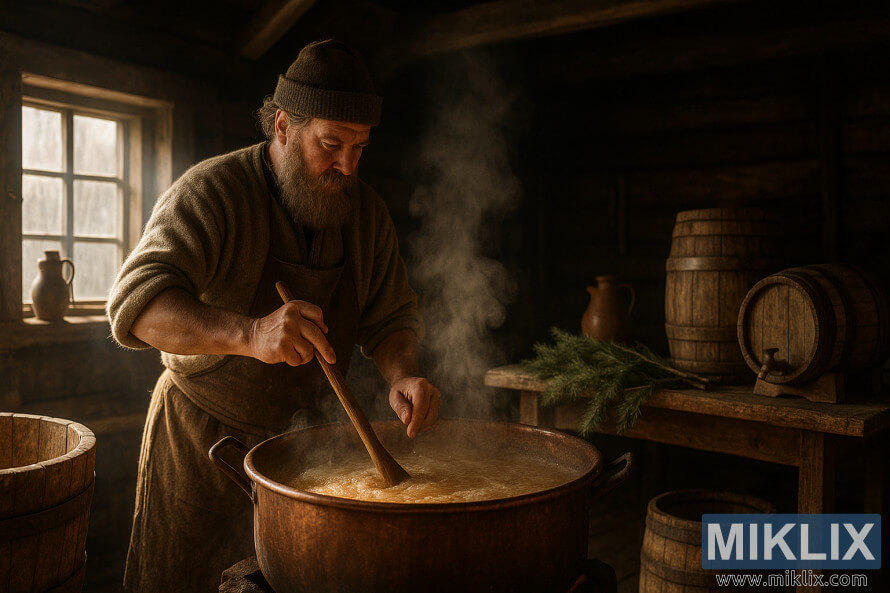
Click or tap the image for more information and higher resolutions.
Alcohol tolerance and high-gravity brewing
White Labs rates WLP518 as a very high alcohol tolerance strain, with a tolerance of 15%. This makes it an excellent choice for high ABV brewing with kveik. Brewers can push original gravities well above typical ale ranges. Still, they can achieve strong attenuation by respecting yeast health.
For kveik high gravity projects, oxygenation and nutrient programs are crucial. Pitching enough healthy yeast and adding a complete yeast nutrient at the start reduces stress. This stress can cause fusel alcohols. Some brewers prefer step-feeding or staggered sugar additions to keep osmotic pressure moderate during peak growth.
Expect robust attenuation in high-gravity worts. Typical attenuation ranges for WLP518 fall between 69% and 80% even as you approach top-end strengths. Allowing extra time in primary and a period of cold conditioning helps the beer clean up solvents and round out the profile.
Practical tips include using higher pitching rates, oxygenating to brewery-style levels for big beers, and planning a longer conditioning schedule. Monitoring gravity and tasting over weeks gives a clearer picture of when fermentation truly ends and when the beer has matured.
- Pitch ample yeast for WLP518 alcohol tolerance targets.
- Use nutrients and consider step-feeding for kveik high gravity brews.
- Allow extended conditioning to reduce higher alcohols when pursuing WLP518 15% tolerance.
- Apply cold-conditioning and time rather than forced fining to improve clarity.
Applications include imperial ales, double IPAs, and other strong beers that benefit from fast, clean fermentation. When managed properly, brewing high ABV with kveik yields beers with solid body, low solvent character, and predictable attenuation.
Comparisons with other kveik strains and common ale yeasts
Brewers often compare WLP518 vs other kveik to decide which strain fits a recipe. WLP518, marketed as Opshaug, tends to be cleaner than many traditional Norwegian kveik strains. These traditional strains can be POF+ and yield phenolic or clove notes that work well in farmhouse ales.
When you compare kveik strains, focus on phenolic off-flavor potential and ester profiles. Opshaug vs other kveik shows lower phenol production, making WLP518 a better match for hop-forward American IPAs and pale ales. Here, a neutral yeast canvas helps hops shine.
Lab tests at 68°F (20°C) show WLP518 produced less acetaldehyde than a competitor kveik strain. This difference reduces green-apple impressions in cooler ferments. This detail matters when you try WLP518 vs ale yeast in recipes that ferment near classic ale temperatures.
Temperature flexibility sets many kveik apart. WLP518 tolerates up to 95°F (35°C) while remaining relatively clean. This heat tolerance lets you exploit kveik speed without the rustic phenolics that some farmhouse strains deliver.
Flocculation and attenuation shape mouthfeel and final gravity. WLP518 offers medium-to-high flocculation and 69%–80% attenuation. These numbers place it in the same attenuation band as many common ale yeasts, while fermentation kinetics can be faster at higher temps.
- Choose WLP518 when you want kveik speed and heat tolerance paired with a cleaner character.
- Pick other kveik strains if you want farmhouse phenolics or bold ester profiles.
- If you must compare WLP518 vs ale yeast, consider that WLP518 combines ale-like attenuation with kveik fermentation speed and thermal robustness.
This comparison helps brewers decide which yeast fits a recipe without guessing. Opshaug vs other kveik highlights trade-offs between cleanliness and rustic character. Match strain choice to style goals and fermentation plan.

Click or tap the image for more information and higher resolutions.
Homebrew competition and community examples
Local clubs have seen a surge in interest for WLP518 homebrew examples. The White Street Brewers Guild in Wake Forest, NC, hosted a themed yeast event. All entries were fermented with WLP518. Brewers exchanged recipes, tasting notes, and fermentation data post-pour.
Steve Hilla, a retired electrical engineer, won gold with a West Coast IPA. His success showcased WLP518's ability to enhance bright hop character while maintaining balance.
Recipes shared included a Kveik IPA for 5 gallons, with OG 1.069 and FG 1.016. The predicted ABV was 6.96%, with apparent attenuation at 76%. The fermentation process involved a 78°F ferment for six days, followed by a crash to 38°F before kegging.
Opshaug kveik user results from club samplings consistently showed reliable performance. Brewers praised the clean fermentation and consistent attenuation across various styles. This consistency encouraged more experimentation, from hoppy IPAs to malty wheat and brown ales.
Many homebrewers preferred WLP518 over other strains. One brewer noted they preferred the kveik version over their usual London Fog yeast for the same recipe. These experiences align with broader Opshaug kveik user results discussed in forums and meetups.
Community experimentation extended WLP518's use beyond IPAs. Entries included amber ales, wheat beers, and session pales. Judges commended the clarity of fruit and restrained esters in several WLP518 award-winning beers during regional tastings.
Clubs use shared wins and losses to refine techniques. Simple logs detailing pitch rate, temp, and time help replicate success. This collective data informs future WLP518 competition strategies and inspires new homebrew examples.
Troubleshooting common issues with WLP518
When tackling WLP518 troubleshooting, the first step is to assess the pitch rate. A low pitch rate can lead to acetaldehyde, commonly known as green apple flavor in beer. White Labs research indicates that increasing the pitching rate significantly reduces this off-flavor. For typical ales, using a starter or two packs is recommended. In cooler fermentation environments, employing lager-style pitching rates can help mitigate kveik fermentation issues and minimize off-flavors from WLP518.
Fast and vigorous fermentation can result in krausen blow-off or stuck gravity if the yeast are under stress. It's crucial to ensure proper oxygenation at the time of pitching and to add yeast nutrient when necessary. To manage krausen, consider using a blow-off tube or increasing the headspace of the fermenter. Monitoring gravity and temperature closely allows for quick intervention to prevent fermentation from stalling.
High-temperature esters can impart a hot or fruit-forward taste, which may not be desirable. If esters are a problem, fermenting at the lower end of the strain's temperature range can help. Cold-crashing after fermentation helps tighten the flavor profile and reduces the perception of hot-yeast esters, common in kveik fermentation issues.
Clarity and settling can vary based on the beer style. WLP518 exhibits medium-to-high flocculation, making cold-conditioning for several days beneficial. For additional clarity, fining agents or extended maturation can be employed to address persistent off-flavors from yeast in suspension.
High-gravity beers are at risk of developing solvent-like higher alcohols due to yeast stress. To mitigate this, ensure thorough oxygenation and nutrient addition at the start. Consider step-feeding or staged oxygen additions, and allow for longer conditioning to allow harsh compounds to settle out. These measures are crucial for addressing kveik issues associated with high-gravity beers.
- Increase pitching rate to reduce acetaldehyde and other early off-notes.
- Oxygenate and nutrient-dose at pitch to prevent stress and under-attenuation.
- Use blow-off tubes or extra headspace to manage krausen during rapid fermentation.
- Ferment cooler or cold-crash to tame unwanted esters.
- Cold-condition or use finings for clearer beer and better yeast settling.
Implementing these practical steps can effectively address common WLP518 troubleshooting issues. They focus on typical kveik fermentation problems, reduce off-flavors from WLP518, and provide solutions for various brewing scenarios.
Conclusion
White Labs WLP518 Opshaug Kveik Ale Yeast offers a unique blend of speed, cleanliness, and robustness. It ferments quickly at warm temperatures and remains clean at cooler temperatures. This makes it an excellent choice for hop-forward ales and those seeking pseudo-lager results. The WLP518 conclusion is that it harmonizes traditional Norwegian kveik character with modern predictability.
For practical brewing, use WLP518 when speed is crucial or temperature control is limited. For lager-like clarity, ensure a healthy cell count, good oxygenation, and ferment around 68°F. High-gravity beers require careful nutrient management and step-feeding; the yeast's high tolerance and attenuation make such beers feasible with proper care.
The Opshaug kveik summary emphasizes its strengths: fast fermentation, medium-to-high flocculation, and a clean profile ideal for IPAs and pale ales. Brewing trials and White Labs testing confirm favorable metabolite outcomes. This reinforces the White Labs kveik verdict as a dependable strain for both competitions and everyday brewing. If you're wondering if you should use WLP518, the answer is yes. It's ideal for those seeking speed, flexibility, and a clean base for hops or lager-like experiments.
Further Reading
If you enjoyed this post, you may also like these suggestions:
- Fermenting Beer with Wyeast 1272 American Ale II Yeast
- Fermenting Beer with Wyeast 2112 California Lager Yeast
- Fermenting Beer with White Labs WLP090 San Diego Super Ale Yeast