
Fermenting Beer with Wyeast 2487-PC Hella Bock Lager Yeast
Published: April 16, 2026 at 7:34:58 PM UTC
Wyeast 2487-PC Hella Bock Lager Yeast is a liquid Saccharomyces pastorianus strain designed for full-bodied, malt-forward lagers, ideal for Munich-style beers and Munich Helles yeast applications
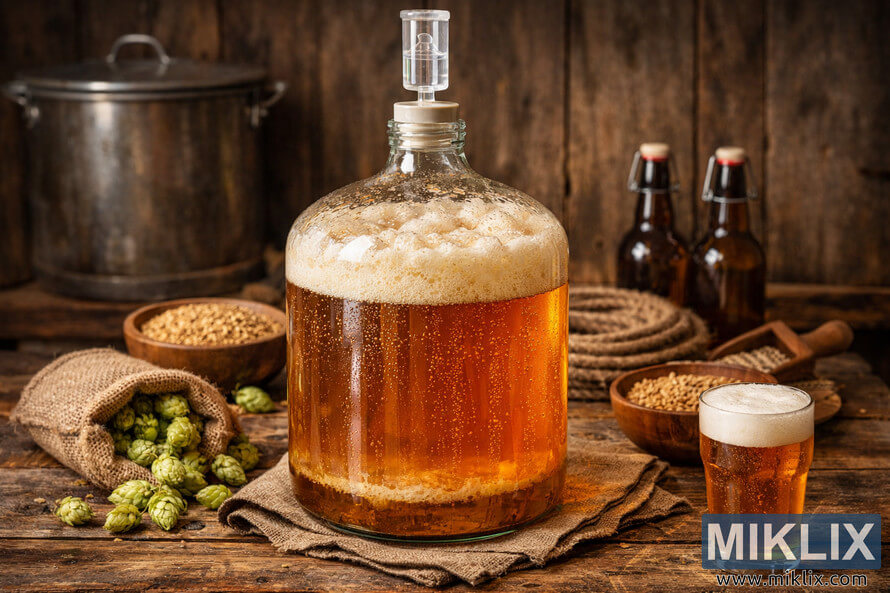
Click or tap the image for more information and higher resolutions.
This review aims to provide practical insights for homebrewers, covering key specs and retail notes to set expectations before brewing.
The strain boasts impressive numbers: apparent attenuation 70–74%, medium flocculation, and an ABV tolerance up to 12%. The manufacturer suggests fermenting between 48–56°F (9–13°C). Additionally, packaging tips, such as using cold packs in transit, are crucial for maintaining viability when ordering Wyeast packs.
This introduction sets the stage for a detailed review of the strain's traits, fermentation schedules, and recipe considerations. It will also cover troubleshooting and handling guidance. If you aim to ferment lagers with a reliable yeast strain that emphasizes malt character, the following sections will guide you through cell counts, rests, and lagering practices. This will help you achieve a clean Munich Helles or a robust bock.
Key Takeaways
- Wyeast 2487-PC Hella Bock Lager Yeast is a liquid lager strain suited for malt-forward Munich-style lagers.
- Manufacturer specs: 70–74% attenuation, medium flocculation, up to 12% ABV tolerance, 48–56°F fermentation range.
- Cold packs and quick shipping help preserve viability when buying Wyeast packs.
- Expect a clean, malty profile when fermenting lagers at the recommended temperatures.
- This Hella Bock yeast review will cover pitching, diacetyl management, and lagering schedules next.
Why choose Wyeast 2487-PC Hella Bock Lager Yeast for your lager
Wyeast 2487-PC is rooted in Austrian lagering traditions, known for malty, full-bodied beers. It's the go-to for brewers seeking a rich mouthfeel and a malt-centric flavor. This yeast avoids the sharpness found in some cleaner strains.
Flavor profile and origin
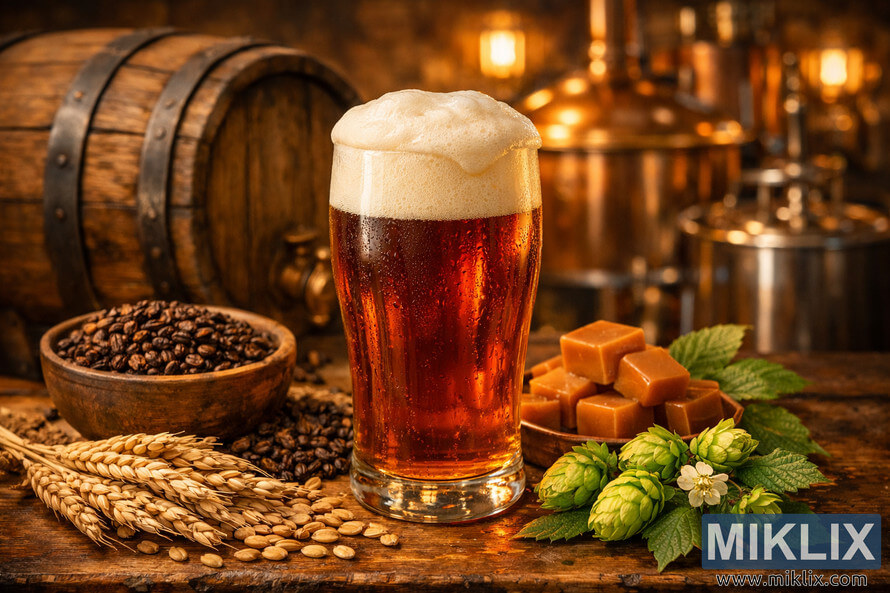
The Hella Bock flavor profile is all about rounded maltiness. It has soft esters when young and a complex malt backbone that really comes through after lagering. Its origins in Central European brewing lines make it perfect for preserving traditional malt character in Munich and Austrian styles.
What makes it suitable for Munich-style and Helles lagers
This Munich-style yeast leaves a lot of malt character while still achieving a balanced finish. It brings out biscuit and bread notes in Munich Helles. It also supports deeper caramel and toffee in Dunkel and enhances body and malt complexity in Bock variants.
Comparison with other popular lager strains
Wyeast 2487 stands out when comparing lager strains. It has firmer flocculation than Wyeast 2124 and slightly lower attenuation than some modern clean lager strains. Brewers note subtle esters in very young beers and sometimes need a diacetyl rest. Yet, it's considered cleaner than typical ale strains.
- Flocculation: tends to flocculate a bit harder than 2124.
- Attenuation: slightly less than some high-attenuating lager yeasts.
- Young beer traits: faint esters or diacetyl that usually resolve with rest.
Feedback from the brewing community ranges from "very clean with no esters" to recommending a diacetyl rest as a precaution. Overall, Wyeast 2487 is ideal for malt-forward brews. It enhances grain character without masking it.
Click or tap the image for more information and higher resolutions.
Strain characteristics: attenuation, flocculation, and alcohol tolerance
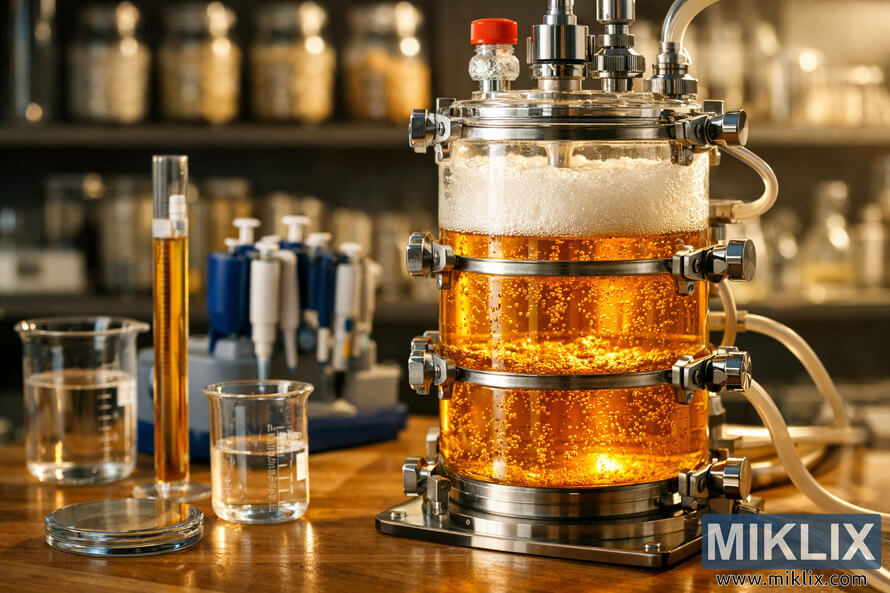
Wyeast 2487-PC exhibits consistent behavior, aiding brewers in recipe planning and fermentation scheduling. It's crucial to consider these traits before choosing grain bills or setting lagering times to align with the yeast's capabilities.
Apparent attenuation (70–74%) and how it affects final gravity
With an apparent attenuation of 70–74%, this yeast efficiently converts sugars, leaving a hint of malt sweetness. For instance, a Munich Helles with an OG of 1.051 will likely reach a FG of 1.013. This results in a balanced body and an ABV of about 4.9%.
To manage final gravity, adjust mash temperature and grain ratios. Higher mash temperatures, around 154–156°F (68–69°C), increase FG and body. Conversely, lower temperatures, near 148–150°F (64–65°C), enhance attenuation, leading to a drier finish.
Medium flocculation and implications for clarity and packaging
The yeast's medium flocculation rate allows for reasonable settling without achieving instant clarity. Adequate lagering will enhance clarity, but additional cold conditioning or fining may be necessary for a brighter appearance.
For those aiming for commercial clarity, extended cold rest periods are essential for yeast drop-out. Bottlers should also consider a brief conditioning period and careful racking to minimize yeast presence in the final product.
Apparent ABV tolerance up to 12%—styles you can safely brew
This strain's high alcohol tolerance of 12% is ideal for brewing stronger lagers like doppelbock and robust märzen. Scaling pitching rates and oxygenation is key at higher gravities. Adequate oxygen and nutrient additions, along with a larger starter, ensure healthy fermentation.
When aiming for beers at the upper end of tolerance, monitor fermentation speed and final gravity closely. Proper cell count and nutrient management help avoid stuck or under-attenuated fermentations. This preserves the strain's distinctive malt-forward character.
Click or tap the image for more information and higher resolutions.
Optimal fermentation temperature range and pitching guidelines
Wyeast 2487 excels within a precise temperature range and requires a tailored pitching approach based on batch size. It's crucial to maintain both wort and yeast within the manufacturer's guidelines. This ensures consistent ester control and clean malt expression. Always monitor yeast viability, especially during shipping, and scale starters for higher gravity brews.
Manufacturer temperature range: 48–56°F (9–13°C)
The recommended fermentation temperature for this strain is 48–56°F. Holding primary fermentation within this range is key to minimizing phenolics and enhancing Munich malt character. While minor temperature fluctuations are tolerable early on, prolonged deviations can lead to unwanted esters or slow fermentation.
Recommended pitching temperatures for clean lagers
Many brewers aim for a pitching temperature of around 45°F for Wyeast 2487. They then allow the wort to warm to about 48°F for the main fermentation phase. This cooler pitching temperature helps suppress fruity esters, resulting in a cleaner, crisper beer. For brews with delicate malt profiles, it's advisable to pitch on the cooler end of the spectrum.
Starter size and cell count considerations for healthy fermentation
Given Wyeast 2487's liquid form, it's essential to match starter size to batch gravity and volume for a healthy yeast cell count. For standard 5-gallon batches, a 1.5–2.0 L starter is usually sufficient. However, for higher OG beers, increase the starter volume or use multiple packs to prevent long lag times and stressed yeast.
- Check viable yeast cell count before pitching when possible.
- Scale starters for larger batches or gravities above 1.060.
- Keep transit cold with cold packs to preserve viable cell count on brew day.
Fermentation schedule: step-by-step for clean results
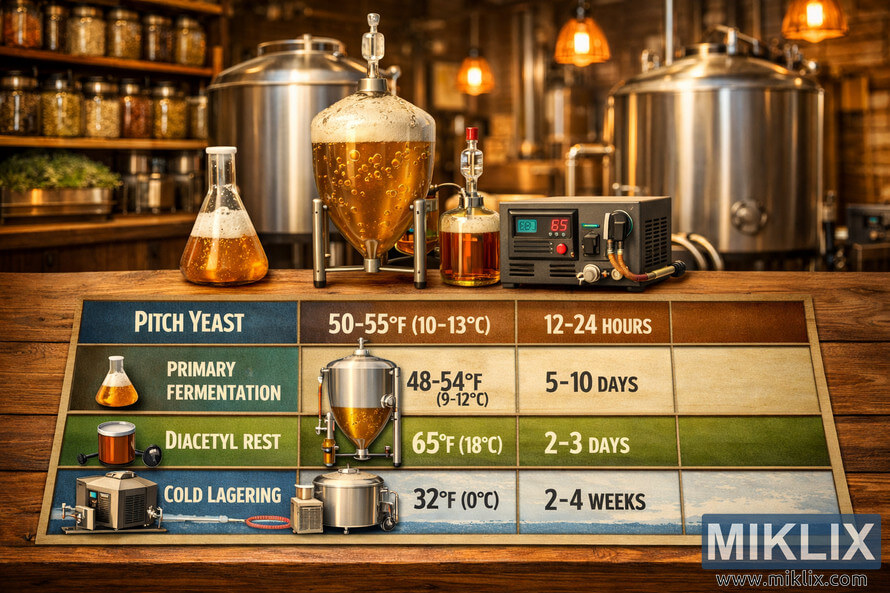
Establish a precise fermentation schedule for lagers to ensure clean and consistent flavors. Begin by cooling the wort to the lower end of the yeast's optimal range. Prepare your starter or smack pack in advance. Then, outline the sequence of holds and transfers before brewing.
Cooling, pitching, and initial low-temperature hold
- Chill the wort to about 45–48°F. This temperature helps control ester production while allowing yeast to start fermenting steadily.
- Pitch the yeast at the target count. For liquid cultures like Wyeast 2487-PC, aim for a healthy cell count to prevent stress.
- Hold at the low temperature for primary fermentation. This steady pitching and hold promote slow, clean fermentation without off-flavors.
Raising temps for diacetyl rest and timing
- When gravity nears terminal or diacetyl tests are positive, raise the temperature to the upper range, around 50–56°F.
- Keep the beer at this warmer temperature for 24–72 hours. This allows yeast to reabsorb diacetyl, preventing buttery notes from persisting into lagering.
- Many brewers opt for a brief diacetyl rest even after a long primary to ensure the beer is clean.
Cold crash and transfer to lagering vessel
- After the diacetyl rest and a stable final gravity, transfer to a secondary or keg for conditioning.
- Perform a gentle cold crash by gradually lowering the temperature to lagering temperatures, around 32–38°F.
- This cold crash lagering step clarifies the beer and refines malt character during the extended chill period.
Two-stage approach
- Adopt a two-stage plan: primary fermentation at low temperatures with a d-rest, followed by extended cold lagering to enhance mouthfeel and clarity.
- Typical community practice involves transferring to a keg, chilling slowly to 32°F, and lagering for six weeks to fully develop malt flavors.
Click or tap the image for more information and higher resolutions.
Managing diacetyl and esters with Wyeast 2487-PC
Wyeast 2487-PC thrives under precise temperature management and adequate yeast nutrition. A brief introduction explains how a temperature increase can prevent buttery off-flavors. It outlines steps to detect diacetyl early, implement a diacetyl rest with Wyeast 2487, and minimize esters while controlling acetaldehyde.
Why a diacetyl rest is often recommended
Many brewers and the manufacturer agree that a diacetyl rest aids in reabsorbing buttery compounds. Even after a long primary fermentation, a gentle warm-up prompts yeast to absorb diacetyl, reducing off-flavors. Schedule a rest near the end of fermentation to allow yeast to complete cleanup before lagering.
How to detect diacetyl and when to raise fermentation temperature
To detect diacetyl, warm a sample to room temperature and look for buttery or butterscotch notes. If you find diacetyl as gravity nears terminal, elevate fermentation to the upper recommended range. Maintain that temperature for 24–72 hours to facilitate reduction. Then, return to cold conditioning for clarity and stability.
Strategies to minimize unwanted esters and acetaldehyde
- Pitch on the cool side of the range and keep fermentation steady to minimize esters. Sudden heat spikes drive ester formation and should be avoided.
- Provide proper oxygenation and yeast nutrients at pitching. Good early yeast health improves attenuation and supports acetaldehyde control later on.
- Use a planned diacetyl rest Wyeast 2487 when needed, then lager long enough to mellow any remaining youthful esters or green apple acetaldehyde.
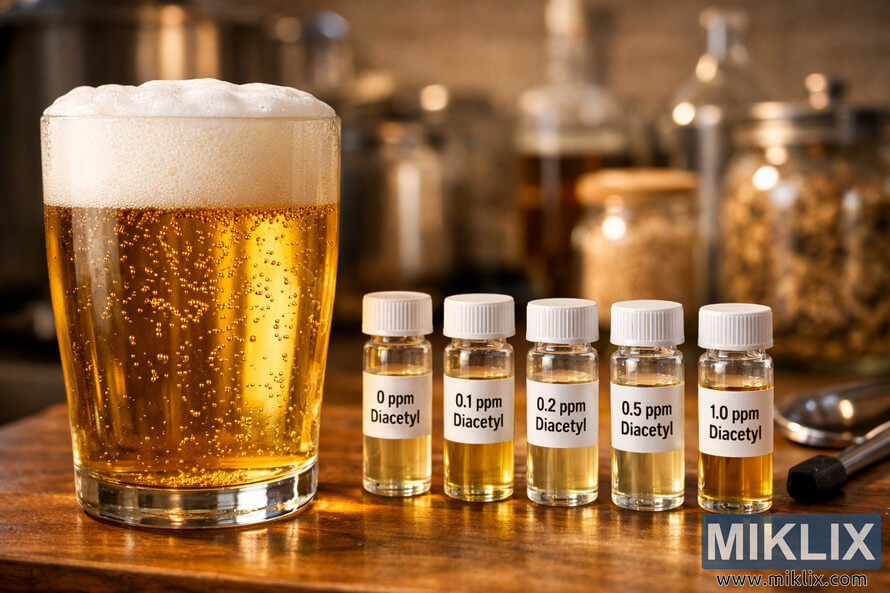
Click or tap the image for more information and higher resolutions.
Typical lagering times and their impact on malt character
Lagering, the cold conditioning step, enhances flavors and clarity. With Wyeast 2487-PC, brewers often opt for a longer rest. This is to bring out the malt character that defines Munich-style beers.
Why 6–8 weeks of cold conditioning is often suggested
Many brewers suggest a lagering time of 6–8 weeks. This allows the yeast to complete cleanup and settle. It reduces green notes and mellow youthful esters, enhancing malt nuances.
How extended conditioning develops malty profile and mouthfeel
Extended lagering benefits from slow chemical changes at low temperatures. Over weeks, residual diacetyl drops, proteins compact, and subtle Maillard-derived sugars emerge. These changes highlight the malt base.
Shorter lagering—tradeoffs and when it might be acceptable
Shorter lagering, like 2–4 weeks, is quicker for test batches or experimental recipes. It results in a drier, less rounded malt character. There's also a higher chance of youthful diacetyl or esters.
- Pros of longer cold conditioning: improved clarity, fuller mouthfeel, and a clear develop malt profile.
- When shorter lagering works: small batches, split-ferment trials, or styles that tolerate brighter yeast character.
- Practical tip: if time is limited, a full diacetyl rest followed by several weeks cold will capture some extended lagering benefits.
Recipe considerations when using Wyeast 2487-PC Hella Bock Lager Yeast
When brewing with Wyeast 2487-PC, the choice of ingredients and process is crucial. Focus on malt clarity, gentle hopping, and a mash that builds body without heaviness. A Munich-forward approach works well with this yeast's clean attenuation and malty expression.
- Base malts: Favor Pilsner and Vienna as primary bases. A Munich Helles-style grain bill leans on Pilsner for lightness and Vienna for toasted depth.
- Body and complexity: Add a touch of flaked barley or dextrin malt to increase mouthfeel and head retention without raising color too much.
- Example proportions: For a 10.57-gallon Munich Helles, try ~11 lb Pilsner, ~7.75 lb Vienna, and ~1.65 lb flaked barley to hit about 4.4 SRM and a sturdy malt backbone.
- Keep specialty malts minimal to preserve the clean profile of the grain bill Helles.
Hop selection and bitterness targets
- Hop varieties: Choose noble hops such as Hallertauer, Hersbrucker, Saaz, or Tettnang for subtle floral and herbal notes.
- Bitterness: Aim for modest IBUs so malt shines. A target near 20 IBU works well for Munich Helles; bock styles may run slightly higher depending on desired balance.
- Timing: Rely on early bittering additions and minimal late hops to preserve the clean malt-forward character while adding light aroma.
- Pairing note: Thoughtful Munich malt yeast pairing with mild noble hops yields a classic, restrained profile that spotlights malt complexity.
Mash schedules to support mouthfeel
- Double infusion: Use a mash schedule double infusion for predictable conversion and a rounded malt body. It offers control without specialized equipment.
- Medium-body profile: Target a medium-body mash to leave dextrins that support a fuller finish and help achieve a final gravity near 1.013 and an ABV around 4.9% in a Helles recipe.
- Practical steps: Start with a protein rest if using high adjunct content, raise to saccharification for conversion, then perform a mashout to stabilize sugars.
- Adjustments: Modify infusion volumes to tune body; a slightly higher mash temperature raises residual dextrins for extra fullness.
Adjuncts and clarifying aids
- Adjuncts: Keep adjuncts minimal; a small amount of CaraMunich or light crystal malt can add nuance but limit use to avoid masking the base malts.
- Finings: Use whirlfloc, Irish moss, or other boil clarifiers to promote bright wort before fermentation and aid final clarity.
- Final tip: Clean, simple grain bills and a careful mash schedule double infusion produce the ideal canvas for this yeast strain to express true malt character.
Water profile and lautering tips for malty lagers
Getting your water and lautering right is crucial for Munich-style lagers. A water profile rich in chloride enhances malt sweetness and mouthfeel. Keep carbonate levels low to maintain a stable mash pH and avoid harshness. By making precise brewing water adjustments and adding salts, you can let the malt shine while preserving the authentic Munich character.
Target mineral levels for Munich-style beers
For Munich-style lagers, aim for a mineral profile that favors chloride over sulfate. A good starting point is 50–100 ppm chloride and 20–40 ppm sulfate. Add calcium to reach 50–100 ppm total, using calcium chloride to boost malt presence. High sulfate levels can lead to a hop-forward taste, rather than malt richness.
Lautering and sparge practices to maximize fermentable sugars
Slow, steady lautering is key to extracting sugars without disturbing the grain bed. Use a gentle sparge at 168–170°F and monitor runoff gravity to avoid over-sparging. Stop sparging when the gravity reaches your target to prevent tannin pickup and harshness.
- Fly sparge at a controlled rate for even extraction.
- Recirculate until the runnings clear to improve clarity and efficiency.
- Monitor runoff gravity with a hydrometer or refractometer.
Adjusting water to enhance malt character
Before mashing, make modest adjustments to your brewing water. Add calcium chloride to enhance fullness and malt tone. Use gypsum sparingly to avoid drying the finish. If your source water is very soft, add a small dose of calcium carbonate or baking soda to keep mash pH in range.
Test mash pH and adjust in small steps. Small, measured tweaks give predictable results and protect the classic Munich Helles profile you want to achieve.
Oxygenation, nutrients, and fermentation health
Ensuring proper oxygenation and nutrient management is crucial for a clean fermentation. For lagers, even small errors early on can magnify during the lagering phase. Focus on simple, consistent steps to oxygenate wort lager and enhance yeast performance from the start.
- DO aerate or oxygenate cooled wort just prior to pitching. Use pure oxygen or vigorous shaking for typical homebrew volumes.
- DO target dissolved oxygen sufficient for lager yeast growth; under-oxygenation can slow activity and raise risk of stuck fermentations.
- DON’T add oxygen once active fermentation is visible. Late oxygenation drives oxidation and off-flavors.
- DON’T assume room air is always enough for high-gravity batches. Heavier worts need more oxygen to reach optimal cell growth.
Yeast nutrient recommendations for fuller attenuation and clean finish
- Consider yeast nutrients Wyeast 2487 or a trusted blend when brewing above average gravity. Nutrients supply nitrogen, vitamins, and minerals yeast use to finish properly.
- Add nutrients at the end of the boil or in the wort before pitching for best uptake. For big beers, staged nutrient additions can help maintain momentum.
- Use a properly sized starter or multiple packs to ensure viable cell counts. Nutrients are a supplement, not a substitute for adequate pitching rate.
Monitoring fermentation activity and signs of a stressed yeast
- Track fermentation health indicators such as steady krausen formation, temperature-appropriate CO2 release, and a consistent drop in gravity readings.
- Watch for slow starts, weak krausen, or stalled gravity. These signs suggest underpitching, poor viability from cold transit, or oxygen/nutrient deficiency.
- If stress appears, verify temperature, oxygen history, and consider building a starter or repitching healthy slurry to regain activity.
- Keep fermentation logs. Clear records of krausen timing and gravity decline help diagnose issues and improve future batches.
Aligning oxygenation, nutrients, and monitoring practices will enhance attenuation, clarity, and aroma. These practices safeguard the delicate profile you aim for with Wyeast 2487. They also make it easier to interpret fermentation health indicators.
Packaging and conditioning with Wyeast 2487-PC
After achieving the desired clarity and flavor through extended lagering, select a packaging method that maintains these qualities. Many opt for kegging to manage conditioning and employ force-carbonation for swift, consistent results. Alternatively, bottling with careful attention to oxygen and priming can introduce bottle-conditioned nuances.
When to package after lagering and clarification
Ensure the beer has reached a stable gravity, clear appearance, and lacks off-flavors before packaging. For Wyeast 2487-PC, this typically requires six to eight weeks of cold lagering. This period allows yeast to settle and flavors to mature. If clarity is still an issue, consider gentle fining or an extended cold rest before proceeding.
Carbonation targets for Helles and Bock styles
Adjust carbonation levels to suit the desired style and mouthfeel. For Munich Helles, aim for 2.3–2.6 volumes CO2 to balance malt and foam. Traditional Bock styles may require slightly lower or similar CO2 levels, depending on substyle and serving temperature. Utilize a carbonation chart or target volumes for precise adjustments.
Best practices for bottling lager yeast and kegging
- Minimize oxygen pickup during transfer by purging lines and using closed transfers.
- If bottling lager yeast-conditioned beer, keep it cold and handle gently to avoid re-suspending trub.
- For keg after lagering, purge the keg with CO2, transfer cold, then carbonate by pressure or set-and-forget in a keg fridge.
Ensuring beer stability shelf life
Cold storage post-packaging enhances beer stability by slowing down oxidative and microbial activities. The yeast's good flocculation and thorough cold conditioning contribute to colloidal stability and clarity. Monitor dissolved oxygen at packaging; low DO is associated with longer shelf life and more consistent flavor.
Adopting these practices will yield results akin to commercial brews, showcasing the clean malt character of Wyeast 2487-PC. This approach ensures freshness and head retention, ideal for distribution or cellaring.
Troubleshooting common issues with Hella Bock yeast
Wyeast 2487-PC is a reliable lager strain, but homebrewers may still face slow starts, off-flavors, or stalled activity. The steps below help diagnose problems and get fermentation back on track without risking the batch.
Handling stuck or slow fermentations
First confirm fermentation is truly stuck. Check gravity over two days and watch for any visible krausen or CO2. Low activity after 48–72 hours can signal low viability from cold transit, poor pitching rates, or insufficient oxygen at pitch.
- Measure yeast viability if possible, or assume losses after long shipping.
- Raise temperature gently into the upper recommended range to encourage activity.
- Oxygenate wort before pitching on future batches. For a current stuck fermentation, avoid re-oxygenating once fermentation has started.
- Prepare a vigorous starter with fresh Wyeast or dry lager yeast to rescue very sluggish ferments.
Dealing with unexpected off-flavors: diacetyl, sulfury notes, or phenolics
Diacetyl shows as buttery or butterscotch; treat it by raising temps for a diacetyl rest so yeast can reduce the compound. That is the quickest way to fix diacetyl without harsh interventions.
- Sulfur or rotten-egg scents often decline during cold conditioning. Allow extra lagering time before drastic steps.
- Phenolic clove or medicinal tones may mean contamination or a temperature excursion during fermentation. Check sanitation and fermentation history.
- If off-flavors persist after a diacetyl rest and lagering, consider repitching with a clean culture to rehabilitate the beer.
When to repitch or build a new starter
Decide quickly when viability looks doubtful. For high gravity beers, adequate cell mass is critical. If little gravity change occurs in 48–72 hours, prepare a yeast repitch starter.
- Harvest healthy yeast from a previous batch or make a fresh starter using Wyeast or a compatible lager strain.
- Scale the starter to the batch gravity; larger starters for higher OGs improve attenuation and reduce stuck fermentation Wyeast 2487 risk.
- Sanitize thoroughly and pitch the starter when it shows active growth. Monitor gravity daily to confirm recovery.
These steps balance gentle remediation with decisive action. When in doubt, a well-built yeast repitch starter often saves the brew while minimizing flavor damage.
Real-world homebrew tips and shared brewer experiences
Homebrewers trading notes on Wyeast 2487 homebrew experiences stress patience and gentle handling. This strain provides a malty backbone with long lagering. Young beers may seem dry or slightly bitter until they mature.
Community posts align with professional bench trials on ester and malt character. Many report low ester levels with a hint of fruit in warm or early fermentations. A light ester presence adds complexity, while extended cold conditioning enhances malt depth.
- Some brewers chill wort to about 45°F, pitch, then hold near 48°F until activity slows.
- Others keep primary for up to four weeks, then raise temperature briefly for a diacetyl rest.
- Common practice is a slow drop to 32°F for roughly six weeks of lagering to round flavors.
Practical brewer fermentation schedules vary by system and batch size. For consistent results, many follow a staged plan: cool, pitch, steady low-temp ferment, diacetyl rest, then slow lager. These schedules work well across home setups from chest freezers to temperature-controlled fridges.
Small adjustments to starter size and oxygenation improve reliability. Increasing cell count for higher OG worts prevents sluggish finishes. Proper oxygen levels at pitching and yeast nutrient help achieve the expected attenuation and a clean finish.
Helles success stories abound in forum threads and club newsletters. Many homebrewers produced clean Munich Helles using double infusion mashes, Vienna or Pilsner base malts, and Hallertauer or Hersbrucker hops. An example all-grain batch around 10.6 gallons with OG 1.051 and FG 1.013 reached about 4.9% ABV and received praise after adequate lagering.
Shared tips include using a gentle transfer to avoid oxygen after fermentation, performing the diacetyl rest when gravity nears target, and giving at least six weeks of cold conditioning for fuller malt expression. These practices are common in Wyeast 2487 homebrew experiences and contribute to a growing list of Helles success stories.
Storage, shipping, and handling when ordering liquid yeast
Proper handling is crucial to maintain the health of your yeast and prevent slow fermentation. When you order active cultures for lagers, the packaging and transit are as important as how you store it at home. Small precautions can significantly protect the cell count and flavor potential of Wyeast strains.
Why add a cold pack during shipment
- Retailers advise to ship liquid yeast cold because transit times vary and warm spells kill cells.
- A cold pack limits temperature swings that reduce viability during long transit.
- If a supplier can’t confirm cold transit, plan to make a larger starter on arrival.
How to store Wyeast 2487 before use
- Keep Wyeast 2487 refrigerated at 36–46°F until brew day; avoid freezing the pouch or vial.
- Don’t leave the yeast at room temperature for long periods; return it to the fridge after inspection.
- If it sat warm in transit, treat it as stressed yeast and build a bigger starter than usual.
Best-before and viability checks
- Always note the manufacture date and best-before liquid yeast guidance on the pack.
- If the pack is near expiry or experienced warm transit, perform yeast viability checks with a starter.
- Monitor starter activity for 12–24 hours; vigorous krausen or bubbling signals adequate viable cells.
Practical handling tips
- When you order, request a cold pack and ask the seller to ship early in the week to avoid weekend delays.
- On receipt, refrigerate immediately and check the best-before date before planning the starter size.
- If in doubt, increase starter volume to ensure pitching rates meet the recipe’s cell count needs.
Conclusion
Wyeast 2487-PC is a top choice for brewers aiming at authentic, malt-forward lagers. This Saccharomyces pastorianus strain offers moderate attenuation (70–74%), medium flocculation, and can handle up to about 12% ABV. It's perfect for Munich Helles, Bock, and similar styles. The Wyeast 2487-PC review conclusion: it provides a rounded malt profile and excellent mouthfeel when used correctly.
To achieve clean results, follow key best practices. Pitch the yeast cool, around 45–48°F, and prepare a sufficient starter or multiple packs for the right cell counts. Also, plan a diacetyl rest towards the end of primary fermentation. A 6–8 week lagering period will enhance malt character and clarity. This fermenting Hella Bock yeast summary emphasizes the importance of temperature control and time for a commercial-like finish.
Handling and logistics are crucial: keep shipments cold, refrigerate until use, and ensure proper oxygenation of the wort. Provide nutrients to support healthy attenuation. Monitor fermentation activity for signs of stress and act promptly if fermentations slow. These steps are essential for achieving consistent, high-quality results with Wyeast 2487-PC.
FAQ
What makes Wyeast 2487-PC Hella Bock Lager yeast a good choice for Munich-style and Helles lagers?
Wyeast 2487-PC is a Saccharomyces pastorianus strain from Austrian lagering traditions. It's designed to preserve malt complexity and mouthfeel. This yeast attenuates moderately, leaving residual sweetness and body. It's perfect for Munich Helles, Dunkel, and Bock variants.
It produces a rich, malty profile while remaining cleaner than typical ale strains at proper lager temperatures.
How does the 70–74% apparent attenuation affect final gravity and recipe planning?
With 70–74% attenuation, you can expect moderate sugar conversion and a moderately high final gravity. Plan your mash temperature and grain bill to control dextrins and body. A slightly lower mash temp or more fermentable adjuncts will lower FG.
Higher mash temps and dextrin-producing malts increase perceived maltiness. For example, an OG of 1.051 projects an FG around 1.013 with this attenuation band, yielding approximately 4.9% ABV.
What is the recommended fermentation temperature range and pitching practice?
The working range is 48–56°F (9–13°C). Many brewers chill wort to ~45°F, pitch, then allow it to rise to roughly 48°F. This maintains a clean profile. Pitching at the lower end suppresses ester production.
Maintain steady temps and avoid spikes for best results.
Should I build a starter for Wyeast 2487-PC, and how large should it be?
Yes—Wyeast 2487 is a liquid yeast and viability can vary. Size your starter to match batch gravity and volume, or pitch multiple packs. For higher OGs or larger batches, scale up the starter or repitch harvested lager yeast.
Ensure sufficient cell count and avoid sluggish or stuck fermentations.
Does Wyeast 2487 require a diacetyl rest?
A diacetyl rest is commonly recommended. While some brewers report no diacetyl, many find a brief rest near the end of primary—raising temperatures to ~50–56°F for 24–72 hours—helps yeast reabsorb buttery diacetyl. Plan the rest when gravity nears terminal or when diacetyl is detected.
How do I detect diacetyl and respond during fermentation?
Warm a small sample and smell/taste for buttery or butterscotch notes. If present as gravity approaches final, raise fermentation temperature into the upper range for 24–72 hours to encourage reduction. After the rest, drop temps and proceed to cold conditioning or lagering.
How long should I lager beers fermented with 2487 to develop malt character?
Six to eight weeks of cold lagering (32–38°F) is a common recommendation to fully develop malt complexity, smooth mouthfeel, and clarity. Shorter lagering (2–4 weeks) is possible for quicker turnaround but risks less developed malt presence and lingering youthful esters or diacetyl.
What fermentation schedule do experienced brewers use with this strain?
A typical schedule: chill wort to ~45–48°F, pitch, hold primary at ~48°F until fermentation nears completion, perform a diacetyl rest at ~50–56°F if needed, then transfer and slowly chill to ~32°F for 6–8 weeks of lagering. Some extend primary up to four weeks on heavy or high-gravity batches before the rest.
How does medium flocculation affect conditioning and packaging?
Medium flocculation means the yeast settles reasonably well but not extremely fast. Expect good clarity after extended lagering, and consider finings, cold crashing, or a longer conditioning period before packaging to achieve commercial-like clarity and stability.
Can Wyeast 2487 handle high-gravity lagers like doppelbocks?
The strain lists apparent ABV tolerance up to about 12%, so it can ferment stronger lagers when managed correctly. For high-gravity worts, increase pitching rate or starter size, ensure strong oxygenation at pitch, and add yeast nutrients to support healthy fermentation and avoid stuck batches.
What grain bill and mash approach best highlight the strain’s malt character?
Use Pilsner and Vienna malts as the backbone, add flaked barley or Munich malt for body, and keep specialty malts minimal. A double-infusion or medium-body mash helps leave dextrins for mouthfeel. For example, formulations combining Pilsner and Vienna malts with flaked barley produce the round maltiness desired in Munich Helles and Bocks.
Which hops and bitterness levels suit beers fermented with 2487?
Choose noble or noble-adjacent hops—Hallertauer, Saaz, or Hallertauer Hersbrucker—to support subtle floral or herbal notes without masking malt. Keep IBUs modest (around 18–22 for Munich Helles) so the malt backbone remains the focus.
How should I treat water and minerals for Munich-style lagers with this yeast?
Aim for a chloride-forward profile to enhance malt richness—add calcium and chloride salts like calcium chloride if needed. Avoid high sulfate levels that emphasize hop dryness. Moderate carbonate is acceptable for darker lagers, but keep adjustments conservative to preserve authentic Munich character.
What are the DOs and DON’Ts for oxygenating wort before pitching 2487?
DO oxygenate sufficiently at pitching—use pure oxygen or vigorous aeration—to support yeast growth and healthy attenuation. DON’T re-oxygenate after fermentation begins, as oxygen can create off-flavors. Proper oxygenation reduces the risk of stuck fermentations and off-flavor formation.
When should I add yeast nutrient, and why?
Add nutrient for higher-gravity worts or if using minimal oxygenation options. Nutrients support a healthy fermentation, enable fuller attenuation, and reduce by-product formation. They’re especially useful when targeting the strain’s upper ABV tolerance or when viability is uncertain.
What signs indicate a stuck or slow fermentation and how do I troubleshoot?
Signs include weak or no krausen, little gravity change after 48–72 hours, and sluggish activity. Check yeast viability (consider cold transit damage), verify temperature and oxygenation, and consider building a fresh starter or repitching with a vigorous lager strain. For underpitched or low-viability yeast, making a larger starter is often the fix.
How do I handle off-flavors like sulfury notes, phenolics, or acetaldehyde?
Sulfury/hydrogen sulfide often clears with time in cold conditioning—allow extended lagering. Diacetyl responds to a d-rest (raise temp for 24–72 hours). Green apple acetaldehyde usually drops with time as well. Phenolic characters may indicate contamination or temperature excursions; extended conditioning, sanitation checks, or repitching with a clean strain may be necessary.
When is it appropriate to repitch or build a new starter?
If yeast viability is suspect after warm transit, or if fermentation shows minimal activity after 48–72 hours, build a starter or repitch with healthy lager yeast. High OG batches and long shipping times increase the need for larger starters to ensure complete fermentation.
What packaging and carbonation targets suit Munich Helles and Bock brewed with Wyeast 2487?
After proper lagering and clarification, you can keg or bottle. Munich Helles typically carbonates around 2.3–2.6 volumes CO2. Bocks often sit similar or slightly lower depending on substyle. Control oxygen during packaging and cold-condition post-packaging for shelf stability.
How important are cold packs and cold transit when ordering Wyeast 2487?
Very important. Retailers recommend adding cold packs because liquid yeast viability drops with warm transit. Cold packs help preserve cell health, increasing viable cell count on brew day and reducing the risk of underpitching or stuck fermentation.
How should I store Wyeast 2487 before use and what about best-before dates?
Refrigerate until use, avoid freezing or prolonged warmth, and use within the manufacturer’s best-before window. If yeast has been in warm transit or is near expiry, plan a larger starter and monitor starter activity to confirm viability.
How long does a beer fermented with Wyeast 2487 remain stable on the shelf?
With careful cold storage, thorough cold-conditioning, and low oxygen pickup during packaging, beers fermented with 2487 can achieve commercial-like stability. Medium flocculation and extended lagering contribute to clarity and colloidal stability, extending shelf life when stored cold.
What community observations should I expect about 2487’s character?
Most brewers praise its malt-forward character and mouthfeel. Some note it can taste a bit drier or slightly bitter before extended lagering. Ester presence is generally low, but a subtle ester can appear in very young beer. Opinions vary on diacetyl—many perform a d-rest to be safe.
Can you summarize best practices for brewing with Wyeast 2487-PC?
Pitch a healthy cell count (starter or multiple packs) at the cool end (around 45–48°F), hold steady through primary, perform a diacetyl rest near the end (50–56°F for 24–72 hours), then cold crash and lager for 6–8 weeks at ~32–38°F. Use a malt-forward grain bill, chloride-forward water adjustments, modest noble hops, adequate oxygenation at pitch, and yeast nutrients for high-gravity beers.
What should I do if I detect esters or acetaldehyde in young beer?
Maintain cool, steady fermentation and ensure adequate aeration and nutrients at pitching to prevent excessive esters. If you find acetaldehyde (green apple) or esters in young beer, extended lagering and time in cold conditioning will typically reduce these compounds. If off-flavors persist, check fermentation health and consider repitching with a healthy yeast strain.
Further Reading
If you enjoyed this post, you may also like these suggestions:
- Fermenting Beer with Mangrove Jack's M41 Belgian Ale Yeast
- Fermenting Beer with Lallemand LalBrew BRY-97 Yeast
- Fermenting Beer with Bulldog B44 European Ale Yeast