
Fermenting Beer with White Labs WLP566 Belgian Saison II Ale Yeast
Vydáno:
Poslední aktualizace: 20. května 2026 v 19:42:53 UTC
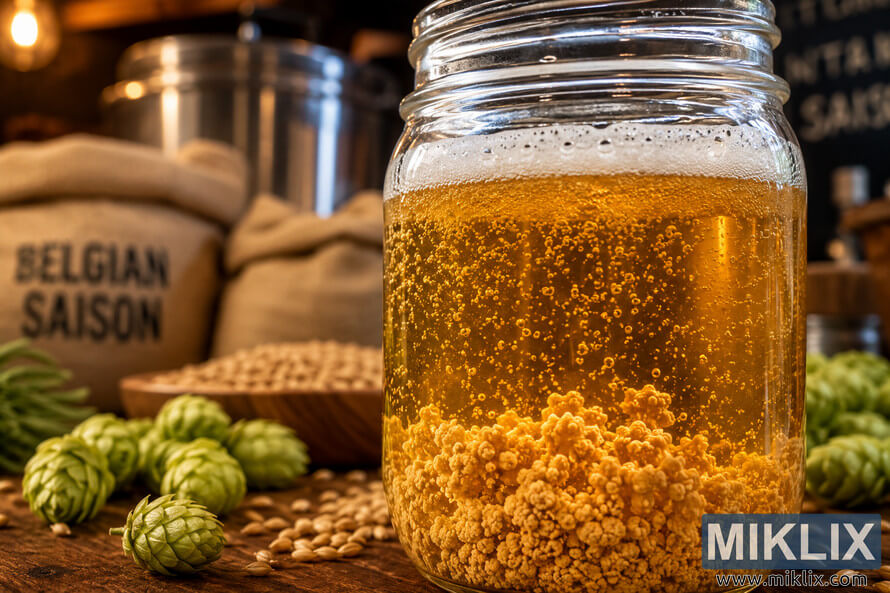
White Labs Saison strain WLP566 combines traditional farmhouse brewing with modern brewing techniques. It is cherished for its reliable fermentation, vibrant aromatics, and consistent attenuation. These traits make it ideal for both traditional and innovative Saison recipes.
Fermenting Beer with White Labs WLP566 Belgian Saison II Ale Yeast
Kliknutím nebo klepnutím na obrázek získáte další informace a vyšší rozlišení.
Key Takeaways
- WLP566 is a Saison yeast prized for peppery spice and fruity esters.
- Expect high attenuation and a dry finish when fermenting Saison with this strain.
- Proper pitching, temperature control, and sanitation are critical for predictable results.
- This WLP566 review compares liquid strain handling versus dry alternatives for small-scale brewers.
- Recipes and schedules in the article aim to balance phenolics, esters, and body for traditional and modern Saisons.
Overview of White Labs WLP566 Belgian Saison II Ale Yeast
Yeast lineage and character
WLP566 originates from farmhouse and Belgian Saison genetics, known for their lively ester and phenol production. This places it among strains that emphasize spicy phenolics over the neutral character of British ales.
This strain exhibits vigorous activity and robust growth in starters. Brewers appreciate its high temperature tolerance and consistent performance, especially when provided with oxygen and nutrients.
Typical flavor and aroma profile
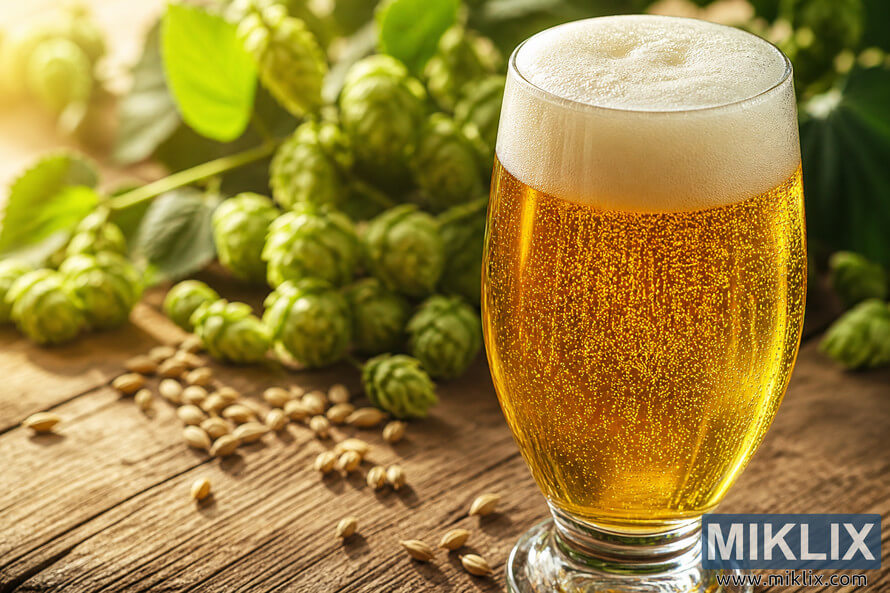
The Saison flavor profile of WLP566 showcases peppery phenols and bright citrus esters like lemon and orange peel. Stone-fruit notes, such as apricot, may appear when fermentation occurs at warmer temperatures.
A dry finish and a light farmhouse funk are common. Early sulfur may appear but usually dissipates, leaving yeast-driven aromatics that dominate a restrained malt base.
Why brewers choose this strain for Saison beers
- Versatility: White Labs Saison adapts to classic farmhouse ales and modern, hopped or fruited variations.
- Predictable attenuation: WLP566 characteristics favor the dry, crisp finishes prized in Saison styles.
- Temperature range: Brewers can shape ester and phenol balance by adjusting fermentation temperatures.
- Commercial consistency: U.S. availability from White Labs makes sourcing easier for small breweries.
Kliknutím nebo klepnutím na obrázek získáte další informace a vyšší rozlišení.
Preparing for Fermentation: Equipment and Sanitation for Saison
Before pitching White Labs WLP566, setting up properly is key. The right equipment, strict sanitation, and temperature control are crucial. This preparation minimizes off-flavors and messy blow-offs.
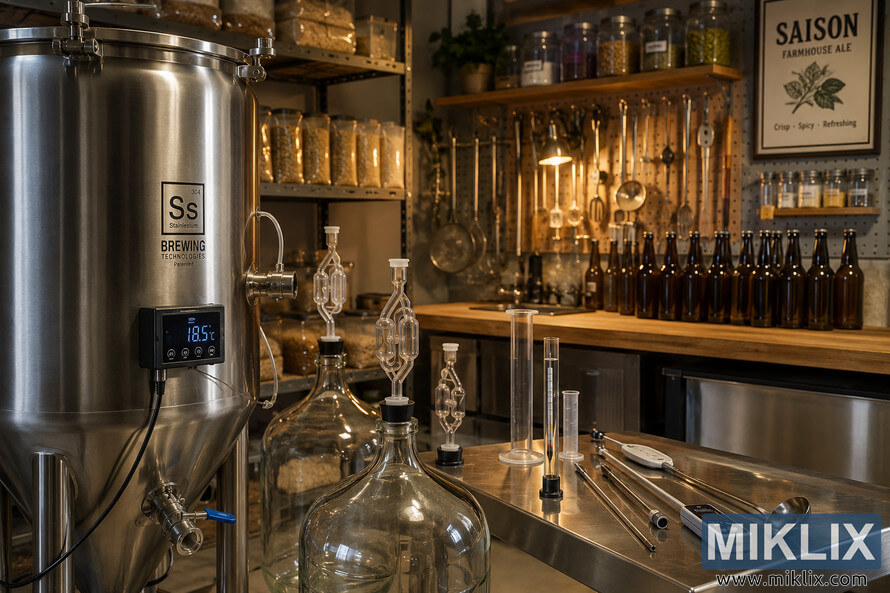
Essential fermentation gear checklist
- Primary fermenter: choose a food-grade plastic bucket or a stainless steel conical. Leave room for vigorous krausen and plan headspace accordingly.
- Airlock and bung or blow-off tube: saisons can erupt. Use a blow-off tube to prevent overflow and contamination.
- Thermometer and temperature probe: an accurate digital probe allows continuous monitoring of wort and keeps temperature control for yeast reliable.
- Oxygenation tools: an aeration stone with pump or a sterile oxygen tank helps achieve the dissolved oxygen yeast need at pitch.
- Pitching and transfer gear: sterile funnel, sanitized racking cane, and bottling or kegging equipment rated for higher carbonation.
- Yeast starter equipment: Erlenmeyer flask or dedicated starter vessel; use a stir plate for larger starters when reviving liquid cultures.
Sanitation best practices and recommended agents
Clean first, then sanitize. Use PBW (Powdered Brewery Wash) or an equivalent alkaline cleaner to remove soil and residue. Rinse when required.
Sanitizers like Star San and Iodophor are industry-standard for sanitation for brewing. Star San is a no-rinse acidic sanitizer that works well on equipment between transfers. Iodophor serves as a short-contact option for tools and small fittings.
Follow manufacturer contact times and sanitize surfaces that touch wort immediately before use. Practice aseptic technique when handling liquid yeast vials or starters to limit exposure to airborne contaminants.
Temperature control equipment options
- Refrigerated fermentation chamber: modify a chest freezer with an external thermostat such as an Inkbird for precise control during active fermentation.
- Temperature-controlled fridges: dedicated units that both heat and cool with integrated controllers fit small to medium breweries.
- Heating belts and controllers: fermentation heating pads or belts paired with thermostats help maintain minimum temps in cooler cellars.
- Water-bath or glycol systems: professional setups using glycol chillers provide stable, uniform temperature control for multiple vessels and kegs.
- Insulation and passive methods: insulating wraps and coolers can buffer batch-to-batch swings when active temperature control for yeast is not available.
Choose your gear based on batch size and brewery environment. Good fermentation equipment, strict sanitation, and reliable temperature control protect yeast's character. This ensures consistent, lively fermentations.
Kliknutím nebo klepnutím na obrázek získáte další informace a vyšší rozlišení.
Ideal Wort and Recipe Considerations for Saison with WLP566
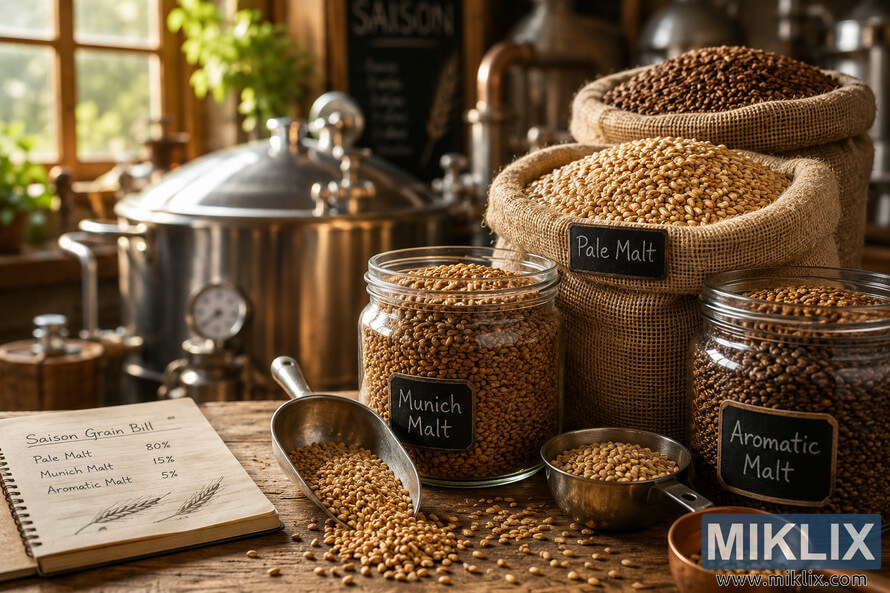
Creating a wort for WLP566 requires a light touch. Use Pilsner or pale two-row as the base. This allows the yeast to shine with spicy phenols and bright esters. Specialty malts should be kept minimal to let the yeast's character dominate.
- Pilsner or pale 2‑row as the primary base (85–95%).
- Vienna, wheat, or light Munich at 5–10% for subtle breadiness.
- Avoid heavy crystal, roasted, or large amounts of dextrin malts that blunt dryness.
Choosing hops is crucial for enhancing the beer's flavor. Opt for noble hops like Saaz or Styrian Golding for their gentle herbal notes. Modern hops, such as Cascade or Citra, add a citrusy aroma without overpowering the yeast.
- Target bitterness in the 20–35 IBU range for balance.
- Use late kettle additions, whirlpool hops, and light dry hopping to enhance aroma.
- Plan hop timing to protect yeast-driven complexity when adding hops late in the process.
Adjuncts and simple sugars are key for achieving dryness. Table sugar or Belgian candi sugar can lighten the body and enhance the finish. Ensure to add enough nutrients to support WLP566's clean and vigorous fermentation.
- Common sugars for dryness: sucrose, clear candi sugar, or light DME.
- Use honey or fruit purées sparingly; they change yeast behavior and final esters.
- Consider a yeast nutrient or energizer when using large sugar adjuncts to avoid sluggish fermentation.
Practical tips for brewing with WLP566 include a simple Saison grain bill. Choose hops that complement the yeast without overpowering it. Add sugars judiciously to enhance dryness. These steps will result in a lively, dry Saison that highlights the yeast's unique characteristics.
Kliknutím nebo klepnutím na obrázek získáte další informace a vyšší rozlišení.
Pitching Rates and Yeast Handling for Optimal Results
Mastering the pitch is crucial for a successful Saison fermentation. This guide will help you determine the right WLP566 pitching rate. It also covers when to create a yeast starter for Saison and how to revive and store liquid yeast. These steps ensure your batches finish clean and lively.
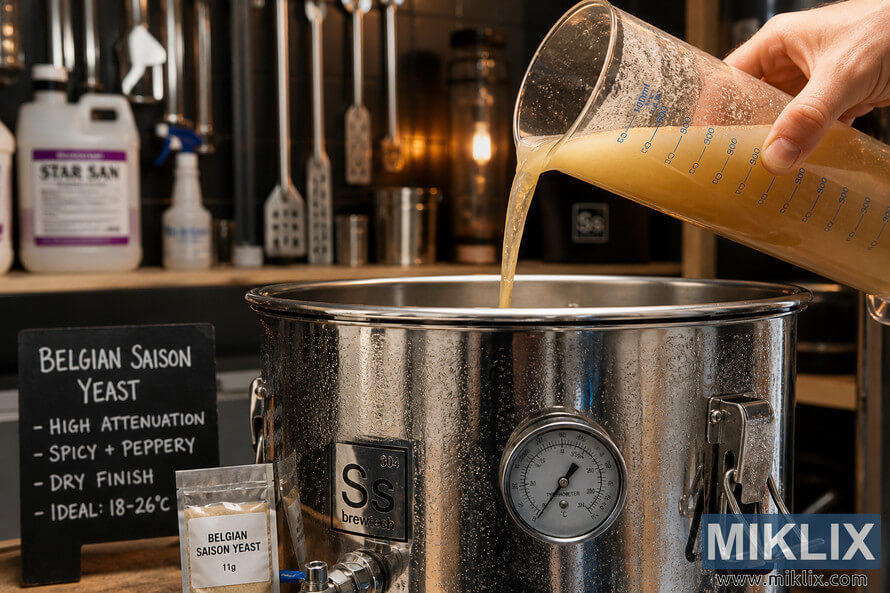
The recommended pitching range depends on batch size and gravity. For typical ales, aim for 0.75–1.5 million cells per mL per °P. A 5-gallon (19 L) Saison with moderate OG usually requires one White Labs vial. However, for OGs above 1.060, you may need a starter or two vials to achieve higher cell counts and avoid long lag times.
High gravity beers require more careful handling. Increase the pitch rate, add extra vials, or build a larger starter. Adequate oxygenation at high gravity supports a strong, healthy fermentation. This reduces stress on WLP566, improving attenuation and minimizing off-aromas.
Choose between direct pitching and a starter based on yeast freshness and gravity. Direct pitching is quicker and reduces oxidation risk with fresh yeast. Use a starter for Saison when you need more cells, want to shorten lag, or face high OG worts.
Starters enhance vitality but must be made cleanly. Keep starters small to preserve ester character; large starters can alter yeast physiology and reduce fruity notes. Sanitize equipment and avoid prolonged air exposure while building a yeast starter for Saison.
Reviving WLP566 from a slant or culture involves standard propagation steps. Start with low-gravity wort, provide gentle aeration, and gradually increase gravity. Monitor smell and appearance for signs of healthy growth. Use a cell count or a pitch rate calculator to confirm readiness when possible.
- Storing liquid yeast: keep refrigerated and avoid temperature cycling to preserve viability.
- If shelf life is uncertain, build a small starter rather than risking an underpitch.
- Follow White Labs' storage recommendations and handle vials gently to prevent damage.
Viability checks are essential. Look for fresh yeast aroma, consistent color, and an active krausen in the starter. When in doubt, a modest starter is safer than guessing. Proper attention to WLP566 pitching rate, yeast starter for Saison planning, and storing liquid yeast will ensure your saisons are bright, dry, and true to style.
Kliknutím nebo klepnutím na obrázek získáte další informace a vyšší rozlišení.
Fermentation Schedule and Temperature Management
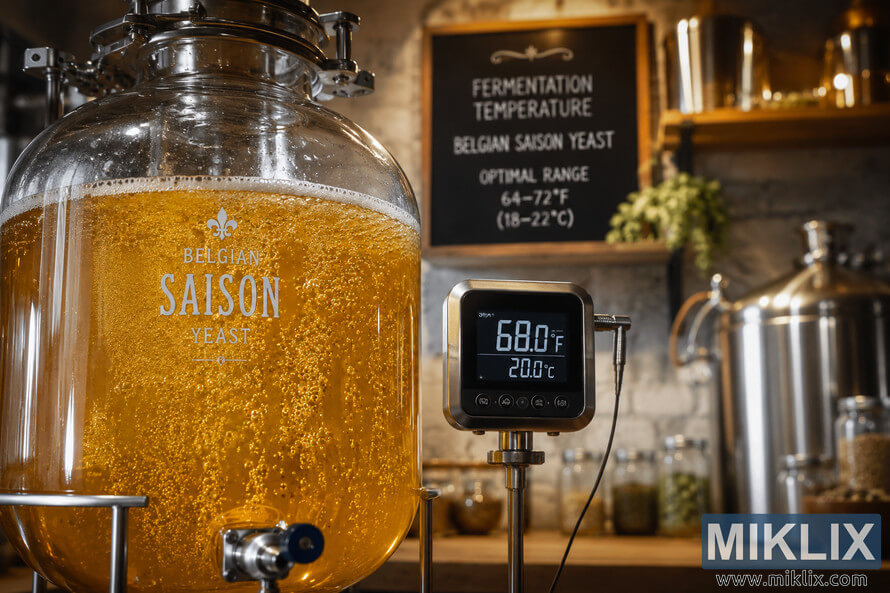
The success of Saison yeast depends on a well-planned fermentation schedule and consistent temperature control. The WLP566 fermentation temperature is crucial for flavor, attenuation, and ester profile. Begin with cooler temperatures for a healthy start, then gradually increase to warmer ranges to reveal the farmhouse character.
Primary fermentation temperature ranges and effects
WLP566 typically ferments best between 64–82°F (18–28°C). Lower temperatures, around 64–68°F, result in a cleaner, more restrained flavor with a peppery note. Mid to high temperatures, 72–82°F, enhance fruity esters and pronounced phenolics, often increasing attenuation.
Be cautious of fusel alcohols when temperatures exceed the recommended range. Stress from under-pitching or nutrient deficiency can lead to solvent-like off-flavors at high WLP566 fermentation temperatures.
Temperature ramping strategies to develop phenols and esters
Begin with lower temperatures, 65–68°F, to prevent a lag phase. Implement a step-up approach, increasing 4–8°F every 24–48 hours. This method encourages the development of esters and peppery phenolics, leading to predictable flavor outcomes.
Aggressive ramping towards the end of fermentation, raising temperatures into the upper range, aids in diacetyl cleanup and enhances full attenuation. Avoid sudden, large temperature changes, as they can stress the yeast and introduce off-flavors.
Signs of stalled fermentation and corrective steps
Indications of a stalled fermentation include flat gravity readings, minimal or no krausen in the expected timeframe, and low CO2 activity. Confirm the temperature and take gravity readings before taking action.
- Gently raise the temperature into the upper recommended range to reactivate the yeast.
- If fermentation is early, oxygenate carefully and add yeast nutrient as needed.
- Pitch an active, healthy yeast starter or rehydrated Saccharomyces yeast when necessary.
Adhere to strict sanitation practices when addressing stuck fermentation issues. Avoid exposing wort to contaminants during re-pitching or transfers. Document each adjustment to refine future fermentation schedules.
Kliknutím nebo klepnutím na obrázek získáte další informace a vyšší rozlišení.
Attenuation, Flocculation, and Mouthfeel Expectations
Understanding yeast performance is key to crafting a Saison. With White Labs WLP566, brewers can anticipate a lean, dry finish. This finish impacts recipe choices and conditioning steps.
Typical attenuation numbers for WLP566 and what they mean
WLP566 attenuation often ranges between 75–95%, influenced by wort gravity and fermentation temperature. This high attenuation pushes the final gravity down, with many Saisons finishing near 1.000–1.010.
Such low FG results in a crisp, dry beer. To enhance mouthfeel, brewers can add dextrin malts, wheat, or unfermentable sugars. This approach maintains the classic Saison character while increasing body.
Flocculation behavior and its impact on clarity
WLP566 exhibits medium to low flocculation, allowing yeast to stay suspended longer. This suspended yeast supports ongoing fermentation and aids in bottle conditioning. However, it also hinders rapid clarification.
For clearer beer, consider longer conditioning, cold crashing, or using fining agents. Many farmhouse ales embrace a slight haze. Commercial releases, however, often require additional steps to reduce yeast haze before packaging.
How yeast selection influences body and carbonation
Yeast metabolism affects residual sugars and perceived body. High attenuation, as seen in WLP566, results in lower residual dextrins. This leads to a lighter body and a more effervescent profile, characteristic of classic Saisons.
For natural carbonation, strains that remain suspended are beneficial for reliable bottle conditioning. When force-carbonating, adjust CO2 targets to reflect the lower fermentable sugars. Blending WLP566 with a lower-attenuating strain or adding maltodextrin can increase Saison mouthfeel when desired.
Managing Phenolics and Spicy Esters from Saison Yeast
Saison yeast, like White Labs WLP566, can add a bright, peppery flavor or lead to cloying spice, depending on brewing techniques. This guide focuses on managing phenolic spice and controlling spicy esters in Saison beers.
Identifying factors that enhance peppery and spicy notes is straightforward. Warmer fermentation temperatures increase phenolic and spicy ester production. Low pitch rates and stressed yeast also contribute to these flavors. The type of wort, especially high wheat or certain adjuncts, can accentuate phenolics. Poor oxygenation or nutrient deficiencies stress yeast, leading to unwanted phenolics.
To minimize spice, concentrate on controllable variables. Ferment at the cooler end of WLP566’s range and avoid sudden temperature increases. Use an adequate starter or slightly higher pitch rates for a cleaner ester profile. Oxygen additions at pitching and balanced yeast nutrients prevent stress-driven phenolic expression.
- Temperature control: cooler primary ferments cut spice; step-ramping adds nuance.
- Pitching strategy: increase pitch and oxygen for cleaner results; reduce starter size to accentuate esters.
- Wort design: include modest specialty malts such as Vienna or Munich to add malt backbone that tames peppery notes.
Balancing phenolics with malt and hops offers brewers more options than just temperature and pitch. A small amount of caramel or toasty malt can soften sharp clove or pepper. Herbal or citrus-forward hops complement saison spice, adding aromatics without masking yeast character. Fruit or spice adjuncts can enhance or hide phenolics, provided they don't interfere with fermentation.
Blending is a reliable method for achieving precise spice levels. Combine a cleaner-fermented batch with one fermented warmer for a tailored balance. This method allows for fine-tuning phenolics WLP566 without risking a full batch that leans too far one way.
- Start with clear goals: decide how much pepper you want before you brew.
- Adjust fermentation profile: cooler for restraint, warmer or stepped for more spice.
- Control nutrients and oxygen to avoid stress-related off-characters.
- Taste and blend if needed to refine the final balance.
By paying close attention to pitching, oxygenation, and temperature, you can manage spicy esters and achieve consistent Saison phenolics control. Small, deliberate changes allow you to fine-tune character while preserving the lively personality WLP566 brings to farmhouse-style beers.
Dry Hopping and Secondary Fermentation with WLP566
Dry hopping and secondary conditioning are crucial for a Saison's final aroma and clarity, especially when using WLP566. Timing and short contact periods are key to preserve the yeast's fragile esters. They also add hop top notes that enhance the farmhouse character.
Timing dry hop additions to preserve yeast character
Introduce dry hops after the primary fermentation has ended, for 3–7 days. This preserves the yeast's delicate aromas. Early additions can alter the expected flavor, as yeast may absorb or transform compounds. Most brewers prefer later additions to maintain WLP566's fruity esters.
Impact of dry hopping on aroma and yeast activity
Dry hopping enhances citrus, floral, or tropical notes, complementing WLP566's peppery and fruity aromas. Active yeast can create new aroma molecules, which can be beneficial or alter the Saison's classic character.
- Limit contact time to avoid grassy or astringent extraction.
- Handle gently to reduce oxygen pickup and oxidation risks.
- Monitor aroma after 48 hours and remove hops if harshness appears.
Using secondary fermentation for clarity or oak additions
Secondary fermentation is essential for oak, fruit, or extended conditioning that could cloud the beer. Transfer carefully once yeast activity has slowed to avoid oxidation and preserve the strain’s nuanced character.
- For oak aging, add light toast chips or cubes in measured doses and check every few days to prevent overpowering the yeast-driven profile.
- For clarity, cold crash or use fining agents such as Biofine or gelatin in secondary to settle particulates while maintaining aroma.
- If you expect additional fermentation from adjunct sugars, allow a short conditioning period in secondary to confirm stability before packaging.
When planning dry hopping Saison and scheduling WLP566 dry hop timing during secondary fermentation Saison, balance is crucial. Short hops contact, minimal oxygen, and thoughtful use of secondary vessels protect the delicate esters. This approach yields a clear, aromatic Saison.
Conditioning, Carbonation, and Packaging Strategies
The choice of conditioning and packaging methods significantly impacts the aroma, mouthfeel, and shelf life of beers fermented with WLP566. This guide offers practical advice for both small and commercial brewers. It aims to strike a balance between tradition and control, resulting in clean, lively Saisons.
Before packaging, consider the trade-offs. Bottle conditioning Saison offers authentic carbonation and micro-oxidation, which can enhance complexity. On the other hand, force carbonation provides speed and consistency, reducing yeast-driven changes post-packaging.
- Bottle conditioning Saison: ensure viable yeast and enough priming sugar based on final gravity. If attenuation was high, add a small fresh yeast or a conditioning strain to guarantee reliable carbonation.
- Force carbonation: use kegs or brite tanks for precise control of volumes CO2. This method suits commercial runs where repeatability and reduced yeast sediment are priorities.
Target carbonation volumes depend on style and service. Many farmhouse Saisons sit between 3.0 and 4.0 volumes CO2 for an effervescent palate. A wider range from 2.5 to 4.5 volumes covers lighter and more aggressive variants. Match serving pressure and glassware to avoid gushing or flat presentation.
- Decide your desired Saison carbonation levels early, while designing the recipe and fermentation plan.
- Adjust priming sugar or keg pressure to reach the target volumes CO2. Test a small batch if uncertain.
- Chill beer before packaging to reduce dissolved CO2 variability and to help solids drop out.
Protect delicate hop and yeast aromatics during filling. Minimize oxygen pickup with CO2 purges, closed transfers, and oxygen-absorbing caps. Fill at cold temperatures and control headspace to limit aroma loss. For cans and bottles, evaluate oxygen-scavenging liners or inert gas blends when necessary.
Packaging for WLP566 beers benefits from gentle handling. Cold conditioning, careful capping, and measured carbonation preserve the strain’s spicy and fruity character. Keep procedures consistent to retain the lively profile brewers expect from Saison styles.
Common Fermentation Issues and Troubleshooting with WLP566
Brewers using WLP566 often encounter recurring problems. This guide helps identify causes, perform quick diagnostics, and apply practical fixes. Keep detailed notes on each batch to track gravity, temperature, and sensory changes.
Off-flavors can stem from simple errors or more complex yeast stress. Taste and smell often reveal the root cause faster than lab tests. Track when the off-note appears to narrow down possible events during the brew day or fermentation.
- Solvent or fusel notes. These heavy, hot alcohol aromas come from high fermentation temperatures, under-pitching, or low yeast health. Cooler the fermenter into the recommended range, check starter size, and add yeast nutrient if nitrogen looks low.
- Excessive phenolics. A peppery or medicinal edge can be part of saison character but becomes a problem if extreme. Stress from rapid temperature swings or high pitching rates can amplify phenols. Use gentler temperature ramps and ensure healthy cell counts.
- Sulfur or allium notes. Brief sulfur at the start is normal and usually fades. Persistent onion, garlic, or egg aromas suggest contamination or poor yeast health. Re-check sanitation, oxygenation at pitch, and yeast viability before taking further action.
- Oxidation. Papery or sherry-like flavors arise from oxygen exposure after active fermentation. Minimize transfers, purge packaging vessels with CO2, and avoid splashing during kegging or bottling.
When attenuation stalls, run a quick diagnostic checklist. These steps tell you whether the issue is yeast-related or process-related and guide effective stuck fermentation remedies.
- Measure current and original gravities to confirm true attenuation.
- Verify fermentation temperature and compare to your planned schedule.
- Assess yeast viability and pitching rate; consider a viability stain or recent repitch history.
- Review oxygenation and nutrient additions at the start of fermentation.
If fermentation is truly stuck, try graduated interventions before discarding the batch. Start with low-risk steps and escalate only if needed.
- Raise temperature. Move the fermenter to the upper end of WLP566’s range for 24–48 hours to wake the yeast.
- Gently aerate. If fermentation stalled early, introduce a small amount of oxygen with a sanitized stir or splash; avoid oxygen late in fermentation.
- Add active yeast. Pitch a high-attenuating strain or a healthy Champagne yeast to finish sugars. Make a vigorous starter to improve chances.
- Supplement nutrients. Add yeast nutrient or energizer if nitrogen deficiency or long lag was observed.
Prevent problems with consistent sanitation and disciplined process control. Good habits reduce the odds of infectious spoilage and make sensory issues easier to interpret.
- Clean and sanitize all equipment rigorously. Use iodophor or Star San as recommended for White Labs practices.
- Keep fermentation temperatures steady. Avoid unnecessary transfers that expose wort to oxygen and microbes.
- Quarantine suspicious kegs or fermenters. Visual signs like pellicles, unexpected turbidity, or sharp sourness point to infection rather than intended Brett or saison funk.
If contamination is confirmed in a commercial setting, remove affected product and perform deep sanitation of tanks and lines. For homebrewers, discard infected batches and sanitize thoroughly before reuse.
Use WLP566 troubleshooting steps and stay alert for Saison off-flavors to maintain consistent quality. Routine checks and prompt stuck fermentation remedies keep saisons bright, dry, and true to style.
Comparing White Labs WLP566 Belgian Saison II Ale Yeast to Other Saison Strains
The choice of yeast is crucial in defining a Saison's essence. This comparison aims to highlight the practical differences in flavor, performance, and handling. It's designed to help brewers select the right strain for their intentions. The content is concise and focused for quick reference.
- WLP566 often delivers a lively mix of peppery phenolics and tropical fruit esters. This balance provides many batches with a spicy top note and a fruity background.
- Wyeast and some White Labs cousins can run cleaner or push more rustic farmhouse funk. These strains may show less pepper and more subtle fruit.
- Dry strains like Lallemand Belle Saison can reach similar dryness and attenuation. Expect differences in ester intensity and mouthfeel when comparing liquid vs dry Saison yeast options.
- Brettanomyces blends add long-term barnyard complexity. WLP566 lacks inherent Brett funk unless you blend in a Brett strain yourself.
When to choose WLP566 over dry or alternative liquid strains
- Pick WLP566 when you want a pronounced ester/phenolic profile from a reliable liquid strain. It shines when fresh liquid yeast is available and temperature control is used.
- Choose dry strains for shelf life, lower cost, or simpler handling. Accept trade-offs in aroma and mouthfeel when prioritizing convenience.
- Opt for alternative liquid strains when a cleaner or more restrained Saison profile fits the recipe. Taste goals should drive whether you use WLP566 vs other Saison yeasts.
Case studies from homebrewers and commercial brewers
- Homebrewers report WLP566 produces strong peppery character and high attenuation in 5-gallon batches when warmed during fermentation. Many recommend making a starter for high-gravity worts.
- Microbreweries note consistent batch-to-batch performance with WLP566. Temperature-controlled fermenters help preserve desired ester levels while ensuring reliable kinetics.
- Side-by-side tests with WLP565 or Lallemand Belle Saison reveal clear differences in phenolic intensity and final dryness. Blind tastings often show personal preference drives the choice of best Saison yeast.
Recipe Examples and Trial Plans Using WLP566
This section provides practical WLP566 recipes and trial plans for home or small pilot systems. Begin with a classic farmhouse outline to understand the yeast's core behavior. Then, experiment with recipes to enhance esters and spice. Finally, note how to scale Saison recipes from bench trials to 5-gallon batches.
- Pilsner malt 85–90%, Vienna or wheat 5–10%, dextrin malt 2–5%.
- OG target 1.048–1.060 with 20–30 IBU using Saaz or Styrian Golding.
- Pitch at 66–68°F, ramp to 76–80°F over 3–5 days, then condition at 60–65°F for one week.
- Optional 0–2 lb Belgian candi sugar for extra dryness; minimal specialty malts to keep yeast character dominant.
Experimental recipes to highlight unique esters and phenolics:
- Fruit-forward Saison: Add late-stage apricot or peach puree after primary fermentation to complement esters.
- Hop-centric Saison: Use late hop additions and dry hop with Citra or Mosaic to interact with yeast-derived citrus notes.
- Spiced Saison: Add coriander or cracked black pepper in secondary to accentuate spicy phenolics; consider small oak chips or a Brett blend for barrel-like complexity.
Technique reminders for experiments:
- Adjust nutrient and oxygenation strategies when adding fruit, sugar, or heavy hop loads to avoid stuck fermentation.
- Use sterile fruit handling and gradual additions to preserve yeast activity and limit infections.
Guidance for scaling Saison recipes from 1-gallon test batches to 5+ gallon production:
- Maintain the same gravity points and grain proportions when scaling volume. Match target OG and IBUs rather than raw weights.
- Use weight-to-volume math or brewing software to convert hop amounts. Keep hop timing identical to preserve bitterness and aroma balance.
- Scale yeast with appropriate starters. Consult cell count calculators to size a starter or number of Wyeast/White Labs units for larger volumes.
- Preserve process consistency: keep mash schedule, boil time, and fermentation profile the same when moving from 1 gallon to 5 gallons or more.
Example checklist for a small trial plan:
- Run a 1-gallon bench batch using the classic outline to observe attenuation and ester profile.
- Make one experimental 1-gallon batch (fruit or hops) to test adjunct impact on yeast character.
- Record gravity, temperature ramp, and sensory notes. Apply those adjustments when scaling.
These WLP566 recipes and trial steps offer a path from simple farmhouse Saison to bold experimental beers. Keep detailed logs and adjust scaling Saison recipes using measured gravity and pitch rates to achieve the same flavor outcomes at larger volumes.
Safety, Legal, and Logistical Notes for U.S. Brewers Using WLP566
Small breweries face challenges when using specialized yeast like WLP566. They must ensure safety, follow legal requirements, and manage logistics. This includes keeping detailed records, adhering to federal and state laws, and planning for yeast shipping and storage. These steps are crucial for maintaining yeast viability and ensuring consumer safety.
Labeling and regulatory tasks begin with TTB rules for alcohol identity and ABV disclosure. Brewers must maintain ingredient logs and batch records for traceability. Although yeast strains are rarely listed on labels, accurate internal documentation is vital for quality control and inspections.
- Follow Alcohol and Tobacco Tax and Trade Bureau guidance for product names and alcohol statements.
- Keep FDA-style sanitation and manufacturing records to meet health and safety expectations.
- Document supplier lot numbers and ingredient certificates for every batch.
Logistics for yeast shipping US require careful attention to cold-chain handling. Liquid cultures, such as White Labs' WLP566, need refrigerated transport. It's essential to order from established distributors that guarantee temperature-controlled delivery and provide clear shelf-life details.
- Verify carrier cold-chain options and expected transit times before ordering.
- Inspect incoming yeast for temperature excursions and note lot numbers on receipt.
- Rotate inventory by use-by date and test older lots with a small starter to confirm vigor.
Proper storage practices are crucial for yeast performance. Store yeast at manufacturer-recommended temperatures, avoid repeated warm spikes, and use older stock first. Maintain clean refrigeration and log temperatures daily for quality assurance.
When brewing with adjuncts, allergen info brewing must be handled with care. Yeast itself is not a common allergen, but wheat, honey, fruit, nuts, and other additions can trigger reactions. Disclose these ingredients on packages and tap lists when required or when a product contains a known allergen.
- List common allergenic adjuncts on packaging or point-of-sale materials for consumer safety.
- Train staff to answer questions about ingredients and cross-contact risks.
- Keep documentation for any nutritional or special claims to satisfy state and federal auditors.
Combining robust recordkeeping with practical handling is key. Log shipments, enforce cold storage, and communicate ingredient details to consumers. These steps reduce risk and protect a brewery's reputation while using WLP566 for saisons and other beers.
Conclusion
White Labs WLP566 Belgian Saison II Ale Yeast stands out as a versatile, expressive Saison strain. This WLP566 review conclusion highlights its high attenuation, peppery phenolics, and bright fruity esters. These traits are perfect for both traditional farmhouse recipes and modern twists. Brewers can rely on predictable results by controlling pitching, oxygenation, and sanitation.
To achieve the best results, follow these best practices WLP566: start with a starter or use higher pitch rates for gravities over 1.060. Ensure good wort oxygenation and provide yeast nutrients to prevent fusel alcohols. Use controlled temperature ramps to balance esters and phenols. Monitoring fermentation is crucial to avoid stalls and maintain the dry finish and lively aromatics Saison enthusiasts love.
WLP566 is ideal for homebrewers and small commercial operations across the United States. Consider a 1–5 gallon trial to explore its potential. Experiment with temperature ramps and adjuncts, and compare it with dry alternatives for shelf stability or simplicity. This fermenting Saison summary confirms WLP566 as a top choice for brewers seeking farmhouse complexity with reliable results.
FAQ
What flavor and aroma characteristics can I expect from White Labs WLP566 Belgian Saison II?
WLP566 typically produces a peppery flavor with notes of clove and black pepper. It also offers citrus and stone-fruit esters, such as lemon and apricot. The yeast contributes to a dry, highly attenuated finish. Early fermentation may show mild sulfur, which usually clears up. When fermented warm or stressed, it can develop a light farmhouse funk.
Overall, the yeast enhances the yeast-derived spice and fruit, allowing the malt and hops to shine through. This results in a balanced flavor profile.
What pitching rate should I use for a 5-gallon Saison with WLP566?
For a 5-gallon batch with an OG of 1.048–1.060, one fresh White Labs vial is often enough. However, using two vials or a starter is recommended for higher OGs or a more vigorous start. Aim for 0.75–1.5 million cells/mL/°P as a guideline. Scale with starters or additional vials for high gravity beers.
Should I make a yeast starter or pitch directly from the White Labs vial?
Make a starter if the vial is older, the OG is above ~1.060, or you want to reduce lag and ensure vitality. Direct pitch is acceptable with fresh, recently refrigerated vials for moderate OG saisons. Keep in mind starters boost cell count and reduce stress but require sterile technique.
Over-sizing a starter can slightly reduce ester production in some cases.
What fermentation temperature range is best to highlight WLP566’s peppery and fruity character?
WLP566 performs well between 64–82°F (18–28°C). Lower temperatures (64–68°F) yield a cleaner profile with restrained phenolics. Mid-to-high temperatures (72–82°F) accentuate fruity esters and peppery phenols.
Many brewers start cool for a healthy lag-free onset, then ramp 4–8°F every 24–48 hours to develop esters without stressing the yeast.
How can I avoid solvent/fusel off-flavors when fermenting warm?
Prevent fusels by pitching adequate healthy yeast, oxygenating the wort before pitch, providing yeast nutrient, and avoiding excessive temperature spikes. If you plan high fermentation temperatures, ensure strong cell counts and controlled ramps. Under-pitching, nutrient deficiency, or wild temperature swings increase the risk of solvent-like off-flavors.
What grain bill and adjuncts best complement WLP566?
Use a light, neutral base like Pilsner or pale 2-row (85–90%) and small specialty additions (5–10% Vienna, wheat, or light Munich) to add breadiness without masking yeast character. Minimize crystal or roasted malts. Simple sugars (table sugar or Belgian candi) can boost dryness and accentuate esters, while fruit or honey can be used experimentally with attention to oxygenation and nutrients.
How aggressive is WLP566’s attenuation and what FG should I expect?
WLP566 typically exhibits high apparent attenuation; reported ranges fall roughly between 75–95%. Expect low final gravities often around 1.000–1.010 depending on recipe and fermentation management. This yields the classic dry Saison mouthfeel; use dextrin malts or adjuncts if you want more body.
Does WLP566 flocculate well and how will that affect clarity?
WLP566 is generally medium to low flocculating and can remain in suspension longer, which supports full attenuation and lively conditioning. If clearer beer is desired, plan for extended conditioning, cold crashing, or fining agents. Many Saison styles are intentionally slightly hazy, so clarity treatments are optional.
When should I dry hop if I want to preserve yeast character?
For preserving delicate Saison aromatics, add dry hops after primary fermentation has mostly finished—typically once FG is reached—for 3–7 days. Adding hops too early risks stripping or altering yeast-derived aromatics, though early dry hopping can be used intentionally to encourage biotransformation if that effect is desired.
Can WLP566 handle high OG beers and what adjustments are needed?
WLP566 can ferment high OG beers, but you should increase pitching rates, build a larger starter or use multiple vials, and ensure thorough oxygenation and nutrient additions. Monitor fermentation temperature, and be prepared to ramp temps to help the yeast finish. Consider re-pitching active high-attenuating strains or Champagne yeast only as a remedial step if fermentation stalls.
What troubleshooting steps help with a stuck or slow fermentation?
Check gravity and temperature first. Warm the fermenter into the upper recommended range, gently oxygenate only if early in fermentation, add yeast nutrient, and consider pitching a healthy starter or active yeast strain to re-seed fermentation. Maintain sanitation during interventions. If under-pitching is suspected, a fresh pitched high-viability strain often restarts activity.
How should I carbonate and what CO2 volumes suit a traditional Saison?
Target carbonation between about 2.5–4.0 volumes CO2 depending on sub-style; many Saisons favor higher carbonation (3.0–3.8) for effervescence. Bottle conditioning is traditional but requires sufficient viable yeast and residual sugars; force-carbonation in kegs delivers consistency for commercial packages. Minimize oxygen pickup during packaging to preserve delicate aromatics.
How does WLP566 compare to dry Saison strains like Lallemand Belle Saison?
WLP566, as a liquid strain, tends to deliver a specific balance of peppery phenolics and fruity esters with high attenuation. Dry strains such as Lallemand Belle Saison offer shelf stability and convenience and can achieve similar dryness, but their ester/phenolic profile and mouthfeel may differ. Choose WLP566 for expressive liquid character and dry strains for logistics or cost reasons.
What sanitation agents and practices are recommended when working with WLP566?
Use a two-step approach: clean with an alkaline cleaner like PBW (Powdered Brewery Wash) first, then sanitize with no-rinse sanitizers like Star San or short-contact sanitizers such as Iodophor for tools. Sanitize surfaces contacting wort immediately before use, practice aseptic yeast handling, and minimize unnecessary transfers to reduce contamination risk.
Any regulatory or storage notes for U.S. brewers using White Labs liquid yeast?
White Labs distributes refrigerated liquid yeast across the U.S.; order through cold-chain suppliers and refrigerate yeast per manufacturer recommendations. For commercial operations, maintain TTB-compliant labeling and traceability records, track lot numbers, and follow FDA and state regulations. Note adjunct allergens (wheat, fruit, honey) on menu or packaging where required.
Další čtení
Pokud se vám tento příspěvek líbil, mohly by se vám líbit i tyto návrhy:
- Kvašení piva s kvasinkami Fermentis SafBrew LA-01
- Kvašení piva s kvasnicemi Bulldog B44 European Ale
- Kvašení piva se směsí kvasinek White Labs WLP080 Cream Ale