
A Complete Guide to Growing Cardinal Flower in Your Own Garden
Published: September 29, 2026 at 3:34:34 PM UTC
Few native plants bring such a clear flash of red to a damp summer garden. Cardinal Flower (Lobelia cardinalis) rises above green foliage on tall spikes that draw hummingbirds close. With the right moisture, this native perennial can become a vivid feature beside a pond, in a rain garden, or along a shaded border.
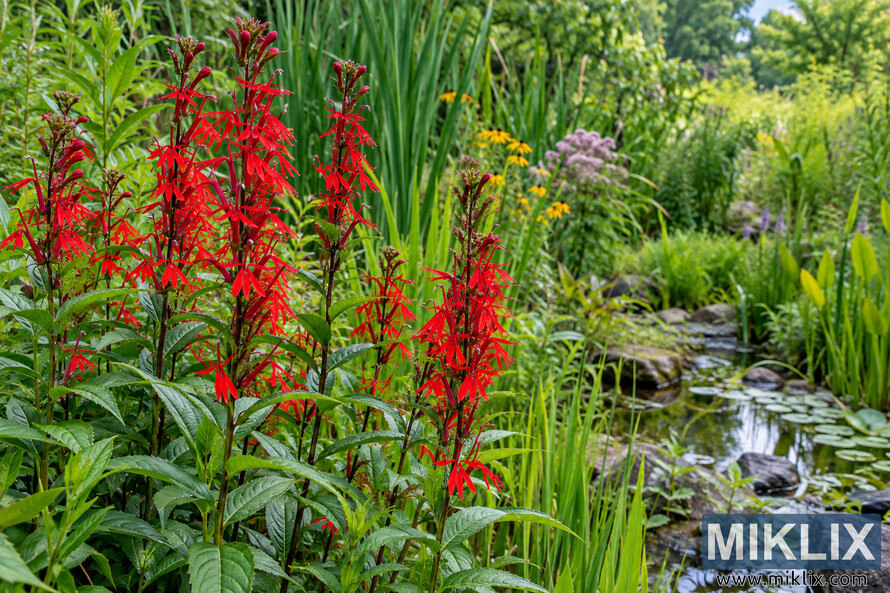
Click or tap the image for more information and higher resolutions.
The key is simple: do not let the root zone dry out. This guide explains how to choose a site, plant, water, propagate, and protect Cardinal Flower (Lobelia cardinalis) through the seasons.
What is Cardinal Flower (Lobelia cardinalis)?
Cardinal Flower is a short-lived perennial species native to much of North America. It grows from a basal leaf cluster and sends up one or more leafy stems. Mature plants commonly reach 2 to 4 feet tall, though size varies with light, water, soil, and local conditions.
The leaves are narrow to lance-shaped and may be green, bronze-green, or tinged with purple. In summer, bright red flowers open along upright spikes. Each flower has a distinctive shape that suits hummingbird pollination. Butterflies and other insects may also visit the blooms for pollen and nectar.
After flowering, the plant forms fruit capsules filled with very small seed. A mature plant may release seed nearby, although seedlings need suitable moisture and light to survive. Cardinal Flower can also produce new growth from offsets or basal areas near the root crown.
Flowers and foliage
Red spikes provide strong color while the leaf growth fills the lower part of the plant.
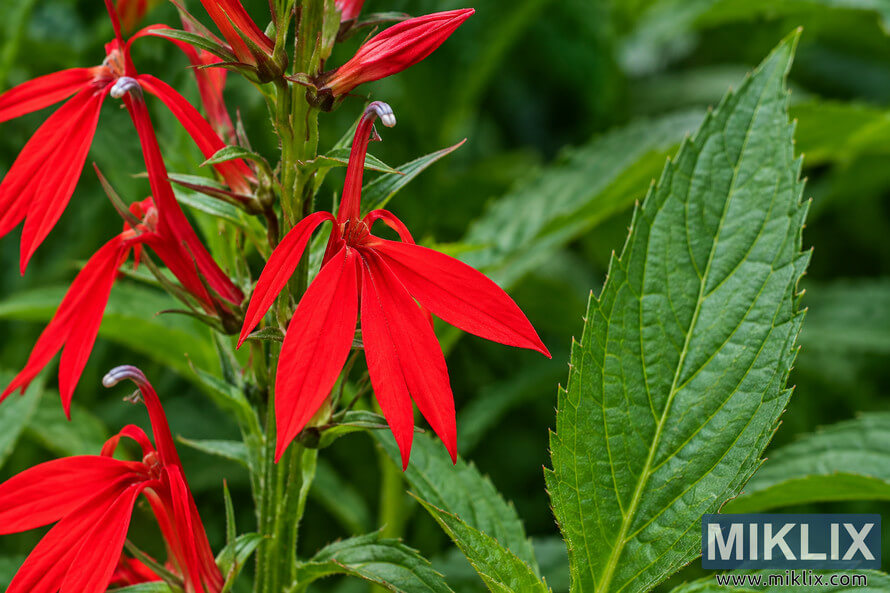
Click or tap the image for more information and higher resolutions.
Pollinator value
Its tubular red flowers are especially noticeable to hummingbirds during the summer bloom period.
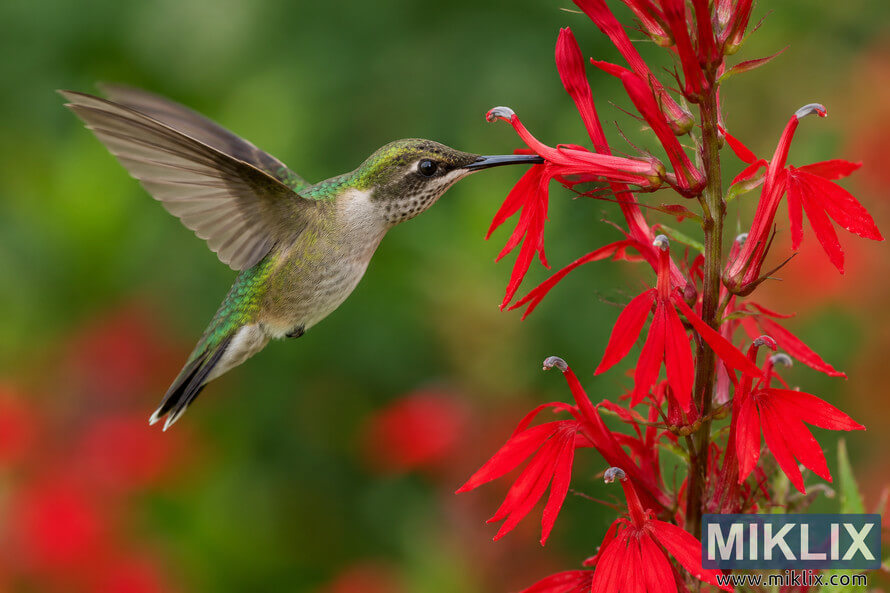
Click or tap the image for more information and higher resolutions.
Perennial life cycle
Plants flower, set fruit, and may decline after several seasons, while seed and offsets help renew the patch.
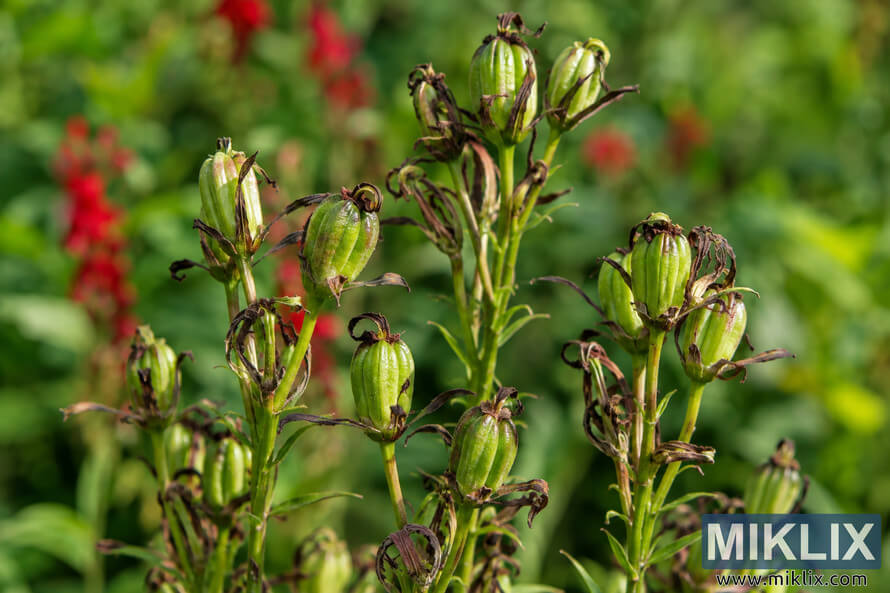
Click or tap the image for more information and higher resolutions.
Choose the right location, soil, and moisture
Moisture is essential. Choose a place with full sun to partial shade and soil that stays consistently damp. Morning sun with afternoon shade can work well in hot areas. More sun often supports stronger flowering, but only when water is available.
Good sites include a pond edge, wet border, rain garden, stream margin, or bog-style bed. Avoid a dry raised bed, a hot wall, or a sandy slope that drains too quickly. Cardinal Flower is not a plant to place in ordinary soil and water only during drought.
The soil should hold moisture without becoming stagnant for long periods. Loam rich in organic matter is useful. If the ground is compacted, mix in finished compost before planting. Do not bury the root crown deeply, and avoid heavy disturbance once the plant is established.
Site test: Dig a hole about 12 inches deep, fill it with water, and watch how quickly it drains. If the site becomes dry within a day or two, plan regular irrigation or choose a wetter location.
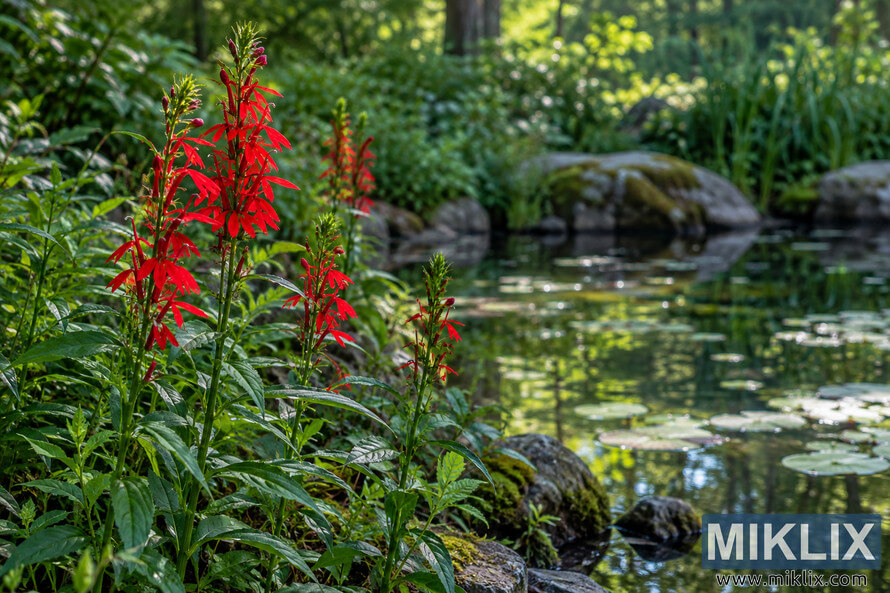
Click or tap the image for more information and higher resolutions.
Planting Cardinal Flower step by step
Nursery-grown plants
- Plant in spring or early fall when temperatures are mild and the soil can be worked.
- Water the container thoroughly before removing the plant.
- Dig a hole as deep as the root ball and about twice as wide.
- Set the crown at the same level it had in the container.
- Backfill with the existing soil, press gently, and water slowly.
- Add a thin mulch layer, keeping mulch away from the stem.
- Water every few days during the first weeks if rain is limited. The goal is even moisture, not a cycle of severe drying followed by flooding.
Starting from seed
- Cardinal Flower seed is tiny. Scatter it on moist seed-starting mix and press it lightly into the surface. Do not cover it with a thick layer of soil. Light exposure helps germination.
- Fresh seed may germinate without special treatment, but a period of cold, moist storage can improve results for some seed lots. Place seed in a labeled, sealed bag with a barely damp medium and refrigerate it for about 30 to 60 days when the supplier recommends stratification. Never freeze it.
- Keep the medium moist and provide bright light after sowing. Germination may be uneven. Transplant young plants after they have several true leaves and outdoor temperatures are moderate.
Division and spacing
Divide established clumps in spring when new growth begins. Lift the root mass carefully, separate healthy sections with roots and shoots, and replant at once. Space plants about 12 to 18 inches apart, allowing room for airflow and mature foliage.
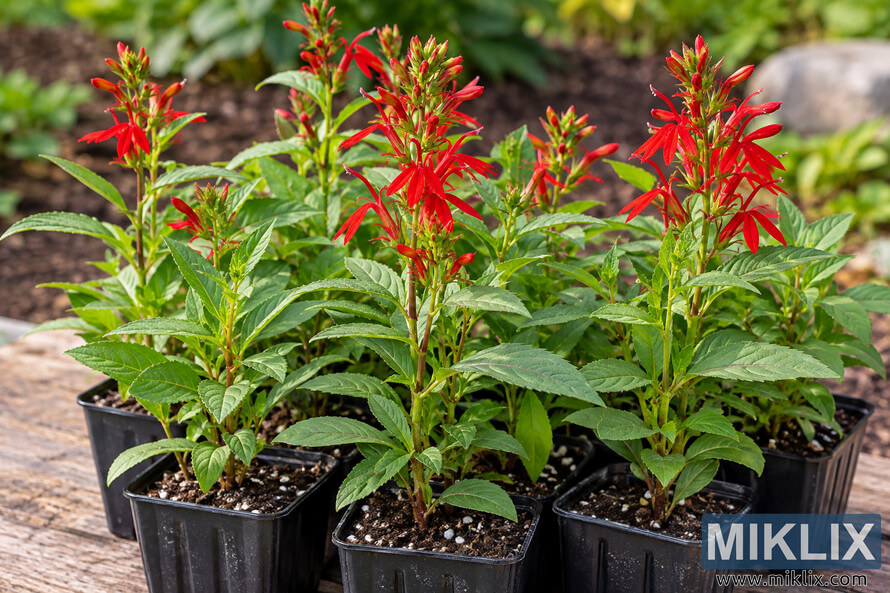
Click or tap the image for more information and higher resolutions.
Transplanting
Move young plants with moist roots and limit exposure to drying wind.
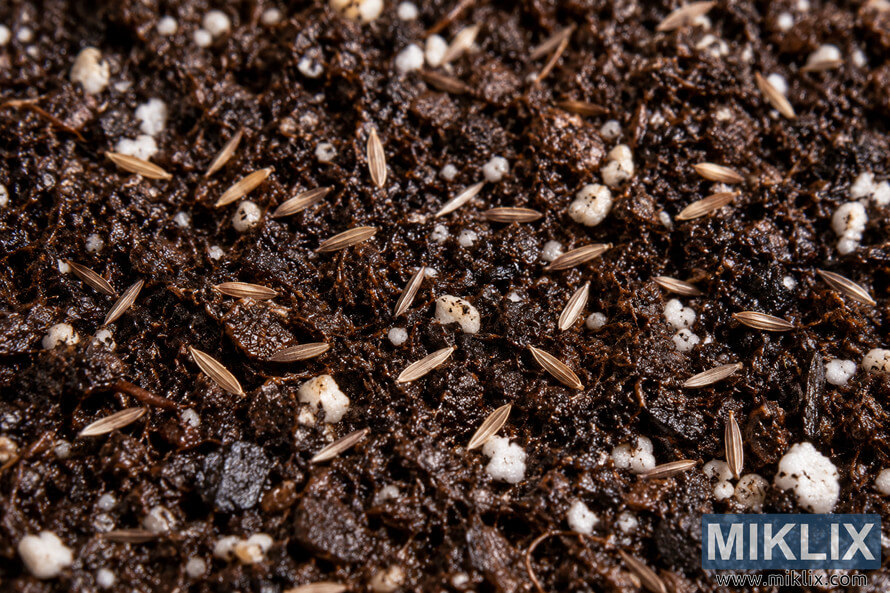
Click or tap the image for more information and higher resolutions.
Seed starting
Keep seed on the surface, provide light, and prevent the mix from drying.
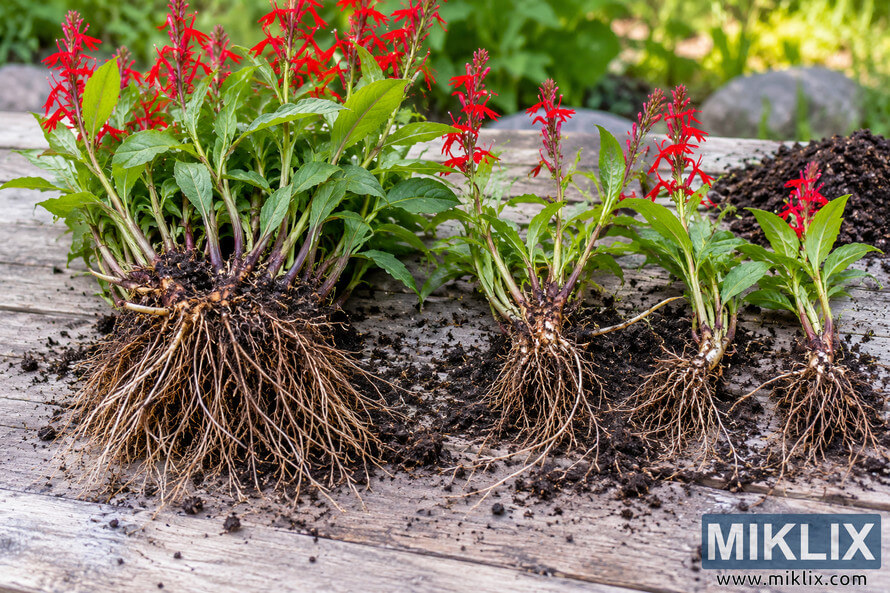
Click or tap the image for more information and higher resolutions.
Dividing roots
Each division needs healthy roots, a crown, and immediate watering after replanting.
Watering, feeding, pruning, and seasonal care
Spring
Remove loose winter debris without damaging new shoots. Check irrigation lines and add compost as a light surface dressing. Spring is the best time to divide plants and move seedlings.
Summer
Water deeply whenever the top layer begins to dry. In a sunny site, plants may need water more often than those in shade. Mulch with leaf mold or compost to slow evaporation, but keep the crown open.
Feed lightly only if growth is weak and the soil is poor. Too much fertilizer can produce soft foliage and fewer flowers. A soil test is more useful than routine heavy feeding.
Fall and winter
Deadhead spent spikes if you want to reduce self-sowing, or leave some fruit capsules for natural seed. Cut tired stems after frost or leave them until late winter for shelter and seed interest.
Cardinal Flower can be sensitive to dry winter conditions. Keep the root zone from becoming powder-dry during a mild, snowless period. Do not add deep, wet mulch over the crown.
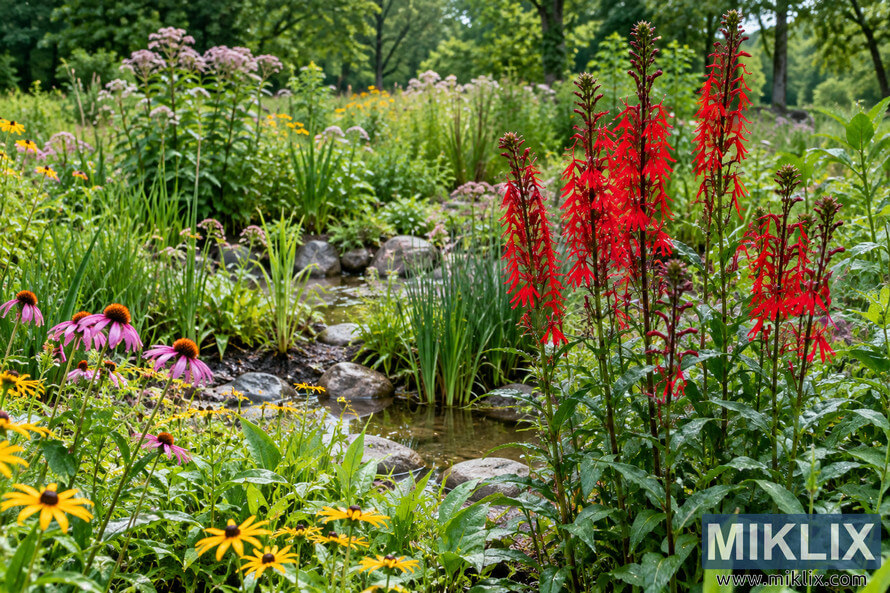
Click or tap the image for more information and higher resolutions.
Propagation, containers, and garden companions
Three reliable propagation routes
- Seed: Collect dry capsules in fall, store seed in a cool dry place, and sow on the surface of moist mix.
- Division: Separate rooted crowns in spring and replant them before the roots dry.
- Basal cuttings: Take young shoots from the base when growth is active, remove lower leaves, and place them in a clean, moist rooting medium.
Basal cuttings need steady humidity and indirect light. Rooting time varies, so check gently rather than pulling the cutting. Once roots form, move the new plant into a larger container before placing it outdoors.
Container growing
Use a wide container with drainage holes and a moisture-retentive mix. A water tray can help, but do not allow stagnant water to smell or remain cold for long periods. Containers dry faster than garden soil, so check them often.
Companion plants and uses
Combine cardinal flower with other moisture-loving native plants. Good design partners may include swamp milkweed, blue flag iris, sedges, turtlehead, joe-pye weed, and native ferns when their light and soil needs match. Confirm local suitability before ordering plants.
Use Cardinal Flower in rain gardens, pond edges, bog gardens, wet woodland borders, and pollinator gardens. It also works in a large container near a water feature. Avoid placing it beside drought-tolerant plants that need sharply drained soil.
Rain garden
Place the plant where collected water remains available after rain.
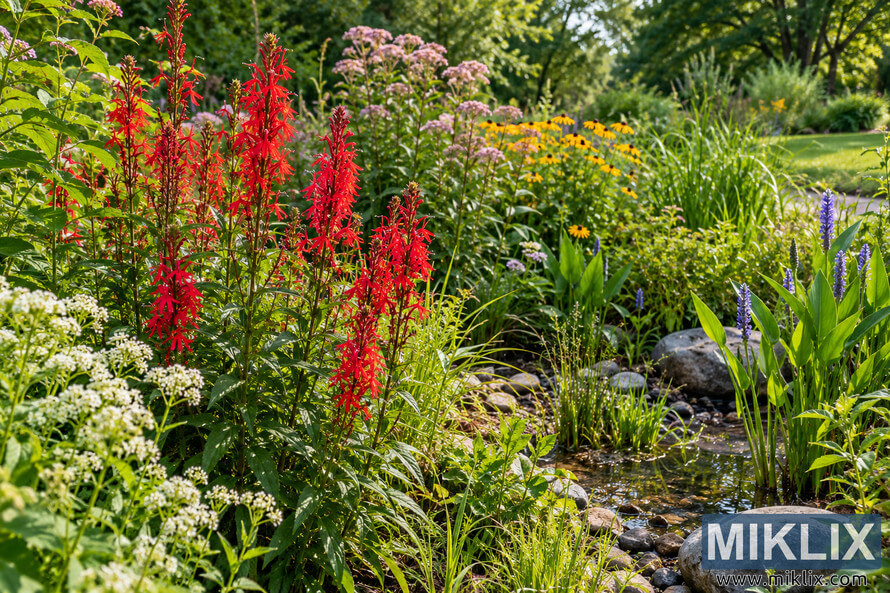
Click or tap the image for more information and higher resolutions.
Container display
A large pot can work when water is checked frequently and drainage remains safe.
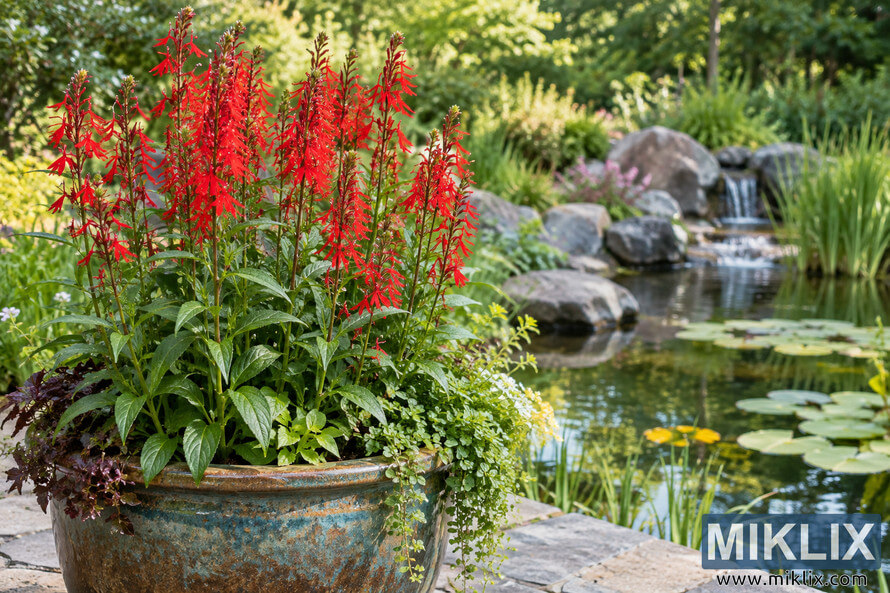
Click or tap the image for more information and higher resolutions.
Pollinator border
Mix flower shapes and bloom times to support hummingbirds, butterflies, and other visitors.
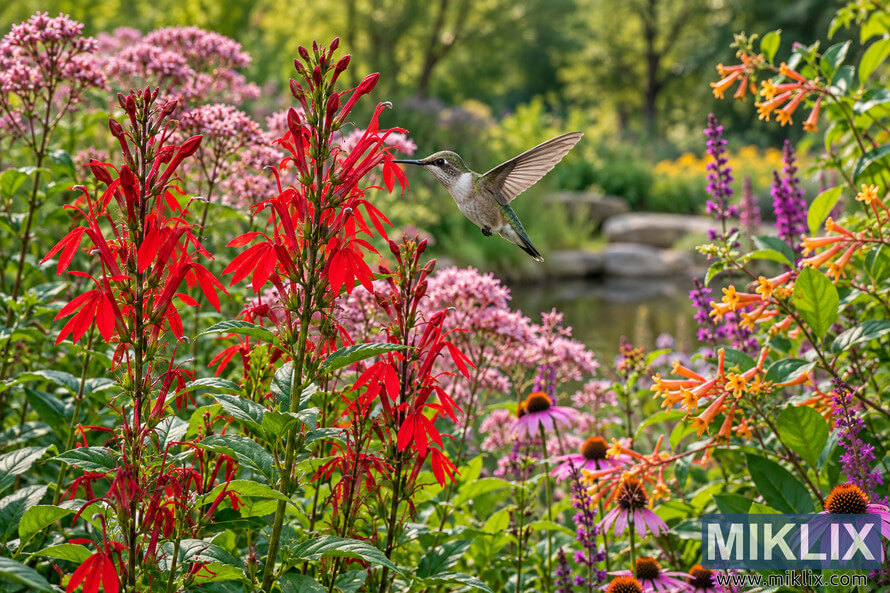
Click or tap the image for more information and higher resolutions.
Pests, diseases, safety, and troubleshooting
Common problems
- Wilting: Check soil moisture first. Dry roots are the most likely cause. If soil is wet, inspect roots for decay and improve airflow.
- Yellow leaves: Older leaves may yellow naturally, but widespread yellowing can signal waterlogged roots, poor light, or nutrient stress.
- Poor flowering: Too much shade, drought, young age, or excess nitrogen can reduce blooms. Improve light and steady moisture before adding fertilizer.
- Chewed leaves: Inspect at night for slugs and remove hiding places near the crown. Avoid broad insecticide use around flowers and pollinators.
- Spots or collapsing stems: Remove badly affected foliage, water at the soil line, space plants well, and avoid working among wet leaves.
- Failure to return: The site may have dried, the crown may have rotted, or the plant may have completed its short life cycle. Protect young seedlings and maintain moisture.
Safety and identification
Do not eat Cardinal Flower. Some lobelia species contain compounds that may be harmful if swallowed, and plant reactions can vary by species, dose, and person. Keep plant material away from children and pets, and contact a medical or veterinary professional if ingestion occurs.
Do not confuse cardinal flower with every red-flowered lobelia sold in nurseries. Compare the scientific name, mature size, leaf form, and moisture needs. The name lobelia cardinalis identifies the species discussed here; other lobelia plants may be annuals, hybrids, or better suited to dry containers.
Use local extension advice for regional pest, hardiness, and invasive-plant questions. Avoid planting a species outside its suitable climate or habitat without checking local guidance.
Cardinal Flower (Lobelia cardinalis) FAQ
Does Cardinal Flower need full sun?
It grows in full sun to partial shade. Full sun can support more flowers, but only when the soil stays consistently moist. Afternoon shade may help in hot areas.
How often should I water it?
Water whenever the root zone begins to dry. Frequency depends on sun, soil, rainfall, and container size. Moisture is essential throughout active growth.
Why is my plant not blooming?
Check for drought, excessive shade, very young growth, or too much nitrogen. Correct site conditions before increasing fertilizer.
Will it return next year?
It can return when the crown survives winter and the site remains suitable. Seedlings and offsets may continue the planting if an older plant declines.
Can Cardinal Flower grow in a pot?
Yes, if the container is large, the mix holds moisture, drainage is open, and water is checked often. Small pots dry too quickly.
Grow Cardinal Flower with steady moisture
Cardinal Flower (Lobelia cardinalis) rewards gardeners who match the plant to the site. Give it dependable water, rich moisture-retentive soil, and full sun to partial shade. Then protect the crown, watch for stress, and allow seed or divisions to renew the planting.
With those basics in place, this native perennial can add tall red flowers, hummingbird activity, and strong seasonal interest to a pond edge, rain garden, or carefully watered home border.
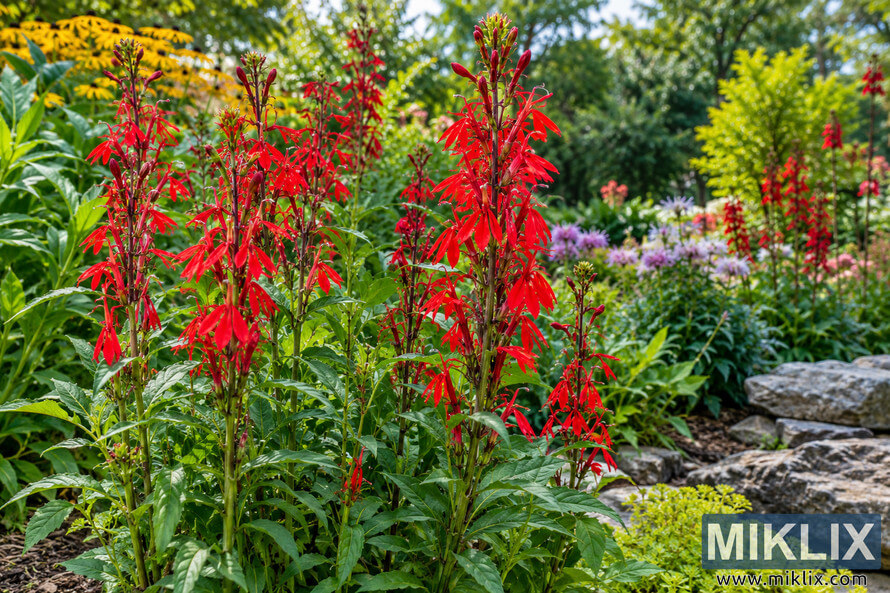
Click or tap the image for more information and higher resolutions.
Further Reading
If you enjoyed this post, you may also like these suggestions:
- A Guide to the Most Beautiful Varieties of Bleeding Heart to Grow in Your Garden
- A Guide to the Most Beautiful Rose Varieties for Gardens
- Beautiful Foxglove Varieties to Transform Your Garden