
Bat-Faced Cuphea: A Practical Growing Guide
Published: September 26, 2026 at 8:36:32 AM UTC
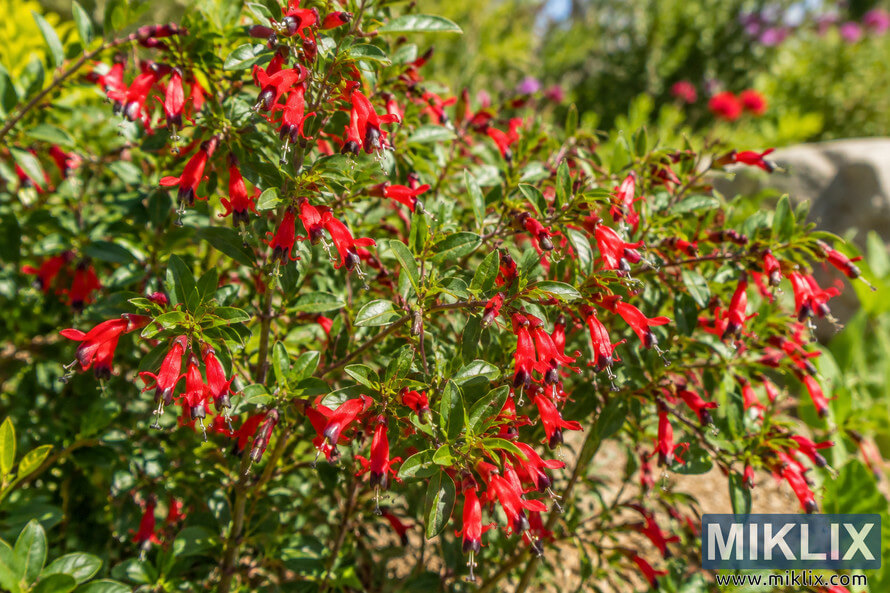
Bat-Faced Cuphea (Cuphea llavea) earns attention with unusual blooms that look like tiny faces. Give this warm-season plant bright light, well-drained soil, and steady water, and it can flower from late spring through summer.
Click or tap the image for more information and higher resolutions.
What Makes Bat-Faced Cuphea Special?
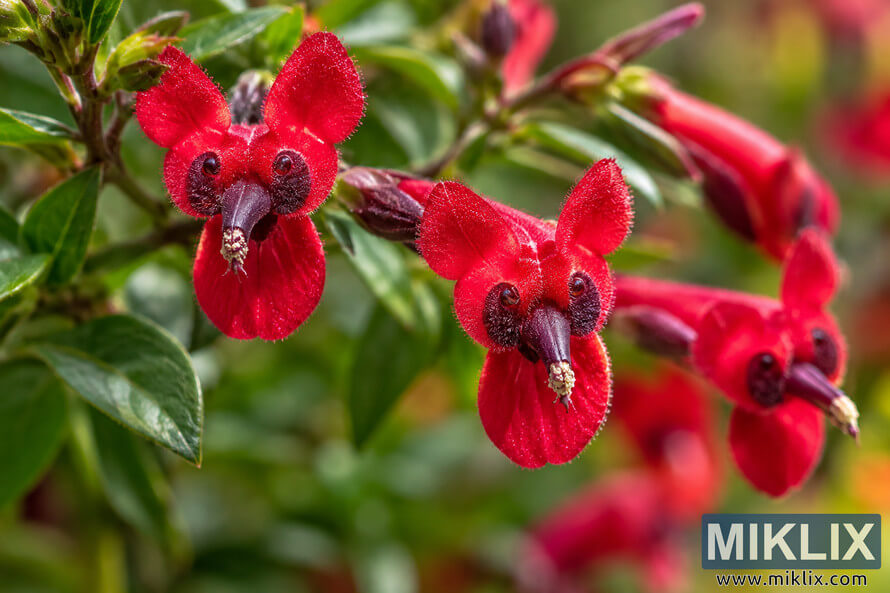
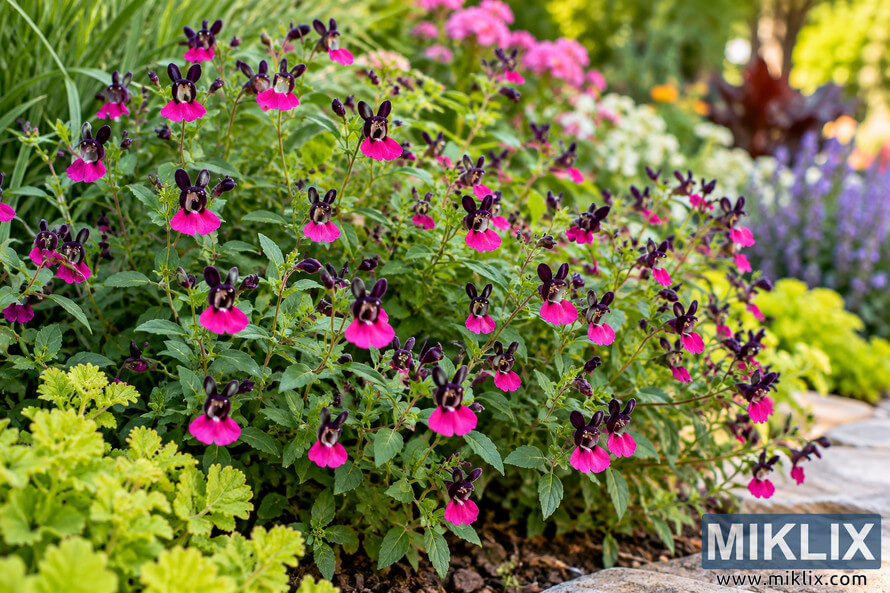
Bat-faced cuphea is a compact, branching plant in the loosestrife family, Lythraceae. It is grown for its tubular flowers, dark calyx, and upward facing red petals. The common name comes from the face-like shape formed by the calyx and petals.
Most plants become about 18 to 24 inches tall and spread about 18 to 24 inches wide. Leaves are green, oval, and slightly glossy. In warm areas, the plant may act as an evergreen perennial. In colder areas, it is usually grown as an annual.
Distinctive flowers
Hot red flowers appear in the leaf axils and attract hummingbirds and butterflies.
Click or tap the image for more information and higher resolutions.
Compact habit
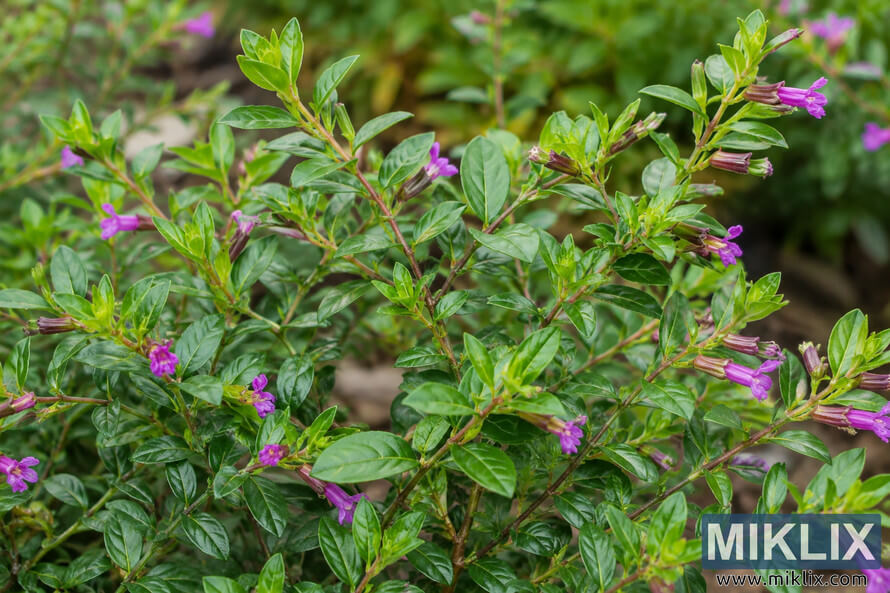
Its spreading habit suits borders, containers, baskets, and small sunny spaces.
Click or tap the image for more information and higher resolutions.
Wildlife value
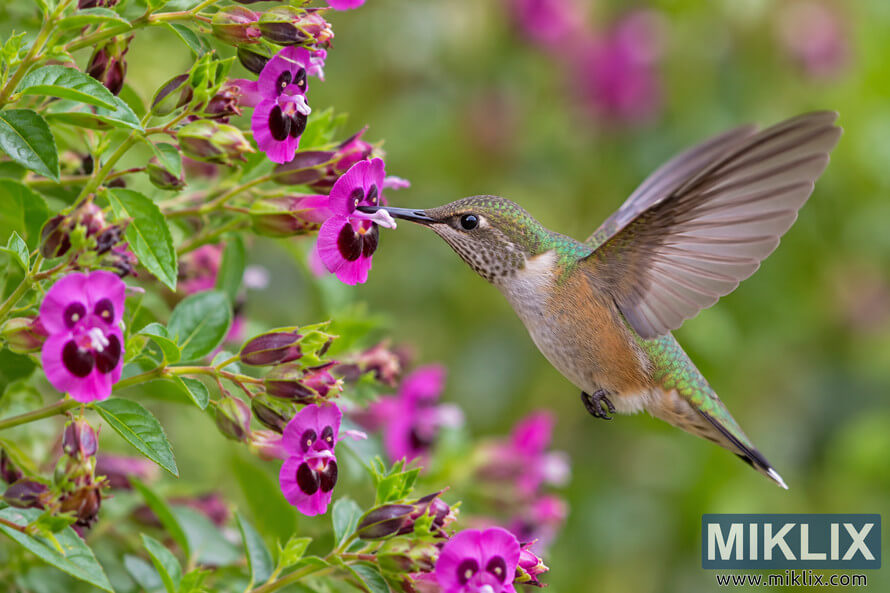
The nectar-rich flowers can bring hummingbirds and butterflies close to patios.
Click or tap the image for more information and higher resolutions.
Choose the Right Location, Light, and Soil
Sun and exposure
Choose a location with full sun for the strongest growth and most flowers. Six or more hours of direct sun is a useful goal. Afternoon shade can help in very hot climates, but too much shade may reduce blooms and create weak stems.
Soil and drainage
Use fertile soil that drains freely. Cuphea tolerates ordinary garden soil when it does not stay wet. Improve heavy clay with compost and coarse organic material. Avoid low spots where rainwater collects.
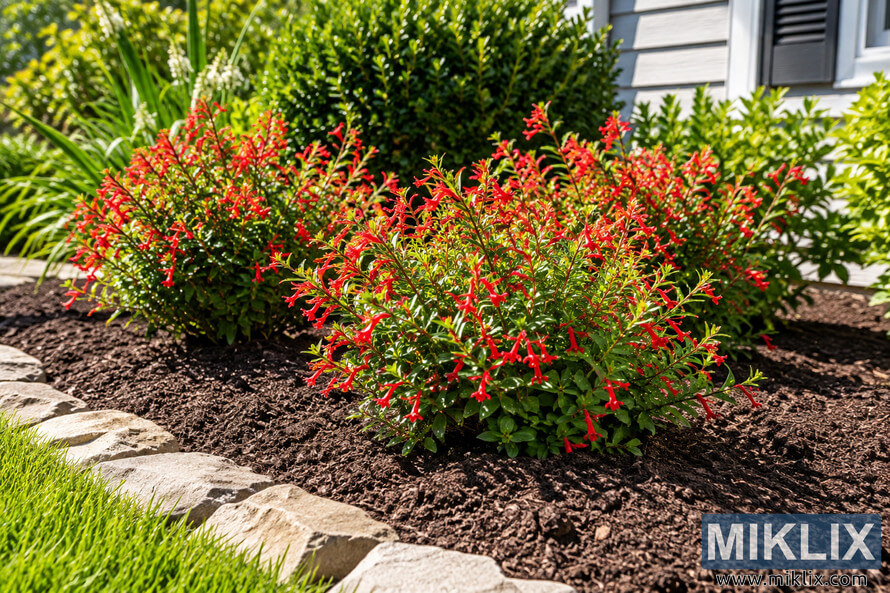
Click or tap the image for more information and higher resolutions.
Site test
After rain, check the bed. If water remains for hours, raise the planting area or choose a container with drainage holes.
How to Plant Bat-Faced Cuphea
Plant outdoors in spring after the threat of frost has passed. Wait until soil and night temperatures are consistently mild. A late spring planting gives roots time to settle before the strongest summer heat.
- Water the nursery plant a few hours before planting.
- Dig a hole twice as wide as the root ball and no deeper than its existing soil level.
- Set the plant so the crown stays level with the surrounding soil.
- Backfill with the original soil, then water slowly.
- Add a thin mulch layer, keeping mulch away from the stem.
- Space plants about 18 to 24 inches apart. This allows air movement and gives each plant room to form its natural spread. Crowding can hold moisture around leaves and increase disease risk.
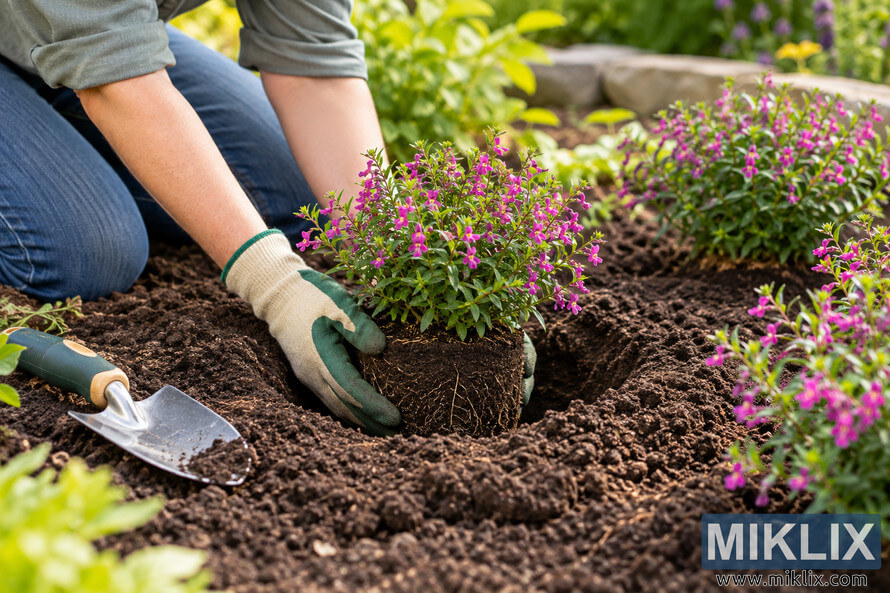
Click or tap the image for more information and higher resolutions.
Planting depth
Keep the crown at soil level. Deep planting may stress the stem and slow establishment.
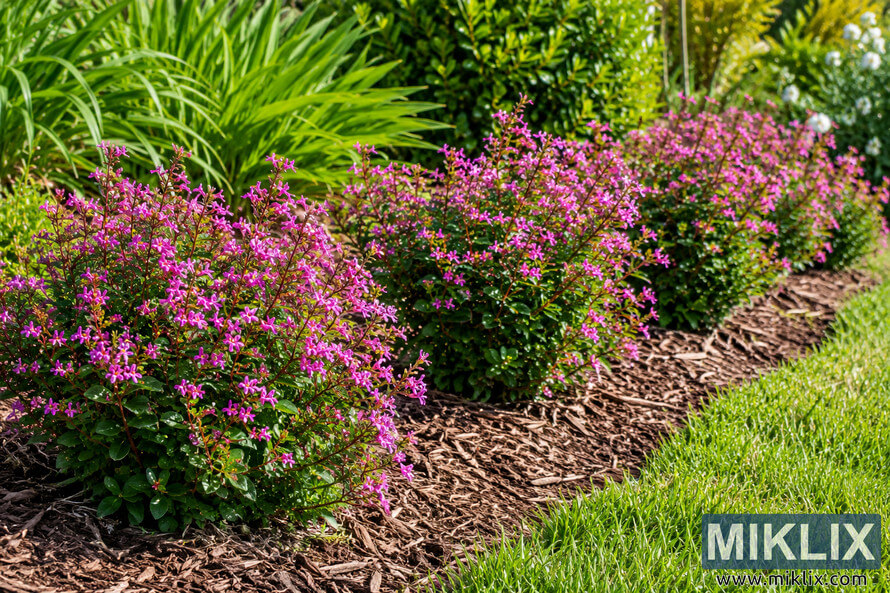
Click or tap the image for more information and higher resolutions.
Spacing
Leave room for the plant’s rounded spread and future flower display.
Watering, Feeding, and Flowering Care
Water newly planted cuphea when the top inch of soil feels dry. Established plants handle short dry periods, but consistent moisture supports better summer flowers. Water at the soil line rather than spraying the leaves.
Container plants dry faster than plants in the ground. Check hanging baskets and containers often during hot weather. Never let pots sit in a saucer of standing water.
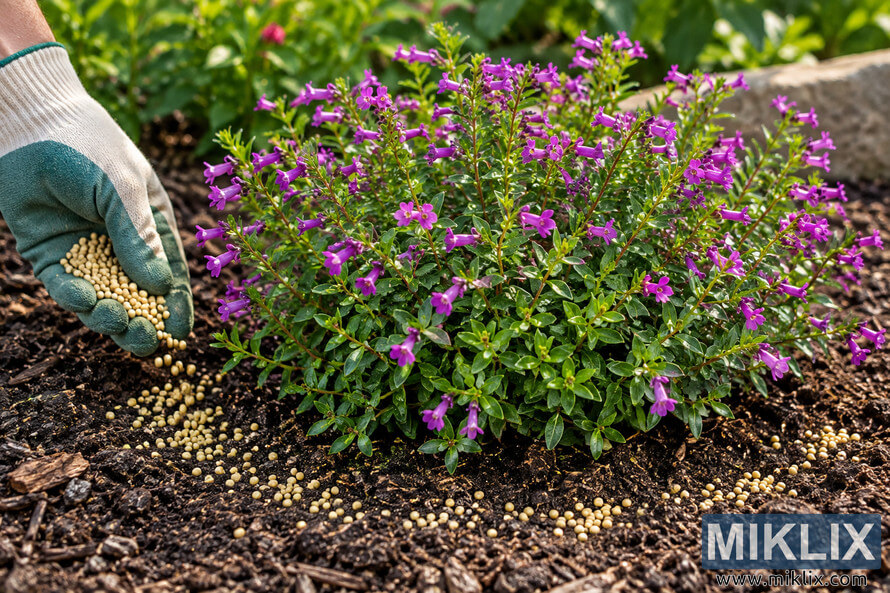
Feed in spring with compost or a balanced, slow-release fertilizer. A second light feeding in midsummer may help plants that grow in poor soil. Avoid excessive nitrogen. It can produce leaves while reducing red flowers.
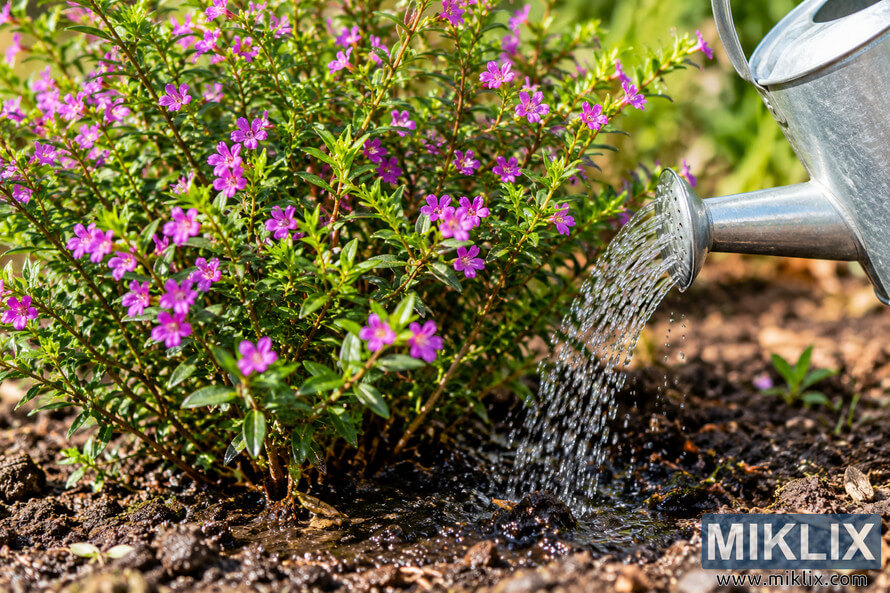
Click or tap the image for more information and higher resolutions.
Water deeply
Apply water slowly until the root zone is moist, then allow the surface to dry slightly.
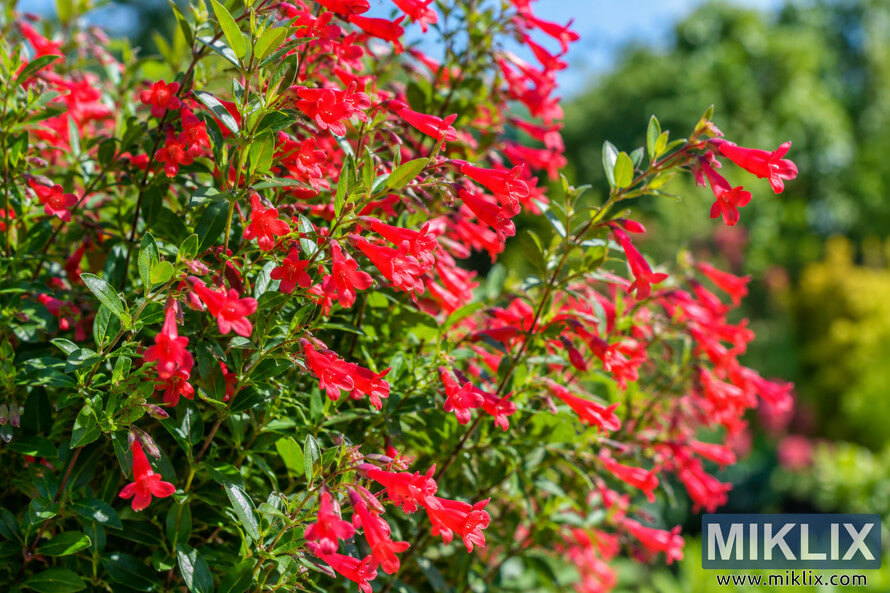
Click or tap the image for more information and higher resolutions.
Encourage blooms
Bright light, moderate feeding, and regular moisture support a long flower season.
Click or tap the image for more information and higher resolutions.
Feed lightly
Use a measured amount. Too much fertilizer can lead to soft, leafy growth.
Pruning and Propagating Cuphea
Pinch growing tips in late spring to create a fuller shape. If plants become leggy, cut back long stems by up to one-third. Make each cut just above a leaf pair. Remove faded flowers when you want a tidier appearance, though this is not always required for continued flowering.
Propagate from stem cuttings in late spring or summer. Cut a healthy, non-flowering stem four to six inches long. Remove the lower leaves, place the cutting in moist, airy rooting mix, and keep it in bright indirect light. Maintain even moisture without saturation. New growth signals root development.
Click or tap the image for more information and higher resolutions.
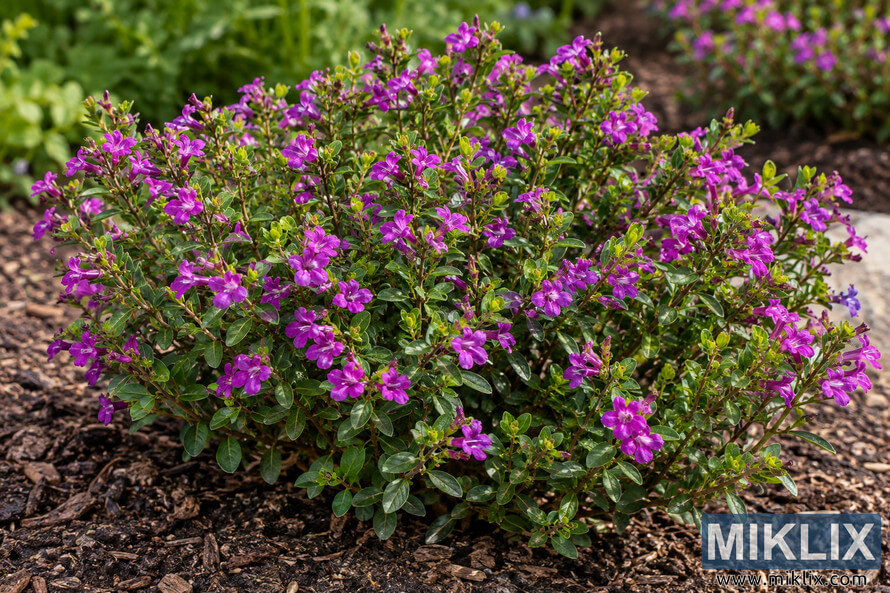
Pruning target
Shape the plant before midsummer. Avoid severe pruning during extreme heat or drought.
Growing in Containers and Hanging Baskets
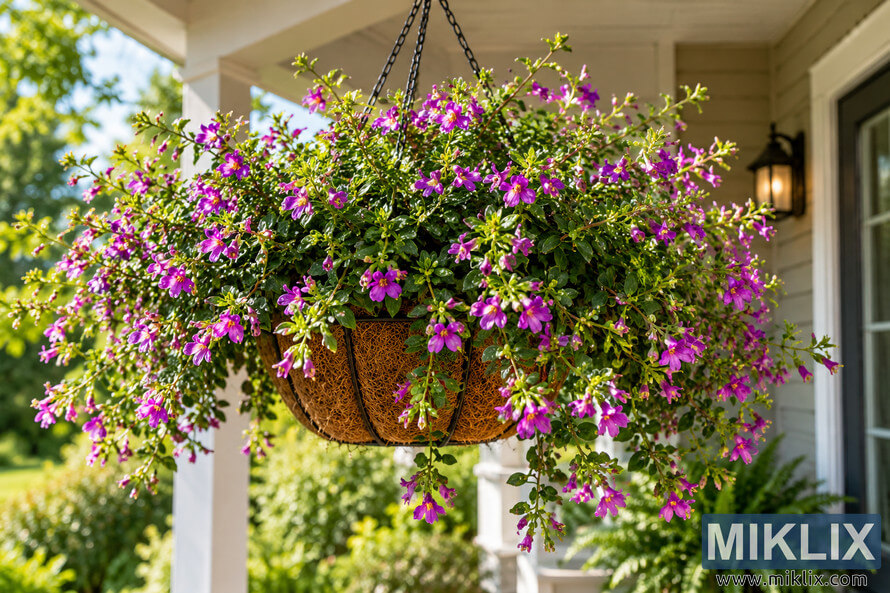
Bat-faced cuphea grows well in containers, baskets, and window boxes. Select a pot with drainage holes and use a quality potting mix. A 10- to 12-inch container suits one young plant. Larger containers support more spread and reduce drying.
Place baskets where they receive strong light and can be watered easily. Hanging baskets may need daily checks during hot summer weather. Rotate containers every week so growth stays even.
In USDA zones where frost occurs, move containers indoors before temperatures fall near freezing. Cut back lightly, inspect for pests, and place the plant near a bright window. Reduce watering during winter, but do not let the root ball become bone dry. Return the plant outside gradually in spring.
Click or tap the image for more information and higher resolutions.
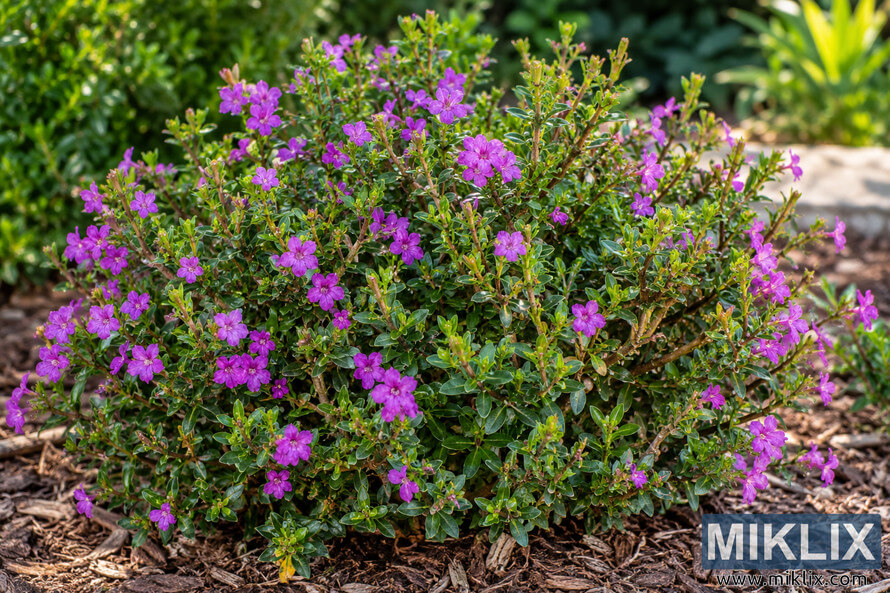
Container setup
Use a free-draining mix and a pot that has a clear drainage path.
Click or tap the image for more information and higher resolutions.
Hanging baskets
Keep baskets close to a water source because they lose moisture quickly.
Pests, Diseases, and Troubleshooting
Common problems
- Leggy plants: Move the plant into brighter light and pinch the tips.
- Few flowers: Check for shade, excess nitrogen, drought, or an overly large pot.
- Yellow leaves: Test moisture first. Constantly wet soil can damage roots.
- Spider mites or aphids: Inspect leaf undersides and rinse small infestations with water.
- Leaf spots: Improve air movement, remove badly affected leaves, and avoid overhead watering.
Quick questions
Is cuphea an annual or perennial?
It can be an evergreen perennial in warm climates. In frost-prone areas, it is commonly grown as a summer annual or overwintered indoors.
Does bat-faced cuphea need full sun?
Full sun produces the best habit and flowers. Light afternoon shade may help in very hot locations.
Why are the leaves healthy but flowers scarce?
The plant may need more sun, less nitrogen, or steadier moisture. Pruning also helps restore a compact flowering habit.
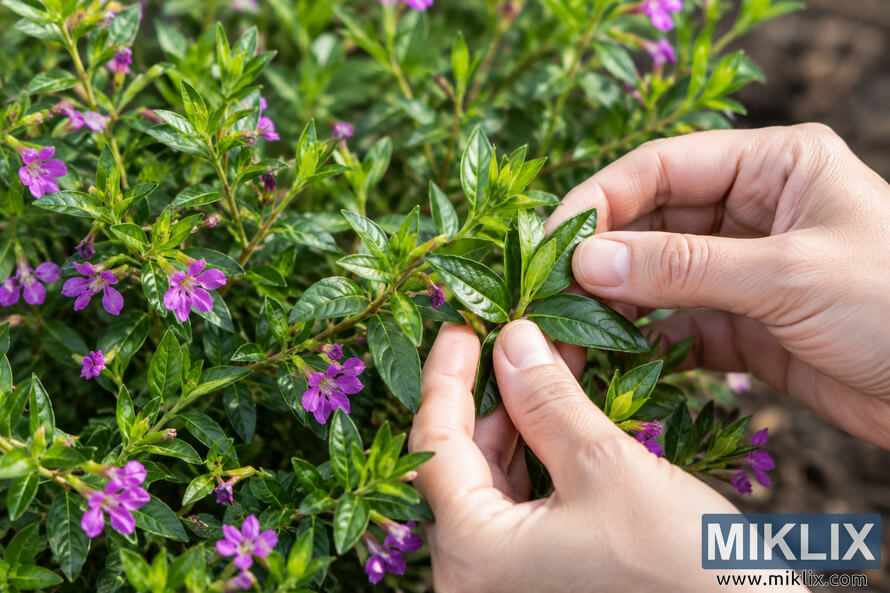
Inspect early
Check leaves and stems each week. Early action is simpler than treating a severe infestation.
Click or tap the image for more information and higher resolutions.
Grow a Fuller Display of Red Flowers
Give bat-faced cuphea full sun, loose soil, regular moisture, and room to spread. Pinch young stems, avoid heavy fertilizer, and protect containers from frost. With these simple steps, the plant can provide unusual flowers, strong color, and useful nectar for hummingbirds and butterflies through the warm season.
Click or tap the image for more information and higher resolutions.
Further Reading
If you enjoyed this post, you may also like these suggestions:
- A Complete Guide to Growing Night-Blooming Cereus in Your Own Garden
- A Guide to the Most Beautiful Dahlia Varieties to Grow in Your Garden
- The Most Beautiful Varieties of Peony Flowers to Grow in Your Garden