
Growing Queen of the Night in Your Own Garden
Published: November 4, 2026 at 7:45:53 PM UTC
One opening night can make years of patient care feel worthwhile. This climbing cactus produces huge, sweet-scented flowers that may open after sunset and fade by morning. With warmth, drainage, support, and a little planning, you can grow this unusual plant indoors or outside.
Click or tap the image for more information and higher resolutions.
Identify the Plant Before You Plant
What Selenicereus grandiflorus looks like
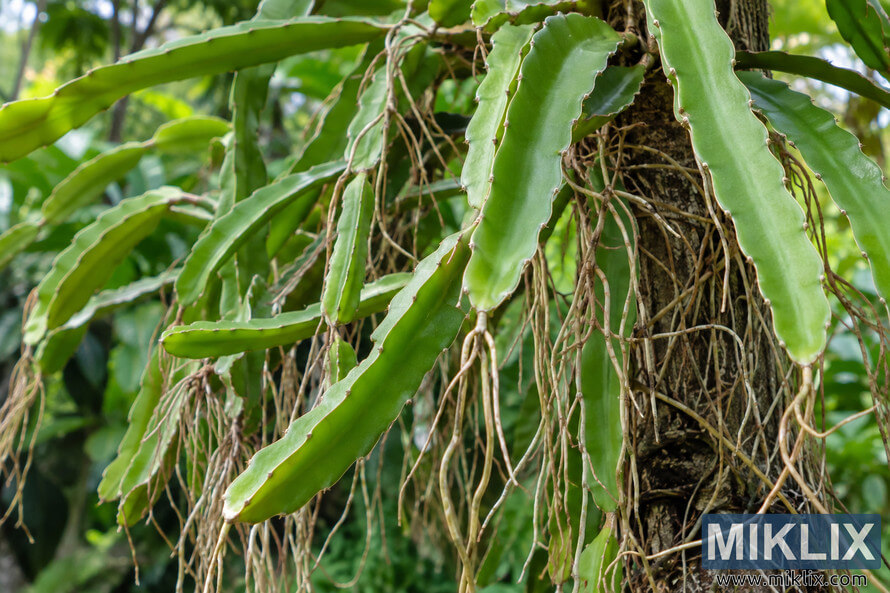
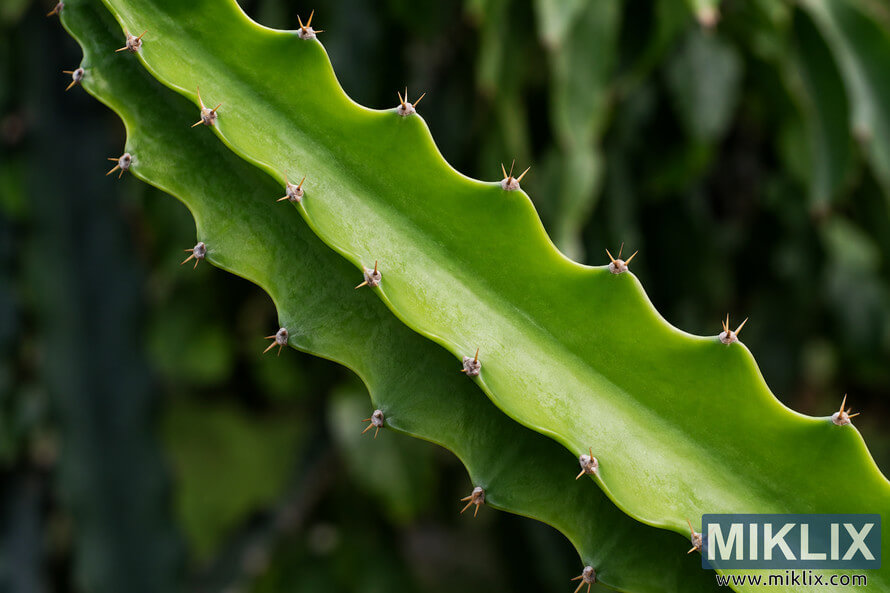
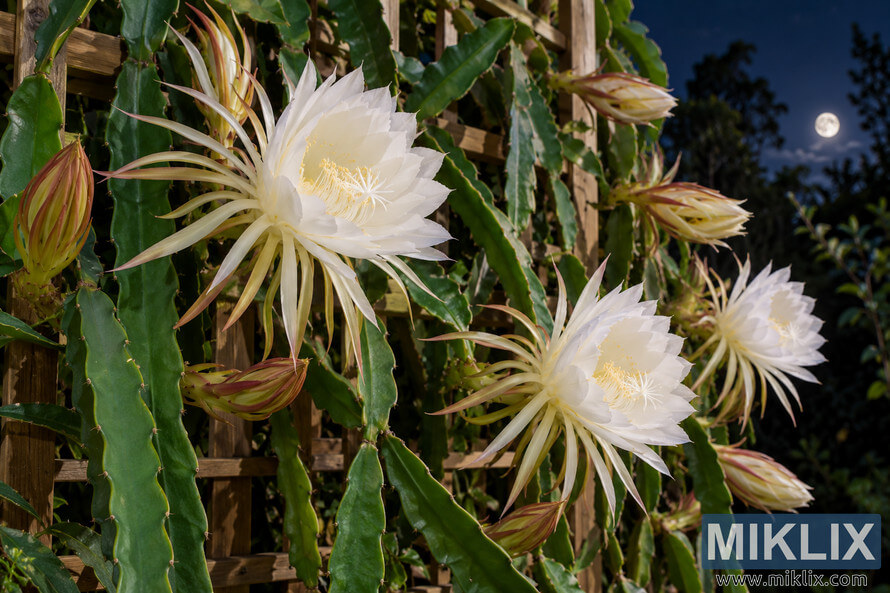
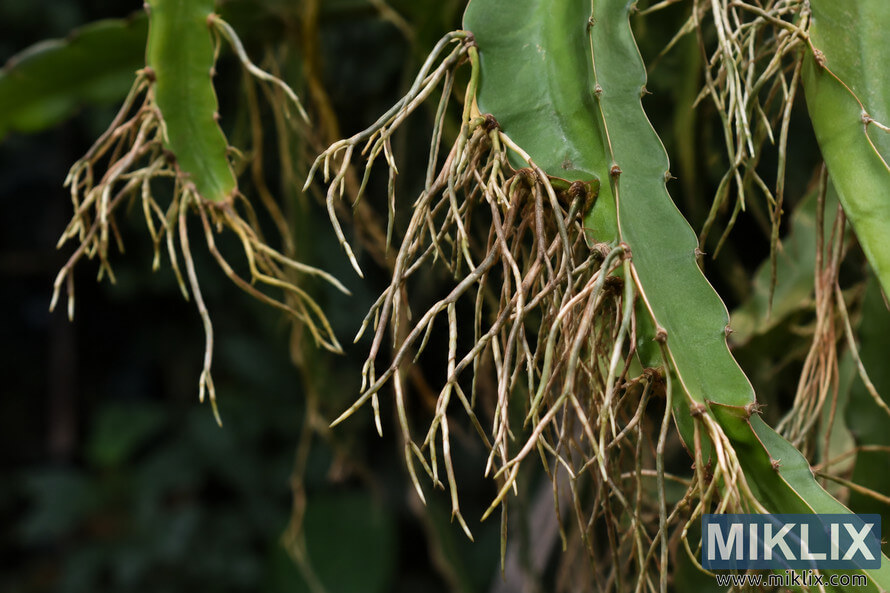
Selenicereus grandiflorus is a tropical, climbing cactus with long, angular or ridged stems. Mature stems can grow several feet, or more than 2 meters, when they find a tree, trellis, or wall. Young growth is usually green and flexible. Older growth becomes firmer and may develop aerial roots.
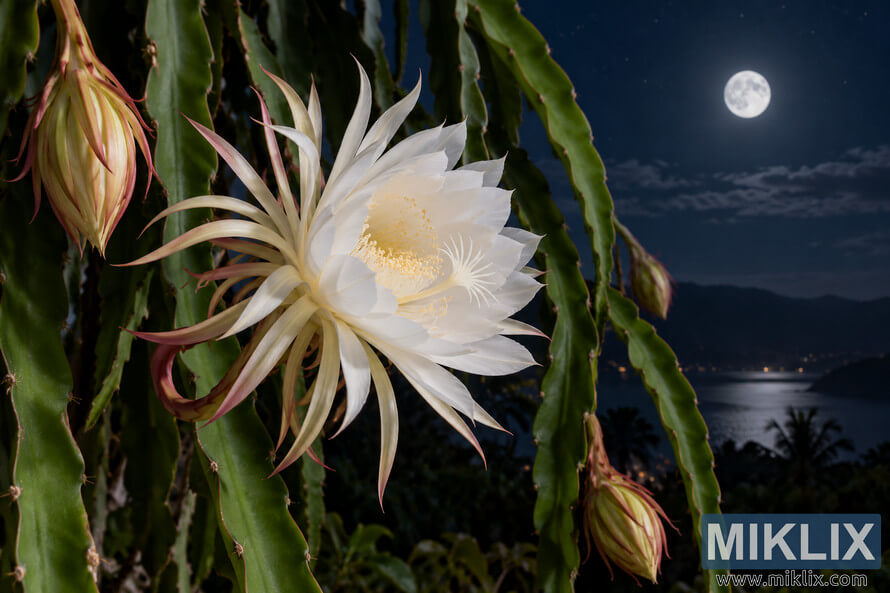
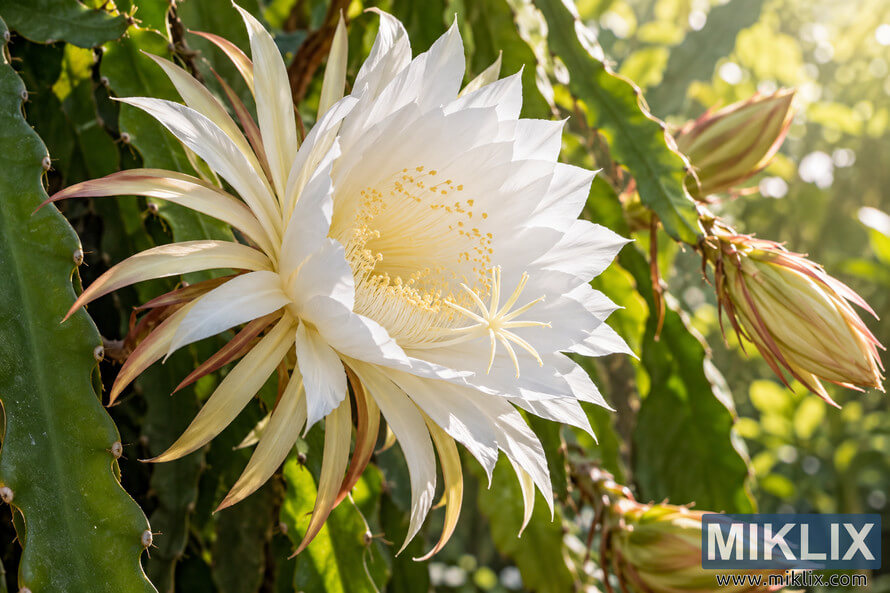
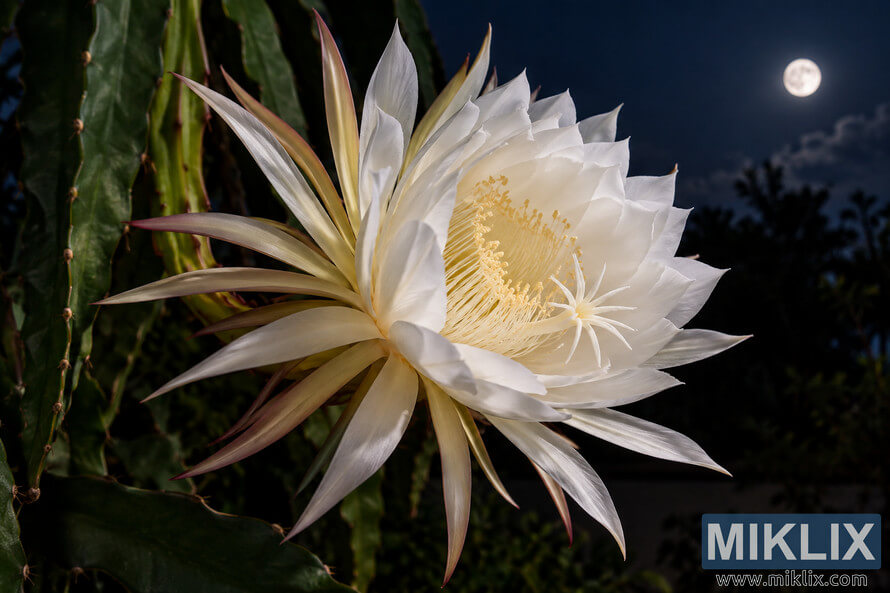
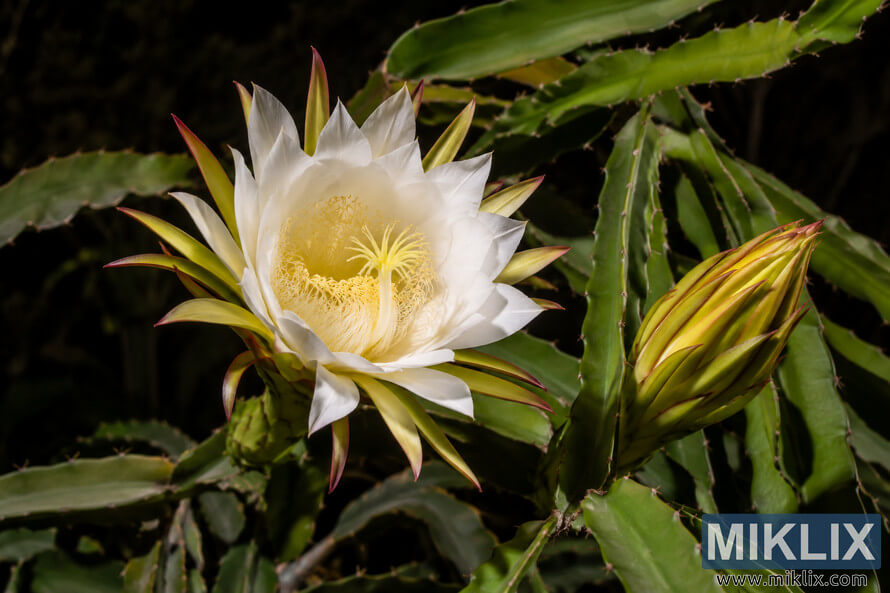
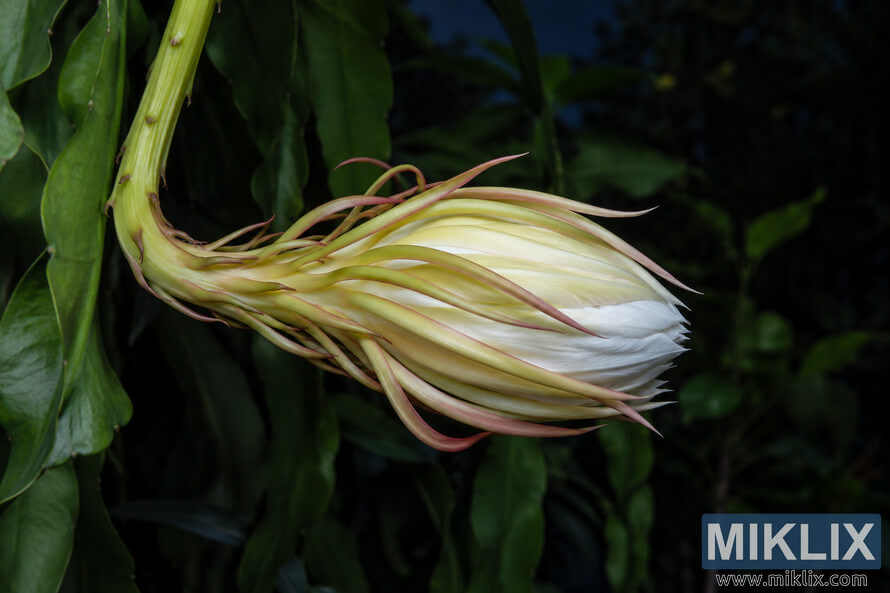
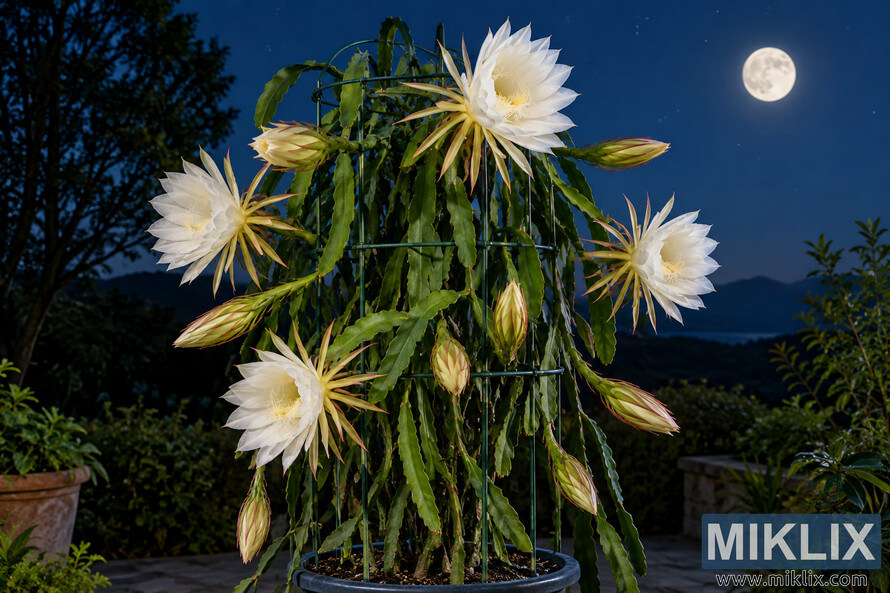
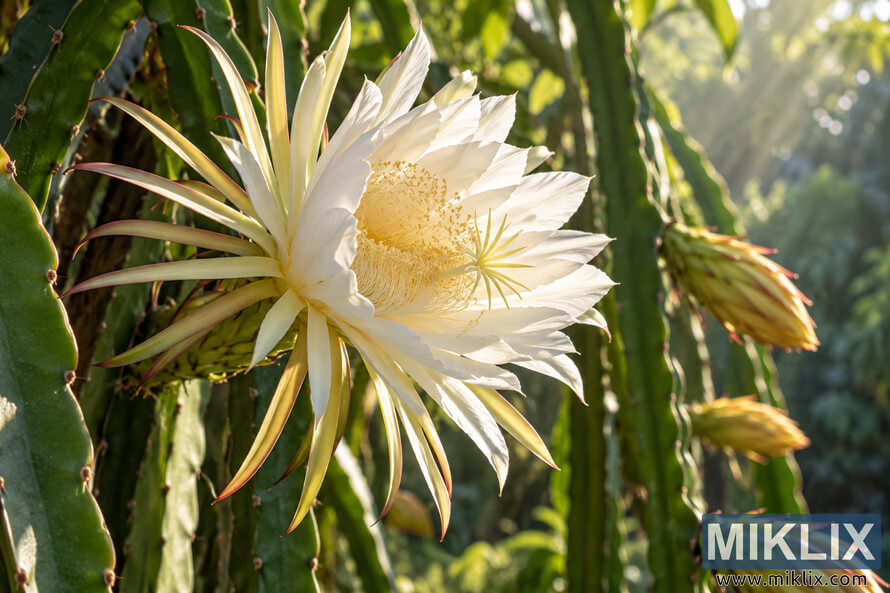
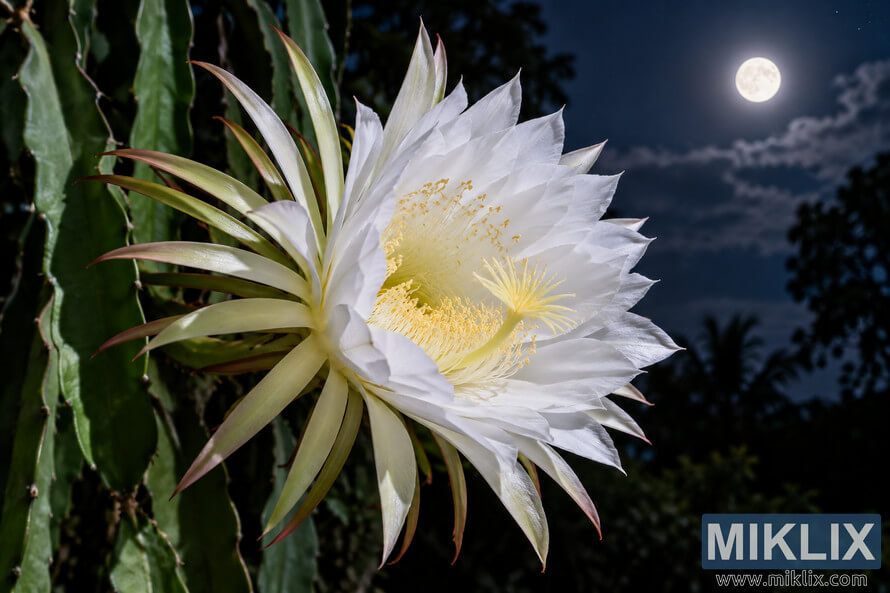
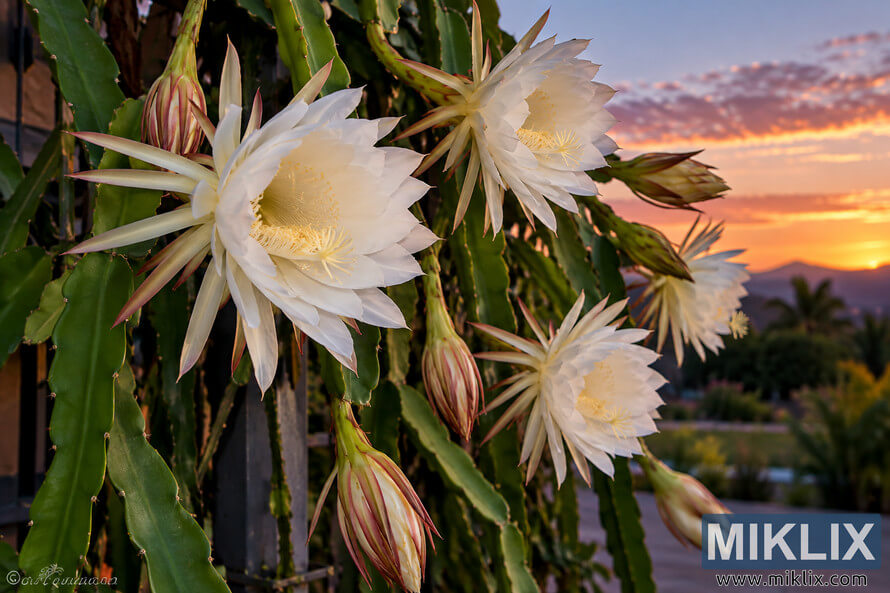
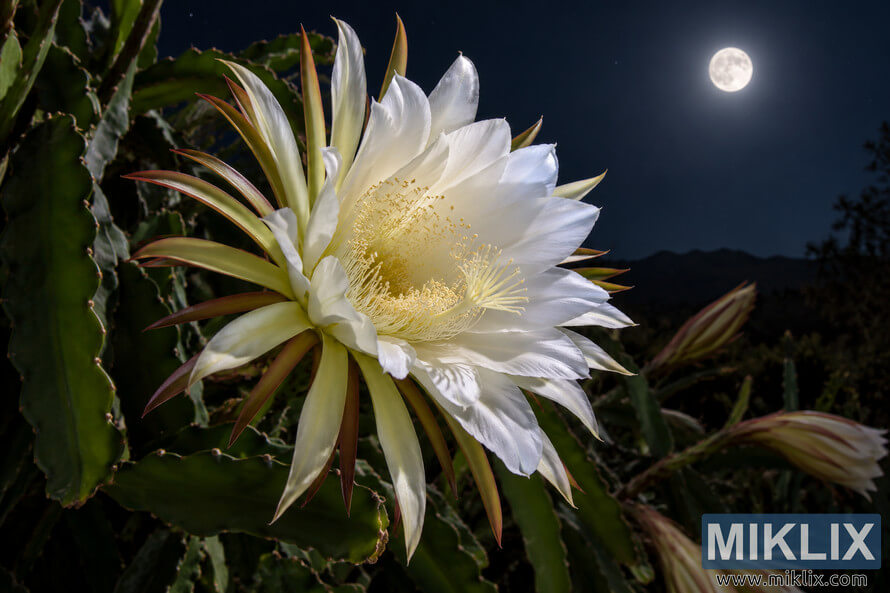
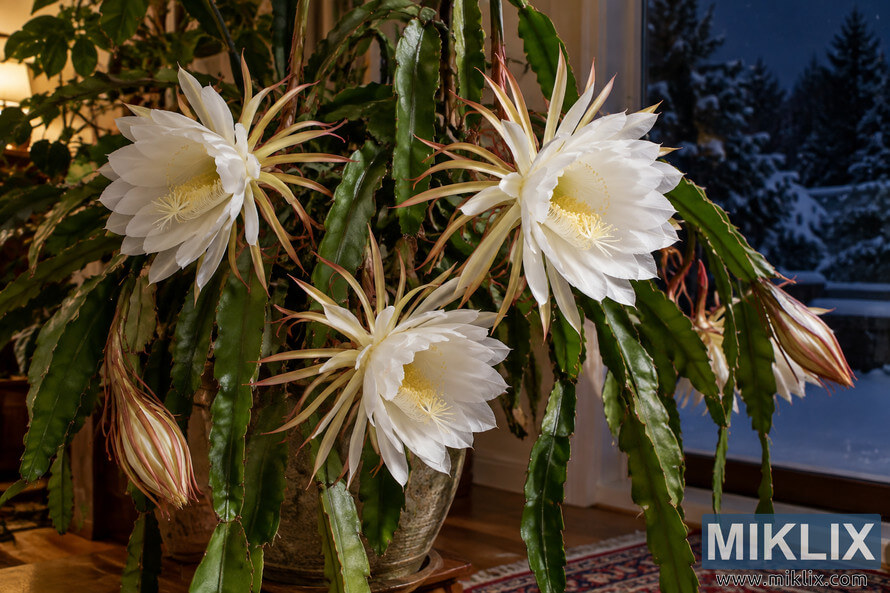
The flower is the clearest clue. It is large, pale, strongly fragrant, and night blooming. The outer parts may be narrow and brownish, while the inner petals open into a broad white display.
Common name confusion
“Queen of the night” can describe several plants. Epiphyllum hybrids, Cereus species, and other night-flowering cacti may use the same common name. Check the botanical name before following care advice. Selenicereus grandiflorus prefers a warm, humid setting and a climbing support.
Click or tap the image for more information and higher resolutions.
Choose Location, Light, and Climate
Outdoor position
Place the plant where it receives bright filtered light. Morning sun is useful, but harsh afternoon sun can scorch stems. A covered patio, bright greenhouse, or sheltered garden bed often works well. Allow enough space for stems to grow 6 to 12 feet, or 2 to 4 meters, over time.
Protect the plant from strong wind and heavy rain. Wind can tear soft growth from its support. Constant wetness around the base raises the risk of root rot.
Temperature and humidity
Active growth needs a warm temperature range, commonly about 65 to 85°F, or 18 to 29°C. Protect the cactus from frost. In cold areas, grow it in a container and move it indoors before nights become consistently cold.
Moderate humidity supports healthy growth, but moving air is still important. Do not trap wet stems in a sealed corner.
Click or tap the image for more information and higher resolutions.
Prepare Soil, Containers, and Support
Use fast-draining soil
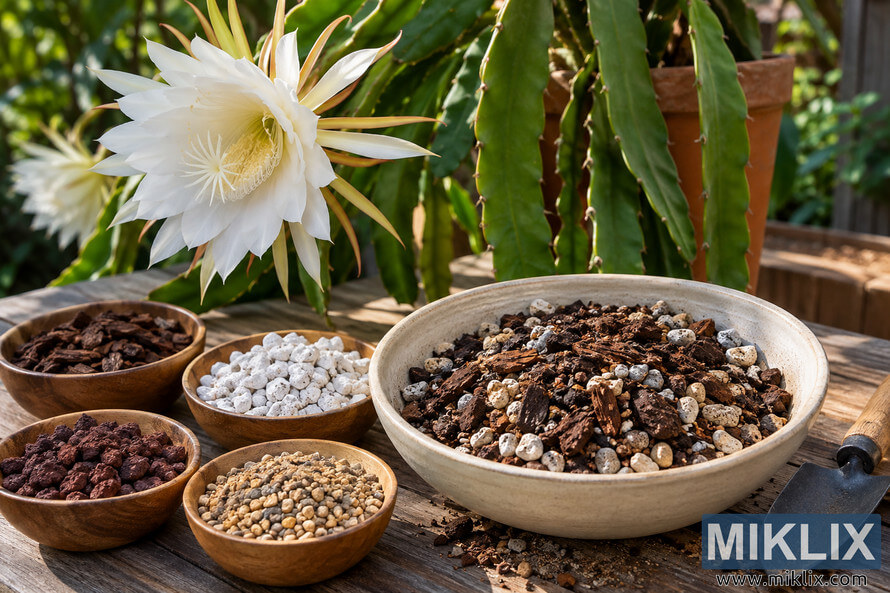
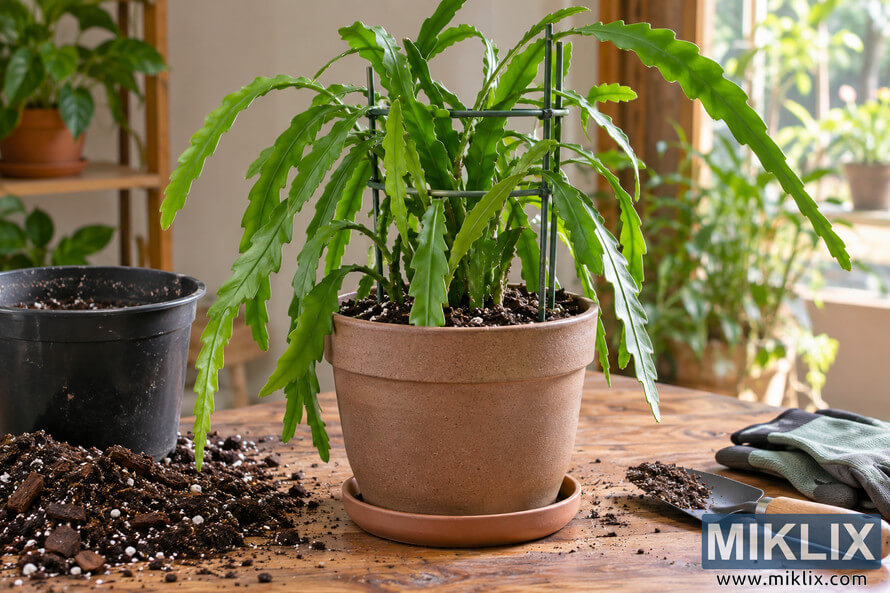
Use a cactus mix amended with orchid bark, pumice, or perlite. The soil should hold a little moisture but drain quickly. A simple mix can contain two parts cactus soil, one part pumice, and one part bark.
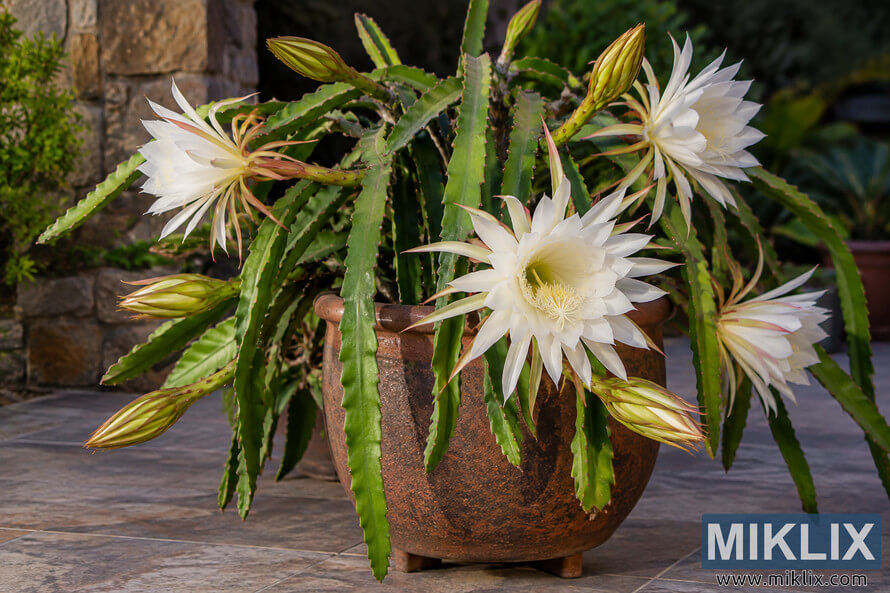
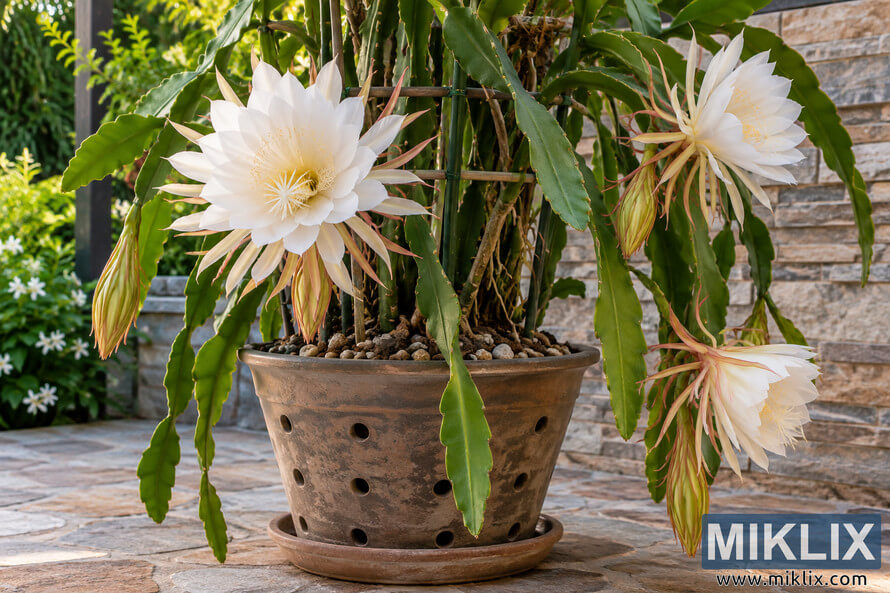
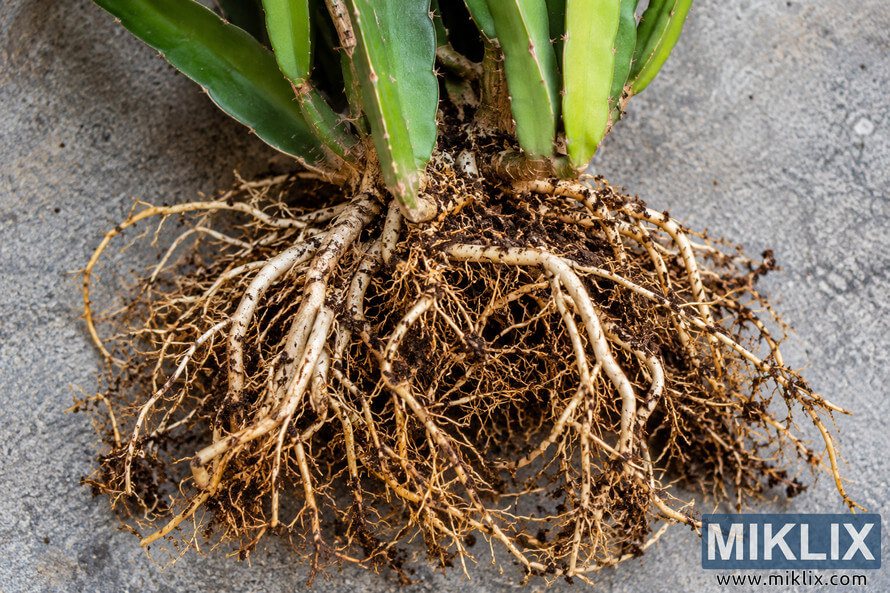
Choose a container with drainage holes. A heavy pot is useful because mature stems can make the plant top-heavy. Repot when roots fill the pot or water runs straight through the sides.
Plant and train the stems
- Cover the drainage hole with a loose piece of mesh.
- Set the root ball at its original depth.
- Fill around it without pressing the soil hard.
- Install a trellis before stems become long.
- Tie growth with soft plant tape, not wire.
Click or tap the image for more information and higher resolutions.
Watering and Feeding Through the Growing Season
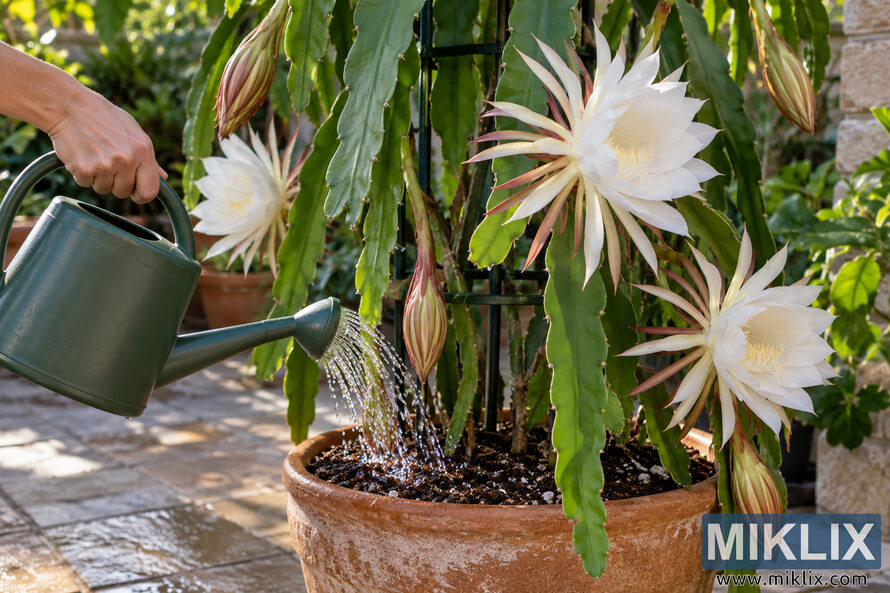
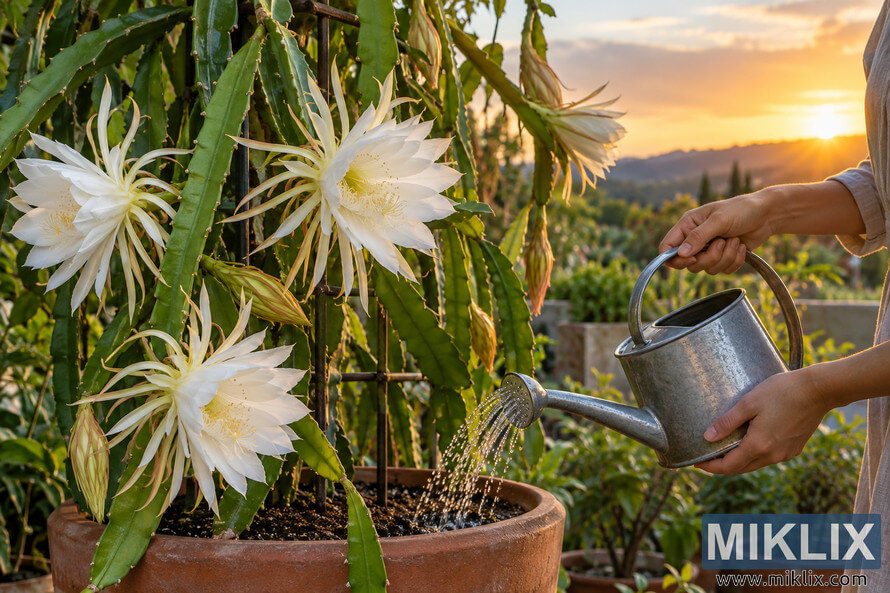
Water deeply when the upper few inches of soil feel dry. Let excess water drain fully, then empty the saucer. During the growing season, watering may be needed every one to two weeks, depending on heat, pot size, and airflow.
Reduce water in winter. The plant uses less moisture when light and temperature fall. Never water on a fixed schedule if the soil remains damp.
Feed in spring and summer with a diluted cactus fertilizer. Monthly feeding is usually enough. Avoid heavy nitrogen, which can produce weak stems and fewer flowers. Stop feeding in late summer or when growth slows.
Click or tap the image for more information and higher resolutions.
Prune, Repot, and Propagate Safely
Pruning and repotting
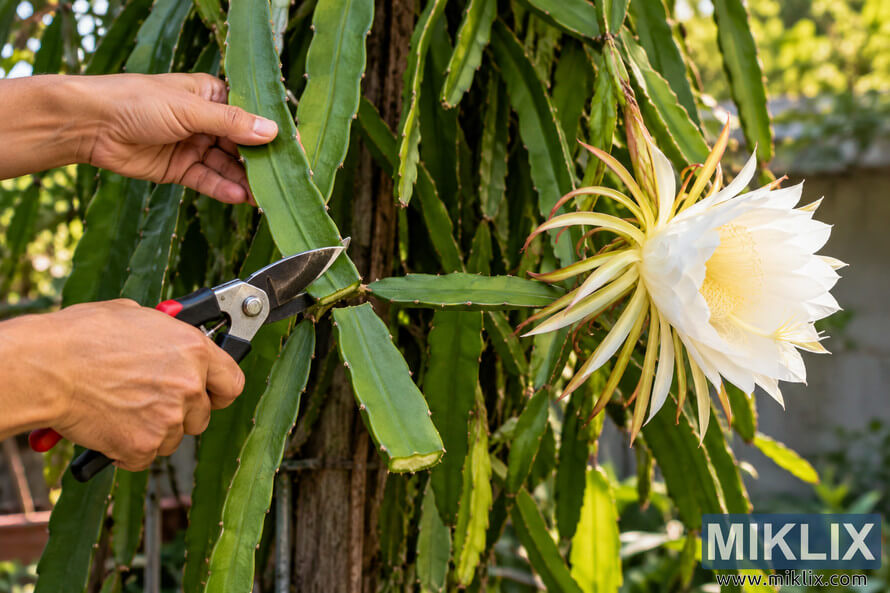
Prune after flowering or during active growth. Remove damaged stems at a clean joint. Shape long growth to keep the support balanced. Let cut surfaces dry for several days before watering.
Repot in spring, moving up only one pot size. Handle roots gently. Wait a few days before the first thorough watering so small root injuries can seal.
Propagation from cuttings
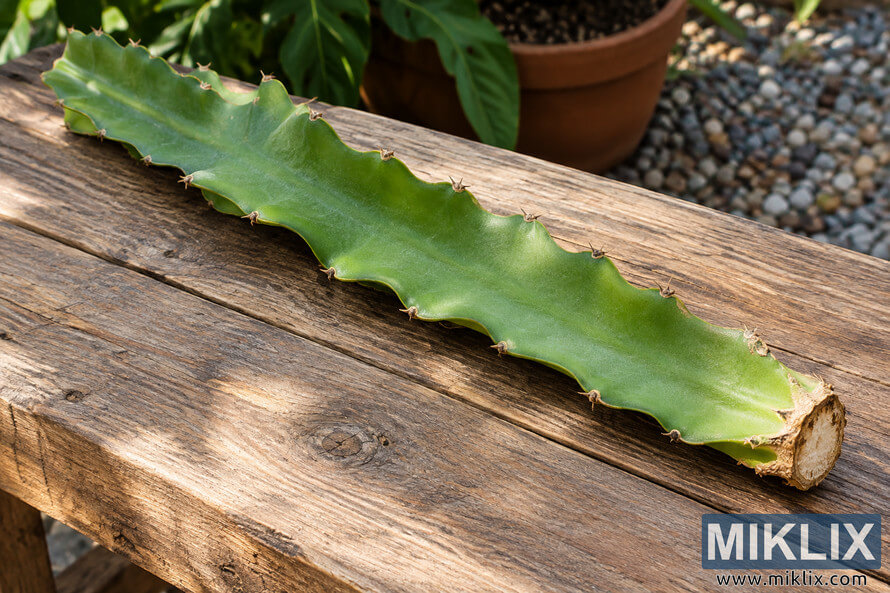
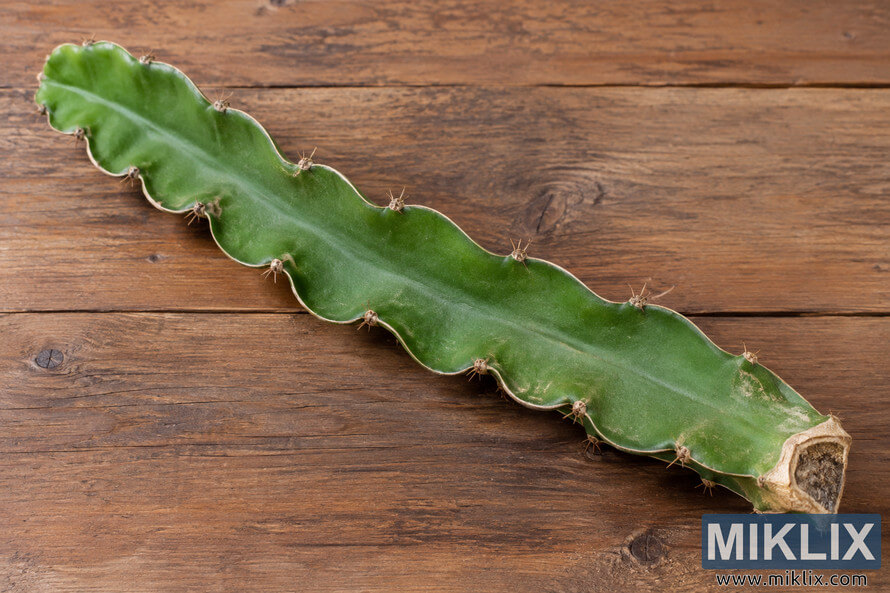
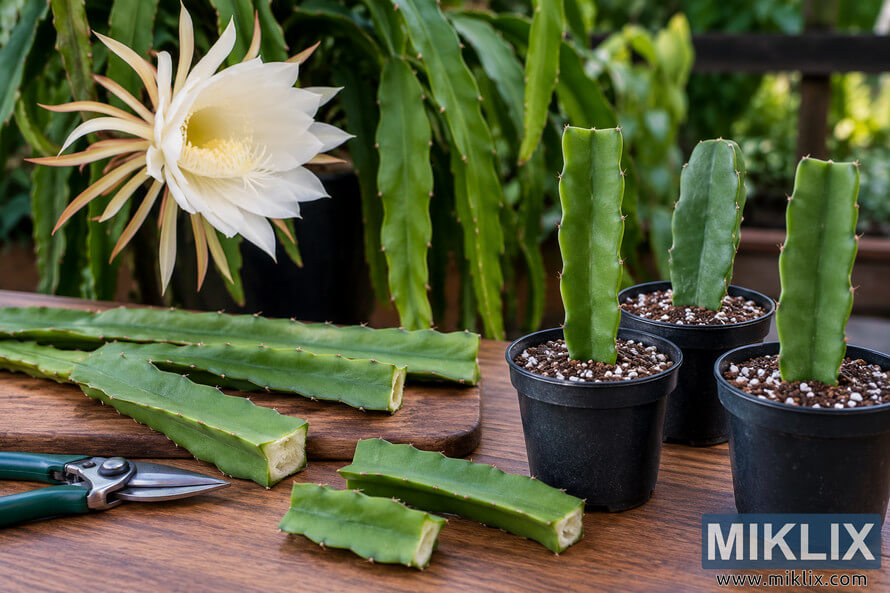
Cut a healthy stem section 8 to 12 inches long. Leave it in a dry, shaded place for one to two weeks. Plant the callused end in barely damp cactus soil. Bright indirect light and warmth encourage roots.
Propagation from seed
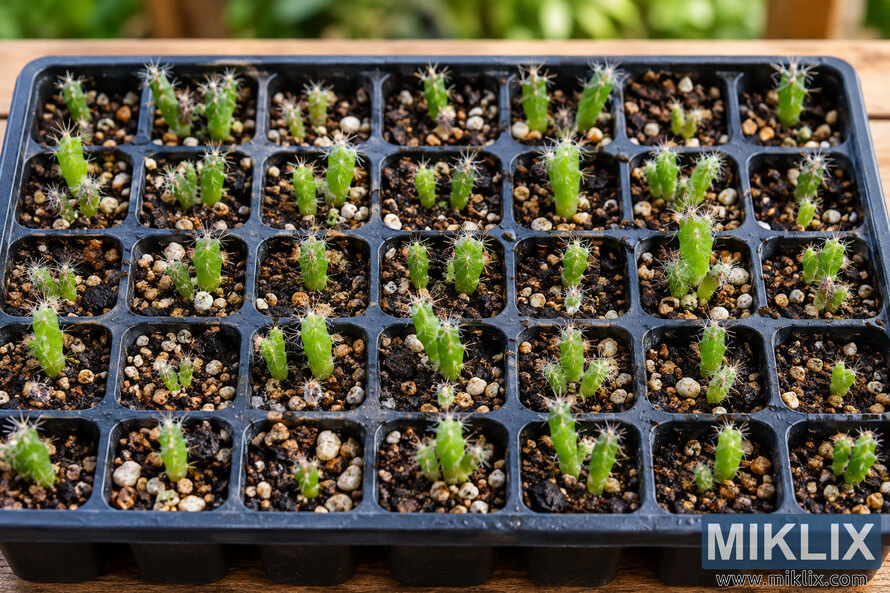
Seeds need warmth, light, and steady moisture. Sow them on a sterile, free-draining surface and cover the container with clear material for humidity. Vent it often. Seed-grown plants can take years to reach flowering size.
Click or tap the image for more information and higher resolutions.
Encourage Rare Night-Blooming Flowers
Build energy before bloom night
Strong light, mature stems, and steady care support flowering. Avoid moving the plant once buds form. Sudden changes in temperature, dry soil, or heavy pruning can cause buds to drop.
Some plants need several years before their first flower. A mild seasonal shift can help: give full care during spring and summer, then reduce feeding and watering as autumn arrives.
Pollination and post-flowering care
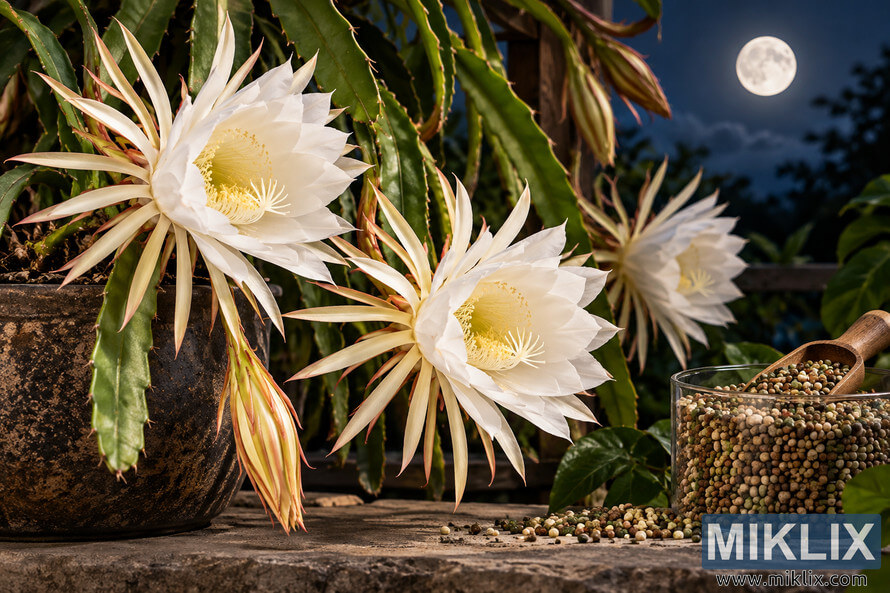
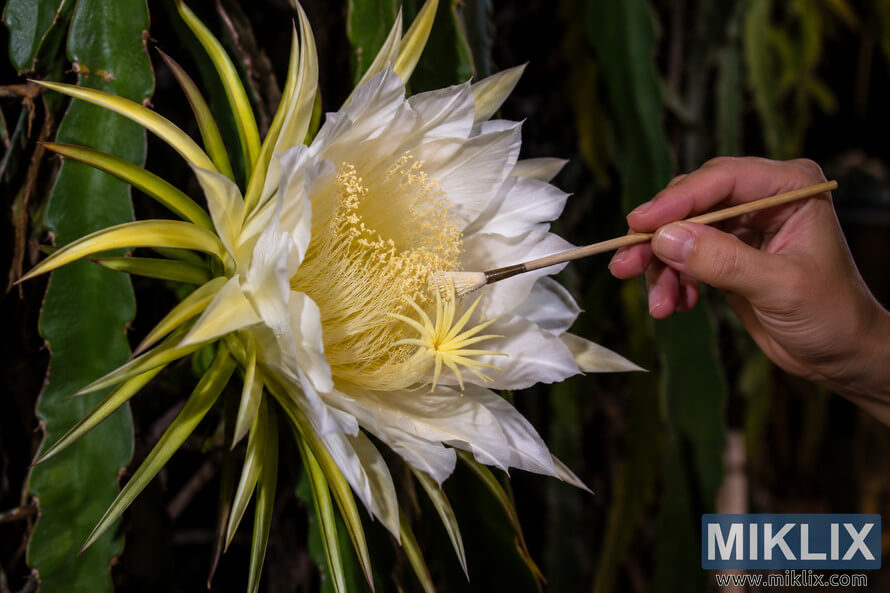
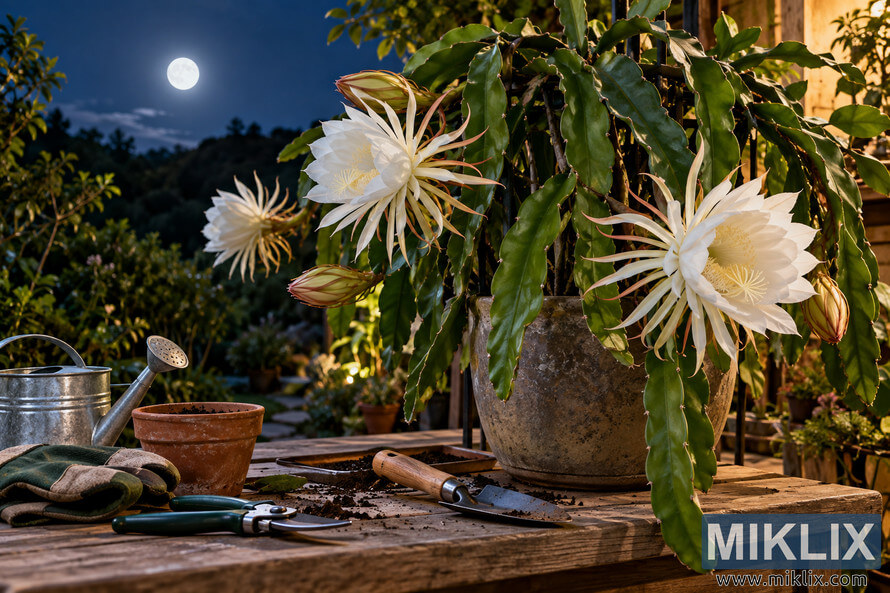
Flowers may open for only one night. If you want seed, transfer pollen between flowers with a clean, soft brush soon after opening. Insects may pollinate outdoor plants, but indoor plants often need hand pollination.
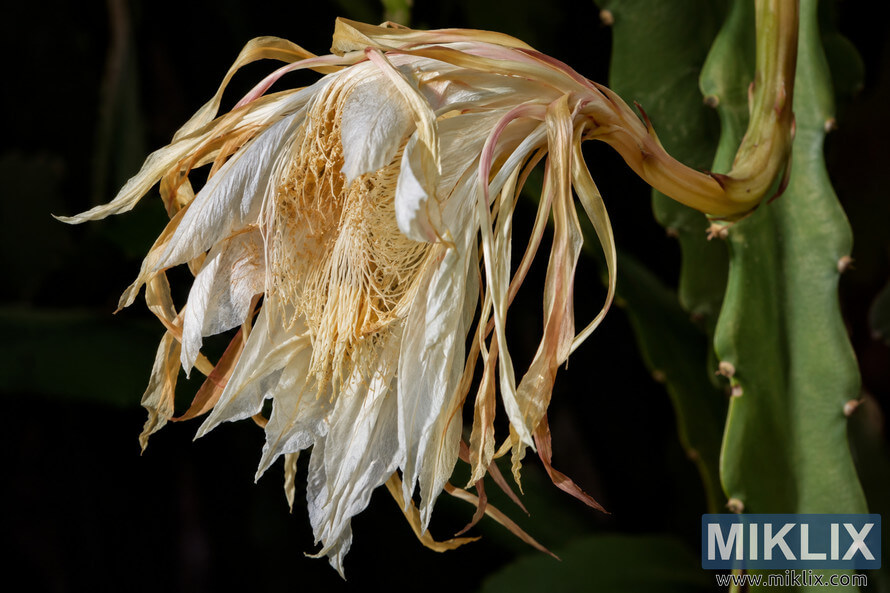
After flowering, remove spent parts once they wilt. Keep normal light and moderate water while the plant restores energy. Fruit development can take months and may require more resources than ordinary growth.
Click or tap the image for more information and higher resolutions.
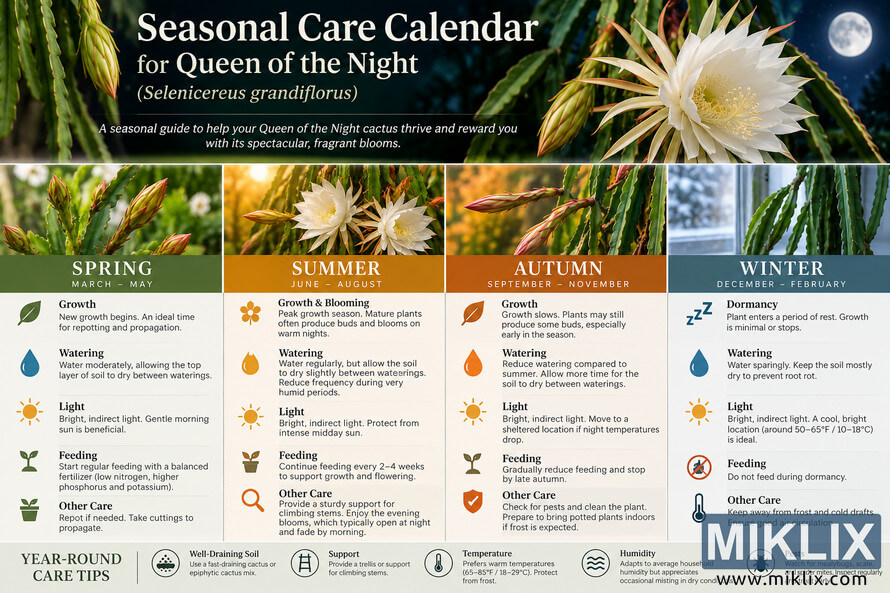
Seasonal Care Schedule for Every Growing Season
| Season | Care focus | What to watch |
| Spring | Repot, increase water, begin feeding, and add support. | New stems, pests, and cold nights. |
| Summer | Provide bright light, regular water, airflow, and monthly feeding. | Sunburn, weak growth, and flower buds. |
| Fall | Reduce feeding and prepare for indoor protection. | Temperature drops and excess rain. |
| Winter | Give bright light, warmth, and sparse watering. | Root rot, drafts, and low light. |
Click or tap the image for more information and higher resolutions.
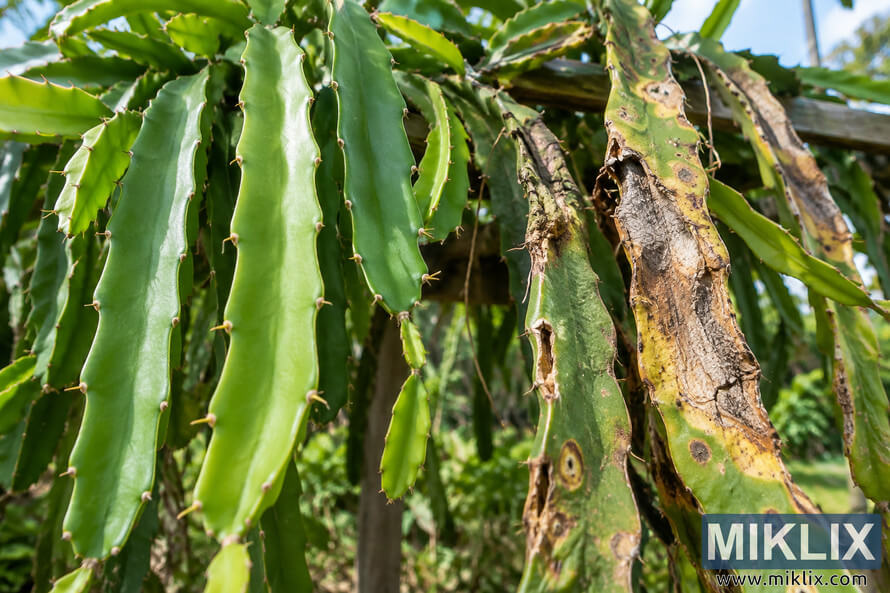
Troubleshoot Pests, Disease, and Weak Growth
Problem
- Yellowing stems
- Soft or dark roots
- Long weak growth
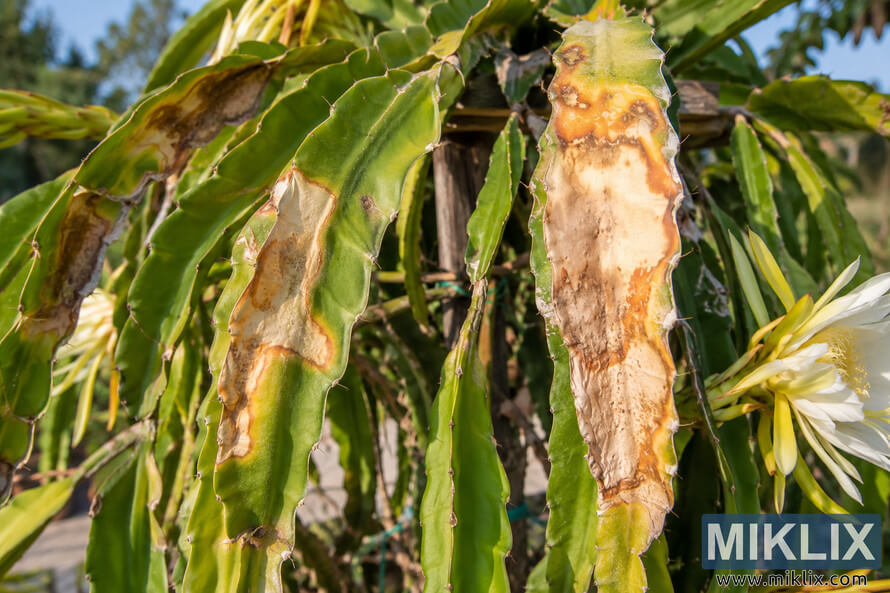
- Brown sunburn patches
Likely cause
- Too much water or poor light
- Root rot from wet soil
- Low light or excess nitrogen
- Sudden exposure to direct light
First response
- Check roots and let soil dry
- Cut away rot and repot dry
- Move to brighter filtered light
- Shade the plant and acclimate slowly
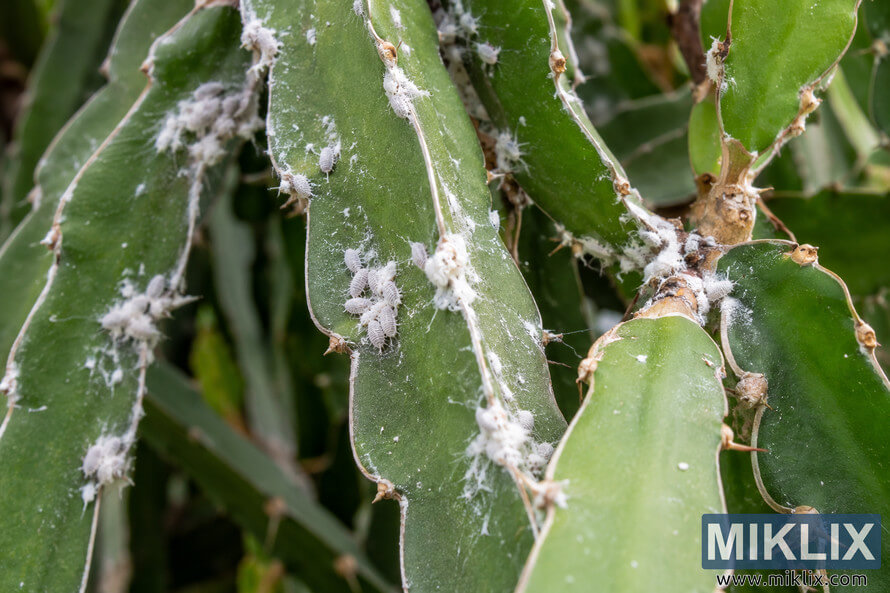
Mealybugs, scale, and spider mites may attack stressed plants. Wipe visible insects away and isolate the plant. Use an appropriate labeled treatment if the problem persists. Do not spray oils in hot direct sun.
Failure to bloom often means the plant is too young, receives poor light, stays too wet, or lacks a seasonal rest. Correct one factor at a time and allow several weeks to judge growth.
Click or tap the image for more information and higher resolutions.
Winter Protection, Indoor Growing, and Safety
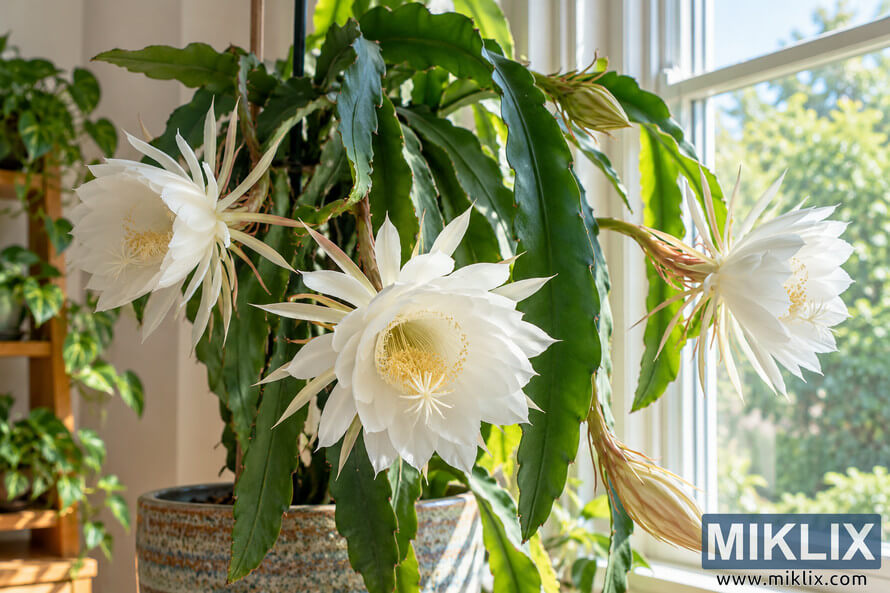
Before the first frost, inspect the plant for insects and move the container indoors. Place it near a bright window, but keep stems away from cold glass and heating vents. A grow light can provide 10 to 12 hours of light each day.
Maintain good airflow and water sparingly. Turn the pot every few weeks for even growth. Return the plant outdoors in spring only after it has been gradually exposed to brighter light.
Wear gloves when handling stems. Keep the cactus away from children and pets because spines can injure skin, and plant material may cause stomach upset if chewed. Do not eat flowers, fruit, or stems unless a qualified source confirms safe use.
Click or tap the image for more information and higher resolutions.
Grow for Healthy Stems and One Special Night
Successful Queen of the night care begins with the basics: bright filtered light, fast drainage, warm temperatures, careful watering, and firm support. Protect the plant from frost, inspect it often, and give it time to mature. When the rare flower finally opens, steady care has already done the most important work.
Visual Reference for Growing Queen of the Night (Selenicereus grandiflorus)
Click or tap the image for more information and higher resolutions.
Click or tap the image for more information and higher resolutions.
Click or tap the image for more information and higher resolutions.
Click or tap the image for more information and higher resolutions.
Click or tap the image for more information and higher resolutions.
Click or tap the image for more information and higher resolutions.
Click or tap the image for more information and higher resolutions.
Click or tap the image for more information and higher resolutions.
Click or tap the image for more information and higher resolutions.
Click or tap the image for more information and higher resolutions.
Click or tap the image for more information and higher resolutions.
Click or tap the image for more information and higher resolutions.
Click or tap the image for more information and higher resolutions.
Click or tap the image for more information and higher resolutions.
Click or tap the image for more information and higher resolutions.
Click or tap the image for more information and higher resolutions.
Click or tap the image for more information and higher resolutions.
Click or tap the image for more information and higher resolutions.
Click or tap the image for more information and higher resolutions.
Click or tap the image for more information and higher resolutions.
Click or tap the image for more information and higher resolutions.
Click or tap the image for more information and higher resolutions.
Click or tap the image for more information and higher resolutions.
Click or tap the image for more information and higher resolutions.
Click or tap the image for more information and higher resolutions.

Click or tap the image for more information and higher resolutions.
Click or tap the image for more information and higher resolutions.
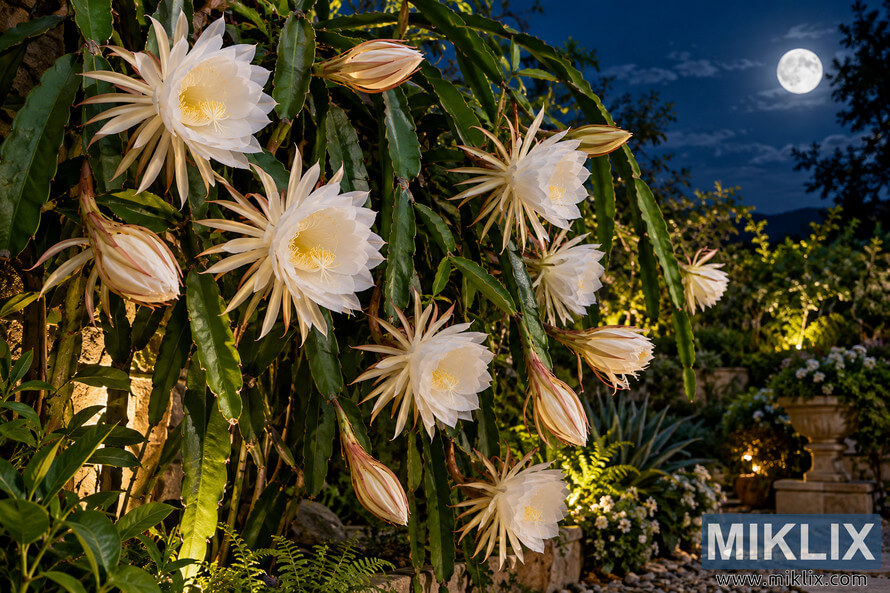
Click or tap the image for more information and higher resolutions.
Further Reading
If you enjoyed this post, you may also like these suggestions:
- Most Beautiful Hydrangea Varieties to Grow in Your Garden
- Growing Jack-in-the-Pulpit: A Practical Woodland Garden Guide
- Blood Lily: A Complete Guide to Growing It in Your Own Garden